×

Japan🇯🇵 | national parksIriomote-Ishigaki National ParkMangrove rivers, subtropical jungle, coral reefs, rare wildlife | things to do and best time to go

Explore Chubu Sangaku National ParkExplore Towada-Hachimantai National Park

Backpacking in Iriomote-Ishigaki
🌟 Highlightnational park ranked #8
By Johan Kruseman 🇳🇱 | Updated September 4, 2026

Your first real fork in the road here is simple but brutal: base yourself on Ishigaki and day-trip to Iriomote, or pay more time and money to actually stay on Iriomote. That choice decides whether this park is a quick postcard or a full-body experience. Iriomote-Ishigaki National Park sits in the Yaeyama Islands, far southwest of Okinawa, closer to Taiwan than to Tokyo. For backpackers, it’s wild mangroves, short but sweaty jungle hikes, sea-kayak routes, coral reefs, and the chance (not promise) of rare wildlife like the Iriomote cat. Access is easy to Ishigaki, slower and pricier to Iriomote, with no real “cheap” once you factor ferries and tours, though camping and basic guesthouses help. No entrance fee, but activities add up. Compared with Okinawa’s main-island parks, this feels rougher, quieter, and less polished—great if you want raw nature, frustrating if you expect dense trail networks and frequent buses.

Discover everything you want to know in the 📖 Japan Travel Guide.


Get your Japan guide
140 ranked highlights, routes & tips, works offline (482 pages)
Loading the map 🌍
CLICK TO FILTER
cities
towns
villages
landmarks
national parks
hikes
beaches
attractions
festivals
regions
SHOW COUNTRY’S BESTSHOW ALL

✨ Why go?
Ranked #8 national park in Japan
What makes it a must-see national park

Iriomote-Ishigaki National Park attracts backpackers for several compelling reasons. First, the independent exploration opportunities are vast. You can wander through dense subtropical forests, kayak in mangroves, or hike to secluded beaches without the constraints of guided tours. This freedom allows you to connect with the landscape on your own terms.

Budget-conscious travelers will appreciate the camping and hostel options nearby. Affordable accommodations make it easier to stretch your yen while enjoying the park’s natural beauty.

The trail variety is another draw. Whether you’re seeking a leisurely stroll or a challenging hike, the park offers routes that cater to different skill levels.

Self-guided travelers thrive here. The well-marked trails and accessible maps empower you to … read more 👉
Iriomote-Ishigaki National Park attracts backpackers for several compelling reasons. First, the independent exploration opportunities are vast. You can wander through dense subtropical forests, kayak in mangroves, or hike to secluded beaches without the constraints of guided tours. This freedom allows you to connect with the landscape on your own terms.

Budget-conscious travelers will appreciate the camping and hostel options nearby. Affordable accommodations make it easier to stretch your yen while enjoying the park’s natural beauty.

The trail variety is another draw. Whether you’re seeking a leisurely stroll or a challenging hike, the park offers routes that cater to different skill levels.

Self-guided travelers thrive here. The well-marked trails and accessible maps empower you to navigate confidently. Just be aware of the weather; sudden changes can occur, so pack accordingly.

In essence, Iriomote-Ishigaki provides a rich experience for those who value freedom, affordability, and adventure.
Want to include Iriomote-Ishigaki National Park in your Japan route?
Create a personalized Japan itinerary that includes Iriomote-Ishigaki National Park and the places that fit your trip — based on your travel style, budget, and available time. Get your route in seconds.

Generate my trip

💡 HighlightsTop highlights of Iriomote-Ishigaki

  • Pinaisara Falls — The biggest waterfall in Okinawa, reached by a mix of boat and a short jungle hike. The cascade drops into a tropical gorge and the walk through dripping greenery feels properly remote; great photo spot and a refreshing mist after the heat.
  • Urauchi River (mangrove kayak/boat tour) — A slow, winding mangrove river that you can paddle or drift along in a boat; tunnels of roots and birds everywhere. It’s my personal favorite — peaceful, easy to access, and you can spot crabs, kingfishers and the layered mangrove ecosystem up close.
  • Iriomote Mangrove Forests — One of Japan’s largest mangrove systems, dense with species of mangrove trees and home to fish, shellfish and many shorebirds. The landscape is otherworldly at low tide and crucial habitat for the islands’ wildlife.
read more 👉
  • Pinaisara Falls — The biggest waterfall in Okinawa, reached by a mix of boat and a short jungle hike. The cascade drops into a tropical gorge and the walk through dripping greenery feels properly remote; great photo spot and a refreshing mist after the heat.
  • Urauchi River (mangrove kayak/boat tour) — A slow, winding mangrove river that you can paddle or drift along in a boat; tunnels of roots and birds everywhere. It’s my personal favorite — peaceful, easy to access, and you can spot crabs, kingfishers and the layered mangrove ecosystem up close.
  • Iriomote Mangrove Forests — One of Japan’s largest mangrove systems, dense with species of mangrove trees and home to fish, shellfish and many shorebirds. The landscape is otherworldly at low tide and crucial habitat for the islands’ wildlife.
  • Iriomote-yamaneko (Iriomote wildcat) — The island’s tiny, critically endangered endemic cat — one of the rarest mammals on earth. Sightings are extremely rare and require luck (and silence), but just knowing you’re in its protected territory adds a real conservation-edge to any visit.
  • Kabira Bay (Ishigaki) — That iconic emerald-blue bay with black limestone bottoms and staghorn coral; famous for its postcard panoramas and glass-bottom boat rides. Swimming is generally discouraged, but the viewpoint and boat trip are unbeatable for scenery and easy photos.
  • Yonehara Beach & coral reef — Shallow shore snorkeling over healthy coral gardens and schools of tropical fish; one of the most accessible reefs on Ishigaki. Bring reef-safe sunscreen and a mask — you can hop in from the beach and see a lot without a full boat trip.
  • Mount Omoto — The highest point on Ishigaki Island with a hiking trail that climbs through subtropical forest to clear ridgeline views. Not a technical climb, but the changing vegetation and panoramic outlooks make it a rewarding half-day hike.
Spotted a mistake or missing something? Contact us.

Things to do near Iriomote-Ishigaki National Park

Ratings based on Tripadvisor reviews. When you book through this link, you support our work at no extra cost to you.

🌤️ When to go?When to go for the best experience


  • Topic: Weather – The subtropical climate means hot, humid summers with frequent rain and typhoons from June to September. Winters are mild and drier, making December to February the safest bet for steady weather.

  • Topic: Temperature – Summer highs hover around 30-33°C (86-91°F), which can sap your energy fast. Winter temps drop to a comfortable 18-22°C (64-72°F), perfect for long hikes without overheating.

  • Topic: Daylight Hours – Expect roughly 11-13 hours of daylight year-round, but winter days are shorter, so start early to maximize your trekking time.

  • Topic: Crowds – Peak season aligns with Japanese holidays and summer breaks, especially August. Visiting off-peak in late autumn or early spring means fewer people and a more peaceful experience.

  • Topic: Seasonal Activities – Kayaking
read more 👉

  • Topic: Weather – The subtropical climate means hot, humid summers with frequent rain and typhoons from June to September. Winters are mild and drier, making December to February the safest bet for steady weather.

  • Topic: Temperature – Summer highs hover around 30-33°C (86-91°F), which can sap your energy fast. Winter temps drop to a comfortable 18-22°C (64-72°F), perfect for long hikes without overheating.

  • Topic: Daylight Hours – Expect roughly 11-13 hours of daylight year-round, but winter days are shorter, so start early to maximize your trekking time.

  • Topic: Crowds – Peak season aligns with Japanese holidays and summer breaks, especially August. Visiting off-peak in late autumn or early spring means fewer people and a more peaceful experience.

  • Topic: Seasonal Activities – Kayaking and snorkeling thrive in warmer months, but if you’re after jungle trekking and wildlife spotting, cooler months offer better comfort and visibility.

  • Topic: Price Fluctuations – Accommodation and transport costs spike during Golden Week (late April to early May) and summer holidays. Booking outside these windows saves money and hassle.


Pro-tip: Aim for late February to April—weather is stable, crowds thin, and you’ll keep your energy for the trails, not battling heat or tourists.


source: climatestotravel.comJANJanuary: excellent for travelingFEBFebruary: excellent for travelingMARMarch: excellent for travelingAPRApril: highly recommended for travelingMAYMay: good for travelingJUNJune: fair for travelingJULJuly: fair for travelingAUGAugust: below average for travelingSEPSeptember: fair for travelingOCTOctober: highly recommended for travelingNOVNovember: highly recommended for travelingDECDecember: excellent for traveling
when-to-go

✈️ The backpacker research shortcutJapan Travel Guide

An offline-friendly backpacking guide with optimized travel routes, ranked highlights, transport advice, and the best areas to stay.
example page 0 from our offline Travel Guide for Japan
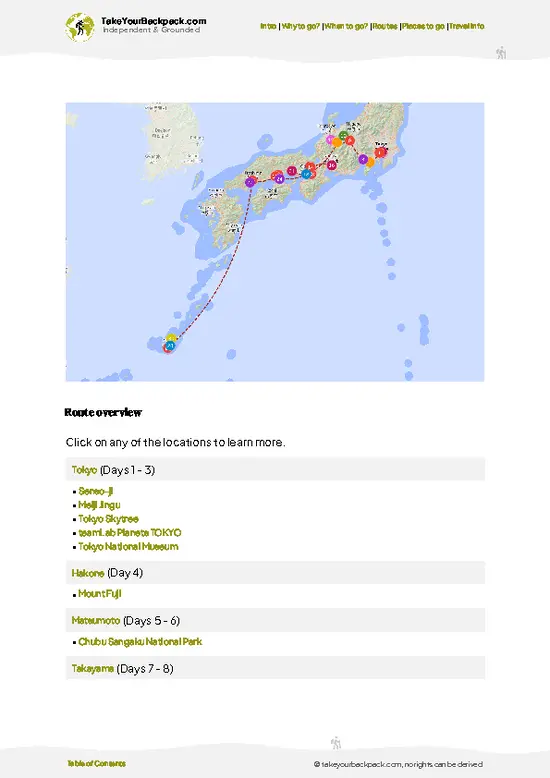
example page 1 from our offline Travel Guide for Japan
example page 2 from our offline Travel Guide for Japan
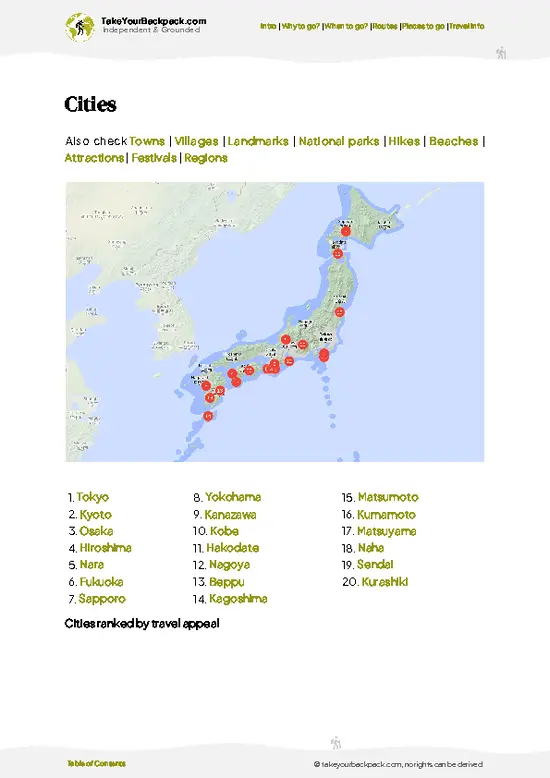
example page 3 from our offline Travel Guide for Japan
example page 4 from our offline Travel Guide for Japan
example page 5 from our offline Travel Guide for Japan
example page 6 from our offline Travel Guide for Japan
example page 7 from our offline Travel Guide for Japan
The digital guide (482 pages) contains:
140 highlights, ranked by travel appeal
Optimized 7, 14 & 21-day travel routes
Cities, national parks, landmarks, beaches
How to get around
Offline-friendly for travel without Wi-Fi
👉 Click to see all 30+ guide features

📅 Plan smarter in minutes, not weeks
Month by month travel advice
Festivals & national holidays
Budget expectations

🗺️ Go to the right places, skip the overrated ones
Honest pros & cons of destinations
Top hikes, parks & viewpoints
Lesser-known places most travelers miss
Clear “worth it vs skip it” guidance

🛏️ Travel smoothly without rookie mistakes
Best areas to stay
Transport systems explained simply
Common scams & safety advice
SIM cards, money & practical tips

🌍 Understand the country, not just visit it
Culture & traditions
52 Essential phrases & customs
Festivals worth planning around
Traveler-friendly historical context
Insights that make places more meaningful

📱 Built for real travel conditions
Fully downloadable PDF
Works completely offline
Optimized for phone use
Useful in remote areas & buses
Everything in one place
Save weeks of stressful planning
Get instant access to your full guide. 30‑day money-back guarantee.
+ Add another guide for just US$7.80

By proceeding you agree to our terms.
Sent to your inbox immediately after payment • 100% Secure Checkout
Best Backpacking Travel Advisor 2025 tourism awardBest Backpacking
Travel Advisor
2025
What others say about Take Your Backpack Guides:
⭐⭐⭐⭐⭐
Fantastic, amazing amount of information!
⭐⭐⭐⭐⭐
My goodness this is amazing, it's what I've been looking for hats off too you!
⭐⭐⭐⭐⭐
I think this is absolutely BRILLIANT
⭐⭐⭐⭐
Very complete and informative. It's still missing places, but I gotta to commend you
⭐⭐⭐⭐⭐
This is truly amazing, thank you, can't wait to explore it with my kids!
⭐⭐⭐⭐⭐
Awesome resource, thank you!
⭐⭐⭐⭐⭐
This is amazing! Can't wait to explore the ones I haven't seen
⭐⭐⭐⭐
I love this! Well done, great idea.
⭐⭐⭐⭐⭐
Thanks for taking the time to make this gem!
⭐⭐⭐⭐⭐
This might be the best website I've ever seen.
⭐⭐⭐⭐⭐
Congratulations, and thank you so much for your work; it's incredibly valuable.
⭐⭐⭐⭐
In all seriousness I think you did a great job pointing out the important spots
⭐⭐⭐⭐⭐
10/10 very good
⭐⭐⭐⭐⭐
As someone who's only just starting to visit regularly this is awesome, thank you.
⭐⭐⭐⭐
Thank you very much! I'm going to visit my dad, it's going to be very useful!
⭐⭐⭐⭐⭐
This is really cool! We'll be travelling for the first time and this definitely come in handy.
⭐⭐⭐⭐⭐
You are now our minister of culture, congratulations 👨‍💼
⭐⭐⭐⭐⭐
Just wanted to tell you that this is a pearl! Going to follow your recommendations.
⭐⭐⭐⭐⭐
This is so cool. I'll definitely be using the resource for my travels soon.
⭐⭐⭐⭐⭐
This is very impressive! Good work.
⭐⭐⭐⭐⭐
This is an amazing and informative site. Very well done!

🛏️ Where to stay?How to pick the right area

When visiting Iriomote-Ishigaki National Park, your best bet for budget-friendly stays is in Ishigaki City. This bustling hub offers a range of hostels and guesthouses, perfect for backpackers. Look for places like Guesthouse Hikari, where you can mingle with fellow travelers and share stories over a communal kitchen.

Inside the national park, options are limited. There are a few campsites, but they require advance planning and permits. If you’re keen on immersing yourself in nature, consider the eco-lodges on Iriomote Island. They provide a unique experience, but be prepared for higher prices … read more 👉
When visiting Iriomote-Ishigaki National Park, your best bet for budget-friendly stays is in Ishigaki City. This bustling hub offers a range of hostels and guesthouses, perfect for backpackers. Look for places like Guesthouse Hikari, where you can mingle with fellow travelers and share stories over a communal kitchen.

Inside the national park, options are limited. There are a few campsites, but they require advance planning and permits. If you’re keen on immersing yourself in nature, consider the eco-lodges on Iriomote Island. They provide a unique experience, but be prepared for higher prices and limited amenities.

Transport is key. Ferries connect Ishigaki to Iriomote, making it easy to explore the park during the day and return to the city for a budget-friendly meal or a cold drink. Avoid the tourist traps in Ishigaki City; instead, seek out local izakayas for authentic flavors without breaking the bank. Prioritize your energy and budget for the experiences that truly matter—like kayaking through mangroves or hiking to hidden waterfalls.

👛 Costs (as of 4 September 2026)What things cost and how to budget

Visiting Iriomote-Ishigaki National Park in Japan can be a rewarding experience, but it’s essential to be aware of the costs involved to avoid surprises.

Entry to the park is free, which is a nice perk. However, if you plan to explore by boat or join guided tours, expect to pay between $30 to $100 per person, depending on the length and type of tour. Kayaking rentals typically range from $20 to $50 for a few hours.

Transportation is another factor. Ferries from Ishigaki Island to Iriomote Island cost around $10 to $15 each way. If you’re renting a car, budget for about $50 to $80 per day, plus fuel.

Accommodations vary widely. Hostels can be found for about $30 to $60 per night, while mid-range hotels might run from $80 to $150. For a more luxurious stay, expect to pay upwards of $200.
read more 👉
Visiting Iriomote-Ishigaki National Park in Japan can be a rewarding experience, but it’s essential to be aware of the costs involved to avoid surprises.

Entry to the park is free, which is a nice perk. However, if you plan to explore by boat or join guided tours, expect to pay between $30 to $100 per person, depending on the length and type of tour. Kayaking rentals typically range from $20 to $50 for a few hours.

Transportation is another factor. Ferries from Ishigaki Island to Iriomote Island cost around $10 to $15 each way. If you’re renting a car, budget for about $50 to $80 per day, plus fuel.

Accommodations vary widely. Hostels can be found for about $30 to $60 per night, while mid-range hotels might run from $80 to $150. For a more luxurious stay, expect to pay upwards of $200.

Food costs are reasonable. Local eateries offer meals for $5 to $15. If you opt for higher-end dining, plan for $30 or more per meal.

Keep these figures in mind to manage your budget effectively. Prioritize what matters most to you, whether it’s a guided tour or a comfortable place to rest after a day of adventure.


source: japan.travel
⚠️ Prices can change and everyone travels differently, so take this as a rough guide. Hope it helps you plan your adventure!

🥾 TrailsScenic routes and wildlife spotting in Iriomote-Ishigaki

Iriomote-Ishigaki National Park is a gem in Japan, offering a unique blend of lush subtropical forests, stunning coastlines, and vibrant coral reefs. The terrain is diverse, ranging from flat coastal paths to more rugged, hilly areas, making it a playground for hikers of various skill levels. Wildlife is a big draw here, with the chance to spot the rare Iriomote cat, along with various birds and marine life.

One of the standout trails is the Yubu Island Trail, which is perfect for those looking for an easier hike.
  • Length: 2 km
  • Estimated Duration: 1 hour
  • Difficulty Level: Easy
  • Key Features: Scenic
read more 👉
Iriomote-Ishigaki National Park is a gem in Japan, offering a unique blend of lush subtropical forests, stunning coastlines, and vibrant coral reefs. The terrain is diverse, ranging from flat coastal paths to more rugged, hilly areas, making it a playground for hikers of various skill levels. Wildlife is a big draw here, with the chance to spot the rare Iriomote cat, along with various birds and marine life.

One of the standout trails is the Yubu Island Trail, which is perfect for those looking for an easier hike.
  • Length: 2 km
  • Estimated Duration: 1 hour
  • Difficulty Level: Easy
  • Key Features: Scenic views of the surrounding ocean and mangroves
  • Terrain: Flat, mostly paved paths

For something a bit more challenging, the Shirakawa Trail offers a deeper dive into the island’s interior.
  • Length: 4.5 km
  • Estimated Duration: 2-3 hours
  • Difficulty Level: Moderate
  • Key Features: Dense forests, unique flora, and occasional river crossings
  • Terrain: Mixed; some rocky and uneven sections

Reaching the park is fairly straightforward. You can hop on a ferry from Ishigaki Island, which is well-connected by flights from major cities like Tokyo and Osaka. Once you arrive, public transport options are available, though renting a bike or car can give you more freedom to explore. It’s not overly crowded, especially if you hit the trails early in the morning or during the off-peak season. There’s no entrance fee, so you can enjoy the natural beauty without worrying about your wallet.
⚠️ Hiking info can sometimes be outdated or inaccurate. Before you hit the trail, check the latest conditions with locals. If you do spot anything that's off, I'd love to hear from you, so I can update it for fellow travelers.

🛡️ SafetySafety Tips and Common Scams in Iriomote-Ishigaki

Iriomote-Ishigaki National Park is generally welcoming for backpackers, but a few practical considerations can enhance your experience. The weather can shift quickly, especially during the rainy season, so pack a reliable rain jacket and check forecasts before heading out.

Trails vary in difficulty; some sections are steep and can be slippery after rain. Good footwear is essential. Navigation is straightforward, but always carry a map or download offline guides, as cell service can be spotty.

Wildlife encounters are rare but fascinating. If you spot a wild cat or other animals, observe from a distance and avoid feeding them. Respect their space to ensure both your safety and theirs.

Finally, start your hikes early to avoid the midday heat and give yourself ample time to explore. With these … read more 👉
Iriomote-Ishigaki National Park is generally welcoming for backpackers, but a few practical considerations can enhance your experience. The weather can shift quickly, especially during the rainy season, so pack a reliable rain jacket and check forecasts before heading out.

Trails vary in difficulty; some sections are steep and can be slippery after rain. Good footwear is essential. Navigation is straightforward, but always carry a map or download offline guides, as cell service can be spotty.

Wildlife encounters are rare but fascinating. If you spot a wild cat or other animals, observe from a distance and avoid feeding them. Respect their space to ensure both your safety and theirs.

Finally, start your hikes early to avoid the midday heat and give yourself ample time to explore. With these tips, you’ll preserve your energy and budget for the moments that truly matter.

FAQFrequently asked questions about Iriomote-Ishigaki

3 to 4 days are recommended to explore Iriomote-Ishigaki National Park thoroughly, allowing time for hiking, kayaking, and visiting key spots like the Pinaisara Falls and mangrove forests.
Yes, you can visit Iriomote-Ishigaki National Park without a car by using local buses and boats, but access to some remote areas may require guided tours or taxis due to limited public transport options.
No entrance fee or permit is required to enter Iriomote-Ishigaki National Park, but some activities like guided tours or boat rentals may have separate charges.
⚠️ Things can change over time, so always validate details locally before you go.

Other Japanese national parks near Iriomote-Ishigaki

Explore more nearby:


💡 Not sure where to go next?
Create a personalized itinerary for Japan including Iriomote-Ishigaki and the places that fit your trip.

Generate my itinerary

👉 Discover all national parks

Or checkout all Japan has to offer (think cities, towns, villages, national parks, hikes, beaches, festivals)
Country photo of Japan

We 💚 feedbackParting advice and final tips

Iriomote-Ishigaki National Park is a paradise for those who crave unspoiled nature. The mangroves and coral reefs offer a rare glimpse into Japan’s rich biodiversity. But be prepared: the humidity can be relentless, and some trails are tougher than they look. Bring plenty of water and don’t underestimate the heat. It’s all part of the adventure, but it’s wise to pace yourself so you can truly soak in the beauty around you.

✈️ When did I visit Japan?
As part of my 1.5 year travel around the world trip, I visited Japan in August 2015.

✍️ Help improve this page!
The information on this page is based on my own backpacking experience in Japan, supplemented with up-to-date research and feedback from other travelers. Travel details can change, so if you notice anything outdated or incomplete, feel free to let me know.


🙋‍♂️ Give feedback

👋 Meet the founderWho’s Behind Take Your Backpack?

Johan, backpacker and founder of TakeYourBackpackHi, I’m Johan (Netherlands 🇳🇱), the creator of TakeYourBackpack. Over the past decade, I’ve backpacked through 80+ countries across six continents, gaining extensive experience with independent travel, long-term trips, and overland routes.

This site is built on a combination of firsthand travel experience and carefully curated insights from other backpackers. Many guides are based on places I’ve personally visited, while others bring together tips, observations, and practical advice shared by trusted travelers I’ve met along the way.

The goal is to provide realistic, experience-driven guidance — not generic itineraries — so you can explore destinations with better context, clearer expectations, and more confidence.

Get full Japan guide •
Instant download • 140 highlights • Full Offline guide