v2.webp)




- Climb to the summit and watch the sunrise (Goraiko) — The classic Mount Fuji experience: a night ascent in climbing season followed by the sun breaking over the clouds. It’s raw, exhausting, and worth it for the lunar-like summit, the feeling of having the whole country below you, and the ritual of hundreds of hikers greeting dawn together. Bring a headlamp, warm layers and respect the fast weather changes.
- Fuji Subaru Line 5th Station — The easiest taste of altitude and mega-views without committing to the full climb. It’s a busy hub for acclimating, last-minute supplies, and panoramic photo stops; buses run from Kawaguchiko in season. Good for lazy day-trippers or starting your summit attempt.
- Chureito Pagoda / Arakurayama Sengen Park — That postcard shot everyone knows: a red pagoda
- Climb to the summit and watch the sunrise (Goraiko) — The classic Mount Fuji experience: a night ascent in climbing season followed by the sun breaking over the clouds. It’s raw, exhausting, and worth it for the lunar-like summit, the feeling of having the whole country below you, and the ritual of hundreds of hikers greeting dawn together. Bring a headlamp, warm layers and respect the fast weather changes.
- Fuji Subaru Line 5th Station — The easiest taste of altitude and mega-views without committing to the full climb. It’s a busy hub for acclimating, last-minute supplies, and panoramic photo stops; buses run from Kawaguchiko in season. Good for lazy day-trippers or starting your summit attempt.
- Chureito Pagoda / Arakurayama Sengen Park — That postcard shot everyone knows: a red pagoda framed with Fuji in the background, especially striking in cherry blossom or autumn colors. It’s not the quietest spot, but the view is iconic and very photogenic.
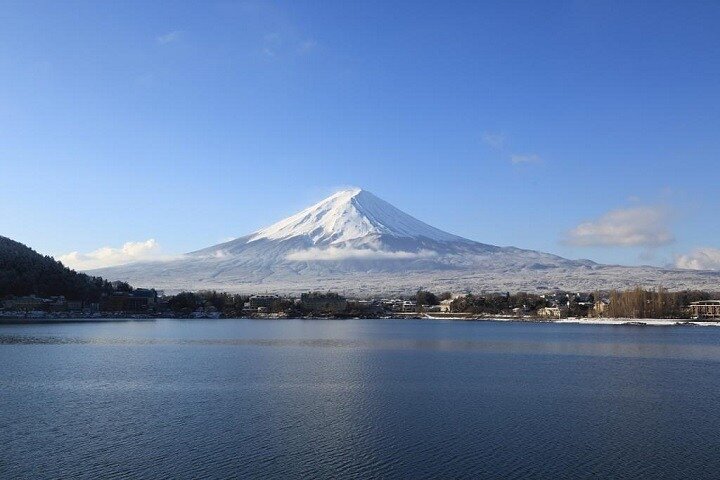
- Lake Kawaguchi and the lakeside ropeway — The most comfortable place to linger and soak up multiple angles of Fuji. Rent a bike, take a cheap boat, or ride the ropeway for elevated views. Great for sunrise photos and relaxed evenings with cheap ryokan or guesthouse options nearby.
- Fujisan Hongu Sengen Taisha (Sengen Shrine) — A centuries-old shrine dedicated to Fuji’s spirit and the start point for traditional pilgrimages. It offers cultural context to the mountain, beautiful cedar approach paths, and a calmer place to reflect away from the tourist crowds.
- Fugaku Wind Cave & Narusawa Ice Cave — Ash-lava caves formed by ancient eruptions, unusually cool year-round and historically used to store silkworms and ice. They’re quick, cheap, and add a quirky geological dimension to the trip.
- Oshino Hakkai spring ponds — Eight crystal-clear ponds fed by Mount Fuji’s snowmelt; the water is absurdly blue and deliciously drinkable. The small village with thatched-roof houses feels like stepping into a quieter, traditional Japan and is perfect for relaxed photos and cheap local snacks. (Personal favorite)
Spotted a mistake or missing something? Contact us.

Mt Fuji and Hakone 1-Day Bus Tour Return by Bullet Train

Private Tour to Mt. Fuji/or hakone (Fully Licensed Operator)

Mt Fuji & Hakone Tour: Cruise, Drum Show & Bullet Train Return

Mount Fuji, Kamakura, Big Buddha, & Lake Ashi Day Trip

Tokyo Guided Small-Group Biking Tour
Mt Fuji and Hakone 1-Day Bus Tour Return by Bus

Mt Fuji Hidden Gem Custom Car Tour with Licensed Guide & Driver
Mt Fuji & Hakone Cruise, Drum Show Bus 1 Day from Tokyo Sta. Area

Mt Fuji & Hakone Cruise, Drum Show Bus 1 Day from Tokyo

 Best Backpacking
.jpg) Hi, I’m Johan (Netherlands 🇳🇱), the creator of TakeYourBackpack. Over the past 3 decades, I’ve backpacked through 90+ countries across six continents, gaining extensive experience with independent travel, long-term trips, and overland routes.
Hi, I’m Johan (Netherlands 🇳🇱), the creator of TakeYourBackpack. Over the past 3 decades, I’ve backpacked through 90+ countries across six continents, gaining extensive experience with independent travel, long-term trips, and overland routes.