×

Japan🇯🇵 | citiesNagoyamodern towers, automotive museums, castle keep | things to do and best time to go

Explore ShizuokaExplore Aomori

Backpacking in Nagoya
🌟 Highlightcity ranked #12
By Johan Kruseman 🇳🇱 | Updated July 28, 2026

Most people only realize on the train out that Nagoya is the cheapest, calmest base for hitting half of central Japan on easy day trips. It sits between Tokyo and Osaka on the Tokaido Shinkansen, right in the industrial heart of Honshu. As a backpacker city, it’s solid rather than romantic: Nagoya Castle, the Toyota Commemorative Museum, Osu’s covered arcades, and late-night izakaya around Sakae give you plenty to chew on, but it’s less postcard-pretty than Kyoto or Kanazawa. Hostels are fewer yet friendly, nightlife is local not backpacker-heavy, costs are slightly lower than Tokyo, trains are absurdly efficient, and the overall vibe is safe, work-focused, and pleasantly underhyped.

Discover everything you want to know in the 📖 Japan Travel Guide.


Get your Japan guide
140 ranked highlights, routes & tips, works offline (482 pages)
Loading the map 🌍
CLICK TO FILTER
cities
towns
villages
landmarks
national parks
hikes
beaches
attractions
festivals
regions
SHOW COUNTRY’S BESTSHOW ALL

✨ Why go?
Ranked #12 city in Japan
Why Nagoya should be on your travel list

Nagoya is a strategic base for backpackers, offering a blend of affordability and convenience. It’s not just about the highlights; it’s the city’s role in your travel route that matters. With a solid range of hostels, you can find budget-friendly options that don’t skimp on comfort. The food scene is a treat, from street stalls to cozy eateries, giving you a taste of local flavors without breaking the bank.

Nagoya’s walkability makes it easy to explore, while its nightlife offers a vibrant atmosphere to unwind after a day of adventures. Plus, the city is a transport hub, making onward travel to other destinations a breeze. If you’re looking for a place that balances time, money, and comfort, Nagoya fits the bill. It’s perfect for a longer stay or a quick stop, depending on your itinerary.
Want to include Nagoya in your Japan route?
Create a personalized Japan itinerary that includes Nagoya and the places that fit your trip — based on your travel style, budget, and available time. Get your route in seconds.

Generate my trip

💡 HighlightsKey sights and experiences for travelers

  • Nagoya Castle — The city’s most iconic landmark: massive stone base, golden shachihoko on the roof and a surprisingly pleasant park around it. The restored Honmaru Palace interiors are ornate and give a real feel for samurai-era power; great for history buffs and photos.
  • Atsuta Shrine (Atsuta Jingu) — One of Japan’s oldest and most venerated shrines, set in a calm forested precinct. It’s culturally important (linked to the imperial regalia), full of seasonal festivals, and perfect for peaceful walks away from the bustle.
  • Tokugawa Art Museum & Tokugawaen Garden — Samurai treasures, lacquerwork, and scrolls in a compact museum, with a beautifully maintained stroll garden next door. Visiting both gives a neat, digestible look into Edo-period elite life without leaving the city.
  • Osu Kannon
read more 👉
  • Nagoya Castle — The city’s most iconic landmark: massive stone base, golden shachihoko on the roof and a surprisingly pleasant park around it. The restored Honmaru Palace interiors are ornate and give a real feel for samurai-era power; great for history buffs and photos.
  • Atsuta Shrine (Atsuta Jingu) — One of Japan’s oldest and most venerated shrines, set in a calm forested precinct. It’s culturally important (linked to the imperial regalia), full of seasonal festivals, and perfect for peaceful walks away from the bustle.
  • Tokugawa Art Museum & Tokugawaen Garden — Samurai treasures, lacquerwork, and scrolls in a compact museum, with a beautifully maintained stroll garden next door. Visiting both gives a neat, digestible look into Edo-period elite life without leaving the city.
  • Osu Kannon & Osu Shopping Arcade — Temple + endless arcade: religious atmosphere meets bargain hunting and street food. Come for the temple, stay for secondhand kimono shops, quirky electronics stalls, and excellent late-night eats.
  • Nagoya City Science Museum — That silver globe with one of the world’s largest planetariums is impossibly photogenic and genuinely fun. Interactive science displays, cool demonstrations and the planetarium make it a win on a hot or rainy day.
  • Toyota Commemorative Museum of Industry and Technology — Surprisingly engaging: starts with textile looms, moves through Toyota’s car-making history with working machines and hands-on exhibits. Perfect for anyone curious about how industry shaped modern Nagoya.
  • SCMAGLEV and Railway Park — A must for train lovers: real Shinkansen and maglev prototypes, cab views and simulators. It’s more than models—there’s tactile history and a real sense of how rail changed Japan.
  • Noritake Garden — A calm spot for ceramics fans: museum, factory shop, hands-on pottery classes and a pleasant café in restored factory buildings. Good for picking up high-quality but affordable tableware and learning a bit of local craft history.
  • Nagoya Port Aquarium — Big tanks, ocean exhibits and lively dolphin/orca performances. It’s family-friendly but also satisfying for solo travelers who like marine biology and harbor views on a relaxed afternoon.
  • Sakae — Nagoya TV Tower & Oasis 21 — The city’s modern heart: climb the TV Tower for the skyline, then stroll Oasis 21’s “spaceship” glass roof with its shallow reflecting pool and shops below. It’s where Nagoya’s nightlife and daytime shopping collide.
A few excellent day trips just outside Nagoya: Inuyama Castle and its charming old town, the open-air Meiji Mura museum of historic buildings, and the sacred Ise Grand Shrine (a bit farther but doable). Personal favorite: Inuyama Castle — compact, photogenic and full of real-feel history, with a lovely riverside town to explore.
Spotted a mistake or missing something? Contact us.

Things to do in Nagoya

Ratings based on Tripadvisor reviews. When you book through this link, you support our work at no extra cost to you.

🏘️ NeighborhoodsUnderstanding the local layout

Nagoya offers a unique blend of modernity and tradition, making it a fascinating stop for backpackers. Here’s how the neighborhoods stack up:

Sakae: This is the heart of Nagoya’s nightlife and shopping. Expect a vibrant atmosphere with plenty of bars and restaurants. It’s walkable, making it easy to explore. Costs can be higher here, but the energy is worth it for a short stay. Great for those who want to dive into the local scene.

Nakamura: A more laid-back vibe, Nakamura is perfect for longer stays. It’s home to Nagoya Station, ensuring excellent transport access. You’ll find budget accommodations and local eateries. The area is quieter, ideal for those who want to recharge after a day of exploring.

Osu: Known for its eclectic mix of shops and street food, Osu is a must-visit. The area … read more 👉
Nagoya offers a unique blend of modernity and tradition, making it a fascinating stop for backpackers. Here’s how the neighborhoods stack up:

Sakae: This is the heart of Nagoya’s nightlife and shopping. Expect a vibrant atmosphere with plenty of bars and restaurants. It’s walkable, making it easy to explore. Costs can be higher here, but the energy is worth it for a short stay. Great for those who want to dive into the local scene.

Nakamura: A more laid-back vibe, Nakamura is perfect for longer stays. It’s home to Nagoya Station, ensuring excellent transport access. You’ll find budget accommodations and local eateries. The area is quieter, ideal for those who want to recharge after a day of exploring.

Osu: Known for its eclectic mix of shops and street food, Osu is a must-visit. The area is walkable and affordable, making it great for budget travelers. The nightlife is lively but not overwhelming. Perfect for short stays where you want to soak in local culture.

Kanayama: A balance of business and leisure, Kanayama offers a mix of hotels and parks. It’s well-connected by public transport. The area is quieter, suitable for longer stays if you prefer a more relaxed pace.

⌛️ 1 daySeeing the highlights in 24 hours

Nagoya, Japan, is often overshadowed by its flashier neighbors, but it’s a treasure trove of culture, history, and culinary delights. This city is a blend of modernity and tradition, with a unique charm that invites exploration.

Start your morning in the bustling Sakae district. Grab a coffee at a local café and soak in the energy of the city. Then, head to Nagoya Castle. Its impressive architecture and beautiful gardens are a must-see. The castle’s history is palpable, and wandering through its grounds feels like stepping back in time.

In the afternoon, make your way to Osu Kannon, a vibrant shopping district. Here, you can explore quirky shops and sample street food like miso katsu and tenmusu. Don’t miss the Osu Kannon Temple; it’s a peaceful spot amidst the hustle. For something off … read more 👉
Nagoya, Japan, is often overshadowed by its flashier neighbors, but it’s a treasure trove of culture, history, and culinary delights. This city is a blend of modernity and tradition, with a unique charm that invites exploration.

Start your morning in the bustling Sakae district. Grab a coffee at a local café and soak in the energy of the city. Then, head to Nagoya Castle. Its impressive architecture and beautiful gardens are a must-see. The castle’s history is palpable, and wandering through its grounds feels like stepping back in time.

In the afternoon, make your way to Osu Kannon, a vibrant shopping district. Here, you can explore quirky shops and sample street food like miso katsu and tenmusu. Don’t miss the Osu Kannon Temple; it’s a peaceful spot amidst the hustle. For something off the beaten path, check out the Toyota Commemorative Museum of Industry and Technology. It’s fascinating to see how this automotive giant evolved, and it’s usually less crowded than other attractions.

As evening falls, head to Nagoya’s Nagoyakutei for dinner. This local favorite serves up delicious hitsumabushi, grilled eel over rice, a dish that’s a true Nagoya specialty. Afterward, stroll through the quiet streets of the Naka Ward, where you can find cozy izakayas and bars.

In just one day, you’ll experience the heart of Nagoya, balancing time, comfort, and money for a trip that feels both rich and rewarding.
Turn your Nagoya visit into an Japan adventure
Build a complete Japan route with Nagoya, hidden gems, must-see destinations, and realistic travel times included.

Generate my trip

🌤️ When to go?Best time to visit Nagoya


  • Weather: Nagoya’s climate swings from hot, humid summers (around 30°C/86°F) to chilly winters dipping near 2°C/36°F. Spring and autumn offer mild, dry conditions perfect for walking and exploring without sweating or shivering.

  • Temperature: April to May and October to November hover between 15°C and 22°C (59°F–72°F), striking a sweet spot for comfort without the extremes that sap energy or force heavy gear.

  • Daylight Hours: Spring and autumn provide balanced daylight—roughly 12 to 14 hours—enough time to pack in sightseeing and still enjoy evening downtime.

  • Crowds: Golden Week (late April to early May) floods Nagoya with domestic tourists, hiking prices and crowd density. Avoid this if you want space to breathe and better deals.

  • Seasonal Activities: Cherry blossoms bloom in early
read more 👉

  • Weather: Nagoya’s climate swings from hot, humid summers (around 30°C/86°F) to chilly winters dipping near 2°C/36°F. Spring and autumn offer mild, dry conditions perfect for walking and exploring without sweating or shivering.

  • Temperature: April to May and October to November hover between 15°C and 22°C (59°F–72°F), striking a sweet spot for comfort without the extremes that sap energy or force heavy gear.

  • Daylight Hours: Spring and autumn provide balanced daylight—roughly 12 to 14 hours—enough time to pack in sightseeing and still enjoy evening downtime.

  • Crowds: Golden Week (late April to early May) floods Nagoya with domestic tourists, hiking prices and crowd density. Avoid this if you want space to breathe and better deals.

  • Seasonal Activities: Cherry blossoms bloom in early April, a brief but iconic spectacle. Autumn’s foliage in November adds a colorful backdrop to hikes and city strolls, enhancing your photos and mood.

  • Price Fluctuations: Accommodation and transport costs spike during Golden Week and autumn festivals. Spring and late autumn outside these peaks offer the best value for budget-conscious backpackers.


Pro-tip: Aim for late April before Golden Week or mid-November after the autumn festivals to maximize comfort, avoid crowds, and keep your wallet happy.


source: climatestotravel.comJANJanuary: good for travelingFEBFebruary: good for travelingMARMarch: highly recommended for travelingAPRApril: highly recommended for travelingMAYMay: fair for travelingJUNJune: fair for travelingJULJuly: fair for travelingAUGAugust: fair for travelingSEPSeptember: good for travelingOCTOctober: highly recommended for travelingNOVNovember: highly recommended for travelingDECDecember: good for traveling
japan-city-nagoya
© Google |

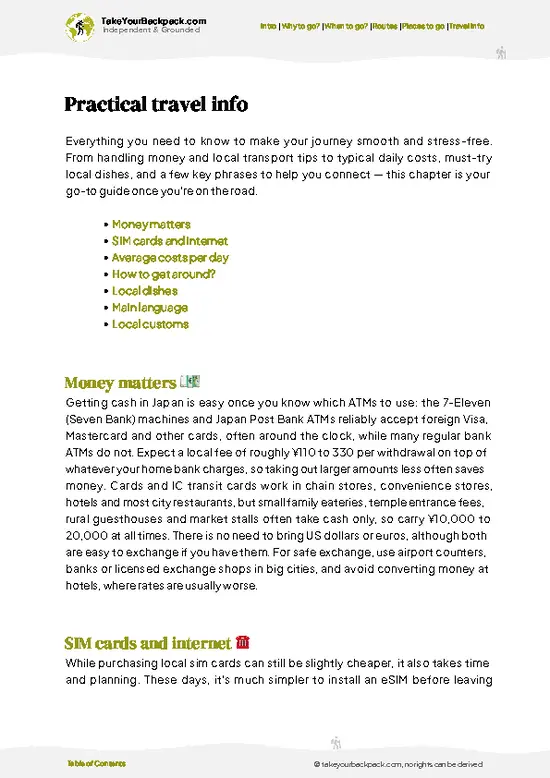
✈️ The backpacker research shortcutJapan Travel Guide

An offline-friendly backpacking guide with optimized travel routes, ranked highlights, transport advice, and the best areas to stay.
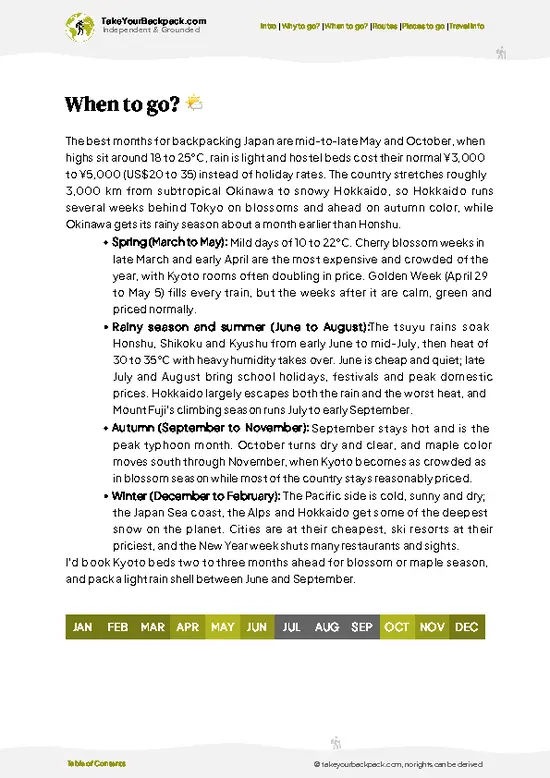
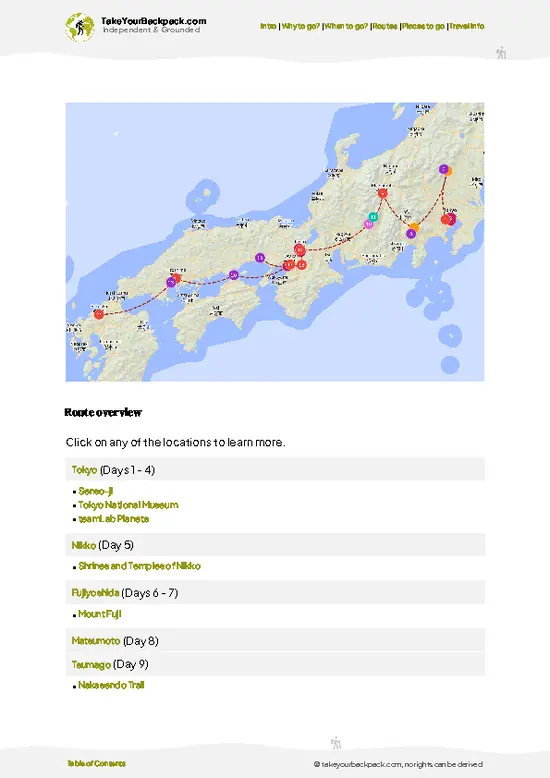
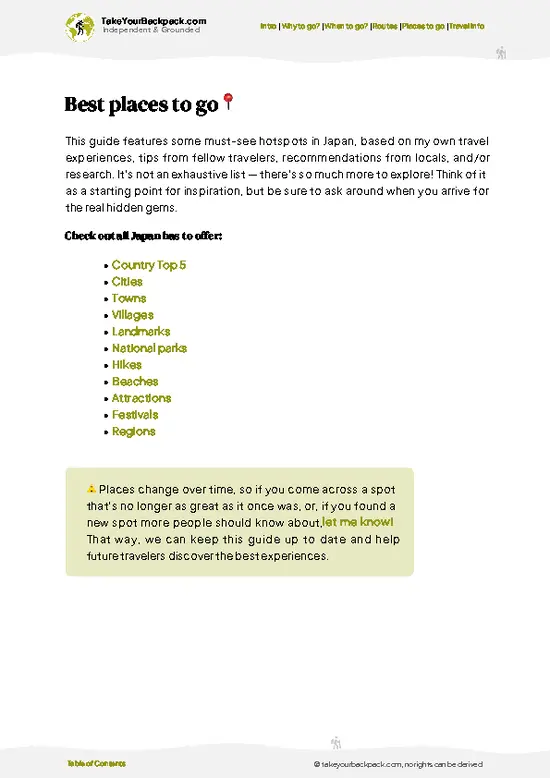
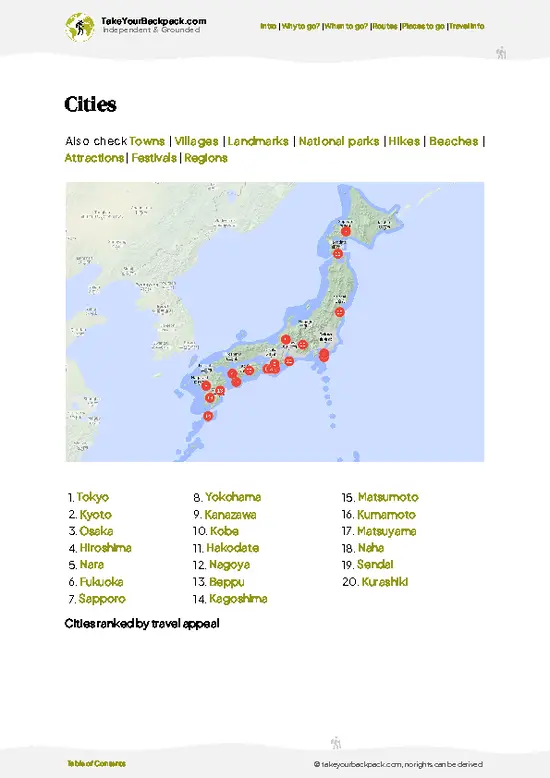
example page 0 from our offline Travel Guide for Japan
example page 1 from our offline Travel Guide for Japan
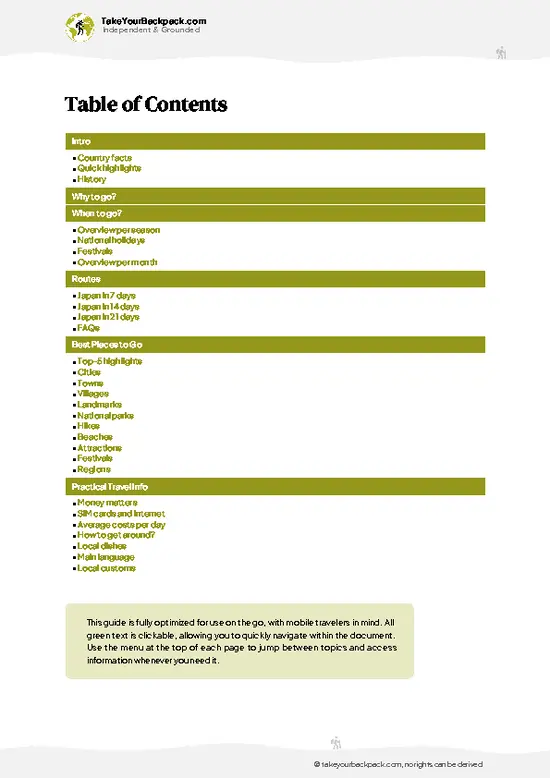
example page 2 from our offline Travel Guide for Japan
example page 3 from our offline Travel Guide for Japan
example page 4 from our offline Travel Guide for Japan
example page 5 from our offline Travel Guide for Japan
example page 6 from our offline Travel Guide for Japan
example page 7 from our offline Travel Guide for Japan
The digital guide (482 pages) contains:
140 highlights, ranked by travel appeal
Optimized 7, 14 & 21-day travel routes
Cities, national parks, landmarks, beaches
How to get around
Offline-friendly for travel without Wi-Fi
👉 Click to see all 30+ guide features

📅 Plan smarter in minutes, not weeks
Month by month travel advice
Festivals & national holidays
Budget expectations

🗺️ Go to the right places, skip the overrated ones
Honest pros & cons of destinations
Top hikes, parks & viewpoints
Lesser-known places most travelers miss
Clear “worth it vs skip it” guidance

🛏️ Travel smoothly without rookie mistakes
Best areas to stay
Transport systems explained simply
Common scams & safety advice
SIM cards, money & practical tips

🌍 Understand the country, not just visit it
Culture & traditions
52 Essential phrases & customs
Festivals worth planning around
Traveler-friendly historical context
Insights that make places more meaningful

📱 Built for real travel conditions
Fully downloadable PDF
Works completely offline
Optimized for phone use
Useful in remote areas & buses
Everything in one place
Save weeks of stressful planning
Get instant access to your full guide. 30‑day money-back guarantee.


By proceeding you agree to our terms.
Sent to your inbox immediately after payment • 100% Secure Checkout
Best Backpacking Travel Advisor 2025 tourism awardBest Backpacking
Travel Advisor
2025
What others say about Take Your Backpack Guides:
⭐⭐⭐⭐⭐
Fantastic, amazing amount of information!
⭐⭐⭐⭐⭐
My goodness this is amazing, it's what I've been looking for hats off too you!
⭐⭐⭐⭐⭐
I think this is absolutely BRILLIANT
⭐⭐⭐⭐
Very complete and informative. It's still missing places, but I gotta to commend you
⭐⭐⭐⭐⭐
This is truly amazing, thank you, can't wait to explore it with my kids!
⭐⭐⭐⭐⭐
Awesome resource, thank you!
⭐⭐⭐⭐⭐
This is amazing! Can't wait to explore the ones I haven't seen
⭐⭐⭐⭐
I love this! Well done, great idea.
⭐⭐⭐⭐⭐
Thanks for taking the time to make this gem!
⭐⭐⭐⭐⭐
This might be the best website I've ever seen.
⭐⭐⭐⭐⭐
Congratulations, and thank you so much for your work; it's incredibly valuable.
⭐⭐⭐⭐
In all seriousness I think you did a great job pointing out the important spots
⭐⭐⭐⭐⭐
10/10 very good
⭐⭐⭐⭐⭐
As someone who's only just starting to visit regularly this is awesome, thank you.
⭐⭐⭐⭐
Thank you very much! I'm going to visit my dad, it's going to be very useful!
⭐⭐⭐⭐⭐
This is really cool! We'll be travelling for the first time and this definitely come in handy.
⭐⭐⭐⭐⭐
You are now our minister of culture, congratulations 👨‍💼
⭐⭐⭐⭐⭐
Just wanted to tell you that this is a pearl! Going to follow your recommendations.
⭐⭐⭐⭐⭐
This is so cool. I'll definitely be using the resource for my travels soon.
⭐⭐⭐⭐⭐
This is very impressive! Good work.
⭐⭐⭐⭐⭐
This is an amazing and informative site. Very well done!

🛏️ Where to stay?Best areas to stay in Japan

Nagoya’s backpacker sweet spot is the area around Sakae and Fushimi. These neighborhoods strike a smart balance between budget and buzz. You’re close enough to the city’s pulse—cafes, bars, and street food stalls—without the sky-high prices of more central districts. Safety is solid here, which means you can roam late without second-guessing your route. Hostels cluster around these spots, offering social atmospheres perfect for solo travelers looking to swap stories or find a crew for day trips.

Compared to Nagoya Station’s immediate vicinity, which is ultra-convenient but leans more business-district … read more 👉
Nagoya’s backpacker sweet spot is the area around Sakae and Fushimi. These neighborhoods strike a smart balance between budget and buzz. You’re close enough to the city’s pulse—cafes, bars, and street food stalls—without the sky-high prices of more central districts. Safety is solid here, which means you can roam late without second-guessing your route. Hostels cluster around these spots, offering social atmospheres perfect for solo travelers looking to swap stories or find a crew for day trips.

Compared to Nagoya Station’s immediate vicinity, which is ultra-convenient but leans more business-district sterile, Sakae and Fushimi feel alive and approachable. They’re not as quiet or residential as areas like Osu, which is charming but less connected by transit and nightlife. Choosing Sakae or Fushimi means you’re trading a bit of the ultra-central convenience for a richer, more interactive experience—ideal for backpackers who want to stretch their yen and their social circle simultaneously.

🚌 Getting aroundGetting around like a local

Nagoya moves with a rhythm that’s neither frantic nor sluggish—it’s a city where punctuality meets practicality. Trains and buses run like clockwork, but the vibe isn’t stiff; locals flow through the streets with a quiet confidence, blending efficiency with a relaxed pace. You won’t find the chaos of Tokyo’s rush hour crush here, nor the laissez-faire drift of a small town. Instead, Nagoya’s transit system feels like a well-oiled machine that rewards you for knowing when and where to jump in, making every minute count without the stress.


  • Subway: The backbone of Nagoya’s transit, the subway lines run from about 5:30 AM to midnight. A single ride costs between 200-300 yen depending on distance, and trains come every 5 minutes during peak hours. It’s fast, clean, and reliable—perfect for
read more 👉
Nagoya moves with a rhythm that’s neither frantic nor sluggish—it’s a city where punctuality meets practicality. Trains and buses run like clockwork, but the vibe isn’t stiff; locals flow through the streets with a quiet confidence, blending efficiency with a relaxed pace. You won’t find the chaos of Tokyo’s rush hour crush here, nor the laissez-faire drift of a small town. Instead, Nagoya’s transit system feels like a well-oiled machine that rewards you for knowing when and where to jump in, making every minute count without the stress.


  • Subway: The backbone of Nagoya’s transit, the subway lines run from about 5:30 AM to midnight. A single ride costs between 200-300 yen depending on distance, and trains come every 5 minutes during peak hours. It’s fast, clean, and reliable—perfect for zipping between major spots like Sakae and Nagoya Station without breaking the bank.


  • JR Trains: If you’re heading beyond the city center, JR lines are your best bet. The local trains start early, around 5 AM, and run until midnight. Tickets vary but expect roughly 200-500 yen for short hops. They’re comfortable and spacious, with reserved seating on some lines, though that’s an extra cost. Great for day trips or connecting to the Shinkansen if you’re splurging on speed.


  • City Buses: Buses cover areas the trains don’t reach, running from 6 AM to 11 PM. Fares are a flat 210 yen, making them a budget-friendly option, though they’re slower and less predictable in traffic. If you want to see neighborhoods off the beaten path or avoid transfers, buses are your quiet, steady companion.


  • Walking: Nagoya’s city center is surprisingly walkable. Strolling between attractions like Osu Shopping District and Nagoya Castle can save you transit costs and reveal unexpected street-level details. It’s slower but free, and the best way to soak up the city’s everyday pulse without a schedule.

👛 Costs (as of 26 December 2024)What things cost and how to budget

Nagoya’s backpacking costs reflect its status as a major Japanese city—efficient, clean, and a bit more affordable than Tokyo or Osaka, but not a bargain basement. Here’s the breakdown to help you plan smart.
  • Dorm Accommodation (High Season): Expect to pay around $25-$35 per night in popular hostels during peak travel months (spring and autumn). These dorms are basic but well-maintained, often with capsule-style beds or simple bunk setups.
  • Dorm Accommodation (Off-Season): In quieter months, prices dip to about $18-$25. Nagoya’s off-season is less crowded, so you might snag a better spot or a quieter dorm.
  • Meals: Budget meals hover around $7-$12. Convenience stores offer filling onigiri and bento boxes for under $5, while casual ramen shops or conveyor belt sushi start at $8-$10 per meal.
read more 👉
Nagoya’s backpacking costs reflect its status as a major Japanese city—efficient, clean, and a bit more affordable than Tokyo or Osaka, but not a bargain basement. Here’s the breakdown to help you plan smart.
  • Dorm Accommodation (High Season): Expect to pay around $25-$35 per night in popular hostels during peak travel months (spring and autumn). These dorms are basic but well-maintained, often with capsule-style beds or simple bunk setups.
  • Dorm Accommodation (Off-Season): In quieter months, prices dip to about $18-$25. Nagoya’s off-season is less crowded, so you might snag a better spot or a quieter dorm.
  • Meals: Budget meals hover around $7-$12. Convenience stores offer filling onigiri and bento boxes for under $5, while casual ramen shops or conveyor belt sushi start at $8-$10 per meal. Splurge occasionally on street food or local izakaya snacks to keep things interesting.
  • Local Transport: Single bus or subway rides cost roughly $1.50-$2.50 depending on distance. Nagoya’s public transport is punctual and clean, making it easy to get around without a car.
  • City Transport Pass: A one-day subway and bus pass runs about $6-$7, which pays off if you plan multiple trips in a day. It’s a no-brainer for efficient exploration.
  • Basic Activities/Entry Fees: Museums, temples, and attractions typically charge between $3 and $8. Some spots offer free entry on certain days, so keep an eye out for those deals.
  • Miscellaneous Expenses: Factor in around $3-$5 for essentials like bottled water, snacks, or small souvenirs. Nagoya’s vending machines and convenience stores are everywhere, so it’s easy to grab what you need on the go.

All told, you’re looking at roughly $40 to $65 per day for a no-frills backpacking experience in Nagoya. This range balances comfort and economy without sacrificing access to the city’s core experiences. Knowing where to spend and where to save turns your trip into a smooth, savvy game rather than a scramble.


source: nagoya-info.jp
⚠️ Prices can change and everyone travels differently, so take this as a rough guide. Hope it helps you plan your adventure!

🚌 Day tripsShort trips worth adding

Nagoya is a fantastic launchpad for day trips, offering a mix of culture, history, and nature that’s easy to access. Here are some worthwhile excursions that will enrich your experience without draining your wallet.

Inuyama Castle
Just a 30-minute train ride from Nagoya, Inuyama Castle is one of Japan’s oldest castles, perched on a hill overlooking the Kiso River. The views from the top are breathtaking, especially during cherry blossom season in spring. Entry is around 550 yen, making it a budget-friendly option. Many first-timers miss the charming town surrounding the castle, which is filled with traditional streets and local snacks.


Takayama
A bit further afield, about two hours by train, Takayama offers a glimpse into Japan’s rural heart. Known for its well-preserved Edo-period … read more 👉
Nagoya is a fantastic launchpad for day trips, offering a mix of culture, history, and nature that’s easy to access. Here are some worthwhile excursions that will enrich your experience without draining your wallet.

Inuyama Castle
Just a 30-minute train ride from Nagoya, Inuyama Castle is one of Japan’s oldest castles, perched on a hill overlooking the Kiso River. The views from the top are breathtaking, especially during cherry blossom season in spring. Entry is around 550 yen, making it a budget-friendly option. Many first-timers miss the charming town surrounding the castle, which is filled with traditional streets and local snacks.


Takayama
A bit further afield, about two hours by train, Takayama offers a glimpse into Japan’s rural heart. Known for its well-preserved Edo-period streets, this town is a haven for food lovers and craft enthusiasts. Expect to spend around 3,000 yen on transport and food for the day. Autumn is particularly lovely here, with colorful foliage enhancing the scenery. Don’t overlook the morning markets; they’re a great way to sample local produce and crafts.
👉 Explore Takayama

Nagashima Spa Land
For a mix of thrills and relaxation, head to Nagashima Spa Land, just an hour away. This amusement park features some of the world’s tallest roller coasters and a massive onsen complex. A day pass costs about 5,000 yen, but it’s worth every yen for the adrenaline rush and the chance to unwind in hot springs afterward. Many backpackers skip the onsen, thinking it’s just for luxury travelers, but it’s a quintessential Japanese experience.


Gifu
Only 40 minutes from Nagoya, Gifu is home to the stunning Gifu Castle and the scenic Nagaragawa River. The castle offers a panoramic view of the surrounding area, especially beautiful in the early morning mist. Budget around 1,500 yen for transport and entry. A common mistake is to rush through; take your time to explore the riverside paths and local eateries.
👉 Explore Gifu

Mikawa Mura
For a taste of rural Japan, Mikawa Mura is about an hour away and offers a unique experience with its traditional farming practices and local crafts. The village is a living museum, showcasing the simplicity of life in the countryside. Expect to spend around 2,000 yen for transport and snacks. Many travelers overlook this spot, but it’s a refreshing break from the urban hustle.
Want to know what more Japan offers?
The Japan Travel Guide describes 140 highlights, from cities to national parks, from beaches to hikes

Get the Travel Guide -

🍲 FoodWhat to Eat & Drink

Nagoya is a culinary playground for backpackers, bursting with flavors that tell the story of the region. You can’t miss hitsumabushi, a grilled eel dish served over rice, which you can enjoy in various styles. Dive into the miso katsu, a local twist on the classic pork cutlet, slathered in a rich, sweet miso sauce that’ll have your taste buds dancing.

Street food is where the magic happens. Stroll through bustling markets and grab some tenmusu—a shrimp tempura sandwich that’s both crunchy and soft. Pair it with a local beer or nagoya cochin, a rich chicken variety that’s often grilled and served with a tangy sauce.

Eating in Nagoya is a communal affair. Don’t be surprised if you’re sharing tables in casual izakayas, where the atmosphere is lively and the drinks flow freely. Remember to … read more 👉
Nagoya is a culinary playground for backpackers, bursting with flavors that tell the story of the region. You can’t miss hitsumabushi, a grilled eel dish served over rice, which you can enjoy in various styles. Dive into the miso katsu, a local twist on the classic pork cutlet, slathered in a rich, sweet miso sauce that’ll have your taste buds dancing.

Street food is where the magic happens. Stroll through bustling markets and grab some tenmusu—a shrimp tempura sandwich that’s both crunchy and soft. Pair it with a local beer or nagoya cochin, a rich chicken variety that’s often grilled and served with a tangy sauce.

Eating in Nagoya is a communal affair. Don’t be surprised if you’re sharing tables in casual izakayas, where the atmosphere is lively and the drinks flow freely. Remember to say “kanpai” before sipping your drink; it’s a toast that brings everyone together. Embrace the quirks, savor the dishes, and let the city’s culinary heart guide you.

🛡️ SafetyStaying Safe: What Travelers Should Know

Nagoya is generally safe, but a few nuances can enhance your experience. Stay alert in crowded areas like Sakae, where pickpockets might lurk. Solo travelers should feel comfortable, but avoid quiet alleys at night; stick to well-lit streets and main thoroughfares.

While scams are rare, be cautious of overly friendly locals offering unsolicited help, especially near tourist spots. They might lead you to shops with inflated prices.

Everyday annoyances include occasional language barriers. Download a translation app to bridge gaps. Carry cash, as some smaller shops don’t accept cards. By staying aware and prepared, you’ll navigate Nagoya with confidence, turning potential pitfalls into mere bumps on your adventure.

Other Japanese cities near Nagoya

Explore more nearby:

  • Gifu—cormorant fishing, mountain castle, river valley| 30 km away
  • Ise—Shinto shrines, pilgrimage routes, sacred forests| 79 km away
  • Kyoto—temple districts, geisha quarters, bamboo groves| 105 km away

💡 Not sure where to go next?
Create a personalized itinerary for Japan including Nagoya and the places that fit your trip.

Generate my itinerary

👉 Discover all cities

Or checkout all Japan has to offer (think cities, towns, villages, national parks, hikes, beaches, festivals)
Country photo of Japan

We 💚 feedbackParting advice and final tips

Nagoya is a treasure trove of authentic Japanese culture, from the mouthwatering hitsumabushi to the stunning Atsuta Shrine. But here’s the catch: it’s often overlooked by travelers rushing to Tokyo or Kyoto. This means fewer crowds, but also fewer English signs and menus. Embrace the challenge, and you’ll uncover a city that rewards curiosity with rich experiences. Just be ready for a bit of a language barrier!

✈️ When did I visit Japan?
As part of my 1.5 year travel around the world trip, I visited Japan in August 2015.

✍️ Help improve this page!
The information on this page is based on my own backpacking experience in Japan, supplemented with up-to-date research and feedback from other travelers. Travel details can change, so if you notice anything outdated or incomplete, feel free to let me know.


🙋‍♂️ Give feedback

👋 Meet the founderWho’s Behind Take Your Backpack?

Johan, backpacker and founder of TakeYourBackpackHi, I’m Johan (Netherlands 🇳🇱), the creator of TakeYourBackpack. Over the past decade, I’ve backpacked through 80+ countries across six continents, gaining extensive experience with independent travel, long-term trips, and overland routes.

This site is built on a combination of firsthand travel experience and carefully curated insights from other backpackers. Many guides are based on places I’ve personally visited, while others bring together tips, observations, and practical advice shared by trusted travelers I’ve met along the way.

The goal is to provide realistic, experience-driven guidance — not generic itineraries — so you can explore destinations with better context, clearer expectations, and more confidence.

Get full Japan guide •
Instant download • 140 highlights • Full Offline guide