×

Japan🇯🇵 | citiesSapporosnow festival, beer halls, tree-lined boulevards | things to do and best time to go

Explore OsakaExplore Tokyo

Backpacking in Sapporo
🏆 Top pickcity ranked #7
By Johan Kruseman 🇳🇱 | Updated September 23, 2026

Most people think Sapporo is just a winter ski base or a beer label. That’s wrong; it’s the quiet strategist’s choice for seeing Japan from a different angle. Sapporo sits on Hokkaido, Japan’s northern island, far from the Tokyo-Osaka conveyor belt. For backpackers, it’s clean, orderly, and easy to navigate, with a grid layout, clear signage, and a compact core around Odori Park and Susukino’s nightlife. You get snow festivals, ramen alleys, the beer museum, and big, breathable parks instead of shrines on every corner. It’s safer and calmer than most cities its size, but also less social; you work a bit harder to meet other travelers compared with Hakodate or Tokyo hostels. Costs are mid-range Japan: cheaper than Tokyo, pricier than rural Hokkaido. The vibe: spacious, slightly reserved, low-drama, high-functioning basecamp.

Discover everything you want to know in the 📖 Japan Travel Guide.


example page 0 from our offline Travel Guide for Japan
example page 1 from our offline Travel Guide for Japan
example page 2 from our offline Travel Guide for Japan
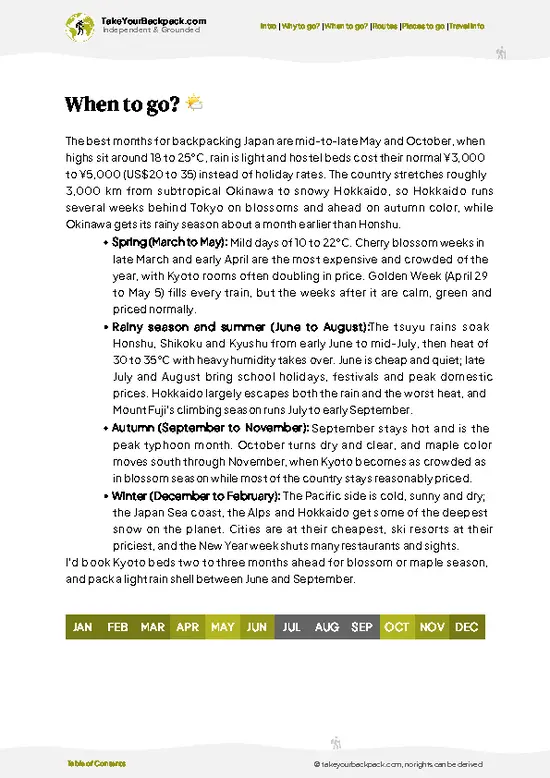
example page 3 from our offline Travel Guide for Japan
example page 4 from our offline Travel Guide for Japan
example page 5 from our offline Travel Guide for Japan
example page 6 from our offline Travel Guide for Japan
example page 7 from our offline Travel Guide for Japan
Loading the map 🌍
CLICK TO FILTER
cities
towns
villages
landmarks
national parks
hikes
beaches
attractions
festivals
regions
SHOW COUNTRY’S BESTSHOW ALL

✨ Why go?
Ranked #7 city in Japan
The unique appeal for travelers

Sapporo is a strategic hub for backpackers navigating Hokkaido. It offers a balance of highlights and activities that cater to various interests, making it a worthy stop on your journey. The city’s walkability means you can explore its vibrant streets without the hassle of public transport, maximizing your time.

When it comes to accommodation, Sapporo boasts a range of hostels that are not only budget-friendly but also foster a social atmosphere, perfect for meeting fellow travelers. The local food scene is a delight, with everything from ramen to fresh seafood that won’t break the bank.

As a basecamp for day trips, Sapporo opens doors to stunning landscapes and outdoor adventures, making it easy to dive into Hokkaido’s natural beauty. Plus, the nightlife is lively enough to keep you entertained … read more 👉
Sapporo is a strategic hub for backpackers navigating Hokkaido. It offers a balance of highlights and activities that cater to various interests, making it a worthy stop on your journey. The city’s walkability means you can explore its vibrant streets without the hassle of public transport, maximizing your time.

When it comes to accommodation, Sapporo boasts a range of hostels that are not only budget-friendly but also foster a social atmosphere, perfect for meeting fellow travelers. The local food scene is a delight, with everything from ramen to fresh seafood that won’t break the bank.

As a basecamp for day trips, Sapporo opens doors to stunning landscapes and outdoor adventures, making it easy to dive into Hokkaido’s natural beauty. Plus, the nightlife is lively enough to keep you entertained after a day of exploration. If you’re looking for a city that combines convenience with character, Sapporo is a solid choice, whether for a quick stop or a longer stay.

💡 HighlightsPlaces and moments you shouldn't skip

  1. Sapporo Clock Tower (Tokeidai) — A tiny wooden building that looks out of place in a modern city; it’s one of Japan’s oldest clock towers and houses a small museum about early Sapporo. It’s short, historic, and a great quick stop to understand the city’s Meiji-era origins.
  2. Odori Park — The green spine through downtown where the Snow Festival sculptures land in winter and outdoor markets, concerts, and food stalls pop up through the year. Walk it end-to-end for city vibes, seasonal flowers, and people-watching with a skyline backdrop.
  3. Sapporo TV Tower — The observation deck gives a clean, classic panoramic view straight down Odori Park and over the city — especially pretty at sunset or when the park is lit for festivals. It’s touristy but useful for getting your bearings (and photos).
… read more 👉
  1. Sapporo Clock Tower (Tokeidai) — A tiny wooden building that looks out of place in a modern city; it’s one of Japan’s oldest clock towers and houses a small museum about early Sapporo. It’s short, historic, and a great quick stop to understand the city’s Meiji-era origins.
  2. Odori Park — The green spine through downtown where the Snow Festival sculptures land in winter and outdoor markets, concerts, and food stalls pop up through the year. Walk it end-to-end for city vibes, seasonal flowers, and people-watching with a skyline backdrop.
  3. Sapporo TV Tower — The observation deck gives a clean, classic panoramic view straight down Odori Park and over the city — especially pretty at sunset or when the park is lit for festivals. It’s touristy but useful for getting your bearings (and photos).
  4. Former Hokkaido Government Office (Aka-Renga / Red Brick) — A stately red-brick building with exhibits on Hokkaido’s development and a pleasant garden courtyard. It’s the best reminder of Sapporo’s colonial-era architecture without leaving the city center.
  5. Hokkaido Shrine & Maruyama Park — A tranquil Shinto shrine set in an old-growth park; great for shrine rituals, seasonal cherry blossoms, and a calming contrast to busy downtown. The adjacent Maruyama area also has cafes and a small zoo if you’re poking around.
  6. Nijo Market — A down-to-earth fish market where you can eat ultra-fresh seafood bowls (crab, sea urchin, salmon roe) right at the stalls. It’s lively, local, and a perfect breakfast or early-lunch stop for seafood lovers.
  7. Sapporo Beer Museum & Beer Garden — Learn how Sapporo Beer shaped the city, then sample brews and local grilled lamb (Genghis Khan) in the attached beer garden. The museum is small but informative and the tasting + meal combo is a classic Sapporo experience.
  8. Hokkaido University Campus — A leafy, university campus in the middle of the city with historic brick buildings and a famous ginkgo avenue that turns gold in autumn. It’s relaxed to stroll, and the campus feel gives a very local, lived-in side of Sapporo.
  9. Mount Moiwa Ropeway & Observatory — A short trip from the city center to a mountain that rewards you with one of Sapporo’s best night views; take the ropeway and then walk the trails if you’ve got time. The sunset-to-night transition from the summit is especially memorable.
  10. Shiroi Koibito Park — A quirky confectionery theme park and former chocolate factory where you can watch cookie production, try sweets, and wander charming gardens and displays. It’s touristy but uniquely Sapporo — good for families and anyone who likes food-related kitsch with substance.
A few excellent day-trip options nearby: Otaru (canal, glass workshops, sushi) — my personal favorite; Jozankei Onsen for hot springs in a mountain river valley; and Yoichi/Nikka Whisky Distillery for a distillery tour.
Spotted a mistake or missing something? Contact us.

Things to do in Sapporo

Ratings based on Tripadvisor reviews. When you book through this link, you support our work at no extra cost to you.

🏘️ NeighborhoodsHow different areas shape the experience

Sapporo is a city that blends urban energy with natural beauty, making it a fantastic base for backpackers. Here’s how the neighborhoods stack up:

Susukino: This is Sapporo’s nightlife hub. Expect a lively atmosphere with countless izakayas and bars. It’s walkable, so you can easily hop from one spot to another. Prices can vary; budget options are available, but splurging on a late-night ramen is worth it. Ideal for short stays where you want to dive into the local scene.

Odori Park: The heart of Sapporo, this area offers a more relaxed vibe. The park itself is perfect for a leisurely stroll or a picnic. It’s centrally located, making transport easy. Accommodations range from budget hostels to mid-range hotels. Great for both short and longer stays, especially if you enjoy a quieter environment. … read more 👉
Sapporo is a city that blends urban energy with natural beauty, making it a fantastic base for backpackers. Here’s how the neighborhoods stack up:

Susukino: This is Sapporo’s nightlife hub. Expect a lively atmosphere with countless izakayas and bars. It’s walkable, so you can easily hop from one spot to another. Prices can vary; budget options are available, but splurging on a late-night ramen is worth it. Ideal for short stays where you want to dive into the local scene.

Odori Park: The heart of Sapporo, this area offers a more relaxed vibe. The park itself is perfect for a leisurely stroll or a picnic. It’s centrally located, making transport easy. Accommodations range from budget hostels to mid-range hotels. Great for both short and longer stays, especially if you enjoy a quieter environment.

Maruyama: A bit more residential, this area is close to nature. The Maruyama Park and Zoo are nearby, making it ideal for those who love the outdoors. It’s less bustling than Susukino, offering a peaceful retreat. Transport is accessible, but you might need to plan for longer commutes. Best for longer stays if you want a balance of city and nature.

Tanukikoji Shopping Arcade: This covered shopping street is a must-visit for foodies and shoppers alike. The vibe is energetic, with plenty of street food options. It’s very walkable, and you can easily spend hours exploring. Budget-friendly eateries abound, making it perfect for short visits focused on local cuisine.

⌛️ 1 daySeeing the highlights in 24 hours

Sapporo, the capital of Hokkaido, is a city that marries urban life with nature. Known for its beer, ramen, and the annual Snow Festival, it’s a place where you can savor local flavors while soaking in the vibrant culture.

Start your day in the bustling Susukino district, famous for its nightlife but equally charming in the morning. Grab a bowl of miso ramen at a local shop like Ramen Shingen. The rich, savory broth will kickstart your day. After breakfast, stroll through Odori Park, where you can enjoy the seasonal flowers and the iconic Sapporo TV Tower. It’s a perfect spot to soak in the city’s atmosphere.

As the afternoon rolls in, head over to the historical village of Hokkaido, a bit off the typical tourist path. This open-air museum showcases buildings from the Meiji and Taisho eras, … read more 👉
Sapporo, the capital of Hokkaido, is a city that marries urban life with nature. Known for its beer, ramen, and the annual Snow Festival, it’s a place where you can savor local flavors while soaking in the vibrant culture.

Start your day in the bustling Susukino district, famous for its nightlife but equally charming in the morning. Grab a bowl of miso ramen at a local shop like Ramen Shingen. The rich, savory broth will kickstart your day. After breakfast, stroll through Odori Park, where you can enjoy the seasonal flowers and the iconic Sapporo TV Tower. It’s a perfect spot to soak in the city’s atmosphere.

As the afternoon rolls in, head over to the historical village of Hokkaido, a bit off the typical tourist path. This open-air museum showcases buildings from the Meiji and Taisho eras, giving you a glimpse into the region’s past. Walking through the village feels like stepping back in time, and it’s a refreshing contrast to the modern city.

For the evening, make your way to the Sapporo Beer Museum. It’s not just about the beer; the building itself is a piece of history. After a tour, enjoy a tasting session paired with Genghis Khan (grilled lamb), a local specialty.

End your day in the Maruyama area, where you can unwind at a cozy izakaya. The friendly atmosphere and local brews will cap off your Sapporo adventure perfectly. Each choice you make today—whether it’s a bowl of ramen or a stroll through history—adds layers to your experience, making it uniquely yours.

🌤️ When to go?Weather, crowds, and seasonal trade-offs

  • Topic: Weather and Temperature — Sapporo’s climate swings dramatically. Winters plunge to -7°C (19°F), perfect for snow lovers but brutal for casual backpackers. Summers hover around 22°C (72°F), offering mild, comfortable conditions without the oppressive heat of southern Japan.
  • Topic: Daylight Hours — In summer, expect up to 15 hours of daylight, maximizing your exploration window. Winter days shrink to about 8 hours, limiting outdoor activities but enhancing the cozy, illuminated city vibe.
  • Topic: Crowds — Winter draws ski and snow festival crowds, especially in February. Summer sees fewer tourists, making it ideal for those who want space to roam without bumping elbows.
  • Topic: Seasonal Activities — Winter’s Snow Festival is a world-class spectacle but demands early booking and higher
… read more 👉
  • Topic: Weather and Temperature — Sapporo’s climate swings dramatically. Winters plunge to -7°C (19°F), perfect for snow lovers but brutal for casual backpackers. Summers hover around 22°C (72°F), offering mild, comfortable conditions without the oppressive heat of southern Japan.
  • Topic: Daylight Hours — In summer, expect up to 15 hours of daylight, maximizing your exploration window. Winter days shrink to about 8 hours, limiting outdoor activities but enhancing the cozy, illuminated city vibe.
  • Topic: Crowds — Winter draws ski and snow festival crowds, especially in February. Summer sees fewer tourists, making it ideal for those who want space to roam without bumping elbows.
  • Topic: Seasonal Activities — Winter’s Snow Festival is a world-class spectacle but demands early booking and higher prices. Summer offers hiking, beer gardens, and flower fields, a quieter but equally rewarding scene.
  • Topic: Price Fluctuations — Winter accommodations spike due to festival demand. Summer and shoulder seasons (late spring, early autumn) offer better deals and more flexible bookings.
Pro-tip: Aim for late spring or early autumn to balance weather, crowd size, and cost—this is when Sapporo reveals its authentic rhythm without the extremes.


source: climatestotravel.comJANJanuary: good for travelingFEBFebruary: fair for travelingMARMarch: good for travelingAPRApril: highly recommended for travelingMAYMay: excellent for travelingJUNJune: highly recommended for travelingJULJuly: highly recommended for travelingAUGAugust: highly recommended for travelingSEPSeptember: excellent for travelingOCTOctober: highly recommended for travelingNOVNovember: good for travelingDECDecember: fair for traveling
when-to-go

✈️ The backpacker research shortcutJapan Travel Guide

An offline-friendly backpacking guide with optimized travel routes, ranked highlights, transport advice, and the best areas to stay.
example page 0 from our offline Travel Guide for Japan
example page 1 from our offline Travel Guide for Japan
example page 2 from our offline Travel Guide for Japan
example page 3 from our offline Travel Guide for Japan
example page 4 from our offline Travel Guide for Japan
example page 5 from our offline Travel Guide for Japan
example page 6 from our offline Travel Guide for Japan
example page 7 from our offline Travel Guide for Japan
The digital guide (475 pages) contains:
✅ 139 highlights, ranked by travel appeal
✅ Optimized 7, 14 & 21-day travel routes
✅ Cities, national parks, landmarks, beaches
✅ How to get around
✅ Offline-friendly for travel without Wi-Fi
👉 Click to see all 30+ guide features

📅 Plan smarter in minutes, not weeks
✅ Month by month travel advice
✅ Festivals & national holidays
✅ Budget expectations

🗺️ Go to the right places, skip the overrated ones
✅ Honest pros & cons of destinations
✅ Top hikes, parks & viewpoints
✅ Lesser-known places most travelers miss
✅ Clear “worth it vs skip it” guidance

🛏️ Travel smoothly without rookie mistakes
✅ Best areas to stay
✅ Transport systems explained simply
✅ Common scams & safety advice
✅ SIM cards, money & practical tips

🌍 Understand the country, not just visit it
✅ Culture & traditions
✅ 52 Essential phrases & customs
✅ Festivals worth planning around
✅ Traveler-friendly historical context
✅ Insights that make places more meaningful

📱 Built for real travel conditions
✅ Fully downloadable PDF
✅ Works completely offline
✅ Optimized for phone use
✅ Useful in remote areas & buses
✅ Everything in one place
Stop searching, start planning
Get instant access to your full guide. 30‑day money-back guarantee.
+ Add another guide for just

By proceeding you agree to our terms.
Sent to your inbox immediately after payment • 100% Secure Checkout
Best Backpacking Travel Advisor 2025 tourism awardBest Backpacking
Travel Advisor
2025
What others say about Take Your Backpack Guides:
⭐⭐⭐⭐⭐
Fantastic, amazing amount of information!
⭐⭐⭐⭐⭐
My goodness this is amazing, it's what I've been looking for hats off too you!
⭐⭐⭐⭐⭐
I think this is absolutely BRILLIANT
⭐⭐⭐⭐
Very complete and informative. It's still missing places, but I gotta to commend you
⭐⭐⭐⭐⭐
This is truly amazing, thank you, can't wait to explore it with my kids!
⭐⭐⭐⭐⭐
Awesome resource, thank you!
⭐⭐⭐⭐⭐
This is amazing! Can't wait to explore the ones I haven't seen
⭐⭐⭐⭐
I love this! Well done, great idea.
⭐⭐⭐⭐⭐
Thanks for taking the time to make this gem!
⭐⭐⭐⭐⭐
This might be the best website I've ever seen.
⭐⭐⭐⭐⭐
Congratulations, and thank you so much for your work; it's incredibly valuable.
⭐⭐⭐⭐
In all seriousness I think you did a great job pointing out the important spots
⭐⭐⭐⭐⭐
10/10 very good
⭐⭐⭐⭐⭐
As someone who's only just starting to visit regularly this is awesome, thank you.
⭐⭐⭐⭐
Thank you very much! I'm going to visit my dad, it's going to be very useful!
⭐⭐⭐⭐⭐
This is really cool! We'll be travelling for the first time and this definitely come in handy.
⭐⭐⭐⭐⭐
You are now our minister of culture, congratulations 👨‍💼
⭐⭐⭐⭐⭐
Just wanted to tell you that this is a pearl! Going to follow your recommendations.
⭐⭐⭐⭐⭐
This is so cool. I'll definitely be using the resource for my travels soon.
⭐⭐⭐⭐⭐
This is very impressive! Good work.
⭐⭐⭐⭐⭐
This is an amazing and informative site. Very well done!

🛏️ Where to stay?Best areas to stay in Japan

In Sapporo, the real backpacker sweet spot is the Susukino district. It’s the city’s nightlife hub, buzzing with energy but also surprisingly safe, thanks to a strong police presence and well-lit streets. Here, you’ll find a cluster of hostels and guesthouses catering to solo travelers and budget adventurers. The vibe is social without being overwhelming—think lively izakayas and street food stalls where striking up a conversation is as natural as ordering a bowl of miso ramen.

Compared to Odori, which is more business and tourist-focused with pricier accommodations, Susukino offers a better … read more 👉
In Sapporo, the real backpacker sweet spot is the Susukino district. It’s the city’s nightlife hub, buzzing with energy but also surprisingly safe, thanks to a strong police presence and well-lit streets. Here, you’ll find a cluster of hostels and guesthouses catering to solo travelers and budget adventurers. The vibe is social without being overwhelming—think lively izakayas and street food stalls where striking up a conversation is as natural as ordering a bowl of miso ramen.

Compared to Odori, which is more business and tourist-focused with pricier accommodations, Susukino offers a better balance of affordability and atmosphere. It’s also more walkable, with easy access to subway lines that connect you to the rest of the city. Meanwhile, areas like Sapporo Station are convenient but lean toward sterile, corporate energy, less conducive to meeting fellow backpackers.

Choosing Susukino means trading a bit of polished comfort for a more authentic, interactive experience. You’re investing time in social connection and local flavor, while keeping your budget intact. It’s a strategic move that turns your stay into a dynamic part of the adventure, not just a place to crash.

🚌 Getting aroundHow to get from A to B

Sapporo moves with a surprising blend of precision and laid-back ease. The city’s pulse is set by punctual trains and buses, yet the atmosphere never feels rushed. Here, schedules are respected but not worshipped—there’s room for a stroll, a coffee break, or a detour to a local market without the pressure of a ticking clock. This balance means your travel choices in Sapporo aren’t just about getting from A to B; they’re about deciding how much time, money, and comfort you want to invest in the experience itself. Understanding this trade-off is your key to mastering the city’s flow.
  • Subway (Sapporo Municipal Subway): Runs from 6:00 AM to midnight, with trains every 5-10 minutes during peak hours. Tickets cost around 210-350 yen depending on distance. It’s fast, reliable, and clean—ideal for
… read more 👉
Sapporo moves with a surprising blend of precision and laid-back ease. The city’s pulse is set by punctual trains and buses, yet the atmosphere never feels rushed. Here, schedules are respected but not worshipped—there’s room for a stroll, a coffee break, or a detour to a local market without the pressure of a ticking clock. This balance means your travel choices in Sapporo aren’t just about getting from A to B; they’re about deciding how much time, money, and comfort you want to invest in the experience itself. Understanding this trade-off is your key to mastering the city’s flow.
  • Subway (Sapporo Municipal Subway): Runs from 6:00 AM to midnight, with trains every 5-10 minutes during peak hours. Tickets cost around 210-350 yen depending on distance. It’s fast, reliable, and clean—ideal for covering longer distances quickly without breaking the bank. Comfort is decent, but expect some crowding during rush hour.
  • JR Trains (JR Hokkaido Lines): Connects Sapporo with surrounding areas and suburbs. Prices vary widely; a short trip within the city costs about 200-300 yen. Trains run roughly every 15-30 minutes. They’re slower than the subway but offer more space and a chance to see the outskirts. Great if you want to stretch your legs and enjoy a less cramped ride.
  • City Buses: Cover routes that subways and trains don’t reach, running from 6:00 AM to around 11:00 PM. Fares are flat at 210 yen per ride. Buses are slower and less predictable due to traffic, but they’re essential for budget travelers aiming to explore neighborhoods off the beaten path. Comfort varies; some buses are modern, others a bit worn.
  • Walking: Sapporo’s grid layout makes walking straightforward and surprisingly efficient for short distances. It costs nothing and lets you soak in the city’s character at your own pace. Ideal for exploring downtown, Odori Park, and the Susukino district. The trade-off is time and energy, but the payoff is a richer, more tactile experience.
  • Bicycle Rentals: Available seasonally, typically from spring to fall. Renting a bike costs about 500-1000 yen per day. It’s a sweet spot between speed and immersion, letting you cover more ground than walking while staying connected to the city’s rhythm. Not the best choice in winter, but a clever move for budget travelers in warmer months.

👛 Costs (as of 23 September 2026)Money, prices, and spending tips

Backpacking in Sapporo, Japan, comes with a clear set of trade-offs between time, money, and comfort. Knowing the average daily costs helps you decide where to lean—whether you want to save cash or upgrade your experience.
  • Dorm Accommodation (High Season): Expect to pay around $25 to $35 per night during peak travel months (summer and winter festival seasons). Hostels fill up fast, and prices reflect demand, so booking early is key.
  • Dorm Accommodation (Off-Season): In quieter months, prices drop to about $15 to $25. You’ll find more availability and sometimes better facilities for less, but the city’s vibe shifts with fewer tourists.
  • Meals: Budget around $10 to $20 daily if you stick to convenience stores, street food, and casual eateries. Sapporo’s famous miso ramen or fresh seafood bowls
… read more 👉
Backpacking in Sapporo, Japan, comes with a clear set of trade-offs between time, money, and comfort. Knowing the average daily costs helps you decide where to lean—whether you want to save cash or upgrade your experience.
  • Dorm Accommodation (High Season): Expect to pay around $25 to $35 per night during peak travel months (summer and winter festival seasons). Hostels fill up fast, and prices reflect demand, so booking early is key.
  • Dorm Accommodation (Off-Season): In quieter months, prices drop to about $15 to $25. You’ll find more availability and sometimes better facilities for less, but the city’s vibe shifts with fewer tourists.
  • Meals: Budget around $10 to $20 daily if you stick to convenience stores, street food, and casual eateries. Sapporo’s famous miso ramen or fresh seafood bowls won’t break the bank if you avoid tourist traps.
  • Local Transport: Single bus or subway rides cost about $1.50 to $2.50 each. If you’re hopping around the city, individual fares add up quickly.
  • City Transport Pass: A one-day subway and bus pass runs about $6 to $8, offering unlimited rides. This is a smart buy if you plan multiple stops or want to save time navigating the city efficiently.
  • Basic Activities/Entry Fees: Museums, parks, and attractions typically charge between $3 and $10. Some iconic spots, like the Sapporo Beer Museum or historical villages, fall into this range.
  • Miscellaneous Expenses: Budget $5 to $10 for small extras—snacks, bottled drinks, or occasional convenience store treats. These add up but keep your energy up for exploring.

Total daily costs for backpacking in Sapporo generally fall between $50 and $80, depending on your accommodation choice and how much you move around. This range balances comfort and economy without sacrificing the experience. Knowing these numbers lets you play the system smart—spend where it counts, save where it doesn’t, and keep your trip both memorable and manageable.


source: sapporo.travel
⚠️ Prices can change and everyone travels differently, so take this as a rough guide. Hope it helps you plan your adventure!

🚌 Day tripsShort trips worth adding

Sapporo is a fantastic launchpad for day trips that blend adventure with cultural immersion. Here are some standout options that pack a punch without draining your wallet.

Otaru
Just a 30-minute train ride from Sapporo, Otaru is a charming port city known for its historic canal and glassworks. Stroll along the waterfront, where the old warehouses have been transformed into shops and cafes. Don’t miss the chance to sample fresh sushi at one of the local markets—it’s a culinary experience that’s worth every yen. Budget around 2,000 yen for transport and a meal. The best time to visit is during winter when the city is draped in snow, creating a picturesque scene. First-timers often overlook the glass-blowing workshops; they’re a unique way to engage with local artisans.


Noboribetsu
About … read more 👉
Sapporo is a fantastic launchpad for day trips that blend adventure with cultural immersion. Here are some standout options that pack a punch without draining your wallet.

Otaru
Just a 30-minute train ride from Sapporo, Otaru is a charming port city known for its historic canal and glassworks. Stroll along the waterfront, where the old warehouses have been transformed into shops and cafes. Don’t miss the chance to sample fresh sushi at one of the local markets—it’s a culinary experience that’s worth every yen. Budget around 2,000 yen for transport and a meal. The best time to visit is during winter when the city is draped in snow, creating a picturesque scene. First-timers often overlook the glass-blowing workshops; they’re a unique way to engage with local artisans.


Noboribetsu
About an hour and a half from Sapporo, Noboribetsu is famous for its hot springs and Hell Valley (Jigokudani). The sulfuric steam rising from the earth is a sight to behold. After exploring the dramatic landscapes, treat yourself to a soak in one of the many onsen. Expect to spend around 3,000 yen for transport and entry fees. Spring and autumn are ideal for fewer crowds and stunning foliage. A common mistake is to rush through; take your time to enjoy the various trails and viewpoints.


Asahikawa
Roughly an hour and a half away, Asahikawa is home to the renowned Asahiyama Zoo. This isn’t just any zoo; it’s designed to let you see animals in action, like the famous penguin walk. The entry fee is around 1,000 yen, plus transport costs. Winter is magical here, with snow-covered landscapes enhancing the experience. Many visitors underestimate the time needed to explore the zoo fully; plan for at least half a day.
👉 Explore Asahikawa

Furano
A two-hour journey will take you to Furano, known for its lavender fields in summer and ski slopes in winter. The rolling hills are a feast for the eyes, and you can enjoy local cheese and wine at nearby farms. Budget about 4,000 yen for transport and tastings. Summer is peak season, but winter offers a different kind of beauty. First-timers often miss the chance to visit the local farms; they provide a genuine taste of Hokkaido’s agricultural heritage.

🍲 FoodWhat to Eat & Drink

In Sapporo, food is a celebration of local flavors and seasonal ingredients. You can’t miss ramen, especially the rich, miso-based version that warms you from the inside out. The scent of simmering broth wafts through the air, drawing you into cozy shops where slurping is not just accepted, but encouraged.

Don’t overlook sushi made with fresh Hokkaido seafood. The taste is a revelation, with each piece melting in your mouth. Street food stalls serve up grilled seafood skewers and Genghis Khan, a lamb dish that’s grilled right before your eyes, filling the air with a smoky aroma that beckons you closer.

For drinks, Sapporo is famous for its beer—try a local brew while mingling with friendly locals at a casual izakaya. The drinking culture here is relaxed; it’s common to share a table and … read more 👉
In Sapporo, food is a celebration of local flavors and seasonal ingredients. You can’t miss ramen, especially the rich, miso-based version that warms you from the inside out. The scent of simmering broth wafts through the air, drawing you into cozy shops where slurping is not just accepted, but encouraged.

Don’t overlook sushi made with fresh Hokkaido seafood. The taste is a revelation, with each piece melting in your mouth. Street food stalls serve up grilled seafood skewers and Genghis Khan, a lamb dish that’s grilled right before your eyes, filling the air with a smoky aroma that beckons you closer.

For drinks, Sapporo is famous for its beer—try a local brew while mingling with friendly locals at a casual izakaya. The drinking culture here is relaxed; it’s common to share a table and strike up conversations with fellow travelers or residents.

Remember, it’s polite to say “kanpai” before taking that first sip. Embrace the local customs, and you’ll find that every meal is an experience, not just sustenance.

🛡️ SafetyStaying Safe: What Travelers Should Know

Sapporo is generally safe, but a few areas deserve your attention. The entertainment districts, like Susukino, can get lively at night. Stay aware of your surroundings, especially if you’re solo. Stick to well-lit streets and avoid alleyways after dark.

Scams are rare, but watch for overly friendly locals offering unsolicited help. They might lead you to shops with inflated prices. If someone seems too eager, politely decline and move on.

Everyday annoyances include the occasional language barrier. Many signs are in Japanese, so having a translation app handy can smooth out any confusion. Public transport is efficient, but during peak hours, it can get crowded. Keep your belongings secure and stay alert. Embrace the experience, and you’ll navigate Sapporo like a pro.

FAQFrequently asked questions about Sapporo

3 to 4 days are sufficient to explore Sapporo's main attractions, including Odori Park, the Sapporo Beer Museum, and the historic village. This allows time for day trips to nearby spots like Otaru or the hot springs in Jozankei. Winter visitors should allocate extra days for the Sapporo Snow Festival in February.
Yes, Sapporo is safe for solo backpackers. The city has low crime rates and a well-maintained public transport system, making it easy to navigate alone. Basic precautions like avoiding poorly lit areas at night are advised, as in any urban setting.
Sapporo is known for its annual Snow Festival featuring massive ice sculptures, its local beer from Sapporo Brewery, and fresh seafood markets like Nijo Market. It is also famous for its ramen, particularly miso ramen, and proximity to ski resorts in winter.
⚠️ Things can change over time, so always validate details locally before you go.

Other Japanese cities near Sapporo

Explore more nearby:

  • Asahikawa—zoo, ramen village, winter festival| 113 km away
  • Hakodate—night views, historic port, morning market| 153 km away
  • Aomori—Nebuta floats, apple orchards, northern bay| 254 km away

💡 Not sure where to go next?
Create a personalized itinerary for Japan including Sapporo and the places that fit your trip.

Generate my itinerary

👉 Discover all cities

Or checkout all Japan has to offer (think cities, towns, villages, national parks, hikes, beaches, festivals)
Country photo of Japan

We 💚 feedbackKey takeaways before you go

Sapporo is a feast for the senses, especially if you’re a foodie. The local ramen and fresh seafood are game-changers. But here’s the catch: winter can be brutal. If you’re not a fan of snow and cold, you might find it challenging to explore. Embrace the chill, though, and you’ll discover a vibrant city that rewards those who venture out. It’s all about balancing comfort with unforgettable experiences.

✈️ When did I visit Japan?
As part of my 1.5 year travel around the world trip, I visited Japan in August 2015.

✍️ Help improve this page!
The information on this page is based on my own backpacking experience in Japan, supplemented with up-to-date research and feedback from other travelers. Travel details can change, so if you notice anything outdated or incomplete, feel free to let me know.


🙋‍♂️ Give feedback

👋 Meet the founderWho’s Behind Take Your Backpack?

Johan, backpacker and founder of TakeYourBackpackHi, I’m Johan (Netherlands 🇳🇱), the creator of TakeYourBackpack. Over the past 3 decades, I’ve backpacked through 90+ countries across six continents, gaining extensive experience with independent travel, long-term trips, and overland routes.

This site is built on a combination of firsthand travel experience and carefully curated insights from other backpackers. Many guides are based on places I’ve personally visited, while others bring together tips, observations, and practical advice shared by trusted travelers I’ve met along the way.

The goal is to provide realistic, experience-driven guidance — not generic itineraries — so you can explore destinations with better context, clearer expectations, and more confidence.