
×

Japan🇯🇵 | landmarksTottori Sand Duneswind-shaped dunes, coastal desert, camel rides | things to do and best time to go

Explore Shrines and Temples of NikkoExplore Shirakawa-go

Backpacking in Tottori Sand Dunes
👀 For curious travelersunique site ranked #9
By Johan Kruseman 🇳🇱 | Updated July 16, 2026

Most people online sell Tottori Sand Dunes as “Japan’s desert,” but here’s the twist: it’s small enough that you can walk end-to-end in under an hour and still feel your calves burn like you’re on a legit expedition. You’ll find it on the Sea of Japan coast in Tottori Prefecture, western Honshu. For backpackers, it’s a weird, memorable detour: wind-sculpted sand, ocean views, and that “wait, this is Japan?” brain glitch. It’s cheap once you’re there, but getting there can be a slow, slightly pricey train slog. Day-trip crowds cluster near the camels and sandboard rentals; walk ten minutes and it’s just you, the wind, and gulls. Photos look dramatic, but the real payoff is the silence and the scale, not the Instagram.

Discover everything you want to know in the 📖 Japan Travel Guide.


Get your Japan guide
140 ranked highlights, routes & tips, works offline (482 pages)
Loading the map 🌍
CLICK TO FILTER
cities
towns
villages
landmarks
national parks
hikes
beaches
attractions
festivals
regions
SHOW COUNTRY’S BESTSHOW ALL

✨ Why go?
Ranked #9 unique site in Japan
The unique appeal for travelers

The Tottori Sand Dunes are a wild card in Japan’s travel deck. Sure, they’re not as hyped as Kyoto’s temples or Tokyo’s neon, but that’s part of their charm. You’ll dodge the crowds that swarm other spots, and the cost is refreshingly low—entry is free, and you can explore without breaking the bank.

What makes these dunes special? They stretch over 16 kilometers, offering a unique landscape that feels like a desert in the heart of Japan. You can hike, sandboard, or simply soak in the vastness. It’s a chance to connect with nature in a way that’s often lost in urban chaos.

Plus, they fit perfectly into a broader route. If you’re traveling along the Sea of Japan, it’s a natural stop between cities like Osaka and Kanazawa. The dunes are a reminder that sometimes, the most unexpected places hold the real magic.
Want to include Tottori Sand Dunes in your Japan route?
Create a personalized Japan itinerary that includes Tottori Sand Dunes and the places that fit your trip — based on your travel style, budget, and available time. Get your route in seconds.

Generate my trip

💡 HighlightsDon't-miss highlights and experiences

  • Vast dune expanse and walking the ridges: The main draw — a surprising stretch of sand that feels almost desert-like right next to the Sea of Japan. Walking the ridgelines gives you a real sense of scale (and a decent leg workout). Bring sturdy shoes, water, and be ready for wind-blown sand — it’s part of the fun.
  • Sunset over the Sea of Japan: Climbing to the top as the sun drops behind the water is quietly dramatic — long shadows, orange light on the ripples, and far fewer people. Perfect for photos and slow, less touristy moments. (Personal favorite.)
  • Sand Museum (Suna Bijutsukan): A short walk from the dunes, this museum showcases massive, intricately carved sand sculptures with a different international theme each year. They’re fragile-looking but astonishingly detailed — great when
read more 👉
  • Vast dune expanse and walking the ridges: The main draw — a surprising stretch of sand that feels almost desert-like right next to the Sea of Japan. Walking the ridgelines gives you a real sense of scale (and a decent leg workout). Bring sturdy shoes, water, and be ready for wind-blown sand — it’s part of the fun.
  • Sunset over the Sea of Japan: Climbing to the top as the sun drops behind the water is quietly dramatic — long shadows, orange light on the ripples, and far fewer people. Perfect for photos and slow, less touristy moments. (Personal favorite.)
  • Sand Museum (Suna Bijutsukan): A short walk from the dunes, this museum showcases massive, intricately carved sand sculptures with a different international theme each year. They’re fragile-looking but astonishingly detailed — great when you want artistry without more sand in your shoes.
  • Sandboarding and sledding: If you want to do more than look, try sliding down the slopes. Local vendors rent boards and sleds; it’s fun, fast, and hilariously sandy. Not technical snowboarding — more joyful gravity play.
  • Camel rides: Unexpectedly charming — you can take a short camel ride along the dunes for a novelty photo op and a very different perspective. It’s touristy but strangely in keeping with the landscape.
  • Tandem paragliding and small aircraft views: For a legit birds-eye look, seasonal operators offer tandem paragliding or light-plane flights over the coastline and dunes. If you’re not afraid of heights, the aerial patterns and the shoreline contrast are worth splurging on.
  • Geology, wildlife and wind-sculpted features: The dunes are a living landscape: migrating sand, wind-made ripples, and pockets of vegetation and shore birds. There’s also a small visitor/interpretation center that explains how the dunes formed and why conservation matters — good context for the wandering.
Spotted a mistake or missing something? Contact us.

Things to do near Tottori Sand Dunes

Ratings based on Tripadvisor reviews. When you book through this link, you support our work at no extra cost to you.

🌤️ When to go?Seasonal considerations and timing


  • Weather: The dunes are exposed, so wind can whip up sand into your eyes, especially in spring and autumn. Summer is hot and humid, with temps often hitting 30°C (86°F), while winter can be chilly, dropping to around 5°C (41°F).

  • Temperature: Spring (March-May) offers mild 15-22°C (59-72°F) days—comfortable for hiking without sweating buckets. Autumn (September-November) is similar but with cooler evenings, so pack layers.

  • Daylight Hours: Longer days in late spring and early autumn mean more time to explore. Winter days are short, cutting your window to soak in the vastness.

  • Crowds: Peak tourist season hits in summer and Golden Week (late April to early May), turning the dunes into a busy photo op zone. Off-peak spring and autumn mornings are your best bet for solitude.

  • Seasonal Activities:
read more 👉

  • Weather: The dunes are exposed, so wind can whip up sand into your eyes, especially in spring and autumn. Summer is hot and humid, with temps often hitting 30°C (86°F), while winter can be chilly, dropping to around 5°C (41°F).

  • Temperature: Spring (March-May) offers mild 15-22°C (59-72°F) days—comfortable for hiking without sweating buckets. Autumn (September-November) is similar but with cooler evenings, so pack layers.

  • Daylight Hours: Longer days in late spring and early autumn mean more time to explore. Winter days are short, cutting your window to soak in the vastness.

  • Crowds: Peak tourist season hits in summer and Golden Week (late April to early May), turning the dunes into a busy photo op zone. Off-peak spring and autumn mornings are your best bet for solitude.

  • Seasonal Activities: Sandboarding and camel rides peak in summer but come with crowds and higher prices. Spring and autumn offer quieter trekking and better light for photography.

  • Price Fluctuations: Accommodation and transport spike during Golden Week and summer holidays. Visiting outside these times saves cash and hassle.


Pro-tip: Aim for early autumn weekdays—cool air, fewer people, and golden light that turns the dunes into a living canvas without the Instagram mob.


source: climatestotravel.comJANJanuary: fair for travelingFEBFebruary: fair for travelingMARMarch: highly recommended for travelingAPRApril: highly recommended for travelingMAYMay: good for travelingJUNJune: fair for travelingJULJuly: below average for travelingAUGAugust: below average for travelingSEPSeptember: highly recommended for travelingOCTOctober: excellent for travelingNOVNovember: highly recommended for travelingDECDecember: fair for traveling
japan-unique-site-tottori-sand-dunes
© Google |

✈️ The backpacker research shortcutJapan Travel Guide

An offline-friendly backpacking guide with optimized travel routes, ranked highlights, transport advice, and the best areas to stay.
example page 0 from our offline Travel Guide for Japan
example page 1 from our offline Travel Guide for Japan
example page 2 from our offline Travel Guide for Japan
example page 3 from our offline Travel Guide for Japan
example page 4 from our offline Travel Guide for Japan
example page 5 from our offline Travel Guide for Japan
example page 6 from our offline Travel Guide for Japan
example page 7 from our offline Travel Guide for Japan
The digital guide (482 pages) contains:
140 highlights, ranked by travel appeal
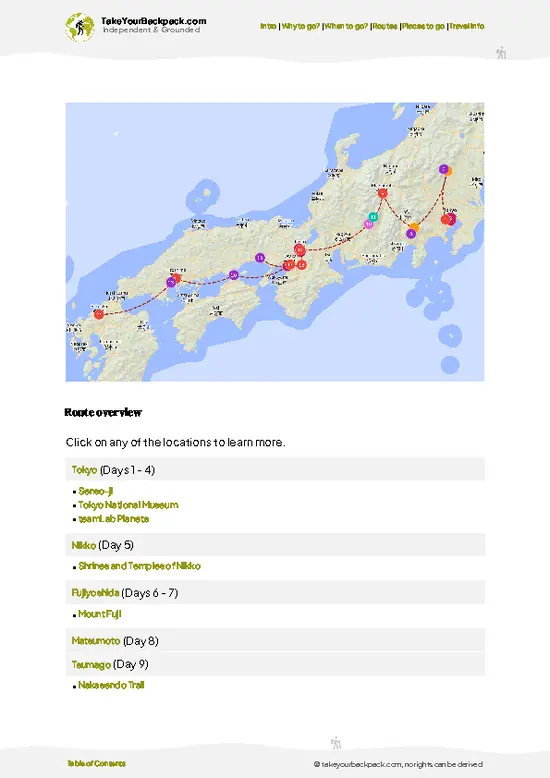
Optimized 7, 14 & 21-day travel routes
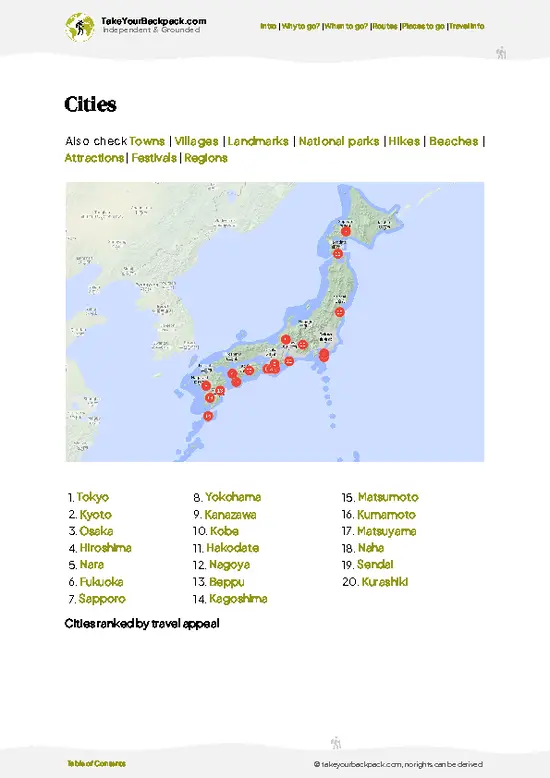
Cities, national parks, landmarks, beaches
How to get around
Offline-friendly for travel without Wi-Fi
👉 Click to see all 30+ guide features

📅 Plan smarter in minutes, not weeks
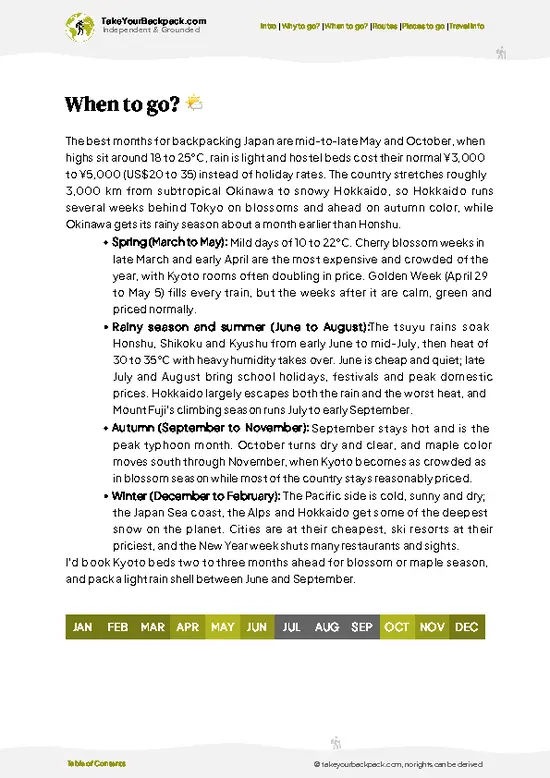
Month by month travel advice
Festivals & national holidays
Budget expectations

🗺️ Go to the right places, skip the overrated ones
Honest pros & cons of destinations
Top hikes, parks & viewpoints
Lesser-known places most travelers miss
Clear “worth it vs skip it” guidance

🛏️ Travel smoothly without rookie mistakes
Best areas to stay
Transport systems explained simply
Common scams & safety advice
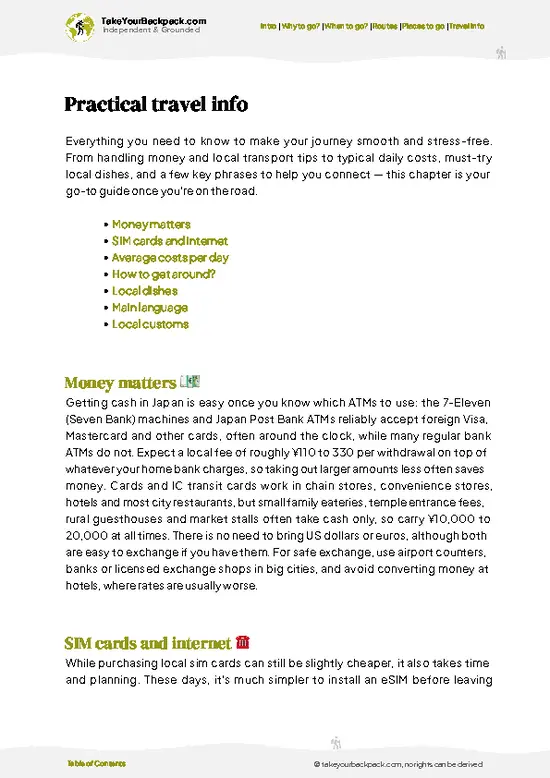
SIM cards, money & practical tips

🌍 Understand the country, not just visit it
Culture & traditions
52 Essential phrases & customs
Festivals worth planning around
Traveler-friendly historical context
Insights that make places more meaningful

📱 Built for real travel conditions
Fully downloadable PDF
Works completely offline
Optimized for phone use
Useful in remote areas & buses
Everything in one place
Save weeks of stressful planning
Get instant access to your full guide. 30‑day money-back guarantee.


By proceeding you agree to our terms.
Sent to your inbox immediately after payment • 100% Secure Checkout
Best Backpacking Travel Advisor 2025 tourism awardBest Backpacking
Travel Advisor
2025
What others say about Take Your Backpack Guides:
⭐⭐⭐⭐⭐
Fantastic, amazing amount of information!
⭐⭐⭐⭐⭐
My goodness this is amazing, it's what I've been looking for hats off too you!
⭐⭐⭐⭐⭐
I think this is absolutely BRILLIANT
⭐⭐⭐⭐
Very complete and informative. It's still missing places, but I gotta to commend you
⭐⭐⭐⭐⭐
This is truly amazing, thank you, can't wait to explore it with my kids!
⭐⭐⭐⭐⭐
Awesome resource, thank you!
⭐⭐⭐⭐⭐
This is amazing! Can't wait to explore the ones I haven't seen
⭐⭐⭐⭐
I love this! Well done, great idea.
⭐⭐⭐⭐⭐
Thanks for taking the time to make this gem!
⭐⭐⭐⭐⭐
This might be the best website I've ever seen.
⭐⭐⭐⭐⭐
Congratulations, and thank you so much for your work; it's incredibly valuable.
⭐⭐⭐⭐
In all seriousness I think you did a great job pointing out the important spots
⭐⭐⭐⭐⭐
10/10 very good
⭐⭐⭐⭐⭐
As someone who's only just starting to visit regularly this is awesome, thank you.
⭐⭐⭐⭐
Thank you very much! I'm going to visit my dad, it's going to be very useful!
⭐⭐⭐⭐⭐
This is really cool! We'll be travelling for the first time and this definitely come in handy.
⭐⭐⭐⭐⭐
You are now our minister of culture, congratulations 👨‍💼
⭐⭐⭐⭐⭐
Just wanted to tell you that this is a pearl! Going to follow your recommendations.
⭐⭐⭐⭐⭐
This is so cool. I'll definitely be using the resource for my travels soon.
⭐⭐⭐⭐⭐
This is very impressive! Good work.
⭐⭐⭐⭐⭐
This is an amazing and informative site. Very well done!

🛏️ Where to stay?Choosing the right base

Staying near the Tottori Sand Dunes? You’ve got options that balance safety, social vibes, and budget-friendly prices.

First up, the area around Tottori Station is a solid choice. It’s the main hub, making it easy to hop on public transport to the dunes. You’ll find a mix of guesthouses and budget accommodations here. The atmosphere is lively, with plenty of cafes and eateries where you can meet fellow travelers.

Then there’s the coastal area near the dunes. This spot offers a more laid-back vibe. Think beachside hostels where you can chill after a day of sandboarding. The sunsets here are … read more 👉
Staying near the Tottori Sand Dunes? You’ve got options that balance safety, social vibes, and budget-friendly prices.

First up, the area around Tottori Station is a solid choice. It’s the main hub, making it easy to hop on public transport to the dunes. You’ll find a mix of guesthouses and budget accommodations here. The atmosphere is lively, with plenty of cafes and eateries where you can meet fellow travelers.

Then there’s the coastal area near the dunes. This spot offers a more laid-back vibe. Think beachside hostels where you can chill after a day of sandboarding. The sunsets here are a bonus, painting the sky while you swap stories with other backpackers.

Lastly, consider the local ryokans. They might stretch your budget a bit, but the experience is worth it. You’ll get a taste of traditional Japanese hospitality, plus the chance to soak in an onsen.

Skip the tourist traps and embrace the local scene. That’s where the real magic happens.

👛 Costs (as of 14 December 2024)How expensive it really is

Visiting the Tottori Sand Dunes is a unique experience, but it comes with its own set of costs. Here’s a breakdown to help you plan your visit without any surprises.
  • Entrance Fee: The dunes themselves are free to explore. However, if you want to access the Sand Museum, expect to pay around €5-€7 ($6-$8). This museum showcases incredible sand sculptures and is worth the small fee.
  • Transportation: Getting to Tottori can be a bit of a trek. If you’re coming from Tokyo, a Shinkansen (bullet train) to Okayama followed by a local train to Tottori will set you back about €100-€150 ($110-$165) one way. Local buses from Tottori Station to the dunes cost around €3 ($3.50) each way.
  • Accommodation: Options vary widely. Budget hostels start at about €20-€30 ($22-$33) per night. Mid-range hotels will run you
read more 👉
Visiting the Tottori Sand Dunes is a unique experience, but it comes with its own set of costs. Here’s a breakdown to help you plan your visit without any surprises.
  • Entrance Fee: The dunes themselves are free to explore. However, if you want to access the Sand Museum, expect to pay around €5-€7 ($6-$8). This museum showcases incredible sand sculptures and is worth the small fee.
  • Transportation: Getting to Tottori can be a bit of a trek. If you’re coming from Tokyo, a Shinkansen (bullet train) to Okayama followed by a local train to Tottori will set you back about €100-€150 ($110-$165) one way. Local buses from Tottori Station to the dunes cost around €3 ($3.50) each way.
  • Accommodation: Options vary widely. Budget hostels start at about €20-€30 ($22-$33) per night. Mid-range hotels will run you €70-€120 ($75-$130) per night. If you’re feeling fancy, upscale hotels can go beyond €150 ($165) a night.
  • Food: Dining in Tottori is reasonably priced. A meal at a casual restaurant will cost around €8-€15 ($9-$17). If you want to try the local specialty, Matsuba crab, expect to pay €30-€50 ($33-$55) for a full meal.
  • Activities: Beyond wandering the dunes, you can try sandboarding or camel rides. Sandboarding rentals are about €10-€15 ($11-$17) for a few hours, while camel rides can cost around €20-€30 ($22-$33) each.

Plan wisely, and you’ll find that the Tottori Sand Dunes offer a blend of adventure and tranquility that’s hard to match.


source: tottori-tour.jp
⚠️ Prices can change and everyone travels differently, so take this as a rough guide. Hope it helps you plan your adventure!

Other Japanese landmarks near Tottori Sand Dunes

Explore more nearby:

  • Himeji-jo—white castle, defensive walls, feudal architecture| 89 km away
  • Naoshima—contemporary art, island landscapes, outdoor installations| 122 km away
  • Shimanami Kaido—cycling route, island bridges, Seto Inland Sea views| 176 km away

💡 Not sure where to go next?
Create a personalized itinerary for Japan including Tottori Sand Dunes and the places that fit your trip.

Generate my itinerary

👉 Discover all landmarks

Or checkout all Japan has to offer (think cities, towns, villages, national parks, hikes, beaches, festivals)
Country photo of Japan

We 💚 feedbackIs it worth it?

The Tottori Sand Dunes are a wild contrast to Japan’s usual hustle. You can hike, slide, or just sit and soak in the vastness—it’s liberating. But let’s be real: the crowds can be overwhelming, especially during peak seasons. If you can time your visit for early morning or late afternoon, you’ll find a bit of solitude. That’s when the dunes truly reveal their magic.

✈️ When did I visit Japan?
As part of my 1.5 year travel around the world trip, I visited Japan in August 2015.

✍️ Help improve this page!
The information on this page is based on my own backpacking experience in Japan, supplemented with up-to-date research and feedback from other travelers. Travel details can change, so if you notice anything outdated or incomplete, feel free to let me know.


🙋‍♂️ Give feedback

👋 Meet the founderWho’s Behind Take Your Backpack?

Johan, backpacker and founder of TakeYourBackpackHi, I’m Johan (Netherlands 🇳🇱), the creator of TakeYourBackpack. Over the past decade, I’ve backpacked through 80+ countries across six continents, gaining extensive experience with independent travel, long-term trips, and overland routes.

This site is built on a combination of firsthand travel experience and carefully curated insights from other backpackers. Many guides are based on places I’ve personally visited, while others bring together tips, observations, and practical advice shared by trusted travelers I’ve met along the way.

The goal is to provide realistic, experience-driven guidance — not generic itineraries — so you can explore destinations with better context, clearer expectations, and more confidence.

Get full Japan guide •
Instant download • 140 highlights • Full Offline guide