×

Libya🇱🇾 | citiesTripoliMedina alleys, Ottoman mosques, Italian boulevards, city port | things to do and best time to go

Explore TobrukExplore Al Khums

Backpacking in Tripoli
🏆 Top pickcity ranked #1
By Johan Kruseman 🇳🇱 | Updated June 18, 2026

A muezzin’s call ricochets off battered limestone, mixing with the hiss of a battered espresso machine and the sweet, sharp tang of orange blossom drifting from a nearby stall. You’re wedged between a chess match and a stack of flatbread, watching a battered Mercedes taxi nudge through Martyrs’ Square. This is Tripoli—Libya’s capital, perched on the Mediterranean’s southern edge, where North Africa’s chaos and charisma collide.

Tripoli is not for the faint-hearted or the checklist tourist. The Red Castle Museum is a labyrinth of Roman mosaics and Ottoman relics, but you’ll need patience and a sense of humor to navigate the bureaucracy. The medina is a maze of crumbling archways and surprise courtyards, more lived-in than picturesque. Nightlife is subdued, but the street cafés buzz with politics and card games. Costs are low, but so is predictability—ATMs are unreliable, and English is rare. Safety is a moving target; you’ll need to stay alert and flexible. Compared to Benghazi or Misrata, Tripoli is bigger, more cosmopolitan, and less immediately welcoming, but it rewards curiosity with raw, unfiltered energy. Meeting other travelers is rare, which makes every encounter count. The vibe? Gritty, unpredictable, and absolutely alive.

Discover everything you want to know in the 📖 Libya Travel Guide.
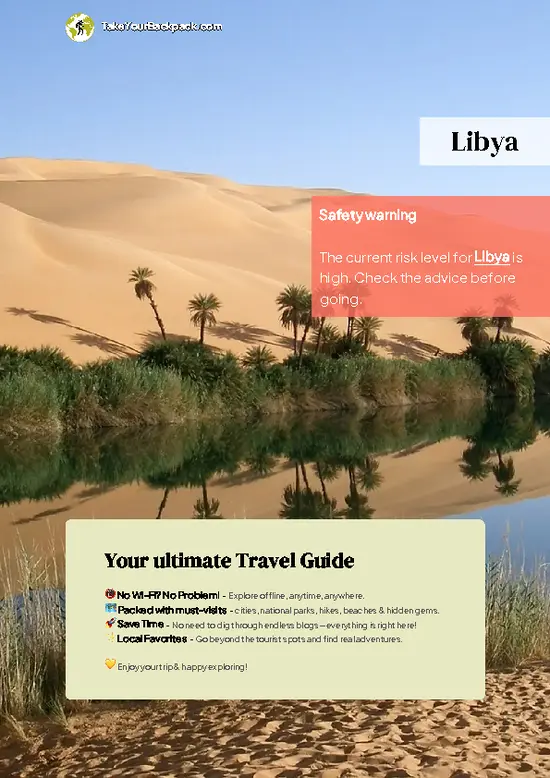
Safety warning

The current risk level for Libya is high. Check the advice before going.


Get your Libya guide
61 ranked highlights, routes & tips, works offline (261 pages)
Loading the map 🌍
CLICK TO FILTER
cities
towns
landmarks
national parks
hikes
beaches
attractions
festivals
regions
SHOW COUNTRY’S BESTSHOW ALL

✨ Why go?
Ranked #1 city in Libya
What makes this city worth visiting

Tripoli is a strategic stop for backpackers weaving through North Africa. It offers a unique blend of affordability and cultural richness that makes it hard to resist. The hostel scene is solid, with budget-friendly options that foster a communal vibe, perfect for meeting fellow travelers. You’ll find delicious street food that won’t break the bank, allowing you to savor local flavors without sacrificing your budget.

The city’s walkability is a major plus; you can easily explore its bustling markets and historic sites on foot, soaking in the atmosphere without the hassle of public transport. When the sun sets, the nightlife comes alive, with cafes and bars that cater to a diverse crowd, making it easy to unwind after a day of exploration.

As a basecamp for day trips, Tripoli opens doors … read more 👉
Tripoli is a strategic stop for backpackers weaving through North Africa. It offers a unique blend of affordability and cultural richness that makes it hard to resist. The hostel scene is solid, with budget-friendly options that foster a communal vibe, perfect for meeting fellow travelers. You’ll find delicious street food that won’t break the bank, allowing you to savor local flavors without sacrificing your budget.

The city’s walkability is a major plus; you can easily explore its bustling markets and historic sites on foot, soaking in the atmosphere without the hassle of public transport. When the sun sets, the nightlife comes alive, with cafes and bars that cater to a diverse crowd, making it easy to unwind after a day of exploration.

As a basecamp for day trips, Tripoli opens doors to nearby attractions, enhancing your travel experience without the need for extensive planning. Whether you’re looking to dive deep into Libyan culture or simply passing through, Tripoli offers a high-value experience that can enrich your journey, making it more than just a stopover.
Want to include Tripoli in your Libya route?
Create a personalized Libya itinerary that includes Tripoli and the places that fit your trip — based on your travel style, budget, and available time. Get your route in seconds.

Generate my trip

💡 HighlightsTop highlights of Tripoli

  1. Red Castle (Assaraya al-Hamra) / Red Castle Museum — The fortress that gives Tripoli its skyline: layered walls, courtyards and museum rooms that hold Roman, Ottoman and colonial artifacts. It’s where the city’s long story is easiest to read on stone and in displays.
  2. The Medina (Old City) and its souks — Tight lanes, old merchant houses, copper shops and bakeries: the medina is the lived heart of Tripoli. Walk slowly—every alley has a shopfront, a courtyard or a café that tells you how people actually live here.
  3. Gurgi Mosque — A 19th-century Ottoman masterpiece near the waterfront with intricate stonework and a blue-tiled interior. It’s small enough to feel intimate but ornate enough to impress photographers and history fans alike.
  4. Martyrs’ Square (Al-Shaheed) — Tripoli’s principal public
read more 👉
  1. Red Castle (Assaraya al-Hamra) / Red Castle Museum — The fortress that gives Tripoli its skyline: layered walls, courtyards and museum rooms that hold Roman, Ottoman and colonial artifacts. It’s where the city’s long story is easiest to read on stone and in displays.
  2. The Medina (Old City) and its souks — Tight lanes, old merchant houses, copper shops and bakeries: the medina is the lived heart of Tripoli. Walk slowly—every alley has a shopfront, a courtyard or a café that tells you how people actually live here.
  3. Gurgi Mosque — A 19th-century Ottoman masterpiece near the waterfront with intricate stonework and a blue-tiled interior. It’s small enough to feel intimate but ornate enough to impress photographers and history fans alike.
  4. Martyrs’ Square (Al-Shaheed) — Tripoli’s principal public space (once called Green Square). It’s the city’s political and social barometer: good for people-watching, seeing Italian-era monuments, and feeling how public life is staged here.
  5. The Corniche and Tripoli port — A walkable seafront with fishermen, cafes and views across the Mediterranean. Early morning fishermen and the sunset promenade capture a different, calmer side of the city than the medina.
  6. Karamanli-era houses / courtyard homes — Scattered in the old city are well-preserved Karamanli and Ottoman courtyard residences (look out for ”Dar” houses). They give a real sense of domestic life through carved doors, inner gardens and traditional layouts.
  7. Sidi Darnah / Sidi Darghut Mosque — An older mosque tied to Tripoli’s Ottoman corsair-era history; its architecture and neighborhood reveal the city’s Mediterranean-and-sea origins more than modern buildings do.
  8. Roman remains and the city’s classical fragments — Pieces of Oea (ancient Tripoli) are woven into the modern city: columns, foundations and small ruins you can spot near the old quarter. They’re a direct, touchable link to Tripoli’s ancient past.
  9. Italian-era architecture and the old colonial quarter — Wide avenues, façades and civic buildings from the Italian period give a very different texture to the city; stroll this part for grand windows, piazza vibes and a sense of 20th-century layers.
  10. The fish market and old port neighborhoods — Raw, noisy and rewarding: the working port area and adjacent markets are where you’ll find fresh catch, market bargaining and local food stalls—an honest slice of everyday Tripoli life.
A few great day trips within easy reach are the Roman ruins at Sabratha, the spectacular Leptis Magna site, and the nearby coastal town of Zuwarah—each makes a perfect one-day outing from Tripoli.
Spotted a mistake or missing something? Contact us.

🏘️ NeighborhoodsNeighborhood guide to Tripoli

Tripoli offers a rich tapestry of neighborhoods, each with its own character and advantages for backpackers. Here’s how to navigate the city’s diverse areas.

Medina: The heart of Tripoli, the Medina is a maze of narrow streets filled with history. It’s walkable and vibrant, perfect for those who want to soak in local culture. Costs here can vary, but you’ll find affordable eateries and shops. The nightlife is low-key, with cozy cafes rather than loud bars. Ideal for short stays, as you can easily explore on foot.

Hay Al-Andalus: This area strikes a balance between modernity and tradition. It’s a bit quieter than the Medina but still offers plenty of local charm. Prices are reasonable, and you’ll find a mix of local and international dining options. Public transport is accessible, making … read more 👉
Tripoli offers a rich tapestry of neighborhoods, each with its own character and advantages for backpackers. Here’s how to navigate the city’s diverse areas.

Medina: The heart of Tripoli, the Medina is a maze of narrow streets filled with history. It’s walkable and vibrant, perfect for those who want to soak in local culture. Costs here can vary, but you’ll find affordable eateries and shops. The nightlife is low-key, with cozy cafes rather than loud bars. Ideal for short stays, as you can easily explore on foot.

Hay Al-Andalus: This area strikes a balance between modernity and tradition. It’s a bit quieter than the Medina but still offers plenty of local charm. Prices are reasonable, and you’ll find a mix of local and international dining options. Public transport is accessible, making it easy to reach other parts of the city. Great for longer stays if you prefer a more relaxed vibe.

Gargaresh: A coastal neighborhood, Gargaresh is where you’ll find a more laid-back atmosphere. It’s a bit further from the city center, but the beach is a major draw. Costs can be higher here, especially for beachfront accommodations. Nightlife is more about beach bars and sunset views. Perfect for those looking to unwind after a day of exploring.

Ben Ashour: This area is known for its local markets and authentic Libyan cuisine. It’s walkable and offers a genuine feel of daily life in Tripoli. Prices are generally low, making it budget-friendly. While nightlife is minimal, the local scene is vibrant during the day. Suitable for both short and longer stays, especially for food lovers.

⌛️ 1 daySeeing the highlights in 24 hours

Tripoli, Libya, is a city where ancient history meets vibrant street life. The medina buzzes with energy, and the coastal views are a refreshing backdrop to the rich culture. Spending a day here is about balancing time, money, and comfort while diving into its unique character.

Start your morning in the heart of the medina. Wander through the narrow alleys of the Old City, where the scent of spices wafts from local markets. Stop by the historic Red Castle (Assaraya al-Hamra), a stunning fortress that offers a glimpse into Tripoli’s past. The entrance fee is minimal, making it a budget-friendly choice that won’t eat into your day. Spend an hour exploring its museum and enjoying the panoramic views from the ramparts.

As the sun climbs higher, head to the nearby Martyrs’ Square. This bustling … read more 👉
Tripoli, Libya, is a city where ancient history meets vibrant street life. The medina buzzes with energy, and the coastal views are a refreshing backdrop to the rich culture. Spending a day here is about balancing time, money, and comfort while diving into its unique character.

Start your morning in the heart of the medina. Wander through the narrow alleys of the Old City, where the scent of spices wafts from local markets. Stop by the historic Red Castle (Assaraya al-Hamra), a stunning fortress that offers a glimpse into Tripoli’s past. The entrance fee is minimal, making it a budget-friendly choice that won’t eat into your day. Spend an hour exploring its museum and enjoying the panoramic views from the ramparts.

As the sun climbs higher, head to the nearby Martyrs’ Square. This bustling hub is perfect for people-watching and soaking in the local vibe. Grab a quick lunch at a nearby café—try a traditional Libyan dish like bazin, a hearty bread served with meat and sauce. It’s affordable and filling, giving you the energy to continue your adventure.

In the afternoon, make your way to the neighborhood of Hay al-Andalus. Here, you’ll find the stunning Gurgi Mosque, often overlooked by tourists. Its intricate architecture and serene atmosphere provide a peaceful contrast to the lively medina. Spend some time reflecting in the courtyard before heading to the local artisan shops. Supporting these craftsmen is not just a way to find unique souvenirs; it’s a chance to connect with the culture.

As evening approaches, stroll along the Corniche, where the Mediterranean sparkles under the setting sun. This is the perfect spot to unwind. For dinner, seek out a local eatery in the area—perhaps a seafood restaurant where you can savor fresh catch while enjoying the sea breeze.

In just one day, you’ve balanced exploration with relaxation, immersing yourself in the soul of Tripoli. Each choice you made—whether to linger in the medina or venture to lesser-known spots—has crafted a rich experience that goes beyond the ordinary.
Turn your Tripoli visit into an Libya adventure
Build a complete Libya route with Tripoli, hidden gems, must-see destinations, and realistic travel times included.

Generate my trip

🌤️ When to go?Choosing the right time of year


  • Weather: Tripoli’s Mediterranean climate means hot, dry summers and mild, wet winters. The best window is spring (April to June) when temperatures are pleasant, avoiding the scorching 35-40°C (95-104°F) highs of July and August.

  • Temperature: Spring days average 20-25°C (68-77°F), perfect for walking and exploring without overheating or bundling up. Winters dip to 10-15°C (50-59°F), which is cooler but manageable if you prefer fewer tourists.

  • Daylight Hours: Spring offers a solid 12-14 hours of daylight, giving you ample time to cover sights and soak in the city’s vibe without rushing.

  • Crowds: Summer draws locals to the coast, swelling Tripoli’s population and prices. Spring and autumn see fewer tourists and locals, making for a more authentic, relaxed experience.

  • Seasonal Activities:
read more 👉

  • Weather: Tripoli’s Mediterranean climate means hot, dry summers and mild, wet winters. The best window is spring (April to June) when temperatures are pleasant, avoiding the scorching 35-40°C (95-104°F) highs of July and August.

  • Temperature: Spring days average 20-25°C (68-77°F), perfect for walking and exploring without overheating or bundling up. Winters dip to 10-15°C (50-59°F), which is cooler but manageable if you prefer fewer tourists.

  • Daylight Hours: Spring offers a solid 12-14 hours of daylight, giving you ample time to cover sights and soak in the city’s vibe without rushing.

  • Crowds: Summer draws locals to the coast, swelling Tripoli’s population and prices. Spring and autumn see fewer tourists and locals, making for a more authentic, relaxed experience.

  • Seasonal Activities: Spring hosts local markets and cultural events, a sweet spot for engaging with Tripoli’s daily life. Summer’s beach scene is lively but less backpacker-friendly due to heat and crowds.

  • Price Fluctuations: Accommodation and transport costs spike in summer. Visiting in spring or late autumn means better deals, letting you stretch your budget without sacrificing comfort.


Pro-tip: Aim for April to June to balance weather, crowd size, and costs—this is when Tripoli rewards you with its most accessible and enjoyable backpacking experience.


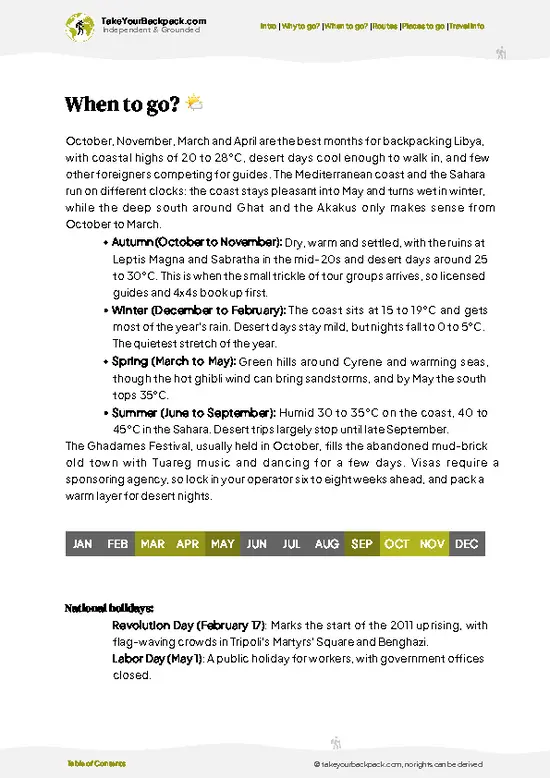
source: climatestotravel.comJANJanuary: fair for travelingFEBFebruary: fair for travelingMARMarch: good for travelingAPRApril: excellent for travelingMAYMay: excellent for travelingJUNJune: excellent for travelingJULJuly: below average for travelingAUGAugust: below average for travelingSEPSeptember: good for travelingOCTOctober: highly recommended for travelingNOVNovember: good for travelingDECDecember: fair for traveling
when-to-go

✈️ The backpacker research shortcutLibya Travel Guide

An offline-friendly backpacking guide with optimized travel routes, ranked highlights, transport advice, and the best areas to stay.
example page 0 from our offline Travel Guide for Libya
example page 1 from our offline Travel Guide for Libya
example page 2 from our offline Travel Guide for Libya
example page 3 from our offline Travel Guide for Libya
example page 4 from our offline Travel Guide for Libya
example page 5 from our offline Travel Guide for Libya
example page 6 from our offline Travel Guide for Libya
example page 7 from our offline Travel Guide for Libya
The digital guide (261 pages) contains:
61 highlights, ranked by travel appeal
Optimized 5, 10 & 15-day travel routes
Cities, national parks, landmarks, beaches
How to get around
Offline-friendly for travel without Wi-Fi
👉 Click to see all 30+ guide features

📅 Plan smarter in minutes, not weeks
Month by month travel advice
Festivals & national holidays
Budget expectations

🗺️ Go to the right places, skip the overrated ones
Honest pros & cons of destinations
Top hikes, parks & viewpoints
Lesser-known places most travelers miss
Clear “worth it vs skip it” guidance

🛏️ Travel smoothly without rookie mistakes
Best areas to stay
Transport systems explained simply
Common scams & safety advice
SIM cards, money & practical tips

🌍 Understand the country, not just visit it
Culture & traditions
52 Essential phrases & customs
Festivals worth planning around
Traveler-friendly historical context
Insights that make places more meaningful

📱 Built for real travel conditions
Fully downloadable PDF
Works completely offline
Optimized for phone use
Useful in remote areas & buses
Everything in one place
Save weeks of stressful planning
Get instant access to your full guide. 30‑day money-back guarantee.


By proceeding you agree to our terms.
Sent to your inbox immediately after payment • 100% Secure Checkout
Best Backpacking Travel Advisor 2025 tourism awardBest Backpacking
Travel Advisor
2025
What others say about Take Your Backpack Guides:
⭐⭐⭐⭐⭐
Fantastic, amazing amount of information!
⭐⭐⭐⭐⭐
My goodness this is amazing, it's what I've been looking for hats off too you!
⭐⭐⭐⭐⭐
I think this is absolutely BRILLIANT
⭐⭐⭐⭐
Very complete and informative. It's still missing places, but I gotta to commend you
⭐⭐⭐⭐⭐
This is truly amazing, thank you, can't wait to explore it with my kids!
⭐⭐⭐⭐⭐
Awesome resource, thank you!
⭐⭐⭐⭐⭐
This is amazing! Can't wait to explore the ones I haven't seen
⭐⭐⭐⭐
I love this! Well done, great idea.
⭐⭐⭐⭐⭐
Thanks for taking the time to make this gem!
⭐⭐⭐⭐⭐
This might be the best website I've ever seen.
⭐⭐⭐⭐⭐
Congratulations, and thank you so much for your work; it's incredibly valuable.
⭐⭐⭐⭐
In all seriousness I think you did a great job pointing out the important spots
⭐⭐⭐⭐⭐
10/10 very good
⭐⭐⭐⭐⭐
As someone who's only just starting to visit regularly this is awesome, thank you.
⭐⭐⭐⭐
Thank you very much! I'm going to visit my dad, it's going to be very useful!
⭐⭐⭐⭐⭐
This is really cool! We'll be travelling for the first time and this definitely come in handy.
⭐⭐⭐⭐⭐
You are now our minister of culture, congratulations 👨‍💼
⭐⭐⭐⭐⭐
Just wanted to tell you that this is a pearl! Going to follow your recommendations.
⭐⭐⭐⭐⭐
This is so cool. I'll definitely be using the resource for my travels soon.
⭐⭐⭐⭐⭐
This is very impressive! Good work.
⭐⭐⭐⭐⭐
This is an amazing and informative site. Very well done!

🛏️ Where to stay?Best areas and accommodation options

In Tripoli, the backpacker’s sweet spot lies in the central districts around the old city—specifically the Medina and the adjacent Souq al-Jumaa area. This zone is where history and daily life collide, offering a gritty, authentic pulse without the inflated prices or isolation of more upscale neighborhoods. Staying here means you’re within walking distance of bustling markets, street food stalls, and a handful of budget-friendly guesthouses that cater to solo travelers and small groups. The vibe is social enough to meet other backpackers but not so touristy that you lose the local flavor.

Compared … read more 👉
In Tripoli, the backpacker’s sweet spot lies in the central districts around the old city—specifically the Medina and the adjacent Souq al-Jumaa area. This zone is where history and daily life collide, offering a gritty, authentic pulse without the inflated prices or isolation of more upscale neighborhoods. Staying here means you’re within walking distance of bustling markets, street food stalls, and a handful of budget-friendly guesthouses that cater to solo travelers and small groups. The vibe is social enough to meet other backpackers but not so touristy that you lose the local flavor.

Compared to the newer, more residential districts like Gargaresh or Ben Ashour, which are quieter and safer but lack the social buzz and affordable lodging, the Medina area demands a bit more street smarts. But that’s part of the trade-off: you sacrifice some comfort and polished amenities for immersion and wallet-friendly options. Hostels here tend to be basic but functional, with communal spaces that encourage interaction—perfect for swapping stories or planning your next move.

If you prioritize comfort and modern conveniences, you’ll pay a premium and miss out on the spontaneous connections that make backpacking memorable. The Medina’s rough edges are exactly what give it character, making it the strategic choice for savvy travelers who want to maximize experience without blowing the budget.

🚌 Getting aroundMoving around without the hassle

Tripoli moves like a city caught between two rhythms: the pulse of Mediterranean trade and the unpredictable beat of local life. It’s not a place where you’ll find neat timetables or punctual buses rolling out on the dot. Instead, expect a dance of improvisation—vehicles appear when they’re ready, and the streets fill with a mix of honking cars, scooters darting through gaps, and pedestrians weaving their own paths. This isn’t chaos for chaos’s sake; it’s a system built on intuition, relationships, and a shared understanding that time here bends to the flow of daily life, not the other way around. For a budget traveler, mastering this flow means knowing when to hold your patience and when to jump on the fastest ride available.


  • Walking: The purest way to absorb Tripoli’s character. Most
read more 👉
Tripoli moves like a city caught between two rhythms: the pulse of Mediterranean trade and the unpredictable beat of local life. It’s not a place where you’ll find neat timetables or punctual buses rolling out on the dot. Instead, expect a dance of improvisation—vehicles appear when they’re ready, and the streets fill with a mix of honking cars, scooters darting through gaps, and pedestrians weaving their own paths. This isn’t chaos for chaos’s sake; it’s a system built on intuition, relationships, and a shared understanding that time here bends to the flow of daily life, not the other way around. For a budget traveler, mastering this flow means knowing when to hold your patience and when to jump on the fastest ride available.


  • Walking: The purest way to absorb Tripoli’s character. Most central neighborhoods are compact enough to explore on foot, especially the old city (Medina). It’s free, flexible, and lets you catch the city’s textures up close—crumbling walls, street vendors, and the occasional stray cat. Walking is slow but unbeatable for comfort and zero cost.


  • Shared Taxis (Service Taxis): These are minibuses or cars that run fixed routes but leave only when full. Prices are dirt cheap—often just a few Libyan dinars. They don’t run on a strict schedule; instead, they wait until enough passengers gather. This means variable wait times but a direct, affordable route across the city. Comfort is basic, and the ride can get cramped, but it’s the fastest budget option for longer distances.


  • Regular Taxis: Metered taxis exist but are rare and often expensive compared to shared options. They offer door-to-door convenience and run whenever you flag them down, making them a good fallback if you’re short on time or traveling with luggage. Expect to negotiate fares upfront, as meters aren’t always used. Comfort is higher than shared taxis, but the price jumps accordingly.


  • Motorcycle Taxis: For the brave and nimble, motorcycle taxis slice through traffic jams with ease. They’re cheap and fast but come with a trade-off in safety and comfort. Helmets aren’t always provided, and the ride can be bumpy. Use them for short hops when you want to save time and don’t mind a little adrenaline.


  • Intercity Buses: If your budget trip extends beyond Tripoli, intercity buses connect to other Libyan cities. They run on rough schedules, often departing when full or when the driver feels like it. Prices are low, but expect long waits and basic comfort. Not ideal for tight itineraries but perfect if you want to stretch your money and don’t mind the unpredictability.

👛 Costs (as of 28 March 2026)How expensive it really is

Backpacking in Tripoli, Libya, involves navigating a unique cost landscape shaped by local conditions and limited tourism infrastructure. Here’s a clear breakdown of what you can expect to spend daily.
  • Dorm Accommodation (High Season): Expect to pay around €15-€25 per night. Options are limited, and prices rise slightly during peak travel months due to demand and fewer available beds.
  • Dorm Accommodation (Off-Season): Prices drop to about €10-€15. Fewer travelers mean more negotiating power, but quality and availability can be inconsistent.
  • Meals: Street food and local eateries offer meals for roughly €2-€5 each. Budget for about €6-€12 daily if you stick to traditional dishes and avoid tourist spots.
  • Local Transport: Shared minibuses and taxis cost around €0.30-€1 per ride. Budget €2-€4
read more 👉
Backpacking in Tripoli, Libya, involves navigating a unique cost landscape shaped by local conditions and limited tourism infrastructure. Here’s a clear breakdown of what you can expect to spend daily.
  • Dorm Accommodation (High Season): Expect to pay around €15-€25 per night. Options are limited, and prices rise slightly during peak travel months due to demand and fewer available beds.
  • Dorm Accommodation (Off-Season): Prices drop to about €10-€15. Fewer travelers mean more negotiating power, but quality and availability can be inconsistent.
  • Meals: Street food and local eateries offer meals for roughly €2-€5 each. Budget for about €6-€12 daily if you stick to traditional dishes and avoid tourist spots.
  • Local Transport: Shared minibuses and taxis cost around €0.30-€1 per ride. Budget €2-€4 daily if you move around frequently but avoid private taxis for cost efficiency.
  • City Transport Pass: There is no formal city transport pass system in Tripoli, so daily transport costs depend on individual rides rather than a flat rate pass.
  • Basic Activities/Entry Fees: Museums and cultural sites typically charge €1-€3. Budget €3-€6 daily if you plan to visit a couple of places.
  • Miscellaneous Expenses: Include essentials like bottled water, snacks, and occasional internet access. Around €2-€5 daily covers these small but necessary costs.

Total daily costs for backpacking in Tripoli generally range from €25 to €50, depending on season and personal choices. This range reflects a balance between stretching your budget and maintaining a reasonable level of comfort and activity. Understanding these trade-offs lets you plan smartly and avoid surprises.
⚠️ Prices can change and everyone travels differently, so take this as a rough guide. Hope it helps you plan your adventure!

🚌 Day tripsBest day trips from Tripoli

Tripoli serves as a fantastic launchpad for day trips that reveal Libya’s rich history and stunning landscapes. Here are some standout options that pack a punch without draining your wallet or time.

Sabratha
Just an hour west of Tripoli, Sabratha is home to some of the best-preserved Roman ruins in North Africa. The amphitheater, with its crumbling columns and sweeping Mediterranean views, feels like a portal to another era. Entry is usually around 10 LYD, making it a budget-friendly excursion. The best time to visit is in spring or fall when the weather is mild. A common mistake is underestimating the time needed to explore; plan for at least three hours to soak it all in.
👉 Explore Sabratha

Leptis Magna
A bit further afield, about 130 kilometers east of Tripoli, lies Leptis Magna, … read more 👉
Tripoli serves as a fantastic launchpad for day trips that reveal Libya’s rich history and stunning landscapes. Here are some standout options that pack a punch without draining your wallet or time.

Sabratha
Just an hour west of Tripoli, Sabratha is home to some of the best-preserved Roman ruins in North Africa. The amphitheater, with its crumbling columns and sweeping Mediterranean views, feels like a portal to another era. Entry is usually around 10 LYD, making it a budget-friendly excursion. The best time to visit is in spring or fall when the weather is mild. A common mistake is underestimating the time needed to explore; plan for at least three hours to soak it all in.
👉 Explore Sabratha

Leptis Magna
A bit further afield, about 130 kilometers east of Tripoli, lies Leptis Magna, a UNESCO World Heritage site that’s often considered the crown jewel of Roman ruins. The sheer scale of the site is breathtaking, with sprawling forums and intricate mosaics. Expect to spend around 20 LYD for entry, and budget a full day for travel and exploration. The summer heat can be intense, so aim for early spring or late autumn. Many first-timers miss the stunning coastal views from the ruins, so don’t rush your visit.


Jebel Nafusa
For a change of scenery, head southwest to the Jebel Nafusa mountains. About two hours from Tripoli, this region offers stunning vistas and traditional Berber villages. Hiking here is a treat, with trails that lead you through olive groves and ancient fortresses. Costs are minimal; just fuel for your ride and perhaps a small fee for village visits. Spring is ideal for hiking, as the flowers bloom and temperatures are pleasant. A common oversight is not bringing enough water; it’s easy to underestimate the heat.
👉 Explore Jebel Nafusa

Ghadames
Known as the ”Pearl of the Desert,” Ghadames is a fascinating oasis town about three hours from Tripoli. Its unique architecture and labyrinthine streets are a photographer’s dream. The trip can be done in a day, but you’ll want to leave early to maximize your time. Expect to spend around 30 LYD for local transport and snacks. Late fall or early spring is best to avoid the scorching summer heat. First-timers often miss the chance to engage with locals, so don’t hesitate to strike up a conversation.
👉 Explore Ghadames
Want to know what more Libya offers?
The Libya Travel Guide describes 61 highlights, from cities to national parks, from beaches to hikes

Get the Travel Guide -

🍲 FoodLocal Cuisine & Drinks

In Tripoli, food is a vibrant tapestry of flavors that tells the story of its rich history. Start with couscous, a staple that’s often served with tender lamb or chicken, infused with spices that dance on your palate. Don’t miss out on shakshuka, a hearty dish of poached eggs in a spicy tomato sauce, perfect for breakfast or any time of day.

Street food is where the magic happens. Vendors line the bustling markets, serving up baked goods like pita and sfiha—savory meat pies that are a must-try. Grab a handful of dates or olives from local stalls; they’re fresh and bursting with flavor. The atmosphere is electric, filled with the sounds of laughter and sizzling pans.

When it comes to drinks, try mint tea, a Libyan favorite that’s sweet and refreshing. It’s often served in small glasses, and … read more 👉
In Tripoli, food is a vibrant tapestry of flavors that tells the story of its rich history. Start with couscous, a staple that’s often served with tender lamb or chicken, infused with spices that dance on your palate. Don’t miss out on shakshuka, a hearty dish of poached eggs in a spicy tomato sauce, perfect for breakfast or any time of day.

Street food is where the magic happens. Vendors line the bustling markets, serving up baked goods like pita and sfiha—savory meat pies that are a must-try. Grab a handful of dates or olives from local stalls; they’re fresh and bursting with flavor. The atmosphere is electric, filled with the sounds of laughter and sizzling pans.

When it comes to drinks, try mint tea, a Libyan favorite that’s sweet and refreshing. It’s often served in small glasses, and the ritual of pouring it from a height is a sight to behold.

Etiquette is simple: share your food and drink. Meals are communal, and it’s customary to offer your companions a taste of what you’re enjoying. This culture of sharing fosters connections, making every bite more meaningful. Embrace the local vibe, and you’ll find that every meal is an experience worth savoring.

🛡️ SafetySafety Tips and Common Scams in Tripoli

Tripoli is generally safe for travelers, but like any city, it has its nuances. Stay aware in crowded markets like Souk al-Mushir, where pickpockets might lurk. Keep your belongings close and avoid flashy displays of wealth.

If you’re solo, be cautious at night. While many areas are fine, it’s best to stick to well-lit streets and avoid wandering too far from your accommodation after dark.

Scams are rare, but some taxi drivers may try to overcharge tourists. Always agree on a fare before getting in, or use ride-hailing apps when possible.

Annoyances can include persistent street vendors or guides who may not take “no” for an answer. A polite but firm response usually does the trick.

Overall, carry yourself with confidence and a friendly demeanor. Engage with locals, but trust your … read more 👉
Tripoli is generally safe for travelers, but like any city, it has its nuances. Stay aware in crowded markets like Souk al-Mushir, where pickpockets might lurk. Keep your belongings close and avoid flashy displays of wealth.

If you’re solo, be cautious at night. While many areas are fine, it’s best to stick to well-lit streets and avoid wandering too far from your accommodation after dark.

Scams are rare, but some taxi drivers may try to overcharge tourists. Always agree on a fare before getting in, or use ride-hailing apps when possible.

Annoyances can include persistent street vendors or guides who may not take “no” for an answer. A polite but firm response usually does the trick.

Overall, carry yourself with confidence and a friendly demeanor. Engage with locals, but trust your instincts. This approach not only keeps you safe but also opens doors to genuine interactions.

Other Libyan cities near Tripoli

Explore more nearby:

  • Tarhuna—Hilltop views, wheat fields, Berber heritage| 67 km away
  • Sabratha—Roman theater, coastal ruins, palm-dotted beaches| 70 km away
  • Gharyan—Troglodyte houses, pottery workshops, mountain plateau| 81 km away

💡 Not sure where to go next?
Create a personalized itinerary for Libya including Tripoli and the places that fit your trip.

Generate my itinerary

👉 Discover all cities

Or checkout all Libya has to offer (think cities, towns, villages, national parks, hikes, beaches, festivals)
Country photo of Libya

We 💚 feedbackIs it worth it?

Tripoli has a raw energy that’s hard to find elsewhere. The bustling markets, especially the Souk al-Jumaa, are a sensory overload in the best way. You’ll stumble upon locals who are genuinely curious about you, which is refreshing. Just a heads-up: the infrastructure can be a bit rough around the edges. Don’t let that deter you; it adds to the charm. Embrace the unpredictability, and you’ll uncover stories that linger long after you leave. Trust me, it’s worth the leap.

✍️ Help improve this page!
The information on this page is based on in-depth research, insights shared by experienced travelers, and feedback from the local travel community in Libya. While every effort is made to keep the information accurate and current, conditions can change — so if you spot anything incorrect or outdated, please get in touch.


🙋‍♂️ Give feedback

👋 Meet the founderWho’s Behind Take Your Backpack?

Johan, backpacker and founder of TakeYourBackpackHi, I’m Johan (Netherlands 🇳🇱), the creator of TakeYourBackpack. Over the past decade, I’ve backpacked through 80+ countries across six continents, gaining extensive experience with independent travel, long-term trips, and overland routes.

This site is built on a combination of firsthand travel experience and carefully curated insights from other backpackers. Many guides are based on places I’ve personally visited, while others bring together tips, observations, and practical advice shared by trusted travelers I’ve met along the way.

The goal is to provide realistic, experience-driven guidance — not generic itineraries — so you can explore destinations with better context, clearer expectations, and more confidence.

Get full Libya guide •
Instant download • 61 highlights • Full Offline guide