

×

Madagascar🇲🇬 | hikesIsalo Window TrailSandstone arch, dusk colors, aloes, short guided walk | things to do and best time to go

Explore Marojejy CircuitExplore Lokobe Reserve Trail

Backpacking in Isalo Window Trail
🌟 Highlighthike ranked #2
By Johan Kruseman 🇳🇱 | Updated October 15, 2026

The Window is a short walk from the vehicle track, so you can see Isalo’s most photographed rock and still have the rest of the day free. It sits in Isalo National Park in southwestern Madagascar, on the sandstone massif beside the RN7 near Ranohira. The payoff is a natural arch framing the sky, with grass and aloes glowing orange at dusk. The catch is that the hike itself is brief and flat-ish, the park requires a guide, and the last stretch from Ranohira needs a hired vehicle or a motorbike ride. Taxi-brousses on the RN7 drop you in town. I waited out the dusk crowd with a cold THB beer on a Ranohira terrace, about 6,000 ariary (roughly US$1.30), tasting of malt and woodsmoke while the sandstone cooled from red to violet. A first day could go like this: guide and ride mid-afternoon, an easy walk, sunset at the arch, then dinner in town.

Discover everything you want to know in the 📖 Madagascar Travel Guide.
Best time to go: April - November
Duration: 1 hour
Distance: 2 kilometers
Total ascent: 60 meters


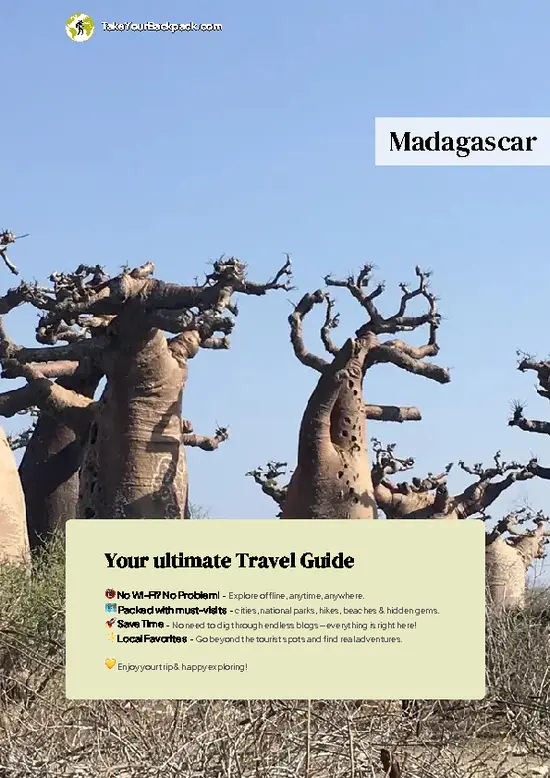
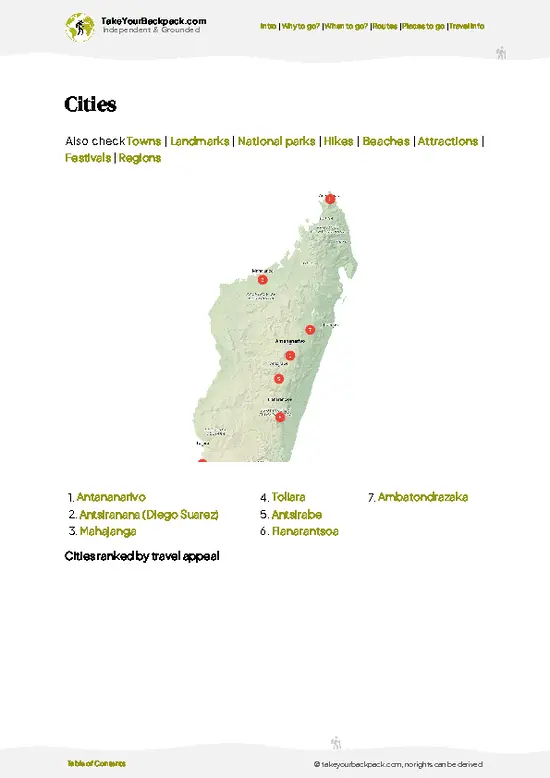
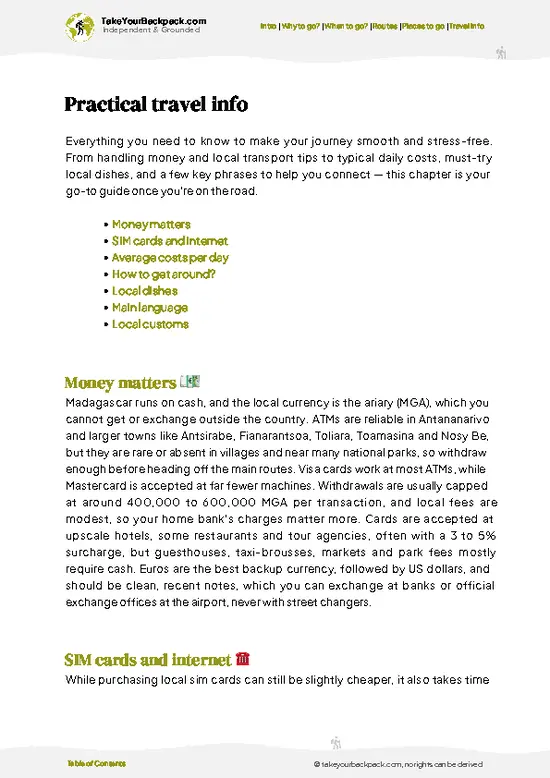
example page 0 from our offline Travel Guide for Madagascar
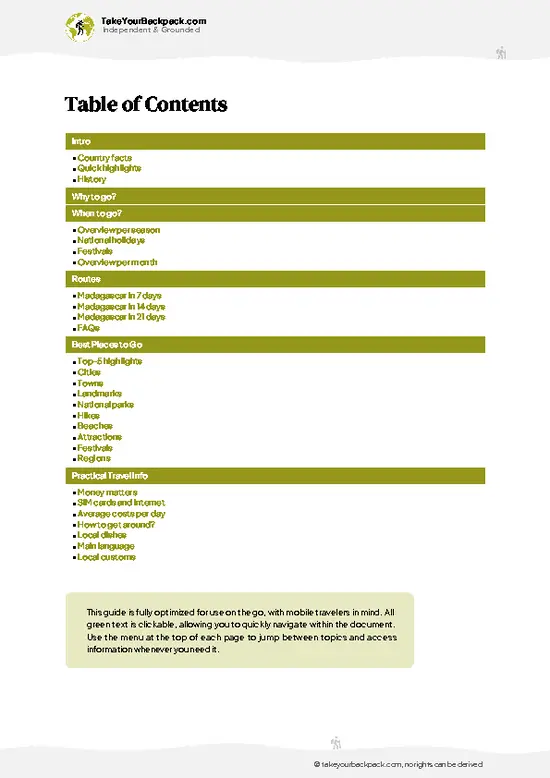
example page 1 from our offline Travel Guide for Madagascar
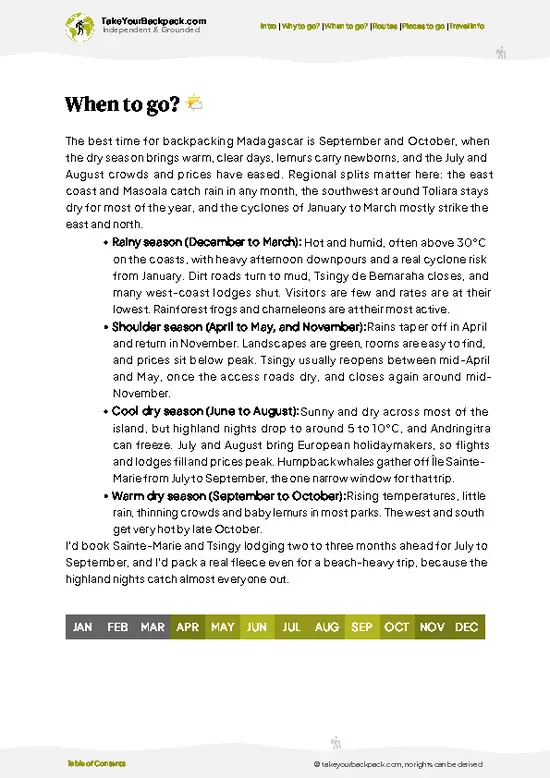
example page 2 from our offline Travel Guide for Madagascar
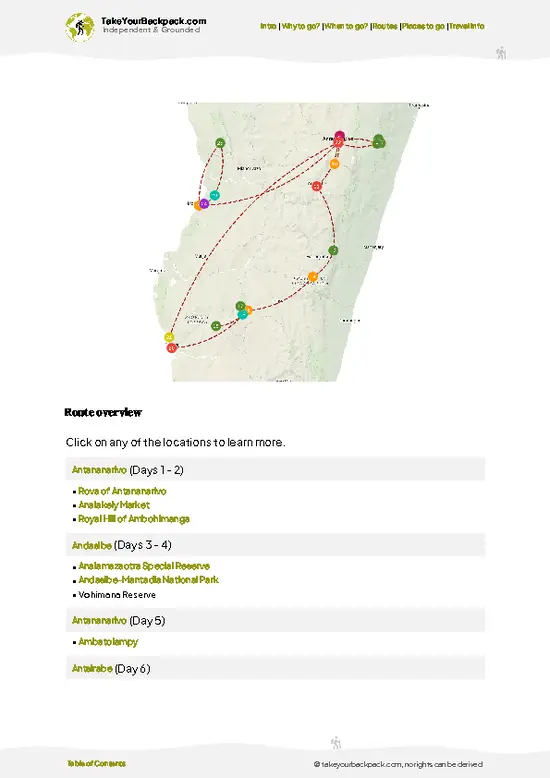
example page 3 from our offline Travel Guide for Madagascar
example page 4 from our offline Travel Guide for Madagascar
example page 5 from our offline Travel Guide for Madagascar
example page 6 from our offline Travel Guide for Madagascar
example page 7 from our offline Travel Guide for Madagascar
Loading the map 🌍
CLICK TO FILTER
cities
towns
landmarks
national parks
hikes
beaches
attractions
festivals
regions
SHOW COUNTRY’S BESTSHOW ALL

✨ Why go?
Ranked #2 hike in Madagascar
Why Isalo Window Trail should be on your travel list

Backpackers come for one reason: the Window of Isalo is the most recognizable image of southern Madagascar, and you get it without committing to a multi-day trek. The walk is short and the climb is gentle, so it works as a late-afternoon add-on after a longer Isalo loop, or as the only thing you do if your legs are spent from the RN7 road. Timing matters more than distance here. Arrive about an hour before sunset and the eroded sandstone massif turns from beige to deep orange, and the arch becomes a frame for the light dropping behind it. It also fits an overland route well. The RN7 runs straight past, so you can pair it with a morning on one of the park’s canyon or pool trails and move on south the next day. Guides are required, which adds a little cost, but they also point out lemurs, elephant’s … read more 👉
Backpackers come for one reason: the Window of Isalo is the most recognizable image of southern Madagascar, and you get it without committing to a multi-day trek. The walk is short and the climb is gentle, so it works as a late-afternoon add-on after a longer Isalo loop, or as the only thing you do if your legs are spent from the RN7 road. Timing matters more than distance here. Arrive about an hour before sunset and the eroded sandstone massif turns from beige to deep orange, and the arch becomes a frame for the light dropping behind it. It also fits an overland route well. The RN7 runs straight past, so you can pair it with a morning on one of the park’s canyon or pool trails and move on south the next day. Guides are required, which adds a little cost, but they also point out lemurs, elephant’s foot plants and birds you would walk past alone. For travelers with limited time, it is the easiest way to say you have seen Isalo properly.

💡 HighlightsKey sights and experiences for travelers

  1. The Window (La Fenêtre de l’Isalo): A natural arch in a sandstone outcrop, worn through by wind and water. Walk to the base and the opening frames a clean slice of sky and the plain beyond. The rock is rough, pale and grippy underfoot, and the arch is bigger than photos suggest.
  2. Sunset through the arch: This is what most visitors come for. In the last hour of daylight the stone shifts from tan to burnt orange, then to a dusty pink. Expect other groups jockeying for the classic silhouette shot, so claim a spot early and stay put once the sun is low.
  3. The Isalo sandstone massif: The surrounding rock is carved into ridges, towers and gullies that look sculpted. From the high points near the Window you read the layered cliffs and valleys clearly, and the fine red-gold grit blows into every crease
… read more 👉
  1. The Window (La Fenêtre de l’Isalo): A natural arch in a sandstone outcrop, worn through by wind and water. Walk to the base and the opening frames a clean slice of sky and the plain beyond. The rock is rough, pale and grippy underfoot, and the arch is bigger than photos suggest.
  2. Sunset through the arch: This is what most visitors come for. In the last hour of daylight the stone shifts from tan to burnt orange, then to a dusty pink. Expect other groups jockeying for the classic silhouette shot, so claim a spot early and stay put once the sun is low.
  3. The Isalo sandstone massif: The surrounding rock is carved into ridges, towers and gullies that look sculpted. From the high points near the Window you read the layered cliffs and valleys clearly, and the fine red-gold grit blows into every crease of your clothing.
  4. Elephant’s foot and aloe plants: The thin, dry soil supports plants that look odd to a first-time visitor. The swollen-trunked elephant’s foot grows from cracks in the stone, and spiky aloes dot the slopes. Your guide can point out which plants are endemic and which are common here.
  5. Lemurs and birdlife: Verreaux’s sifakas and ring-tailed lemurs live within the park, and sightings along the approach are possible rather than guaranteed. Listen for rustling in the scrub and look for pale shapes bounding through the trees. Raptors often circle the cliffs near sunset.
For a first visit, the sunset at the arch is the one to plan your day around.
Spotted a mistake or missing something? Contact us.

🌤️ When to go?Best time to hike the Isalo Window Trail

  • Dry Season (May to October): The most dependable window for the Isalo Window Trail. Days run 25 to 32°C (77 to 90°F), and June to August nights at the Ruaha-style plateau drop to 8 to 12°C (46 to 54°F). Sunrise is near 6:00 and sunset near 17:30, so you have roughly 11 hours of light.
  • Peak Crowds (July to September): Sunset at the Window fills up with guides and day visitors, and lodges in Ranohira raise rates and book out. Reserve ahead.
  • Hot Wet Season (November to March): Afternoon storms are common, with highs of 30 to 36°C (86 to 97°F). Sandstone turns slick, streams rise, and the canyon pools fill. Prices fall and the trail is nearly empty.
  • Shoulder Months (April and late October): Green slopes, mild 22 to 30°C (72 to 86°F) days and fewer people, with occasional showers.
Arrive at the Window … read more 👉
  • Dry Season (May to October): The most dependable window for the Isalo Window Trail. Days run 25 to 32°C (77 to 90°F), and June to August nights at the Ruaha-style plateau drop to 8 to 12°C (46 to 54°F). Sunrise is near 6:00 and sunset near 17:30, so you have roughly 11 hours of light.
  • Peak Crowds (July to September): Sunset at the Window fills up with guides and day visitors, and lodges in Ranohira raise rates and book out. Reserve ahead.
  • Hot Wet Season (November to March): Afternoon storms are common, with highs of 30 to 36°C (86 to 97°F). Sandstone turns slick, streams rise, and the canyon pools fill. Prices fall and the trail is nearly empty.
  • Shoulder Months (April and late October): Green slopes, mild 22 to 30°C (72 to 86°F) days and fewer people, with occasional showers.
Arrive at the Window about 90 minutes before sunset in any season, since the light on the rock arch is best then.


source: climatestotravel.comJANJanuary: below average for travelingFEBFebruary: below average for travelingMARMarch: fair for travelingAPRApril: highly recommended for travelingMAYMay: excellent for travelingJUNJune: excellent for travelingJULJuly: highly recommended for travelingAUGAugust: highly recommended for travelingSEPSeptember: excellent for travelingOCTOctober: highly recommended for travelingNOVNovember: good for travelingDECDecember: below average for traveling
when-to-go

✈️ The backpacker research shortcutMadagascar Travel Guide

An offline-friendly backpacking guide with optimized travel routes, ranked highlights, transport advice, and the best areas to stay.
example page 0 from our offline Travel Guide for Madagascar
example page 1 from our offline Travel Guide for Madagascar
example page 2 from our offline Travel Guide for Madagascar
example page 3 from our offline Travel Guide for Madagascar
example page 4 from our offline Travel Guide for Madagascar
example page 5 from our offline Travel Guide for Madagascar
example page 6 from our offline Travel Guide for Madagascar
example page 7 from our offline Travel Guide for Madagascar
The digital guide (305 pages) contains:
✅ 96 highlights, ranked by travel appeal
✅ Optimized 7, 14 & 21-day travel routes
✅ Cities, national parks, landmarks, beaches
✅ How to get around
✅ Offline-friendly for travel without Wi-Fi
👉 Click to see all 30+ guide features

📅 Plan smarter in minutes, not weeks
✅ Month by month travel advice
✅ Festivals & national holidays
✅ Budget expectations

🗺️ Go to the right places, skip the overrated ones
✅ Honest pros & cons of destinations
✅ Top hikes, parks & viewpoints
✅ Lesser-known places most travelers miss
✅ Clear “worth it vs skip it” guidance

🛏️ Travel smoothly without rookie mistakes
✅ Best areas to stay
✅ Transport systems explained simply
✅ Common scams & safety advice
✅ SIM cards, money & practical tips

🌍 Understand the country, not just visit it
✅ Culture & traditions
✅ 52 Essential phrases & customs
✅ Festivals worth planning around
✅ Traveler-friendly historical context
✅ Insights that make places more meaningful

📱 Built for real travel conditions
✅ Fully downloadable PDF
✅ Works completely offline
✅ Optimized for phone use
✅ Useful in remote areas & buses
✅ Everything in one place
Stop searching, start planning
Get instant access to your full guide. 30‑day money-back guarantee.
+ Add another guide for just

By proceeding you agree to our terms.
Sent to your inbox immediately after payment • 100% Secure Checkout
Best Backpacking Travel Advisor 2025 tourism awardBest Backpacking
Travel Advisor
2025
What others say about Take Your Backpack Guides:
⭐⭐⭐⭐⭐
Fantastic, amazing amount of information!
⭐⭐⭐⭐⭐
My goodness this is amazing, it's what I've been looking for hats off too you!
⭐⭐⭐⭐⭐
I think this is absolutely BRILLIANT
⭐⭐⭐⭐
Very complete and informative. It's still missing places, but I gotta to commend you
⭐⭐⭐⭐⭐
This is truly amazing, thank you, can't wait to explore it with my kids!
⭐⭐⭐⭐⭐
Awesome resource, thank you!
⭐⭐⭐⭐⭐
This is amazing! Can't wait to explore the ones I haven't seen
⭐⭐⭐⭐
I love this! Well done, great idea.
⭐⭐⭐⭐⭐
Thanks for taking the time to make this gem!
⭐⭐⭐⭐⭐
This might be the best website I've ever seen.
⭐⭐⭐⭐⭐
Congratulations, and thank you so much for your work; it's incredibly valuable.
⭐⭐⭐⭐
In all seriousness I think you did a great job pointing out the important spots
⭐⭐⭐⭐⭐
10/10 very good
⭐⭐⭐⭐⭐
As someone who's only just starting to visit regularly this is awesome, thank you.
⭐⭐⭐⭐
Thank you very much! I'm going to visit my dad, it's going to be very useful!
⭐⭐⭐⭐⭐
This is really cool! We'll be travelling for the first time and this definitely come in handy.
⭐⭐⭐⭐⭐
You are now our minister of culture, congratulations 👨‍💼
⭐⭐⭐⭐⭐
Just wanted to tell you that this is a pearl! Going to follow your recommendations.
⭐⭐⭐⭐⭐
This is so cool. I'll definitely be using the resource for my travels soon.
⭐⭐⭐⭐⭐
This is very impressive! Good work.
⭐⭐⭐⭐⭐
This is an amazing and informative site. Very well done!

🛏️ Where to stay?How to pick the right area

If you enjoy meeting fellow travelers, consider choosing hostels with high ratings for atmosphere. On the other hand, if you prefer having your own space, a hotel might be a better option.

🥾 Hike detailsEverything you need to know before hiking Isalo Window Trail

Total Distance: About 2 kilometers return, depending on where your vehicle can park.
Estimated Duration: 45 minutes to 1 hour on foot, plus whatever time you spend waiting for sunset light.
Difficulty: Easy. The path is short with a mild climb over rock, and anyone with ordinary fitness manages it. Sandstone can be slick with loose grit, so wear shoes with grip.
Starting Point: A parking area off the RN7 within Isalo National Park.
  • Public transport: Taxi-brousses along the RN7 stop at Ranohira, the gateway town. From there a hired 4x4, tuk-tuk or motorbike covers the last stretch, and many travelers
… read more 👉
Total Distance: About 2 kilometers return, depending on where your vehicle can park.
Estimated Duration: 45 minutes to 1 hour on foot, plus whatever time you spend waiting for sunset light.
Difficulty: Easy. The path is short with a mild climb over rock, and anyone with ordinary fitness manages it. Sandstone can be slick with loose grit, so wear shoes with grip.
Starting Point: A parking area off the RN7 within Isalo National Park.
  • Public transport: Taxi-brousses along the RN7 stop at Ranohira, the gateway town. From there a hired 4x4, tuk-tuk or motorbike covers the last stretch, and many travelers arrange a guide at the park office in town.
Major Landmarks:
  • The Window: A natural sandstone arch at the end of the trail.
  • Viewpoints on the outcrop: Rock ledges beside the arch look over the massif and plain, and they are the places to settle for sunset.
Terrain and Scenery: Bare sandstone, packed sandy tracks and low ridges. Wind has carved the rock into smooth hollows and sharp edges, and the colors run from cream to deep rust depending on the hour.
Vegetation: Dry grassland, aloes, elephant’s foot plants and scattered scrub. Shade is scarce, so bring a hat and water.
Wildlife: Verreaux’s sifakas and ring-tailed lemurs inhabit the park, and sightings depend on luck. Birds of prey often circle near the cliffs. A guide is required and helps you spot animals.
Practical Notes: Bring a headlamp, since the walk back can fall after dark if you stay for the last light.
⚠️ Hiking info can sometimes be outdated or inaccurate. Before you hit the trail, check the latest conditions with locals. If you do spot anything that's off, I'd love to hear from you, so I can update it for fellow travelers.

🛡️ SafetySafety Tips and Common Scams in Isalo Window Trail

The Isalo Window Trail is short, well-trodden and low-risk, but sun and footing cause most problems. The sandstone has almost no shade, so start early or time your walk for late afternoon, carry at least 2 liters of water, and wear a hat. Loose sand over rock makes descents slippery, so wear shoes with real grip rather than sandals. Rain turns the surface greasy and storms bring lightning on open ridges, so turn back if clouds build. Park rules require a licensed guide, who handles route finding along the unmarked sections and spots things you would walk past. Ring-tailed lemurs and sifakas live in the park, but they are best seen from a distance. Do not feed them, as it alters their behavior and causes conflicts. Carry out all trash. First-timers often arrive with too little water and no … read more 👉
The Isalo Window Trail is short, well-trodden and low-risk, but sun and footing cause most problems. The sandstone has almost no shade, so start early or time your walk for late afternoon, carry at least 2 liters of water, and wear a hat. Loose sand over rock makes descents slippery, so wear shoes with real grip rather than sandals. Rain turns the surface greasy and storms bring lightning on open ridges, so turn back if clouds build. Park rules require a licensed guide, who handles route finding along the unmarked sections and spots things you would walk past. Ring-tailed lemurs and sifakas live in the park, but they are best seen from a distance. Do not feed them, as it alters their behavior and causes conflicts. Carry out all trash. First-timers often arrive with too little water and no headlamp for the walk back after sunset, so pack both.

FAQFrequently asked questions about Isalo Window Trail

The Window trail itself takes about 1 to 2 hours round trip from the parking area, roughly 2 to 3 km (1.2 to 1.9 miles) of walking. Most people time it to reach the rock arch for sunset, then walk back in the last light. It sits about 13 km (8 miles) from Ranohira, a drive of 20 to 30 minutes.
Easy to moderate. The path climbs gently over sandstone with a few rocky steps, and most reasonably fit walkers manage it in sneakers or light trail shoes. Heat is the main challenge, with midday temperatures of 30°C (86°F) or more in dry season. Allow extra time on the descent in low light.
Yes to both. Entry to Isalo National Park requires a ticket from the Madagascar National Parks office in Ranohira, and a guide is compulsory on the trails. Expect the park fee to be around 65,000 to 85,000 ariary (about US$14 to 19) for one day, plus a guide fee that is set per group, usually roughly 70,000 to 100,000 ariary (US$15 to 22) for the short circuits. Arrange both at the office on the day or the evening before.
⚠️ Things can change over time, so always validate details locally before you go.

Other Malagasy hikes near Isalo Window Trail

Explore more nearby:


💡 Not sure where to go next?
Create a personalized itinerary for Madagascar including Isalo Window Trail and the places that fit your trip.

Generate my itinerary

👉 Discover all hikes

Or checkout all Madagascar has to offer (think cities, towns, villages, national parks, hikes, beaches, festivals)
Country photo of Madagascar

We 💚 feedbackFinal thoughts on hiking the Isalo Window Trail

I would treat the Window as the bookend to a longer Isalo day, not a destination on its own. Combine it with a morning walk to a natural pool or canyon, then end at the arch for sunset and a beer in Ranohira. After that, continue along the RN7 toward the coast. Carry a headlamp for the return, and skip the midday visit when the light is flat.

✈️ When did I visit Madagascar?
Madagascar I went backpacking in October 2019. With a friend I rented a 4WD and drove around the southern part of Madagascar.

✍️ Help improve this page!
The information on this page is based on my own backpacking experience in Madagascar, supplemented with up-to-date research and feedback from other travelers. Travel details can change, so if you notice anything outdated or incomplete, feel free to let me know.


🙋‍♂️ Give feedback

👋 Meet the founderWho’s Behind Take Your Backpack?

Johan, backpacker and founder of TakeYourBackpackHi, I’m Johan (Netherlands 🇳🇱), the creator of TakeYourBackpack. Over the past 3 decades, I’ve backpacked through 90+ countries across six continents, gaining extensive experience with independent travel, long-term trips, and overland routes.

This site is built on a combination of firsthand travel experience and carefully curated insights from other backpackers. Many guides are based on places I’ve personally visited, while others bring together tips, observations, and practical advice shared by trusted travelers I’ve met along the way.

The goal is to provide realistic, experience-driven guidance — not generic itineraries — so you can explore destinations with better context, clearer expectations, and more confidence.