×

Mali🇲🇱 | townsDjennéGreat Mosque, mud architecture, island town | things to do and best time to go

Explore BandiagaraExplore Gao

Backpacking in Djenné
🏆 Top picktown ranked #2
By Johan Kruseman 🇳🇱 | Updated October 16, 2026

Forget the postcard myth: Djenné isn’t some Saharan mirage frozen in time, waiting for you to stumble into a living museum. It’s a working town, alive with the dust and chatter of daily Malian life, set on an island in the Niger inland delta, about 570 kilometers northeast of Bamako. For backpackers, Djenné is both a reward and a test—its famous mud-brick mosque rises from the ochre earth like something conjured from a fever dream, but the journey here is half the story. Expect slow, bumpy bush taxis and a ferry crossing that feels more like a rite of passage than a convenience. The old town is compact and walkable, its narrow lanes scented with woodsmoke and market spices, but don’t expect a parade of hostels or a buzzing café scene; evenings are slow, and you’ll meet more traders than travelers. Djenné works best as a short, atmospheric detour—an architectural marvel and a sensory jolt—rather than a base for wider exploration. Compared to busier Mopti, Djenné is quieter, less practical for logistics, but infinitely more evocative. Costs are moderate, but safety can fluctuate—ask locals about current conditions before lingering.

Discover everything you want to know in the 📖 Mali Travel Guide.
Safety warning

The current risk level for Mali is high. Check the advice before going.


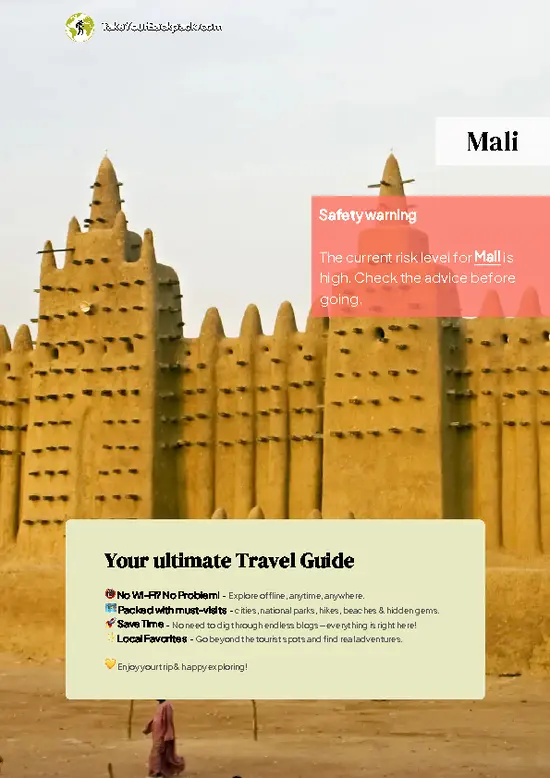
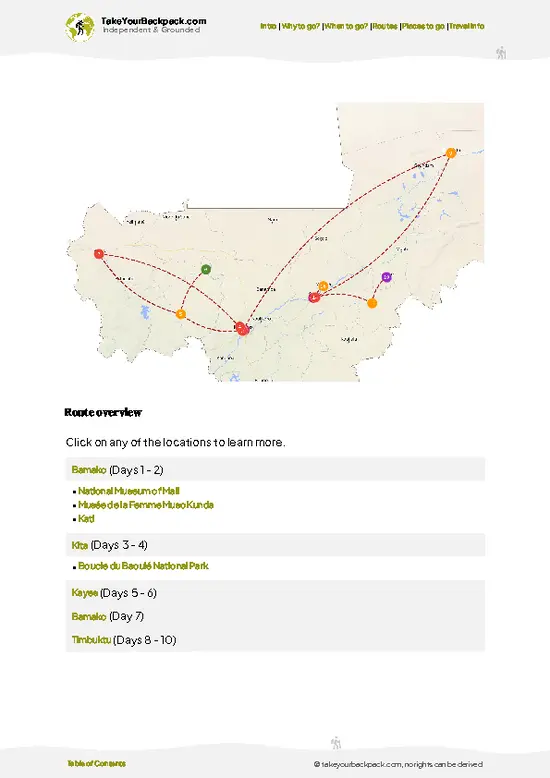
example page 0 from our offline Travel Guide for Mali
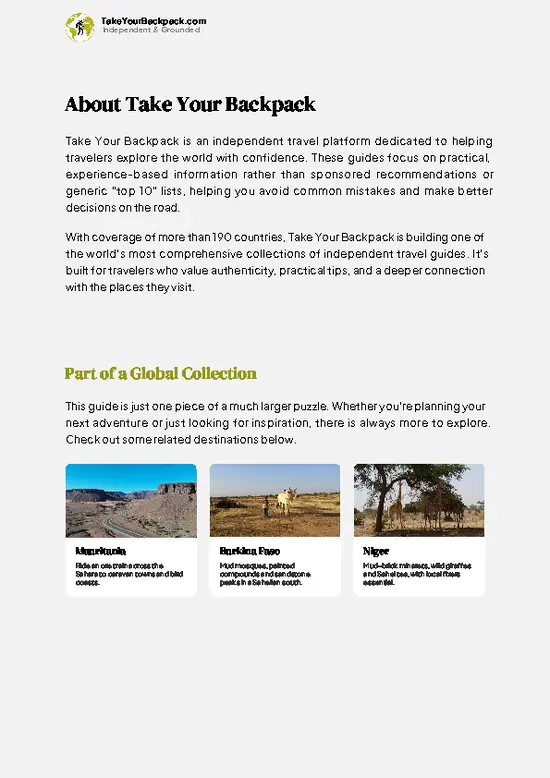
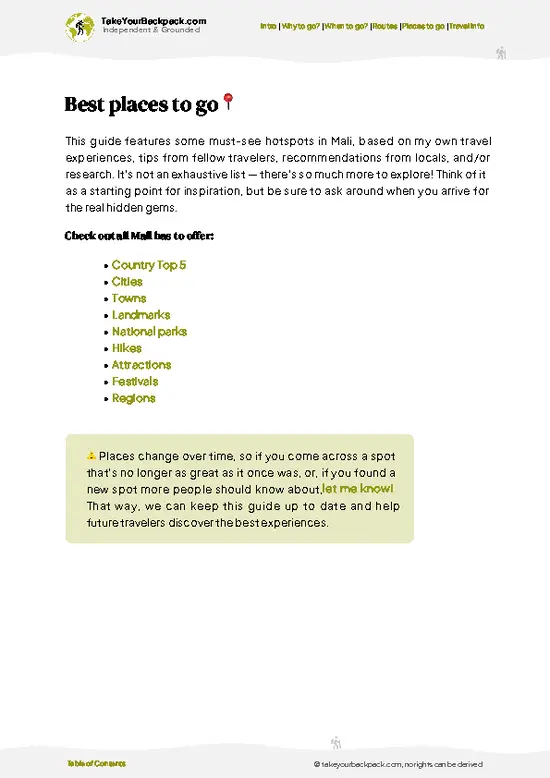
example page 1 from our offline Travel Guide for Mali
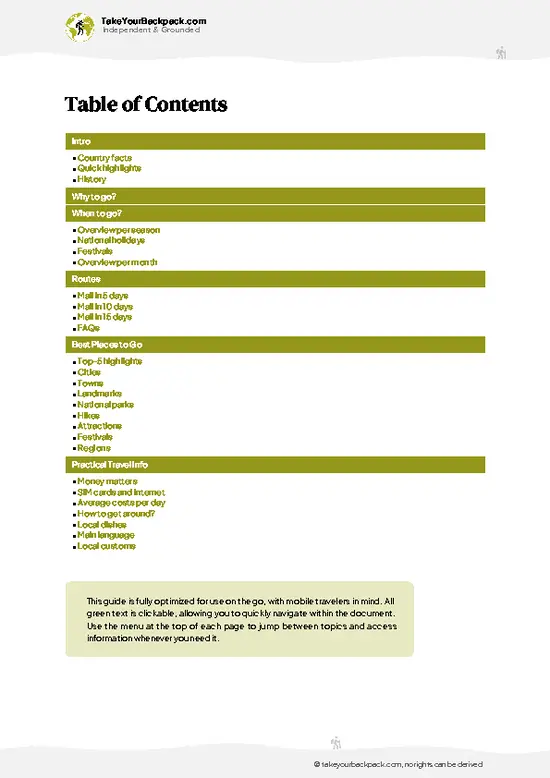
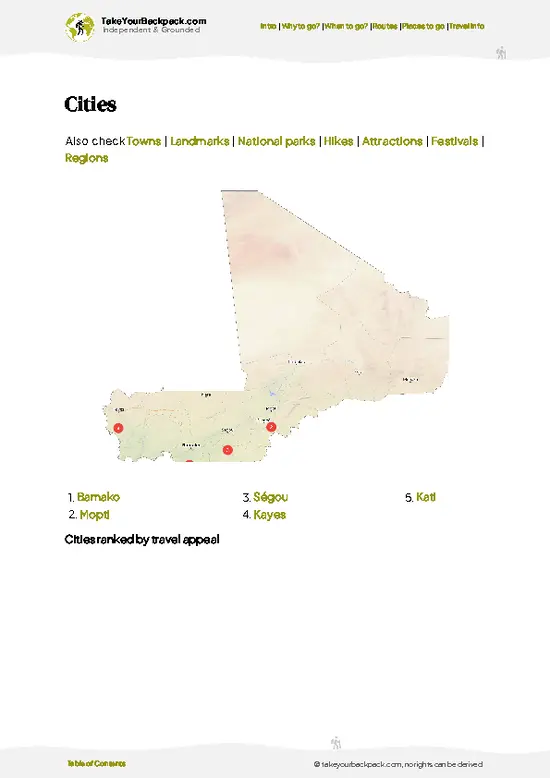
example page 2 from our offline Travel Guide for Mali
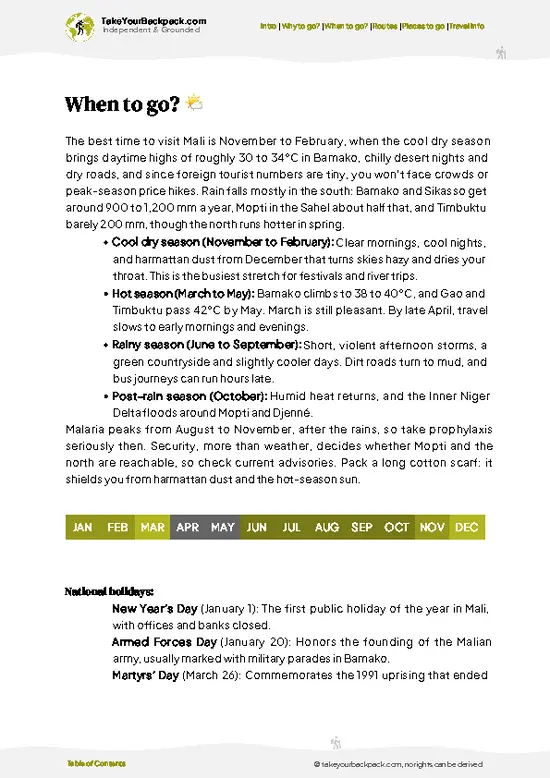
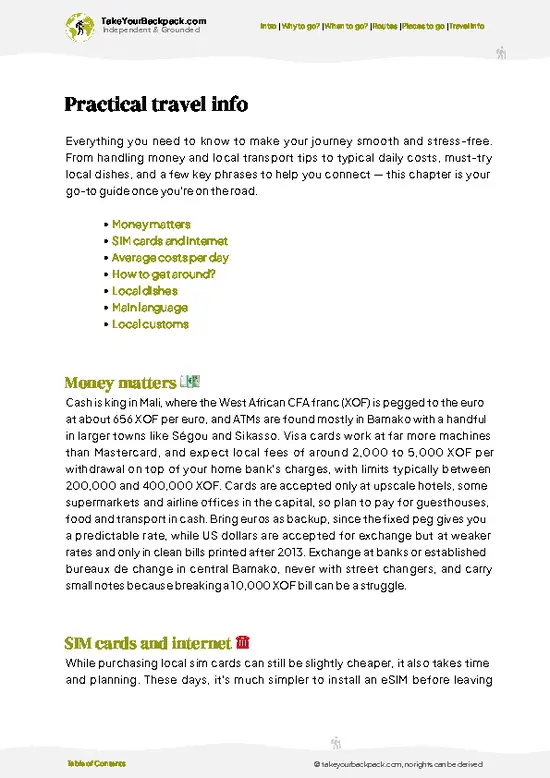
example page 3 from our offline Travel Guide for Mali
example page 4 from our offline Travel Guide for Mali
example page 5 from our offline Travel Guide for Mali
example page 6 from our offline Travel Guide for Mali
example page 7 from our offline Travel Guide for Mali
Loading the map 🌍
CLICK TO FILTER
cities
towns
landmarks
national parks
hikes
attractions
festivals
regions
SHOW COUNTRY’S BESTSHOW ALL

✨ Why go?
Ranked #2 town in Mali
Reasons people choose to visit here

Djenné, Mali, is a backpacker’s waypoint that offers more than just a quick photo op. It’s a gateway to the Bandiagara Escarpment, where you can lace up your boots for stunning hikes through dramatic landscapes. The local guesthouses provide a cozy base, often run by friendly families eager to share their culture over a bowl of jollof rice or a cup of sweet mint tea.

Strolling through Djenné’s mud-brick streets, you’ll feel the pulse of a town that thrives on community. Travelers often linger here for a few days, soaking in the slow pace and engaging with locals. It’s not a party town; instead, it attracts solo travelers and small groups who appreciate the chance to connect with others over shared meals or during a market visit.

The atmosphere is relaxed, making it easy to strike up conversations … read more 👉
Djenné, Mali, is a backpacker’s waypoint that offers more than just a quick photo op. It’s a gateway to the Bandiagara Escarpment, where you can lace up your boots for stunning hikes through dramatic landscapes. The local guesthouses provide a cozy base, often run by friendly families eager to share their culture over a bowl of jollof rice or a cup of sweet mint tea.

Strolling through Djenné’s mud-brick streets, you’ll feel the pulse of a town that thrives on community. Travelers often linger here for a few days, soaking in the slow pace and engaging with locals. It’s not a party town; instead, it attracts solo travelers and small groups who appreciate the chance to connect with others over shared meals or during a market visit.

The atmosphere is relaxed, making it easy to strike up conversations with fellow backpackers or locals. If you’re looking for a place that balances cultural immersion with the thrill of nearby adventures, Djenné is a perfect fit. Just remember, the real beauty of this town lies in its authentic experiences, not just its sights.

💡 HighlightsMust-see experiences and standout moments

  • Great Mosque of Djenné (La Grande Mosquée) — The world’s largest mud-brick building and Djenné’s beating heart: striking adobe architecture, toron wooden scaffolds, and an unbeatable photo at sunrise or after rain. It’s a living mosque, so the exterior and plaza are the main visitor experiences unless you go with a local guide for special inside access.
  • Grande Place (the mosque plaza) — The open square in front of the mosque where everyday life happens: traders, kids flying kites, rooftop sellers, and the heartbeat of town gatherings. Best for people-watching, sunset light on the mosque, and catching market spillover.
  • Djenné Weekly Market (Marché) — A proper regional market with foodstuffs, river fish, textiles and basics; it’s where the countryside meets town. Timing varies by season,
… read more 👉
  • Great Mosque of Djenné (La Grande Mosquée) — The world’s largest mud-brick building and Djenné’s beating heart: striking adobe architecture, toron wooden scaffolds, and an unbeatable photo at sunrise or after rain. It’s a living mosque, so the exterior and plaza are the main visitor experiences unless you go with a local guide for special inside access.
  • Grande Place (the mosque plaza) — The open square in front of the mosque where everyday life happens: traders, kids flying kites, rooftop sellers, and the heartbeat of town gatherings. Best for people-watching, sunset light on the mosque, and catching market spillover.
  • Djenné Weekly Market (Marché) — A proper regional market with foodstuffs, river fish, textiles and basics; it’s where the countryside meets town. Timing varies by season, so ask locally — when it’s on, it’s vivid, noisy and essential for seeing local trade and barter in action.
  • Musée de Djenné (Djenné Museum) — A small local museum with archaeological finds, traditional objects and context on the town’s history. It’s compact but valuable for understanding why Djenné became a trading and Islamic learning center.
  • Mud-brick alleys and traditional houses — Walk the narrow lanes to see the carved facades, wooden torons, and family compounds up close. Homes and courtyards are living heritage; a local guide can explain family lineages, repair practices, and the social uses of space.
  • Pottery workshops and clay markets — Djenné clay pottery is a local craft: visit women’s pottery yards and sellers around the market to watch shaping, drying and firing. Great for buying sensible, usable pots and seeing traditional techniques.
  • Carpenter and blacksmith quarters — These workshops make and repair the wooden torons and tools that keep the mud town standing. Watching the carpenters and smiths at work gives insight into the hands-on maintenance behind the town’s architecture.
  • Bani River landing and pirogue rides — The riverfront is alive with boat activity; short pirogue trips let you see riverside life, fishermen, and birdlife. It’s also the practical link to surrounding villages and seasonal floodplain scenery.
  • Rooftop viewpoints and terrace cafés — Climb a permitted rooftop or ask a guesthouse terrace for access to watch the light change on the mosque and town. It’s the best way to get orientation, photos and a sense of how the town sits in the floodplain — polite permission required.
  • The annual Crépissage (mosque replastering festival) — If you’re in town for it (usually once a year), this community plastering of the mosque is one of the most authentic, joyful public rituals imaginable: singing, ladders, shared labor and a true expression of local identity. Even if you miss the event itself, the repair culture behind it is visible year-round.
A few nearby, visitable day-trip highlights: the riverside towns and fishing villages along the Bani/Niger waterways, the regional markets and port at Mopti, and the seasonal wetlands of the Inner Niger Delta reachable by pirogue from Djenné.
Spotted a mistake or missing something? Contact us.

🏘️ NeighborhoodsNeighborhood guide to Djenné

Djenné is a captivating blend of history and culture, where the scent of spices mingles with the earthy tones of mud-brick architecture. Each neighborhood offers a unique experience for backpackers.

Old Djenné: This is the heart of the town, where the iconic Great Mosque stands tall. The vibe here is vibrant yet laid-back, perfect for soaking in the local culture. Streets are narrow and walkable, making it easy to explore. Accommodations range from budget guesthouses to mid-range options. Nightlife is minimal, but the evening atmosphere is lively with locals gathering. Ideal for short stays, as you can immerse yourself in the history without feeling rushed.

New Djenné: A contrast to Old Djenné, this area is quieter and more residential. It’s less touristy, offering a more authentic experience. … read more 👉
Djenné is a captivating blend of history and culture, where the scent of spices mingles with the earthy tones of mud-brick architecture. Each neighborhood offers a unique experience for backpackers.

Old Djenné: This is the heart of the town, where the iconic Great Mosque stands tall. The vibe here is vibrant yet laid-back, perfect for soaking in the local culture. Streets are narrow and walkable, making it easy to explore. Accommodations range from budget guesthouses to mid-range options. Nightlife is minimal, but the evening atmosphere is lively with locals gathering. Ideal for short stays, as you can immerse yourself in the history without feeling rushed.

New Djenné: A contrast to Old Djenné, this area is quieter and more residential. It’s less touristy, offering a more authentic experience. The cost of living is lower here, with simple lodgings available. Walkability is decent, but you might need to rely on local transport for longer distances. This neighborhood is perfect for longer stays, allowing you to connect with the community and enjoy the slower pace.

Market District: The bustling market area is a sensory overload, filled with the sounds of bargaining and the aroma of fresh produce. It’s a great spot for budget travelers looking to sample local food. While it can be chaotic, the energy is infectious. Accommodations are basic but affordable. This area is best for short visits, as the market atmosphere can be overwhelming for extended stays.

Navigating Djenné is about embracing its rhythm. Each area offers a different flavor, making your journey richer and more rewarding.

⌛️ 1 dayA smart one-day plan

Djenné, Mali, is a living canvas of mud-brick architecture and vibrant culture. The town is home to the Great Mosque, a UNESCO World Heritage site, and is steeped in history that whispers through its narrow streets. The air is thick with the scent of spices and the sound of laughter, making it a place where every corner holds a story.

Start your morning at the bustling market. The sun is just rising, casting a warm glow over the stalls. Here, you can find everything from colorful textiles to fresh produce. Engage with the local vendors; their smiles are as rich as the fabrics they sell. Grab a breakfast of *boudin* (spicy sausage) and *foutou* (a starchy dish) from a nearby stand. The flavors will energize you for the day ahead.

After breakfast, head to the Great Mosque. Its towering façade … read more 👉
Djenné, Mali, is a living canvas of mud-brick architecture and vibrant culture. The town is home to the Great Mosque, a UNESCO World Heritage site, and is steeped in history that whispers through its narrow streets. The air is thick with the scent of spices and the sound of laughter, making it a place where every corner holds a story.

Start your morning at the bustling market. The sun is just rising, casting a warm glow over the stalls. Here, you can find everything from colorful textiles to fresh produce. Engage with the local vendors; their smiles are as rich as the fabrics they sell. Grab a breakfast of *boudin* (spicy sausage) and *foutou* (a starchy dish) from a nearby stand. The flavors will energize you for the day ahead.

After breakfast, head to the Great Mosque. Its towering façade is a marvel of Sudano-Sahelian architecture. Spend some time wandering around, soaking in the intricate details of the mud plaster and wooden beams. If you’re lucky, you might catch a local guide who can share stories about the mosque’s history and significance.

In the afternoon, venture to the lesser-known neighborhood of Djenné-Djeno. This area is often overlooked by tourists but offers a glimpse into ancient Djenné. The ruins here are a testament to the town’s long-standing heritage. Walk among the remnants and imagine the lives once lived in this vibrant community.

As the sun begins to set, return to the main square. The light softens, and the atmosphere shifts. Grab a seat at a local eatery and enjoy a dinner of *tiguadege na* (peanut stew) while watching the locals gather. The day winds down with laughter and music, a perfect end to your Djenné adventure.

This day in Djenné isn’t just about sights; it’s about immersing yourself in a rhythm that feels both ancient and alive.

🌤️ When to go?Seasonal considerations and timing

  • Weather: The dry season from November to February is your best bet. Expect clear skies and minimal rain, which means the iconic mud-brick architecture stays intact and accessible. The rainy season (June to September) turns the streets into mud traps, making walking and exploring a slog.
  • Temperature: Daytime highs hover around 30-35°C (86-95°F) in the dry season, cooling off to a comfortable 20-25°C (68-77°F) at night. The wet season is hotter and more humid, often pushing above 35°C (95°F), which can drain your energy fast.
  • Daylight Hours: Djenné enjoys roughly 11 to 12 hours of daylight year-round, but the dry season’s crisp mornings and longer evenings make for better trekking and photography conditions.
  • Crowds: The dry season, especially around the annual Djenné Festival in February,
… read more 👉
  • Weather: The dry season from November to February is your best bet. Expect clear skies and minimal rain, which means the iconic mud-brick architecture stays intact and accessible. The rainy season (June to September) turns the streets into mud traps, making walking and exploring a slog.
  • Temperature: Daytime highs hover around 30-35°C (86-95°F) in the dry season, cooling off to a comfortable 20-25°C (68-77°F) at night. The wet season is hotter and more humid, often pushing above 35°C (95°F), which can drain your energy fast.
  • Daylight Hours: Djenné enjoys roughly 11 to 12 hours of daylight year-round, but the dry season’s crisp mornings and longer evenings make for better trekking and photography conditions.
  • Crowds: The dry season, especially around the annual Djenné Festival in February, draws more visitors. This means a livelier atmosphere but also higher prices and busier accommodations.
  • Seasonal Activities: The Great Mosque’s maintenance and the vibrant cultural events happen mostly in the dry months. Visiting then means catching the town’s heartbeat in full swing.
  • Price Fluctuations: Expect prices for lodging and guides to spike during the dry season and festival times. The wet season offers cheaper rates but at the cost of comfort and accessibility.
Pro-tip: Aim for late November or early December—before the festival rush—to enjoy pleasant weather, manageable crowds, and better deals, all while soaking in Djenné’s authentic rhythm.


source: climatestotravel.comJANJanuary: excellent for travelingFEBFebruary: highly recommended for travelingMARMarch: good for travelingAPRApril: fair for travelingMAYMay: fair for travelingJUNJune: below average for travelingJULJuly: below average for travelingAUGAugust: below average for travelingSEPSeptember: below average for travelingOCTOctober: fair for travelingNOVNovember: highly recommended for travelingDECDecember: excellent for traveling
when-to-go

✈️ The backpacker research shortcutMali Travel Guide

An offline-friendly backpacking guide with optimized travel routes, ranked highlights, transport advice, and the best areas to stay.
example page 0 from our offline Travel Guide for Mali
example page 1 from our offline Travel Guide for Mali
example page 2 from our offline Travel Guide for Mali
example page 3 from our offline Travel Guide for Mali
example page 4 from our offline Travel Guide for Mali
example page 5 from our offline Travel Guide for Mali
example page 6 from our offline Travel Guide for Mali
example page 7 from our offline Travel Guide for Mali
The digital guide (266 pages) contains:
✅ 61 highlights, ranked by travel appeal
✅ Optimized 5, 10 & 15-day travel routes
✅ Cities, national parks, landmarks, beaches
✅ How to get around
✅ Offline-friendly for travel without Wi-Fi
👉 Click to see all 30+ guide features

📅 Plan smarter in minutes, not weeks
✅ Month by month travel advice
✅ Festivals & national holidays
✅ Budget expectations

🗺️ Go to the right places, skip the overrated ones
✅ Honest pros & cons of destinations
✅ Top hikes, parks & viewpoints
✅ Lesser-known places most travelers miss
✅ Clear “worth it vs skip it” guidance

🛏️ Travel smoothly without rookie mistakes
✅ Best areas to stay
✅ Transport systems explained simply
✅ Common scams & safety advice
✅ SIM cards, money & practical tips

🌍 Understand the country, not just visit it
✅ Culture & traditions
✅ 52 Essential phrases & customs
✅ Festivals worth planning around
✅ Traveler-friendly historical context
✅ Insights that make places more meaningful

📱 Built for real travel conditions
✅ Fully downloadable PDF
✅ Works completely offline
✅ Optimized for phone use
✅ Useful in remote areas & buses
✅ Everything in one place
Stop searching, start planning
Get instant access to your full guide. 30‑day money-back guarantee.
+ Add another guide for just

By proceeding you agree to our terms.
Sent to your inbox immediately after payment • 100% Secure Checkout
Best Backpacking Travel Advisor 2025 tourism awardBest Backpacking
Travel Advisor
2025
What others say about Take Your Backpack Guides:
⭐⭐⭐⭐⭐
Fantastic, amazing amount of information!
⭐⭐⭐⭐⭐
My goodness this is amazing, it's what I've been looking for hats off too you!
⭐⭐⭐⭐⭐
I think this is absolutely BRILLIANT
⭐⭐⭐⭐
Very complete and informative. It's still missing places, but I gotta to commend you
⭐⭐⭐⭐⭐
This is truly amazing, thank you, can't wait to explore it with my kids!
⭐⭐⭐⭐⭐
Awesome resource, thank you!
⭐⭐⭐⭐⭐
This is amazing! Can't wait to explore the ones I haven't seen
⭐⭐⭐⭐
I love this! Well done, great idea.
⭐⭐⭐⭐⭐
Thanks for taking the time to make this gem!
⭐⭐⭐⭐⭐
This might be the best website I've ever seen.
⭐⭐⭐⭐⭐
Congratulations, and thank you so much for your work; it's incredibly valuable.
⭐⭐⭐⭐
In all seriousness I think you did a great job pointing out the important spots
⭐⭐⭐⭐⭐
10/10 very good
⭐⭐⭐⭐⭐
As someone who's only just starting to visit regularly this is awesome, thank you.
⭐⭐⭐⭐
Thank you very much! I'm going to visit my dad, it's going to be very useful!
⭐⭐⭐⭐⭐
This is really cool! We'll be travelling for the first time and this definitely come in handy.
⭐⭐⭐⭐⭐
You are now our minister of culture, congratulations 👨‍💼
⭐⭐⭐⭐⭐
Just wanted to tell you that this is a pearl! Going to follow your recommendations.
⭐⭐⭐⭐⭐
This is so cool. I'll definitely be using the resource for my travels soon.
⭐⭐⭐⭐⭐
This is very impressive! Good work.
⭐⭐⭐⭐⭐
This is an amazing and informative site. Very well done!

🛏️ Where to stay?How to pick the right area

In Djenné, the heartbeat for backpackers pulses strongest near the Grand Mosque and the central market area. This is where the town’s rhythm is most accessible—dusty streets lined with mudbrick buildings, the scent of fresh millet bread mingling with the earthy aroma of the Niger River nearby. Staying here means you’re steps away from the mosque’s imposing silhouette, catching the golden light that turns its walls a warm ochre at sunset. It’s not just about proximity; this area hums with a social vibe. Travelers and locals mingle in the open-air cafés and market stalls, making it easy to swap … read more 👉
In Djenné, the heartbeat for backpackers pulses strongest near the Grand Mosque and the central market area. This is where the town’s rhythm is most accessible—dusty streets lined with mudbrick buildings, the scent of fresh millet bread mingling with the earthy aroma of the Niger River nearby. Staying here means you’re steps away from the mosque’s imposing silhouette, catching the golden light that turns its walls a warm ochre at sunset. It’s not just about proximity; this area hums with a social vibe. Travelers and locals mingle in the open-air cafés and market stalls, making it easy to swap stories or find a guide for the next adventure.

Compared to the quieter, more residential quarters on the outskirts, this central zone offers a safer, more connected experience. The streets are busier, which naturally deters trouble and keeps you in the flow of daily life. Hostels and budget guesthouses cluster here, offering simple but clean accommodations with communal spaces that encourage interaction. You’ll find fellow backpackers over shared meals or around evening fires, the kind of low-key social scene that feels like a travel tribe forming organically.

Venturing beyond this hub means fewer options for socializing and less immediate access to the town’s pulse. So, if you want to soak in Djenné’s unique atmosphere without feeling isolated or out of place, the area around the mosque and market is your best bet. It’s where the town’s soul is most tangible, and where your backpacking experience gains both ease and depth.

🚌 Getting aroundTransportation options and practical tips

Djenné moves at the pace of the Niger River’s lazy bends—unhurried, with a rhythm that feels more like a slow dance than a march. The sun drapes the mud-brick buildings in a warm, ochre glow by mid-morning, and the town’s pulse is measured in the clatter of market stalls opening and the occasional call of a motorbike weaving through narrow streets. There’s no rush here, no strict timetable to catch. Instead, you navigate by instinct and local cues: the scent of fresh bread, the chatter of fishermen, the dusty breeze carrying the promise of the next boat. This is a place where patience isn’t just a virtue; it’s your best tool for unlocking the town’s character.

Walking: The heart of Djenné is compact and best explored on foot. Streets are narrow and often uneven, so sturdy shoes are a must. … read more 👉
Djenné moves at the pace of the Niger River’s lazy bends—unhurried, with a rhythm that feels more like a slow dance than a march. The sun drapes the mud-brick buildings in a warm, ochre glow by mid-morning, and the town’s pulse is measured in the clatter of market stalls opening and the occasional call of a motorbike weaving through narrow streets. There’s no rush here, no strict timetable to catch. Instead, you navigate by instinct and local cues: the scent of fresh bread, the chatter of fishermen, the dusty breeze carrying the promise of the next boat. This is a place where patience isn’t just a virtue; it’s your best tool for unlocking the town’s character.

Walking: The heart of Djenné is compact and best explored on foot. Streets are narrow and often uneven, so sturdy shoes are a must. Walking lets you soak in the tactile details—the cracked mud walls, the smell of spices from open-air kitchens, the vibrant chatter of market vendors. It’s free, flexible, and the only way to truly feel the town’s texture. Expect to spend 15-30 minutes walking between major spots like the Grand Mosque and the market.

Motorbike Taxis (Moto): These are the town’s unofficial express lanes. Moto taxis dart through alleys and dirt roads with surprising agility. They’re cheap—usually around 200-500 CFA francs per short trip—and run from dawn until dusk, but don’t expect helmets or smooth rides. The wind, dust, and occasional pothole are part of the experience. Great for when your feet are tired or you’re carrying gear, but hold on tight.

Shared Minibuses: For trips to nearby villages or the outskirts of Djenné, shared minibuses are your go-to. They leave when full, which means timing is flexible but unpredictable—sometimes you wait 10 minutes, sometimes an hour. Fares hover around 500-1000 CFA francs depending on distance. The ride is bumpy, windows often open to let in dust and heat, but it’s a genuine slice of local life and a budget-friendly way to cover longer distances.

Boats on the Niger River: When the river is high (usually July to October), boats become a vital transit mode. They connect Djenné to other river towns and offer a scenic, slow-moving alternative to road travel. Prices vary widely—expect to negotiate hard—and schedules are informal, often departing when enough passengers gather. The boat’s wooden planks creak underfoot, and the river breeze carries the scent of wet earth and fish. It’s not the fastest option, but it’s unforgettable.

Bicycles: Renting a bike is a quiet, efficient way to explore beyond the town center. Bikes cost around 1000-1500 CFA francs per day. The terrain is mostly flat but dusty, so a sturdy bike with good tires is essential. Cycling lets you cover more ground than walking without the noise and dust of motorbikes, and you control the pace completely. Early morning rides offer cooler air and softer light, perfect for photography or a peaceful escape.

Mastering Djenné’s transit means embracing its laid-back flow and using each mode for what it’s best at—walking for immersion, motos for quick hops, minibuses for longer hauls, boats for the river’s charm, and bikes for flexible exploration. This mix keeps your budget intact while letting you experience the town’s rhythms on your own terms.

👛 Costs (as of 16 October 2026)What things cost and how to budget

Backpacking in Djenné, Mali, means stepping into a world where the sun bakes the mud-brick buildings and the air carries the scent of spices and river dust. Knowing the daily costs helps you plan without surprises, so you can focus on soaking in the atmosphere.
  • Dorm Accommodation: Expect to pay around €5 to €10 per night for a basic dorm bed. Options are limited and simple—think mosquito nets, shared bathrooms, and a fan if you’re lucky. It’s not luxury, but it’s enough to rest after wandering the market and the famous Great Mosque.
  • Meals: Street food and local eateries dominate here. A filling meal of rice, sauce, and grilled fish or chicken will cost about €1.50 to €3. Fresh fruit and snacks are even cheaper. If you want a bit more comfort or variety, small restaurants might push you closer
… read more 👉
Backpacking in Djenné, Mali, means stepping into a world where the sun bakes the mud-brick buildings and the air carries the scent of spices and river dust. Knowing the daily costs helps you plan without surprises, so you can focus on soaking in the atmosphere.
  • Dorm Accommodation: Expect to pay around €5 to €10 per night for a basic dorm bed. Options are limited and simple—think mosquito nets, shared bathrooms, and a fan if you’re lucky. It’s not luxury, but it’s enough to rest after wandering the market and the famous Great Mosque.
  • Meals: Street food and local eateries dominate here. A filling meal of rice, sauce, and grilled fish or chicken will cost about €1.50 to €3. Fresh fruit and snacks are even cheaper. If you want a bit more comfort or variety, small restaurants might push you closer to €5 per meal.
  • Local Transport: Djenné is small enough to explore mostly on foot, which saves money and lets you catch the town’s rhythms. For longer trips or to nearby villages, shared taxis or motorbike rides cost around €1 to €3 per trip. Bargaining is common, so keep that in mind.
  • Basic Activities/Entry Fees: Visiting the Great Mosque is free from the outside, but guided tours or entry to certain cultural sites can cost €2 to €5. Hiring a local guide to navigate the town’s history and markets might run you €10 to €15 for a half-day, which is worth it for the context and stories you won’t get otherwise.
  • Miscellaneous Expenses: Water, snacks, and small souvenirs add up. Bottled water is about €0.50, and a cold soda or juice is around the same. Budget €1 to €3 daily for these extras, depending on your pace and preferences.

All told, a realistic daily budget for backpacking in Djenné hovers between €10 and €25. This range covers the essentials without cutting corners, letting you experience the town’s unique character without constant money stress.
⚠️ Prices can change and everyone travels differently, so take this as a rough guide. Hope it helps you plan your adventure!

🚌 Day tripsExploring the surroundings

Djenné, Mali, is a vibrant hub that serves as a fantastic base for day trips, offering a blend of culture, history, and breathtaking landscapes. Here are some standout excursions that will enrich your experience.

1. The Great Mosque of Djenné
Start your day with a visit to the iconic Great Mosque, a UNESCO World Heritage site. The early morning light casts a warm glow on its adobe walls, and the scent of fresh bread wafts through the air from nearby stalls. Spend a few hours exploring the market that surrounds the mosque, where you can haggle for handmade crafts and local spices. The mosque is just a short walk from the town center, making it easily accessible. Aim to visit during the dry season (November to February) for the best weather. A common mistake? Skipping the guided tour; local … read more 👉
Djenné, Mali, is a vibrant hub that serves as a fantastic base for day trips, offering a blend of culture, history, and breathtaking landscapes. Here are some standout excursions that will enrich your experience.

1. The Great Mosque of Djenné
Start your day with a visit to the iconic Great Mosque, a UNESCO World Heritage site. The early morning light casts a warm glow on its adobe walls, and the scent of fresh bread wafts through the air from nearby stalls. Spend a few hours exploring the market that surrounds the mosque, where you can haggle for handmade crafts and local spices. The mosque is just a short walk from the town center, making it easily accessible. Aim to visit during the dry season (November to February) for the best weather. A common mistake? Skipping the guided tour; local guides share stories that breathe life into the bricks.
👉 Explore Great Mosque of Djenné

2. Mopti
A 1.5-hour drive from Djenné, Mopti is a bustling port town where the Niger River meets the Bani River. The boat rides here are a sensory delight, with the sound of water lapping against wooden pirogues and the vibrant colors of fishing nets. Explore the lively market, where you can sample local fish dishes and fresh fruits. Budget around $10 for transport and a meal. The best time to go is early morning to avoid the midday heat. Many first-timers underestimate the river’s charm; don’t miss the chance to take a pirogue ride for a unique perspective of the town.
👉 Explore Mopti

3. Dogon Country
While a bit more adventurous, a day trip to Dogon Country is worth the effort. It takes about two hours to reach the village of Bandiagara, where you can hike through stunning cliffs and ancient villages. The landscape is a feast for the eyes, with ochre cliffs contrasting against the blue sky. Expect to spend around $15 for transport and snacks. The dry season is ideal for hiking, but be prepared for some steep trails. A common mistake is underestimating the physical demand; wear sturdy shoes and bring plenty of water.
👉 Explore Dogon Country

4. Sangha
Just over an hour from Djenné, Sangha offers a serene escape into nature. The lush greenery and the sound of birds create a peaceful atmosphere. You can explore the nearby wetlands, which are teeming with wildlife. Bring a picnic and enjoy lunch by the water. Costs are minimal, around $5 for transport. The best time to visit is during the cooler months, from November to February. Many travelers overlook this spot, but it’s a perfect way to unwind after a busy market day.


These day trips from Djenné not only showcase the region’s rich culture but also allow you to immerse yourself in the local way of life. Each journey is a chance to connect with Mali’s heart and soul.

🛡️ SafetyTraveler Safety Guide

Djenné is generally safe, but like any vibrant place, it has its nuances. The bustling market is a sensory overload—spices wafting through the air, laughter echoing off mud-brick walls. Here, keep your belongings close. Pickpockets can blend into the crowd, so wear a crossbody bag and keep your phone tucked away.

Traveling solo? Daytime is perfect for wandering. The locals are friendly and often eager to share stories. At night, stick to well-lit areas and avoid wandering too far from your accommodation. The atmosphere shifts after dark, and it’s best to be cautious.

Scams are rare, but some vendors might inflate prices for tourists. Always negotiate with a smile; it’s part of the experience. If someone offers unsolicited help, politely decline. It’s often a prelude to a request for payment. … read more 👉
Djenné is generally safe, but like any vibrant place, it has its nuances. The bustling market is a sensory overload—spices wafting through the air, laughter echoing off mud-brick walls. Here, keep your belongings close. Pickpockets can blend into the crowd, so wear a crossbody bag and keep your phone tucked away.

Traveling solo? Daytime is perfect for wandering. The locals are friendly and often eager to share stories. At night, stick to well-lit areas and avoid wandering too far from your accommodation. The atmosphere shifts after dark, and it’s best to be cautious.

Scams are rare, but some vendors might inflate prices for tourists. Always negotiate with a smile; it’s part of the experience. If someone offers unsolicited help, politely decline. It’s often a prelude to a request for payment.

Embrace the rhythm of Djenné, but stay aware. The beauty here is earned through connection and a little common sense.

FAQCommon questions from travelers

Yes, Djenné is worth visiting for its unique mud-brick architecture and the famous Great Mosque, a UNESCO World Heritage site. It offers a rich cultural experience that goes beyond a simple stopover, especially during the weekly market or the annual plastering festival in March.
Two days are sufficient to explore Djenné thoroughly, including the mosque, the market, and the surrounding traditional villages. This allows time to appreciate the local crafts and the town's atmosphere without rushing.
No, Djenné is not ideal for a day trip from nearby cities like Mopti due to travel times and the need to explore the town properly. It is about 100 kilometers from Mopti, and the journey can take 3-4 hours each way on rough roads, making an overnight stay necessary.
⚠️ Things can change over time, so always validate details locally before you go.

Other Malian towns near Djenné

Explore more nearby:

  • Tominian—Bwa farming country, mission church, Bani banks| 69 km away
  • Ténenkou—Inner Delta island, Diaka channel, Fulani cattle crossings| 73 km away
  • San—Banco mosque, Bani riverbank, indigo and shea workshops| 77 km away

💡 Not sure where to go next?
Create a personalized itinerary for Mali including Djenné and the places that fit your trip.

Generate my itinerary

👉 Discover all towns

Or checkout all Mali has to offer (think cities, towns, villages, national parks, hikes, beaches, festivals)
Country photo of Mali

We 💚 feedbackSumming up the experience

Djenné is a sensory feast. The earthy scent of sun-baked mud mingles with spices from bustling markets. You’ll feel the pulse of life in the narrow alleys, where laughter and chatter echo off ancient walls. The best surprise? Watching the sunset paint the Great Mosque in hues of gold and crimson—it’s a moment that feels sacred. Just a heads-up: the heat can be relentless, so hydrate and take it slow. Embrace the rhythm, and you’ll find Djenné’s magic unfolds in its own time.

✍️ Help improve this page!
The information on this page is based on in-depth research, insights shared by experienced travelers, and feedback from the local travel community in Mali. While every effort is made to keep the information accurate and current, conditions can change — so if you spot anything incorrect or outdated, please get in touch.


🙋‍♂️ Give feedback

👋 Meet the founderWho’s Behind Take Your Backpack?

Johan, backpacker and founder of TakeYourBackpackHi, I’m Johan (Netherlands 🇳🇱), the creator of TakeYourBackpack. Over the past 3 decades, I’ve backpacked through 90+ countries across six continents, gaining extensive experience with independent travel, long-term trips, and overland routes.

This site is built on a combination of firsthand travel experience and carefully curated insights from other backpackers. Many guides are based on places I’ve personally visited, while others bring together tips, observations, and practical advice shared by trusted travelers I’ve met along the way.

The goal is to provide realistic, experience-driven guidance — not generic itineraries — so you can explore destinations with better context, clearer expectations, and more confidence.