

×

Marshall Islands🇲🇭 | regionsArno AtollIne porches, pandanus mats, lagoon skiffs, sandy single lane | things to do and best time to go

Explore Jaluit Atoll Conservation AreaExplore Ailuk Atoll

Backpacking in Arno Atoll
🏆 Top pickregion ranked #1
By Johan Kruseman 🇳🇱 | Updated October 22, 2026

Women on Arno weave pandanus into mats and baskets, and the best place to find the work is on the porches of Ine, the main village, where the dried strips lie flat in the sun and the leaves smell faintly of hay. Arno Atoll lies in the southeast of the Marshall Islands, a short hop across open water from the capital, Majuro. It is a wide lagoon rimmed by narrow islets, with coconut palms, breadfruit and low houses along a single lane. Roads are sandy, the generator hum fades by early evening, and nights are quiet and dark. Services are thin and guesthouse choices are few, so you meet other travelers rarely and locals constantly. The reward is clear lagoon water, wind through the palms, and a pace set by tides. Plan a first day around arriving, walking Ine at golden hour, buying a mat from a weaver, and sleeping early to the sound of surf.

Discover everything you want to know in the 📖 Marshall Islands Travel Guide.


example page 0 from our offline Travel Guide for Marshall Islands
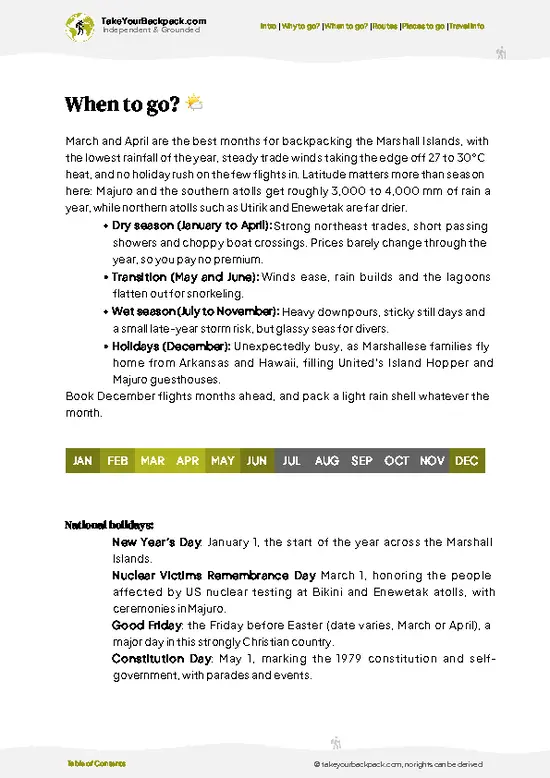
example page 1 from our offline Travel Guide for Marshall Islands
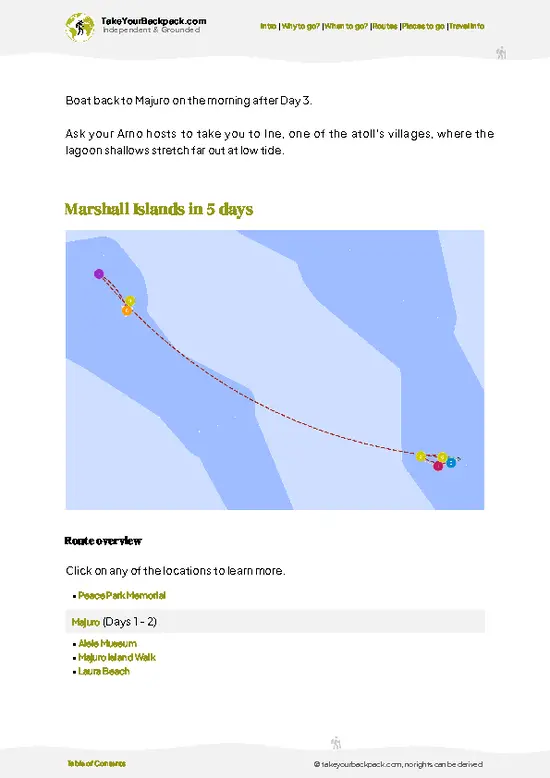
example page 2 from our offline Travel Guide for Marshall Islands
example page 3 from our offline Travel Guide for Marshall Islands
example page 4 from our offline Travel Guide for Marshall Islands
example page 5 from our offline Travel Guide for Marshall Islands
example page 6 from our offline Travel Guide for Marshall Islands
example page 7 from our offline Travel Guide for Marshall Islands
Loading the map 🌍
CLICK TO FILTER
towns
villages
landmarks
national parks
hikes
beaches
attractions
festivals
regions
SHOW COUNTRY’S BESTSHOW ALL

✨ Why go?
Ranked #1 region in Marshall Islands
The unique appeal for travelers

Backpackers come to Arno because it offers what Majuro cannot: a working Marshallese community where the lagoon is the main road. The atoll holds roughly 133 islets around one big lagoon, so a borrowed skiff with a local guide turns every day into a small expedition, with snorkeling over coral heads and picnics on empty sandbars. Ine, the main settlement, is where you will sleep and where life is easiest to join. Women weave pandanus mats and baskets that are among the better handicrafts you can buy in the country, and buying directly means the money reaches the maker. Church bells, fishing in the early hours and shared meals structure the day. Most people stay two or three nights, though slow travelers and anyone happy with a book, a hammock and conversation can stretch it. It suits curious … read more 👉
Backpackers come to Arno because it offers what Majuro cannot: a working Marshallese community where the lagoon is the main road. The atoll holds roughly 133 islets around one big lagoon, so a borrowed skiff with a local guide turns every day into a small expedition, with snorkeling over coral heads and picnics on empty sandbars. Ine, the main settlement, is where you will sleep and where life is easiest to join. Women weave pandanus mats and baskets that are among the better handicrafts you can buy in the country, and buying directly means the money reaches the maker. Church bells, fishing in the early hours and shared meals structure the day. Most people stay two or three nights, though slow travelers and anyone happy with a book, a hammock and conversation can stretch it. It suits curious solo travelers and couples who want quiet, and it is best skipped by anyone who needs nightlife, reliable Wi-Fi or a fixed schedule, since boats and flights shift with the weather.

💡 HighlightsDon't-miss highlights and experiences

  1. Ine Village and Its Church: Ine is the heart of the atoll and the best introduction to Marshallese life. Walk the sandy lane past tin-roofed houses, cookhouses and breadfruit trees, and stop at the church, which anchors Sunday life and draws the whole community for hymns that carry across the lagoon. Go on a Sunday morning if you can, dressing modestly, or come in the late afternoon when the light turns gold and people sit outside. Visiting is free, and an hour or two is enough. Greet people and ask before taking photographs.
  2. Pandanus Weaving in Ine: The mats, fans and baskets made here are the atoll’s best-known craft. Women dry, split and plait pandanus leaves, and many will show you the process if you ask politely. Mornings are best, when work happens in the shade of porches. Small items
… read more 👉
  1. Ine Village and Its Church: Ine is the heart of the atoll and the best introduction to Marshallese life. Walk the sandy lane past tin-roofed houses, cookhouses and breadfruit trees, and stop at the church, which anchors Sunday life and draws the whole community for hymns that carry across the lagoon. Go on a Sunday morning if you can, dressing modestly, or come in the late afternoon when the light turns gold and people sit outside. Visiting is free, and an hour or two is enough. Greet people and ask before taking photographs.
  2. Pandanus Weaving in Ine: The mats, fans and baskets made here are the atoll’s best-known craft. Women dry, split and plait pandanus leaves, and many will show you the process if you ask politely. Mornings are best, when work happens in the shade of porches. Small items cost roughly US$5 to 20, and large mats can reach US$40 to 80 depending on size and pattern. Plan one to two hours, longer if you are invited to sit and try weaving yourself. Carry small bills, because change is scarce.
  3. The Arno Lagoon by Skiff: The lagoon is the real attraction. Ask your host to arrange a boat and a local who knows the channels, coral heads and sandbars. Mornings give calm water and clear visibility for snorkeling, and the wind rises in the afternoon. Expect to pay for fuel and the boatman, commonly US$40 to 100 for a half or full day depending on distance, shared between passengers. Bring your own mask, reef shoes, sun protection and plenty of water. Allow four to eight hours.
Start with the walk through Ine on your first afternoon, since meeting people there is how the weaving and boat trips get arranged. Beyond the village, the lagoon’s outer islets, including Bikarej and Tutu, make good day trips by skiff, with empty beaches, reef edges and small communities to visit.
Spotted a mistake or missing something? Contact us.

⌛️ 5 days5-day itinerary for Arno Atoll

Day 1: Ine: Start here, because Ine is where Arno Atoll's pace gets set. Everything moves by skiff and by schedule that locals know better than any timetable, so arrive with a loose plan and a willingness to let it bend. Spend the afternoon walking the village lanes, meeting the family hosting you, and asking which boat is heading where tomorrow. Mats and pandanus handicrafts are made here, and buying one directly is the easiest way to say thank you.
Day 2: Longar: Hop along the lagoon shore to Longar. The islands are strung close together, so short skiff rides replace roads, and fuel is the real limit on how far you go. Spend the day on foot between coconut groves and quiet beaches, and swim in the shallows where the water is calm. Hosting is informal, so settle details like meals and boat … read more 👉
Day 1: Ine: Start here, because Ine is where Arno Atoll's pace gets set. Everything moves by skiff and by schedule that locals know better than any timetable, so arrive with a loose plan and a willingness to let it bend. Spend the afternoon walking the village lanes, meeting the family hosting you, and asking which boat is heading where tomorrow. Mats and pandanus handicrafts are made here, and buying one directly is the easiest way to say thank you.
Day 2: Longar: Hop along the lagoon shore to Longar. The islands are strung close together, so short skiff rides replace roads, and fuel is the real limit on how far you go. Spend the day on foot between coconut groves and quiet beaches, and swim in the shallows where the water is calm. Hosting is informal, so settle details like meals and boat contributions the evening before.
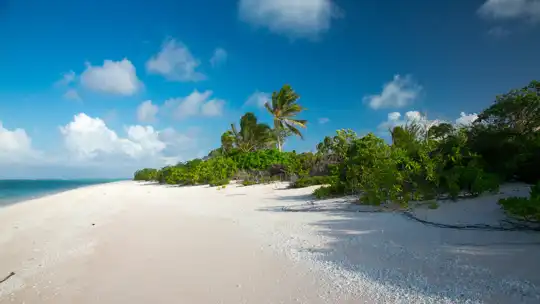
Day 3: Lagoon Islets: This is the day that justifies the whole trip. Ask your host to run you out to the uninhabited islets inside the lagoon, where white sand narrows to a few steps wide and the water shifts from pale turquoise to deep blue. Snorkel the coral heads, picnic on fish and breadfruit, and stay until the boat has to turn back. Pick calm weather, since a rough lagoon can cancel the run.
Day 4: Detour to the Outer Reef: If the sea allows, take a morning skiff to the ocean side of a reef islet. The surf is loud, the shoreline is rougher, and you get a sense of how exposed this ring of land really is. It adds a lot without changing your base, as you return to your village by afternoon.
Day 5: Back to Ine: Return to Ine to be sure you connect with your boat or flight out, because weather and fuel can shift departures. Use the slack hours for a last swim, a village conversation, and any handicraft shopping you saved. Leaving a buffer day on either end of the trip is the smartest move you can make here.

🌤️ When to go?When to go for the best experience

  • Dry Season (December to April): Trade winds blow steadily, rain is lighter, and the lagoon crossing from Majuro is usually calmer. Highs reach 29 to 31°C (84 to 88°F), with nights near 26°C (79°F). This is the best window for boat days and snorkeling.
  • Wet Season (May to November): Showers come in short, heavy bursts, humidity is high, and the lagoon can turn choppy enough to delay boats. Temperatures barely move, around 27 to 31°C (81 to 88°F). Rain tanks fill up, which helps host families.
  • Daylight: Sunrise and sunset shift by only about 30 minutes through the year, giving roughly 11.5 to 12.5 hours of light. Plan boat travel for the morning.
  • Crowds and Prices: Visitors are scarce all year. Holiday weeks around Christmas and the New Year bring home returning relatives, so spare beds and boat
… read more 👉
  • Dry Season (December to April): Trade winds blow steadily, rain is lighter, and the lagoon crossing from Majuro is usually calmer. Highs reach 29 to 31°C (84 to 88°F), with nights near 26°C (79°F). This is the best window for boat days and snorkeling.
  • Wet Season (May to November): Showers come in short, heavy bursts, humidity is high, and the lagoon can turn choppy enough to delay boats. Temperatures barely move, around 27 to 31°C (81 to 88°F). Rain tanks fill up, which helps host families.
  • Daylight: Sunrise and sunset shift by only about 30 minutes through the year, giving roughly 11.5 to 12.5 hours of light. Plan boat travel for the morning.
  • Crowds and Prices: Visitors are scarce all year. Holiday weeks around Christmas and the New Year bring home returning relatives, so spare beds and boat seats fill. Fuel costs drive boat prices more than the season does.
Book your boat back to Majuro before you arrive, because schedules shift with weather and fuel.


source: climatestotravel.comJANJanuary: highly recommended for travelingFEBFebruary: highly recommended for travelingMARMarch: excellent for travelingAPRApril: excellent for travelingMAYMay: good for travelingJUNJune: fair for travelingJULJuly: fair for travelingAUGAugust: fair for travelingSEPSeptember: fair for travelingOCTOctober: good for travelingNOVNovember: good for travelingDECDecember: highly recommended for traveling
when-to-go

✈️ The backpacker research shortcutMarshall Islands Travel Guide

An offline-friendly backpacking guide with optimized travel routes, ranked highlights, transport advice, and the best areas to stay.
example page 0 from our offline Travel Guide for Marshall Islands
example page 1 from our offline Travel Guide for Marshall Islands
example page 2 from our offline Travel Guide for Marshall Islands
example page 3 from our offline Travel Guide for Marshall Islands
example page 4 from our offline Travel Guide for Marshall Islands
example page 5 from our offline Travel Guide for Marshall Islands
example page 6 from our offline Travel Guide for Marshall Islands
example page 7 from our offline Travel Guide for Marshall Islands
The digital guide (125 pages) contains:
✅ 27 highlights, ranked by travel appeal
✅ Optimized 2, 3 & 5-day travel routes
✅ Cities, national parks, landmarks, beaches
✅ How to get around
✅ Offline-friendly for travel without Wi-Fi
👉 Click to see all 30+ guide features

📅 Plan smarter in minutes, not weeks
✅ Month by month travel advice
✅ Festivals & national holidays
✅ Budget expectations

🗺️ Go to the right places, skip the overrated ones
✅ Honest pros & cons of destinations
✅ Top hikes, parks & viewpoints
✅ Lesser-known places most travelers miss
✅ Clear “worth it vs skip it” guidance

🛏️ Travel smoothly without rookie mistakes
✅ Best areas to stay
✅ Transport systems explained simply
✅ Common scams & safety advice
✅ SIM cards, money & practical tips

🌍 Understand the country, not just visit it
✅ Culture & traditions
✅ 52 Essential phrases & customs
✅ Festivals worth planning around
✅ Traveler-friendly historical context
✅ Insights that make places more meaningful

📱 Built for real travel conditions
✅ Fully downloadable PDF
✅ Works completely offline
✅ Optimized for phone use
✅ Useful in remote areas & buses
✅ Everything in one place
Stop searching, start planning
Get instant access to your full guide. 30‑day money-back guarantee.
+ Add another guide for just

By proceeding you agree to our terms.
Sent to your inbox immediately after payment • 100% Secure Checkout
Best Backpacking Travel Advisor 2025 tourism awardBest Backpacking
Travel Advisor
2025
What others say about Take Your Backpack Guides:
⭐⭐⭐⭐⭐
Fantastic, amazing amount of information!
⭐⭐⭐⭐⭐
My goodness this is amazing, it's what I've been looking for hats off too you!
⭐⭐⭐⭐⭐
I think this is absolutely BRILLIANT
⭐⭐⭐⭐
Very complete and informative. It's still missing places, but I gotta to commend you
⭐⭐⭐⭐⭐
This is truly amazing, thank you, can't wait to explore it with my kids!
⭐⭐⭐⭐⭐
Awesome resource, thank you!
⭐⭐⭐⭐⭐
This is amazing! Can't wait to explore the ones I haven't seen
⭐⭐⭐⭐
I love this! Well done, great idea.
⭐⭐⭐⭐⭐
Thanks for taking the time to make this gem!
⭐⭐⭐⭐⭐
This might be the best website I've ever seen.
⭐⭐⭐⭐⭐
Congratulations, and thank you so much for your work; it's incredibly valuable.
⭐⭐⭐⭐
In all seriousness I think you did a great job pointing out the important spots
⭐⭐⭐⭐⭐
10/10 very good
⭐⭐⭐⭐⭐
As someone who's only just starting to visit regularly this is awesome, thank you.
⭐⭐⭐⭐
Thank you very much! I'm going to visit my dad, it's going to be very useful!
⭐⭐⭐⭐⭐
This is really cool! We'll be travelling for the first time and this definitely come in handy.
⭐⭐⭐⭐⭐
You are now our minister of culture, congratulations 👨‍💼
⭐⭐⭐⭐⭐
Just wanted to tell you that this is a pearl! Going to follow your recommendations.
⭐⭐⭐⭐⭐
This is so cool. I'll definitely be using the resource for my travels soon.
⭐⭐⭐⭐⭐
This is very impressive! Good work.
⭐⭐⭐⭐⭐
This is an amazing and informative site. Very well done!

🛏️ Where to stay?Where staying makes the most sense

The best option for backpackers on Arno Atoll is a homestay with a local family, since formal tourist lodging is extremely limited. Most visitors stay near Ine or Arno village on Arno Island, where the road, the airstrip and the shops are concentrated.
Expect a simple room or a mattress on a mat floor, a shared bucket shower or rainwater tank, and an outhouse or basic toilet. Electricity may be limited to a few hours of generator or solar power, so bring a power bank and a headlamp. Mosquito coils or a net are useful in the wet months.
Arrange everything through contacts in Majuro, the Arno local … read more 👉
The best option for backpackers on Arno Atoll is a homestay with a local family, since formal tourist lodging is extremely limited. Most visitors stay near Ine or Arno village on Arno Island, where the road, the airstrip and the shops are concentrated.
Expect a simple room or a mattress on a mat floor, a shared bucket shower or rainwater tank, and an outhouse or basic toilet. Electricity may be limited to a few hours of generator or solar power, so bring a power bank and a headlamp. Mosquito coils or a net are useful in the wet months.
Arrange everything through contacts in Majuro, the Arno local government office or relatives of a Marshallese friend. Turning up unannounced is unfair to a family that has no spare food stocked. Budget roughly US$20 to 40 per person per night for a bed and meals, and agree on the price beforehand. The US dollar is the local currency, but there are no ATMs, so carry small bills.
Bring your own bottled or boiled water, instant coffee and snacks, and rice or canned goods as a gift for the host. Dress modestly, with shoulders and knees covered in the village. If you want to camp on a more remote islet, ask the landowner first, since all land is held by family clans.

🚌 Getting aroundMoving around without the hassle

There is no bus or train station on Arno Atoll, so arrival means stepping off a skiff onto a coral-stone landing, and the village center is a few minutes' walk along a sandy lane shaded by coconut palms and breadfruit. The main islands are strung along a lagoon, and nearly everything moves by small boat or on foot. Schedules are loose and weather decides most of them, so build slack into every plan.
  • Boat from Majuro: The 20 km crossing is open sea, usually 1.5 to 3 hours in an outboard skiff, and spray soaks you by the halfway mark. Seats on a family or supply boat run roughly US$15 to 30, while a private charter costs about US$150 to 400. Experienced travelers ride the supply boats because they leave when cargo is loaded, so ask around the Majuro harbor a day ahead and pack gear in dry bags.
… read more 👉
There is no bus or train station on Arno Atoll, so arrival means stepping off a skiff onto a coral-stone landing, and the village center is a few minutes' walk along a sandy lane shaded by coconut palms and breadfruit. The main islands are strung along a lagoon, and nearly everything moves by small boat or on foot. Schedules are loose and weather decides most of them, so build slack into every plan.
  • Boat from Majuro: The 20 km crossing is open sea, usually 1.5 to 3 hours in an outboard skiff, and spray soaks you by the halfway mark. Seats on a family or supply boat run roughly US$15 to 30, while a private charter costs about US$150 to 400. Experienced travelers ride the supply boats because they leave when cargo is loaded, so ask around the Majuro harbor a day ahead and pack gear in dry bags.
  • Lagoon skiffs: Islets are separated by shallow channels and reef flats, so locals run skiffs between them, typically US$5 to 20 per trip depending on fuel and distance. Fuel is the real cost and it is shipped in, which is why prices swing. Offer to share fuel costs and agree on the price before you board.
  • Walking: Most islets are only a few hundred meters wide, and a path crosses them from ocean beach to lagoon shore in minutes. Coral gravel is hard on bare feet and the sun bounces off the white sand, so wear sturdy sandals and a hat. Go early morning or late afternoon, when the air is cooler and the smell of cooking fires drifts between houses.
  • Bicycle or ride on a local truck: On the longer islets with a track, a bike or a lift on a pickup saves time, and a lift costs little, often US$1 to 3 or a shared bit of fuel. Rain turns the track to sandy mud, so plan rides for dry spells.
Tell your host the day before where you want to go. Boat owners fuel up around tide and weather, and a message passed along the lane usually gets a skiff waiting at the landing by morning.

🚌 Day tripsEasy escapes and nearby places

Arno works well as a base for short boat and walking outings, but everything beyond the road on Arno Island depends on finding a local boat and fuel money.
Ine to Arno Village Walk: The main island has a road linking its villages, so a walk of 3 to 5 hours return costs nothing. You pass breadfruit groves, pandanus stands and churches, and you meet people weaving mats. Go early before the midday heat. First-timers often leave water behind, and shops may have little stock.

Longar Island: A boat across the lagoon takes around 30 to 60 minutes each way, depending on weather and engine size. Expect to pay US$30 to 60 split among passengers, mostly for fuel. The village is quiet, with coconut-lined shorelines. Visit in the dry season, and agree on a return time with your boatman before leaving.

Tutu … read more 👉
Arno works well as a base for short boat and walking outings, but everything beyond the road on Arno Island depends on finding a local boat and fuel money.
Ine to Arno Village Walk: The main island has a road linking its villages, so a walk of 3 to 5 hours return costs nothing. You pass breadfruit groves, pandanus stands and churches, and you meet people weaving mats. Go early before the midday heat. First-timers often leave water behind, and shops may have little stock.

Longar Island: A boat across the lagoon takes around 30 to 60 minutes each way, depending on weather and engine size. Expect to pay US$30 to 60 split among passengers, mostly for fuel. The village is quiet, with coconut-lined shorelines. Visit in the dry season, and agree on a return time with your boatman before leaving.

Tutu Island: This is a good day for swimming and snorkeling on calm lagoon-side water. Boat transport is roughly 30 to 45 minutes and costs about US$25 to 50 for the group. Ask your host which sandbars and reef patches are safe, because currents at the passes can be strong. Many beginners snorkel without a shirt and burn within an hour, so wear a rash guard.

Lagoon Sandbars and Reef Snorkeling: Small uninhabited islets and sandbars scatter around the lagoon, with clear water and healthy coral patches. Plan 4 to 6 hours with a host who knows tides. Costs are mostly shared fuel, about US$30 to 60. Calm mornings from December to April are best, and always ask permission before landing on private islets.

🍲 FoodWhat to Eat & Drink

Meals on Arno Atoll come straight from reef, lagoon and palm. Fresh tuna and reef fish are grilled over coconut husk or served raw with lime, and breadfruit is roasted until the skin blackens and the inside turns dense, sweet and smoky. Pandanus fruit is a chewy, caramel-like local sweet, and coconut crab appears on special occasions. To drink, crack open a green coconut, cold, faintly salty and sweet, or sample jekaro, thick coconut-sap syrup stirred into water or tea.

There are no restaurants to speak of. You eat at homestays and family kitchens, where a plate of rice, fish and breadfruit costs about US$5 to 10, and tiny village shops sell crackers, instant noodles and canned meat. Stock up on rice, coffee and snacks in Majuro before the crossing, since supplies are limited and shipments … read more 👉
Meals on Arno Atoll come straight from reef, lagoon and palm. Fresh tuna and reef fish are grilled over coconut husk or served raw with lime, and breadfruit is roasted until the skin blackens and the inside turns dense, sweet and smoky. Pandanus fruit is a chewy, caramel-like local sweet, and coconut crab appears on special occasions. To drink, crack open a green coconut, cold, faintly salty and sweet, or sample jekaro, thick coconut-sap syrup stirred into water or tea.

There are no restaurants to speak of. You eat at homestays and family kitchens, where a plate of rice, fish and breadfruit costs about US$5 to 10, and tiny village shops sell crackers, instant noodles and canned meat. Stock up on rice, coffee and snacks in Majuro before the crossing, since supplies are limited and shipments arrive late.

Food is shared. A host will pile your plate, and refusing everything feels cold, so take a little of each dish and finish it. Wash your hands before eating, and bring a gift of rice or sugar for the household. Drinking water is rainwater, so ask before filling a bottle.

FAQCommon questions from travelers

Most travelers reach Arno Atoll from Majuro, about 20 km to the west, by small boat across open water or by a scheduled or charter flight when available. A boat usually takes about 1.5 to 3 hours depending on the vessel and sea conditions, and costs roughly US$20 to 50 per person when shared. Arrange transport and lodging in advance through contacts or the Arno local government in Majuro, since schedules shift with weather and fuel.
Arno is worth it if you want quiet village life, lagoon swimming and a look at everyday Marshallese culture with almost no other visitors. Plan 3 to 5 days to cover Arno Island, a couple of nearby islets and a few snorkel spots. It is not a good choice if you need restaurants, ATMs, reliable internet or polished tourist services, because most things cost cash and depend on your host.
A day trip from Majuro is theoretically possible but tight, since a round trip by boat takes 3 to 6 hours and leaves little time on the atoll. It works best on a private charter in the dry season, costing roughly US$150 to 300 split among passengers. An overnight stay of at least one or two nights with a host family is far better and spares you a rushed return in rough water.
⚠️ Things can change over time, so always validate details locally before you go.

Other Marshallese regions near Arno Atoll

Explore more nearby:

  • Majuro—Capital road, Alele Museum, Laura Beach, reef drop-offs| 33 km away
  • Mili Atoll—Wartime airstrip, coastal guns, copra villages, turquoise reef flats| 108 km away
  • Maloelap Atoll—Taroa airbase ruins, Zero wreck, lagoon wrecks, reef passes| 197 km away

💡 Not sure where to go next?
Create a personalized itinerary for Marshall Islands including Arno Atoll and the places that fit your trip.

Generate my itinerary

👉 Discover all regions

Or checkout all Marshall Islands has to offer (think cities, towns, villages, national parks, hikes, beaches, festivals)
Country photo of Marshall Islands

We 💚 feedbackIs it worth it?

Most visitors rush past the weavers’ porches in Ine on the way to the lagoon, which is a mistake. Spend an unhurried hour there, ask about the patterns, and buy directly. I would carry small bills for it, because change is hard to find, and I would pack a spare day in your plans since boats and flights bend to the weather.

✍️ Help improve this page!
The information on this page is based on in-depth research, insights shared by experienced travelers, and feedback from the local travel community in Marshall Islands. While every effort is made to keep the information accurate and current, conditions can change — so if you spot anything incorrect or outdated, please get in touch.


🙋‍♂️ Give feedback

👋 Meet the founderWho’s Behind Take Your Backpack?

Johan, backpacker and founder of TakeYourBackpackHi, I’m Johan (Netherlands 🇳🇱), the creator of TakeYourBackpack. Over the past 3 decades, I’ve backpacked through 90+ countries across six continents, gaining extensive experience with independent travel, long-term trips, and overland routes.

This site is built on a combination of firsthand travel experience and carefully curated insights from other backpackers. Many guides are based on places I’ve personally visited, while others bring together tips, observations, and practical advice shared by trusted travelers I’ve met along the way.

The goal is to provide realistic, experience-driven guidance — not generic itineraries — so you can explore destinations with better context, clearer expectations, and more confidence.