×

Mauritius🇲🇺 | attractionsRhumerie de Chamareldistillery tours, sugarcane fields, tasting sessions | things to do and best time to go

Explore Château de LabourdonnaisExplore SSR Botanic Garden Sugar Museum & Factory

Backpacking in Rhumerie de Chamarel
🏆 Top pickattraction ranked #3
By Johan Kruseman 🇳🇱 | Updated May 23, 2026

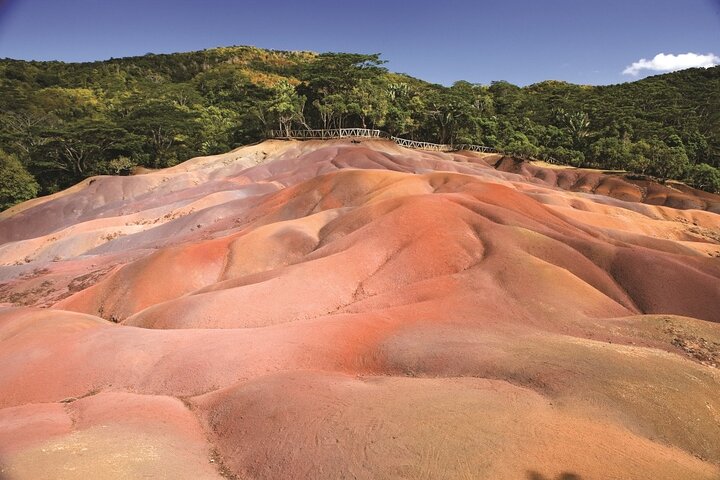
Forget the Instagram fantasy: Rhumerie de Chamarel isn’t a secret jungle speakeasy where you’ll sip rum alone under a waterfall. It’s a polished, working distillery in the lush hills of southwest Mauritius, about an hour’s drive from the coast, and yes—everyone with a guidebook knows about it. Here’s the real deal: you’ll pay more than you’d expect for a tour, and you’ll share the experience with busloads of day-trippers snapping photos of copper stills. But if you can look past the curated visitor flow, Chamarel delivers a hit of Mauritian culture you won’t get at the beach resorts. The rum tastings are generous, the guides know their stuff, and the setting—surrounded by sugarcane fields and forested peaks—actually feels alive, not staged. It’s not adrenaline, but it’s not dull either. Compared to the island’s postcard beaches or the Seven Coloured Earths, Chamarel is less about spectacle and more about flavor, craft, and the slow burn of local pride.

Discover everything you want to know in the 📖 Mauritius Travel Guide.
Loading the map 🌍
CLICK TO FILTER
cities
towns
villages
landmarks
national parks
hikes
beaches
attractions
festivals
regions
SHOW COUNTRY’S BESTSHOW ALL

✨ Why go?
Ranked #3 attraction in Mauritius
Reasons people choose to visit here

The Rhumerie de Chamarel isn’t just another tourist stop on Mauritius—it’s a checkpoint for anyone serious about understanding the island’s soul. Sure, it’s famous, and yes, it can get busy, especially when cruise ships dock. But here’s the thing: this isn’t just about sipping rum and snapping photos. It’s about tracing the island’s complex history through the lens of its oldest sugarcane distillery, where every bottle tells a story of colonial legacy, local craftsmanship, and resilience. The distillery’s authentic production process—still largely traditional—gives you a front-row seat to how raw, unfiltered rum is born. That’s a rare chance to connect with a craft that’s been refined over centuries, not just packaged for tourists.

Backpackers who make the trek here aren’t just ticking a … read more 👉
The Rhumerie de Chamarel isn’t just another tourist stop on Mauritius—it’s a checkpoint for anyone serious about understanding the island’s soul. Sure, it’s famous, and yes, it can get busy, especially when cruise ships dock. But here’s the thing: this isn’t just about sipping rum and snapping photos. It’s about tracing the island’s complex history through the lens of its oldest sugarcane distillery, where every bottle tells a story of colonial legacy, local craftsmanship, and resilience. The distillery’s authentic production process—still largely traditional—gives you a front-row seat to how raw, unfiltered rum is born. That’s a rare chance to connect with a craft that’s been refined over centuries, not just packaged for tourists.

Backpackers who make the trek here aren’t just ticking a box; they’re marking a milestone on their Mauritius journey. It’s a place where culture, history, and flavor collide, offering a rich sensory experience that goes beyond the usual beach clichés. The effort to get there—often a rugged drive through lush hills—pays off with a genuine taste of the island’s heritage and a shot of adrenaline from the steep climb and panoramic views. If you want the real Mauritius, the Rhumerie de Chamarel is non-negotiable.
Want to include Rhumerie de Chamarel in your Mauritius route?
Create a personalized Mauritius itinerary that includes Rhumerie de Chamarel and the places that fit your trip — based on your travel style, budget, and available time. Get your route in seconds.

Generate my trip

💡 HighlightsKey sights and experiences for travelers

1. The Distillery Tour: Behind the Curtain of Rum-Making
Forget the glossy Instagram shots of copper stills and barrels. The real thrill here is getting up close with the machinery and the process. You’ll walk through the working heart of the distillery—no velvet ropes, no staged photo ops. You’ll see sugarcane being crushed, smell the raw, grassy juice, and watch the transformation from sticky plant to clear spirit. The guides don’t sugarcoat the process; they’ll talk about the quirks of Mauritian terroir, the headaches of fermentation, and why Chamarel’s single estate approach actually matters. This isn’t a Disneyland version of rum—this is the real, slightly sweaty, slightly noisy, always fascinating engine room.


2. Tasting Room: The Full Spectrum of Rum
This is where the Instagram crowd … read more 👉
1. The Distillery Tour: Behind the Curtain of Rum-Making
Forget the glossy Instagram shots of copper stills and barrels. The real thrill here is getting up close with the machinery and the process. You’ll walk through the working heart of the distillery—no velvet ropes, no staged photo ops. You’ll see sugarcane being crushed, smell the raw, grassy juice, and watch the transformation from sticky plant to clear spirit. The guides don’t sugarcoat the process; they’ll talk about the quirks of Mauritian terroir, the headaches of fermentation, and why Chamarel’s single estate approach actually matters. This isn’t a Disneyland version of rum—this is the real, slightly sweaty, slightly noisy, always fascinating engine room.


2. Tasting Room: The Full Spectrum of Rum
This is where the Instagram crowd thins out. The tasting isn’t a quick shot and a selfie. You’ll get a guided flight through white, gold, spiced, and aged rums, each with its own backstory and flavor profile. The staff know their stuff and will push you to actually taste, not just sip. Expect to be surprised—Chamarel’s agricole rums are grassy, funky, and nothing like the syrupy stuff you might know from the supermarket. If you’re used to Bacardi, this is a wake-up call. The aged rums, especially, have a complexity that’s more Cognac than Captain Morgan.


3. The Sugarcane Fields: Context, Not Just Scenery
Yes, the fields are photogenic, but the real value is in walking them and understanding the link between land and liquid. You’ll see the different cane varieties, learn why volcanic soil matters, and get a sense of the scale—this is a single estate operation, so every stalk you see ends up in the bottle. If you want to understand why Mauritian rum tastes the way it does, this is where it clicks.


4. The Barrel Cellar: Time, Oak, and Patience
The cellar isn’t just a cool, dark room for moody photos. It’s where the magic of aging happens, and Chamarel’s team will show you how different barrels (French oak, American oak, even cherry wood) shape the rum’s character. You’ll get to nose the air—thick with vanilla, spice, and a hint of sugarcane—and see the slow, almost meditative process of maturation. It’s a lesson in patience and craft, not just a backdrop for your feed.


5. The Restaurant: Local Flavors, No Gimmicks
Most distilleries tack on a restaurant as an afterthought. Not here. The on-site restaurant is genuinely worth your time, serving Mauritian dishes that actually pair with the rums. Think venison curry, smoked marlin, and desserts laced with cane syrup. The kitchen doesn’t pander to tourists; you’ll get bold flavors, local ingredients, and a view over the valley that feels earned after a morning of rum education. This is where you taste Mauritius, not just see it.
Spotted a mistake or missing something? Contact us.
Things to do around Rhumerie de Chamarel

Ratings based on Tripadvisor reviews. When you book through this link, you support our work at no extra cost to you.

🌤️ When to go?Seasonal considerations and timing


  • Topic: Weather – Mauritius enjoys a tropical climate, but the best time to visit Rhumerie de Chamarel is during the dry season from May to November. Expect less humidity and minimal rain, making your rum tasting and distillery tour far more enjoyable without the sticky, sweaty mess. Avoid January to March when heavy rains and cyclones can disrupt plans.

  • Topic: Temperature – From May to November, temperatures hover between 20°C to 25°C (68°F to 77°F), perfect for exploring without overheating. The hotter, wetter months (December to April) push temps up to 30°C (86°F) or more, which can sap your energy fast.

  • Topic: Daylight Hours – Daylight is fairly consistent year-round, roughly 11 to 12 hours. However, visiting between May and August means shorter days but cooler evenings, which is
read more 👉

  • Topic: Weather – Mauritius enjoys a tropical climate, but the best time to visit Rhumerie de Chamarel is during the dry season from May to November. Expect less humidity and minimal rain, making your rum tasting and distillery tour far more enjoyable without the sticky, sweaty mess. Avoid January to March when heavy rains and cyclones can disrupt plans.

  • Topic: Temperature – From May to November, temperatures hover between 20°C to 25°C (68°F to 77°F), perfect for exploring without overheating. The hotter, wetter months (December to April) push temps up to 30°C (86°F) or more, which can sap your energy fast.

  • Topic: Daylight Hours – Daylight is fairly consistent year-round, roughly 11 to 12 hours. However, visiting between May and August means shorter days but cooler evenings, which is great if you want to avoid the midday sun during your visit.

  • Topic: Crowds – Peak tourist season aligns with the dry months, especially July and August. Expect more visitors and higher prices then. For a quieter experience, aim for shoulder months like May, June, or September when the crowds thin but the weather stays pleasant.

  • Topic: Seasonal Activities – The distillery runs special events and tastings mostly during the dry season, capitalizing on better weather. Visiting off-peak might mean fewer organized tours but more personal attention from staff.

  • Topic: Price Fluctuations – Accommodation and tours spike in July and August. Booking in shoulder months can save you a decent chunk of cash, letting you splurge on extra tastings or local eats instead.


Pro-tip: Visit Rhumerie de Chamarel in late May or early September to dodge the crowds, enjoy perfect weather, and get the best bang for your buck on tours and tastings.


source: climatestotravel.comJANJanuary: below average for travelingFEBFebruary: below average for travelingMARMarch: below average for travelingAPRApril: fair for travelingMAYMay: excellent for travelingJUNJune: highly recommended for travelingJULJuly: highly recommended for travelingAUGAugust: highly recommended for travelingSEPSeptember: excellent for travelingOCTOctober: excellent for travelingNOVNovember: excellent for travelingDECDecember: fair for traveling
when-to-go

✈️ The backpacker research shortcutMauritius Travel Guide

An offline-friendly backpacking guide with optimized travel routes, ranked highlights, transport advice, and the best areas to stay.
example page 0 from our offline Travel Guide for Mauritius
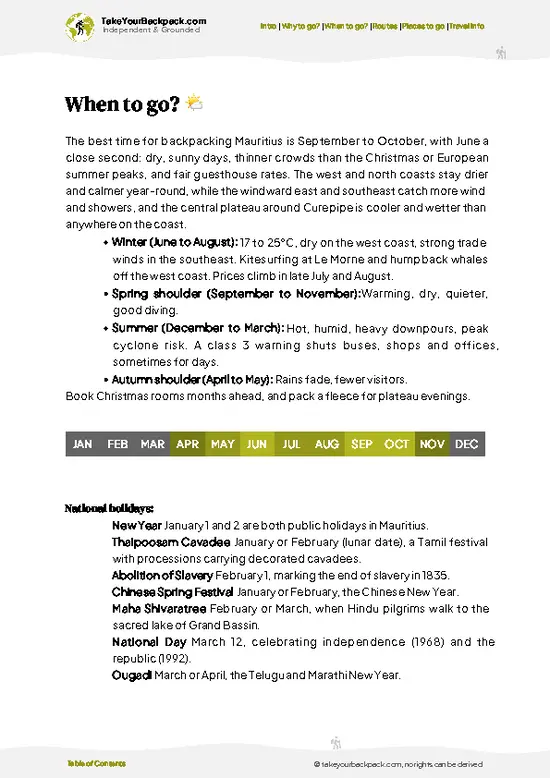
example page 1 from our offline Travel Guide for Mauritius
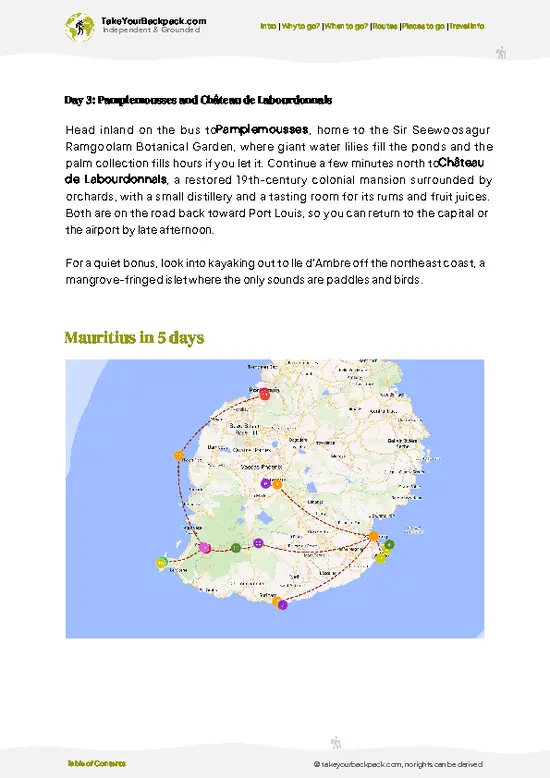
example page 2 from our offline Travel Guide for Mauritius
example page 3 from our offline Travel Guide for Mauritius
example page 4 from our offline Travel Guide for Mauritius
example page 5 from our offline Travel Guide for Mauritius
example page 6 from our offline Travel Guide for Mauritius
example page 7 from our offline Travel Guide for Mauritius
The digital guide (256 pages) contains:
68 highlights, ranked by travel appeal
Optimized 2, 3 & 5-day travel routes
Cities, national parks, landmarks, beaches
How to get around
Offline-friendly for travel without Wi-Fi
👉 Click to see all 30+ guide features

📅 Plan smarter in minutes, not weeks
Month by month travel advice
Festivals & national holidays
Budget expectations

🗺️ Go to the right places, skip the overrated ones
Honest pros & cons of destinations
Top hikes, parks & viewpoints
Lesser-known places most travelers miss
Clear “worth it vs skip it” guidance

🛏️ Travel smoothly without rookie mistakes
Best areas to stay
Transport systems explained simply
Common scams & safety advice
SIM cards, money & practical tips

🌍 Understand the country, not just visit it
Culture & traditions
Local customs
Festivals worth planning around
Traveler-friendly historical context
Insights that make places more meaningful

📱 Built for real travel conditions
Fully downloadable PDF
Works completely offline
Optimized for phone use
Useful in remote areas & buses
Everything in one place
Save weeks of stressful planning
Get instant access to your full guide. 30‑day money-back guarantee.


By proceeding you agree to our terms.
Sent to your inbox immediately after payment • 100% Secure Checkout
Best Backpacking Travel Advisor 2025 tourism awardBest Backpacking
Travel Advisor
2025
What others say about Take Your Backpack Guides:
⭐⭐⭐⭐⭐
Fantastic, amazing amount of information!
⭐⭐⭐⭐⭐
My goodness this is amazing, it's what I've been looking for hats off too you!
⭐⭐⭐⭐⭐
I think this is absolutely BRILLIANT
⭐⭐⭐⭐
Very complete and informative. It's still missing places, but I gotta to commend you
⭐⭐⭐⭐⭐
This is truly amazing, thank you, can't wait to explore it with my kids!
⭐⭐⭐⭐⭐
Awesome resource, thank you!
⭐⭐⭐⭐⭐
This is amazing! Can't wait to explore the ones I haven't seen
⭐⭐⭐⭐
I love this! Well done, great idea.
⭐⭐⭐⭐⭐
Thanks for taking the time to make this gem!
⭐⭐⭐⭐⭐
This might be the best website I've ever seen.
⭐⭐⭐⭐⭐
Congratulations, and thank you so much for your work; it's incredibly valuable.
⭐⭐⭐⭐
In all seriousness I think you did a great job pointing out the important spots
⭐⭐⭐⭐⭐
10/10 very good
⭐⭐⭐⭐⭐
As someone who's only just starting to visit regularly this is awesome, thank you.
⭐⭐⭐⭐
Thank you very much! I'm going to visit my dad, it's going to be very useful!
⭐⭐⭐⭐⭐
This is really cool! We'll be travelling for the first time and this definitely come in handy.
⭐⭐⭐⭐⭐
You are now our minister of culture, congratulations 👨‍💼
⭐⭐⭐⭐⭐
Just wanted to tell you that this is a pearl! Going to follow your recommendations.
⭐⭐⭐⭐⭐
This is so cool. I'll definitely be using the resource for my travels soon.
⭐⭐⭐⭐⭐
This is very impressive! Good work.
⭐⭐⭐⭐⭐
This is an amazing and informative site. Very well done!

🛏️ Where to stay?Where staying makes the most sense

Forget the postcard-perfect image of sipping rum in serene isolation at Rhumerie de Chamarel. Reality check: this spot draws a steady stream of day-trippers and tour groups, especially during peak hours. It’s not a secret hideaway, and the entrance fee isn’t exactly pocket change for a backpacker. But here’s the kicker—the real magic isn’t just in the rum tasting or the distillery tour; it’s in the rugged, wild landscape surrounding it. The nearby Chamarel area is where you want to anchor yourself if you’re backpacking on a budget but craving authenticity.

Skip the flashy resorts and aim for … read more 👉
Forget the postcard-perfect image of sipping rum in serene isolation at Rhumerie de Chamarel. Reality check: this spot draws a steady stream of day-trippers and tour groups, especially during peak hours. It’s not a secret hideaway, and the entrance fee isn’t exactly pocket change for a backpacker. But here’s the kicker—the real magic isn’t just in the rum tasting or the distillery tour; it’s in the rugged, wild landscape surrounding it. The nearby Chamarel area is where you want to anchor yourself if you’re backpacking on a budget but craving authenticity.

Skip the flashy resorts and aim for the villages and small towns within a 10-15 minute drive—places like Chamarel village itself or the outskirts of Black River. These spots offer a genuine slice of Mauritian life, with guesthouses and small lodges that are safe, social, and attract solo travelers and budget adventurers. You’ll find locals who are more than happy to share stories, and fellow backpackers who are there for the same reason: to soak in the island’s raw character without the tourist gloss.

Staying here means you’re close enough to hit the distillery early or late, avoiding the crowds, and you get to explore the nearby hiking trails and waterfalls without the tourist rush. It’s not about luxury; it’s about connection—to the land, the people, and the real Mauritius behind the Instagram filter.

👛 Costs (as of 30 August 2025)What things cost and how to budget

As of the most recent estimates, the entrance fee for Rhumerie de Chamarel is approximately €11 per adult, which includes a guided tour and rum tasting. Additional costs may apply for dining at the on-site restaurant or purchasing souvenirs from the boutique. Please note that prices are subject to change, and it's advisable to check the official website for the most current information.

source: rhumeriedechamarel.com
⚠️ Prices can change and everyone travels differently, so take this as a rough guide. Hope it helps you plan your adventure!

Other Mauritian attractions near Rhumerie de Chamarel

Explore more nearby:


💡 Not sure where to go next?
Create a personalized itinerary for Mauritius including Rhumerie de Chamarel and the places that fit your trip.

Generate my itinerary

👉 Discover all attractions

Or checkout all Mauritius has to offer (think cities, towns, villages, national parks, hikes, beaches, festivals)
Country photo of Mauritius

We 💚 feedbackIs it worth it?

If you’re expecting a quiet, off-the-beaten-path sip of rum, think again—this place draws a crowd, especially midday. But here’s the kicker: the real magic isn’t just the rum itself, it’s the way the staff talk you through the process, like they’re sharing a secret handshake. The tasting isn’t a quick shot; it’s a slow unraveling of flavors that’ll surprise even if you think you know rum. Just don’t come expecting a fancy bar scene—this is raw, authentic, and a little rough around the edges, which is exactly why it’s worth your time.

✍️ Help improve this page!
The information on this page is based on in-depth research, insights shared by experienced travelers, and feedback from the local travel community in Mauritius. While every effort is made to keep the information accurate and current, conditions can change — so if you spot anything incorrect or outdated, please get in touch.


🙋‍♂️ Give feedback

👋 Meet the founderWho’s Behind Take Your Backpack?

Johan, backpacker and founder of TakeYourBackpackHi, I’m Johan (Netherlands 🇳🇱), the creator of TakeYourBackpack. Over the past decade, I’ve backpacked through 80+ countries across six continents, gaining extensive experience with independent travel, long-term trips, and overland routes.

This site is built on a combination of firsthand travel experience and carefully curated insights from other backpackers. Many guides are based on places I’ve personally visited, while others bring together tips, observations, and practical advice shared by trusted travelers I’ve met along the way.

The goal is to provide realistic, experience-driven guidance — not generic itineraries — so you can explore destinations with better context, clearer expectations, and more confidence.

Get full Mauritius guide •
Instant download • 68 highlights • Full Offline guide