×

Mongolia🇲🇳 | attractionsChoijin Lama Temple MuseumBuddhist relics, temple complex, tantric art | things to do and best time to go

Explore Gandantegchinlen MonasteryExplore Winter Palace of the Bogd Khan

Backpacking in Choijin Lama Temple Museum
🌟 Highlightattraction ranked #4
By Johan Kruseman 🇳🇱 | Updated May 26, 2026

Everyone’s Instagram feed will tell you to visit the Choijin Lama Temple Museum for its “photogenic” Buddhist architecture—those swooping eaves and candy-colored details. But let’s be real: if you’re only here for the photos, you’ll miss the actual electricity of the place. What matters is the way this temple, right in the heart of Ulaanbaatar, feels like a stubborn survivor—wedged between glass towers and Soviet leftovers, holding onto Mongolia’s spiritual DNA while the city rushes past. For backpackers, it’s not the cheapest ticket in town, but it’s still a fraction of what you’d pay for a day trip to the steppe. Yes, you’ll dodge tour groups and selfie sticks, but step inside and the incense hits you, the silence is thick, and suddenly you’re face-to-face with Mongolia’s wrestling match between old and new. It’s not adrenaline, but it’s real. And that’s rare.

Discover everything you want to know in the 📖 Mongolia Travel Guide.


Get your Mongolia guide
70 ranked highlights, routes & tips, works offline (280 pages)
Loading the map 🌍
CLICK TO FILTER
cities
towns
villages
landmarks
national parks
hikes
attractions
festivals
regions
SHOW COUNTRY’S BESTSHOW ALL

✨ Why go?
Ranked #4 attraction in Mongolia
What sets this place apart

The Choijin Lama Temple Museum in Mongolia is often overshadowed by the vast steppes and nomadic culture, but skipping it means missing a crucial piece of the country’s soul. Yes, it’s a popular stop, so expect crowds, especially midday. But here’s the kicker: this place isn’t just a pretty facade or a tourist checkbox. It’s a rare, intact example of early 20th-century Buddhist architecture and religious art in Ulaanbaatar, offering a window into Mongolia’s spiritual life before communism clamped down. The intricate murals, wooden carvings, and preserved ritual objects aren’t just museum pieces—they’re a direct line to a vanished world. For backpackers, it’s a manageable detour with a high payoff: you get cultural depth without the slog of a multi-day trek. It’s also a milestone on the classic … read more 👉
The Choijin Lama Temple Museum in Mongolia is often overshadowed by the vast steppes and nomadic culture, but skipping it means missing a crucial piece of the country’s soul. Yes, it’s a popular stop, so expect crowds, especially midday. But here’s the kicker: this place isn’t just a pretty facade or a tourist checkbox. It’s a rare, intact example of early 20th-century Buddhist architecture and religious art in Ulaanbaatar, offering a window into Mongolia’s spiritual life before communism clamped down. The intricate murals, wooden carvings, and preserved ritual objects aren’t just museum pieces—they’re a direct line to a vanished world. For backpackers, it’s a manageable detour with a high payoff: you get cultural depth without the slog of a multi-day trek. It’s also a milestone on the classic Mongolia route, grounding your journey in history before you hit the wild landscapes. The effort-to-reward ratio here is solid—short visit, big insight. If you want to understand Mongolia beyond the clichés, this temple is where the story starts to make sense.
Want to include Choijin Lama Temple Museum in your Mongolia route?
Create a personalized Mongolia itinerary that includes Choijin Lama Temple Museum and the places that fit your trip — based on your travel style, budget, and available time. Get your route in seconds.

Generate my trip

💡 HighlightsEssential experiences to have while visiting Choijin Lama Temple Museum

Main Temple (Tsogchin Dugan)
Let’s get real: most people breeze through the main hall, snap a photo of the gilded Buddha, and move on. Big mistake. This is the spiritual engine room of the entire complex. The air is thick with incense and centuries of whispered prayers. The walls are packed with murals that don’t just depict Buddhist cosmology—they practically vibrate with color and detail. If you want a crash course in Mongolian Buddhist symbolism, this is your classroom. Stand quietly and let the atmosphere work on you; it’s the closest you’ll get to time travel in Ulaanbaatar.


Dance Mask Collection
Forget the Instagrammable statues—these masks are the real showstoppers. Housed in a side building that most tourists skip, the collection includes dozens of ceremonial Tsam masks, each hand-crafted … read more 👉
Main Temple (Tsogchin Dugan)
Let’s get real: most people breeze through the main hall, snap a photo of the gilded Buddha, and move on. Big mistake. This is the spiritual engine room of the entire complex. The air is thick with incense and centuries of whispered prayers. The walls are packed with murals that don’t just depict Buddhist cosmology—they practically vibrate with color and detail. If you want a crash course in Mongolian Buddhist symbolism, this is your classroom. Stand quietly and let the atmosphere work on you; it’s the closest you’ll get to time travel in Ulaanbaatar.


Dance Mask Collection
Forget the Instagrammable statues—these masks are the real showstoppers. Housed in a side building that most tourists skip, the collection includes dozens of ceremonial Tsam masks, each hand-crafted and painted with a level of detail that borders on obsessive. These aren’t just art pieces; they’re tools for exorcising demons and channeling deities during Mongolia’s wildest religious festivals. The faces are grotesque, comic, and sometimes outright terrifying. If you want to see the intersection of shamanism and Buddhism, this is where it gets weird—in the best way.


Yadam Temple (Temple of Meditation)
This is the introvert’s sanctuary. Tucked away from the main drag, the Yadam Temple is where the lamas would retreat for serious meditation. The vibe is hushed, almost conspiratorial. The murals here are less bombastic, more introspective—think cosmic diagrams and tantric deities instead of epic battle scenes. If you’re looking for a moment of actual peace in a city that never stops honking, this is your spot.


Tantric Deity Statues
You’ll find these tucked into alcoves and side chapels, and they’re not for the prudish. These statues are explicit, raw, and unapologetically mystical. They’re a reminder that Mongolian Buddhism isn’t just about serene Buddhas—it’s about confronting the wild, chaotic forces of the universe head-on. The craftsmanship is next-level, with intricate jewelry, fierce expressions, and a sense of movement that makes them feel alive. My personal favorite—because nothing says “wake up” like a deity with a skull crown and a third eye staring you down.


Library of Sutras
This is the intellectual heart of the temple. The library houses ancient Buddhist texts, some written in gold ink on indigo paper. You can’t leaf through them, but just seeing the rows of manuscripts—some battered, some pristine—is a reminder of how seriously Mongolians took their scholarship. It’s a quiet flex of cultural depth that most visitors miss entirely. If you’re a book nerd or just want to feel the weight of history, linger here.
Spotted a mistake or missing something? Contact us.

Things to do around Choijin Lama Temple Museum

Ratings based on Tripadvisor reviews. When you book through this link, you support our work at no extra cost to you.

🌤️ When to go?Seasonal considerations and timing


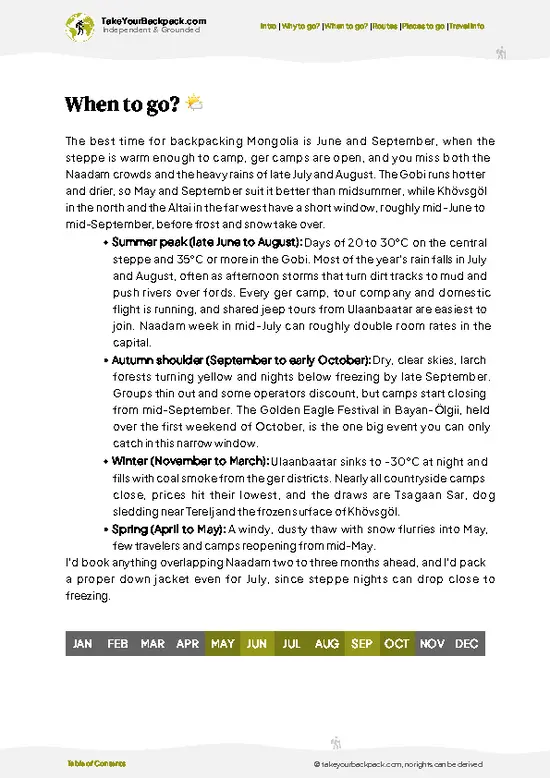
  • Weather: The best weather hits between June and August when Mongolia warms up to a comfortable 15-25°C (59-77°F). Outside these months, expect biting cold, especially from November to March, when temperatures can plunge below -20°C (-4°F), making temple visits less enjoyable.

  • Daylight Hours: Summer offers long days with up to 16 hours of daylight, perfect for exploring without rushing. Winter days shrink to just 6-8 hours, limiting your window to soak in the temple’s details.

  • Crowds: The temple sees a spike in visitors during July and August, mostly local tourists and some international travelers. If you want fewer people, aim for late May or early September when the weather is still decent but the crowds thin out.

  • Seasonal Activities: Summer aligns with local festivals and cultural
read more 👉

  • Weather: The best weather hits between June and August when Mongolia warms up to a comfortable 15-25°C (59-77°F). Outside these months, expect biting cold, especially from November to March, when temperatures can plunge below -20°C (-4°F), making temple visits less enjoyable.

  • Daylight Hours: Summer offers long days with up to 16 hours of daylight, perfect for exploring without rushing. Winter days shrink to just 6-8 hours, limiting your window to soak in the temple’s details.

  • Crowds: The temple sees a spike in visitors during July and August, mostly local tourists and some international travelers. If you want fewer people, aim for late May or early September when the weather is still decent but the crowds thin out.

  • Seasonal Activities: Summer aligns with local festivals and cultural events in Ulaanbaatar, adding layers to your visit. Winter’s harshness means fewer events and a quieter, more introspective experience but with limited access to some areas.

  • Price Fluctuations: Expect higher accommodation and tour prices in peak summer months. Visiting in shoulder seasons like May or September can save you money without sacrificing much on comfort or experience.


Pro-tip: Visit in early September to catch mild weather, manageable crowds, and better prices—plus, the temple’s intricate details pop under the softer autumn light.


source: climatestotravel.comJANJanuary: below average for travelingFEBFebruary: below average for travelingMARMarch: fair for travelingAPRApril: good for travelingMAYMay: highly recommended for travelingJUNJune: excellent for travelingJULJuly: excellent for travelingAUGAugust: excellent for travelingSEPSeptember: highly recommended for travelingOCTOctober: good for travelingNOVNovember: fair for travelingDECDecember: below average for traveling
when-to-go

✈️ The backpacker research shortcutMongolia Travel Guide

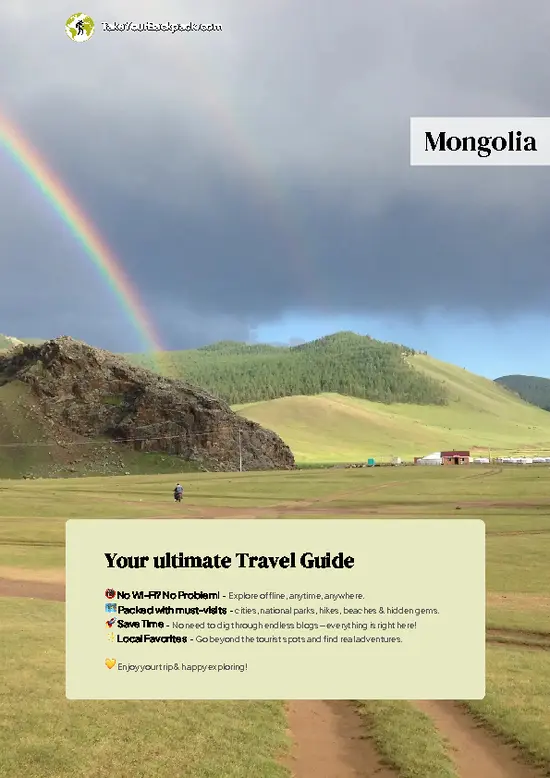
An offline-friendly backpacking guide with optimized travel routes, ranked highlights, transport advice, and the best areas to stay.
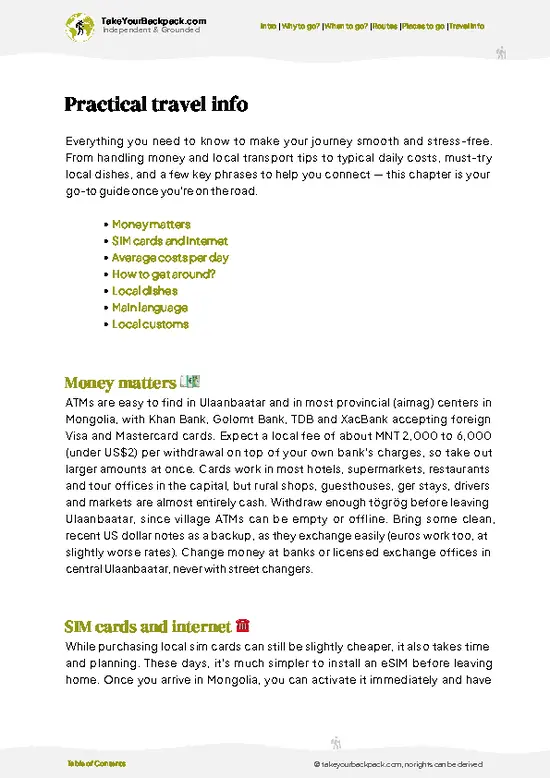
example page 0 from our offline Travel Guide for Mongolia
example page 1 from our offline Travel Guide for Mongolia
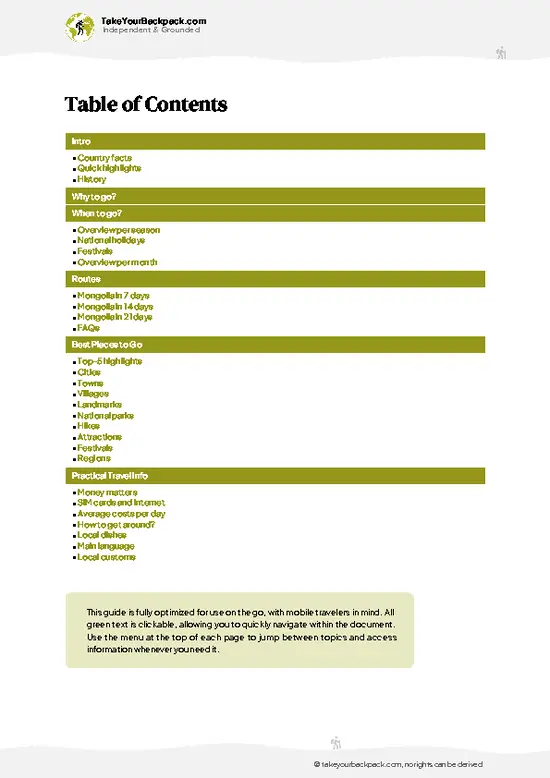
example page 2 from our offline Travel Guide for Mongolia
example page 3 from our offline Travel Guide for Mongolia
example page 4 from our offline Travel Guide for Mongolia
example page 5 from our offline Travel Guide for Mongolia
example page 6 from our offline Travel Guide for Mongolia
example page 7 from our offline Travel Guide for Mongolia
The digital guide (280 pages) contains:
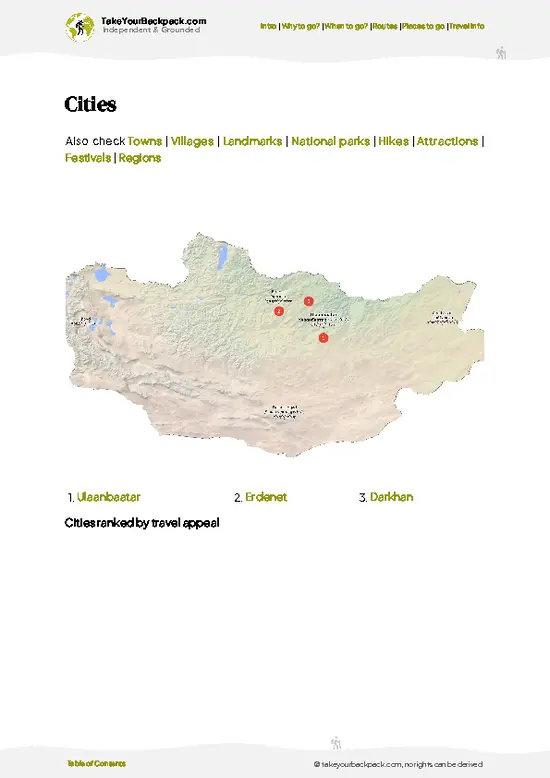
70 highlights, ranked by travel appeal
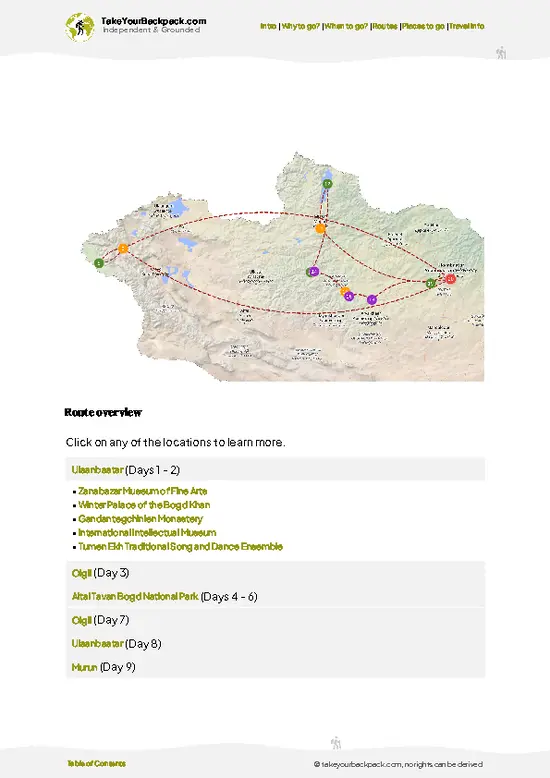
Optimized 7, 14 & 21-day travel routes
Cities, national parks, landmarks, beaches
How to get around
Offline-friendly for travel without Wi-Fi
👉 Click to see all 30+ guide features

📅 Plan smarter in minutes, not weeks
Month by month travel advice
Festivals & national holidays
Budget expectations

🗺️ Go to the right places, skip the overrated ones
Honest pros & cons of destinations
Top hikes, parks & viewpoints
Lesser-known places most travelers miss
Clear “worth it vs skip it” guidance

🛏️ Travel smoothly without rookie mistakes
Best areas to stay
Transport systems explained simply
Common scams & safety advice
SIM cards, money & practical tips

🌍 Understand the country, not just visit it
Culture & traditions
52 Essential phrases & customs
Festivals worth planning around
Traveler-friendly historical context
Insights that make places more meaningful

📱 Built for real travel conditions
Fully downloadable PDF
Works completely offline
Optimized for phone use
Useful in remote areas & buses
Everything in one place
Save weeks of stressful planning
Get instant access to your full guide. 30‑day money-back guarantee.


By proceeding you agree to our terms.
Sent to your inbox immediately after payment • 100% Secure Checkout
Best Backpacking Travel Advisor 2025 tourism awardBest Backpacking
Travel Advisor
2025
What others say about Take Your Backpack Guides:
⭐⭐⭐⭐⭐
Fantastic, amazing amount of information!
⭐⭐⭐⭐⭐
My goodness this is amazing, it's what I've been looking for hats off too you!
⭐⭐⭐⭐⭐
I think this is absolutely BRILLIANT
⭐⭐⭐⭐
Very complete and informative. It's still missing places, but I gotta to commend you
⭐⭐⭐⭐⭐
This is truly amazing, thank you, can't wait to explore it with my kids!
⭐⭐⭐⭐⭐
Awesome resource, thank you!
⭐⭐⭐⭐⭐
This is amazing! Can't wait to explore the ones I haven't seen
⭐⭐⭐⭐
I love this! Well done, great idea.
⭐⭐⭐⭐⭐
Thanks for taking the time to make this gem!
⭐⭐⭐⭐⭐
This might be the best website I've ever seen.
⭐⭐⭐⭐⭐
Congratulations, and thank you so much for your work; it's incredibly valuable.
⭐⭐⭐⭐
In all seriousness I think you did a great job pointing out the important spots
⭐⭐⭐⭐⭐
10/10 very good
⭐⭐⭐⭐⭐
As someone who's only just starting to visit regularly this is awesome, thank you.
⭐⭐⭐⭐
Thank you very much! I'm going to visit my dad, it's going to be very useful!
⭐⭐⭐⭐⭐
This is really cool! We'll be travelling for the first time and this definitely come in handy.
⭐⭐⭐⭐⭐
You are now our minister of culture, congratulations 👨‍💼
⭐⭐⭐⭐⭐
Just wanted to tell you that this is a pearl! Going to follow your recommendations.
⭐⭐⭐⭐⭐
This is so cool. I'll definitely be using the resource for my travels soon.
⭐⭐⭐⭐⭐
This is very impressive! Good work.
⭐⭐⭐⭐⭐
This is an amazing and informative site. Very well done!

🛏️ Where to stay?How to pick the right area

If you’re aiming to soak in the Choijin Lama Temple Museum without getting swallowed by tourist crowds or overpriced digs, your best bet is to camp yourself in the heart of Ulaanbaatar’s old town district. This area isn’t just a convenient launchpad to the temple—it’s where the city’s pulse beats strongest for backpackers. You’ll find a cluster of guesthouses and budget hostels that are safe, social, and genuinely welcoming to solo travelers. Forget the polished, sterile hotel lobbies; here, you’ll meet other adventurers swapping stories over cheap tea or local brews, which is the real currency … read more 👉
If you’re aiming to soak in the Choijin Lama Temple Museum without getting swallowed by tourist crowds or overpriced digs, your best bet is to camp yourself in the heart of Ulaanbaatar’s old town district. This area isn’t just a convenient launchpad to the temple—it’s where the city’s pulse beats strongest for backpackers. You’ll find a cluster of guesthouses and budget hostels that are safe, social, and genuinely welcoming to solo travelers. Forget the polished, sterile hotel lobbies; here, you’ll meet other adventurers swapping stories over cheap tea or local brews, which is the real currency of travel.

The streets around Choijin Lama are a mix of Soviet-era grit and emerging hipster cafes, giving you a taste of Mongolia’s raw urban edge. It’s walkable, so you won’t waste time or money on taxis, and you can easily blend temple visits with spontaneous street food hunts or local markets. Yes, it’s not a secret hideaway—expect some crowds during peak hours—but the vibe is authentic, not touristy. Staying here means you’re not just ticking off a temple; you’re stepping into the daily rhythm of Ulaanbaatar, where history and modern life collide in a way that’s far more rewarding than any Instagram shot.

👛 Costs (as of 16 July 2025)What things cost and how to budget

As of the most recent estimates, the Choijin Lama Temple Museum in Ulaanbaatar, Mongolia, charges an entrance fee of 8,000 Mongolian Tugrik (MNT) for adults, approximately €2.50. Students receive a discounted rate of 3,000 MNT (€0.95), and children are admitted for 1,500 MNT (€0.48). Photography inside the museum requires an additional fee of 50,000 MNT (€15.80). ([escapetomongolia.com](https://www.escapetomongolia.com/blog/choijin-lama-museum?utm_source=openai))

source: escapetomongolia.com
⚠️ Prices can change and everyone travels differently, so take this as a rough guide. Hope it helps you plan your adventure!

Other Mongolian attractions near Choijin Lama Temple Museum

Explore more nearby:


💡 Not sure where to go next?
Create a personalized itinerary for Mongolia including Choijin Lama Temple Museum and the places that fit your trip.

Generate my itinerary

👉 Discover all attractions

Or checkout all Mongolia has to offer (think cities, towns, villages, national parks, hikes, beaches, festivals)
Country photo of Mongolia

We 💚 feedbackKey takeaways before you go

Choijin Lama Temple Museum isn’t a flashy spectacle, and yes, it can feel a bit crowded during peak hours—expect a steady stream of tourists snapping photos. But here’s the kicker: inside those walls, you’ll find some of Mongolia’s richest spiritual art, untouched by modern kitsch. The intricate thangka paintings and preserved ritual objects offer a rare, raw glimpse into a culture that’s often overshadowed by nomadic myths. It’s worth pushing through the crowd for that.

✈️ When did I visit Mongolia?
As part of my 1.5 year travel around the world trip, I visited Mongolia in July 2015. After a month of horse-riding and hitch-hiking I took the TransMongolia express to China.

✍️ Help improve this page!
The information on this page is based on my own backpacking experience in Mongolia, supplemented with up-to-date research and feedback from other travelers. Travel details can change, so if you notice anything outdated or incomplete, feel free to let me know.


🙋‍♂️ Give feedback

👋 Meet the founderWho’s Behind Take Your Backpack?

Johan, backpacker and founder of TakeYourBackpackHi, I’m Johan (Netherlands 🇳🇱), the creator of TakeYourBackpack. Over the past decade, I’ve backpacked through 80+ countries across six continents, gaining extensive experience with independent travel, long-term trips, and overland routes.

This site is built on a combination of firsthand travel experience and carefully curated insights from other backpackers. Many guides are based on places I’ve personally visited, while others bring together tips, observations, and practical advice shared by trusted travelers I’ve met along the way.

The goal is to provide realistic, experience-driven guidance — not generic itineraries — so you can explore destinations with better context, clearer expectations, and more confidence.

Get full Mongolia guide •
Instant download • 70 highlights • Full Offline guide