×

Montenegro🇲🇪 | best hikesEssential 6 hikes to Explore in Montenegro

In Montenegro, the best hikes offer a tapestry of experiences shaped by the country’s diverse landscapes and climates. From the rugged peaks of the Durmitor National Park to the serene shores of Kotor Bay, each trail presents unique challenges and rewards.

Hikes vary in difficulty, with some demanding steep ascents and others meandering through lush valleys. Seasonal changes affect trail conditions and daylight hours, impacting your overall experience. Choosing wisely influences not just your budget and safety, but also your ability to immerse in local culture.

Independent travelers will find that the right hike can transform a simple trek into a profound connection with Montenegro’s natural beauty and rich heritage.

By Johan Kruseman 🇳🇱 | Updated June 12, 2026
Explore the best beaches in Montenegro

Why go?Understanding Their Importance

Hiking in Montenegro offers a unique blend of terrain variety and altitude that sets it apart from many other countries. The rugged Dinaric Alps provide dramatic landscapes, from steep cliffs to lush valleys, creating a playground for hikers of all levels. However, this diversity comes with trade-offs. Higher altitudes can mean breathtaking views, but they also bring challenges like thinner air and unpredictable weather.

The trail infrastructure varies widely. Some paths are well-marked and maintained, while others require a keen sense of direction and experience. This inconsistency can affect the logistics of your hike. Travelers must weigh the ease of access against the depth of exploration. A well-trodden path might lead to popular viewpoints, but it often lacks the solitude found on … read more 👉
Hiking in Montenegro offers a unique blend of terrain variety and altitude that sets it apart from many other countries. The rugged Dinaric Alps provide dramatic landscapes, from steep cliffs to lush valleys, creating a playground for hikers of all levels. However, this diversity comes with trade-offs. Higher altitudes can mean breathtaking views, but they also bring challenges like thinner air and unpredictable weather.

The trail infrastructure varies widely. Some paths are well-marked and maintained, while others require a keen sense of direction and experience. This inconsistency can affect the logistics of your hike. Travelers must weigh the ease of access against the depth of exploration. A well-trodden path might lead to popular viewpoints, but it often lacks the solitude found on less-traveled routes.

Montenegro’s climatic conditions also play a crucial role. Summer can be sweltering, while spring and autumn offer milder temperatures but may introduce rain. Understanding these seasonal nuances is vital for safety and enjoyment.

Culturally, the trails often intersect with historical sites, adding layers of meaning to the journey. Yet, the remoteness of some areas can limit accessibility, making it essential to plan ahead. Each hike is a balance of difficulty versus reward, and the choices made will shape the overall experience.
Our Approach to Ranking
The list of best hikes in Montenegro is created based on scenery, challenge, trail quality, landmarks, and overall enjoyment. If you feel a hike is missing in this list, please let us know.

When to go?Best Time to Visit Montenegro for hikes

Seasonality


Montenegro’s hiking conditions shift dramatically throughout the year, influenced by altitude and weather patterns. Spring, from March to May, brings mild temperatures and blooming flora. However, early spring can still hold snow at higher elevations, making some trails inaccessible.

Summer, particularly June to August, offers long daylight hours and warm weather, ideal for hiking. Yet, this peak season attracts crowds, and the heat can be intense, especially in lower regions. Hydration and sun protection become crucial.

Autumn, from September to November, presents a sweet spot. The trails are less crowded, and the temperatures are cooler, making for comfortable hikes. However, rainfall increases, particularly in October, which can lead to muddy trails and slippery conditions. … read more 👉

Seasonality


Montenegro’s hiking conditions shift dramatically throughout the year, influenced by altitude and weather patterns. Spring, from March to May, brings mild temperatures and blooming flora. However, early spring can still hold snow at higher elevations, making some trails inaccessible.

Summer, particularly June to August, offers long daylight hours and warm weather, ideal for hiking. Yet, this peak season attracts crowds, and the heat can be intense, especially in lower regions. Hydration and sun protection become crucial.

Autumn, from September to November, presents a sweet spot. The trails are less crowded, and the temperatures are cooler, making for comfortable hikes. However, rainfall increases, particularly in October, which can lead to muddy trails and slippery conditions.

Winter transforms the landscape, with snow blanketing higher altitudes. While this season limits access to many trails, it offers a unique experience for those equipped for winter hiking.

Travelers should weigh these seasonal trade-offs carefully. Optimal hiking months balance safety, comfort, and scenic reward. Understanding the interplay of weather, trail access, and recovery needs ensures a more fulfilling experience in Montenegro’s diverse terrain.

hike hoppingTips for Visiting Multiple Destinations

General Routing Logic

Montenegro’s diverse landscapes invite a strategic approach to hiking. Cluster hikes by region: the rugged Durmitor National Park, the dramatic Bay of Kotor, and the serene Biogradska Gora. This minimizes travel time and maximizes scenic immersion. Start in the north, tackling higher altitudes first, then descend toward the coast. This sequence allows for acclimatization and recovery.

Typical Time Needed

Plan for at least two days in each major area. Allocate time for both hiking and recovery. A full day for a challenging hike, followed by a lighter day to explore or rest, keeps energy levels balanced. Expect to spend 4-8 hours on the trails, depending on difficulty, with additional time for meals and travel between stops.

Common Planning Mistakes

Avoid cramming … read more 👉

General Routing Logic

Montenegro’s diverse landscapes invite a strategic approach to hiking. Cluster hikes by region: the rugged Durmitor National Park, the dramatic Bay of Kotor, and the serene Biogradska Gora. This minimizes travel time and maximizes scenic immersion. Start in the north, tackling higher altitudes first, then descend toward the coast. This sequence allows for acclimatization and recovery.

Typical Time Needed

Plan for at least two days in each major area. Allocate time for both hiking and recovery. A full day for a challenging hike, followed by a lighter day to explore or rest, keeps energy levels balanced. Expect to spend 4-8 hours on the trails, depending on difficulty, with additional time for meals and travel between stops.

Common Planning Mistakes

Avoid cramming too many hikes into a short timeframe. This leads to fatigue and missed experiences. Many underestimate the physical demands of altitude changes and terrain variability. Prioritize quality over quantity; savor the moments rather than rushing through them.

Trade-Offs and Constraints

Speed often sacrifices depth. A faster pace may mean less time to soak in the surroundings. Budget constraints can limit comfort, but investing in a local guide enhances the experience. Balancing effort with reward is crucial; the most breathtaking views often come after the hardest climbs. Flexibility in planning allows for spontaneous detours that can lead to unexpected joys.

The ListTop hikes of Montenegro

1 Kotor Fortress Trail

stone stairways, medieval fortifications, bay panoramas

Climb steep historic steps to reach ancient ramparts, gaining a direct view over Kotor’s rooftops and the surrounding fjord-like coastline.

montenegro-hike-kotor-fortress-trail v1
© Google |

2 Tara River Canyon

deep gorge, turquoise river, suspension bridges

Walk along the canyon rim or descend to the river, encountering dramatic drops, forested slopes, and the sound of rushing water.

montenegro-hike-tara-river-canyon
© Google | Wojciech Więch

3 Two peaks of Orjen circuit

karst ridges, summit cairns, panoramic plateaus

Circle two prominent summits on rocky trails, moving between exposed ridgelines and open plateaus with distant sea and mountain views.

4 Kotor serpentine viewpoint

hairpin road, limestone cliffs, sweeping vistas

Ascend a winding route above the bay, pausing at exposed bends for uninterrupted views of the Adriatic and the old town below.

montenegro-hike-kotor-serpentine-viewpoint
© Google |

5 Peaks of the Balkan trail

border crossings, glacial valleys, rugged summits

Follow a demanding circuit that links three countries, crossing high passes and traversing wild terrain shaped by ancient glaciers.

montenegro-hike-peaks-of-the-balkan-trail
© Google | Dominique Labelle

6 Balkan Trail

cross-border route, alpine meadows, remote villages

Traverse a multi-day path linking mountain communities, passing through high pastures and experiencing the region’s changing landscapes and cultures.

Albania&Kosovo&Montenegro - the Balkan Trail
Loading the map 🌍

Expert viewInsights from Locals and Experts

Trail Logistics

Montenegro’s hiking scene is a tapestry of rugged mountains, deep valleys, and stunning lakes. Expect to tackle anywhere from three to five hikes to truly appreciate the country’s diverse landscapes. Each trail offers a unique flavor, from the dramatic peaks of the Durmitor National Park to the serene shores of Lake Skadar.

Time is a crucial factor. Most hikes range from half a day to a full day, depending on your pace and the trail’s difficulty. If you’re looking for a high-value experience, consider the effort-to-reward ratio. Some trails may seem daunting, but the payoff—a panoramic view or a secluded spot by a glacial lake—makes the sweat worthwhile.

Budget-wise, you’ll find that many trails are free or have minimal entry fees. However, don’t overlook the costs of … read more 👉

Trail Logistics

Montenegro’s hiking scene is a tapestry of rugged mountains, deep valleys, and stunning lakes. Expect to tackle anywhere from three to five hikes to truly appreciate the country’s diverse landscapes. Each trail offers a unique flavor, from the dramatic peaks of the Durmitor National Park to the serene shores of Lake Skadar.

Time is a crucial factor. Most hikes range from half a day to a full day, depending on your pace and the trail’s difficulty. If you’re looking for a high-value experience, consider the effort-to-reward ratio. Some trails may seem daunting, but the payoff—a panoramic view or a secluded spot by a glacial lake—makes the sweat worthwhile.

Budget-wise, you’ll find that many trails are free or have minimal entry fees. However, don’t overlook the costs of transportation to trailheads, which can add up, especially if you’re relying on local taxis or shuttles. Factor in food and water; packing a hearty lunch can save you money and keep your energy up.

Altitude and Recovery

Altitude can be a game-changer in Montenegro. Many trails ascend quickly, and you might find yourself above 2,000 meters before you know it. This can lead to fatigue or altitude sickness if you’re not acclimatized. Take your time on the ascent; the views are worth the pause.

Recovery is equally important. After a long day on the trails, allow yourself time to rest. Local accommodations often offer hearty meals that can help replenish your energy. Embrace the local culture by trying traditional dishes; they’re not just delicious but also a way to connect with the region.

Difficulty and Pacing

Difficulty levels vary widely. Some trails are well-marked and manageable for beginners, while others demand a solid fitness level and experience. Know your limits. If you’re unsure, start with easier hikes to build confidence and stamina.

Pacing is key. Montenegro’s trails can be deceptive; what looks like a short distance can take longer than expected due to elevation changes and rocky terrain. Plan for breaks, not just for rest but to soak in the surroundings. The scent of pine trees, the sound of distant waterfalls, and the sight of soaring eagles can transform a simple hike into a profound experience.

Planning and Prioritizing

When planning your hikes, prioritize based on your interests. If you’re drawn to natural beauty, focus on trails that lead to lakes or viewpoints. If cultural experiences excite you, seek out paths that pass through local villages or historical sites.

Consider the season as well. Summer brings warmth but also crowds, while spring and fall offer cooler temperatures and fewer hikers. Each season has its charm, but the trails can be slippery in spring due to melting snow, so tread carefully.

Safety and Cultural Considerations

Safety is paramount. Always check weather conditions before heading out; storms can roll in quickly. Carry a map or download offline navigation apps, as cell service can be spotty in remote areas.

Culturally, respect local customs. Montenegro is known for its hospitality, but it’s essential to be mindful of the environment. Leave no trace, and be considerate of wildlife and fellow hikers. Engaging with locals can enhance your experience, so don’t hesitate to ask for tips or recommendations.

Montenegro’s trails are not just paths through nature; they are gateways to understanding the land and its people. Embrace the challenges, savor the rewards, and let each hike deepen your connection to this remarkable country.

✈️ The backpacker research shortcutMontenegro Travel Guide

An offline-friendly backpacking guide with optimized travel routes, ranked highlights, transport advice, and the best areas to stay.
example page 0 from our offline Travel Guide for Montenegro
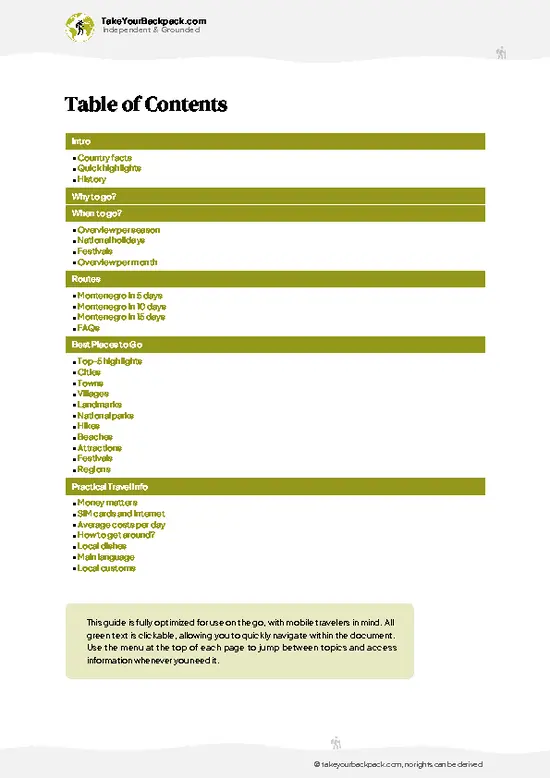
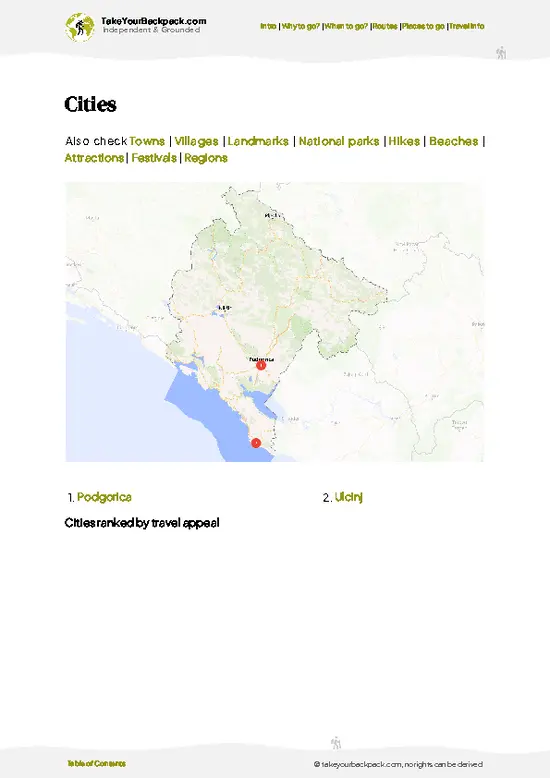
example page 1 from our offline Travel Guide for Montenegro
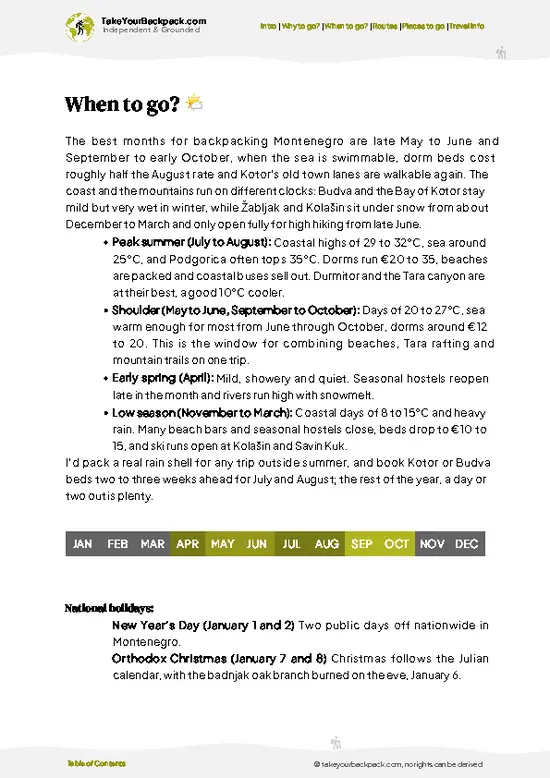
example page 2 from our offline Travel Guide for Montenegro
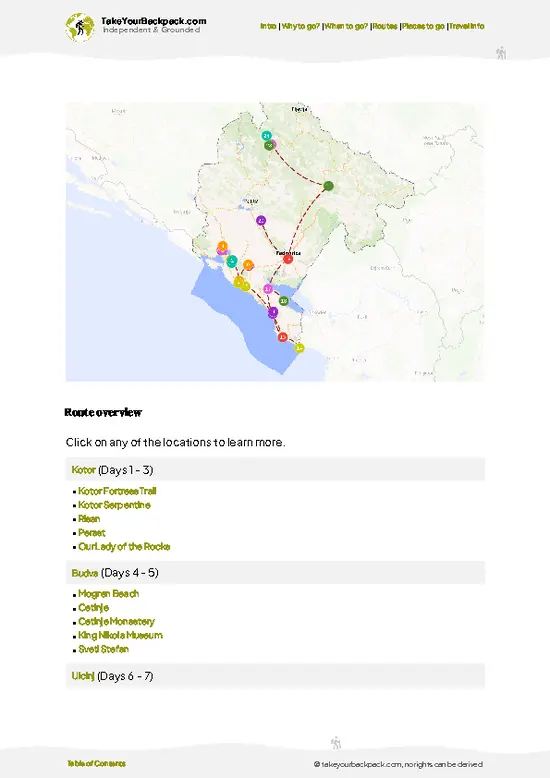
example page 3 from our offline Travel Guide for Montenegro
example page 4 from our offline Travel Guide for Montenegro
example page 5 from our offline Travel Guide for Montenegro
example page 6 from our offline Travel Guide for Montenegro
example page 7 from our offline Travel Guide for Montenegro
The digital guide (252 pages) contains:
64 highlights, ranked by travel appeal
Optimized 5, 10 & 15-day travel routes
Cities, national parks, landmarks, beaches
How to get around
Offline-friendly for travel without Wi-Fi
👉 Click to see all 30+ guide features

📅 Plan smarter in minutes, not weeks
Month by month travel advice
Festivals & national holidays
Budget expectations

🗺️ Go to the right places, skip the overrated ones
Honest pros & cons of destinations
Top hikes, parks & viewpoints
Lesser-known places most travelers miss
Clear “worth it vs skip it” guidance

🛏️ Travel smoothly without rookie mistakes
Best areas to stay
Transport systems explained simply
Common scams & safety advice
SIM cards, money & practical tips

🌍 Understand the country, not just visit it
Culture & traditions
52 Essential phrases & customs
Festivals worth planning around
Traveler-friendly historical context
Insights that make places more meaningful

📱 Built for real travel conditions
Fully downloadable PDF
Works completely offline
Optimized for phone use
Useful in remote areas & buses
Everything in one place
Save weeks of stressful planning
Get instant access to your full guide. 30‑day money-back guarantee.


By proceeding you agree to our terms.
Sent to your inbox immediately after payment • 100% Secure Checkout
Best Backpacking Travel Advisor 2025 tourism awardBest Backpacking
Travel Advisor
2025
What others say about Take Your Backpack Guides:
⭐⭐⭐⭐⭐
Fantastic, amazing amount of information!
⭐⭐⭐⭐⭐
My goodness this is amazing, it's what I've been looking for hats off too you!
⭐⭐⭐⭐⭐
I think this is absolutely BRILLIANT
⭐⭐⭐⭐
Very complete and informative. It's still missing places, but I gotta to commend you
⭐⭐⭐⭐⭐
This is truly amazing, thank you, can't wait to explore it with my kids!
⭐⭐⭐⭐⭐
Awesome resource, thank you!
⭐⭐⭐⭐⭐
This is amazing! Can't wait to explore the ones I haven't seen
⭐⭐⭐⭐
I love this! Well done, great idea.
⭐⭐⭐⭐⭐
Thanks for taking the time to make this gem!
⭐⭐⭐⭐⭐
This might be the best website I've ever seen.
⭐⭐⭐⭐⭐
Congratulations, and thank you so much for your work; it's incredibly valuable.
⭐⭐⭐⭐
In all seriousness I think you did a great job pointing out the important spots
⭐⭐⭐⭐⭐
10/10 very good
⭐⭐⭐⭐⭐
As someone who's only just starting to visit regularly this is awesome, thank you.
⭐⭐⭐⭐
Thank you very much! I'm going to visit my dad, it's going to be very useful!
⭐⭐⭐⭐⭐
This is really cool! We'll be travelling for the first time and this definitely come in handy.
⭐⭐⭐⭐⭐
You are now our minister of culture, congratulations 👨‍💼
⭐⭐⭐⭐⭐
Just wanted to tell you that this is a pearl! Going to follow your recommendations.
⭐⭐⭐⭐⭐
This is so cool. I'll definitely be using the resource for my travels soon.
⭐⭐⭐⭐⭐
This is very impressive! Good work.
⭐⭐⭐⭐⭐
This is an amazing and informative site. Very well done!

🛏️ Where to stay?Where to Stay in Montenegro

Yes — Montenegro has many hostels and budget accommodation, concentrated around Kotor Old Town, Budva (Old Town and the Riviera), Tivat (airport/marina area), Podgorica city centre, Ulcinj (Old Town/Long Beach) and Herceg Novi.
Kotor gives the most character and direct access to bay hikes and boat trips but books out and gets pricier in summer; Budva offers the widest choice for beaches and nightlife yet is the busiest and noisiest at peak season; Tivat is the easiest arrival hub with better transport links but fewer truly cheap options.
Podgorica is the cheapest transport hub with basic hostels but few sights and hot summers; Ulcinj is best for budget beach stays and cheaper food while … read more 👉
Yes — Montenegro has many hostels and budget accommodation, concentrated around Kotor Old Town, Budva (Old Town and the Riviera), Tivat (airport/marina area), Podgorica city centre, Ulcinj (Old Town/Long Beach) and Herceg Novi.
Kotor gives the most character and direct access to bay hikes and boat trips but books out and gets pricier in summer; Budva offers the widest choice for beaches and nightlife yet is the busiest and noisiest at peak season; Tivat is the easiest arrival hub with better transport links but fewer truly cheap options.
Podgorica is the cheapest transport hub with basic hostels but few sights and hot summers; Ulcinj is best for budget beach stays and cheaper food while sitting farther from northern attractions; Herceg Novi is quieter and cheaper off-season but has limited hostel supply — pick based on whether you prioritise beaches and nightlife, historic hiking, or transport convenience.

If you enjoy meeting fellow travelers, consider choosing hostels with high ratings for atmosphere. On the other hand, if you prefer having your own space, a hotel might be a better option.

MontenegroMore of Montenegro

👋 Meet the founderWho’s Behind Take Your Backpack?

Johan, backpacker and founder of TakeYourBackpackHi, I’m Johan (Netherlands 🇳🇱), the creator of TakeYourBackpack. Over the past decade, I’ve backpacked through 80+ countries across six continents, gaining extensive experience with independent travel, long-term trips, and overland routes.

This site is built on a combination of firsthand travel experience and carefully curated insights from other backpackers. Many guides are based on places I’ve personally visited, while others bring together tips, observations, and practical advice shared by trusted travelers I’ve met along the way.

The goal is to provide realistic, experience-driven guidance — not generic itineraries — so you can explore destinations with better context, clearer expectations, and more confidence.

Get full Montenegro guide •
Instant download • 64 highlights • Full Offline guide