×

Montenegro🇲🇪 | best beachesEssential 10 beaches to Explore in Montenegro

Montenegro packs about 290 kilometers of Adriatic coast into a country smaller than Connecticut, and the sand here is rare. Most of it is pebble and shingle that clacks under your sandals, with water so clear and cold-edged that you see your toes at three meters. The Bay of Kotor has almost no true beaches, only concrete platforms and ladders. The central Budva Riviera is loud with sunbed rows, grilled fish smoke and thumping bass, and costs more. The south toward Ulcinj has long, soft dark sand, cheaper rooms and a slower pace. For independent travelers, the real choice is between party, scenery and space.

By Johan Kruseman 🇳🇱 | Updated October 18, 2026
Explore the best attractions in Montenegro

Why go?Understanding Their Importance

Montenegro’s beaches matter because mountains drop almost directly into the sea. Limestone peaks above 2,000 meters stand within an hour’s drive of the shore, so the light at dusk turns the cliffs copper while you swim in water that stays clear and rarely above 26°C. The geology explains the texture: steep, rocky coastline produces pebbles and small coves, while the flat delta near the Albanian border produces the country’s long sandy stretches. Old walled towns, Venetian and Ottoman in layers, sit right behind several waterfronts, so a swim can end among stone alleys smelling of coffee and grilled cevapi.

Know the limits before you choose. The coast is short, so summer crowds concentrate hard, and in July and August the roads clog, parking vanishes and beach clubs charge for nearly every … read more 👉
Montenegro’s beaches matter because mountains drop almost directly into the sea. Limestone peaks above 2,000 meters stand within an hour’s drive of the shore, so the light at dusk turns the cliffs copper while you swim in water that stays clear and rarely above 26°C. The geology explains the texture: steep, rocky coastline produces pebbles and small coves, while the flat delta near the Albanian border produces the country’s long sandy stretches. Old walled towns, Venetian and Ottoman in layers, sit right behind several waterfronts, so a swim can end among stone alleys smelling of coffee and grilled cevapi.

Know the limits before you choose. The coast is short, so summer crowds concentrate hard, and in July and August the roads clog, parking vanishes and beach clubs charge for nearly every patch of ground. Public, free space exists but you must arrive early. Infrastructure is uneven: some stretches have showers, cafes and lifeguards, while remote coves have only a rough path and no shade. Many beaches have private concessions, and Montenegro’s tourism boom has pushed development fast, so concrete sits beside wild shore. Bring water shoes for the pebbles and sea urchins, and expect the country to suit travelers who value variety over a single endless strand.
Our Approach to Ranking
The list of best beaches in Montenegro is created based on beauty, vibe, water quality, activities, and surrounding scenery. If you feel a beach is missing in this list, please let us know.

When to go?Best Time to Visit Montenegro for beaches

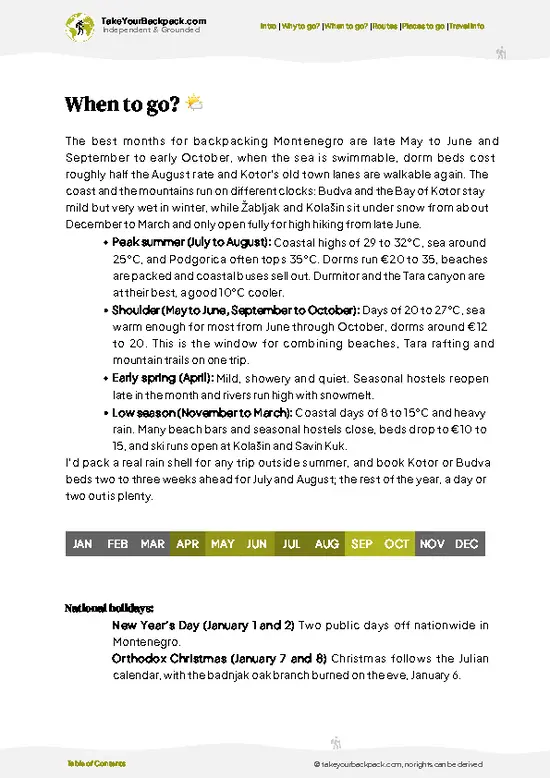
Best months for the beach: The best months are June and September, when the sea sits around 22 to 25°C, the days are warm and sunny, and the coast is not yet or no longer packed. July and August bring air temperatures of 29 to 35°C, a sea of 25 to 27°C, near-constant sun and cicadas buzzing in the pines. They also bring the highest prices and thickest crowds, especially around Budva, where rooms can cost 40 to 80 percent more than in shoulder months.

Shoulder seasons and the cold months: May is pleasant on land at 20 to 24°C, but the sea is still a bracing 17 to 19°C, so swims are short. Late September and early October keep the water near 21 to 23°C and the light turns golden and low. Rain increases from October, and the coast gets some of Europe’s highest rainfall, with heavy autumn and … read more 👉
Best months for the beach: The best months are June and September, when the sea sits around 22 to 25°C, the days are warm and sunny, and the coast is not yet or no longer packed. July and August bring air temperatures of 29 to 35°C, a sea of 25 to 27°C, near-constant sun and cicadas buzzing in the pines. They also bring the highest prices and thickest crowds, especially around Budva, where rooms can cost 40 to 80 percent more than in shoulder months.

Shoulder seasons and the cold months: May is pleasant on land at 20 to 24°C, but the sea is still a bracing 17 to 19°C, so swims are short. Late September and early October keep the water near 21 to 23°C and the light turns golden and low. Rain increases from October, and the coast gets some of Europe’s highest rainfall, with heavy autumn and winter downpours, especially around the Bay of Kotor, where mountains trap clouds. From November to April most beach bars, sunbed operators and seasonal restaurants close, and shutters stay down in smaller resorts. The south near Ulcinj is typically a little warmer and drier than the Bay, with a longer swimming window. Book accommodation ahead only for July and August; in other months, walk-up deals are easy.

beach hoppingTips for Visiting Multiple Destinations

How many days to plan: A trip combining several beaches in Montenegro needs 7 to 10 days, since the country is small but its coastal roads are slow, winding and often jammed in summer. Think of it as three clusters: the Bay of Kotor and Tivat in the northwest, the Budva Riviera in the center and the Bar to Ulcinj stretch in the south. Travel one direction, either north to south or the reverse, rather than doubling back. Starting near Tivat or Kotor airport and ending at Ulcinj, or the reverse using Podgorica, works well.

Time per stop and between regions: Give each cluster two to four nights, with a full day at the water and a lazy half day around it. Kotor to Budva takes about 30 to 50 minutes by bus or car outside peak hours, Budva to Bar roughly 45 minutes to an hour, and Bar to Ulcinj … read more 👉
How many days to plan: A trip combining several beaches in Montenegro needs 7 to 10 days, since the country is small but its coastal roads are slow, winding and often jammed in summer. Think of it as three clusters: the Bay of Kotor and Tivat in the northwest, the Budva Riviera in the center and the Bar to Ulcinj stretch in the south. Travel one direction, either north to south or the reverse, rather than doubling back. Starting near Tivat or Kotor airport and ending at Ulcinj, or the reverse using Podgorica, works well.

Time per stop and between regions: Give each cluster two to four nights, with a full day at the water and a lazy half day around it. Kotor to Budva takes about 30 to 50 minutes by bus or car outside peak hours, Budva to Bar roughly 45 minutes to an hour, and Bar to Ulcinj about 30 to 40 minutes. In July and August, double those times near Budva and Sveti Stefan, where traffic sits in a heat shimmer of exhaust.

Common planning mistakes: Travelers often cram one beach into each day and spend hours in buses instead of swimming. Pick a base per cluster and use local buses and short taxis for day trips. Another mistake is arriving in the afternoon in high season, when parking and sun lounger spots are gone. Go early, before 10 a.m., and leave the shore as the crowds build.

The ListTop beaches of Montenegro

1 Sveti Stefan

island view, pink pebbles, exclusive access

Photograph the iconic islet from the shore, or pay for entry to swim in clear water with a unique pink-hued pebble underfoot.

montenegro-beach-sveti-stefan
© Google |

2 Ada Bojana

river delta, sandy expanse, kite surfing

Experience open sand and strong winds at the river mouth, where the Adriatic meets the Bojana, drawing kite surfers and naturists.

montenegro-beach-ada-bojana
© Google |

3 Mogren Beach

twin coves, golden sand, cliff walk

Walk a coastal path to reach two sandy inlets backed by cliffs, close to Budva but separated enough for a quieter swim.

4 Jaz Beach

festival venue, wide bay, mixed sand

Join crowds for music events or find space along the long shoreline, with a mix of sand and pebbles and easy access from Budva.

montenegro-beach-jaz-beach
© Google | Poseidon

5 Plavi Horizonti

gentle slope, fine sand, sheltered bay

Wade into shallow, calm water on a sandy bottom, with a protective bay that makes it safe for less confident swimmers.

montenegro-beach-plavi-horizonti
© Google |

6 Lučice Beach

family-friendly, shallow entry, pine backdrop

Relax on a wide, sandy curve with gentle shallows and natural shade, popular with families but rarely overcrowded.

montenegro-beach-lucice-beach
© Google |

7 Perazića Do Beach

pebble shore, turquoise water, tunnel approach

Arrive through a hillside tunnel to a pebbled stretch with strikingly clear water, framed by steep slopes and minimal development.

montenegro-beach-perazica-do-beach
© Google |

8 Mirišta

rocky coves, pine shade, boat moorings

Swim from stone terraces beneath fragrant trees, watch boats drift by, and find quiet corners away from the main tourist flow.

montenegro-beach-mirista
© Google |

9 Sutomore

urban stretch, lively promenade, budget eats

Navigate a busy town beach lined with casual food stalls and bars, offering affordable options and a social, energetic atmosphere.

montenegro-beach-sutomore
© Google |

10 Rt Vesla

cliffside access, deep water, snorkeling spots

Descend rugged paths to clear, deep water ideal for snorkeling, with dramatic cliffs and a sense of isolation from busier beaches.

Loading the map 🌍

Expert viewInsights from Locals and Experts

How many beaches to visit: Plan on four to six beaches, spread across at least two regions. Fewer than that and you miss how different the coast is. More than that and you spend your holiday in buses, queuing at parking lots and dragging gear in the midday heat. A good mix is one rocky cove for clear water, one lively resort beach for the scene and one long sandy stretch for space. Each extra beach beyond six costs half a day of transit and adds little you have not already seen.

Choosing between kinds of beaches: Budget travelers get the most from the long sandy beaches in the south: rooms and food are cheaper, free stretches are wider and you can lay a towel without paying. Social travelers and solo backpackers who want company will find more hostels and nightlife around Budva, but must … read more 👉
How many beaches to visit: Plan on four to six beaches, spread across at least two regions. Fewer than that and you miss how different the coast is. More than that and you spend your holiday in buses, queuing at parking lots and dragging gear in the midday heat. A good mix is one rocky cove for clear water, one lively resort beach for the scene and one long sandy stretch for space. Each extra beach beyond six costs half a day of transit and adds little you have not already seen.

Choosing between kinds of beaches: Budget travelers get the most from the long sandy beaches in the south: rooms and food are cheaper, free stretches are wider and you can lay a towel without paying. Social travelers and solo backpackers who want company will find more hostels and nightlife around Budva, but must accept sunbed prices, loud music and hotter crowds. Travelers after calm and photography should take pebble coves and bay-side swimming spots, which cost little but need more walking and offer fewer facilities. Resort-club beaches give the most comfort for the money only if you want chairs, shade and drinks; otherwise your own towel and umbrella cost far less.

What it costs: Plan on US$45 to 80 a day in summer (about €40 to 70) for a hostel bed or budget room, local food and transport. Sunbed pairs at private beaches run roughly €10 to 30 a day, and at the most fashionable clubs far more. Many public beaches are free, while some charge €1 to 5 for entry or parking. Local buses between coastal towns cost about €1.50 to 5 per ride; taxis are pricier and usually need agreeing in advance. Boat trips to coves cost around €15 to 30 per person. Buy a simple umbrella and mat in town for under €15 and skip the daily rental.

Safety and etiquette: Most swimming is calm, but few beaches outside the main resorts have lifeguards, so swim near others and avoid jumping from rocks into unknown depth. Sea urchins live on rocky bottoms and their spines hurt, so wear water shoes. Sun is intense; shade is scarce on bare shingle, and midday heat above 32°C can cause heat exhaustion. Keep valuables out of sight and never leave bags unattended in busy spots. Topless sunbathing is tolerated at some tourist beaches and frowned on elsewhere; cover up when walking into town. Locals expect polite greetings, and many beach cafes expect you to order something if you use their chairs. Take your litter with you, since bins can overflow in August.

✈️ The backpacker research shortcutMontenegro Travel Guide

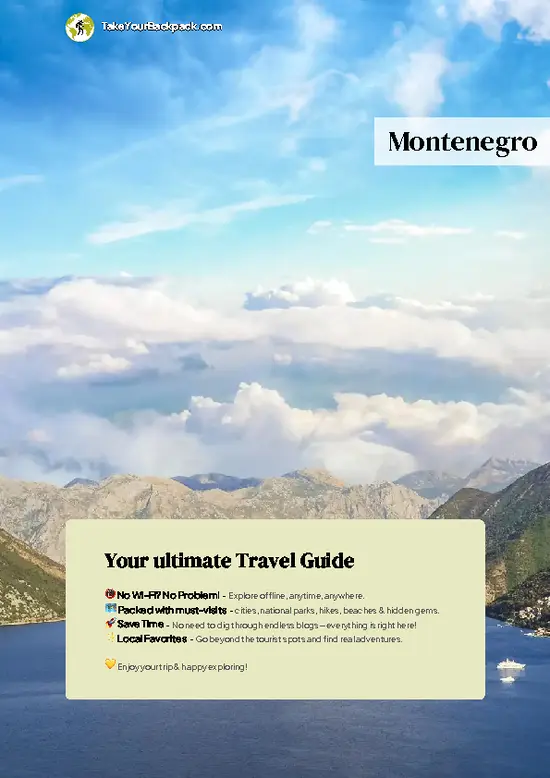
An offline-friendly backpacking guide with optimized travel routes, ranked highlights, transport advice, and the best areas to stay.
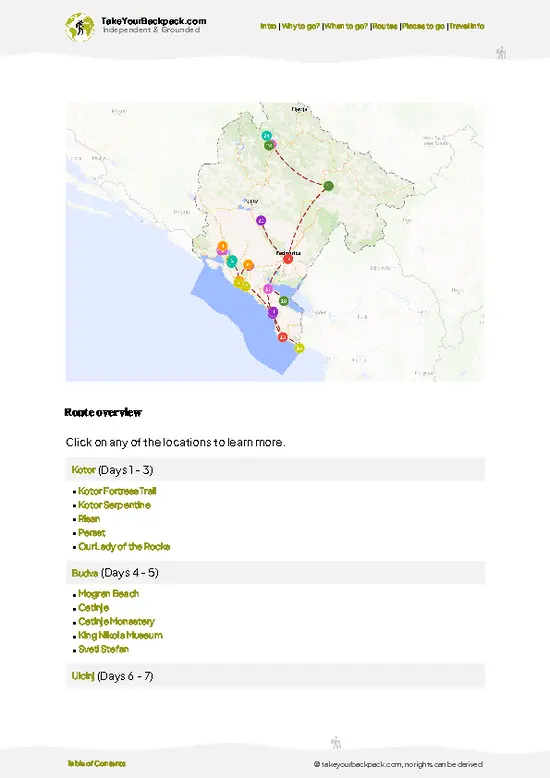
example page 0 from our offline Travel Guide for Montenegro
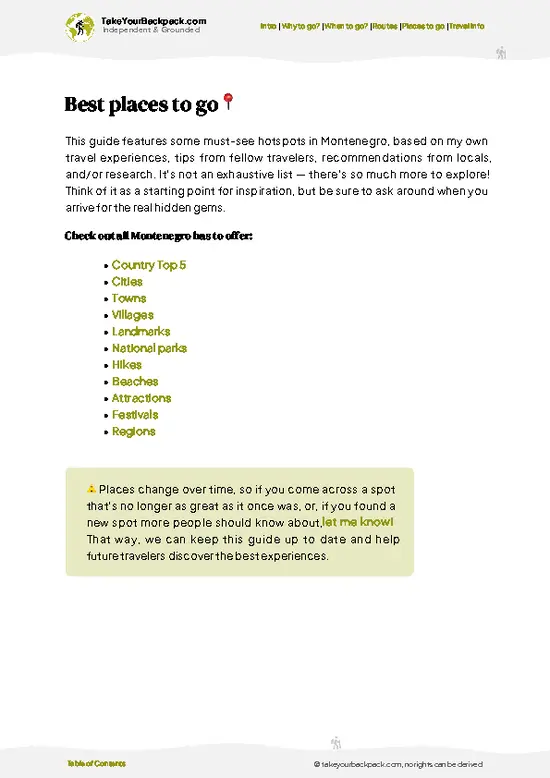
example page 1 from our offline Travel Guide for Montenegro
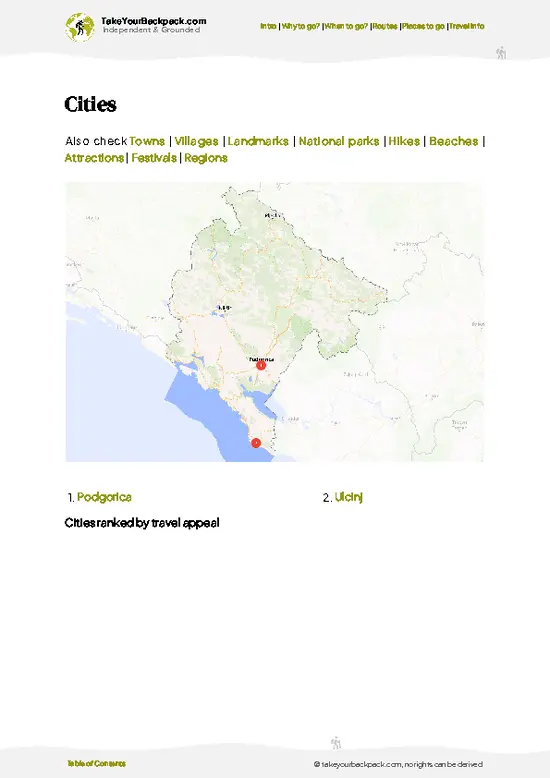
example page 2 from our offline Travel Guide for Montenegro
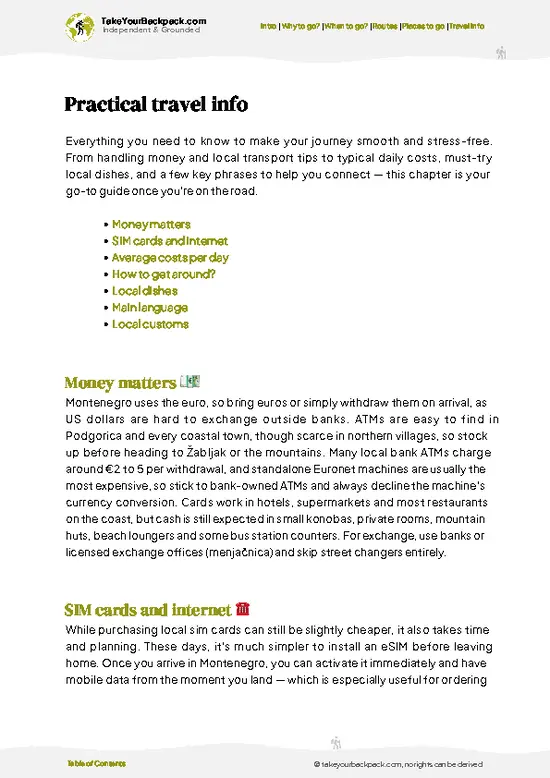
example page 3 from our offline Travel Guide for Montenegro
example page 4 from our offline Travel Guide for Montenegro
example page 5 from our offline Travel Guide for Montenegro
example page 6 from our offline Travel Guide for Montenegro
example page 7 from our offline Travel Guide for Montenegro
The digital guide (241 pages) contains:
✅ 62 highlights, ranked by travel appeal
✅ Optimized 5, 10 & 15-day travel routes
✅ Cities, national parks, landmarks, beaches
✅ How to get around
✅ Offline-friendly for travel without Wi-Fi
👉 Click to see all 30+ guide features

📅 Plan smarter in minutes, not weeks
✅ Month by month travel advice
✅ Festivals & national holidays
✅ Budget expectations

🗺️ Go to the right places, skip the overrated ones
✅ Honest pros & cons of destinations
✅ Top hikes, parks & viewpoints
✅ Lesser-known places most travelers miss
✅ Clear “worth it vs skip it” guidance

🛏️ Travel smoothly without rookie mistakes
✅ Best areas to stay
✅ Transport systems explained simply
✅ Common scams & safety advice
✅ SIM cards, money & practical tips

🌍 Understand the country, not just visit it
✅ Culture & traditions
✅ 52 Essential phrases & customs
✅ Festivals worth planning around
✅ Traveler-friendly historical context
✅ Insights that make places more meaningful

📱 Built for real travel conditions
✅ Fully downloadable PDF
✅ Works completely offline
✅ Optimized for phone use
✅ Useful in remote areas & buses
✅ Everything in one place
Stop searching, start planning
Get instant access to your full guide. 30‑day money-back guarantee.
+ Add another guide for just

By proceeding you agree to our terms.
Sent to your inbox immediately after payment • 100% Secure Checkout
Best Backpacking Travel Advisor 2025 tourism awardBest Backpacking
Travel Advisor
2025
What others say about Take Your Backpack Guides:
⭐⭐⭐⭐⭐
Fantastic, amazing amount of information!
⭐⭐⭐⭐⭐
My goodness this is amazing, it's what I've been looking for hats off too you!
⭐⭐⭐⭐⭐
I think this is absolutely BRILLIANT
⭐⭐⭐⭐
Very complete and informative. It's still missing places, but I gotta to commend you
⭐⭐⭐⭐⭐
This is truly amazing, thank you, can't wait to explore it with my kids!
⭐⭐⭐⭐⭐
Awesome resource, thank you!
⭐⭐⭐⭐⭐
This is amazing! Can't wait to explore the ones I haven't seen
⭐⭐⭐⭐
I love this! Well done, great idea.
⭐⭐⭐⭐⭐
Thanks for taking the time to make this gem!
⭐⭐⭐⭐⭐
This might be the best website I've ever seen.
⭐⭐⭐⭐⭐
Congratulations, and thank you so much for your work; it's incredibly valuable.
⭐⭐⭐⭐
In all seriousness I think you did a great job pointing out the important spots
⭐⭐⭐⭐⭐
10/10 very good
⭐⭐⭐⭐⭐
As someone who's only just starting to visit regularly this is awesome, thank you.
⭐⭐⭐⭐
Thank you very much! I'm going to visit my dad, it's going to be very useful!
⭐⭐⭐⭐⭐
This is really cool! We'll be travelling for the first time and this definitely come in handy.
⭐⭐⭐⭐⭐
You are now our minister of culture, congratulations 👨‍💼
⭐⭐⭐⭐⭐
Just wanted to tell you that this is a pearl! Going to follow your recommendations.
⭐⭐⭐⭐⭐
This is so cool. I'll definitely be using the resource for my travels soon.
⭐⭐⭐⭐⭐
This is very impressive! Good work.
⭐⭐⭐⭐⭐
This is an amazing and informative site. Very well done!

🛏️ Where to stay?Best Stay Options in Montenegro

Montenegro has plenty of hostels and guesthouses, with dorm beds typically running €12 to 25 a night in summer and private rooms in family-run apartments (“sobe”) from about €25 to 45. In Kotor, the Old Town puts you inside the walls next to the fortress climb but gets loud and packed on cruise-ship days, while Dobrota just north is quieter and cheaper; Budva around the Old Town and Slovenska Plaža has the most party hostels and late bars, which is great for nightlife and bad for sleep. For mountains and lower prices, Žabljak is the base for Durmitor, and central Podgorica near the bus and train stations has cheap, safe, if unexciting beds that work well for onward connections.

If you enjoy meeting … read more 👉
Montenegro has plenty of hostels and guesthouses, with dorm beds typically running €12 to 25 a night in summer and private rooms in family-run apartments (“sobe”) from about €25 to 45. In Kotor, the Old Town puts you inside the walls next to the fortress climb but gets loud and packed on cruise-ship days, while Dobrota just north is quieter and cheaper; Budva around the Old Town and Slovenska Plaža has the most party hostels and late bars, which is great for nightlife and bad for sleep. For mountains and lower prices, Žabljak is the base for Durmitor, and central Podgorica near the bus and train stations has cheap, safe, if unexciting beds that work well for onward connections.

If you enjoy meeting fellow travelers, consider choosing hostels with high ratings for atmosphere. On the other hand, if you prefer having your own space, a hotel might be a better option.

MontenegroWhere to Go Next

👋 Meet the founderWho’s Behind Take Your Backpack?

Johan, backpacker and founder of TakeYourBackpackHi, I’m Johan (Netherlands 🇳🇱), the creator of TakeYourBackpack. Over the past 3 decades, I’ve backpacked through 90+ countries across six continents, gaining extensive experience with independent travel, long-term trips, and overland routes.

This site is built on a combination of firsthand travel experience and carefully curated insights from other backpackers. Many guides are based on places I’ve personally visited, while others bring together tips, observations, and practical advice shared by trusted travelers I’ve met along the way.

The goal is to provide realistic, experience-driven guidance — not generic itineraries — so you can explore destinations with better context, clearer expectations, and more confidence.