×

Namibia🇳🇦 | regionsCaprivi StripFloodplains, riverine forests, wildlife corridors, border crossings | things to do and best time to go

Explore Sperrgebiet National ParkExplore Damaraland

Backpacking in Caprivi Strip
🏆 Top pickregion ranked #2
By Johan Kruseman 🇳🇱 | Updated June 8, 2026

Everyone’s heard the pitch: you go to the Caprivi Strip for wildlife—elephants, hippos, the whole safari checklist. But here’s the real trade: what you’ll remember isn’t just the animals, but the feeling of being wedged between four countries, where Namibia stretches east like a finger poking into Zambia, Botswana, and Angola. The Caprivi Strip is Namibia’s wild card—lush, river-threaded, and nothing like the desert heartland to the west. Backpackers get a raw deal here, in the best way: it’s cheaper than Etosha, less polished than Chobe, and the river camps feel like secret handshakes. You’ll trade easy transport for authenticity; buses are slow, and hitching is common, but every stop—Katima Mulilo’s market chaos, the sleepy banks of Divundu, the untamed parks like Bwabwata—feels earned. It’s not overrun, not yet. If you want the Namibia that locals actually talk about, not just the one on postcards, this is where you go.

Discover everything you want to know in the 📖 Namibia Travel Guide.


Get your Namibia guide
79 ranked highlights, routes & tips, works offline (318 pages)
Loading the map 🌍
CLICK TO FILTER
cities
towns
villages
landmarks
national parks
hikes
beaches
attractions
festivals
regions
SHOW COUNTRY’S BESTSHOW ALL

✨ Why go?
Ranked #2 region in Namibia
Why visitors keep coming back

The Caprivi Strip in Namibia is a backpacker’s playground, and here’s why savvy travelers flock there. First off, the variety of landscapes is mind-blowing. You’ve got lush wetlands, savannahs, and even the Zambezi River. Each corner offers a fresh backdrop, keeping your Instagram game strong without the hassle of constant relocation.

Speaking of hassle, the transport flexibility here is a game changer. You can hop on a local bus or rent a bike to explore at your own pace. This means you can soak in the sights without feeling rushed.

What really sets the Caprivi apart is the chance to mix nature and culture seamlessly. Spend a day tracking elephants in Bwabwata National Park, then dive into local traditions in a nearby village. This slow travel approach lets you connect with the land and … read more 👉
The Caprivi Strip in Namibia is a backpacker’s playground, and here’s why savvy travelers flock there. First off, the variety of landscapes is mind-blowing. You’ve got lush wetlands, savannahs, and even the Zambezi River. Each corner offers a fresh backdrop, keeping your Instagram game strong without the hassle of constant relocation.

Speaking of hassle, the transport flexibility here is a game changer. You can hop on a local bus or rent a bike to explore at your own pace. This means you can soak in the sights without feeling rushed.

What really sets the Caprivi apart is the chance to mix nature and culture seamlessly. Spend a day tracking elephants in Bwabwata National Park, then dive into local traditions in a nearby village. This slow travel approach lets you connect with the land and its people, making each experience richer.

So, if you’re after a trip that balances adventure and authenticity, the Caprivi Strip is where you want to be. It’s all about those high-value experiences that stick with you long after you’ve left.
Want to include Caprivi Strip in your Namibia route?
Create a personalized Namibia itinerary that includes Caprivi Strip and the places that fit your trip — based on your travel style, budget, and available time. Get your route in seconds.

Generate my trip

💡 HighlightsDon't-miss highlights and experiences

  • Nkasa Rupara National Park — A wild, waterlogged maze of channels, reedbeds and islands (this used to be called Mamili). You’ll find huge hippo pods, remote boat and mokoro trips and birdlife that feels more Okavango than typical Namibian bush — a true back-of-beyond wetland experience unique to the Caprivi Strip.
  • Mudumu National Park — Floodplain country along the Kwando River where elephants move through thick reeds and the night chorus is deafening. Game drives and river edge hides give close sightings that feel different from the dry western parks: lots of waterbirds, marsh predators and that floating-meadow vibe.
  • Bwabwata National Park (Mahango area) — A rare mix of people and big wildlife: Mahango Game Park (inside Bwabwata) sits on the Okavango floodplain and gives reliable sightings
read more 👉
  • Nkasa Rupara National Park — A wild, waterlogged maze of channels, reedbeds and islands (this used to be called Mamili). You’ll find huge hippo pods, remote boat and mokoro trips and birdlife that feels more Okavango than typical Namibian bush — a true back-of-beyond wetland experience unique to the Caprivi Strip.
  • Mudumu National Park — Floodplain country along the Kwando River where elephants move through thick reeds and the night chorus is deafening. Game drives and river edge hides give close sightings that feel different from the dry western parks: lots of waterbirds, marsh predators and that floating-meadow vibe.
  • Bwabwata National Park (Mahango area) — A rare mix of people and big wildlife: Mahango Game Park (inside Bwabwata) sits on the Okavango floodplain and gives reliable sightings of buffalo, elephants, sable and plenty of birdlife. It’s where riverine habitat and small communities intersect, so you can combine wildlife drives with village visits.
  • Popa Falls — A series of shallow rapids and islands on the Cuando/ Linyanti system near Katima Mulilo. It’s not a towering waterfall, but the basalt rocks, seasonal channels and quiet sandbanks make for great short walks, picnics, fishing with locals and excellent sundown photos.
  • Katima Mulilo riverfront & craft market — The easiest place to feel the Zambezi: a riverside promenade, lively market stalls selling Subia and Mafwe crafts, grilled fish vendors and cafes with river views. Good for resupplying, meeting locals and catching cheap boat trips at sunset.
  • Mayuni Conservancy boat and mokoro trips (hidden gem) — Community-run, low-impact canoe and boat safaris through narrow channels that big operators don’t reach. You’ll float past hippos, kingfishers and reed islands while local guides share fishing and floodplain lore — a quiet, authentic way to see the wetland that many tourists miss.
  • Schuckmannsburg / Luhonono (hidden gem) — The tiny, off-grid colonial administrative settlement on the western edge of the Strip: think abandoned brick buildings, a faded mission church and real local stories. It’s raw and atmospheric, good for history nerds and people who like places that haven’t been polished for visitors.
  • Divundu and Mahango community experiences (hidden gem) — Divundu is an unflashy river town that’s the gateway to Mahango Game Park; more importantly it’s where you can organize homestead visits, local craft pickups and quiet river trips with small operators. It’s low-key but rich for cultural exchange if you’re prepared to visit respectfully.
  • Sunset and sunrise boat safaris on the Zambezi/Kwando — The light here is special. Early-morning or late-afternoon boat runs bring hippos surfacing within arm’s reach, dramatic bird hawking, and riverbank game you won’t get on dryland drives. It’s a simple experience that feels unique because the whole landscape is water-shaped.
  • Seasonal floodplain islands and beach camping — When water levels drop you can walk or camp on temporary sandy islands and mudflats, fall asleep to frogs and wake to flocks of waders. It’s basic — no glamping — but staying on a floodplain island overnight is a Caprivi-specific experience you won’t recreate in arid Namibia elsewhere.
Spotted a mistake or missing something? Contact us.

⌛️ 5 daysWhat you can realistically do in a week

Day 1: Katima Mulilo
Arrive in Katima Mulilo, the gateway to the Caprivi Strip. This town is your launchpad, where you can stock up on supplies and get a feel for the local vibe. The transport system here is straightforward: you’ll find taxis and shuttle services that connect you to various points along the strip. Spend the day acclimating, and don’t miss the local market for fresh produce and crafts. It’s a great way to ease into the rhythm of the region.

Day 2: Nkasa Rupara National Park
Head to Nkasa Rupara National Park, about a two-hour drive from Katima. This park is less frequented, offering a more intimate wildlife experience. The roads can be bumpy, but the payoff is worth it. You’ll encounter elephants, hippos, and a variety of bird species. The park’s remoteness means fewer … read more 👉
Day 1: Katima Mulilo
Arrive in Katima Mulilo, the gateway to the Caprivi Strip. This town is your launchpad, where you can stock up on supplies and get a feel for the local vibe. The transport system here is straightforward: you’ll find taxis and shuttle services that connect you to various points along the strip. Spend the day acclimating, and don’t miss the local market for fresh produce and crafts. It’s a great way to ease into the rhythm of the region.

Day 2: Nkasa Rupara National Park
Head to Nkasa Rupara National Park, about a two-hour drive from Katima. This park is less frequented, offering a more intimate wildlife experience. The roads can be bumpy, but the payoff is worth it. You’ll encounter elephants, hippos, and a variety of bird species. The park’s remoteness means fewer tourists, allowing you to soak in the serenity.

Day 3: Linyanti River
Travel to the Linyanti River, a scenic spot that’s about three hours from Nkasa Rupara. This area is known for its stunning sunsets and rich wildlife. Consider a boat trip to see the river’s inhabitants up close. The transport options are limited, so plan ahead.

Day 4: Kasane (Botswana)
Cross the border into Kasane, just an hour away. This is where the Caprivi Strip meets Botswana, and it opens up more adventure options. The transport here is more developed, with various tours available. Spend the day exploring Chobe National Park, famous for its large elephant population.

Day 5: Off-Path Reward - Impalila Island
Take a short boat ride to Impalila Island. This detour is a hidden treasure, offering cultural insights and a chance to meet local communities. The island is a peaceful contrast to the busier parks.

The must-do day? Day 4 in Kasane. The combination of wildlife and accessibility makes it the highlight of your trip, justifying every mile traveled.
Turn your Caprivi Strip visit into an Namibia adventure
Build a complete Namibia route with Caprivi Strip, hidden gems, must-see destinations, and realistic travel times included.

Generate my trip

🌤️ When to go?When to go for the best experience


  • Weather: The dry season from May to October is your golden window. Expect clear skies and minimal rain, perfect for trekking and wildlife spotting. The wet season (November to April) floods the area, making some trails impassable and wildlife harder to find.

  • Temperature: During the dry months, daytime highs hover around 25-30°C (77-86°F), cooling off sharply at night to 5-10°C (41-50°F). Pack layers—you’ll want warmth after sunset but light clothes for daytime.

  • Daylight Hours: Long days dominate May to August, with up to 11-12 hours of daylight. This stretch gives you more time to explore without rushing, especially since early mornings and late afternoons are prime for animal activity.

  • Crowds: Peak dry season draws safari enthusiasts, but the Caprivi Strip remains relatively quiet
read more 👉

  • Weather: The dry season from May to October is your golden window. Expect clear skies and minimal rain, perfect for trekking and wildlife spotting. The wet season (November to April) floods the area, making some trails impassable and wildlife harder to find.

  • Temperature: During the dry months, daytime highs hover around 25-30°C (77-86°F), cooling off sharply at night to 5-10°C (41-50°F). Pack layers—you’ll want warmth after sunset but light clothes for daytime.

  • Daylight Hours: Long days dominate May to August, with up to 11-12 hours of daylight. This stretch gives you more time to explore without rushing, especially since early mornings and late afternoons are prime for animal activity.

  • Crowds: Peak dry season draws safari enthusiasts, but the Caprivi Strip remains relatively quiet compared to Namibia’s west. Visiting shoulder months like April or October balances fewer people with decent weather.

  • Seasonal Activities: Dry season is prime for game drives and boat safaris on the Okavango and Zambezi rivers. Wet season brings birdwatching bonanzas but expect muddy roads and fewer accessible campsites.

  • Price Fluctuations: Expect higher rates during the dry season’s peak (June-August). Booking early can snag deals, but last-minute travelers might find better prices in shoulder months—just be ready for some weather trade-offs.


Pro-tip: Arrive late May or early June to catch the dry season’s start—fewer crowds, cooler temps, and wildlife waking up from the rains. It’s the sweet spot locals keep to themselves.


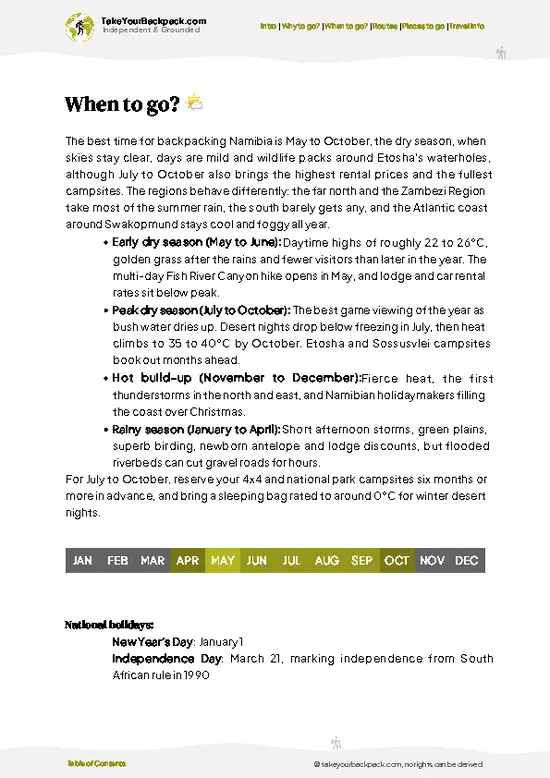
source: climatestotravel.comJANJanuary: fair for travelingFEBFebruary: fair for travelingMARMarch: fair for travelingAPRApril: good for travelingMAYMay: highly recommended for travelingJUNJune: excellent for travelingJULJuly: excellent for travelingAUGAugust: excellent for travelingSEPSeptember: highly recommended for travelingOCTOctober: good for travelingNOVNovember: fair for travelingDECDecember: fair for traveling
when-to-go

✈️ The backpacker research shortcutNamibia Travel Guide

An offline-friendly backpacking guide with optimized travel routes, ranked highlights, transport advice, and the best areas to stay.
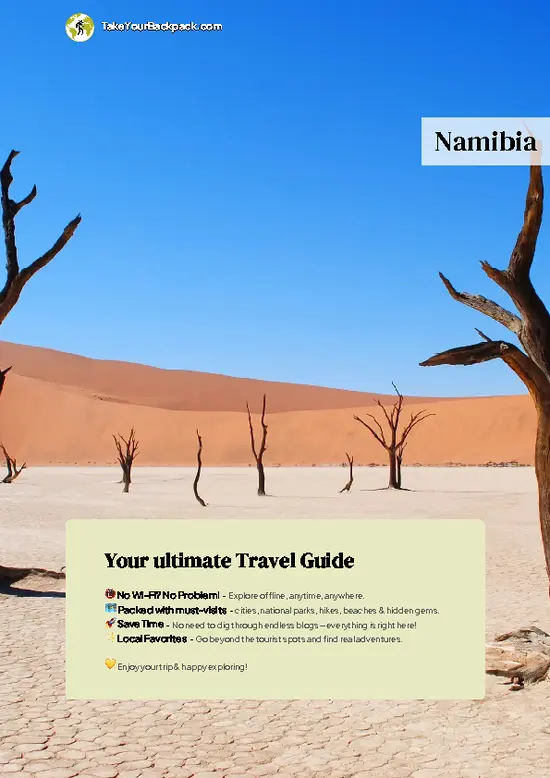
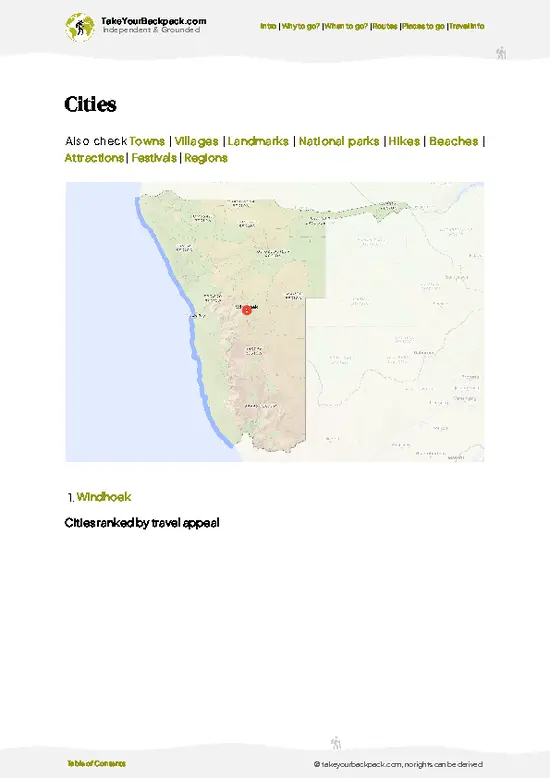
example page 0 from our offline Travel Guide for Namibia
example page 1 from our offline Travel Guide for Namibia
example page 2 from our offline Travel Guide for Namibia
example page 3 from our offline Travel Guide for Namibia
example page 4 from our offline Travel Guide for Namibia
example page 5 from our offline Travel Guide for Namibia
example page 6 from our offline Travel Guide for Namibia
example page 7 from our offline Travel Guide for Namibia
The digital guide (318 pages) contains:
79 highlights, ranked by travel appeal
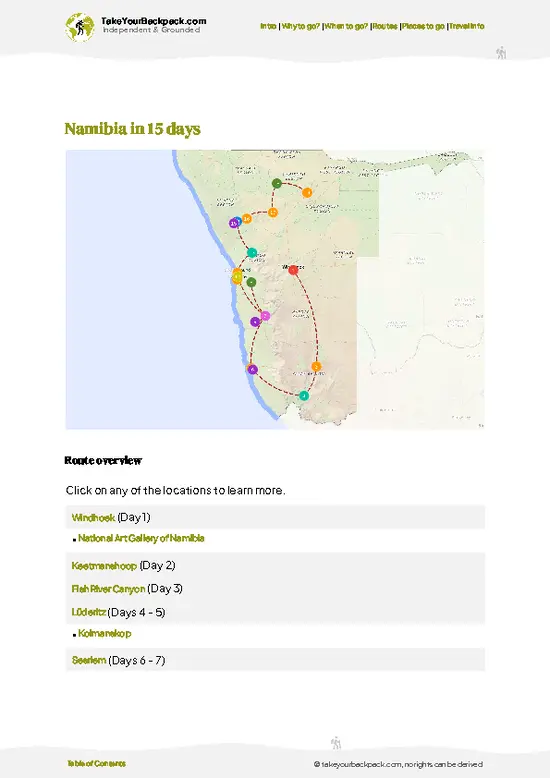
Optimized 5, 10 & 15-day travel routes
Cities, national parks, landmarks, beaches
How to get around
Offline-friendly for travel without Wi-Fi
👉 Click to see all 30+ guide features

📅 Plan smarter in minutes, not weeks
Month by month travel advice
Festivals & national holidays
Budget expectations

🗺️ Go to the right places, skip the overrated ones
Honest pros & cons of destinations
Top hikes, parks & viewpoints
Lesser-known places most travelers miss
Clear “worth it vs skip it” guidance

🛏️ Travel smoothly without rookie mistakes
Best areas to stay
Transport systems explained simply
Common scams & safety advice
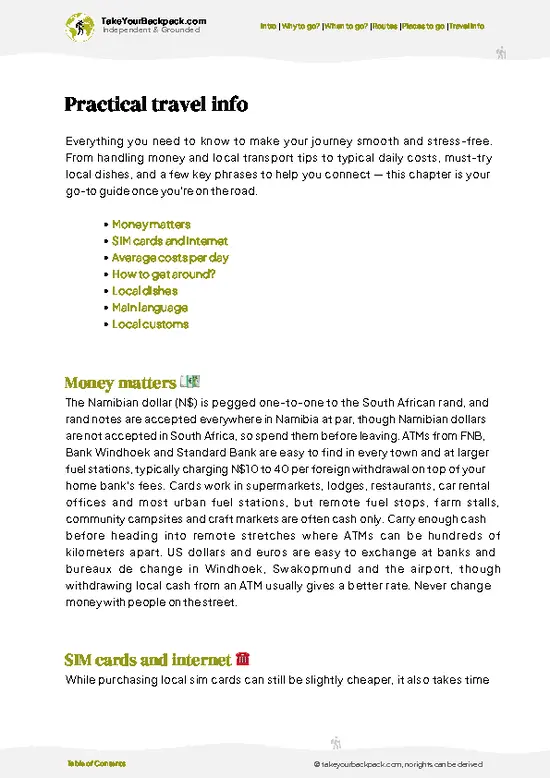
SIM cards, money & practical tips

🌍 Understand the country, not just visit it
Culture & traditions
52 Essential phrases & customs
Festivals worth planning around
Traveler-friendly historical context
Insights that make places more meaningful

📱 Built for real travel conditions
Fully downloadable PDF
Works completely offline
Optimized for phone use
Useful in remote areas & buses
Everything in one place
Save weeks of stressful planning
Get instant access to your full guide. 30‑day money-back guarantee.


By proceeding you agree to our terms.
Sent to your inbox immediately after payment • 100% Secure Checkout
Best Backpacking Travel Advisor 2025 tourism awardBest Backpacking
Travel Advisor
2025
What others say about Take Your Backpack Guides:
⭐⭐⭐⭐⭐
Fantastic, amazing amount of information!
⭐⭐⭐⭐⭐
My goodness this is amazing, it's what I've been looking for hats off too you!
⭐⭐⭐⭐⭐
I think this is absolutely BRILLIANT
⭐⭐⭐⭐
Very complete and informative. It's still missing places, but I gotta to commend you
⭐⭐⭐⭐⭐
This is truly amazing, thank you, can't wait to explore it with my kids!
⭐⭐⭐⭐⭐
Awesome resource, thank you!
⭐⭐⭐⭐⭐
This is amazing! Can't wait to explore the ones I haven't seen
⭐⭐⭐⭐
I love this! Well done, great idea.
⭐⭐⭐⭐⭐
Thanks for taking the time to make this gem!
⭐⭐⭐⭐⭐
This might be the best website I've ever seen.
⭐⭐⭐⭐⭐
Congratulations, and thank you so much for your work; it's incredibly valuable.
⭐⭐⭐⭐
In all seriousness I think you did a great job pointing out the important spots
⭐⭐⭐⭐⭐
10/10 very good
⭐⭐⭐⭐⭐
As someone who's only just starting to visit regularly this is awesome, thank you.
⭐⭐⭐⭐
Thank you very much! I'm going to visit my dad, it's going to be very useful!
⭐⭐⭐⭐⭐
This is really cool! We'll be travelling for the first time and this definitely come in handy.
⭐⭐⭐⭐⭐
You are now our minister of culture, congratulations 👨‍💼
⭐⭐⭐⭐⭐
Just wanted to tell you that this is a pearl! Going to follow your recommendations.
⭐⭐⭐⭐⭐
This is so cool. I'll definitely be using the resource for my travels soon.
⭐⭐⭐⭐⭐
This is very impressive! Good work.
⭐⭐⭐⭐⭐
This is an amazing and informative site. Very well done!

🛏️ Where to stay?Best areas to stay in Namibia

The Caprivi Strip is a backpacker’s playground, and knowing where to stay can make all the difference.

Start in Katima Mulilo. This bustling town is the gateway to the Caprivi. It’s safe, with a lively market scene and plenty of locals to chat with. You’ll find a mix of budget-friendly eateries and social spots where you can swap stories with fellow travelers. Time your visit around the weekend to catch the local vibe—trust me, the energy is infectious.

Next up is Divundu, a small town that feels like a hidden oasis. It’s close to the stunning Bwabwata National Park. Here, you can kick back … read more 👉
The Caprivi Strip is a backpacker’s playground, and knowing where to stay can make all the difference.

Start in Katima Mulilo. This bustling town is the gateway to the Caprivi. It’s safe, with a lively market scene and plenty of locals to chat with. You’ll find a mix of budget-friendly eateries and social spots where you can swap stories with fellow travelers. Time your visit around the weekend to catch the local vibe—trust me, the energy is infectious.

Next up is Divundu, a small town that feels like a hidden oasis. It’s close to the stunning Bwabwata National Park. Here, you can kick back by the river and soak in the scenery. The atmosphere is relaxed, making it easy to meet other backpackers. Don’t miss the sunset; it’s a moment that sticks with you.

Finally, consider Namushasha. It’s quieter but offers a unique experience with its proximity to wildlife and cultural interactions. You’ll find it’s a great base for exploring the region’s natural beauty.

Each of these spots has its own charm, and the connections you make will enrich your journey. Choose wisely, and you’ll walk away with stories that last a lifetime.

🚌 Getting aroundMoving around without the hassle

The Caprivi Strip is a wild, untamed ribbon of land where the Zambezi and Kwando rivers carve their paths through the landscape. Here, the rhythm of travel is dictated more by the sun and the whims of nature than by rigid schedules. You’ll find that getting around is less about sticking to a timetable and more about embracing the unexpected. Buses may roll in late, or not at all, while hitchhiking can lead to spontaneous adventures with locals. This is a place where intuition reigns, and the journey often becomes as memorable as the destination.


  • Minibus Taxis: These are your lifeline for budget travel. They run frequently between towns like Katima Mulilo and Ngoma, usually starting around 6 AM and wrapping up by 6 PM. Expect to pay around 30 Namibian dollars for a ride, but be prepared for
read more 👉
The Caprivi Strip is a wild, untamed ribbon of land where the Zambezi and Kwando rivers carve their paths through the landscape. Here, the rhythm of travel is dictated more by the sun and the whims of nature than by rigid schedules. You’ll find that getting around is less about sticking to a timetable and more about embracing the unexpected. Buses may roll in late, or not at all, while hitchhiking can lead to spontaneous adventures with locals. This is a place where intuition reigns, and the journey often becomes as memorable as the destination.


  • Minibus Taxis: These are your lifeline for budget travel. They run frequently between towns like Katima Mulilo and Ngoma, usually starting around 6 AM and wrapping up by 6 PM. Expect to pay around 30 Namibian dollars for a ride, but be prepared for a cozy squeeze with fellow passengers. They’re fast and can be a bit chaotic, but they’ll get you where you need to go.


  • Public Buses: Slightly more structured than minibuses, these buses connect major towns and run on a more predictable schedule. Prices hover around 100 Namibian dollars for longer distances, with departures typically at 7 AM and 1 PM. They offer a bit more comfort, with designated seats, but don’t expect luxury. Bring snacks and patience.


  • Car Rentals: If you’re looking for freedom, renting a 4x4 is the way to go. Prices start around 800 Namibian dollars per day, and you can explore at your own pace. Just remember that roads can be rough, and fuel stations are sparse, so plan your routes carefully. This option gives you the chance to discover hidden spots off the beaten path.


  • Bicycle Rentals: For the adventurous spirit, renting a bike in towns like Katima Mulilo can be a fantastic way to soak in the scenery. Rentals are about 150 Namibian dollars per day. You’ll move slower, but you’ll connect with the landscape and locals in a way that’s hard to replicate.


One master tactical tip: always chat with locals about transport options. They often know the best times to travel and can help you avoid the tourist traps. Plus, you might score a ride with someone heading in the same direction, turning a simple trip into a shared adventure.

🍲 FoodWhat to Eat & Drink

In the Caprivi Strip, food is a celebration of local culture and flavors. You can’t miss the pap—a staple made from maize, often served with a rich, savory sauce. Pair it with biltong, Namibia’s answer to jerky, which packs a punch of flavor and is perfect for snacking on the go. For a real treat, try game meat dishes like kudu or oryx, often grilled to perfection over an open flame.

Street food is where the magic happens. Local markets buzz with life, offering everything from samosas to vetkoek—fried dough balls stuffed with savory fillings. Grab a cold Windhoek Lager or a local sorghum beer to wash it down; the latter has a slightly sour kick that’s refreshing after a long day of exploring.

Dining here is relaxed. You’ll find people sharing meals, so don’t hesitate to join in. It’s common … read more 👉
In the Caprivi Strip, food is a celebration of local culture and flavors. You can’t miss the pap—a staple made from maize, often served with a rich, savory sauce. Pair it with biltong, Namibia’s answer to jerky, which packs a punch of flavor and is perfect for snacking on the go. For a real treat, try game meat dishes like kudu or oryx, often grilled to perfection over an open flame.

Street food is where the magic happens. Local markets buzz with life, offering everything from samosas to vetkoek—fried dough balls stuffed with savory fillings. Grab a cold Windhoek Lager or a local sorghum beer to wash it down; the latter has a slightly sour kick that’s refreshing after a long day of exploring.

Dining here is relaxed. You’ll find people sharing meals, so don’t hesitate to join in. It’s common to eat with your hands, especially with dishes like pap. Just remember to use your right hand—it’s a local custom that shows respect. Embrace the communal vibe, and you’ll feel like a true insider, savoring every bite of this unique region.

Other Namibian regions near Caprivi Strip

Explore more nearby:

  • Kalahari Desert—Red sand dunes, acacia woodlands, San communities, seasonal pans| 740 km away
  • Damaraland—Granite outcrops, desert-adapted elephants, ancient rock art, open savannah| 1053 km away
  • Kunene Region—Epupa Falls, Himba villages, rugged escarpments, remote tracks| 1166 km away

💡 Not sure where to go next?
Create a personalized itinerary for Namibia including Caprivi Strip and the places that fit your trip.

Generate my itinerary

👉 Discover all regions

Or checkout all Namibia has to offer (think cities, towns, villages, national parks, hikes, beaches, festivals)
Country photo of Namibia

We 💚 feedbackParting advice and final tips

The Caprivi Strip is a wild card in Namibia. It’s not just about the stunning landscapes; it’s the vibe that gets you. Expect to see locals genuinely welcoming you into their world. The best surprise? The river sunsets that paint the sky like a masterpiece. Just a heads-up: the roads can be rough, so don’t rush. Take your time to soak it all in. This isn’t just a stop; it’s a chance to connect with the heart of Africa.

✍️ Help improve this page!
The information on this page is based on in-depth research, insights shared by experienced travelers, and feedback from the local travel community in Namibia. While every effort is made to keep the information accurate and current, conditions can change — so if you spot anything incorrect or outdated, please get in touch.


🙋‍♂️ Give feedback

👋 Meet the founderWho’s Behind Take Your Backpack?

Johan, backpacker and founder of TakeYourBackpackHi, I’m Johan (Netherlands 🇳🇱), the creator of TakeYourBackpack. Over the past decade, I’ve backpacked through 80+ countries across six continents, gaining extensive experience with independent travel, long-term trips, and overland routes.

This site is built on a combination of firsthand travel experience and carefully curated insights from other backpackers. Many guides are based on places I’ve personally visited, while others bring together tips, observations, and practical advice shared by trusted travelers I’ve met along the way.

The goal is to provide realistic, experience-driven guidance — not generic itineraries — so you can explore destinations with better context, clearer expectations, and more confidence.

Get full Namibia guide •
Instant download • 79 highlights • Full Offline guide