×

Nepal🇳🇵 | citiesBirgunjcustoms checkpoint, freight yards, Indian border | things to do and best time to go

Explore DharanExplore Bardia

Backpacking in Birgunj
👌 Worth visitingcity ranked #11
By Johan Kruseman 🇳🇱 | Updated June 16, 2026

Ten years ago Birgunj felt like a rough border bazaar: fumes, chaos, trucks, and not much reason to linger. Today it’s still Nepal’s main gateway from India, but a bit more organized, a bit less feral, and far more interesting if you like watching how trade actually moves. It sits in the southern Terai, opposite Raxaul in Bihar, a flat, humid contrast to Kathmandu’s hills. For backpackers, Birgunj is cheap, gritty, and very real: busy chowks, old commercial streets, temples tucked between warehouses, and street food that tastes like a Nepal–India handshake. It’s less safe and polished than Pokhara or Chitwan, thinner on museums and nightlife, and you won’t find a ready-made hostel scene, but if you enjoy border energy and don’t mind some noise and dust, it’s a fascinating overnight stop.

Discover everything you want to know in the 📖 Nepal Travel Guide.


Get your Nepal guide
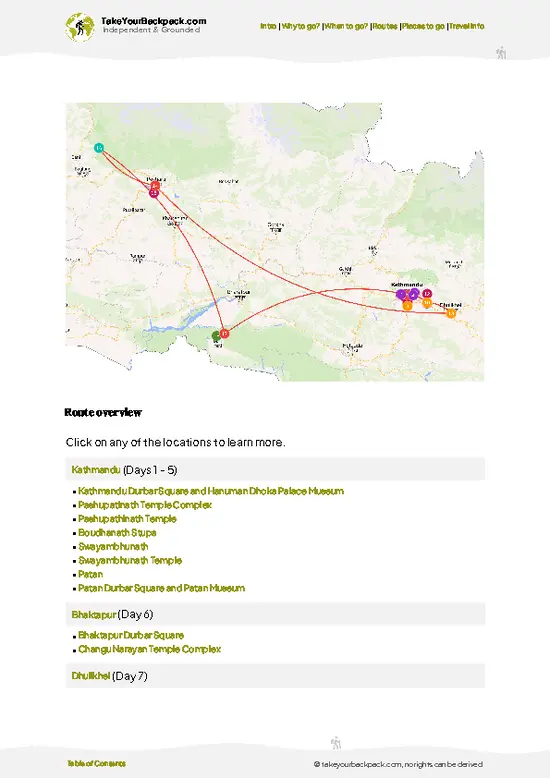
107 ranked highlights, routes & tips, works offline (402 pages)
Loading the map 🌍
CLICK TO FILTER
cities
towns
villages
landmarks
national parks
hikes
attractions
festivals
regions
SHOW COUNTRY’S BESTSHOW ALL

✨ Why go?
Ranked #11 city in Nepal
What makes it a must-see city

Birgunj is often a strategic stop for backpackers navigating Nepal. It’s not just a transit hub; it offers a unique blend of affordability and local culture. The hostels here are budget-friendly and often buzzing with fellow travelers, making it easy to swap stories and tips. The food scene is a delightful mix of street vendors and local eateries, perfect for sampling authentic flavors without breaking the bank.

While the city itself may not be a highlight, its walkability allows you to soak in the daily rhythm of life. Plus, it serves as a basecamp for day trips to nearby attractions, giving you the chance to explore without the hassle of constant travel. If you’re looking for a place to recharge and plan your next adventure, Birgunj fits the bill perfectly.
Want to include Birgunj in your Nepal route?
Create a personalized Nepal itinerary that includes Birgunj and the places that fit your trip — based on your travel style, budget, and available time. Get your route in seconds.

Generate my trip

💡 HighlightsMust-see experiences and standout moments

  1. Ghantaghar (Clock Tower) — The city’s most recognizable meeting point and visual anchor; a bustling junction where tuk-tuks, street vendors, and daily life converge, great for quick people-watching and getting a feel for Birgunj’s pace.
  2. Sirsiya Inland Container Depot (Sirsiya Dry Port) — Nepal’s busiest inland dry port right on Birgunj’s edge; visiting shows you the scale of Nepal-India trade, container logistics, and the industrial heartbeat that keeps the region moving.
  3. Birgunj-Raxaul Border Area and Local Trade Bazaar — The active border zone and adjacent markets give a front-row view of cross-border commerce: crowded stalls, bargain shopping, Indo-Nepali street food, and the vibrant trade culture that defines Birgunj.
  4. Gahawa Mai Temple — A locally important shrine where neighborhood
read more 👉
  1. Ghantaghar (Clock Tower) — The city’s most recognizable meeting point and visual anchor; a bustling junction where tuk-tuks, street vendors, and daily life converge, great for quick people-watching and getting a feel for Birgunj’s pace.
  2. Sirsiya Inland Container Depot (Sirsiya Dry Port) — Nepal’s busiest inland dry port right on Birgunj’s edge; visiting shows you the scale of Nepal-India trade, container logistics, and the industrial heartbeat that keeps the region moving.
  3. Birgunj-Raxaul Border Area and Local Trade Bazaar — The active border zone and adjacent markets give a front-row view of cross-border commerce: crowded stalls, bargain shopping, Indo-Nepali street food, and the vibrant trade culture that defines Birgunj.
  4. Gahawa Mai Temple — A locally important shrine where neighborhood rituals and annual festivals draw crowds; visiting offers an authentic glimpse into everyday devotional life and community traditions in Birgunj.
Nearby visitable highlights for day trips include the Gadhimai Temple (Bariyarpur), the ruins of Simraungadh (Simraungarh), and Parsa National Park — my personal favorite for a day trip is Simraungadh.
Spotted a mistake or missing something? Contact us.

Things to do near Birgunj

Ratings based on Tripadvisor reviews. When you book through this link, you support our work at no extra cost to you.

🏘️ NeighborhoodsNeighborhood guide to Birgunj

Birgunj is a bustling entry point into Nepal, where the crossroads of culture and commerce create a unique backpacking experience. Here’s how the neighborhoods stack up:

Thakur Ram Sthan: This area is the heart of Birgunj. It’s lively and affordable, perfect for budget travelers. You’ll find local eateries and shops, making it easy to immerse yourself in daily life. Walkability is high, but be prepared for some noise. Ideal for short stays.

Birgunj Bazaar: A vibrant market area, it’s a feast for the senses. The streets are crowded, but that’s part of the charm. Prices are low, and you can easily find transport options. Nightlife is limited, but the energy is palpable. Great for longer stays if you enjoy the hustle.

Ramgadhia: Quieter and more residential, this neighborhood offers a break … read more 👉
Birgunj is a bustling entry point into Nepal, where the crossroads of culture and commerce create a unique backpacking experience. Here’s how the neighborhoods stack up:

Thakur Ram Sthan: This area is the heart of Birgunj. It’s lively and affordable, perfect for budget travelers. You’ll find local eateries and shops, making it easy to immerse yourself in daily life. Walkability is high, but be prepared for some noise. Ideal for short stays.

Birgunj Bazaar: A vibrant market area, it’s a feast for the senses. The streets are crowded, but that’s part of the charm. Prices are low, and you can easily find transport options. Nightlife is limited, but the energy is palpable. Great for longer stays if you enjoy the hustle.

Ramgadhia: Quieter and more residential, this neighborhood offers a break from the chaos. It’s less touristy, which means you’ll get a more authentic experience. Costs are reasonable, and it’s walkable, though transport options are fewer. Best for those looking to settle in for a while.

Choose wisely based on your priorities, and you’ll unlock the best of Birgunj.

⌛️ 1 day1-day itinerary for Birgunj

Birgunj, Nepal, is a bustling border town that serves as a gateway to both India and the heart of Nepal. It’s a melting pot of cultures, where the vibrant street life and local markets pulse with energy. You can feel the rhythm of daily life here, making it a fascinating spot for a day of exploration.

Start your morning in the bustling Narayani River area. Grab a cup of chai from a local stall and watch the world wake up. The riverbanks are a great place to soak in the early light and observe the fishermen casting their nets. Afterward, head to the nearby Rani Pokhari, a serene pond surrounded by lush greenery, perfect for a peaceful stroll.

In the afternoon, dive into the heart of the city. Explore the chaotic yet charming markets of Birgunj, especially in the Thakur Ram area. Here, you … read more 👉
Birgunj, Nepal, is a bustling border town that serves as a gateway to both India and the heart of Nepal. It’s a melting pot of cultures, where the vibrant street life and local markets pulse with energy. You can feel the rhythm of daily life here, making it a fascinating spot for a day of exploration.

Start your morning in the bustling Narayani River area. Grab a cup of chai from a local stall and watch the world wake up. The riverbanks are a great place to soak in the early light and observe the fishermen casting their nets. Afterward, head to the nearby Rani Pokhari, a serene pond surrounded by lush greenery, perfect for a peaceful stroll.

In the afternoon, dive into the heart of the city. Explore the chaotic yet charming markets of Birgunj, especially in the Thakur Ram area. Here, you can find everything from spices to textiles. Don’t miss the chance to visit the less-touristed Bhutahi Temple, where you can witness local rituals and perhaps even chat with friendly locals.

As evening falls, make your way to the bustling food stalls near the main bus park. Sample some local delicacies like samosas and momos while mingling with the locals. This is where the city truly comes alive, and you’ll leave with a taste of its authentic spirit. In just one day, you’ll experience the pulse of Birgunj, making it a trip worth every moment.
Turn your Birgunj visit into an Nepal adventure
Build a complete Nepal route with Birgunj, hidden gems, must-see destinations, and realistic travel times included.

Generate my trip

🌤️ When to go?When to go for the best experience


  • Weather: Birgunj’s climate swings between hot, humid summers and mild winters. The monsoon season from June to September drenches the city, making trekking and outdoor activities slippery and less enjoyable.

  • Temperature: From October to March, temperatures hover between 10°C to 25°C (50°F to 77°F), offering a comfortable range for backpackers who want to avoid the stifling heat of 30°C+ (86°F+).

  • Daylight Hours: Daylight remains fairly consistent year-round, around 11 to 12 hours, so early starts and late finishes are always possible regardless of season.

  • Crowds: Tourist traffic peaks during the dry season (October to March), especially around festivals, which means more energy but also higher prices and busier accommodations.

  • Seasonal Activities: The post-monsoon months bring lush
read more 👉

  • Weather: Birgunj’s climate swings between hot, humid summers and mild winters. The monsoon season from June to September drenches the city, making trekking and outdoor activities slippery and less enjoyable.

  • Temperature: From October to March, temperatures hover between 10°C to 25°C (50°F to 77°F), offering a comfortable range for backpackers who want to avoid the stifling heat of 30°C+ (86°F+).

  • Daylight Hours: Daylight remains fairly consistent year-round, around 11 to 12 hours, so early starts and late finishes are always possible regardless of season.

  • Crowds: Tourist traffic peaks during the dry season (October to March), especially around festivals, which means more energy but also higher prices and busier accommodations.

  • Seasonal Activities: The post-monsoon months bring lush greenery and clear skies, perfect for exploring local markets and cultural sites without the oppressive heat or rain.

  • Price Fluctuations: Expect a price hike in accommodation and transport during the dry season due to demand. Off-season (monsoon) offers bargains but at the cost of comfort and accessibility.


Pro-tip: Aim for late October to early December—dry, cool, and less crowded—maximizing comfort and value while dodging the tourist crush and monsoon mess.


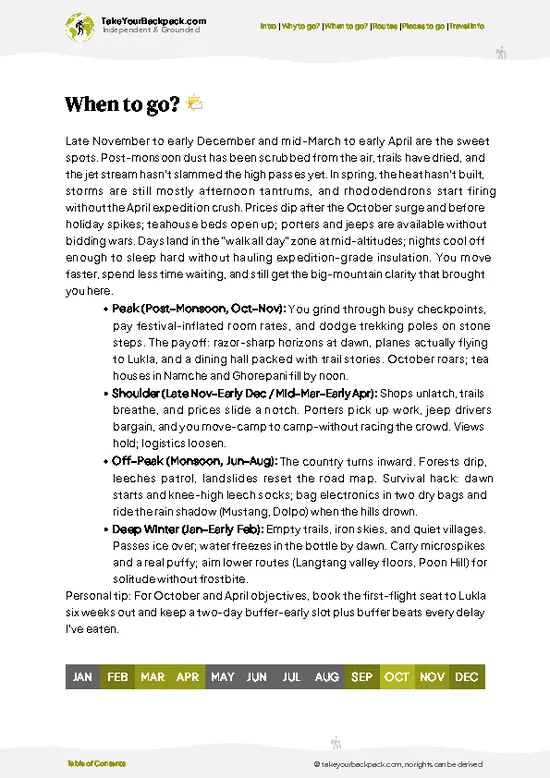
source: climatestotravel.comJANJanuary: highly recommended for travelingFEBFebruary: highly recommended for travelingMARMarch: good for travelingAPRApril: good for travelingMAYMay: fair for travelingJUNJune: below average for travelingJULJuly: below average for travelingAUGAugust: below average for travelingSEPSeptember: fair for travelingOCTOctober: excellent for travelingNOVNovember: excellent for travelingDECDecember: highly recommended for traveling
when-to-go

✈️ The backpacker research shortcutNepal Travel Guide

An offline-friendly backpacking guide with optimized travel routes, ranked highlights, transport advice, and the best areas to stay.
example page 0 from our offline Travel Guide for Nepal
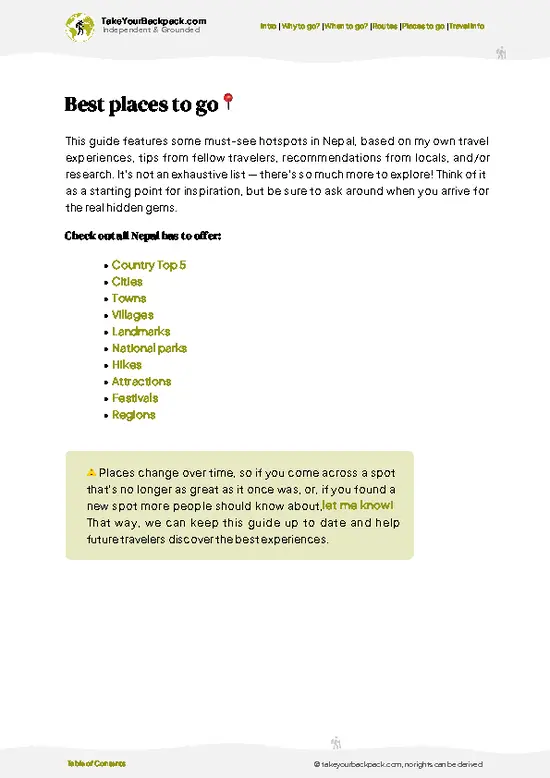
example page 1 from our offline Travel Guide for Nepal
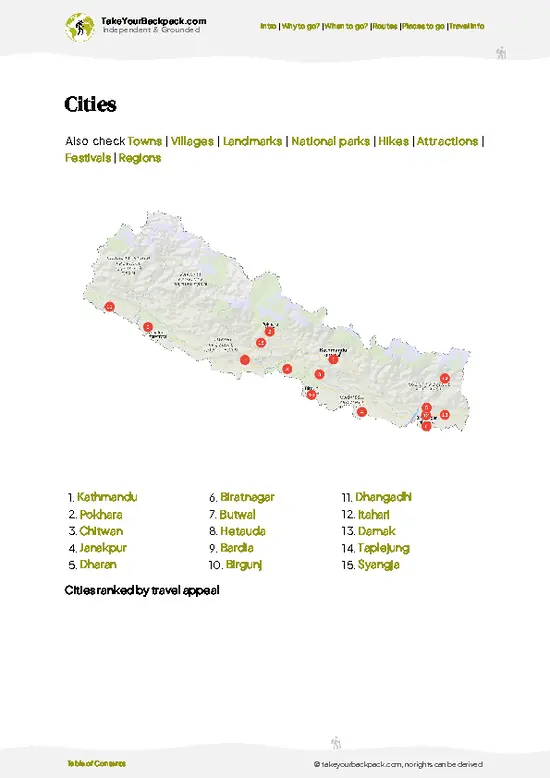
example page 2 from our offline Travel Guide for Nepal
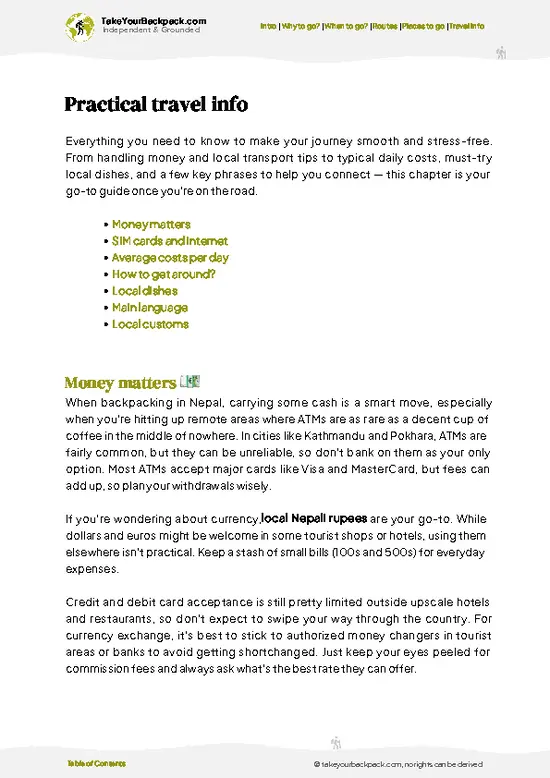
example page 3 from our offline Travel Guide for Nepal
example page 4 from our offline Travel Guide for Nepal
example page 5 from our offline Travel Guide for Nepal
example page 6 from our offline Travel Guide for Nepal
example page 7 from our offline Travel Guide for Nepal
The digital guide (402 pages) contains:
107 highlights, ranked by travel appeal
Optimized 5, 10 & 15-day travel routes
Cities, national parks, landmarks, beaches
How to get around
Offline-friendly for travel without Wi-Fi
👉 Click to see all 30+ guide features

📅 Plan smarter in minutes, not weeks
Month by month travel advice
Festivals & national holidays
Budget expectations

🗺️ Go to the right places, skip the overrated ones
Honest pros & cons of destinations
Top hikes, parks & viewpoints
Lesser-known places most travelers miss
Clear “worth it vs skip it” guidance

🛏️ Travel smoothly without rookie mistakes
Best areas to stay
Transport systems explained simply
Common scams & safety advice
SIM cards, money & practical tips

🌍 Understand the country, not just visit it
Culture & traditions
52 Essential phrases & customs
Festivals worth planning around
Traveler-friendly historical context
Insights that make places more meaningful

📱 Built for real travel conditions
Fully downloadable PDF
Works completely offline
Optimized for phone use
Useful in remote areas & buses
Everything in one place
Save weeks of stressful planning
Get instant access to your full guide. 30‑day money-back guarantee.


By proceeding you agree to our terms.
Sent to your inbox immediately after payment • 100% Secure Checkout
Best Backpacking Travel Advisor 2025 tourism awardBest Backpacking
Travel Advisor
2025
What others say about Take Your Backpack Guides:
⭐⭐⭐⭐⭐
Fantastic, amazing amount of information!
⭐⭐⭐⭐⭐
My goodness this is amazing, it's what I've been looking for hats off too you!
⭐⭐⭐⭐⭐
I think this is absolutely BRILLIANT
⭐⭐⭐⭐
Very complete and informative. It's still missing places, but I gotta to commend you
⭐⭐⭐⭐⭐
This is truly amazing, thank you, can't wait to explore it with my kids!
⭐⭐⭐⭐⭐
Awesome resource, thank you!
⭐⭐⭐⭐⭐
This is amazing! Can't wait to explore the ones I haven't seen
⭐⭐⭐⭐
I love this! Well done, great idea.
⭐⭐⭐⭐⭐
Thanks for taking the time to make this gem!
⭐⭐⭐⭐⭐
This might be the best website I've ever seen.
⭐⭐⭐⭐⭐
Congratulations, and thank you so much for your work; it's incredibly valuable.
⭐⭐⭐⭐
In all seriousness I think you did a great job pointing out the important spots
⭐⭐⭐⭐⭐
10/10 very good
⭐⭐⭐⭐⭐
As someone who's only just starting to visit regularly this is awesome, thank you.
⭐⭐⭐⭐
Thank you very much! I'm going to visit my dad, it's going to be very useful!
⭐⭐⭐⭐⭐
This is really cool! We'll be travelling for the first time and this definitely come in handy.
⭐⭐⭐⭐⭐
You are now our minister of culture, congratulations 👨‍💼
⭐⭐⭐⭐⭐
Just wanted to tell you that this is a pearl! Going to follow your recommendations.
⭐⭐⭐⭐⭐
This is so cool. I'll definitely be using the resource for my travels soon.
⭐⭐⭐⭐⭐
This is very impressive! Good work.
⭐⭐⭐⭐⭐
This is an amazing and informative site. Very well done!

🛏️ Where to stay?Choosing the right base

Birgunj’s backpacker scene is compact but distinct, with the heart of budget travel centered around the area near the main bus park and the adjoining New Road neighborhood. This zone is your best bet for a blend of safety, social buzz, and wallet-friendly options. It’s where you’ll find the most hostels and guesthouses catering to solo travelers and budget adventurers, making it easier to connect with others without sacrificing security.

Compared to the quieter, more residential outskirts, this area hums with activity—street food vendors, local markets, and easy access to transport hubs. It’s … read more 👉
Birgunj’s backpacker scene is compact but distinct, with the heart of budget travel centered around the area near the main bus park and the adjoining New Road neighborhood. This zone is your best bet for a blend of safety, social buzz, and wallet-friendly options. It’s where you’ll find the most hostels and guesthouses catering to solo travelers and budget adventurers, making it easier to connect with others without sacrificing security.

Compared to the quieter, more residential outskirts, this area hums with activity—street food vendors, local markets, and easy access to transport hubs. It’s not luxury, but it’s comfortable enough to recharge after a day of exploring. The trade-off here is clear: you sacrifice some peace and quiet for convenience and community. If you want to dive into Birgunj’s pulse, this is where you want to be. Other neighborhoods might offer calm, but they lack the social infrastructure that makes solo travel feel less like a solo slog.

🚌 Getting aroundHow to get around Birgunj

Birgunj moves at its own rhythm—somewhere between the pulse of a border town’s hustle and the laid-back cadence of a place where deals are struck over chai and the clock bends to human will. It’s not a city where you’ll find strict timetables or polished transit apps dictating your every move. Instead, expect a blend of informal networks and a bit of chaos that rewards those who watch, listen, and adapt. Here, time is flexible, money is a negotiation, and comfort is a relative term. Your choices in getting around will reflect this dynamic, forcing you to weigh what you’re willing to trade off: speed, cost, or ease.


  • Walking: The most straightforward and free option, especially in the central market areas. It’s slow but gives you a real feel for the city’s textures and sounds. Best for short
read more 👉
Birgunj moves at its own rhythm—somewhere between the pulse of a border town’s hustle and the laid-back cadence of a place where deals are struck over chai and the clock bends to human will. It’s not a city where you’ll find strict timetables or polished transit apps dictating your every move. Instead, expect a blend of informal networks and a bit of chaos that rewards those who watch, listen, and adapt. Here, time is flexible, money is a negotiation, and comfort is a relative term. Your choices in getting around will reflect this dynamic, forcing you to weigh what you’re willing to trade off: speed, cost, or ease.


  • Walking: The most straightforward and free option, especially in the central market areas. It’s slow but gives you a real feel for the city’s textures and sounds. Best for short distances or when you want to soak in the local vibe without spending a rupee.


  • Cycle Rickshaw: A budget-friendly, flexible way to cover moderate distances. Prices are negotiable but generally hover around NPR 20-50 for short trips. They’re slow compared to motorized options but offer a comfortable breeze and a chance to chat with your driver. Available from early morning until late evening.


  • Tempo (Three-Wheelers): These motorized three-wheelers are faster than cycle rickshaws and can weave through traffic with ease. Fares are slightly higher, around NPR 50-100 depending on distance. They run throughout the day but don’t follow fixed routes or schedules, so you’ll need to flag one down and negotiate.


  • Local Buses: The cheapest motorized option for longer distances, especially if you’re heading toward the outskirts or neighboring towns. Buses start early, around 6 AM, and run until dusk. Expect crowded, hot conditions and irregular departure times, but the price is unbeatable—often under NPR 30.


  • Shared Taxis: A step up in speed and comfort, these operate on popular routes and fill up before leaving. Fares are higher, NPR 100-200, but you save time and get a seat. They’re less predictable in schedule but more reliable than buses for reaching farther destinations quickly.


Understanding these options is your key to mastering Birgunj’s flow. You’re not just choosing transport—you’re deciding how much time, money, and comfort you’re willing to exchange for the experience itself. Play it smart, and you’ll turn the city’s logistical quirks into your advantage.

👛 Costs (as of 21 February 2026)Travel costs and budget guide for Birgunj

Backpacking in Birgunj, Nepal, offers a straightforward cost structure that rewards those who understand the trade-offs between time, money, and comfort. Here’s how your daily expenses typically break down:
  • Dorm Accommodation (High Season): Expect to pay around $5 to $8 per night. This is when demand peaks, so prices edge up slightly but remain very affordable compared to bigger cities.
  • Dorm Accommodation (Off-Season): Prices drop to about $3 to $5 per night. Fewer travelers mean better deals, but some places might reduce services or close temporarily.
  • Meals: Local eateries serve filling meals for $1.50 to $3 each. Sticking to Nepali staples like dal bhat keeps costs low and energy high. Western-style or imported foods push the price up to $5 or more.
  • Local Transport: Rickshaws and shared
read more 👉
Backpacking in Birgunj, Nepal, offers a straightforward cost structure that rewards those who understand the trade-offs between time, money, and comfort. Here’s how your daily expenses typically break down:
  • Dorm Accommodation (High Season): Expect to pay around $5 to $8 per night. This is when demand peaks, so prices edge up slightly but remain very affordable compared to bigger cities.
  • Dorm Accommodation (Off-Season): Prices drop to about $3 to $5 per night. Fewer travelers mean better deals, but some places might reduce services or close temporarily.
  • Meals: Local eateries serve filling meals for $1.50 to $3 each. Sticking to Nepali staples like dal bhat keeps costs low and energy high. Western-style or imported foods push the price up to $5 or more.
  • Local Transport: Rickshaws and shared tempos are the norm, costing around $0.20 to $0.50 per short trip. It’s cheap but expect basic conditions and occasional waits.
  • City Transport Pass: Birgunj doesn’t have a formal city transport pass system. Budgeting for individual rides is more practical here.
  • Basic Activities/Entry Fees: Most cultural or local attractions are free or charge a nominal fee under $1. Organized tours or special events might cost $5 to $10, but these are rare in Birgunj.
  • Miscellaneous Expenses: Budget $1 to $3 for essentials like bottled water, snacks, or phone top-ups. Birgunj’s market prices are low, but small extras add up.

All told, a daily budget in Birgunj typically ranges from about $10 on the leanest days to $20 if you lean toward comfort or occasional extras. This city rewards travelers who prioritize simplicity and local immersion over luxury or convenience. Knowing where to save and where to spend turns your budget into a tool, not a limitation.


source: welcomenepal.com
⚠️ Prices can change and everyone travels differently, so take this as a rough guide. Hope it helps you plan your adventure!

🚌 Day tripsWhere to go beyond the main area

Birgunj, Nepal, is a strategic launchpad for day trips that blend culture, nature, and adventure. Here’s how to make the most of your time without breaking the bank.

**Chhath Puja at the Ghats**
Experience the vibrant Chhath Puja festival along the banks of the local rivers. This is a unique cultural immersion where you’ll witness locals offering prayers to the sun. The energy is palpable, and the colorful rituals are a photographer’s dream. It’s just a 30-minute rickshaw ride from Birgunj, costing around 200 NPR. Best visited in October or November, when the festival is in full swing. A common mistake? Arriving too late to catch the sunrise ceremonies.
👉 Explore Chhath Puja

**Sita’s Birthplace**
A trip to Janakpur, the birthplace of Sita, is a must. The ancient temples and the stunning … read more 👉
Birgunj, Nepal, is a strategic launchpad for day trips that blend culture, nature, and adventure. Here’s how to make the most of your time without breaking the bank.

**Chhath Puja at the Ghats**
Experience the vibrant Chhath Puja festival along the banks of the local rivers. This is a unique cultural immersion where you’ll witness locals offering prayers to the sun. The energy is palpable, and the colorful rituals are a photographer’s dream. It’s just a 30-minute rickshaw ride from Birgunj, costing around 200 NPR. Best visited in October or November, when the festival is in full swing. A common mistake? Arriving too late to catch the sunrise ceremonies.
👉 Explore Chhath Puja

**Sita’s Birthplace**
A trip to Janakpur, the birthplace of Sita, is a must. The ancient temples and the stunning Janaki Mandir are steeped in mythology. It’s about a two-hour bus ride, costing around 300 NPR. The best time to visit is during the winter months when the weather is cooler and more pleasant. Many first-timers overlook the local food stalls; don’t miss out on the delicious mithai (sweets) that are a local specialty.


**Churia Hills Trek**
For those craving a bit of nature, the Churia Hills offer a refreshing escape. The trek is moderate, taking about 1.5 hours to reach the viewpoint, where you can soak in panoramic views of the Terai plains. Expect to spend around 500 NPR for transport and snacks. The best time to go is during the cooler months, from October to March. A common pitfall is underestimating the sun; pack plenty of water and sunscreen.


**Lumbini Pilgrimage**
While a bit further afield, Lumbini, the birthplace of Buddha, is worth the trip. It’s about a four-hour bus ride, costing around 600 NPR. The serene gardens and historical significance make it a reflective experience. Aim for early morning visits to avoid the heat and crowds. Many travelers forget to explore the surrounding monasteries; each one offers a unique architectural style and story.
👉 Explore Lumbini
Want to know what more Nepal offers?
The Nepal Travel Guide describes 107 highlights, from cities to national parks, from beaches to hikes

Get the Travel Guide -

🍲 FoodWhat to Eat & Drink

In **Birgunj**, the food scene is a vibrant tapestry of flavors that beckons you to dive in. Start with **dal bhat**, a staple that’s more than just a meal; it’s a ritual. The lentil soup paired with rice and pickles is a daily delight for locals. Don’t skip the **momo**—these steamed dumplings, often filled with spiced meat or veggies, are a street food essential.

Wander through bustling **markets** where the air is thick with the aroma of frying spices and fresh produce. Here, you’ll find vendors serving up **chow mein** and **samosas** that are perfect for a quick bite.

As for drinks, try **masala chai** from a roadside stall; it’s a sweet, spiced tea that fuels conversations. Remember, sharing food is a sign of friendship, so don’t hesitate to join a table or offer a taste. Embrace the local customs, and you’ll savor every moment.

🛡️ SafetySafety Tips and Common Scams in Birgunj

Birgunj is generally safe for backpackers, but a few situational awareness tips can enhance your experience. Stick to well-lit areas at night, especially around the bus station and market. Solo travelers should remain confident; a friendly demeanor goes a long way.

Watch for common scams, like inflated taxi fares or overly eager guides. Always negotiate prices upfront. Annoyances can include persistent street vendors; a polite but firm “no, thank you” usually does the trick. Keep your belongings close, especially in crowded areas. By staying aware and engaged, you’ll navigate Birgunj smoothly, turning potential pitfalls into mere bumps on your adventure.

Other Nepali cities near Birgunj

Explore more nearby:

  • Hetauda—industrial hub, hill passes, market crossroads| 46 km away
  • Chitwan—jungle buffer zone, Tharu villages, elephant grasslands| 74 km away
  • Kathmandu—temple squares, urban sprawl, backpacker districts| 87 km away

💡 Not sure where to go next?
Create a personalized itinerary for Nepal including Birgunj and the places that fit your trip.

Generate my itinerary

👉 Discover all cities

Or checkout all Nepal has to offer (think cities, towns, villages, national parks, hikes, beaches, festivals)
Country photo of Nepal

We 💚 feedbackFinal thoughts on visiting Birgunj

Birgunj offers a raw glimpse into daily Nepali life, bustling markets, and the vibrant street food scene that’s a feast for the senses. But be prepared: the chaos can be overwhelming. If you’re seeking tranquility, this isn’t your spot. Embrace the energy, and you’ll find a unique charm that’s hard to shake off.

✈️ When did I visit Nepal?
Being a mountain lover, Nepal is one of my favorites. I visited it in November 2006, hiking the full Annapurna circuit as my highlight.

✍️ Help improve this page!
The information on this page is based on my own backpacking experience in Nepal, supplemented with up-to-date research and feedback from other travelers. Travel details can change, so if you notice anything outdated or incomplete, feel free to let me know.


🙋‍♂️ Give feedback

👋 Meet the founderWho’s Behind Take Your Backpack?

Johan, backpacker and founder of TakeYourBackpackHi, I’m Johan (Netherlands 🇳🇱), the creator of TakeYourBackpack. Over the past decade, I’ve backpacked through 80+ countries across six continents, gaining extensive experience with independent travel, long-term trips, and overland routes.

This site is built on a combination of firsthand travel experience and carefully curated insights from other backpackers. Many guides are based on places I’ve personally visited, while others bring together tips, observations, and practical advice shared by trusted travelers I’ve met along the way.

The goal is to provide realistic, experience-driven guidance — not generic itineraries — so you can explore destinations with better context, clearer expectations, and more confidence.

Get full Nepal guide •
Instant download • 107 highlights • Full Offline guide