×

North Korea🇰🇵 | citiesChongjinindustrial port, steelworks, northern gateway | things to do and best time to go

Explore Haeju BeachExplore Haeju

Backpacking in Chongjin
👍 Recommendedcity ranked #6
By Johan Kruseman 🇳🇱 | Updated June 12, 2026

Chongjin is not for anyone chasing easy fun, casual bar-hopping, or spontaneous solo wandering. It’s tightly controlled, politically heavy, and emotionally demanding. But that’s exactly why some backpackers still go: to understand how a closed system works from the inside, and to see a very different North Korea than the polished showcase of Pyongyang. Chongjin sits in the far northeast, on the Sea of Japan coast, closer to China and Russia than to the capital, and it feels grittier, more industrial, more “real.” You move only with guides, so logistics are simple but rigid, nightlife is basically non-existent, and meeting other travelers depends on who’s in your small tour group. It’s relatively safe under supervision, not cheap once permits and tours are factored in, and compared with Pyongyang it’s harsher, quieter, and more revealing.

Discover everything you want to know in the 📖 North Korea Travel Guide.
Safety warning

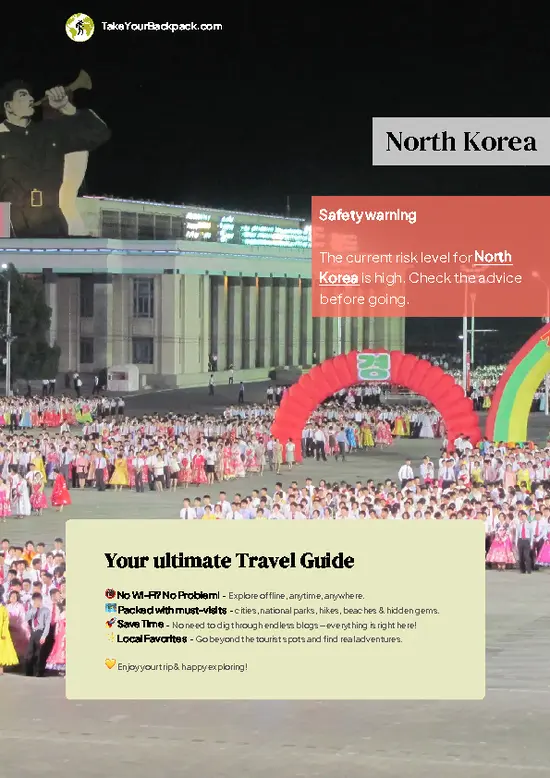
The current risk level for North Korea is high. Check the advice before going.


Get your North Korea guide
74 ranked highlights, routes & tips, works offline (296 pages)
Loading the map 🌍
CLICK TO FILTER
cities
towns
landmarks
national parks
hikes
beaches
attractions
festivals
regions
SHOW COUNTRY’S BESTSHOW ALL

✨ Why go?
Ranked #6 city in North Korea
Why visitors keep coming back

Chongjin is a unique stop for backpackers navigating North Korea. It offers a basecamp value for day trips, making it a strategic choice for those wanting to explore the surrounding areas without the hassle of constant travel. The city has a few highlights that provide insight into local life, but it’s not just about sights; it’s about the experience.

Accommodations are limited, but the hostels available cater to the adventurous spirit, often fostering a sense of community among travelers. Food options are basic but authentic, giving you a taste of local cuisine without breaking the bank. The city is walkable, allowing you to soak in the atmosphere at your own pace.

While nightlife isn’t bustling, there are pockets of local culture to explore after dark. Plus, easy onward travel options … read more 👉
Chongjin is a unique stop for backpackers navigating North Korea. It offers a basecamp value for day trips, making it a strategic choice for those wanting to explore the surrounding areas without the hassle of constant travel. The city has a few highlights that provide insight into local life, but it’s not just about sights; it’s about the experience.

Accommodations are limited, but the hostels available cater to the adventurous spirit, often fostering a sense of community among travelers. Food options are basic but authentic, giving you a taste of local cuisine without breaking the bank. The city is walkable, allowing you to soak in the atmosphere at your own pace.

While nightlife isn’t bustling, there are pockets of local culture to explore after dark. Plus, easy onward travel options make it simple to continue your journey. If you’re looking for a deeper understanding of North Korea, Chongjin is worth your time; if not, it might be best as a brief stop.
Want to include Chongjin in your North Korea route?
Create a personalized North Korea itinerary that includes Chongjin and the places that fit your trip — based on your travel style, budget, and available time. Get your route in seconds.

Generate my trip

💡 HighlightsDon't-miss highlights and experiences

  • Chongjin Revolutionary Museum — A compact, official museum full of photos, dioramas and local stories about the city’s role in revolutionary history; good for getting the state-style narrative and seeing artifacts you won’t find in guidebooks.
  • Chongjin City Museum — Local history, archaeology and folk displays that explain the region’s fishing, mining and industrial heritage; quieter than the big national museums and more focused on everyday life here.
  • Downtown Leader Monuments — The pairings of statues and plaques to Kim Il Sung and Kim Jong Il in the city center are choreographed public spaces that tell you a lot about civic life and ritual in Chongjin; useful for people-watching and photography (with guide permission).
  • Chongjin Port & Fish Market — Real working waterfront: fishing
read more 👉
  • Chongjin Revolutionary Museum — A compact, official museum full of photos, dioramas and local stories about the city’s role in revolutionary history; good for getting the state-style narrative and seeing artifacts you won’t find in guidebooks.
  • Chongjin City Museum — Local history, archaeology and folk displays that explain the region’s fishing, mining and industrial heritage; quieter than the big national museums and more focused on everyday life here.
  • Downtown Leader Monuments — The pairings of statues and plaques to Kim Il Sung and Kim Jong Il in the city center are choreographed public spaces that tell you a lot about civic life and ritual in Chongjin; useful for people-watching and photography (with guide permission).
  • Chongjin Port & Fish Market — Real working waterfront: fishing boats, cold boxes, and a bustling market where you can observe the seafood trade and street-level commerce — one of the most vivid slices of daily life in the city.
  • Chongjin Railway Station — A functioning Soviet-era station where you can feel the scale of rail’s importance to the region; trains, port freight and the architecture combine into a gritty, industrial vibe that’s oddly photogenic.
  • People’s Park (Central Park) — Green space with locals exercising, children on rides and informal markets; a great place to sit, observe routines and see how families and pensioners spend their free time.
  • Chongjin Zoo — Not a safari, but a local zoo that gives insight into leisure and education for families; cages and exhibits are vintage DPRK style and visiting shows a different side of community life.
  • City Cultural Palace / Grand Theatre — The local cultural center stages music, dance and school performances; if your visit coincides with a show it’s one of the best ways to see folk arts and organized mass-culture activities up close.
  • Children’s Palace — Where kids study music, dance, languages and science after school; visiting (through an arranged program) reveals how youth education and extracurricular life are structured here.
  • Revolutionary Martyrs’ Cemetery — A tidy, solemn site honoring locals who died in wartime and revolutionary struggles; it’s both a civic shrine and a green viewpoint for understanding local commemorative practices.
A few worthwhile day trips outside Chongjin include the coastal scenery of Mount Chilbo (my personal favorite), the Rason (Rajin-Sonbong) port area, and historic sites around Hoeryong — all visitable on arranged day trips from Chongjin.
Spotted a mistake or missing something? Contact us.
🏘️ NeighborhoodsWhere things are and how it's laid out

Chongjin is a unique city where the rhythm of life beats differently. Understanding its neighborhoods can help you maximize your experience.

**Chongjin City Center**: This area is the heart of the city. It’s bustling with local shops and eateries, giving you a taste of everyday life. Walkability is high, making it easy to explore on foot. Costs here are moderate, with budget-friendly options for food. Nightlife is limited, but you can find a few bars for a low-key evening. Ideal for short stays, as you can soak in the local vibe quickly.

**Chongjin Port**: A bit quieter, this area offers stunning views of the harbor. It’s less commercial, making it a peaceful spot to unwind. Costs are lower here, especially for accommodations. While nightlife is sparse, the serene atmosphere is perfect for … read more 👉
Chongjin is a unique city where the rhythm of life beats differently. Understanding its neighborhoods can help you maximize your experience.

**Chongjin City Center**: This area is the heart of the city. It’s bustling with local shops and eateries, giving you a taste of everyday life. Walkability is high, making it easy to explore on foot. Costs here are moderate, with budget-friendly options for food. Nightlife is limited, but you can find a few bars for a low-key evening. Ideal for short stays, as you can soak in the local vibe quickly.

**Chongjin Port**: A bit quieter, this area offers stunning views of the harbor. It’s less commercial, making it a peaceful spot to unwind. Costs are lower here, especially for accommodations. While nightlife is sparse, the serene atmosphere is perfect for longer stays if you want to escape the hustle. Transport access is decent, but you’ll need to plan your outings.

**Koryo Hotel Area**: This is where you’ll find more upscale options. It’s a bit pricier, but the comfort level is higher. The hotel often hosts foreign visitors, creating a more international vibe. Walkability is moderate; you’ll want to plan your excursions. Nightlife is minimal, but the hotel bar offers a social setting. Suitable for both short and longer stays, especially if you appreciate a bit of luxury.

⌛️ 1 daySeeing the highlights in 24 hours

Chongjin, North Korea’s third-largest city, offers a unique glimpse into the country’s industrial heart. It’s a place where the past and present collide, showcasing Soviet-era architecture alongside the stark realities of daily life. You’ll find a blend of bustling markets, quiet parks, and a coastline that whispers stories of resilience.

Start your morning at the Chongjin Central Market. The vibrant atmosphere is electric, with vendors selling everything from fresh produce to handmade goods. Grab a local breakfast of rice porridge and kimchi from a street stall. It’s a simple meal, but it’s a perfect introduction to the local flavors. Afterward, stroll through the nearby Kim Il Sung Square, where you can take in the grand monuments and perhaps catch a glimpse of locals going about their … read more 👉
Chongjin, North Korea’s third-largest city, offers a unique glimpse into the country’s industrial heart. It’s a place where the past and present collide, showcasing Soviet-era architecture alongside the stark realities of daily life. You’ll find a blend of bustling markets, quiet parks, and a coastline that whispers stories of resilience.

Start your morning at the Chongjin Central Market. The vibrant atmosphere is electric, with vendors selling everything from fresh produce to handmade goods. Grab a local breakfast of rice porridge and kimchi from a street stall. It’s a simple meal, but it’s a perfect introduction to the local flavors. Afterward, stroll through the nearby Kim Il Sung Square, where you can take in the grand monuments and perhaps catch a glimpse of locals going about their day.

In the afternoon, head to the Chongjin Revolutionary Museum. This place is often overlooked by tourists, but it’s a treasure trove of history. The exhibits provide insight into the region’s past, and you might even find yourself chatting with a guide who can share personal stories that bring the exhibits to life. Afterward, take a leisurely walk along the coast at the East Sea, where the waves crash against the rocky shore. It’s a peaceful contrast to the city’s hustle and bustle.

As evening falls, make your way to the local seafood restaurant near the port. The catch of the day is fresh and flavorful, and dining here gives you a taste of local life. Enjoy your meal while watching the sunset over the water, a perfect end to a day spent exploring the layers of Chongjin. This city may not be on everyone’s radar, but it’s a rewarding experience for those willing to venture off the beaten path.
Turn your Chongjin visit into an North Korea adventure
Build a complete North Korea route with Chongjin, hidden gems, must-see destinations, and realistic travel times included.

Generate my trip

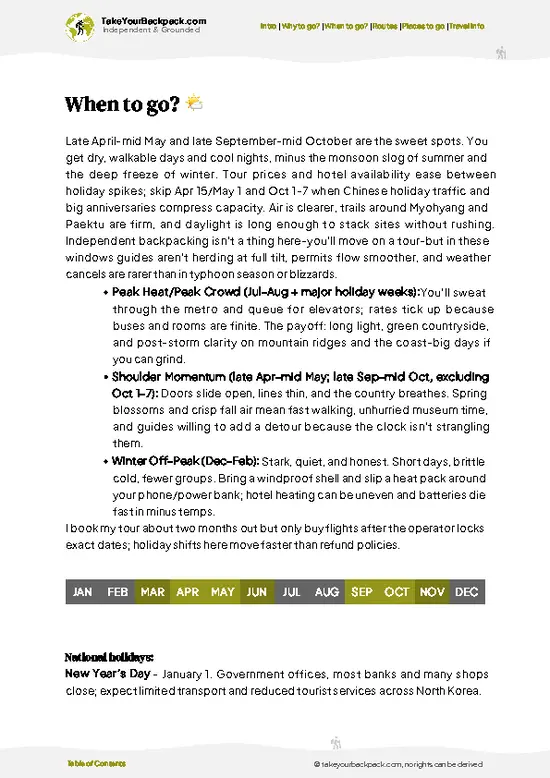
🌤️ When to go?Best time to visit Chongjin


  • Weather: Chongjin experiences cold, harsh winters with temperatures often dropping below -10°C (14°F), making outdoor exploration tough. Summers are mild and more agreeable, hovering around 20-25°C (68-77°F), which is ideal for walking and sightseeing without overheating.

  • Temperature: Spring and autumn offer the most balanced temperatures, ranging from 10-18°C (50-64°F). These shoulder seasons avoid the extremes, letting you enjoy the city comfortably without bundling up or sweating through your layers.

  • Daylight Hours: In summer, daylight stretches to about 14-15 hours, giving you more time to explore. Winter days shrink to roughly 9 hours, limiting your window for outdoor activities and making planning crucial.

  • Crowds: Tourism in Chongjin is minimal year-round due to its remote location
read more 👉

  • Weather: Chongjin experiences cold, harsh winters with temperatures often dropping below -10°C (14°F), making outdoor exploration tough. Summers are mild and more agreeable, hovering around 20-25°C (68-77°F), which is ideal for walking and sightseeing without overheating.

  • Temperature: Spring and autumn offer the most balanced temperatures, ranging from 10-18°C (50-64°F). These shoulder seasons avoid the extremes, letting you enjoy the city comfortably without bundling up or sweating through your layers.

  • Daylight Hours: In summer, daylight stretches to about 14-15 hours, giving you more time to explore. Winter days shrink to roughly 9 hours, limiting your window for outdoor activities and making planning crucial.

  • Crowds: Tourism in Chongjin is minimal year-round due to its remote location and political context. You won’t face tourist crushes, but local events can cause brief spikes in activity, especially around national holidays.

  • Seasonal Activities: Spring and autumn bring local festivals and agricultural markets, offering a glimpse into daily life. Winter’s cold limits outdoor events, while summer’s moderate climate supports occasional cultural gatherings.

  • Price Fluctuations: Prices for accommodations and tours remain relatively stable, with slight increases during peak summer months when weather is most favorable. Off-season travel in winter can yield better deals but at the cost of comfort.


Pro-tip: Aim for late spring or early autumn to balance comfort, daylight, and cultural immersion—this is when Chongjin reveals its character without the extremes of weather or crowds.


source: climatestotravel.comJANJanuary: below average for travelingFEBFebruary: below average for travelingMARMarch: good for travelingAPRApril: highly recommended for travelingMAYMay: excellent for travelingJUNJune: highly recommended for travelingJULJuly: highly recommended for travelingAUGAugust: highly recommended for travelingSEPSeptember: excellent for travelingOCTOctober: excellent for travelingNOVNovember: good for travelingDECDecember: fair for traveling
when-to-go

✈️ The backpacker research shortcutNorth Korea Travel Guide

An offline-friendly backpacking guide with optimized travel routes, ranked highlights, transport advice, and the best areas to stay.
example page 0 from our offline Travel Guide for North Korea
example page 1 from our offline Travel Guide for North Korea
example page 2 from our offline Travel Guide for North Korea
example page 3 from our offline Travel Guide for North Korea
example page 4 from our offline Travel Guide for North Korea
example page 5 from our offline Travel Guide for North Korea
example page 6 from our offline Travel Guide for North Korea
example page 7 from our offline Travel Guide for North Korea
The digital guide (296 pages) contains:
74 highlights, ranked by travel appeal
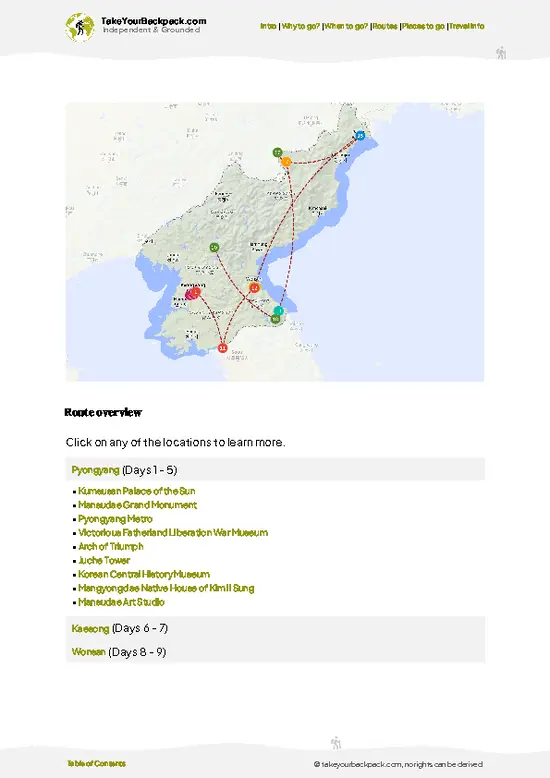
Optimized 5, 10 & 15-day travel routes
Cities, national parks, landmarks, beaches
How to get around
Offline-friendly for travel without Wi-Fi
👉 Click to see all 30+ guide features

📅 Plan smarter in minutes, not weeks
Month by month travel advice
Festivals & national holidays
Budget expectations

🗺️ Go to the right places, skip the overrated ones
Honest pros & cons of destinations
Top hikes, parks & viewpoints
Lesser-known places most travelers miss
Clear “worth it vs skip it” guidance

🛏️ Travel smoothly without rookie mistakes
Best areas to stay
Transport systems explained simply
Common scams & safety advice
SIM cards, money & practical tips

🌍 Understand the country, not just visit it
Culture & traditions
52 Essential phrases & customs
Festivals worth planning around
Traveler-friendly historical context
Insights that make places more meaningful

📱 Built for real travel conditions
Fully downloadable PDF
Works completely offline
Optimized for phone use
Useful in remote areas & buses
Everything in one place
Save weeks of stressful planning
Get instant access to your full guide. 30‑day money-back guarantee.


By proceeding you agree to our terms.
Sent to your inbox immediately after payment • 100% Secure Checkout
Best Backpacking Travel Advisor 2025 tourism awardBest Backpacking
Travel Advisor
2025
What others say about Take Your Backpack Guides:
⭐⭐⭐⭐⭐
Fantastic, amazing amount of information!
⭐⭐⭐⭐⭐
My goodness this is amazing, it's what I've been looking for hats off too you!
⭐⭐⭐⭐⭐
I think this is absolutely BRILLIANT
⭐⭐⭐⭐
Very complete and informative. It's still missing places, but I gotta to commend you
⭐⭐⭐⭐⭐
This is truly amazing, thank you, can't wait to explore it with my kids!
⭐⭐⭐⭐⭐
Awesome resource, thank you!
⭐⭐⭐⭐⭐
This is amazing! Can't wait to explore the ones I haven't seen
⭐⭐⭐⭐
I love this! Well done, great idea.
⭐⭐⭐⭐⭐
Thanks for taking the time to make this gem!
⭐⭐⭐⭐⭐
This might be the best website I've ever seen.
⭐⭐⭐⭐⭐
Congratulations, and thank you so much for your work; it's incredibly valuable.
⭐⭐⭐⭐
In all seriousness I think you did a great job pointing out the important spots
⭐⭐⭐⭐⭐
10/10 very good
⭐⭐⭐⭐⭐
As someone who's only just starting to visit regularly this is awesome, thank you.
⭐⭐⭐⭐
Thank you very much! I'm going to visit my dad, it's going to be very useful!
⭐⭐⭐⭐⭐
This is really cool! We'll be travelling for the first time and this definitely come in handy.
⭐⭐⭐⭐⭐
You are now our minister of culture, congratulations 👨‍💼
⭐⭐⭐⭐⭐
Just wanted to tell you that this is a pearl! Going to follow your recommendations.
⭐⭐⭐⭐⭐
This is so cool. I'll definitely be using the resource for my travels soon.
⭐⭐⭐⭐⭐
This is very impressive! Good work.
⭐⭐⭐⭐⭐
This is an amazing and informative site. Very well done!

🛏️ Where to stay?Best areas to stay in North Korea

Chongjin’s backpacker scene is, by design, tightly controlled and limited, but if you’re aiming for the best balance of safety, social atmosphere, and budget-friendliness, focus on the central district near the city’s main transportation hubs. This area offers the clearest advantage: proximity to the train station and bus terminals means easy access to guided tours and official checkpoints, which is crucial in a place where independent wandering isn’t an option.

Staying here minimizes transit time and maximizes your window for exploration within the strict itinerary constraints. The vibe is … read more 👉
Chongjin’s backpacker scene is, by design, tightly controlled and limited, but if you’re aiming for the best balance of safety, social atmosphere, and budget-friendliness, focus on the central district near the city’s main transportation hubs. This area offers the clearest advantage: proximity to the train station and bus terminals means easy access to guided tours and official checkpoints, which is crucial in a place where independent wandering isn’t an option.

Staying here minimizes transit time and maximizes your window for exploration within the strict itinerary constraints. The vibe is quiet but functional—think practical rather than lively. Socializing happens mostly in common areas of guesthouses or during organized group activities, so choose a spot where communal spaces encourage interaction.

Other neighborhoods in Chongjin tend to be more residential or industrial, lacking the infrastructure for visitors and offering little in terms of social or budget accommodations. Venturing outside the central zone usually means sacrificing comfort and safety for no real gain. In Chongjin, your smartest move is to prioritize convenience and official accessibility over charm or nightlife, which simply aren’t part of the equation here.

🚌 Getting aroundTransportation options and practical tips

Chongjin moves at its own pace—a mix of rigid, state-driven timetables and the kind of local improvisation born from necessity. It’s not a city where you’ll find sleek apps or polished transit hubs. Instead, the rhythm here is set by the clatter of buses that run on a schedule you learn by watching, the steady shuffle of pedestrians weaving through the streets, and the occasional honk of a shared taxi negotiating its way through traffic. Time is a flexible concept, but money and comfort are the real currencies you’ll trade in. Understanding this flow means you can navigate Chongjin like a strategist, choosing your battles between speed, cost, and ease.


  • Walking: The most reliable and cost-free way to get around, especially in the city center where distances are manageable. Walking lets
read more 👉
Chongjin moves at its own pace—a mix of rigid, state-driven timetables and the kind of local improvisation born from necessity. It’s not a city where you’ll find sleek apps or polished transit hubs. Instead, the rhythm here is set by the clatter of buses that run on a schedule you learn by watching, the steady shuffle of pedestrians weaving through the streets, and the occasional honk of a shared taxi negotiating its way through traffic. Time is a flexible concept, but money and comfort are the real currencies you’ll trade in. Understanding this flow means you can navigate Chongjin like a strategist, choosing your battles between speed, cost, and ease.


  • Walking: The most reliable and cost-free way to get around, especially in the city center where distances are manageable. Walking lets you absorb the city’s texture but expect uneven sidewalks and limited signage. It’s slow but unbeatable for immersion and zero expense.


  • City Bus: The backbone of Chongjin’s public transit, buses run roughly from 6:00 AM to 9:00 PM. Fares are low, typically under 100 North Korean won, making this the cheapest option. Buses can be crowded and slow, especially during rush hours, but they cover most neighborhoods and major points of interest. Comfort is minimal—think hard benches and no air conditioning.


  • Shared Taxis: These operate on fixed routes but leave only when full, so timing is unpredictable. Prices are higher than buses but still affordable, around 200-300 won. They’re faster and more comfortable than buses, with cushioned seats and some shelter from the elements. Ideal if you’re balancing time and comfort without breaking the bank.


  • Private Taxi: Expensive by local standards and often reserved for official use, private taxis are rare for tourists. If you manage to hire one, expect to pay significantly more—several thousand won per trip. The upside is door-to-door service and a controlled schedule, but this option is a luxury and not budget-friendly.


Mastering Chongjin’s transit means recognizing that every choice is a trade-off. Walk if you want to save money and soak in the city’s pulse. Take the bus if you’re patient and budget-conscious. Opt for shared taxis when time is tight but you still want a bit of comfort. Private taxis? They’re the ace up your sleeve, but only if you’re ready to spend. This is your game board—play it smart.

👛 Costs (as of 9 April 2026)Typical daily expenses

Backpacking in Chongjin, North Korea, is a unique challenge, especially when it comes to budgeting. The city’s isolation and strict travel controls mean prices don’t follow typical backpacker patterns, but here’s a realistic breakdown to help you plan.
  • Dorm Accommodation (High Season): Expect to pay around $40-$60 per night. Options are extremely limited and often tied to official guesthouses or state-run hotels, which are pricier than typical dorms elsewhere.
  • Dorm Accommodation (Off-Season): Prices drop slightly to about $30-$45, but availability tightens. Independent travelers might find fewer options, so booking through official channels is crucial.
  • Meals: Meals are generally modest and state-controlled. Budget around $5-$10 per meal at local eateries, with simple dishes like cold noodles
read more 👉
Backpacking in Chongjin, North Korea, is a unique challenge, especially when it comes to budgeting. The city’s isolation and strict travel controls mean prices don’t follow typical backpacker patterns, but here’s a realistic breakdown to help you plan.
  • Dorm Accommodation (High Season): Expect to pay around $40-$60 per night. Options are extremely limited and often tied to official guesthouses or state-run hotels, which are pricier than typical dorms elsewhere.
  • Dorm Accommodation (Off-Season): Prices drop slightly to about $30-$45, but availability tightens. Independent travelers might find fewer options, so booking through official channels is crucial.
  • Meals: Meals are generally modest and state-controlled. Budget around $5-$10 per meal at local eateries, with simple dishes like cold noodles or rice-based meals. Western-style or imported food is rare and expensive.
  • Local Transport: Public transport is minimal and often restricted. If available, expect to pay about $0.20-$0.50 per ride on buses or trams, but many travelers rely on arranged transport through guides.
  • City Transport Pass: There is no standard city transport pass for tourists. Most transport is arranged privately or through official tours, which can add to costs.
  • Basic Activities/Entry Fees: Entry fees to museums or monuments are usually nominal, around $1-$3. However, most sightseeing is guided and bundled into tour packages, inflating overall costs.
  • Miscellaneous Expenses: This includes bottled water, snacks, and small tips. Budget around $3-$7 daily, but keep in mind that foreign currency exchange and access to goods are tightly controlled.

All told, a daily budget for an independent traveler in Chongjin realistically falls between $50 and $80. This isn’t your typical backpacker bargain city—comfort and access come at a premium, and the system is designed to keep things tightly managed. Knowing this upfront lets you focus on the experience rather than hunting for deals that don’t exist.


source: korea-dpr.com
⚠️ Prices can change and everyone travels differently, so take this as a rough guide. Hope it helps you plan your adventure!

🚌 Day tripsShort trips worth adding

Chongjin serves as a unique launchpad for exploring North Korea’s rugged beauty and cultural depth. Here are some day trips that pack a punch without draining your resources.

**Mount Chilbo**
Just a couple of hours from Chongjin, Mount Chilbo offers breathtaking landscapes and a chance to hike through lush forests and rocky outcrops. The trails vary in difficulty, making it accessible for most backpackers. Expect to spend around $10 for transportation and entry fees. Spring and autumn are ideal for this trip, as the weather is mild and the scenery is vibrant. A common mistake is underestimating the hike’s length; pack snacks and water to keep your energy up.
👉 Explore Mount Chilbo

**Wonsan**
A scenic drive of about three hours takes you to Wonsan, a coastal city with a rich maritime … read more 👉
Chongjin serves as a unique launchpad for exploring North Korea’s rugged beauty and cultural depth. Here are some day trips that pack a punch without draining your resources.

**Mount Chilbo**
Just a couple of hours from Chongjin, Mount Chilbo offers breathtaking landscapes and a chance to hike through lush forests and rocky outcrops. The trails vary in difficulty, making it accessible for most backpackers. Expect to spend around $10 for transportation and entry fees. Spring and autumn are ideal for this trip, as the weather is mild and the scenery is vibrant. A common mistake is underestimating the hike’s length; pack snacks and water to keep your energy up.
👉 Explore Mount Chilbo

**Wonsan**
A scenic drive of about three hours takes you to Wonsan, a coastal city with a rich maritime history. Here, you can stroll along the beach, sample local seafood, and visit the historic Wonsan Fortress. Budget around $15 for transport and meals. Late summer is perfect for enjoying the beach vibe, but be prepared for crowds. First-timers often overlook the fortress; it’s a great spot for panoramic views and a bit of history.
👉 Explore Wonsan

**Ryanggang Province**
For a taste of rural North Korean life, head to Ryanggang Province, about four hours away. This area showcases traditional farming practices and stunning landscapes. You can interact with locals and learn about their way of life. Expect to spend around $20 for transport and a meal. Spring is particularly lovely, with fields in bloom. A common pitfall is not engaging with the locals; they’re often eager to share their stories.


**Chongjin’s Beaches**
If you prefer to stay close, Chongjin’s beaches are a hidden delight. Spend a day soaking up the sun, swimming, or enjoying a beachside meal. It’s only a short bus ride away, costing about $5. Summer is the best time to visit, but be mindful of local customs. Many first-timers miss the chance to mingle with locals; don’t hesitate to strike up a conversation.
Want to know what more North Korea offers?
The North Korea Travel Guide describes 74 highlights, from cities to national parks, from beaches to hikes

Get the Travel Guide -

🍲 FoodWhat to Eat & Drink

In **Chongjin**, the culinary scene is a fascinating blend of tradition and local flavor. You can’t miss trying **Naengmyeon**, cold buckwheat noodles served with a tangy broth, perfect for the region’s climate. Pair it with **Kimchi**, which here has a unique, spicy kick that lingers on your palate.

Street food is where the action is. Vendors line the bustling markets, offering **grilled fish** and **corn on the cob**. The aroma of sizzling seafood fills the air, drawing you in. Grab a skewer and enjoy it on the go; it’s a quick, satisfying bite that connects you to the local rhythm.

When it comes to drinks, **soju** is the go-to. This clear spirit is often shared among friends, and it’s customary to pour for one another. Embrace the local drinking culture by joining in the toast—“Geonbae! … read more 👉
In **Chongjin**, the culinary scene is a fascinating blend of tradition and local flavor. You can’t miss trying **Naengmyeon**, cold buckwheat noodles served with a tangy broth, perfect for the region’s climate. Pair it with **Kimchi**, which here has a unique, spicy kick that lingers on your palate.

Street food is where the action is. Vendors line the bustling markets, offering **grilled fish** and **corn on the cob**. The aroma of sizzling seafood fills the air, drawing you in. Grab a skewer and enjoy it on the go; it’s a quick, satisfying bite that connects you to the local rhythm.

When it comes to drinks, **soju** is the go-to. This clear spirit is often shared among friends, and it’s customary to pour for one another. Embrace the local drinking culture by joining in the toast—“Geonbae!”—and savor the camaraderie.

Dining here is casual and communal. Expect to share tables and engage in lively conversation, making every meal a social experience. The quirks of **Chongjin’s** food scene invite you to step out of your comfort zone and truly taste the essence of North Korea.

🛡️ SafetySafety Tips and Common Scams in Chongjin

Chongjin is generally safe for travelers, but a few considerations can enhance your experience. Stick to well-trodden paths and avoid wandering into less populated areas, especially after dark. The city has a low crime rate, but being aware of your surroundings is always wise.

Solo travelers should be particularly cautious at night; it’s best to return to your accommodation before it gets dark.

While scams are rare, some locals may try to sell overpriced goods or services. Approach transactions with a sense of humor and assertiveness. If something feels off, trust your instincts and walk away.

Everyday annoyances can include language barriers and limited access to amenities. Patience and a friendly demeanor go a long way in navigating these minor hurdles. Embrace the quirks, and you’ll … read more 👉
Chongjin is generally safe for travelers, but a few considerations can enhance your experience. Stick to well-trodden paths and avoid wandering into less populated areas, especially after dark. The city has a low crime rate, but being aware of your surroundings is always wise.

Solo travelers should be particularly cautious at night; it’s best to return to your accommodation before it gets dark.

While scams are rare, some locals may try to sell overpriced goods or services. Approach transactions with a sense of humor and assertiveness. If something feels off, trust your instincts and walk away.

Everyday annoyances can include language barriers and limited access to amenities. Patience and a friendly demeanor go a long way in navigating these minor hurdles. Embrace the quirks, and you’ll find Chongjin offers a unique glimpse into North Korean life.

Other North Korean cities near Chongjin

Explore more nearby:

  • Hoeryong—border crossing, mining settlements, local memorials| 74 km away
  • Kimchaek—port city, steelworks, coastal neighborhoods| 130 km away
  • Hyesan—border river, mountain views, timber yards| 136 km away

💡 Not sure where to go next?
Create a personalized itinerary for North Korea including Chongjin and the places that fit your trip.

Generate my itinerary

👉 Discover all cities

Or checkout all North Korea has to offer (think cities, towns, villages, national parks, hikes, beaches, festivals)
Country photo of North Korea

We 💚 feedbackWhat to keep in mind

Chongjin offers a rare glimpse into North Korean life, where the everyday feels like a time capsule. You’ll see a different side of the country, one that’s often overshadowed by Pyongyang’s grandeur. But be prepared: the restrictions can be stifling. Freedom of movement is limited, and you’ll need to stick to your guide. It’s a trade-off, but for those curious enough, it’s a fascinating experience worth the effort.

✈️ When did I visit North Korea?
As part of my 1.5 year travel around the world trip, I visited North Korea in August 2015. I had never expected I was able to get in.

✍️ Help improve this page!
The information on this page is based on my own backpacking experience in North Korea, supplemented with up-to-date research and feedback from other travelers. Travel details can change, so if you notice anything outdated or incomplete, feel free to let me know.


🙋‍♂️ Give feedback

👋 Meet the founderWho’s Behind Take Your Backpack?

Johan, backpacker and founder of TakeYourBackpackHi, I’m Johan (Netherlands 🇳🇱), the creator of TakeYourBackpack. Over the past decade, I’ve backpacked through 80+ countries across six continents, gaining extensive experience with independent travel, long-term trips, and overland routes.

This site is built on a combination of firsthand travel experience and carefully curated insights from other backpackers. Many guides are based on places I’ve personally visited, while others bring together tips, observations, and practical advice shared by trusted travelers I’ve met along the way.

The goal is to provide realistic, experience-driven guidance — not generic itineraries — so you can explore destinations with better context, clearer expectations, and more confidence.

Get full country guide •
Instant download • 74 highlights • Full Offline guide