×

Oman🇴🇲 | best festivalsBest 11 festivals in Oman

Festivals in Oman are vibrant expressions of the country’s rich heritage, blending ancient traditions with modern celebrations. Each region offers unique experiences, from the lively Muscat Festival showcasing local arts to the Salalah Tourism Festival, which highlights the lush beauty of the Khareef season. Timing is crucial; festivals often align with seasonal changes, affecting the atmosphere and crowd sizes. Choosing the right festival can enhance your backpacking journey, influencing your budget, safety, and cultural immersion. For independent travelers, understanding these nuances unlocks a deeper connection to Omani culture, transforming a simple visit into a meaningful adventure.

By Johan Kruseman 🇳🇱 | Updated June 4, 2026
Explore the best regions in Oman

Why go?Key Factors That Shape the Experience

Festivals in Oman are a vibrant tapestry of cultural significance and historical resonance, reflecting the nation’s rich heritage. Unlike many other countries, Oman’s festivals are deeply rooted in tradition, showcasing the Bedouin spirit and the Islamic calendar. Events like Eid al-Fitr and National Day are not just celebrations; they are moments when the community comes together, reinforcing social bonds and cultural identity.

The timing of these festivals is crucial. They often align with the lunar calendar, meaning that travelers must plan around seasonal variations. The climate can be a double-edged sword; summer festivals can be sweltering, while winter events offer a more pleasant atmosphere. This can affect crowd sizes, with cooler months attracting more visitors, leading to a more … read more 👉
Festivals in Oman are a vibrant tapestry of cultural significance and historical resonance, reflecting the nation’s rich heritage. Unlike many other countries, Oman’s festivals are deeply rooted in tradition, showcasing the Bedouin spirit and the Islamic calendar. Events like Eid al-Fitr and National Day are not just celebrations; they are moments when the community comes together, reinforcing social bonds and cultural identity.

The timing of these festivals is crucial. They often align with the lunar calendar, meaning that travelers must plan around seasonal variations. The climate can be a double-edged sword; summer festivals can be sweltering, while winter events offer a more pleasant atmosphere. This can affect crowd sizes, with cooler months attracting more visitors, leading to a more vibrant but crowded experience.

Accessibility can also be a trade-off. Major cities may offer easier access to festivals, but venturing into rural areas can provide a more immersive experience. However, this often requires additional travel time and planning. Understanding these dynamics allows travelers to navigate the logistics effectively, ensuring they don’t just witness the festivities but truly engage with the local culture.

In Oman, the essence of each festival lies in its ability to connect the past with the present, making every moment spent there a meaningful exploration of the nation’s soul.
Our Approach to Ranking
The list of best festivals in Oman is created based on energy, traditions, crowd experience, activities, and overall excitement. If you feel a festival is missing in this list, please let us know.

When to go?Seasonal Guide to Visiting

Seasonality plays a crucial role in experiencing festivals in Oman. The country’s climate is characterized by extreme heat in summer, making outdoor events less enjoyable. From May to September, temperatures soar, often exceeding 40°C (104°F). This period sees fewer festivals, as the sweltering heat drives locals indoors.

Optimal months for festival visits typically fall between October and April. During this time, the weather is milder, with pleasant temperatures ranging from 20°C to 30°C (68°F to 86°F). Festivals during these months are vibrant, filled with energy, and attract both locals and tourists. The atmosphere is electric, with colorful displays and lively performances.

Shoulder seasons—late September and early May—offer a different experience. While the weather may still be warm, … read more 👉
Seasonality plays a crucial role in experiencing festivals in Oman. The country’s climate is characterized by extreme heat in summer, making outdoor events less enjoyable. From May to September, temperatures soar, often exceeding 40°C (104°F). This period sees fewer festivals, as the sweltering heat drives locals indoors.

Optimal months for festival visits typically fall between October and April. During this time, the weather is milder, with pleasant temperatures ranging from 20°C to 30°C (68°F to 86°F). Festivals during these months are vibrant, filled with energy, and attract both locals and tourists. The atmosphere is electric, with colorful displays and lively performances.

Shoulder seasons—late September and early May—offer a different experience. While the weather may still be warm, crowds are thinner, and costs can be lower. This can lead to a more intimate experience, allowing for deeper connections with local culture. However, fewer events may be scheduled, and the authenticity of the experience can vary.

Peak periods coincide with major festivals, drawing large crowds and higher prices. While the energy is palpable, navigating through throngs can be challenging. Balancing the excitement of peak times with the tranquility of quieter seasons is essential for a fulfilling visit. Understanding these dynamics allows for a more rewarding festival experience in Oman.

festival hoppingHow to Combine festivals Into One Trip

To efficiently combine festivals across Oman, start by clustering events regionally. Focus on the northern region first, where Muscat hosts the Muscat Festival in January, followed by the Salalah Tourism Festival in the south during the summer months. This approach minimizes travel time and maximizes festival immersion.

Consider the direction of travel. Begin in Muscat, then head south to Nizwa for the Nizwa Festival, and finally make your way to Salalah. This route allows for a natural flow, reducing backtracking and fatigue.

Allocate ample time at each festival. Aim for at least two to three days per major event to soak in the atmosphere, enjoy local cuisine, and participate in activities. Rushing through can lead to missing the essence of each celebration.

Common mistakes include read more 👉
To efficiently combine festivals across Oman, start by clustering events regionally. Focus on the northern region first, where Muscat hosts the Muscat Festival in January, followed by the Salalah Tourism Festival in the south during the summer months. This approach minimizes travel time and maximizes festival immersion.

Consider the direction of travel. Begin in Muscat, then head south to Nizwa for the Nizwa Festival, and finally make your way to Salalah. This route allows for a natural flow, reducing backtracking and fatigue.

Allocate ample time at each festival. Aim for at least two to three days per major event to soak in the atmosphere, enjoy local cuisine, and participate in activities. Rushing through can lead to missing the essence of each celebration.

Common mistakes include underestimating travel times and overloading schedules. Festivals can draw large crowds, so plan for potential delays. Balancing energy levels is crucial; intersperse busy festival days with lighter activities, like exploring local markets or relaxing at a beach.

Finally, weigh trade-offs carefully. Speed may get you to more events, but depth of experience enriches the journey. Prioritize comfort over budget when booking accommodations, as a good night’s rest can enhance your festival experience significantly.

The ListMust-Visit festivals in Oman

1 Khareef Festival

monsoon mist, green hills, Salalah markets

Experience Salalah’s transformation as monsoon rains bring cool air, lush landscapes, and a surge of local festivities unique to southern Oman.

2 Muscat Festival

citywide events, folk performances, artisan stalls

Explore Muscat’s neighborhoods as they host concerts, food fairs, and craft markets, offering a window into Omani urban life.

3 Salalah Tourism Festival

outdoor concerts, food stalls, family zones

Enjoy open-air events and local flavors as Salalah welcomes visitors with music, games, and seasonal attractions.

4 Muscat International Film Festival

cinema screenings, filmmaker panels, global entries

Attend film premieres and discussions that connect Omani audiences with international cinema and regional storytelling.

5 Nizwa Tourism Festival

fort tours, souq activities, mountain cuisine

Sample local dishes, browse handicrafts, and explore the historic fort as Nizwa highlights its role as a cultural crossroads.

6 Musandam Festival

fjord views, mountain villages, dhow displays

Travel to Oman’s northern exclave for cultural showcases, maritime traditions, and panoramic scenery along dramatic coastal cliffs.

7 Al Batinah Festival

agricultural exhibits, date farms, coastal towns

Discover the region’s farming heritage through produce displays, rural crafts, and community gatherings in Oman’s fertile northwest.

8 Sohar Festival

harbor events, maritime history, street parades

Experience Sohar’s seafaring legacy through waterfront celebrations, traditional music, and community processions.

9 National Day

parades, fireworks, Omani flags

Watch cities and villages display national pride through public celebrations, traditional dress, and coordinated displays of color and music.

10 Eid al-Fitr

family gatherings, sweet pastries, mosque prayers

Join communities as they mark the end of Ramadan with morning prayers, shared meals, and a focus on generosity and togetherness.

11 Eid al-Adha

sacrificial feasts, livestock markets, communal charity

Observe a major religious occasion centered on ritual sacrifice, large family meals, and acts of giving that unite neighborhoods.

Loading the map 🌍

Expert viewPro Tips for Exploring the Best

Energy Festivals in Oman pulse with life, drawing on the rich tapestry of its culture. You’ll want to experience at least three major festivals to grasp the essence of Omani traditions. Each festival showcases unique aspects of the country’s heritage, from music and dance to food and crafts. The Salalah Khareef Festival, for instance, celebrates the monsoon season with vibrant markets and cultural performances. The atmosphere is electric, filled with the scent of frankincense and the sound of traditional Omani music echoing through the air.

Seasonal Timing is crucial. Festivals often align with significant cultural or agricultural events, so timing your visit is key. The Salalah Khareef Festival runs from June to September, coinciding with the lush greenery of the Dhofar region. This is … read more 👉
Energy Festivals in Oman pulse with life, drawing on the rich tapestry of its culture. You’ll want to experience at least three major festivals to grasp the essence of Omani traditions. Each festival showcases unique aspects of the country’s heritage, from music and dance to food and crafts. The Salalah Khareef Festival, for instance, celebrates the monsoon season with vibrant markets and cultural performances. The atmosphere is electric, filled with the scent of frankincense and the sound of traditional Omani music echoing through the air.

Seasonal Timing is crucial. Festivals often align with significant cultural or agricultural events, so timing your visit is key. The Salalah Khareef Festival runs from June to September, coinciding with the lush greenery of the Dhofar region. This is a peak time for both locals and tourists, so expect larger crowds. If you prefer a more intimate experience, consider visiting during the Muscat Festival in January, which offers a blend of cultural exhibitions and entertainment without overwhelming numbers.

Crowd Management is another factor to consider. Popular festivals can draw thousands, making it essential to plan your visit strategically. Arrive early to secure a good spot for performances and activities. If you’re not a fan of large crowds, aim for weekdays rather than weekends. This can make a significant difference in your experience, allowing you to engage more deeply with the local culture without the distraction of throngs of people.

Budget and Comfort are also important. While many festivals are free to enter, you’ll want to budget for food, crafts, and transportation. Street food stalls offer delicious local dishes at reasonable prices, but be prepared for varying levels of comfort. Some areas may lack seating or shade, so bring a portable chair or blanket to enhance your experience. If you’re staying in a hotel, check for festival packages that might include transportation or guided tours, which can ease the logistical burden.

Planning and Prioritizing your festival itinerary is essential. Research the specific events and activities that interest you most. Some festivals feature workshops where you can learn traditional crafts, while others focus on performances. Prioritize what resonates with you, but remain flexible. Local schedules can change, and sometimes the best experiences come from spontaneous moments.

Cultural Context is vital to understanding these festivals. Omanis take immense pride in their heritage, and festivals are a reflection of this. Engage with locals, ask questions, and be respectful of traditions. Dress modestly, especially in rural areas, to show respect for local customs. This not only enhances your experience but also fosters genuine connections with the people you meet.

Safety Considerations should not be overlooked. While Oman is generally safe, be mindful of your surroundings, especially in crowded areas. Keep your belongings secure and be aware of local customs regarding photography and interaction. Understanding these nuances will enrich your experience and help you navigate the cultural landscape with ease.

In summary, immersing yourself in Oman’s festivals is a rewarding journey. By planning strategically, respecting local customs, and embracing the vibrant energy of these events, you’ll unlock a deeper appreciation for the country’s rich cultural heritage. Each festival is a celebration of life, and participating in them is a chance to connect with Oman on a profound level.

✈️ The backpacker research shortcutOman Travel Guide

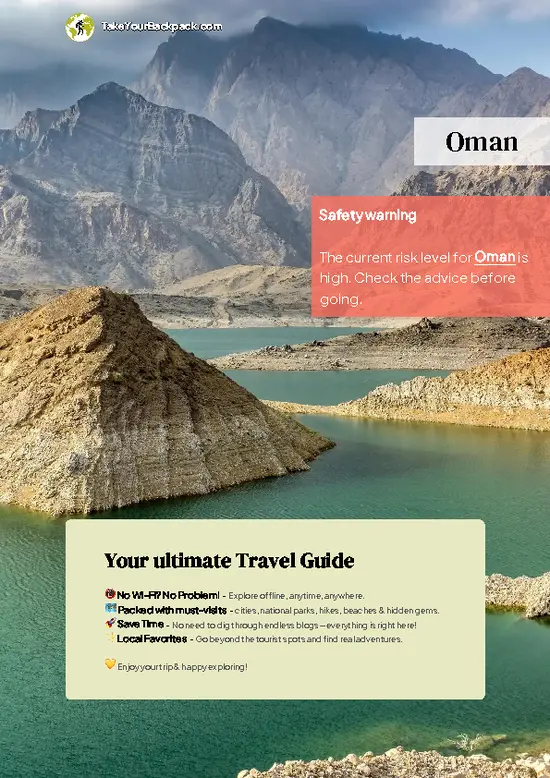
An offline-friendly backpacking guide with optimized travel routes, ranked highlights, transport advice, and the best areas to stay.
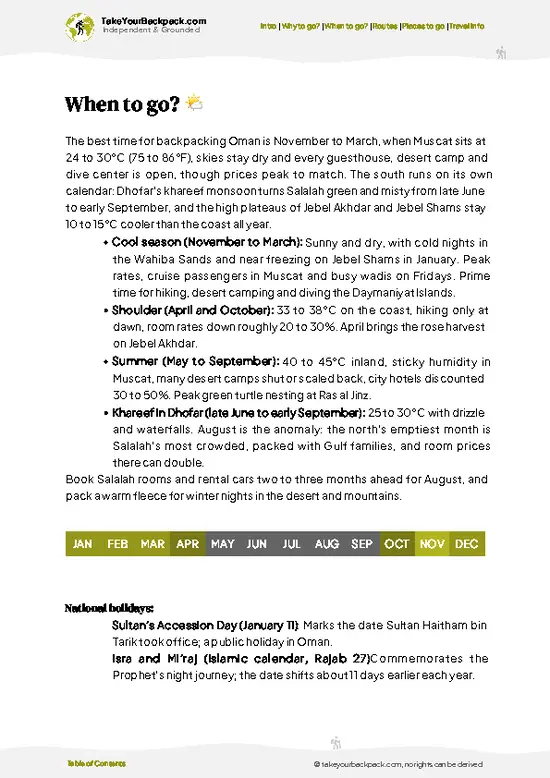
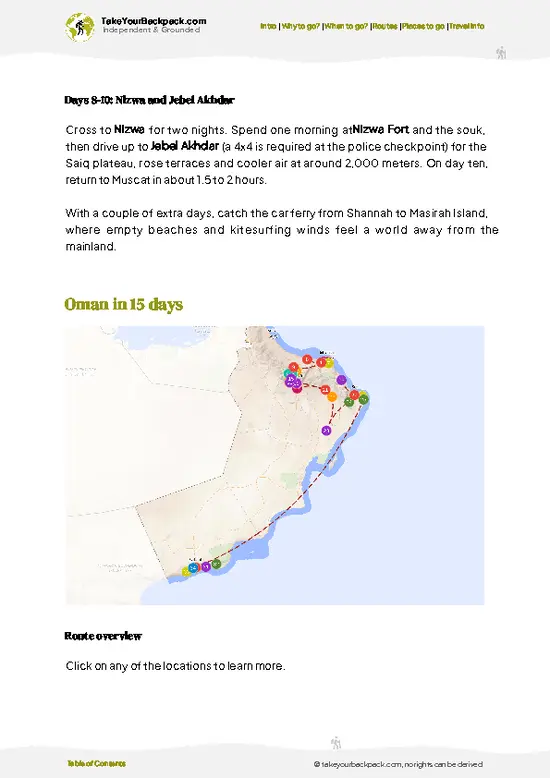
example page 0 from our offline Travel Guide for Omanexample page 1 from our offline Travel Guide for Omanexample page 2 from our offline Travel Guide for Omanexample page 3 from our offline Travel Guide for Omanexample page 4 from our offline Travel Guide for Omanexample page 5 from our offline Travel Guide for Omanexample page 6 from our offline Travel Guide for Omanexample page 7 from our offline Travel Guide for Oman
The digital guide (349 pages) contains:
89 highlights, ranked by travel appeal
Optimized 5, 10 & 15-day travel routes
Cities, national parks, beaches, historical sites, ...
How to get around
Offline-friendly for travel without Wi-Fi
👉 Click to see all 30+ guide features

📅 Plan smarter in minutes, not weeks
Month by month travel advice
Festivals & national holidays
Budget expectations

🗺️ Go to the right places, skip the overrated ones
Honest pros & cons of destinations
Top hikes, parks & viewpoints
Lesser-known places most travelers miss
Clear “worth it vs skip it” guidance

🛏️ Travel smoothly without rookie mistakes
Best areas to stay
Transport systems explained simply
Common scams & safety advice
SIM cards, money & practical tips

🌍 Understand the country, not just visit it
Culture & traditions
52 Essential phrases & customs
Festivals worth planning around
Traveler-friendly historical context
Insights that make places more meaningful

📱 Built for real travel conditions
Fully downloadable PDF
Works completely offline
Optimized for phone use
Useful in remote areas & buses
Everything in one place
Save weeks of stressful planning
Get instant access to the full guide directly. 30-day money-back guarantee.


Sent to your inbox immediately after payment • 100% Secure Checkout
Best Backpacking Travel Advisor 2025 tourism awardBest Backpacking
Travel Advisor
2025
What others say about Take Your Backpack Guides:
⭐⭐⭐⭐⭐
Fantastic, amazing amount of information!
⭐⭐⭐⭐⭐
My goodness this is amazing, it's what I've been looking for hats off too you!
⭐⭐⭐⭐⭐
I think this is absolutely BRILLIANT
⭐⭐⭐⭐
Very complete and informative. It's still missing places, but I gotta to commend you
⭐⭐⭐⭐⭐
This is truly amazing, thank you, can't wait to explore it with my kids!
⭐⭐⭐⭐⭐
Awesome resource, thank you!
⭐⭐⭐⭐⭐
This is amazing! Can't wait to explore the ones I haven't seen
⭐⭐⭐⭐
I love this! Well done, great idea.
⭐⭐⭐⭐⭐
Thanks for taking the time to make this gem!
⭐⭐⭐⭐⭐
This might be the best website I've ever seen.
⭐⭐⭐⭐⭐
Congratulations, and thank you so much for your work; it's incredibly valuable.
⭐⭐⭐⭐
In all seriousness I think you did a great job pointing out the important spots
⭐⭐⭐⭐⭐
10/10 very good
⭐⭐⭐⭐⭐
As someone who's only just starting to visit regularly this is awesome, thank you.
⭐⭐⭐⭐
Thank you very much! I'm going to visit my dad, it's going to be very useful!
⭐⭐⭐⭐⭐
This is really cool! We'll be travelling for the first time and this definitely come in handy.
⭐⭐⭐⭐⭐
You are now our minister of culture, congratulations 👨‍💼
⭐⭐⭐⭐⭐
Just wanted to tell you that this is a pearl! Going to follow your recommendations.
⭐⭐⭐⭐⭐
This is so cool. I'll definitely be using the resource for my travels soon.
⭐⭐⭐⭐⭐
This is very impressive! Good work.
⭐⭐⭐⭐⭐
This is an amazing and informative site. Very well done!

🛏️ Where to stay?Where to Stay in Oman

Yes. Hostels and budget accommodation exist in Oman but are less common than in backpacker hotspots; most options cluster in Muscat (Mutrah, Ruwi, Qurum), Salalah, Nizwa, Sur, plus a few around Sohar and the mountain trails (Jebel Shams/Jebel Akhdar).
Mutrah puts you by the corniche and souq—good for sights and some nightlife but slightly pricier; Ruwi is the transport hub and cheaper but busy and less atmospheric; Qurum is quieter and beach-close with fewer dorms; Salalah has the most seasonal budget choices during Khareef but books fast; Nizwa and the mountains offer cheap guesthouses near forts and trails but very limited dorm-style hostels and require transport; Sur and Ras Al Jinz suit … read more 👉
Yes. Hostels and budget accommodation exist in Oman but are less common than in backpacker hotspots; most options cluster in Muscat (Mutrah, Ruwi, Qurum), Salalah, Nizwa, Sur, plus a few around Sohar and the mountain trails (Jebel Shams/Jebel Akhdar).
Mutrah puts you by the corniche and souq—good for sights and some nightlife but slightly pricier; Ruwi is the transport hub and cheaper but busy and less atmospheric; Qurum is quieter and beach-close with fewer dorms; Salalah has the most seasonal budget choices during Khareef but books fast; Nizwa and the mountains offer cheap guesthouses near forts and trails but very limited dorm-style hostels and require transport; Sur and Ras Al Jinz suit coastal and turtle-watching trips, are peaceful at night but have sparse options.

If you enjoy meeting fellow travelers, consider choosing hostels with high ratings for atmosphere. On the other hand, if you prefer having your own space, a hotel might be a better option.

OmanMore of Oman

👋 Meet the founderWho’s Behind Take Your Backpack?

Johan, backpacker and founder of TakeYourBackpackHi, I’m Johan (Netherlands 🇳🇱), the creator of TakeYourBackpack. Over the past decade, I’ve backpacked through 80+ countries across six continents, gaining extensive experience with independent travel, long-term trips, and overland routes.

This site is built on a combination of firsthand travel experience and carefully curated insights from other backpackers. Many guides are based on places I’ve personally visited, while others bring together tips, observations, and practical advice shared by trusted travelers I’ve met along the way.

The goal is to provide realistic, experience-driven guidance — not generic itineraries — so you can explore destinations with better context, clearer expectations, and more confidence.

Get full Oman guide •
Instant download • 89 highlights • Full Offline guide