×

Oman🇴🇲 | best beachesBest 7 beaches in Oman

Beaches in Oman are long, quiet and mostly empty: pale sand, hammered by Indian Ocean swell, backed by bare brown mountains instead of hotel towers. Mornings smell of salt, drying fish and diesel from the dhows. In the north, Muscat and the Batinah coast have the easiest access and the most facilities, plus the highest prices. The east coast around Sur offers turtle nesting and sheltered coves. Dhofar in the south turns green and misty in summer. Backpacking here means renting a car or hitching, since public buses skip most coastline, and wild camping on sand is the cheap, rewarding default.

By Johan Kruseman 🇳🇱 | Updated October 18, 2026
Explore the best attractions in Oman

Why go?Key Factors That Shape the Experience

Oman has roughly 3,100 kilometers of coastline facing three different bodies of water: the Gulf of Oman, the Arabian Sea and the edge of the Indian Ocean. That variety is rare. You can find calm, flat water near Muscat, big surf in the south, and rocky fjord-style inlets in Musandam, all in one country. Population is small and spread thin, so long stretches of shoreline have no building at all, just wind, the crunch of shells and the cry of terns.

Culture shapes the experience. Oman is conservative, and public beaches are not party spaces. Women commonly swim in T-shirts and leggings or shorts, and men keep their torsos covered away from resort pools. Alcohol is not sold on public sand, and private resort beaches are the exception. Bikinis are fine at hotels but draw stares elsewhere.

The … read more 👉
Oman has roughly 3,100 kilometers of coastline facing three different bodies of water: the Gulf of Oman, the Arabian Sea and the edge of the Indian Ocean. That variety is rare. You can find calm, flat water near Muscat, big surf in the south, and rocky fjord-style inlets in Musandam, all in one country. Population is small and spread thin, so long stretches of shoreline have no building at all, just wind, the crunch of shells and the cry of terns.

Culture shapes the experience. Oman is conservative, and public beaches are not party spaces. Women commonly swim in T-shirts and leggings or shorts, and men keep their torsos covered away from resort pools. Alcohol is not sold on public sand, and private resort beaches are the exception. Bikinis are fine at hotels but draw stares elsewhere.

The climate matters more than most visitors expect. Summer heat can pass 40°C, and the Arabian Sea has strong currents and rip tides that make swimming dangerous for months, with few lifeguards. The south has a monsoon season called the khareef, which brings drizzle and fog. Distances are huge and public transport is thin, so a rental car or flexible lifts decide how many beaches you can reach. Come for solitude, snorkeling and turtles, not for beach clubs.
How the List Was Created
The list of best beaches in Oman is created based on beauty, vibe, water quality, activities, and surrounding scenery. If you feel a beach is missing in this list, please let us know.

When to go?Seasonal Guide to Visiting

Best Months for Beaches: The best months for Oman’s beaches are October to April, when daytime air temperatures sit around 24 to 32°C and the sea stays warm at roughly 24 to 28°C. Skies are hard blue, the light is sharp by 7 a.m., and the sand is walkable barefoot until late morning. Rain is rare, averaging only a few days a year in the north, usually in winter.

Peak and Shoulder Seasons: December to February is peak season in Muscat and along the north coast. Hotel rates can run 30 to 60 percent above summer levels, and weekends fill with local families. October, November and March are shoulder months, with slightly warmer days and fewer visitors, good for lower rates and easier campsites.

Summer and the Khareef: From May to September, the north and the interior become extremely hot, often … read more 👉
Best Months for Beaches: The best months for Oman’s beaches are October to April, when daytime air temperatures sit around 24 to 32°C and the sea stays warm at roughly 24 to 28°C. Skies are hard blue, the light is sharp by 7 a.m., and the sand is walkable barefoot until late morning. Rain is rare, averaging only a few days a year in the north, usually in winter.

Peak and Shoulder Seasons: December to February is peak season in Muscat and along the north coast. Hotel rates can run 30 to 60 percent above summer levels, and weekends fill with local families. October, November and March are shoulder months, with slightly warmer days and fewer visitors, good for lower rates and easier campsites.

Summer and the Khareef: From May to September, the north and the interior become extremely hot, often 38 to 45°C, with thick humidity near the coast. Beach hours shrink to early morning and sunset. The Arabian Sea coast, especially the east and south, is rough from roughly June to August, with big swell and dangerous currents. In Dhofar, the khareef from about late June to early September turns the hills green with mist and drizzle, and air temperatures drop to 25 to 30°C. Hotel prices there rise sharply and Gulf visitors crowd in, so book ahead. Sea conditions in the south are not suitable for casual swimming then.

beach hoppingHow to Combine beaches Into One Trip

How Many Days You Need: A trip linking several beaches in Oman needs 10 to 14 days, because distances are large and the good sand is rarely beside the main road. Plan around three regional clusters: the north (Muscat plus the Batinah coast), the east (Sur and the Sharqiyah coast), and the far south (Salalah and Dhofar).

Direction of Travel: Most travelers fly into Muscat, drive southeast down the coast, then fly or drive to Salalah. Muscat to Sur takes about 3 to 3.5 hours by road. Sur to Salalah by road runs 10 to 12 hours across empty desert, so the one-hour flight from Muscat to Salalah is usually the smarter move. Allow 2 to 3 days in the north, 3 to 4 in the east, and 3 to 4 in the south. Ending in Salalah lets you fly out directly, or return to Muscat for departure.

Planning Mistakes: … read more 👉
How Many Days You Need: A trip linking several beaches in Oman needs 10 to 14 days, because distances are large and the good sand is rarely beside the main road. Plan around three regional clusters: the north (Muscat plus the Batinah coast), the east (Sur and the Sharqiyah coast), and the far south (Salalah and Dhofar).

Direction of Travel: Most travelers fly into Muscat, drive southeast down the coast, then fly or drive to Salalah. Muscat to Sur takes about 3 to 3.5 hours by road. Sur to Salalah by road runs 10 to 12 hours across empty desert, so the one-hour flight from Muscat to Salalah is usually the smarter move. Allow 2 to 3 days in the north, 3 to 4 in the east, and 3 to 4 in the south. Ending in Salalah lets you fly out directly, or return to Muscat for departure.

Planning Mistakes: The most common error is underestimating drive times on straight roads with sparse fuel, sparse shade and midday heat bouncing off the asphalt. Fill up whenever you pass a station and carry extra water. Another mistake is packing the schedule with a new beach every day. Sand, wind and snorkeling are best given a full morning, so stay put for one or two nights per stop. Finally, travelers often skip booking a car early. Buses are infrequent and do not serve remote coves.

The ListMust-Visit beaches in Oman

1 Al Mughsail Beach

limestone cliffs, blowholes, turquoise shallows

Watch waves crash against sculpted cliffs while seabirds circle overhead, then wander the sands where freshwater streams meet the Arabian Sea.

oman-beach-al-mughsail-beach
© Google |

2 Salalah Beach

palm groves, monsoon mist, wide tidal flats

Visit during the khareef to see mist roll over palms, or wander broad sands where freshwater streams reach the ocean.

oman-beach-salalah-beach
© Google |

3 Ras Al Jinz Beach

protected reserve, guided turtle walks, sandy flats

Join guided night walks to observe nesting turtles, then explore the quiet reserve where conservation shapes every visitor’s experience.

4 Fins Beach

white pebbles, clear snorkeling coves, coastal camping

Swim in transparent waters edged by smooth stones, set up camp along the shore, and snorkel among darting fish just offshore.

5 Qantab Beach

fishing village, wooden boats, rocky headlands

Join locals launching boats at sunrise, explore rocky outcrops, and watch the daily rhythm of a working coastal community.

oman-beach-qantab-beach
© Google |

6 Ras Al-Hadd

turtle nesting, windswept dunes, remote shoreline

Arrive at dusk to witness turtles nesting, then walk along windswept sands where the Gulf of Oman meets the Indian Ocean.

oman-beach-ras-al-hadd
© Google |

7 Khasab Beach

fjord views, dhow harbors, mountain backdrop

Relax on a quiet stretch facing dramatic inlets, with fishing boats bobbing nearby and rugged peaks rising behind the sand.

oman-beach-khasab-beach
© Google |
Loading the map 🌍

Expert viewPro Tips for Exploring the Best

How Many Beaches to Visit: Visit four to six beaches on a typical two-week trip. Oman’s distances make more than that feel like a car tour rather than a beach trip, and fewer leaves you with no contrast between the calm northern water, the east coast’s turtle sands and the rougher south. One beach per region, plus one or two extra stops where you stay overnight, is a workable rhythm.

Which Kind Suits Your Style: Travelers who want swimming and snorkeling should prioritize sheltered bays in the north, where the water is clear and calm. Those chasing wildlife should pick the east coast, where green turtles nest and tours run at night. Anyone seeking empty space and camping will love the long remote stretches, but should treat them as places to walk and watch, not swim. Resort-style beaches … read more 👉
How Many Beaches to Visit: Visit four to six beaches on a typical two-week trip. Oman’s distances make more than that feel like a car tour rather than a beach trip, and fewer leaves you with no contrast between the calm northern water, the east coast’s turtle sands and the rougher south. One beach per region, plus one or two extra stops where you stay overnight, is a workable rhythm.

Which Kind Suits Your Style: Travelers who want swimming and snorkeling should prioritize sheltered bays in the north, where the water is clear and calm. Those chasing wildlife should pick the east coast, where green turtles nest and tours run at night. Anyone seeking empty space and camping will love the long remote stretches, but should treat them as places to walk and watch, not swim. Resort-style beaches suit those who want showers, shade and cold drinks, though they cost more.

What It Costs: Most public beaches are free. A frugal traveler can manage on US$35 to 55 a day (about 13 to 21 Omani rials) using hostels or camping, shared food and a shared rental car. Car hire runs roughly US$25 to 45 a day, plus fuel at low prices compared with most countries. Resort or hotel beach access typically costs US$10 to 30 a visit. Snorkeling boat trips cost roughly US$20 to 40, and turtle-watching permits in nesting areas are around US$7 to 15. Bring your own mask, since rentals are limited and often worn.

Safety Matters: Water is the main danger. On the Arabian Sea coast, rip currents are powerful even on calm-looking days, and lifeguards are scarce. Swim only where locals do, stay in your depth, and never swim alone. The sun is also severe, so wear a long-sleeve rash guard. Midday sand can burn bare feet. Carry at least 3 liters of water per person for remote sites, since there are no kiosks.

Cultural Etiquette: Oman is conservative. Cover shoulders and knees when walking from the car to the water, and swim in modest clothing. Women are better off wearing leggings and a loose top in the water. Do not photograph local families or women on the sand without permission. Alcohol is illegal on public beaches, and public displays of affection draw disapproval. Leave no rubbish, and never take shells, coral or turtle eggs; fines are real. Camping on open beaches is usually tolerated, but light fires carefully and keep well clear of nesting sites.

✈️ The backpacker research shortcutOman Travel Guide

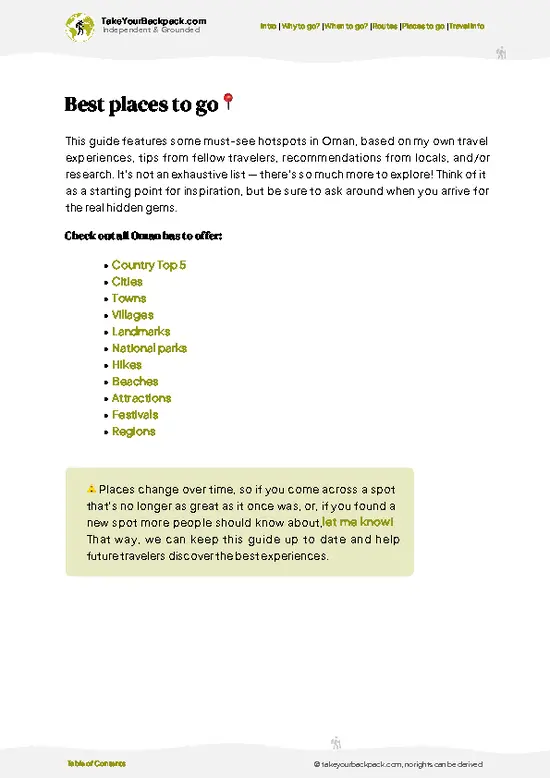
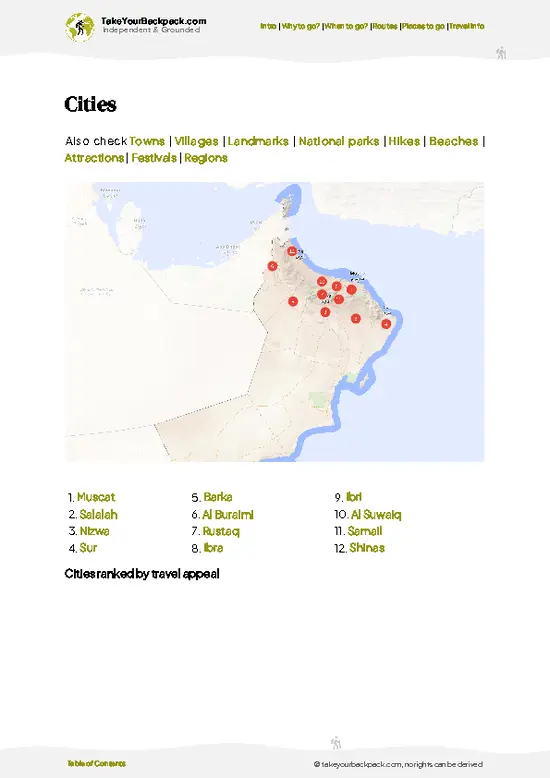
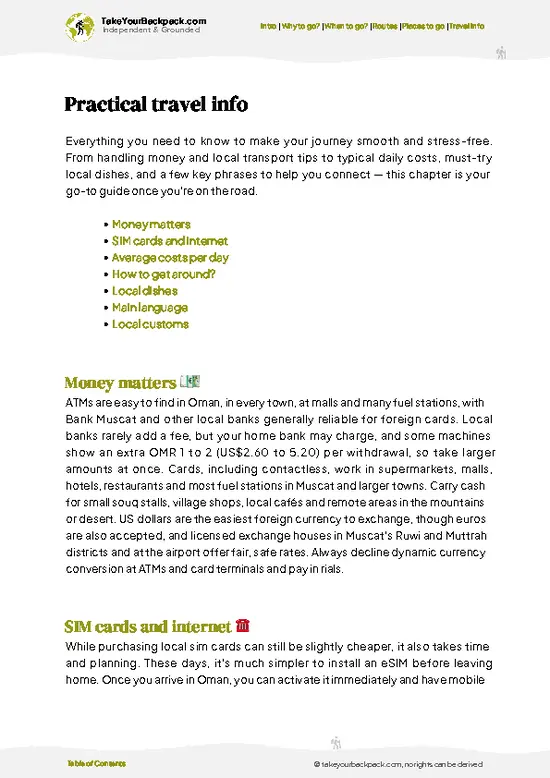
An offline-friendly backpacking guide with optimized travel routes, ranked highlights, transport advice, and the best areas to stay.
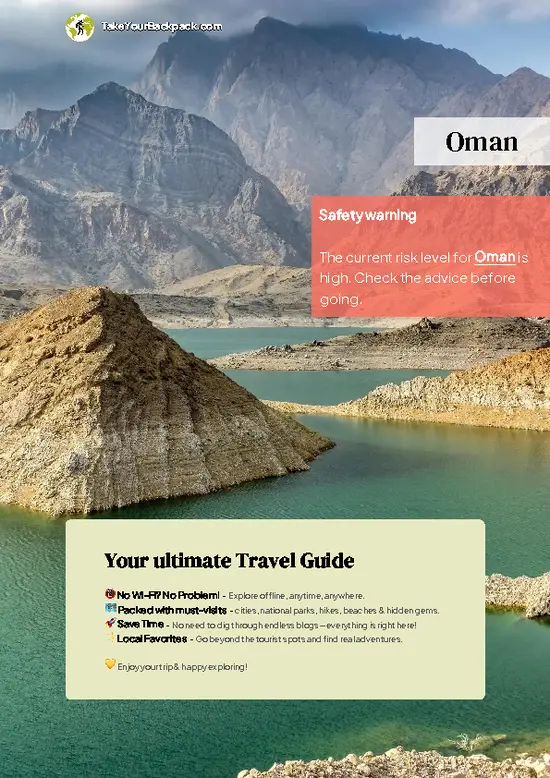
example page 0 from our offline Travel Guide for Oman
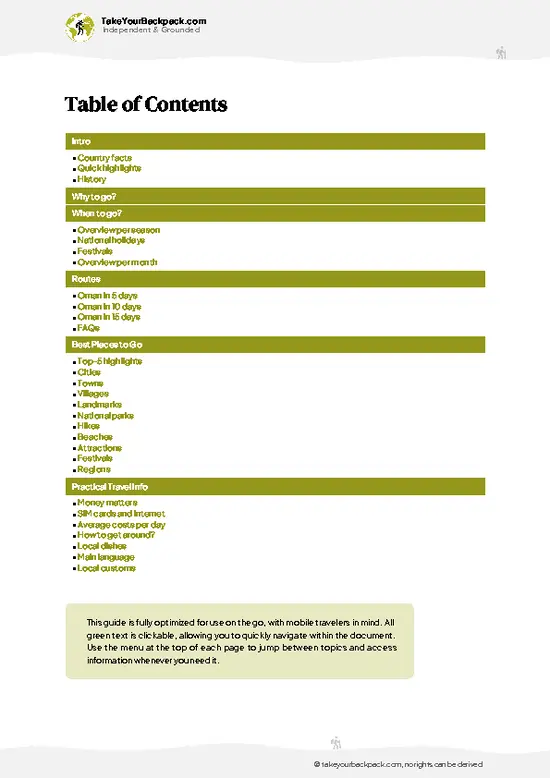
example page 1 from our offline Travel Guide for Oman
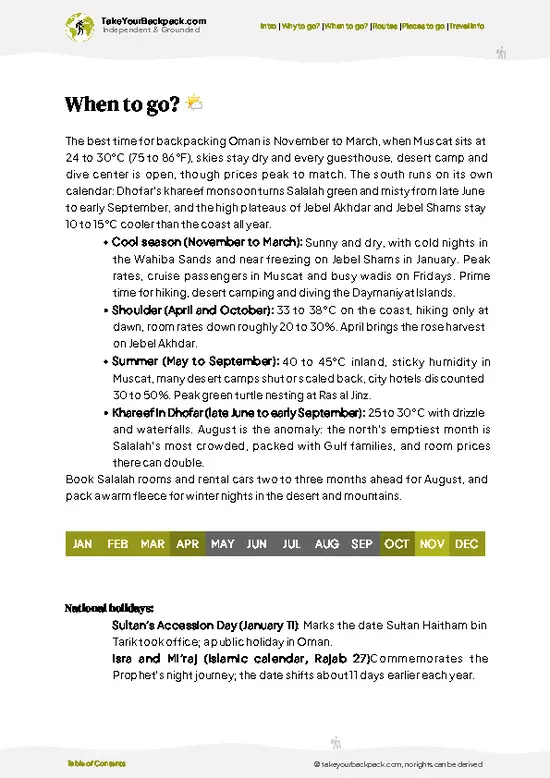
example page 2 from our offline Travel Guide for Oman
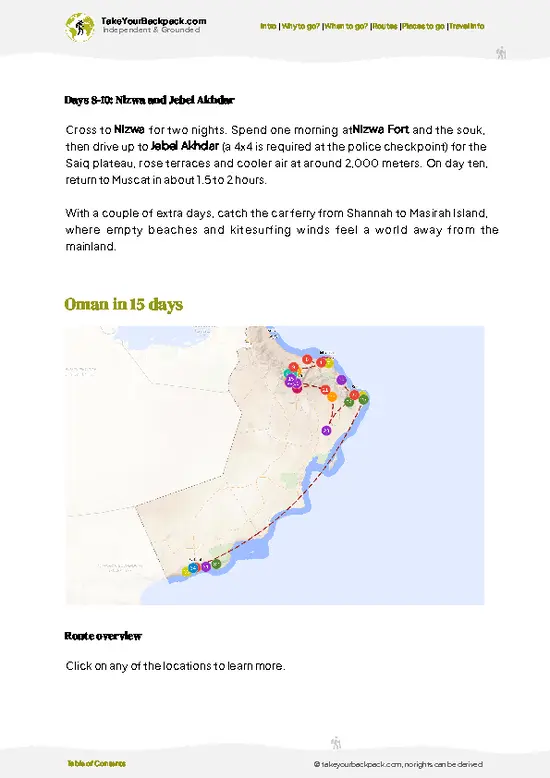
example page 3 from our offline Travel Guide for Oman
example page 4 from our offline Travel Guide for Oman
example page 5 from our offline Travel Guide for Oman
example page 6 from our offline Travel Guide for Oman
example page 7 from our offline Travel Guide for Oman
The digital guide (291 pages) contains:
✅ 73 highlights, ranked by travel appeal
✅ Optimized 5, 10 & 15-day travel routes
✅ Cities, national parks, landmarks, beaches
✅ How to get around
✅ Offline-friendly for travel without Wi-Fi
👉 Click to see all 30+ guide features

📅 Plan smarter in minutes, not weeks
✅ Month by month travel advice
✅ Festivals & national holidays
✅ Budget expectations

🗺️ Go to the right places, skip the overrated ones
✅ Honest pros & cons of destinations
✅ Top hikes, parks & viewpoints
✅ Lesser-known places most travelers miss
✅ Clear “worth it vs skip it” guidance

🛏️ Travel smoothly without rookie mistakes
✅ Best areas to stay
✅ Transport systems explained simply
✅ Common scams & safety advice
✅ SIM cards, money & practical tips

🌍 Understand the country, not just visit it
✅ Culture & traditions
✅ 52 Essential phrases & customs
✅ Festivals worth planning around
✅ Traveler-friendly historical context
✅ Insights that make places more meaningful

📱 Built for real travel conditions
✅ Fully downloadable PDF
✅ Works completely offline
✅ Optimized for phone use
✅ Useful in remote areas & buses
✅ Everything in one place
Stop searching, start planning
Get instant access to your full guide. 30‑day money-back guarantee.
+ Add another guide for just

By proceeding you agree to our terms.
Sent to your inbox immediately after payment • 100% Secure Checkout
Best Backpacking Travel Advisor 2025 tourism awardBest Backpacking
Travel Advisor
2025
What others say about Take Your Backpack Guides:
⭐⭐⭐⭐⭐
Fantastic, amazing amount of information!
⭐⭐⭐⭐⭐
My goodness this is amazing, it's what I've been looking for hats off too you!
⭐⭐⭐⭐⭐
I think this is absolutely BRILLIANT
⭐⭐⭐⭐
Very complete and informative. It's still missing places, but I gotta to commend you
⭐⭐⭐⭐⭐
This is truly amazing, thank you, can't wait to explore it with my kids!
⭐⭐⭐⭐⭐
Awesome resource, thank you!
⭐⭐⭐⭐⭐
This is amazing! Can't wait to explore the ones I haven't seen
⭐⭐⭐⭐
I love this! Well done, great idea.
⭐⭐⭐⭐⭐
Thanks for taking the time to make this gem!
⭐⭐⭐⭐⭐
This might be the best website I've ever seen.
⭐⭐⭐⭐⭐
Congratulations, and thank you so much for your work; it's incredibly valuable.
⭐⭐⭐⭐
In all seriousness I think you did a great job pointing out the important spots
⭐⭐⭐⭐⭐
10/10 very good
⭐⭐⭐⭐⭐
As someone who's only just starting to visit regularly this is awesome, thank you.
⭐⭐⭐⭐
Thank you very much! I'm going to visit my dad, it's going to be very useful!
⭐⭐⭐⭐⭐
This is really cool! We'll be travelling for the first time and this definitely come in handy.
⭐⭐⭐⭐⭐
You are now our minister of culture, congratulations 👨‍💼
⭐⭐⭐⭐⭐
Just wanted to tell you that this is a pearl! Going to follow your recommendations.
⭐⭐⭐⭐⭐
This is so cool. I'll definitely be using the resource for my travels soon.
⭐⭐⭐⭐⭐
This is very impressive! Good work.
⭐⭐⭐⭐⭐
This is an amazing and informative site. Very well done!

🛏️ Where to stay?Best Stay Options in Oman

Oman has only a handful of true hostels, so budget travel here usually means simple guesthouses, older hotels and heritage homestays at roughly OMR 15 to 25 (US$39 to 65) a night, with dorm beds in the few hostels starting around OMR 6 to 10 (US$16 to 26). In Muscat, Muttrah puts you on the corniche and next to the souq, with sea breezes and quiet evenings, while Ruwi is the cheapest district and the main bus hub but busy and short on charm, and Qurum and Al Khuwair cost more yet sit near the beach, malls and the licensed hotel bars where the city’s limited nightlife happens. Outside the capital, the old quarter of Nizwa has restored mud-brick guesthouses within walking distance of the fort … read more 👉
Oman has only a handful of true hostels, so budget travel here usually means simple guesthouses, older hotels and heritage homestays at roughly OMR 15 to 25 (US$39 to 65) a night, with dorm beds in the few hostels starting around OMR 6 to 10 (US$16 to 26). In Muscat, Muttrah puts you on the corniche and next to the souq, with sea breezes and quiet evenings, while Ruwi is the cheapest district and the main bus hub but busy and short on charm, and Qurum and Al Khuwair cost more yet sit near the beach, malls and the licensed hotel bars where the city’s limited nightlife happens. Outside the capital, the old quarter of Nizwa has restored mud-brick guesthouses within walking distance of the fort and souq, and all of these areas are very safe after dark.

If you enjoy meeting fellow travelers, consider choosing hostels with high ratings for atmosphere. On the other hand, if you prefer having your own space, a hotel might be a better option.

OmanWhere to Go Next

👋 Meet the founderWho’s Behind Take Your Backpack?

Johan, backpacker and founder of TakeYourBackpackHi, I’m Johan (Netherlands 🇳🇱), the creator of TakeYourBackpack. Over the past 3 decades, I’ve backpacked through 90+ countries across six continents, gaining extensive experience with independent travel, long-term trips, and overland routes.

This site is built on a combination of firsthand travel experience and carefully curated insights from other backpackers. Many guides are based on places I’ve personally visited, while others bring together tips, observations, and practical advice shared by trusted travelers I’ve met along the way.

The goal is to provide realistic, experience-driven guidance — not generic itineraries — so you can explore destinations with better context, clearer expectations, and more confidence.