×

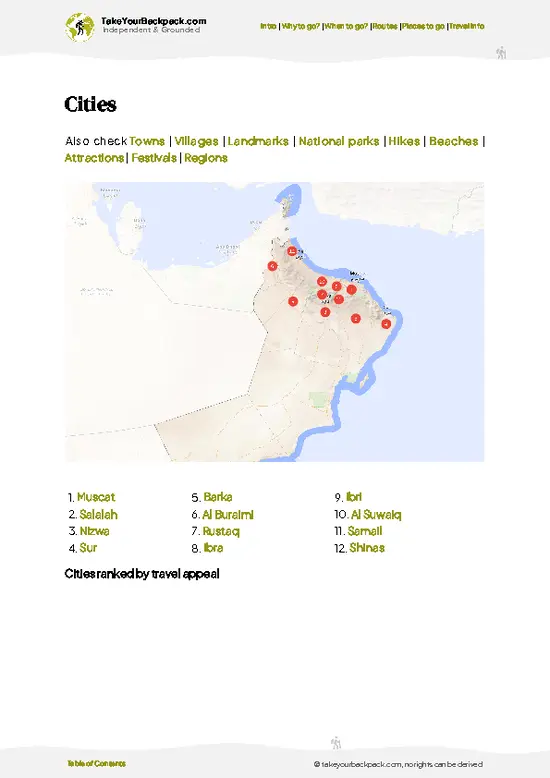
Oman🇴🇲 | best citiesBest 10 cities in Oman

Oman’s cities offer a rich tapestry of experiences, each with its own unique character shaped by geography and culture. In Muscat, the capital, you’ll find a blend of modernity and tradition, where vibrant souks and stunning mosques coexist. Smaller urban centers like Salalah and Nizwa provide a more intimate glimpse into Omani life, with lush landscapes and historical forts.

Transport connections vary; while Muscat boasts extensive links, remote areas may require more planning. Seasonal nuances affect everything from budget to safety—summer heat can be intense, making winter the ideal time for backpacking. Choosing the right city impacts your vibe, cultural immersion, and overall ease of travel, ensuring a more rewarding independent journey.

By Johan Kruseman 🇳🇱 | Updated June 11, 2026
Explore the best towns in Oman

Why go?Key Factors That Shape the Experience

Oman’s cities stand out in the Arabian Peninsula for their cultural diversity and historical depth. Unlike many neighboring countries, Oman has a rich tapestry woven from influences of African, Indian, and Persian cultures. This blend creates a unique urban experience where traditional souks coexist with modern amenities, allowing travelers to engage with both the past and present.

Geographically, Oman’s cities are strategically positioned along the coast and near mountain ranges, offering a variety of climatic conditions. The coastal cities provide a warm, inviting atmosphere, while the highlands offer cooler retreats. This diversity shapes not only the lifestyle but also the transport networks. Roads are generally well-maintained, but travel times can vary significantly. For instance, a … read more 👉
Oman’s cities stand out in the Arabian Peninsula for their cultural diversity and historical depth. Unlike many neighboring countries, Oman has a rich tapestry woven from influences of African, Indian, and Persian cultures. This blend creates a unique urban experience where traditional souks coexist with modern amenities, allowing travelers to engage with both the past and present.

Geographically, Oman’s cities are strategically positioned along the coast and near mountain ranges, offering a variety of climatic conditions. The coastal cities provide a warm, inviting atmosphere, while the highlands offer cooler retreats. This diversity shapes not only the lifestyle but also the transport networks. Roads are generally well-maintained, but travel times can vary significantly. For instance, a drive from Muscat to Nizwa can take over an hour, making it essential to plan for depth of exploration rather than rushing through.

However, this commitment to immersive experiences comes with trade-offs. Some areas may lack the accessibility found in other countries, requiring a willingness to navigate less-traveled paths. Travelers should consider these constraints carefully; the reward lies in the authenticity of the experience, where every interaction and landscape tells a story. Understanding these dynamics enhances the journey, making Oman’s cities not just destinations, but gateways to deeper cultural appreciation.
How the List Was Created
The list of best cities in Oman is created based on culture, vibe, attractions, transport ease, and local charm. If you feel a city is missing in this list, please let us know.

When to go?Seasonal Guide to Visiting

Seasonality plays a crucial role in shaping the experience of visiting cities in Oman. The climate is predominantly arid, with scorching summers and mild winters. From June to September, temperatures can soar, often exceeding 40°C (104°F). This heat drives many locals indoors, creating a quieter atmosphere in urban areas. However, this period also means fewer tourists, which can lead to lower accommodation costs and a more authentic experience.

Optimal months for city visits typically fall between October and April. During these months, temperatures are more manageable, ranging from 20°C to 30°C (68°F to 86°F). This is when the cities come alive with cultural events and festivals, offering a vibrant glimpse into local traditions. However, this peak season attracts larger crowds, which can … read more 👉
Seasonality plays a crucial role in shaping the experience of visiting cities in Oman. The climate is predominantly arid, with scorching summers and mild winters. From June to September, temperatures can soar, often exceeding 40°C (104°F). This heat drives many locals indoors, creating a quieter atmosphere in urban areas. However, this period also means fewer tourists, which can lead to lower accommodation costs and a more authentic experience.

Optimal months for city visits typically fall between October and April. During these months, temperatures are more manageable, ranging from 20°C to 30°C (68°F to 86°F). This is when the cities come alive with cultural events and festivals, offering a vibrant glimpse into local traditions. However, this peak season attracts larger crowds, which can lead to higher prices and busier attractions.

Shoulder seasons, particularly late September and early May, provide a balanced option. Travelers can enjoy milder weather while avoiding the peak tourist influx. Yet, this comes with trade-offs; some cultural events may be less frequent, and certain attractions might have limited hours.

Understanding these seasonal dynamics allows for a more strategic approach to planning. The right timing can unlock a richer experience, blending comfort with cultural immersion.

city hoppingHow to Combine cities Into One Trip

Transport Networks and Regional Clustering


Oman’s cities are best explored through a strategic approach that clusters them by region. Start in Muscat, the capital, where the blend of modernity and tradition sets the tone. From there, head south to Sur, a coastal city rich in maritime history. This route allows for a scenic drive along the coast, with the Arabian Sea on one side and rugged mountains on the other.

Optimal Sequencing and Travel Time


Plan for at least two days in Muscat to soak in its souks and forts. Sur deserves a day to explore its dhow-building heritage and stunning beaches. If time permits, venture to the Wahiba Sands for a night under the stars, adding a unique desert experience. Each stop should ideally be spaced out to allow for leisurely exploration—aim for 2-3 hours … read more 👉

Transport Networks and Regional Clustering


Oman’s cities are best explored through a strategic approach that clusters them by region. Start in Muscat, the capital, where the blend of modernity and tradition sets the tone. From there, head south to Sur, a coastal city rich in maritime history. This route allows for a scenic drive along the coast, with the Arabian Sea on one side and rugged mountains on the other.

Optimal Sequencing and Travel Time


Plan for at least two days in Muscat to soak in its souks and forts. Sur deserves a day to explore its dhow-building heritage and stunning beaches. If time permits, venture to the Wahiba Sands for a night under the stars, adding a unique desert experience. Each stop should ideally be spaced out to allow for leisurely exploration—aim for 2-3 hours of travel between cities, with a full day dedicated to each major stop.

Common Planning Mistakes


Travelers often underestimate the distances and overestimate what can be seen in a short time. Rushing through cities can lead to missing the essence of Omani culture. Prioritize depth over speed; a deeper experience in fewer places often yields richer memories.

Trade-offs and Flexibility


Consider the balance between budget and comfort. While public transport is available, renting a car offers flexibility and access to off-the-beaten-path locations. Embrace the slower pace; the journey itself is part of Oman’s allure.

The ListMust-Visit cities in Oman

1 Muscat

coastal cliffs, royal opera, souq labyrinths

Navigate a capital where whitewashed buildings hug the Gulf, neighborhoods blend old and new, and evenings bring locals to the corniche.

2 Sur

dhow yards, lighthouse, coastal corniche

Watch craftsmen build wooden boats, stroll the seaside promenade, and climb the lighthouse for views of the Gulf of Oman.

3 Salalah

monsoon greenery, frankincense trails, coconut stalls

Arrive during khareef to see desert hills turn green, with misty mornings, tropical fruit stands, and ancient incense trade routes.

4 Nizwa

mountain backdrop, Friday livestock market, round fort

Experience a city where mountain air cools bustling markets, and centuries-old traditions shape the rhythm of daily commerce and community.

oman-city-nizwa
© Google |

5 Sohar

industrial port, copper heritage, seaside corniche

Trace the evolution from ancient seafaring hub to modern port city, where maritime history meets Oman’s industrial ambitions along the coast.

6 Al Buraimi

border markets, desert forts, date palm groves

Cross into a city where Omani and Emirati influences meet, with daily life centered around traditional souqs and quiet agricultural villages.

7 Ibra

women’s souq, adobe mansions, desert gateway

Browse a bustling market run by local women, admire faded merchant houses, and use the town as a launch point into the Sharqiya Sands.

oman-city-ibra
© Google |

8 Rustaq

hot springs, mountain foothills, Friday market

Soak in mineral-rich pools, explore the base of the Hajar mountains, and time your visit for the weekly livestock and produce market.

9 Ibri

prehistoric tombs, bustling souq, border crossroads

Visit Bronze Age beehive tombs, shop for local goods in a lively market, and note the town’s role as a regional trade junction.

10 Samail

mountain pass, old mosques, falaj gardens

Drive through a dramatic mountain pass, visit some of Oman’s oldest mosques, and relax in gardens watered by ancient channels.

11 Barka

coastal fish market, bull wrestling arena, palm groves

Experience the morning catch at the waterfront, witness traditional bull wrestling, and stroll shaded paths lined with tall palms.

12 Shinas

port town, fishing dhows, northern farms

Watch wooden boats unload at the harbor, sample fresh seafood, and see green fields stretching toward the UAE border.

13 Al Seeb

beachfront, local souqs, suburban sprawl

Walk sandy beaches, shop for daily goods in neighborhood markets, and experience the spread of Muscat’s residential life.

14 Al Amerat

mountain views, new housing, city outskirts

Drive winding roads with city and mountain views, see rapid urban growth, and use the area as a gateway to Muscat’s hinterland.

15 Al Suwaiq

market town, coastal fort, agricultural fields

Explore a low-key fort by the sea, browse local produce at the market, and observe daily life in Oman’s agricultural heartland.

oman-city-al-suwaiq
© Google |

16 Al Khuwair

urban district, embassies, shopping centers

Navigate a busy Muscat suburb with international embassies, modern malls, and a range of dining options for travelers passing through.

Think you know Oman?

Prove you’re a true local — uncover 6 lesser-known cities in Oman that locals tend to keep to themselves.
Loading the map 🌍

Expert viewPro Tips for Exploring the Best

Transport Hubs
Oman’s transport network is surprisingly efficient, but it’s essential to understand its nuances. Major cities are well-connected by a mix of modern highways and local roads. Airports in key cities serve as gateways, but don’t expect a plethora of options for smaller towns. If you’re planning to explore beyond the main hubs, consider renting a car. This gives you the freedom to navigate the stunning landscapes at your own pace. However, be prepared for some stretches of road that can feel isolated. The trade-off here is between the convenience of public transport and the flexibility of driving. Public buses are available, but they can be infrequent and less reliable, especially in rural areas.

Urban Pacing
The rhythm of life in Oman’s cities is distinct. You’ll find a slower … read more 👉
Transport Hubs
Oman’s transport network is surprisingly efficient, but it’s essential to understand its nuances. Major cities are well-connected by a mix of modern highways and local roads. Airports in key cities serve as gateways, but don’t expect a plethora of options for smaller towns. If you’re planning to explore beyond the main hubs, consider renting a car. This gives you the freedom to navigate the stunning landscapes at your own pace. However, be prepared for some stretches of road that can feel isolated. The trade-off here is between the convenience of public transport and the flexibility of driving. Public buses are available, but they can be infrequent and less reliable, especially in rural areas.

Urban Pacing
The rhythm of life in Oman’s cities is distinct. You’ll find a slower pace, especially in the evenings when the heat subsides. This is when the streets come alive with families enjoying the cooler air. If you’re moving quickly from city to city, you might miss these moments of local life. Aim for a balance: visiting two to three cities allows you to soak in the atmosphere without feeling rushed. Each city has its own character, and spending a couple of days in each will let you appreciate the local culture, food, and traditions. The trade-off here is between breadth and depth; a whirlwind tour might check off more boxes, but it sacrifices the richness of experience.

Local Costs
Oman is relatively affordable compared to many Gulf countries, but costs can vary significantly between urban and rural areas. In cities, you’ll find a range of accommodations from budget hostels to luxurious hotels. Eating out can also be economical if you opt for local eateries over international chains. However, if you’re in a hurry and choose convenience, you might end up spending more. A good strategy is to budget for a mix of local dining experiences and a few splurges on unique culinary offerings. The trade-off here is between saving money and indulging in the local food scene; prioritize meals that showcase Omani flavors for a more authentic experience.

Exploring More Cities Quickly vs. Deeper Immersion
When planning your itinerary, consider the trade-off between visiting more cities quickly and immersing yourself in fewer locations. While it’s tempting to check off as many places as possible, each city has its own unique offerings that deserve time to explore. If you rush, you might miss out on the local markets, the scent of spices wafting through the air, or the chance to engage with residents. A deeper immersion allows you to connect with the culture, perhaps even participating in a local festival or learning about traditional crafts. This connection can transform your trip from a checklist into a meaningful journey.

Safety & Cultural Considerations
Oman is one of the safest countries in the region, but it’s wise to respect local customs. Dress modestly, especially in rural areas, and be mindful of cultural practices. Engaging with locals can enhance your experience, but approach conversations with respect and curiosity. The trade-off here is between being a passive observer and an active participant in the culture. By taking the time to understand local norms, you’ll not only enrich your experience but also foster goodwill.

In summary, navigating Oman’s cities is about making informed choices. Whether you’re drawn to the allure of multiple destinations or the depth of a single city, understanding the local context will enhance your journey. Embrace the contrasts, and let the rhythm of Oman guide your adventure.

✈️ The backpacker research shortcutOman Travel Guide

An offline-friendly backpacking guide with optimized travel routes, ranked highlights, transport advice, and the best areas to stay.
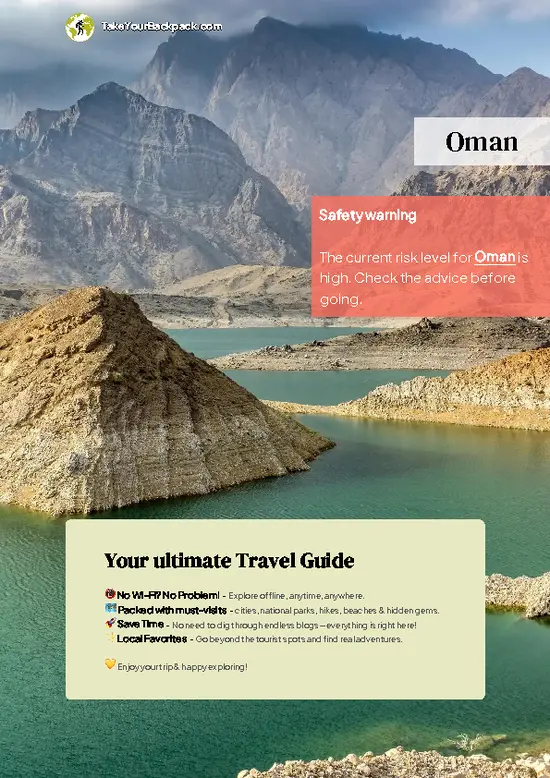
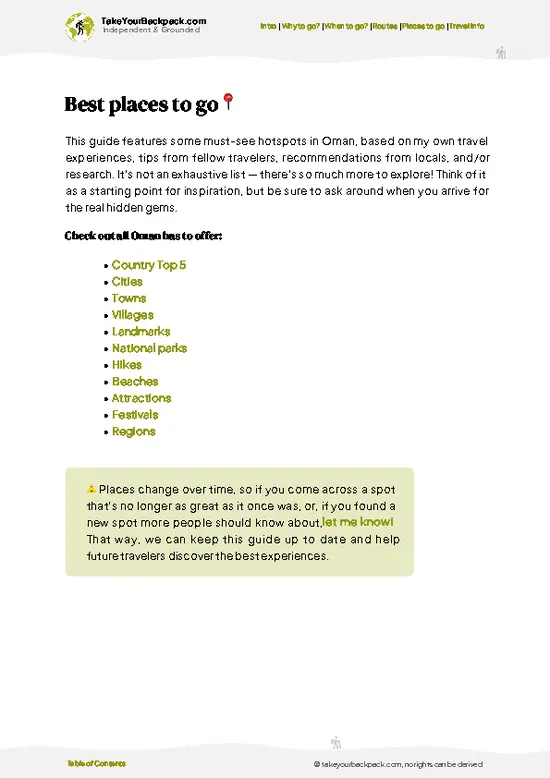
example page 0 from our offline Travel Guide for Oman
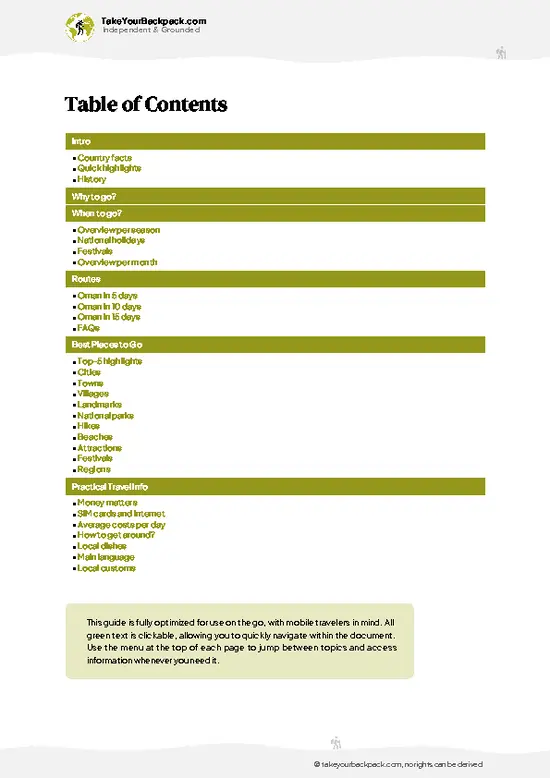
example page 1 from our offline Travel Guide for Oman
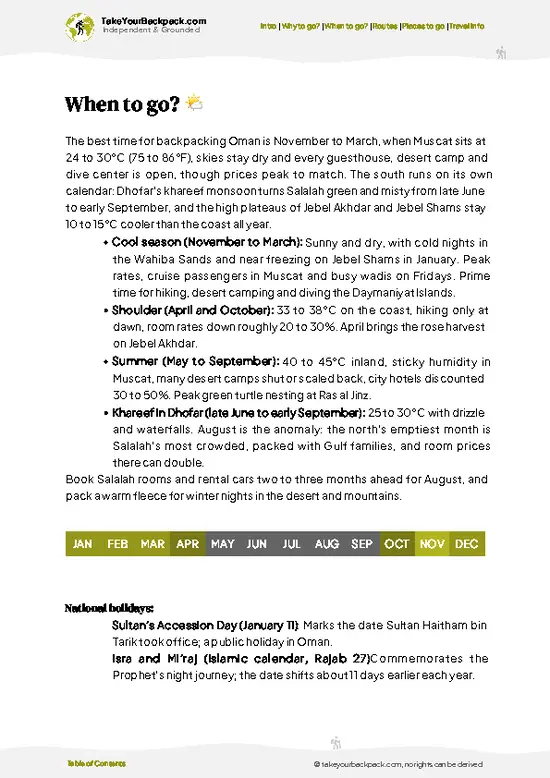
example page 2 from our offline Travel Guide for Oman
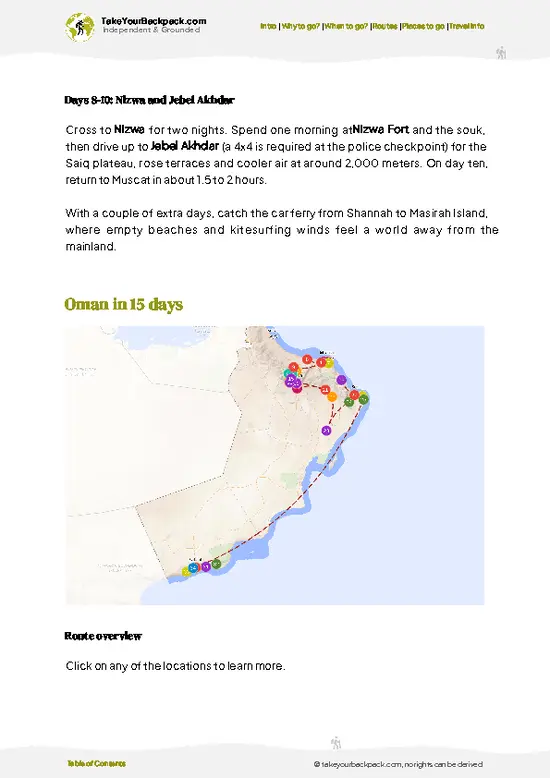
example page 3 from our offline Travel Guide for Oman
example page 4 from our offline Travel Guide for Oman
example page 5 from our offline Travel Guide for Oman
example page 6 from our offline Travel Guide for Oman
example page 7 from our offline Travel Guide for Oman
The digital guide (349 pages) contains:
89 highlights, ranked by travel appeal
Optimized 5, 10 & 15-day travel routes
Cities, national parks, landmarks, beaches
How to get around
Offline-friendly for travel without Wi-Fi
👉 Click to see all 30+ guide features

📅 Plan smarter in minutes, not weeks
Month by month travel advice
Festivals & national holidays
Budget expectations

🗺️ Go to the right places, skip the overrated ones
Honest pros & cons of destinations
Top hikes, parks & viewpoints
Lesser-known places most travelers miss
Clear “worth it vs skip it” guidance

🛏️ Travel smoothly without rookie mistakes
Best areas to stay
Transport systems explained simply
Common scams & safety advice
SIM cards, money & practical tips

🌍 Understand the country, not just visit it
Culture & traditions
52 Essential phrases & customs
Festivals worth planning around
Traveler-friendly historical context
Insights that make places more meaningful

📱 Built for real travel conditions
Fully downloadable PDF
Works completely offline
Optimized for phone use
Useful in remote areas & buses
Everything in one place
Save weeks of stressful planning
Get instant access to your full guide. 30‑day money-back guarantee.


By proceeding you agree to our terms.
Sent to your inbox immediately after payment • 100% Secure Checkout
Best Backpacking Travel Advisor 2025 tourism awardBest Backpacking
Travel Advisor
2025
What others say about Take Your Backpack Guides:
⭐⭐⭐⭐⭐
Fantastic, amazing amount of information!
⭐⭐⭐⭐⭐
My goodness this is amazing, it's what I've been looking for hats off too you!
⭐⭐⭐⭐⭐
I think this is absolutely BRILLIANT
⭐⭐⭐⭐
Very complete and informative. It's still missing places, but I gotta to commend you
⭐⭐⭐⭐⭐
This is truly amazing, thank you, can't wait to explore it with my kids!
⭐⭐⭐⭐⭐
Awesome resource, thank you!
⭐⭐⭐⭐⭐
This is amazing! Can't wait to explore the ones I haven't seen
⭐⭐⭐⭐
I love this! Well done, great idea.
⭐⭐⭐⭐⭐
Thanks for taking the time to make this gem!
⭐⭐⭐⭐⭐
This might be the best website I've ever seen.
⭐⭐⭐⭐⭐
Congratulations, and thank you so much for your work; it's incredibly valuable.
⭐⭐⭐⭐
In all seriousness I think you did a great job pointing out the important spots
⭐⭐⭐⭐⭐
10/10 very good
⭐⭐⭐⭐⭐
As someone who's only just starting to visit regularly this is awesome, thank you.
⭐⭐⭐⭐
Thank you very much! I'm going to visit my dad, it's going to be very useful!
⭐⭐⭐⭐⭐
This is really cool! We'll be travelling for the first time and this definitely come in handy.
⭐⭐⭐⭐⭐
You are now our minister of culture, congratulations 👨‍💼
⭐⭐⭐⭐⭐
Just wanted to tell you that this is a pearl! Going to follow your recommendations.
⭐⭐⭐⭐⭐
This is so cool. I'll definitely be using the resource for my travels soon.
⭐⭐⭐⭐⭐
This is very impressive! Good work.
⭐⭐⭐⭐⭐
This is an amazing and informative site. Very well done!

🛏️ Where to stay?Top Places to Consider Staying

Yes. Hostels and budget accommodation exist in Oman but are less common than in backpacker hotspots; most options cluster in Muscat (Mutrah, Ruwi, Qurum), Salalah, Nizwa, Sur, plus a few around Sohar and the mountain trails (Jebel Shams/Jebel Akhdar).
Mutrah puts you by the corniche and souq—good for sights and some nightlife but slightly pricier; Ruwi is the transport hub and cheaper but busy and less atmospheric; Qurum is quieter and beach-close with fewer dorms; Salalah has the most seasonal budget choices during Khareef but books fast; Nizwa and the mountains offer cheap guesthouses near forts and trails but very limited dorm-style hostels and require transport; Sur and Ras Al Jinz suit … read more 👉
Yes. Hostels and budget accommodation exist in Oman but are less common than in backpacker hotspots; most options cluster in Muscat (Mutrah, Ruwi, Qurum), Salalah, Nizwa, Sur, plus a few around Sohar and the mountain trails (Jebel Shams/Jebel Akhdar).
Mutrah puts you by the corniche and souq—good for sights and some nightlife but slightly pricier; Ruwi is the transport hub and cheaper but busy and less atmospheric; Qurum is quieter and beach-close with fewer dorms; Salalah has the most seasonal budget choices during Khareef but books fast; Nizwa and the mountains offer cheap guesthouses near forts and trails but very limited dorm-style hostels and require transport; Sur and Ras Al Jinz suit coastal and turtle-watching trips, are peaceful at night but have sparse options.

If you enjoy meeting fellow travelers, consider choosing hostels with high ratings for atmosphere. On the other hand, if you prefer having your own space, a hotel might be a better option.

OmanMore Places Across Oman

👋 Meet the founderWho’s Behind Take Your Backpack?

Johan, backpacker and founder of TakeYourBackpackHi, I’m Johan (Netherlands 🇳🇱), the creator of TakeYourBackpack. Over the past decade, I’ve backpacked through 80+ countries across six continents, gaining extensive experience with independent travel, long-term trips, and overland routes.

This site is built on a combination of firsthand travel experience and carefully curated insights from other backpackers. Many guides are based on places I’ve personally visited, while others bring together tips, observations, and practical advice shared by trusted travelers I’ve met along the way.

The goal is to provide realistic, experience-driven guidance — not generic itineraries — so you can explore destinations with better context, clearer expectations, and more confidence.

Get full Oman guide •
Instant download • 89 highlights • Full Offline guide