×

Oman🇴🇲 | best attractionsBest 11 attractions in Oman

Oman’s attractions unfold through a landscape where desert dunes meet rugged mountains and ancient forts guard quiet fishing villages. Understanding this geography is key for backpackers seeking authentic experiences without the usual tourist crowds. The northern coast offers accessible beaches and historic souks, ideal for independent travelers prioritizing ease and cultural immersion. In contrast, the southern Dhofar region, with its monsoon season and lush greenery, demands timing and patience but rewards with a different pace and atmosphere. Choosing the right destination in Oman shapes your trip’s vibe, budget, and safety—whether you’re navigating gravel roads in the interior or exploring urban Muscat’s blend of tradition and modernity.

By Johan Kruseman 🇳🇱 | Updated June 6, 2026
Explore the best festivals in Oman

Why go?Key Factors That Shape the Experience

Why These Attractions Matter

Oman’s attractions stand apart because they unfold within a landscape where geography and culture intertwine with deliberate slowness. The country’s rugged mountains, vast deserts, and sweeping coastlines create a backdrop that demands time and patience to truly absorb. Unlike destinations where attractions cluster tightly, Oman’s sites are spread across challenging terrain, making travel time a significant factor. This means visitors must weigh the trade-off between covering more ground superficially or investing in deeper, more immersive experiences that reveal the subtle shifts in light, scent, and sound unique to each environment.

The cultural fabric here is tightly woven with centuries of maritime trade, desert nomadism, and Islamic tradition, offering a layered … read more 👉
Why These Attractions Matter

Oman’s attractions stand apart because they unfold within a landscape where geography and culture intertwine with deliberate slowness. The country’s rugged mountains, vast deserts, and sweeping coastlines create a backdrop that demands time and patience to truly absorb. Unlike destinations where attractions cluster tightly, Oman’s sites are spread across challenging terrain, making travel time a significant factor. This means visitors must weigh the trade-off between covering more ground superficially or investing in deeper, more immersive experiences that reveal the subtle shifts in light, scent, and sound unique to each environment.

The cultural fabric here is tightly woven with centuries of maritime trade, desert nomadism, and Islamic tradition, offering a layered historical context that rewards those willing to engage beyond surface-level sightseeing. However, Oman’s infrastructure, while steadily improving, still leans toward low-impact tourism. Roads can be narrow and winding, and public transport options are limited, which means self-driving or guided tours become practical necessities for accessing remote attractions.

Climatic factors also shape the experience. The intense sun and dry air sculpt the landscape but require careful planning around seasonal extremes to avoid discomfort or missed opportunities. Ultimately, Oman’s attractions matter because they invite travelers to slow down, embrace logistical challenges, and connect with a place where every detail—from the texture of ancient stone to the whisper of desert wind—carries meaning. This is not a destination for ticking boxes but for savoring the deliberate rhythm of discovery.
Behind the Scenes of Selection
The list of best attractions in Oman is created based on cultural significance or entertainment value. If you feel a attraction is missing in this list, please let us know.

When to go?Seasonal Guide to Visiting

Seasonal Rhythms Shape Your Oman Experience

Oman’s climate swings between extremes, and understanding this is key to unlocking its attractions without the usual travel headaches. The country bakes under a relentless sun for much of the year, with summer temperatures often soaring well above 40°C (104°F). This intense heat isn’t just uncomfortable—it can limit your ability to explore outdoor sites safely and enjoyably. The air feels thick, and the landscape’s colors bleach under the glare, muting the desert’s usual rich ochres and reds.

Best Time to Embrace Oman’s Outdoors

The cooler months, roughly spanning late autumn through early spring, offer a gentler sun and crisp mornings that coax the landscape into sharper focus. This period brings daytime highs in the mid-20s Celsius (mid-70s … read more 👉

Seasonal Rhythms Shape Your Oman Experience

Oman’s climate swings between extremes, and understanding this is key to unlocking its attractions without the usual travel headaches. The country bakes under a relentless sun for much of the year, with summer temperatures often soaring well above 40°C (104°F). This intense heat isn’t just uncomfortable—it can limit your ability to explore outdoor sites safely and enjoyably. The air feels thick, and the landscape’s colors bleach under the glare, muting the desert’s usual rich ochres and reds.

Best Time to Embrace Oman’s Outdoors

The cooler months, roughly spanning late autumn through early spring, offer a gentler sun and crisp mornings that coax the landscape into sharper focus. This period brings daytime highs in the mid-20s Celsius (mid-70s Fahrenheit), perfect for hiking, desert treks, and wandering through open-air markets without wilting. The light during these months is softer, casting long shadows that reveal the textures of rocky outcrops and ancient fortifications. The air carries a dry, clean scent, often tinged with frankincense or desert herbs, enhancing the sensory experience.

Shoulder Seasons: A Calculated Trade-Off

The edges of this cooler window—early autumn and late spring—offer a quieter, less expensive experience but come with trade-offs. Temperatures can still climb sharply by midday, demanding early starts and midday rests. Crowds thin out, which means more space to breathe at popular spots, but some services may scale back, and the risk of sudden heat spikes means you’ll need to stay vigilant about hydration and sun protection.

Peak Periods and Practical Considerations

Peak travel aligns with the cooler season, so expect higher prices and busier sites during this window. However, the payoff is clear: the landscape is alive with color and texture, and the weather invites exploration rather than retreat. Avoiding the scorching summer months isn’t just about comfort—it’s about preserving the energy and enthusiasm needed to fully engage with Oman’s rugged beauty. Planning your visit around these seasonal patterns transforms the trip from a test of endurance into a rich, sensory journey.

attraction hoppingHow to Combine attractions Into One Trip

Mapping Oman’s Attractions into a Cohesive Journey

Oman’s geography naturally divides into distinct regions—coastal plains, rugged mountains, vast deserts, and historic towns—each demanding its own rhythm. The key to a smooth trip is to cluster stops by region, moving logically from one to the next rather than zigzagging across the map. For example, start with the Muscat area’s cultural sites before heading south along the coast or inland to the Hajar Mountains. This reduces wasted travel time and lets you settle into the atmosphere of each zone.

Balancing Time and Experience

Expect to spend at least half a day at major cultural or natural sites to absorb their character—rushing through ruins or wadis dilutes the experience. Desert excursions and mountain hikes often require a full day … read more 👉

Mapping Oman’s Attractions into a Cohesive Journey

Oman’s geography naturally divides into distinct regions—coastal plains, rugged mountains, vast deserts, and historic towns—each demanding its own rhythm. The key to a smooth trip is to cluster stops by region, moving logically from one to the next rather than zigzagging across the map. For example, start with the Muscat area’s cultural sites before heading south along the coast or inland to the Hajar Mountains. This reduces wasted travel time and lets you settle into the atmosphere of each zone.

Balancing Time and Experience

Expect to spend at least half a day at major cultural or natural sites to absorb their character—rushing through ruins or wadis dilutes the experience. Desert excursions and mountain hikes often require a full day or overnight to appreciate the scale and silence. Overloading your itinerary with too many stops in a short span leads to fatigue and missed moments. Instead, prioritize depth over quantity, allowing flexibility for unexpected detours or local encounters.

Common Pitfalls and Trade-offs

A frequent mistake is underestimating Oman’s travel times, which are extended by winding roads and speed limits. Trying to cover too much ground quickly sacrifices comfort and the chance to savor the landscape’s subtle shifts—from salty sea breezes to dry, pine-scented air. Budget travelers may opt for shared transport, but this can limit timing freedom. Conversely, renting a car offers control but requires confidence with mountain driving. The best trips balance effort and reward, blending well-paced drives with immersive stops that reveal Oman’s layered textures.

The ListMust-Visit attractions in Oman

1 Sultan Qaboos Grand Mosque

ornate prayer hall, Persian carpet, Islamic artistry

Admire intricate mosaics, towering chandeliers, and the scale of one of the region’s most architecturally significant mosques.

2 Royal Opera House Muscat

modern auditorium, marble interiors, international performances

Attend a concert or tour the venue to appreciate acoustics, architectural detail, and the role of performing arts in Oman.

3 National Museum of Oman

national treasures, immersive galleries, ancient manuscripts

Survey Oman’s cultural legacy through rare artifacts, multimedia installations, and detailed reconstructions spanning millennia.

4 Al Jalali Fort

harbor views, Portuguese architecture, cliffside ramparts

Climb the steep approach to survey Muscat’s port from fortified walls, where centuries-old stonework faces the open sea.

5 Al Mirani Fort

watchtowers, coastal defense, panoramic cityscape

Ascend to the upper battlements for sweeping perspectives over Muscat’s old quarter and the Gulf, framed by rugged hills.

6 Oman Across Ages Museum

chronological displays, technological innovation, interactive timelines

Follow Oman’s development from early civilizations to present day, with a focus on social change and scientific progress.

7 Bait Al Zubair Museum

Omani heritage, traditional weapons, costume collections

Discover curated galleries showcasing domestic life, ceremonial objects, and the evolution of Omani identity across generations.

8 Sohar Fort

coastal stronghold, underground passages, regional museum

Wander through thick-walled corridors and explore exhibits on Sohar’s maritime trade and local legends.

9 Bait Al Baranda Museum

interactive exhibits, Muscat history, local geology

Trace Muscat’s transformation from prehistoric settlements to modern city through hands-on displays and regional artifacts.

10 Omani-French Museum

diplomatic history, colonial-era artifacts, French-Omani relations

Examine the legacy of cross-cultural exchange through rooms filled with correspondence, gifts, and period furnishings.

11 Oman Children’s Museum

hands-on science, educational play, family activities

Engage with interactive exhibits designed for young minds, encouraging curiosity about physics, biology, and the natural world.

Loading the map 🌍

Expert viewPro Tips for Exploring the Best

Expert Commentary


Oman’s attractions don’t just line up neatly like checkboxes on a list; they unfold across a landscape that demands patience and respect for its rhythms. You’ll want to aim for a handful of key experiences—three to five is a solid target. This range balances the country’s vastness and the time it takes to truly absorb each place’s character. Trying to cram more risks turning your trip into a blur of highways and missed moments rather than a series of meaningful encounters.

Traveling between attractions here is a lesson in scale and pace. Distances can be deceptive; what looks like a short drive on the map often stretches longer due to winding mountain roads or desert tracks. The light shifts dramatically as you move from coastal plains to rugged wadis, so timing your visits … read more 👉

Expert Commentary


Oman’s attractions don’t just line up neatly like checkboxes on a list; they unfold across a landscape that demands patience and respect for its rhythms. You’ll want to aim for a handful of key experiences—three to five is a solid target. This range balances the country’s vastness and the time it takes to truly absorb each place’s character. Trying to cram more risks turning your trip into a blur of highways and missed moments rather than a series of meaningful encounters.

Traveling between attractions here is a lesson in scale and pace. Distances can be deceptive; what looks like a short drive on the map often stretches longer due to winding mountain roads or desert tracks. The light shifts dramatically as you move from coastal plains to rugged wadis, so timing your visits around the softer morning or late afternoon sun can transform a scene from flat to cinematic. Budget-wise, Oman isn’t a bargain basement destination. The cost of fuel, guided tours, and entry fees can add up, especially if you opt for 4x4 excursions or desert camping. But the payoff is in the quality of the experience—quiet, uncrowded spaces where you can hear the wind and the call to prayer without interruption.

Planning your itinerary means embracing a certain flexibility. Infrastructure outside the main hubs is improving but still limited. Roads can be rough, and cell service patchy, so a reliable vehicle and offline navigation tools are essentials. This isn’t a place for last-minute changes or spontaneous detours without preparation. The cultural fabric here is woven with deep respect for tradition and hospitality, but it also comes with clear boundaries. Dress modestly, especially in rural areas, and be mindful of local customs around photography and social interactions. These aren’t just rules to follow—they’re keys to unlocking genuine connections with locals who often welcome visitors with warmth once trust is established.

Safety is less about danger and more about awareness. The desert’s heat can be brutal, and dehydration sneaks up on you. Plan your outings to avoid the midday scorch and carry ample water. Flash floods in wadis are a real hazard during rare rains, so always check local conditions before heading into canyons or dry riverbeds. Nighttime temperatures can drop sharply, so layering is crucial if you’re camping or staying in mountain lodges.

One of the most rewarding aspects of Oman’s attractions is how they engage all your senses. The scent of frankincense trees, the crunch of gravel underfoot, the sharp contrast between the salty sea breeze and the dry desert air—these details anchor you in the moment. But to truly appreciate them, you have to accept the trade-offs: slower travel, occasional discomfort, and the need for thoughtful preparation. The payoff is a trip that feels earned, where each vista and cultural encounter carries the weight of effort and intention.

In short, Oman’s best attractions are not about quantity but quality. Prioritize depth over breadth, respect the environment and culture, and prepare for a journey that unfolds on its own terms. This approach transforms what could be a checklist into a layered experience, where every step reveals something new beneath the surface.

✈️ The backpacker research shortcutOman Travel Guide

An offline-friendly backpacking guide with optimized travel routes, ranked highlights, transport advice, and the best areas to stay.
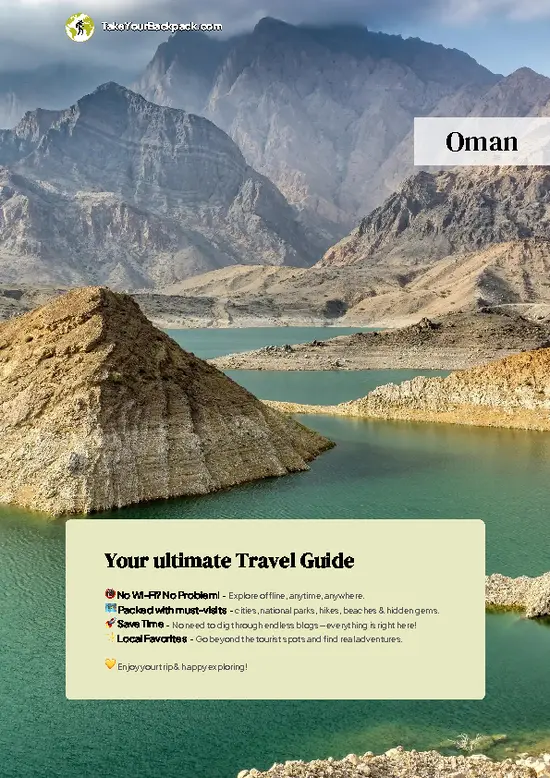
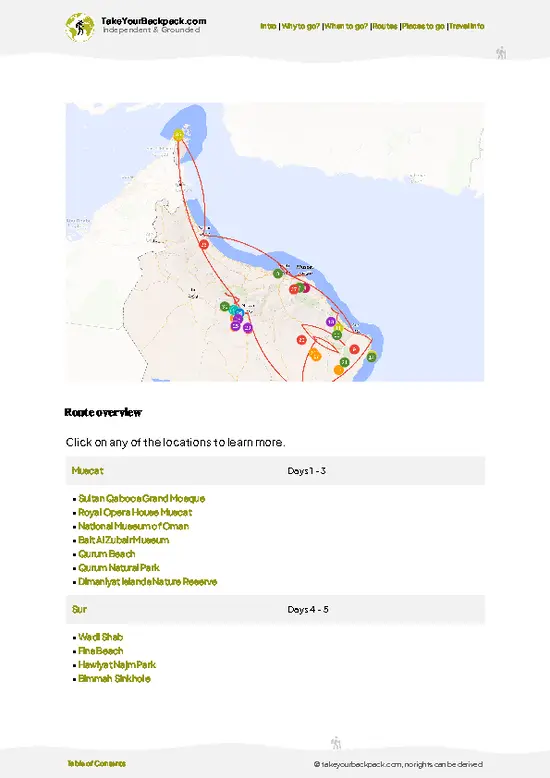
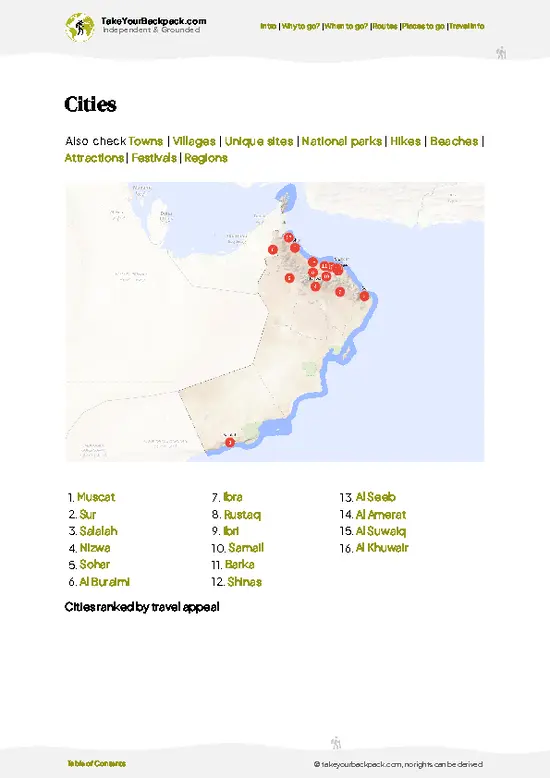
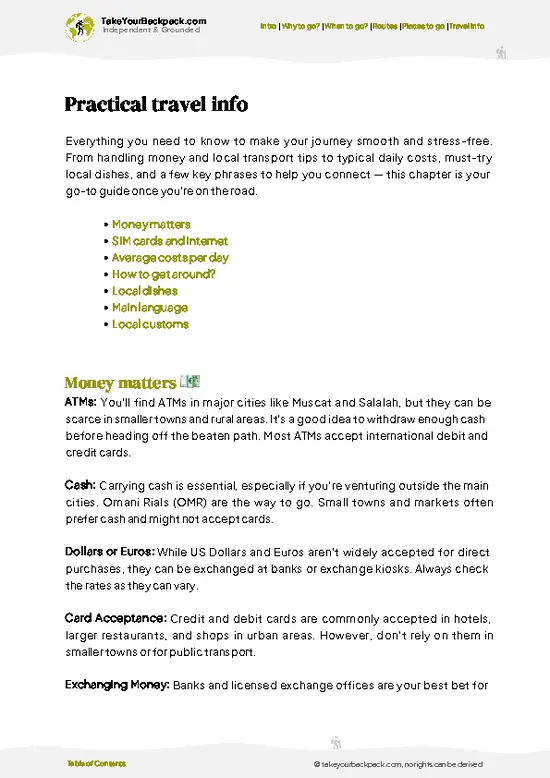
example page 0 from our offline Travel Guide for Omanexample page 1 from our offline Travel Guide for Omanexample page 2 from our offline Travel Guide for Omanexample page 3 from our offline Travel Guide for Omanexample page 4 from our offline Travel Guide for Omanexample page 5 from our offline Travel Guide for Omanexample page 6 from our offline Travel Guide for Omanexample page 7 from our offline Travel Guide for Oman
The digital guide (349 pages) contains:
89 highlights, ranked by travel appeal
Optimized 5, 10 & 15-day travel routes
Cities, national parks, landmarks, beaches
How to get around
Offline-friendly for travel without Wi-Fi
👉 Click to see all 30+ guide features

📅 Plan smarter in minutes, not weeks
Month by month travel advice
Festivals & national holidays
Budget expectations

🗺️ Go to the right places, skip the overrated ones
Honest pros & cons of destinations
Top hikes, parks & viewpoints
Lesser-known places most travelers miss
Clear “worth it vs skip it” guidance

🛏️ Travel smoothly without rookie mistakes
Best areas to stay
Transport systems explained simply
Common scams & safety advice
SIM cards, money & practical tips

🌍 Understand the country, not just visit it
Culture & traditions
52 Essential phrases & customs
Festivals worth planning around
Traveler-friendly historical context
Insights that make places more meaningful

📱 Built for real travel conditions
Fully downloadable PDF
Works completely offline
Optimized for phone use
Useful in remote areas & buses
Everything in one place
Save weeks of stressful planning
Get instant access to your full guide. 30‑day money-back guarantee.


By proceeding you agree to our terms.
Sent to your inbox immediately after payment • 100% Secure Checkout
Best Backpacking Travel Advisor 2025 tourism awardBest Backpacking
Travel Advisor
2025
What others say about Take Your Backpack Guides:
⭐⭐⭐⭐⭐
Fantastic, amazing amount of information!
⭐⭐⭐⭐⭐
My goodness this is amazing, it's what I've been looking for hats off too you!
⭐⭐⭐⭐⭐
I think this is absolutely BRILLIANT
⭐⭐⭐⭐
Very complete and informative. It's still missing places, but I gotta to commend you
⭐⭐⭐⭐⭐
This is truly amazing, thank you, can't wait to explore it with my kids!
⭐⭐⭐⭐⭐
Awesome resource, thank you!
⭐⭐⭐⭐⭐
This is amazing! Can't wait to explore the ones I haven't seen
⭐⭐⭐⭐
I love this! Well done, great idea.
⭐⭐⭐⭐⭐
Thanks for taking the time to make this gem!
⭐⭐⭐⭐⭐
This might be the best website I've ever seen.
⭐⭐⭐⭐⭐
Congratulations, and thank you so much for your work; it's incredibly valuable.
⭐⭐⭐⭐
In all seriousness I think you did a great job pointing out the important spots
⭐⭐⭐⭐⭐
10/10 very good
⭐⭐⭐⭐⭐
As someone who's only just starting to visit regularly this is awesome, thank you.
⭐⭐⭐⭐
Thank you very much! I'm going to visit my dad, it's going to be very useful!
⭐⭐⭐⭐⭐
This is really cool! We'll be travelling for the first time and this definitely come in handy.
⭐⭐⭐⭐⭐
You are now our minister of culture, congratulations 👨‍💼
⭐⭐⭐⭐⭐
Just wanted to tell you that this is a pearl! Going to follow your recommendations.
⭐⭐⭐⭐⭐
This is so cool. I'll definitely be using the resource for my travels soon.
⭐⭐⭐⭐⭐
This is very impressive! Good work.
⭐⭐⭐⭐⭐
This is an amazing and informative site. Very well done!

🛏️ Where to stay?Where to Stay: Oman Edition

Yes. Hostels and budget accommodation exist in Oman but are less common than in backpacker hotspots; most options cluster in Muscat (Mutrah, Ruwi, Qurum), Salalah, Nizwa, Sur, plus a few around Sohar and the mountain trails (Jebel Shams/Jebel Akhdar).
Mutrah puts you by the corniche and souq—good for sights and some nightlife but slightly pricier; Ruwi is the transport hub and cheaper but busy and less atmospheric; Qurum is quieter and beach-close with fewer dorms; Salalah has the most seasonal budget choices during Khareef but books fast; Nizwa and the mountains offer cheap guesthouses near forts and trails but very limited dorm-style hostels and require transport; Sur and Ras Al Jinz suit … read more 👉
Yes. Hostels and budget accommodation exist in Oman but are less common than in backpacker hotspots; most options cluster in Muscat (Mutrah, Ruwi, Qurum), Salalah, Nizwa, Sur, plus a few around Sohar and the mountain trails (Jebel Shams/Jebel Akhdar).
Mutrah puts you by the corniche and souq—good for sights and some nightlife but slightly pricier; Ruwi is the transport hub and cheaper but busy and less atmospheric; Qurum is quieter and beach-close with fewer dorms; Salalah has the most seasonal budget choices during Khareef but books fast; Nizwa and the mountains offer cheap guesthouses near forts and trails but very limited dorm-style hostels and require transport; Sur and Ras Al Jinz suit coastal and turtle-watching trips, are peaceful at night but have sparse options.

If you enjoy meeting fellow travelers, consider choosing hostels with high ratings for atmosphere. On the other hand, if you prefer having your own space, a hotel might be a better option.

OmanExplore Beyond This Category

👋 Meet the founderWho’s Behind Take Your Backpack?

Johan, backpacker and founder of TakeYourBackpackHi, I’m Johan (Netherlands 🇳🇱), the creator of TakeYourBackpack. Over the past decade, I’ve backpacked through 80+ countries across six continents, gaining extensive experience with independent travel, long-term trips, and overland routes.

This site is built on a combination of firsthand travel experience and carefully curated insights from other backpackers. Many guides are based on places I’ve personally visited, while others bring together tips, observations, and practical advice shared by trusted travelers I’ve met along the way.

The goal is to provide realistic, experience-driven guidance — not generic itineraries — so you can explore destinations with better context, clearer expectations, and more confidence.

Get full Oman guide •
Instant download • 89 highlights • Full Offline guide