×

Panama🇵🇦 | best villagesDiscover the 3 Best villages Across Panama

Villages in Panama split into three distinct kinds, and the differences change your trip. In the western highlands of Chiriquí, cool mountain towns sit among coffee farms, with easy chicken-bus access and moderate costs. On the Caribbean side and island archipelagos, small coastal communities mean boats, rain and higher prices, with fewer crowds. In the Azuero Peninsula and the interior, farming towns hold the country’s most traditional festivals and almost no tourist infrastructure. Indigenous comarcas such as Guna Yala run on community rules, fees and set logistics. For backpacking or independent travel, matching the kind of village to your tolerance for transport hassle matters more than distance.

By Johan Kruseman 🇳🇱 | Updated October 23, 2026
Explore the best landmarks in Panama

Why go?What Makes Them Special

Panama suits village travel because a narrow isthmus packs sharply different geography into short distances. A central mountain spine splits a drier, farmed Pacific side from a wetter Caribbean side, so a few hours of travel moves you between coffee highlands, cattle country, rainforest and reef. That variety explains why village life here differs so much by region.

History adds the second layer. Spanish colonial settlement shaped the Azuero and interior towns, with plazas, churches and saint-day festivals, while Afro-Caribbean communities grew around Bocas del Toro and the Colón coast, and several Indigenous peoples (Guna, Ngäbe, Emberá) keep semi-autonomous territories called comarcas. Each tradition produces a different kind of village, with its own food, language and rules.

Before choosing … read more 👉
Panama suits village travel because a narrow isthmus packs sharply different geography into short distances. A central mountain spine splits a drier, farmed Pacific side from a wetter Caribbean side, so a few hours of travel moves you between coffee highlands, cattle country, rainforest and reef. That variety explains why village life here differs so much by region.

History adds the second layer. Spanish colonial settlement shaped the Azuero and interior towns, with plazas, churches and saint-day festivals, while Afro-Caribbean communities grew around Bocas del Toro and the Colón coast, and several Indigenous peoples (Guna, Ngäbe, Emberá) keep semi-autonomous territories called comarcas. Each tradition produces a different kind of village, with its own food, language and rules.

Before choosing Panama, know that it is not a country of uniformly quaint hamlets. Many Pacific lowland towns are functional roadside settlements with little to see. Infrastructure is good by Central American standards, with paved main highways and frequent buses, but side roads and island communities depend on boats and weather. Panama uses the US dollar (the balboa is only a coin), which keeps pricing transparent but makes tourist-facing villages costlier than neighbors such as Nicaragua. Indigenous territories charge entry fees and restrict photography, so plan to follow community rules.
Our Approach to Ranking
The list of best villages in Panama is created based on authenticity, scenic beauty, community spirit, traditions, and overall character. If you feel a village is missing in this list, please let us know.

When to go?Best Time to Visit Panama for villages

Best months: The best months for villages in Panama are January to mid-April, the dry season, when Pacific-side roads are firm, skies are clear and trails and boat crossings run reliably. Daytime highs in the lowlands sit around 30 to 33°C (86 to 91°F), while highland towns in Chiriquí stay near 18 to 24°C (64 to 75°F) and drop to 10 to 14°C on clear nights.
Shoulder and wet seasons: May to December is the rainy season on the Pacific slope. Expect near-daily afternoon downpours, with mornings usually clear, and rainfall of roughly 2,000 to 3,500 mm a year in many areas. Mountain mist and green landscapes arrive then, but unpaved tracks turn to mud and river crossings can swell. Late April to June and December offer a workable middle, with fewer visitors and lower rates.
Caribbean differences: … read more 👉
Best months: The best months for villages in Panama are January to mid-April, the dry season, when Pacific-side roads are firm, skies are clear and trails and boat crossings run reliably. Daytime highs in the lowlands sit around 30 to 33°C (86 to 91°F), while highland towns in Chiriquí stay near 18 to 24°C (64 to 75°F) and drop to 10 to 14°C on clear nights.
Shoulder and wet seasons: May to December is the rainy season on the Pacific slope. Expect near-daily afternoon downpours, with mornings usually clear, and rainfall of roughly 2,000 to 3,500 mm a year in many areas. Mountain mist and green landscapes arrive then, but unpaved tracks turn to mud and river crossings can swell. Late April to June and December offer a workable middle, with fewer visitors and lower rates.
Caribbean differences: The Caribbean coast and Bocas del Toro follow a different rhythm. Rain falls year-round, and the driest, calmest spells are often September to October and February to March, the opposite of the Pacific pattern. Sea conditions matter more than rain for boat-access communities.
Peak periods: Peak pricing applies from late December to Easter, when rooms in popular highland and island towns can cost 20 to 40 percent more and sell out. Carnival (the four days before Ash Wednesday) fills interior and Azuero towns, so book ahead or avoid that weekend.

village hoppingTips for Visiting Multiple Destinations

How long you need: A trip combining several villages in Panama needs 10 to 16 days, because transfers eat more time than the map suggests. Panama City is the transport hub, with Tocumen airport and the Albrook bus terminal serving nearly every region.
Which regions group well: The country is long and thin, so travel in one direction instead of looping. Start with Azuero or the interior, about 4 to 5 hours from the capital, then continue west on the Pan-American Highway to Chiriquí (David is the hub, roughly 6 to 7 hours from Panama City). From there, Bocas del Toro is a 4 to 5 hour shuttle and boat trip over the mountains. Guna Yala and the Caribbean coast sit east of the capital and work best as a separate short leg, using 4x4 transfers and boats.
Time per stop and planning mistakes: Allow … read more 👉
How long you need: A trip combining several villages in Panama needs 10 to 16 days, because transfers eat more time than the map suggests. Panama City is the transport hub, with Tocumen airport and the Albrook bus terminal serving nearly every region.
Which regions group well: The country is long and thin, so travel in one direction instead of looping. Start with Azuero or the interior, about 4 to 5 hours from the capital, then continue west on the Pan-American Highway to Chiriquí (David is the hub, roughly 6 to 7 hours from Panama City). From there, Bocas del Toro is a 4 to 5 hour shuttle and boat trip over the mountains. Guna Yala and the Caribbean coast sit east of the capital and work best as a separate short leg, using 4x4 transfers and boats.
Time per stop and planning mistakes: Allow 2 to 3 nights per village so you recover from transport and catch a full day on the ground. The common mistake is cramming a different town in each night, which turns the trip into buses. Another is ignoring weather: Caribbean boats and mountain roads can delay departures, so keep a buffer day before any flight. Travelers also underestimate Indigenous territory logistics, which usually need advance booking and a fixed return. Choose fewer regions and travel them slowly.

The ListThe Best villages of Panama

1 Santa Catalina

Coiba boat days, rocky point surf, dead-end road, dive shops

Board an early dive boat for Coiba’s reefs and sharks, surf the point beside town, and finish with fish dinners on one street.

panama-city-santa-catalina
© Google |

2 Cerro Punta

Strawberry stands, steep vegetable terraces, orchid garden, quetzal trail

Walk the farm road past produce stalls, visit the Dracula orchids, then climb into mossy cloud forest on trails toward Boquete.

panama-city-cerro-punta
© Google |

3 Gamboa

Pipeline Road birding, canal and river meeting point, canopy tram, rainforest edge

Start at dawn on a forest track for trogons and toucans, then ride a canopy gondola and watch freighters pass the Chagres.

Loading the map 🌍

Expert viewExpert Commentary on villages

How many villages to visit: Three to five villages is the right number for a two-week trip. Transfers in Panama take 3 to 7 hours between regions, and each place needs at least two nights before it starts to reveal its rhythm. Beyond five, you are mostly watching bus windows.
Choosing by travel style: Budget travelers who want easy access and social hostels do best in the highlands and Caribbean islands, where tourism infrastructure exists. Culture seekers should prioritize interior and Azuero towns, which are less polished but connected to real festivals and daily markets. Anyone wanting Indigenous community contact should choose one territory visit with a registered community, since fees fund local households and visits are structured around hosts. Mixing one of each kind gives variety without … read more 👉
How many villages to visit: Three to five villages is the right number for a two-week trip. Transfers in Panama take 3 to 7 hours between regions, and each place needs at least two nights before it starts to reveal its rhythm. Beyond five, you are mostly watching bus windows.
Choosing by travel style: Budget travelers who want easy access and social hostels do best in the highlands and Caribbean islands, where tourism infrastructure exists. Culture seekers should prioritize interior and Azuero towns, which are less polished but connected to real festivals and daily markets. Anyone wanting Indigenous community contact should choose one territory visit with a registered community, since fees fund local households and visits are structured around hosts. Mixing one of each kind gives variety without exhausting you.
What it costs: Expect US$30 to 50 a day on a backpacker budget in most villages: dorm beds run US$10 to 18, private rooms US$25 to 50, and local meals at fondas or comedores cost US$3 to 6. Island and tourist-heavy places run US$45 to 70 a day because food and boats are imported or fuel-dependent. Indigenous territories often cost more per visit. Guna Yala packages with lodging, meals and boat transport typically run US$80 to 130 a day, and many territories charge an entry fee of US$5 to 20. Local buses cost US$1 to 12 per leg, but boat transfers cost US$6 to 25. Guided hikes in highland areas are US$25 to 60 for a half day. Carry small bills and coins, because rural shops rarely change US$50 or 100 notes, and ATMs vanish outside district towns.
Safety and cultural considerations: Rural Panama is generally calm, and petty theft is the main concern, mostly in transit hubs. Risk rises in the Darién border region, where independent travel is not advised. In villages, the bigger issue is respect. Ask before photographing people, especially in Guna and Ngäbe communities, where photos may carry a fee or be refused. Dress modestly away from beaches, since locals dress conservatively in town. Greet people with a “buenas” on entering shops or passing on a path, because skipping it reads as cold.
Practical watch-outs: Rainy-season river levels can strand you, so confirm return transport before leaving for remote communities. Cell signal fades quickly and island electricity can be limited to certain hours. Bring cash, insect repellent and a light rain shell, and book Indigenous stays directly through the community or a reputable local operator.

✈️ The backpacker research shortcutPanama Travel Guide

An offline-friendly backpacking guide with optimized travel routes, ranked highlights, transport advice, and the best areas to stay.
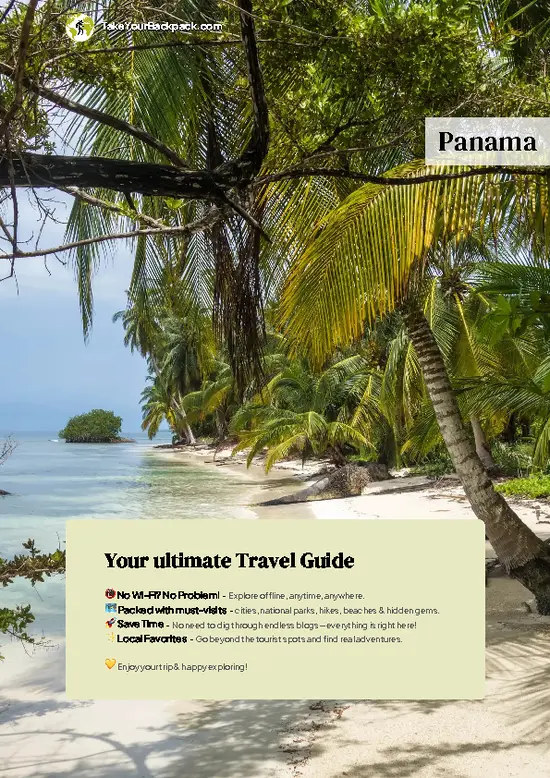
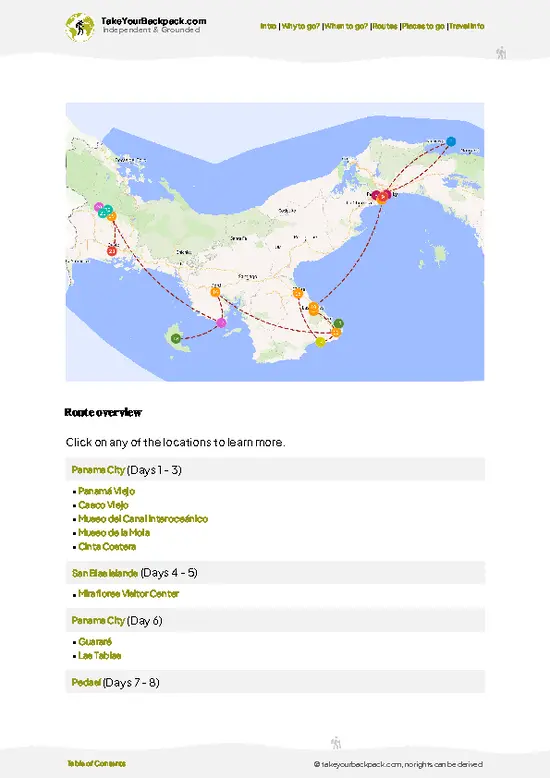
example page 0 from our offline Travel Guide for Panama
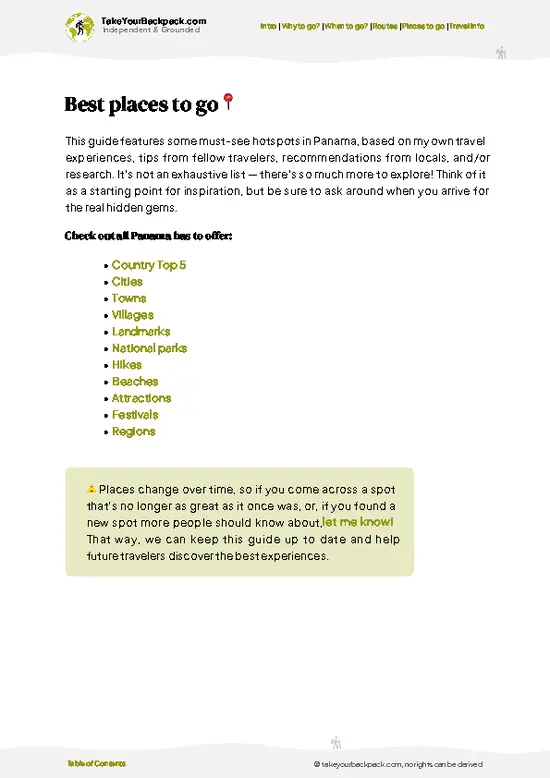
example page 1 from our offline Travel Guide for Panama
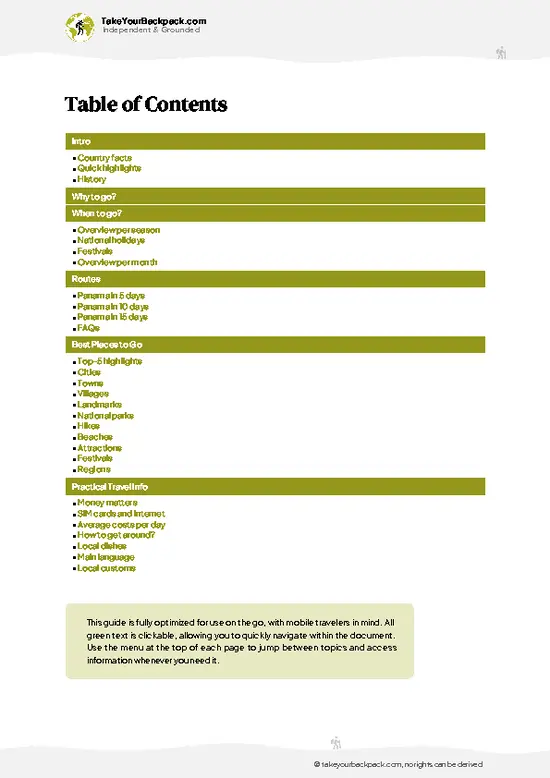
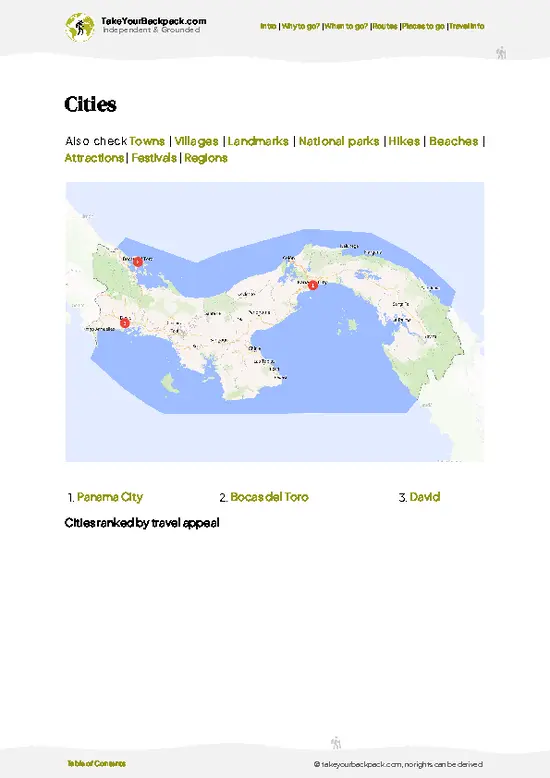
example page 2 from our offline Travel Guide for Panama
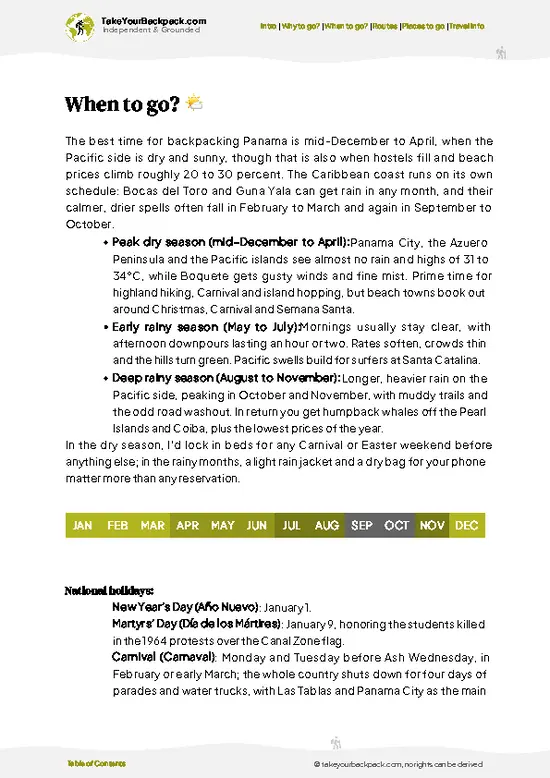
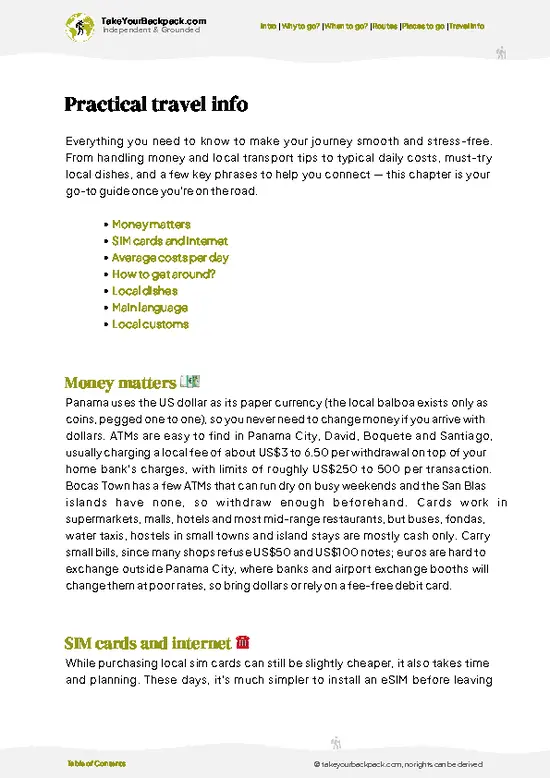
example page 3 from our offline Travel Guide for Panama
example page 4 from our offline Travel Guide for Panama
example page 5 from our offline Travel Guide for Panama
example page 6 from our offline Travel Guide for Panama
example page 7 from our offline Travel Guide for Panama
The digital guide (272 pages) contains:
✅ 89 highlights, ranked by travel appeal
✅ Optimized 5, 10 & 15-day travel routes
✅ Cities, national parks, landmarks, beaches
✅ How to get around
✅ Offline-friendly for travel without Wi-Fi
👉 Click to see all 30+ guide features

📅 Plan smarter in minutes, not weeks
✅ Month by month travel advice
✅ Festivals & national holidays
✅ Budget expectations

🗺️ Go to the right places, skip the overrated ones
✅ Honest pros & cons of destinations
✅ Top hikes, parks & viewpoints
✅ Lesser-known places most travelers miss
✅ Clear “worth it vs skip it” guidance

🛏️ Travel smoothly without rookie mistakes
✅ Best areas to stay
✅ Transport systems explained simply
✅ Common scams & safety advice
✅ SIM cards, money & practical tips

🌍 Understand the country, not just visit it
✅ Culture & traditions
✅ 52 Essential phrases & customs
✅ Festivals worth planning around
✅ Traveler-friendly historical context
✅ Insights that make places more meaningful

📱 Built for real travel conditions
✅ Fully downloadable PDF
✅ Works completely offline
✅ Optimized for phone use
✅ Useful in remote areas & buses
✅ Everything in one place
Stop searching, start planning
Get instant access to your full guide. 30‑day money-back guarantee.
+ Add another guide for just

By proceeding you agree to our terms.
Sent to your inbox immediately after payment • 100% Secure Checkout
Best Backpacking Travel Advisor 2025 tourism awardBest Backpacking
Travel Advisor
2025
What others say about Take Your Backpack Guides:
⭐⭐⭐⭐⭐
Fantastic, amazing amount of information!
⭐⭐⭐⭐⭐
My goodness this is amazing, it's what I've been looking for hats off too you!
⭐⭐⭐⭐⭐
I think this is absolutely BRILLIANT
⭐⭐⭐⭐
Very complete and informative. It's still missing places, but I gotta to commend you
⭐⭐⭐⭐⭐
This is truly amazing, thank you, can't wait to explore it with my kids!
⭐⭐⭐⭐⭐
Awesome resource, thank you!
⭐⭐⭐⭐⭐
This is amazing! Can't wait to explore the ones I haven't seen
⭐⭐⭐⭐
I love this! Well done, great idea.
⭐⭐⭐⭐⭐
Thanks for taking the time to make this gem!
⭐⭐⭐⭐⭐
This might be the best website I've ever seen.
⭐⭐⭐⭐⭐
Congratulations, and thank you so much for your work; it's incredibly valuable.
⭐⭐⭐⭐
In all seriousness I think you did a great job pointing out the important spots
⭐⭐⭐⭐⭐
10/10 very good
⭐⭐⭐⭐⭐
As someone who's only just starting to visit regularly this is awesome, thank you.
⭐⭐⭐⭐
Thank you very much! I'm going to visit my dad, it's going to be very useful!
⭐⭐⭐⭐⭐
This is really cool! We'll be travelling for the first time and this definitely come in handy.
⭐⭐⭐⭐⭐
You are now our minister of culture, congratulations 👨‍💼
⭐⭐⭐⭐⭐
Just wanted to tell you that this is a pearl! Going to follow your recommendations.
⭐⭐⭐⭐⭐
This is so cool. I'll definitely be using the resource for my travels soon.
⭐⭐⭐⭐⭐
This is very impressive! Good work.
⭐⭐⭐⭐⭐
This is an amazing and informative site. Very well done!

🛏️ Where to stay?Top Places to Consider Staying

Panama has a solid hostel scene, with dorm beds typically around US$12 to 25 and private rooms from roughly US$35 to 60 a night. In Panama City, Casco Viejo puts you within walking distance of the old-town sights and the rooftop bars, though it gets loud on weekends and some edges turn sketchy after dark, while El Cangrejo is quieter, cheaper and close to the Metro but lacks the colonial character. Elsewhere, Bocas Town on Isla Colón is the party-and-beaches base (sleep is optional), Boquete trades nightlife for cool mountain air and hiking access, and Santa Catalina offers a mellow surf-village stay with fewer services.

If you enjoy meeting fellow travelers, consider choosing hostels with high … read more 👉
Panama has a solid hostel scene, with dorm beds typically around US$12 to 25 and private rooms from roughly US$35 to 60 a night. In Panama City, Casco Viejo puts you within walking distance of the old-town sights and the rooftop bars, though it gets loud on weekends and some edges turn sketchy after dark, while El Cangrejo is quieter, cheaper and close to the Metro but lacks the colonial character. Elsewhere, Bocas Town on Isla Colón is the party-and-beaches base (sleep is optional), Boquete trades nightlife for cool mountain air and hiking access, and Santa Catalina offers a mellow surf-village stay with fewer services.

If you enjoy meeting fellow travelers, consider choosing hostels with high ratings for atmosphere. On the other hand, if you prefer having your own space, a hotel might be a better option.

PanamaMore Places Across Panama

👋 Meet the founderWho’s Behind Take Your Backpack?

Johan, backpacker and founder of TakeYourBackpackHi, I’m Johan (Netherlands 🇳🇱), the creator of TakeYourBackpack. Over the past 3 decades, I’ve backpacked through 90+ countries across six continents, gaining extensive experience with independent travel, long-term trips, and overland routes.

This site is built on a combination of firsthand travel experience and carefully curated insights from other backpackers. Many guides are based on places I’ve personally visited, while others bring together tips, observations, and practical advice shared by trusted travelers I’ve met along the way.

The goal is to provide realistic, experience-driven guidance — not generic itineraries — so you can explore destinations with better context, clearer expectations, and more confidence.