×

Papua New Guinea🇵🇬 | festivalsBilum Festivalwoven bags, women’s weaving, Goroka market | things to do and best time to go

Explore Frangipani FestivalExplore Black Cat Track

Backpacking in Bilum
👍 Recommendedfestival ranked #9
By Johan Kruseman 🇳🇱 | Updated July 30, 2026

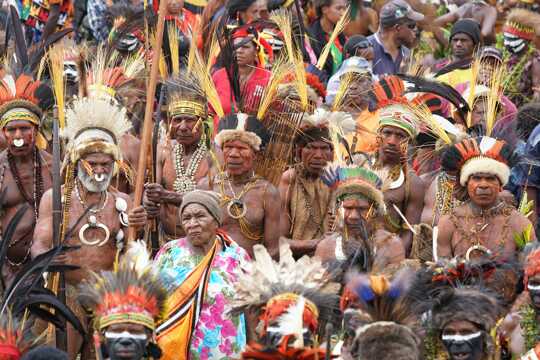
You save a fortune on “extra” tours at the Bilum Festival because the thing everyone later raves about—meeting the weavers, watching the slow, exact work, hearing the stories—is built right into the program, not paywalled as an add‑on. The Bilum Festival takes place in Goroka, in Papua New Guinea’s Eastern Highlands. It’s a tight, culture-first event built around bilum weaving, song, and dance rather than big-name bands, drawing PNG families, artisans, and a small but growing trickle of curious backpackers. Expect earthy, community energy over spectacle, a short multi-day run, and a rare chance to see living craft, not staged folklore.

Discover everything you want to know in the 📖 Papua New Guinea Travel Guide.
Loading the map 🌍
CLICK TO FILTER
cities
towns
national parks
hikes
beaches
attractions
festivals
regions
SHOW COUNTRY’S BESTSHOW ALL

✨ Why go?
Ranked #9 festival in Papua New Guinea
What makes this festival worth celebrating

Backpackers plan their routes around the Bilum Festival in Papua New Guinea for a reason. This event is a social energy powerhouse, drawing people together in a vibrant celebration of culture. You’ll find yourself immersed in temporary community, where shared experiences create bonds that last beyond the festival.

The cultural immersion is unparalleled; you’ll witness traditional crafts, dances, and rituals that breathe life into the local heritage. Plus, it’s affordable compared to similar global events, allowing you to stretch your budget for more adventures.

Integrating the festival into your travel plans means you’re not just passing through; you’re engaging deeply with the land and its people. It’s a chance to recharge your spirit while collecting stories that enrich your journey. … read more 👉
Backpackers plan their routes around the Bilum Festival in Papua New Guinea for a reason. This event is a social energy powerhouse, drawing people together in a vibrant celebration of culture. You’ll find yourself immersed in temporary community, where shared experiences create bonds that last beyond the festival.

The cultural immersion is unparalleled; you’ll witness traditional crafts, dances, and rituals that breathe life into the local heritage. Plus, it’s affordable compared to similar global events, allowing you to stretch your budget for more adventures.

Integrating the festival into your travel plans means you’re not just passing through; you’re engaging deeply with the land and its people. It’s a chance to recharge your spirit while collecting stories that enrich your journey. Embrace the challenge—this is where the magic happens!
Want to include Bilum Festival in your Papua New Guinea route?
Create a personalized Papua New Guinea itinerary that includes Bilum Festival and the places that fit your trip — based on your travel style, budget, and available time. Get your route in seconds.

Generate my trip

💡 HighlightsTop highlights of Bilum

  1. Hands-on Bilum Weaving Workshops — Sit down with master weavers and learn the stitch that makes PNG’s iconic bags. These sessions are practical, friendly, and social: you’ll leave with a tiny bilum or the muscle memory to keep weaving, plus stories about patterns, materials and the bag’s role in everyday life.
  2. Bilum Runway & Contemporary Fashion — See traditional bilum techniques reimagined as modern wearable art. Designers, community models and experimental pieces blur the line between craft and couture, making for stunning visuals and a clear sense of how culture is being reshaped by young makers.
  3. Traditional Dance, Song & Storytelling — Large, rhythmic performances from different provinces bring clans’ origin stories, songs and dance onto one stage. It’s loud, physical and emotional—great
read more 👉
  1. Hands-on Bilum Weaving Workshops — Sit down with master weavers and learn the stitch that makes PNG’s iconic bags. These sessions are practical, friendly, and social: you’ll leave with a tiny bilum or the muscle memory to keep weaving, plus stories about patterns, materials and the bag’s role in everyday life.
  2. Bilum Runway & Contemporary Fashion — See traditional bilum techniques reimagined as modern wearable art. Designers, community models and experimental pieces blur the line between craft and couture, making for stunning visuals and a clear sense of how culture is being reshaped by young makers.
  3. Traditional Dance, Song & Storytelling — Large, rhythmic performances from different provinces bring clans’ origin stories, songs and dance onto one stage. It’s loud, physical and emotional—great for feeling the communal energy and learning how dance encodes history and identity.
  4. Night Markets, Street Food & Communal Feasting — Long after daylight events end, stalls and food stalls stay alive: grilled seafood, local staples, sweet treats and kava in a buzzing, informal setting. It’s where you taste real local life, try dishes you wouldn’t find otherwise, and trade travel stories with locals.
  5. Artisan Stalls, Commissions & Community Projects — Beyond finished bilums, artisans sell beads, fibres and bespoke pieces you can commission on the spot. There are often collaborative installations or community weaving projects to join, so buying a bag also becomes a direct way to support makers and meet them.
Spotted a mistake or missing something? Contact us.
🌤️ When to go?When is the celebration of Bilum Festival?


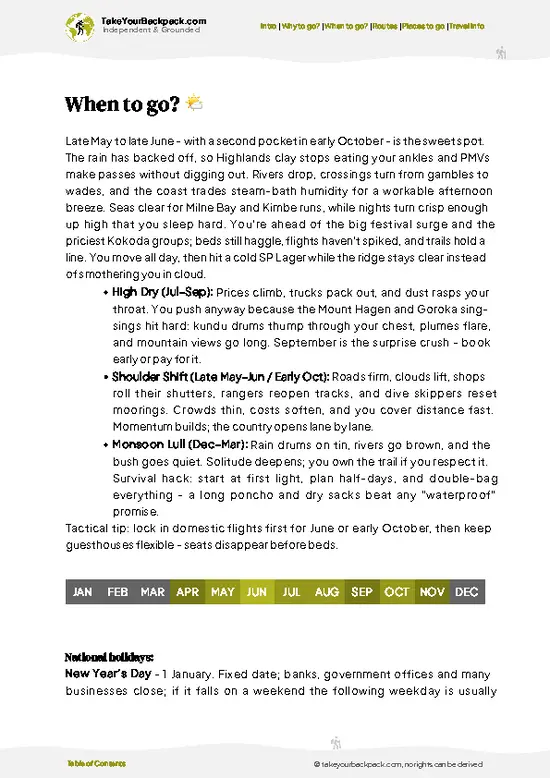
  • Topic: Weather – Aim for July to September when Papua New Guinea’s dry season cuts the humidity and rain. This means fewer mudslides and slippery trails, so your boots stay cleaner and your pace steadier.

  • Topic: Temperature – Expect daytime highs around 25-28°C (77-82°F), perfect for trekking without overheating. Nights dip to 15-18°C (59-64°F), so pack a light jacket to stay comfortable after dark.

  • Topic: Daylight Hours – Roughly 11 to 12 hours of daylight during these months give you ample time to explore the festival and surrounding villages without rushing.

  • Topic: Crowds – The dry season draws more visitors, but the festival’s remote vibe keeps crowds manageable. Arrive early to snag prime spots for performances and workshops.

  • Topic: Seasonal Activities – This period aligns
read more 👉

  • Topic: Weather – Aim for July to September when Papua New Guinea’s dry season cuts the humidity and rain. This means fewer mudslides and slippery trails, so your boots stay cleaner and your pace steadier.

  • Topic: Temperature – Expect daytime highs around 25-28°C (77-82°F), perfect for trekking without overheating. Nights dip to 15-18°C (59-64°F), so pack a light jacket to stay comfortable after dark.

  • Topic: Daylight Hours – Roughly 11 to 12 hours of daylight during these months give you ample time to explore the festival and surrounding villages without rushing.

  • Topic: Crowds – The dry season draws more visitors, but the festival’s remote vibe keeps crowds manageable. Arrive early to snag prime spots for performances and workshops.

  • Topic: Seasonal Activities – This period aligns with traditional bilum weaving and cultural ceremonies, offering authentic, hands-on experiences rather than staged tourist shows.

  • Topic: Price Fluctuations – Expect a slight bump in accommodation and transport costs during the festival peak, but booking in advance locks in better deals and avoids last-minute surges.


Pro-tip: Lock your trip during the dry season’s early window to dodge the heaviest crowds and rain, preserving your energy for the festival’s full cultural immersion.


source: climatestotravel.comJANJanuary: not recommended for travelingFEBFebruary: not recommended for travelingMARMarch: not recommended for travelingAPRApril: not recommended for travelingMAYMay: not recommended for travelingJUNJune: not recommended for travelingJULJuly: excellent for travelingAUGAugust: not recommended for travelingSEPSeptember: not recommended for travelingOCTOctober: not recommended for travelingNOVNovember: not recommended for travelingDECDecember: not recommended for traveling

✈️ The backpacker research shortcutPapua New Guinea Travel Guide

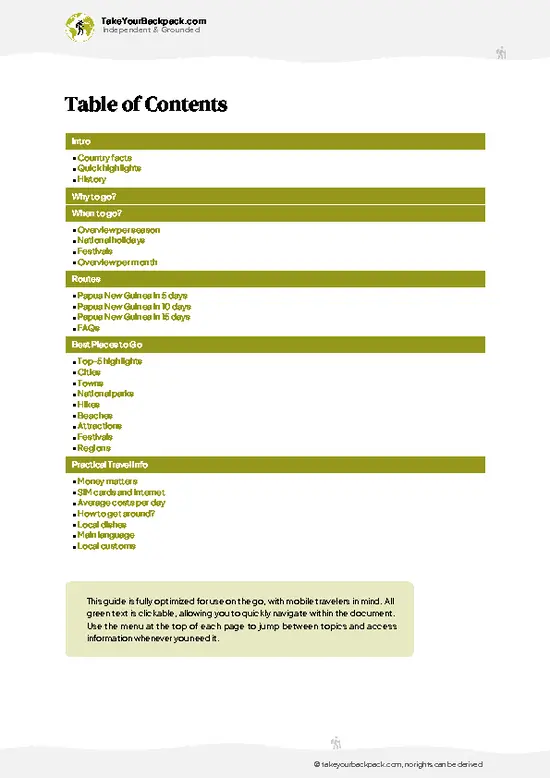
An offline-friendly backpacking guide with optimized travel routes, ranked highlights, transport advice, and the best areas to stay.
example page 0 from our offline Travel Guide for Papua New Guinea
example page 1 from our offline Travel Guide for Papua New Guinea
example page 2 from our offline Travel Guide for Papua New Guinea
example page 3 from our offline Travel Guide for Papua New Guinea
example page 4 from our offline Travel Guide for Papua New Guinea
example page 5 from our offline Travel Guide for Papua New Guinea
example page 6 from our offline Travel Guide for Papua New Guinea
example page 7 from our offline Travel Guide for Papua New Guinea
The digital guide (319 pages) contains:
86 highlights, ranked by travel appeal
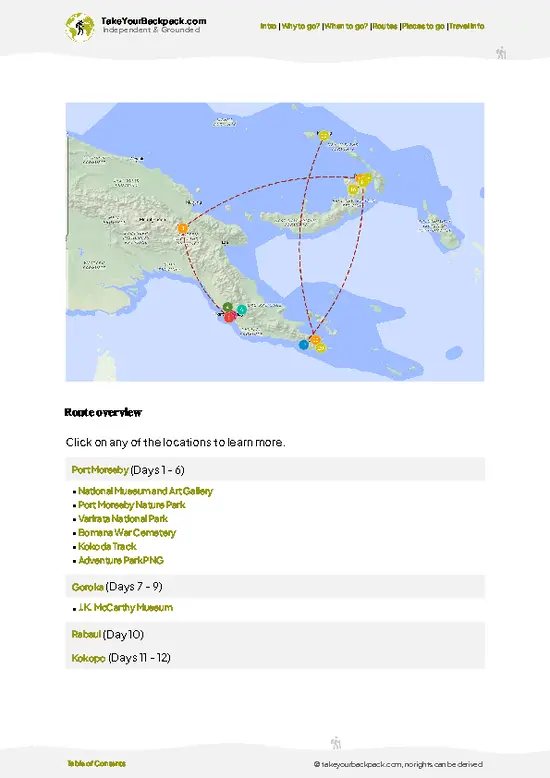
Optimized 5, 10 & 15-day travel routes
Cities, national parks, landmarks, beaches
How to get around
Offline-friendly for travel without Wi-Fi
👉 Click to see all 30+ guide features

📅 Plan smarter in minutes, not weeks
Month by month travel advice
Festivals & national holidays
Budget expectations

🗺️ Go to the right places, skip the overrated ones
Honest pros & cons of destinations
Top hikes, parks & viewpoints
Lesser-known places most travelers miss
Clear “worth it vs skip it” guidance

🛏️ Travel smoothly without rookie mistakes
Best areas to stay
Transport systems explained simply
Common scams & safety advice
SIM cards, money & practical tips

🌍 Understand the country, not just visit it
Culture & traditions
52 Essential phrases & customs
Festivals worth planning around
Traveler-friendly historical context
Insights that make places more meaningful

📱 Built for real travel conditions
Fully downloadable PDF
Works completely offline
Optimized for phone use
Useful in remote areas & buses
Everything in one place
Save weeks of stressful planning
Get instant access to your full guide. 30‑day money-back guarantee.


By proceeding you agree to our terms.
Sent to your inbox immediately after payment • 100% Secure Checkout
Best Backpacking Travel Advisor 2025 tourism awardBest Backpacking
Travel Advisor
2025
What others say about Take Your Backpack Guides:
⭐⭐⭐⭐⭐
Fantastic, amazing amount of information!
⭐⭐⭐⭐⭐
My goodness this is amazing, it's what I've been looking for hats off too you!
⭐⭐⭐⭐⭐
I think this is absolutely BRILLIANT
⭐⭐⭐⭐
Very complete and informative. It's still missing places, but I gotta to commend you
⭐⭐⭐⭐⭐
This is truly amazing, thank you, can't wait to explore it with my kids!
⭐⭐⭐⭐⭐
Awesome resource, thank you!
⭐⭐⭐⭐⭐
This is amazing! Can't wait to explore the ones I haven't seen
⭐⭐⭐⭐
I love this! Well done, great idea.
⭐⭐⭐⭐⭐
Thanks for taking the time to make this gem!
⭐⭐⭐⭐⭐
This might be the best website I've ever seen.
⭐⭐⭐⭐⭐
Congratulations, and thank you so much for your work; it's incredibly valuable.
⭐⭐⭐⭐
In all seriousness I think you did a great job pointing out the important spots
⭐⭐⭐⭐⭐
10/10 very good
⭐⭐⭐⭐⭐
As someone who's only just starting to visit regularly this is awesome, thank you.
⭐⭐⭐⭐
Thank you very much! I'm going to visit my dad, it's going to be very useful!
⭐⭐⭐⭐⭐
This is really cool! We'll be travelling for the first time and this definitely come in handy.
⭐⭐⭐⭐⭐
You are now our minister of culture, congratulations 👨‍💼
⭐⭐⭐⭐⭐
Just wanted to tell you that this is a pearl! Going to follow your recommendations.
⭐⭐⭐⭐⭐
This is so cool. I'll definitely be using the resource for my travels soon.
⭐⭐⭐⭐⭐
This is very impressive! Good work.
⭐⭐⭐⭐⭐
This is an amazing and informative site. Very well done!

🛏️ Where to stay?Choosing the right base

For the Bilum Festival in Papua New Guinea, you want to be where the action is, but also where you can kick back and connect with fellow travelers.

Start in Goroka. This bustling town is the festival’s heartbeat. It’s safe, with a friendly vibe that welcomes backpackers. You’ll find a mix of budget accommodations that foster camaraderie. Think communal spaces where stories flow as freely as the local coffee.

Next, consider staying in nearby Kainantu. It’s a bit quieter but offers stunning mountain views and a chance to experience local life. The atmosphere is laid-back, perfect for unwinding … read more 👉
For the Bilum Festival in Papua New Guinea, you want to be where the action is, but also where you can kick back and connect with fellow travelers.

Start in Goroka. This bustling town is the festival’s heartbeat. It’s safe, with a friendly vibe that welcomes backpackers. You’ll find a mix of budget accommodations that foster camaraderie. Think communal spaces where stories flow as freely as the local coffee.

Next, consider staying in nearby Kainantu. It’s a bit quieter but offers stunning mountain views and a chance to experience local life. The atmosphere is laid-back, perfect for unwinding after a day of festivities.

Both areas are well-connected, making it easy to hop between events. Just remember, book early; spots fill up fast during the festival. Prioritize social spaces to maximize your experience and keep your energy high for all the vibrant moments ahead.

👛 Costs (as of 30 July 2026)How expensive it really is

The Bilum Festival in Papua New Guinea is a vibrant celebration of culture, but navigating the costs can be tricky. Here’s how to budget wisely for an unforgettable experience.
  • Festival Tickets: Expect to pay around $10 to $20 USD for entry. This fee grants you access to a whirlwind of performances, traditional dances, and local crafts. Buying tickets in advance can save you from last-minute price hikes.
  • Accommodation: Options range from basic guesthouses to mid-range hotels. Budget travelers can find dorm beds for about $15 to $30 USD per night, while private rooms may cost between $40 to $80 USD. Book early to secure the best rates, especially during the festival.
  • Local Transport: Getting around can be a mix of adventure and expense. Expect to spend about $5 to $15 USD for local buses or shared
read more 👉
The Bilum Festival in Papua New Guinea is a vibrant celebration of culture, but navigating the costs can be tricky. Here’s how to budget wisely for an unforgettable experience.
  • Festival Tickets: Expect to pay around $10 to $20 USD for entry. This fee grants you access to a whirlwind of performances, traditional dances, and local crafts. Buying tickets in advance can save you from last-minute price hikes.
  • Accommodation: Options range from basic guesthouses to mid-range hotels. Budget travelers can find dorm beds for about $15 to $30 USD per night, while private rooms may cost between $40 to $80 USD. Book early to secure the best rates, especially during the festival.
  • Local Transport: Getting around can be a mix of adventure and expense. Expect to spend about $5 to $15 USD for local buses or shared taxis. If you’re venturing further, budget around $50 to $100 USD for longer trips. Always negotiate fares upfront to avoid surprises.
  • Food & Drinks: Street food is your best friend here. Meals can cost as little as $3 to $10 USD, depending on where you eat. Restaurants will set you back about $10 to $20 USD for a decent meal. Don’t forget to try the local specialties, but keep an eye on your budget.
  • Miscellaneous Expenses: Set aside about $20 to $50 USD for souvenirs, tips, or unexpected costs. This cushion allows you to enjoy spontaneous experiences without worrying about your wallet.

Planning ahead and keeping these costs in mind will help you focus on the vibrant energy of the festival, rather than stress over finances.


source: papuanewguinea.travel
⚠️ Prices can change and everyone travels differently, so take this as a rough guide. Hope it helps you plan your adventure!

🍲 FoodWhat to Eat & Drink

At the Bilum Festival in Papua New Guinea, food and drinks pulse with local flavor. Dive into mumu, a traditional feast where meats and veggies are slow-cooked in an underground oven. The smoky aroma wraps around you, inviting you to savor every bite. Don’t miss the sago, a starchy staple that pairs perfectly with fresh fish or wild greens.

Festival stalls buzz with energy, offering kaukau (sweet potato) and taro—simple yet satisfying. For a refreshing sip, grab a cup of kava, a traditional drink that’ll mellow your vibe and spark conversations.

Etiquette is key here. Expect to share; it’s part of the experience. Lines can be long, but patience pays off. Bring cash; not all vendors accept cards. Serving sizes are generous, so pace yourself and enjoy the communal spirit. This festival isn’t … read more 👉
At the Bilum Festival in Papua New Guinea, food and drinks pulse with local flavor. Dive into mumu, a traditional feast where meats and veggies are slow-cooked in an underground oven. The smoky aroma wraps around you, inviting you to savor every bite. Don’t miss the sago, a starchy staple that pairs perfectly with fresh fish or wild greens.

Festival stalls buzz with energy, offering kaukau (sweet potato) and taro—simple yet satisfying. For a refreshing sip, grab a cup of kava, a traditional drink that’ll mellow your vibe and spark conversations.

Etiquette is key here. Expect to share; it’s part of the experience. Lines can be long, but patience pays off. Bring cash; not all vendors accept cards. Serving sizes are generous, so pace yourself and enjoy the communal spirit. This festival isn’t just about food; it’s about connecting with the heart of Papua New Guinea.

Other Papua New Guinean festivals near Bilum

Explore more nearby:


💡 Not sure where to go next?
Create a personalized itinerary for Papua New Guinea including Bilum and the places that fit your trip.

Generate my itinerary

👉 Discover all festivals

Or checkout all Papua New Guinea has to offer (think cities, towns, villages, national parks, hikes, beaches, festivals)
Country photo of Papua New Guinea

We 💚 feedbackIs it worth it?

The Bilum Festival is a whirlwind of color and culture. Expect to be swept up in the energy of traditional dances and vibrant crafts. The best surprise? The warmth of the locals; they’ll share stories that stick with you. Just a heads-up: stay hydrated and pace yourself. The excitement can be overwhelming, but that’s part of the magic.

✍️ Help improve this page!
The information on this page is based on in-depth research, insights shared by experienced travelers, and feedback from the local travel community in Papua New Guinea. While every effort is made to keep the information accurate and current, conditions can change — so if you spot anything incorrect or outdated, please get in touch.


🙋‍♂️ Give feedback

👋 Meet the founderWho’s Behind Take Your Backpack?

Johan, backpacker and founder of TakeYourBackpackHi, I’m Johan (Netherlands 🇳🇱), the creator of TakeYourBackpack. Over the past decade, I’ve backpacked through 80+ countries across six continents, gaining extensive experience with independent travel, long-term trips, and overland routes.

This site is built on a combination of firsthand travel experience and carefully curated insights from other backpackers. Many guides are based on places I’ve personally visited, while others bring together tips, observations, and practical advice shared by trusted travelers I’ve met along the way.

The goal is to provide realistic, experience-driven guidance — not generic itineraries — so you can explore destinations with better context, clearer expectations, and more confidence.

Get full country guide •
Instant download • 86 highlights • Full Offline guide