×

Papua New Guinea🇵🇬 | regionsKiriwina IslandTrobriand cricket, calm lagoons, canoe carvers, string band evenings | things to do and best time to go

Explore Manus IslandExplore Misima Island

Backpacking in Kiriwina Island
👍 Recommendedregion ranked #10
By Johan Kruseman 🇳🇱 | Updated October 15, 2026

Trobriand cricket is played on the village grounds of Kiriwina, with dancing warriors in leaf skirts, chanting teams and a bat that looks like a paddle. Kiriwina Island lies in the Trobriand Islands, off the southeast coast of Papua New Guinea, reached by a short flight from Alotau. Sand is pale, water is warm and clear, and you walk to the shore along coral roads past yam houses with carved fronts. Crowds do not exist. Facilities are basic, food is simple local fare, and getting here takes planning. Swimming is easy in sheltered lagoons, and snorkeling over reefs rewards you with color. Culture-hungry, patient travelers will love it. Resort seekers and anyone on a tight schedule won't.

Discover everything you want to know in the 📖 Papua New Guinea Travel Guide.


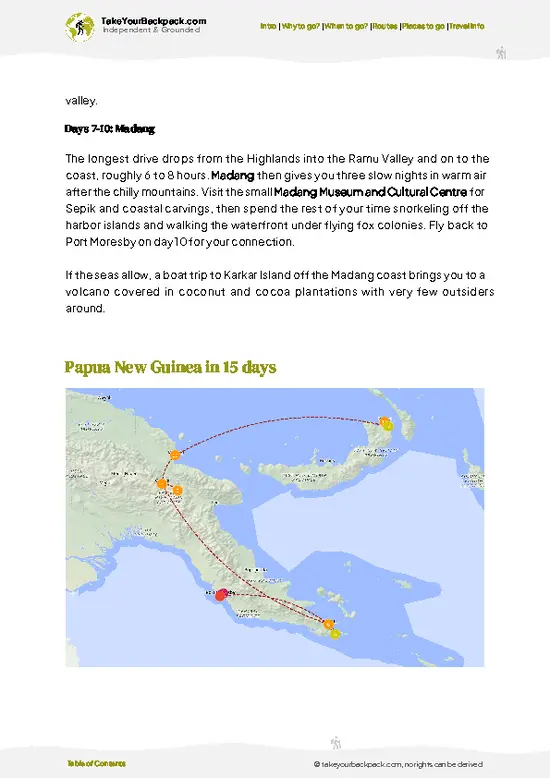
example page 0 from our offline Travel Guide for Papua New Guinea
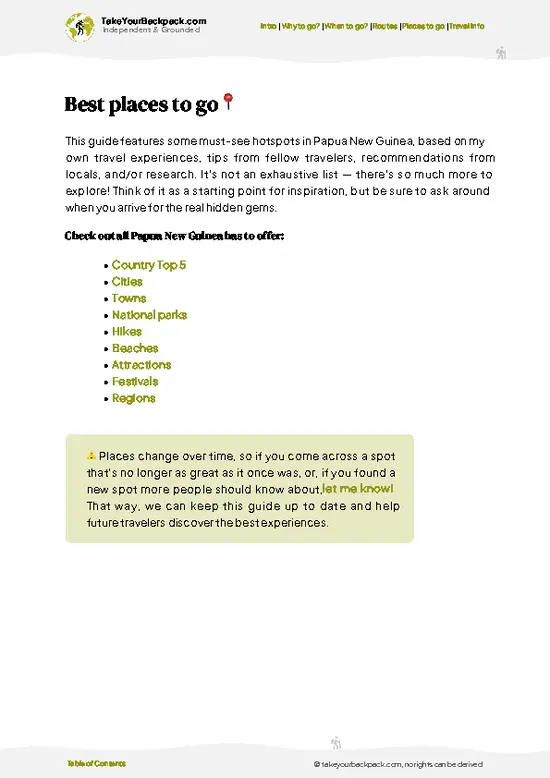
example page 1 from our offline Travel Guide for Papua New Guinea
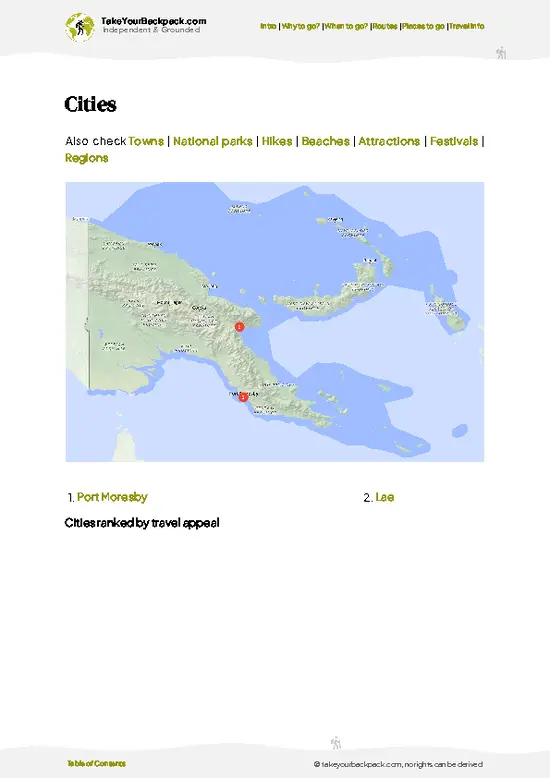
example page 2 from our offline Travel Guide for Papua New Guinea
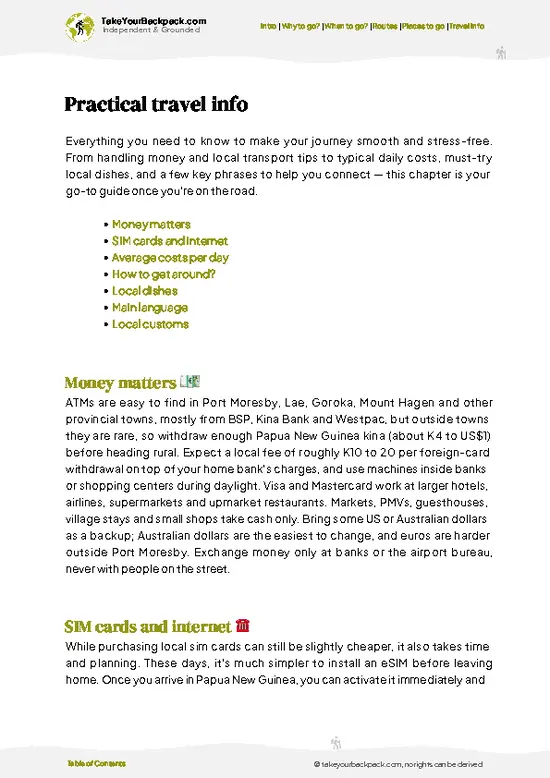
example page 3 from our offline Travel Guide for Papua New Guinea
example page 4 from our offline Travel Guide for Papua New Guinea
example page 5 from our offline Travel Guide for Papua New Guinea
example page 6 from our offline Travel Guide for Papua New Guinea
example page 7 from our offline Travel Guide for Papua New Guinea
Loading the map 🌍
CLICK TO FILTER
cities
towns
national parks
hikes
beaches
attractions
festivals
regions
SHOW COUNTRY’S BESTSHOW ALL

✨ Why go?
Ranked #10 region in Papua New Guinea
The unique appeal for travelers

Most people come to Kiriwina for the culture first and the sand second. The island is the heartland of the Trobriand Islanders, and the beach is simply where life happens: outrigger sailing canoes are carved and launched from village shores, and children swim beside them. Guesthouses near the lagoon are small, family-run and cheap, so staying a week costs little and gets you invited to things. You walk, you chat, you get pulled into a game. The second pull is the water. The reefs off the northern and eastern shores hold clear snorkeling, and the Losuia area gives you the island's only real town, with a small market, a few shops and the airstrip, so supplies are never far. If you want a place where the shoreline is the village living room, this delivers.

💡 HighlightsThe experiences that define the visit

  1. Trobriand Cricket Matches: The island's signature sight. Teams in feathers and grass skirts perform war chants and dances between overs, and games are staged for visitors by arrangement through guesthouses or village leaders.
  2. Lagoon Swimming at Kaibola: The beaches here are known for white sand and shallow, calm water. Walk out at low tide and the shallows stay warm and clear.
  3. Snorkeling the Reefs: Fringing coral on the north and east coasts holds colorful reef fish, and local boatmen can take you out to the best spots in a dugout canoe.
  4. Canoe Carving Villages: Along the shore you can watch builders shape hulls and prows with traditional carvings. Watching a canoe take form on the sand is the best free show on the island.
  5. Sunset Walks and Village Evenings: There are no clubs or bars to speak of.
… read more 👉
  1. Trobriand Cricket Matches: The island's signature sight. Teams in feathers and grass skirts perform war chants and dances between overs, and games are staged for visitors by arrangement through guesthouses or village leaders.
  2. Lagoon Swimming at Kaibola: The beaches here are known for white sand and shallow, calm water. Walk out at low tide and the shallows stay warm and clear.
  3. Snorkeling the Reefs: Fringing coral on the north and east coasts holds colorful reef fish, and local boatmen can take you out to the best spots in a dugout canoe.
  4. Canoe Carving Villages: Along the shore you can watch builders shape hulls and prows with traditional carvings. Watching a canoe take form on the sand is the best free show on the island.
  5. Sunset Walks and Village Evenings: There are no clubs or bars to speak of. Evenings mean a walk along the sand, fires, string band music and quiet conversation under dense stars.
If time is short, skip the canoe villages and put the hours into the cricket match and a snorkel.
Spotted a mistake or missing something? Contact us.

⌛️ 5 daysHow to make the most of Kiriwina Island

Day 1: Losuia: Market morning, and the pace is set by trucks that leave when they fill, not when a schedule says so. Losuia is the island’s gateway, where the airstrip and small port sit, so stock up on cash, snacks and water here, because stalls thin out quickly as you head north on the one main road.
Day 2: Kaibola: Ride a shared truck north to the beach at Kaibola and spend the day on the sand and in the shallows. Moving once and then staying put matches the transport, since a return truck late in the afternoon is never guaranteed. Sleep in a village guesthouse and let the evening happen around you.
Day 3: Omarakana: Head inland to Omarakana, the village of the paramount chief and a center of Trobriand tradition. Visit early so a guide can arrange introductions and explain the yam houses, … read more 👉
Day 1: Losuia: Market morning, and the pace is set by trucks that leave when they fill, not when a schedule says so. Losuia is the island’s gateway, where the airstrip and small port sit, so stock up on cash, snacks and water here, because stalls thin out quickly as you head north on the one main road.
Day 2: Kaibola: Ride a shared truck north to the beach at Kaibola and spend the day on the sand and in the shallows. Moving once and then staying put matches the transport, since a return truck late in the afternoon is never guaranteed. Sleep in a village guesthouse and let the evening happen around you.
Day 3: Omarakana: Head inland to Omarakana, the village of the paramount chief and a center of Trobriand tradition. Visit early so a guide can arrange introductions and explain the yam houses, with their open log walls and decorated gables. The detour: take a day trip to the carving villages of Bwoytalu and Gumilababa, where ebony and rosewood sculptors work in front of their houses. It adds depth without forcing an extra overnight.
Day 4: Lilava: Travel to the southeast to reach Lilava, with its caves and the sacred lagoon setting, then work back toward Losuia. Trucks run more freely toward the main town, so this loop fits neatly into one day.
Day 5: Kiriwina Island Coast: Use the last day for flexibility, with a flight or boat departure from Losuia. Keep a buffer, because plans shift here without apology. If one day justifies the trip, it is Day 3 at Omarakana, where the island’s living culture is easiest to grasp.

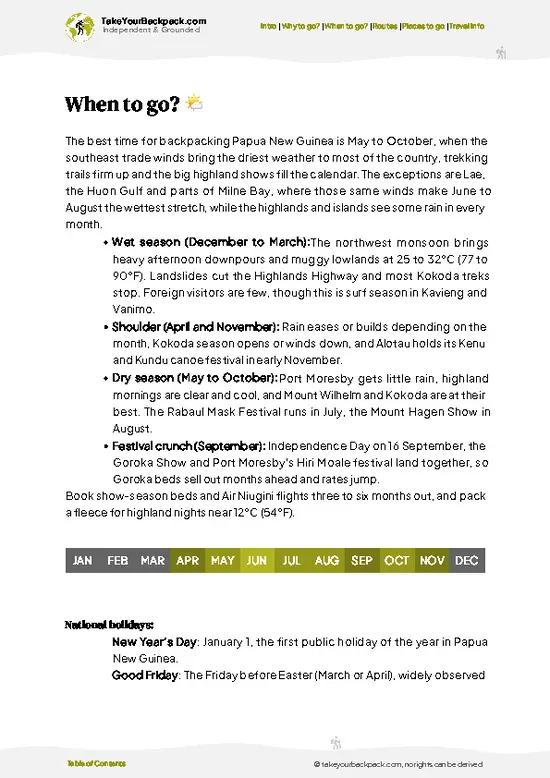
🌤️ When to go?When to go for the best experience

  • Dry Season (May to October): Southeast trade winds bring the clearest skies and the calmest days for boat trips to outer islets. Highs run 28 to 31°C (82 to 88°F), nights 23 to 25°C (73 to 77°F). Sunrise is near 6:15 a.m. and sunset near 6:00 p.m.
  • Yam Harvest and Milamala (roughly July to September): Villages hold dancing, cricket matches and feasts, so this is the liveliest window. Flights and the few guesthouses fill early and prices edge up.
  • Wet Season (November to April): Heavy showers and humidity of 80 percent or more, with highs of 30 to 33°C (86 to 91°F). Cyclone-season swells can cancel flights and the sea turns murky. Rooms are easy to get and cheaper.
Book flights to Losuia at least a month ahead for July and August.

source: climatestotravel.comJANJanuary: fair for travelingFEBFebruary: fair for travelingMARMarch: fair for travelingAPRApril: fair for travelingMAYMay: highly recommended for travelingJUNJune: excellent for travelingJULJuly: excellent for travelingAUGAugust: excellent for travelingSEPSeptember: excellent for travelingOCTOctober: highly recommended for travelingNOVNovember: fair for travelingDECDecember: fair for traveling
when-to-go

✈️ The backpacker research shortcutPapua New Guinea Travel Guide

An offline-friendly backpacking guide with optimized travel routes, ranked highlights, transport advice, and the best areas to stay.
example page 0 from our offline Travel Guide for Papua New Guinea
example page 1 from our offline Travel Guide for Papua New Guinea
example page 2 from our offline Travel Guide for Papua New Guinea
example page 3 from our offline Travel Guide for Papua New Guinea
example page 4 from our offline Travel Guide for Papua New Guinea
example page 5 from our offline Travel Guide for Papua New Guinea
example page 6 from our offline Travel Guide for Papua New Guinea
example page 7 from our offline Travel Guide for Papua New Guinea
The digital guide (251 pages) contains:
✅ 81 highlights, ranked by travel appeal
✅ Optimized 5, 10 & 15-day travel routes
✅ Cities, national parks, landmarks, beaches
✅ How to get around
✅ Offline-friendly for travel without Wi-Fi
👉 Click to see all 30+ guide features

📅 Plan smarter in minutes, not weeks
✅ Month by month travel advice
✅ Festivals & national holidays
✅ Budget expectations

🗺️ Go to the right places, skip the overrated ones
✅ Honest pros & cons of destinations
✅ Top hikes, parks & viewpoints
✅ Lesser-known places most travelers miss
✅ Clear “worth it vs skip it” guidance

🛏️ Travel smoothly without rookie mistakes
✅ Best areas to stay
✅ Transport systems explained simply
✅ Common scams & safety advice
✅ SIM cards, money & practical tips

🌍 Understand the country, not just visit it
✅ Culture & traditions
✅ 52 Essential phrases & customs
✅ Festivals worth planning around
✅ Traveler-friendly historical context
✅ Insights that make places more meaningful

📱 Built for real travel conditions
✅ Fully downloadable PDF
✅ Works completely offline
✅ Optimized for phone use
✅ Useful in remote areas & buses
✅ Everything in one place
Stop searching, start planning
Get instant access to your full guide. 30‑day money-back guarantee.
+ Add another guide for just

By proceeding you agree to our terms.
Sent to your inbox immediately after payment • 100% Secure Checkout
Best Backpacking Travel Advisor 2025 tourism awardBest Backpacking
Travel Advisor
2025
What others say about Take Your Backpack Guides:
⭐⭐⭐⭐⭐
Fantastic, amazing amount of information!
⭐⭐⭐⭐⭐
My goodness this is amazing, it's what I've been looking for hats off too you!
⭐⭐⭐⭐⭐
I think this is absolutely BRILLIANT
⭐⭐⭐⭐
Very complete and informative. It's still missing places, but I gotta to commend you
⭐⭐⭐⭐⭐
This is truly amazing, thank you, can't wait to explore it with my kids!
⭐⭐⭐⭐⭐
Awesome resource, thank you!
⭐⭐⭐⭐⭐
This is amazing! Can't wait to explore the ones I haven't seen
⭐⭐⭐⭐
I love this! Well done, great idea.
⭐⭐⭐⭐⭐
Thanks for taking the time to make this gem!
⭐⭐⭐⭐⭐
This might be the best website I've ever seen.
⭐⭐⭐⭐⭐
Congratulations, and thank you so much for your work; it's incredibly valuable.
⭐⭐⭐⭐
In all seriousness I think you did a great job pointing out the important spots
⭐⭐⭐⭐⭐
10/10 very good
⭐⭐⭐⭐⭐
As someone who's only just starting to visit regularly this is awesome, thank you.
⭐⭐⭐⭐
Thank you very much! I'm going to visit my dad, it's going to be very useful!
⭐⭐⭐⭐⭐
This is really cool! We'll be travelling for the first time and this definitely come in handy.
⭐⭐⭐⭐⭐
You are now our minister of culture, congratulations 👨‍💼
⭐⭐⭐⭐⭐
Just wanted to tell you that this is a pearl! Going to follow your recommendations.
⭐⭐⭐⭐⭐
This is so cool. I'll definitely be using the resource for my travels soon.
⭐⭐⭐⭐⭐
This is very impressive! Good work.
⭐⭐⭐⭐⭐
This is an amazing and informative site. Very well done!

🛏️ Where to stay?Best areas and accommodation options

Most backpackers sleep around Losuia, the main station on the island's southwest side, because it holds the airstrip, the market, the shops and the only bank agency. Expect basic guesthouses and lodges at roughly K150 to 350 (US$40 to 90) a night, and the other travelers you meet will be researchers, divers and a few adventurous solo visitors. From Losuia you can hire a truck seat to reach beaches along the lagoon.
For sand underfoot, look at village homestays and beach bungalows along the northern and eastern coasts near Kaibola, Kaduwaga and Omarakana. These are run by families, often with leaf-roofed … read more 👉
Most backpackers sleep around Losuia, the main station on the island's southwest side, because it holds the airstrip, the market, the shops and the only bank agency. Expect basic guesthouses and lodges at roughly K150 to 350 (US$40 to 90) a night, and the other travelers you meet will be researchers, divers and a few adventurous solo visitors. From Losuia you can hire a truck seat to reach beaches along the lagoon.
For sand underfoot, look at village homestays and beach bungalows along the northern and eastern coasts near Kaibola, Kaduwaga and Omarakana. These are run by families, often with leaf-roofed huts, rainwater and shared meals of fish, taro and yam for around K60 to 150 (US$15 to 40) per person. They are quiet and sociable in a village way: expect kids, kava-free evenings and long talks. Ask the owner about transport before booking, since trucks run irregularly and fuel is costly. Bring cash in small notes, as cards are almost useless outside Losuia.

🚌 Getting aroundGetting around like a local

A ride on a PMV (the open-backed trucks and minibuses that run Kiriwina’s main road) costs roughly US$0.50 to 3 depending on the stretch, and you pay the driver or his helper in cash, in kina, once you’re aboard. Most backpackers hop between Losuia, Kaibola, Omarakana and the northern villages this way, and the road is mostly the one spine of the island, so you can’t get seriously lost. Timetables don’t exist. Trucks leave when they fill, so reliability comes down to patience and an early start.
  • PMV trucks and minibuses. They are the backbone of island life, cover Losuia to the north in about 1 to 2 hours, and run mainly in the morning. Fares are set by habit, so ask a fellow passenger what they pay before you hand over notes, and keep small change ready because drivers rarely have any.
  • Chartered
… read more 👉
A ride on a PMV (the open-backed trucks and minibuses that run Kiriwina’s main road) costs roughly US$0.50 to 3 depending on the stretch, and you pay the driver or his helper in cash, in kina, once you’re aboard. Most backpackers hop between Losuia, Kaibola, Omarakana and the northern villages this way, and the road is mostly the one spine of the island, so you can’t get seriously lost. Timetables don’t exist. Trucks leave when they fill, so reliability comes down to patience and an early start.
  • PMV trucks and minibuses. They are the backbone of island life, cover Losuia to the north in about 1 to 2 hours, and run mainly in the morning. Fares are set by habit, so ask a fellow passenger what they pay before you hand over notes, and keep small change ready because drivers rarely have any.
  • Chartered vehicle. A truck with a driver costs about US$40 to 80 a day, because fuel on the island is expensive and scarce. Split it with other travelers and you can hit villages, beaches and the Trobriand carving areas on your own schedule, which a PMV simply won’t allow.
  • Walking. The island is flat and roughly 60 kilometers (37 miles) long, and village paths link yam houses, gardens and beaches. Start at dawn to dodge the heat, and walk with water, because shops can be few and far between.
  • Outrigger canoes and small boats. Villagers run them to neighboring islands and reefs for about US$20 to 60 per trip depending on fuel. Arrange the price and return time first, then board, since weather shifts quickly and nobody is in a hurry to leave.
  • Flights to Losuia. Air Niugini and regional carriers link the island with Alotau and Port Moresby, with fares that vary widely and often sell out. Book early, and treat the schedule as flexible, because the airstrip is the island’s lifeline and weather or load can change plans.
Plan your hardest-to-reach stop first thing in the morning, when trucks are plentiful, and treat the afternoon as slack time for beaches or a village chat.

🍲 FoodLocal Flavors for Backpackers

Food on Kiriwina runs on the garden. Yams are the pride of the island, stacked in decorated storehouses and served boiled or roasted beside taro, sweet potato and banana. Fresh reef fish arrives grilled over coals or steamed in coconut milk with greens, smoky and sweet. Try mumu, food slow-cooked in an earth oven with hot stones, which fills a village with the smell of woodsmoke and banana leaf. Drink green coconut water cracked open at roadside, and expect black tea or instant coffee at guesthouses.

Most eating happens at guesthouse tables, where meals are set and simple, and at the Losuia market, where women sell produce, betel nut and baked scones or fried dough. Small trade stores carry rice, canned fish and noodles.

Guests are often served first, and sharing is the norm, so accept a … read more 👉
Food on Kiriwina runs on the garden. Yams are the pride of the island, stacked in decorated storehouses and served boiled or roasted beside taro, sweet potato and banana. Fresh reef fish arrives grilled over coals or steamed in coconut milk with greens, smoky and sweet. Try mumu, food slow-cooked in an earth oven with hot stones, which fills a village with the smell of woodsmoke and banana leaf. Drink green coconut water cracked open at roadside, and expect black tea or instant coffee at guesthouses.

Most eating happens at guesthouse tables, where meals are set and simple, and at the Losuia market, where women sell produce, betel nut and baked scones or fried dough. Small trade stores carry rice, canned fish and noodles.

Guests are often served first, and sharing is the norm, so accept a little of everything. Yams carry deep cultural weight, so treat them respectfully. Tell your host about dietary needs early, since supplies are limited.

🛡️ SafetyStaying Safe: What Travelers Should Know

Kiriwina's beaches are calm and low-key, and the shallow lagoon side is gentle enough for relaxed swimming most days. Surf is minimal inside the reef, though currents can pull through channels at the reef gaps and at tide change, so stay where locals and children are wading. Saltwater crocodiles are present in parts of Papua New Guinea, so ask villagers before swimming near mangroves or river mouths. Sun is the real issue: the equatorial UV is fierce by 10 a.m., so swim early and late, and wear a rash guard. Reef coral cuts easily, so wear reef shoes. Theft on the beach is rare in villages, but ask the owner before leaving gear, and respect that many beaches belong to specific families who expect a small fee or a polite greeting.

FAQTraveler FAQ

Fly to Losuia, the airstrip on Kiriwina, from Port Moresby or Alotau with Air Niugini or PNG Air, usually one to two hours depending on routing and schedule. Cargo boats and the occasional ferry run from Alotau but take about a day or more in open water and are unreliable. From Losuia, hire a truck or arrange a village pickup for the 30 to 60 minute ride to the northern beaches, roughly K20 to 50 (US$5 to 13).
Swimming and snorkeling are the strengths here, with warm lagoon water of 27 to 30°C (81 to 86°F) and coral patches close to shore at several northern villages. Surfing is not a regular activity because the reef breaks up swells, so no surf scene or board rental exists. Visibility is best from May to October, and local boat owners can take you to reef edges for around K100 to 300 (US$25 to 80) per trip.
Most beaches have no ticket booth, but they sit on customary land, so expect to pay a small village fee of about K10 to 50 (US$3 to 13) or to cover it with your homestay. Ask permission first and agree on any fee before you settle in. Photography at cultural sites such as Omarakana may carry a separate charge.
⚠️ Things can change over time, so always validate details locally before you go.

Other Papua New Guinean regions near Kiriwina Island

Explore more nearby:

  • Milne Bay—Carved canoe prows, Trobriand yam houses, Solomon Sea islands, volcanic hot springs| 227 km away
  • Misima Island—Louisiade coast tracks, drop-off reefs, dawn fishing, old gold mine| 298 km away
  • Kimbe Bay—Coral walls, seamounts, jetty snorkeling, Willaumez hot springs| 392 km away

💡 Not sure where to go next?
Create a personalized itinerary for Papua New Guinea including Kiriwina Island and the places that fit your trip.

Generate my itinerary

👉 Discover all regions

Or checkout all Papua New Guinea has to offer (think cities, towns, villages, national parks, hikes, beaches, festivals)
Country photo of Papua New Guinea

We 💚 feedbackWhat to keep in mind

Kiriwina suits curious, flexible travelers who like conversation more than comfort and can shrug when a flight shifts. Bring cash in small notes, a dry bag and plenty of patience, and ask your host about a cricket match early. Skip it if you need schedules and Wi-Fi.

✍️ Help improve this page!
The information on this page is based on in-depth research, insights shared by experienced travelers, and feedback from the local travel community in Papua New Guinea. While every effort is made to keep the information accurate and current, conditions can change — so if you spot anything incorrect or outdated, please get in touch.


🙋‍♂️ Give feedback

👋 Meet the founderWho’s Behind Take Your Backpack?

Johan, backpacker and founder of TakeYourBackpackHi, I’m Johan (Netherlands 🇳🇱), the creator of TakeYourBackpack. Over the past 3 decades, I’ve backpacked through 90+ countries across six continents, gaining extensive experience with independent travel, long-term trips, and overland routes.

This site is built on a combination of firsthand travel experience and carefully curated insights from other backpackers. Many guides are based on places I’ve personally visited, while others bring together tips, observations, and practical advice shared by trusted travelers I’ve met along the way.

The goal is to provide realistic, experience-driven guidance — not generic itineraries — so you can explore destinations with better context, clearer expectations, and more confidence.