×

Papua New Guinea🇵🇬 | regionsManus IslandEmpty Admiralty sand, Lorengau harbor, outrigger trips, Allied base relics | things to do and best time to go

Explore Kimbe BayExplore Kiriwina Island

Backpacking in Manus Island
👌 Worth visitingregion ranked #17
By Johan Kruseman 🇳🇱 | Updated October 15, 2026

Empty sand is the main perk here: you can walk a beach on Manus Island and meet no other traveler at all. The island sits in the Admiralty group, in the north of Papua New Guinea, off the Bismarck Sea coast. Getting here costs real money, flights are limited, and tourist facilities are thin. The reward is clean water, coconut palms leaning over the tideline and reef close to shore. Villagers paddle out in outrigger canoes, and you can ask to join them.

Discover everything you want to know in the 📖 Papua New Guinea Travel Guide.


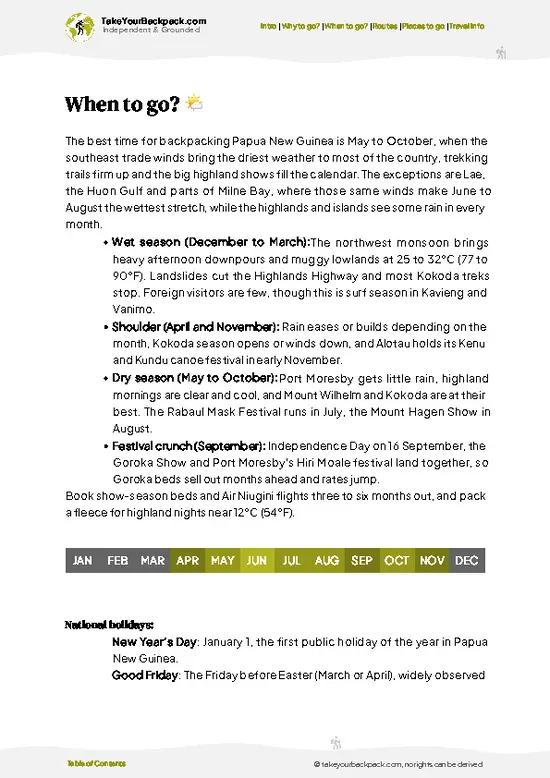
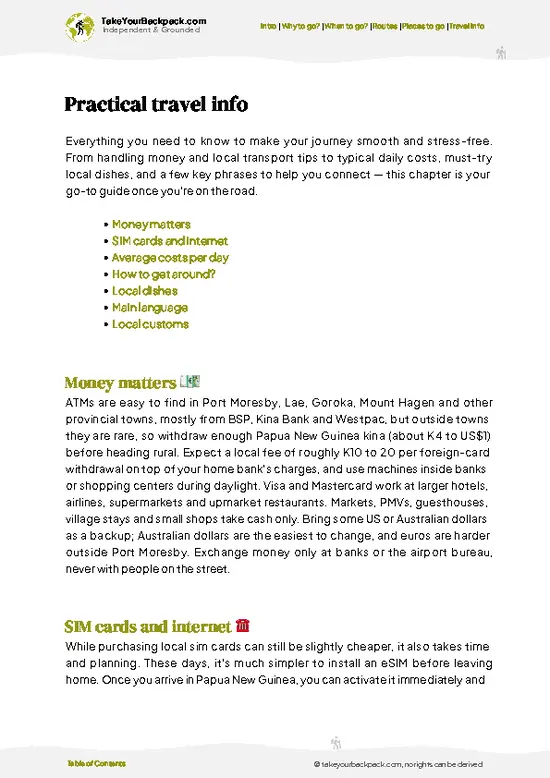
example page 0 from our offline Travel Guide for Papua New Guinea
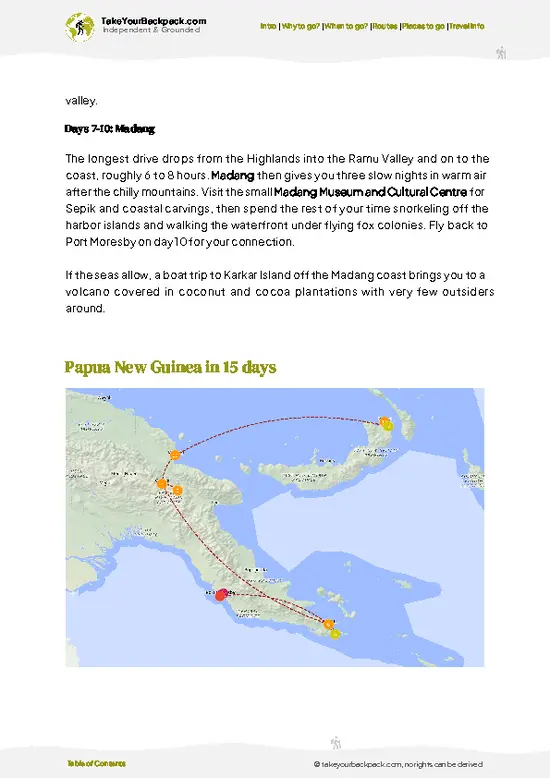
example page 1 from our offline Travel Guide for Papua New Guinea
example page 2 from our offline Travel Guide for Papua New Guinea
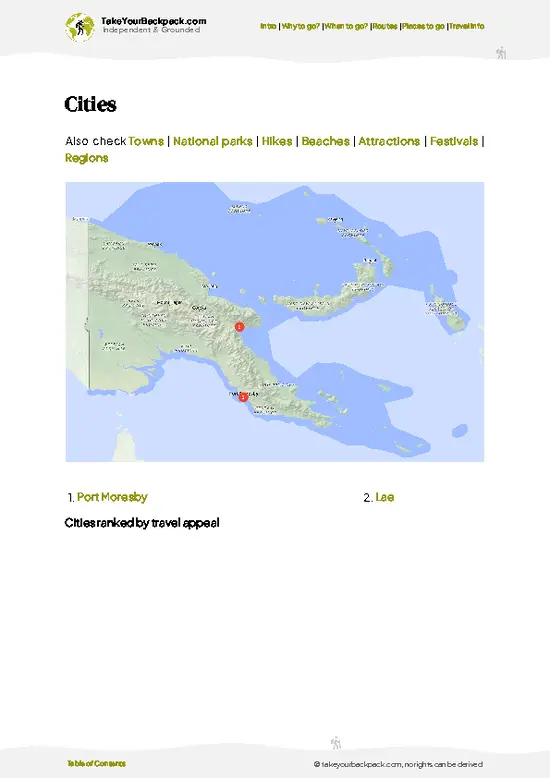
example page 3 from our offline Travel Guide for Papua New Guinea
example page 4 from our offline Travel Guide for Papua New Guinea
example page 5 from our offline Travel Guide for Papua New Guinea
example page 6 from our offline Travel Guide for Papua New Guinea
example page 7 from our offline Travel Guide for Papua New Guinea
Loading the map 🌍
CLICK TO FILTER
cities
towns
national parks
hikes
beaches
attractions
festivals
regions
SHOW COUNTRY’S BESTSHOW ALL

✨ Why go?
Ranked #17 region in Papua New Guinea
The unique appeal for travelers

Backpackers come to Manus for isolation that is hard to find elsewhere in the Pacific. Guesthouse stays and village homestays let you eat what the family caught that morning, often reef fish with taro or sweet potato, and the people of the island are known for seafaring skills. The reefs around Lorengau and the offshore islets reward anyone with a mask, because coral starts only a short swim from many beaches. The island also works as a pause for people island-hopping through the Bismarck Sea, with Momote airport as the usual way in.

💡 HighlightsTop highlights of Manus Island

  1. Momote and Lorengau coastline: The main town stretch is where the island’s life happens. Watch fishing boats unload at the harbor and walk the shore at low tide, when the sand flats open up.
  2. Reef snorkeling off village beaches: Coral gardens sit close to the sand at many points. Visibility is often excellent, and village hosts can point you to the best entry spots and warn you of currents.
  3. Outrigger canoe trips: Local paddlers take visitors to nearby islets. The sail-and-paddle craft are built on the island, and watching the crew read the wind is half the fun.
  4. Wreck and war relics: Manus was a major Allied base in World War II, and rusting remnants still lie around the coast. Ask in the village before you wander, as some sites sit on private land.
  5. Sunset beach walks: With almost no artificial
… read more 👉
  1. Momote and Lorengau coastline: The main town stretch is where the island’s life happens. Watch fishing boats unload at the harbor and walk the shore at low tide, when the sand flats open up.
  2. Reef snorkeling off village beaches: Coral gardens sit close to the sand at many points. Visibility is often excellent, and village hosts can point you to the best entry spots and warn you of currents.
  3. Outrigger canoe trips: Local paddlers take visitors to nearby islets. The sail-and-paddle craft are built on the island, and watching the crew read the wind is half the fun.
  4. Wreck and war relics: Manus was a major Allied base in World War II, and rusting remnants still lie around the coast. Ask in the village before you wander, as some sites sit on private land.
  5. Sunset beach walks: With almost no artificial light, the evening shoreline turns orange and then black. Stars on a clear night are dense, and there is no nightlife to compete with them.
Start with the reef snorkel, because morning light and calm water make the coral easiest to see.
Spotted a mistake or missing something? Contact us.

⌛️ 5 daysSeeing the highlights in 5 days

Day 1: Lorengau: Start in Lorengau, because the airport at Momote is a short ride away and the town holds the island’s only real market, bank and supplies. Stock up on cash, food and fuel before anything else, since the roads thin out fast and transport runs on whatever pickup or boat is going your way. Wander the waterfront market and catch the lagoon light.
Day 2 to 3: Southern Coast and Islets: Hire a boat or a vehicle with a driver and head for the quieter southern side. Boats set your pace here, so leave early and accept that tides and fuel decide departure. Spend two days snorkeling reef edges and sleeping in village guesthouses, where the stilt homes sit over clear shallows.
Day 4: Detour to Ponam Island: This small island off the north coast adds a day of white sand, coral and village … read more 👉
Day 1: Lorengau: Start in Lorengau, because the airport at Momote is a short ride away and the town holds the island’s only real market, bank and supplies. Stock up on cash, food and fuel before anything else, since the roads thin out fast and transport runs on whatever pickup or boat is going your way. Wander the waterfront market and catch the lagoon light.
Day 2 to 3: Southern Coast and Islets: Hire a boat or a vehicle with a driver and head for the quieter southern side. Boats set your pace here, so leave early and accept that tides and fuel decide departure. Spend two days snorkeling reef edges and sleeping in village guesthouses, where the stilt homes sit over clear shallows.
Day 4: Detour to Ponam Island: This small island off the north coast adds a day of white sand, coral and village life without needing a long overland push. Arrange the boat the evening before.
Day 5: Back to Lorengau: Return to Lorengau to buffer against flight changes. If you only get one day right, make it Day 4. Ponam’s water clarity and the unhurried welcome justify the whole trip.

🌤️ When to go?Choosing the right time of year

  • Southeast Trade Season (May to October): Calmer, drier days on the north coast near Lorengau, with highs of 29 to 31°C (84 to 88°F) and clearer water for snorkeling.
  • Northwest Monsoon (November to April): Heavier squalls and rougher seas, with similar 24 to 31°C (75 to 88°F) ranges. Boat transfers get delayed.
  • Daylight: Sunrise and sunset stay close to 6:00 and 18:00 all year.
  • Crowds and Prices: Visitors are few year-round. Flights and guesthouses cost about the same in any month.
Book flights early, since seats to Momote are limited and fill around school holidays.

source: climatestotravel.comJANJanuary: fair for travelingFEBFebruary: fair for travelingMARMarch: fair for travelingAPRApril: fair for travelingMAYMay: highly recommended for travelingJUNJune: excellent for travelingJULJuly: excellent for travelingAUGAugust: excellent for travelingSEPSeptember: excellent for travelingOCTOctober: highly recommended for travelingNOVNovember: fair for travelingDECDecember: fair for traveling
when-to-go

✈️ The backpacker research shortcutPapua New Guinea Travel Guide

An offline-friendly backpacking guide with optimized travel routes, ranked highlights, transport advice, and the best areas to stay.
example page 0 from our offline Travel Guide for Papua New Guinea
example page 1 from our offline Travel Guide for Papua New Guinea
example page 2 from our offline Travel Guide for Papua New Guinea
example page 3 from our offline Travel Guide for Papua New Guinea
example page 4 from our offline Travel Guide for Papua New Guinea
example page 5 from our offline Travel Guide for Papua New Guinea
example page 6 from our offline Travel Guide for Papua New Guinea
example page 7 from our offline Travel Guide for Papua New Guinea
The digital guide (251 pages) contains:
✅ 81 highlights, ranked by travel appeal
✅ Optimized 5, 10 & 15-day travel routes
✅ Cities, national parks, landmarks, beaches
✅ How to get around
✅ Offline-friendly for travel without Wi-Fi
👉 Click to see all 30+ guide features

📅 Plan smarter in minutes, not weeks
✅ Month by month travel advice
✅ Festivals & national holidays
✅ Budget expectations

🗺️ Go to the right places, skip the overrated ones
✅ Honest pros & cons of destinations
✅ Top hikes, parks & viewpoints
✅ Lesser-known places most travelers miss
✅ Clear “worth it vs skip it” guidance

🛏️ Travel smoothly without rookie mistakes
✅ Best areas to stay
✅ Transport systems explained simply
✅ Common scams & safety advice
✅ SIM cards, money & practical tips

🌍 Understand the country, not just visit it
✅ Culture & traditions
✅ 52 Essential phrases & customs
✅ Festivals worth planning around
✅ Traveler-friendly historical context
✅ Insights that make places more meaningful

📱 Built for real travel conditions
✅ Fully downloadable PDF
✅ Works completely offline
✅ Optimized for phone use
✅ Useful in remote areas & buses
✅ Everything in one place
Stop searching, start planning
Get instant access to your full guide. 30‑day money-back guarantee.
+ Add another guide for just

By proceeding you agree to our terms.
Sent to your inbox immediately after payment • 100% Secure Checkout
Best Backpacking Travel Advisor 2025 tourism awardBest Backpacking
Travel Advisor
2025
What others say about Take Your Backpack Guides:
⭐⭐⭐⭐⭐
Fantastic, amazing amount of information!
⭐⭐⭐⭐⭐
My goodness this is amazing, it's what I've been looking for hats off too you!
⭐⭐⭐⭐⭐
I think this is absolutely BRILLIANT
⭐⭐⭐⭐
Very complete and informative. It's still missing places, but I gotta to commend you
⭐⭐⭐⭐⭐
This is truly amazing, thank you, can't wait to explore it with my kids!
⭐⭐⭐⭐⭐
Awesome resource, thank you!
⭐⭐⭐⭐⭐
This is amazing! Can't wait to explore the ones I haven't seen
⭐⭐⭐⭐
I love this! Well done, great idea.
⭐⭐⭐⭐⭐
Thanks for taking the time to make this gem!
⭐⭐⭐⭐⭐
This might be the best website I've ever seen.
⭐⭐⭐⭐⭐
Congratulations, and thank you so much for your work; it's incredibly valuable.
⭐⭐⭐⭐
In all seriousness I think you did a great job pointing out the important spots
⭐⭐⭐⭐⭐
10/10 very good
⭐⭐⭐⭐⭐
As someone who's only just starting to visit regularly this is awesome, thank you.
⭐⭐⭐⭐
Thank you very much! I'm going to visit my dad, it's going to be very useful!
⭐⭐⭐⭐⭐
This is really cool! We'll be travelling for the first time and this definitely come in handy.
⭐⭐⭐⭐⭐
You are now our minister of culture, congratulations 👨‍💼
⭐⭐⭐⭐⭐
Just wanted to tell you that this is a pearl! Going to follow your recommendations.
⭐⭐⭐⭐⭐
This is so cool. I'll definitely be using the resource for my travels soon.
⭐⭐⭐⭐⭐
This is very impressive! Good work.
⭐⭐⭐⭐⭐
This is an amazing and informative site. Very well done!

🛏️ Where to stay?How to pick the right area

Lorengau town is the practical base for backpackers on Manus. It has the only real cluster of guesthouses (roughly K150 to 350, about US$40 to 90, a night), the market, shops, ATMs and the PMV trucks that run along the coast road. Momote, near the airport, is quieter and handy for early flights, though you will want a ride to reach anything else. For beach time, ask about village homestays and lodges near Lorengau Harbor or along the north coast, where you sleep close to sand, share meals with local families and arrange canoe trips. Social scenes are small, so you will mostly meet other travelers and aid workers in Lorengau.

🚌 Getting aroundMoving around without the hassle

The easiest way to get around Manus Island is a shared PMV (public motor vehicle), a minibus or open truck that runs the sealed Lorengau to Lombrum road and the stretches beyond, and you flag it down like a local. Boards fill with produce sacks, school kids and chatter, and you get a window onto coconut groves and bright water for pennies. Roads outside the main stretch turn rough, so plan on flexibility.
  • PMV minibus: Fares run about US$0.50 to 2 for most hops around Lorengau and the main road, with service thinning after mid-afternoon. You squeeze in, hold on, and arrive having met half the island.
  • Hired vehicle: A driver and truck for a day costs roughly US$60 to 120 depending on fuel and distance. It lets you stop at a village market or a lookout whenever the view demands it.
  • Banana boat (dinghy):
… read more 👉
The easiest way to get around Manus Island is a shared PMV (public motor vehicle), a minibus or open truck that runs the sealed Lorengau to Lombrum road and the stretches beyond, and you flag it down like a local. Boards fill with produce sacks, school kids and chatter, and you get a window onto coconut groves and bright water for pennies. Roads outside the main stretch turn rough, so plan on flexibility.
  • PMV minibus: Fares run about US$0.50 to 2 for most hops around Lorengau and the main road, with service thinning after mid-afternoon. You squeeze in, hold on, and arrive having met half the island.
  • Hired vehicle: A driver and truck for a day costs roughly US$60 to 120 depending on fuel and distance. It lets you stop at a village market or a lookout whenever the view demands it.
  • Banana boat (dinghy): Outboard boats run to nearby islands and coastal villages, usually US$10 to 50 per trip when you share fuel costs. You skim over reef shallows and step out onto white sand with nobody else around.
  • Domestic flight: Flights from Port Moresby and Wewak land at Momote airport, typically US$150 to 300 one way, about 1.5 to 2 hours from the capital. You drop out of the clouds onto a runway beside the sea.
  • On foot: Lorengau town is compact, and a stroll from the market to the harbor takes 15 to 20 minutes. You pass fish sellers and betel nut stalls along the way.
Confirm the return PMV time with your driver before heading out, since the last runs leave early.

🍲 FoodLocal Flavors for Backpackers

Eat fresh reef fish grilled over coals or boiled in coconut milk with greens, and you taste the island at its best. Staples are taro, sweet potato and sago, and smoky mumu (earth oven) feasts appear at celebrations. Lorengau’s central market sells bananas, pineapples and fish at dawn, plus fried dough snacks for under US$1. Casual guesthouse kitchens and small trade stores cover simple meals around US$4 to 10. Coconut water and strong tea are the usual drinks. If invited to share food, accept something small, and wait for elders to start eating. Betel nut is chewed everywhere, so expect red-stained spit on the ground.

🛡️ SafetySafety Tips and Common Scams in Manus Island

Most Manus beaches are calm, shallow and reef-fringed, and village bays rarely have strong rips. Swim at high tide, since low tide leaves coral flats that are sharp underfoot, and wear reef shoes. Crocodiles live in some river mouths and mangrove inlets, so ask locals before swimming anywhere near them. The equatorial sun burns fast between 10:00 and 15:00. Always ask the village before using its beach, and travel with a local guide. Keep valuables out of sight and avoid walking alone after dark.

FAQFrequently asked questions about Manus Island

Fly to Momote Airport (MAG) from Port Moresby, a flight of about 2 to 2.5 hours operated by Air Niugini and PNG Air, with fares often around K900 to 1,800 return. From Momote, Lorengau is a 20 to 30 minute drive by taxi or PMV (K5 to 30). Villages along the north coast are a further 15 to 60 minutes by road or small boat.
Swimming and snorkeling are the highlights, while surfing is not a thing here. Reef-fringed bays near Lorengau and the offshore islands have clear water, healthy coral and small fish, best from May to October. Bring your own mask and snorkel because rental is rare, and ask a local guide to arrange a boat for about K100 to 300 for the day.
Most beaches are on customary land, so there is no ticket booth, but villagers expect you to ask permission first. Expect to pay a small fee, often K10 to 50 (about US$3 to 13), for access, a guide or a canoe ride. Staying in a homestay usually covers beach access. Carry small notes in kina, since few places give change.
⚠️ Things can change over time, so always validate details locally before you go.

Other Papua New Guinean regions near Manus Island

Explore more nearby:

  • Rai Coast—Maclay Coast, Saidor wartime relics, black-sand bays, village homestays, Finisterre foothills| 396 km away
  • Sinasina—Simbu sing-sings, coffee terraces, ridge paths, kaukau markets| 489 km away
  • Sepik River—Dugout canoes, spirit houses, Chambri Lake, Angoram departure| 507 km away

💡 Not sure where to go next?
Create a personalized itinerary for Papua New Guinea including Manus Island and the places that fit your trip.

Generate my itinerary

👉 Discover all regions

Or checkout all Papua New Guinea has to offer (think cities, towns, villages, national parks, hikes, beaches, festivals)
Country photo of Papua New Guinea

We 💚 feedbackFinal thoughts on visiting Manus Island

Go in the early morning, when the sea is glassy, the sand is cool and the canoes are heading out. The calmer months from roughly May to October give the best water clarity. Bring your own mask and reef-safe sunscreen, since rentals are scarce.

✍️ Help improve this page!
The information on this page is based on in-depth research, insights shared by experienced travelers, and feedback from the local travel community in Papua New Guinea. While every effort is made to keep the information accurate and current, conditions can change — so if you spot anything incorrect or outdated, please get in touch.


🙋‍♂️ Give feedback

👋 Meet the founderWho’s Behind Take Your Backpack?

Johan, backpacker and founder of TakeYourBackpackHi, I’m Johan (Netherlands 🇳🇱), the creator of TakeYourBackpack. Over the past 3 decades, I’ve backpacked through 90+ countries across six continents, gaining extensive experience with independent travel, long-term trips, and overland routes.

This site is built on a combination of firsthand travel experience and carefully curated insights from other backpackers. Many guides are based on places I’ve personally visited, while others bring together tips, observations, and practical advice shared by trusted travelers I’ve met along the way.

The goal is to provide realistic, experience-driven guidance — not generic itineraries — so you can explore destinations with better context, clearer expectations, and more confidence.