
×

Papua New Guinea🇵🇬 | regionsMilne Bayisland archipelagos, coral reefs, traditional sailing canoes, remote villages | things to do and best time to go

Explore Mount Giluwe National ParkExplore Rai Coast

Backpacking in Milne Bay
🏆 Top pickregion ranked #1
By Johan Kruseman 🇳🇱 | Updated September 4, 2026

Ten, fifteen years ago Milne Bay felt like a rumor passed between divers and yachties: no roads, no ATMs, just dugout canoes, betel nut smiles, and reefs that looked completely untouched. Today it’s still remote by global standards, but you feel the creep of change—more guesthouses, a few liveaboard boats, and locals who’ve seen enough outsiders to know what a “content creator” is. Milne Bay sits at the far eastern tip of Papua New Guinea, a scatter of islands and peninsulas fanning out from Alotau, the main town. For backpackers, it’s a trade: outrageous coral, quiet villages, and real kastom culture instead of bars and brunch. Transport between islands is slow, wet, and often late; costs are higher than you’d expect for somewhere this basic. Compared with easier hubs like Madang or East New Britain, Milne Bay is wilder, less packaged, and more work—exactly why it hooks the right kind of traveler.

Discover everything you want to know in the 📖 Papua New Guinea Travel Guide.
Loading the map 🌍
CLICK TO FILTER
cities
towns
national parks
hikes
beaches
attractions
festivals
regions
SHOW COUNTRY’S BESTSHOW ALL

✨ Why go?
Ranked #1 region in Papua New Guinea
What makes this region worth visiting

Milne Bay is a backpacker’s playground, and here’s why you’ll want to linger. First off, the variety of landscapes is jaw-dropping. You’ve got everything from lush rainforests to stunning coral reefs, all within a stone’s throw. This means you can dive into multiple experiences without the hassle of constant relocation.

Transport is surprisingly flexible here. Local boats and buses can whisk you from one breathtaking spot to another, making it easy to explore at your own pace. Want to hike a volcano in the morning and sip kava with locals in the evening? You can do that.

What’s more, Milne Bay offers a unique chance to mix nature and culture seamlessly. You can trek through the wild, then dive into the rich traditions of the communities you encounter. This isn’t just sightseeing; it’s … read more 👉
Milne Bay is a backpacker’s playground, and here’s why you’ll want to linger. First off, the variety of landscapes is jaw-dropping. You’ve got everything from lush rainforests to stunning coral reefs, all within a stone’s throw. This means you can dive into multiple experiences without the hassle of constant relocation.

Transport is surprisingly flexible here. Local boats and buses can whisk you from one breathtaking spot to another, making it easy to explore at your own pace. Want to hike a volcano in the morning and sip kava with locals in the evening? You can do that.

What’s more, Milne Bay offers a unique chance to mix nature and culture seamlessly. You can trek through the wild, then dive into the rich traditions of the communities you encounter. This isn’t just sightseeing; it’s about slow travel that allows you to soak in the essence of the place.

So, if you’re looking to stretch your time, money, and comfort in a way that feels authentic, Milne Bay is your ticket. Embrace the adventure and let the region’s charm work its magic.
Want to include Milne Bay in your Papua New Guinea route?
Create a personalized Papua New Guinea itinerary that includes Milne Bay and the places that fit your trip — based on your travel style, budget, and available time. Get your route in seconds.

Generate my trip

💡 HighlightsDon't-miss highlights and experiences

  1. Trobriand Islands (Kiriwina) — A cultural world in itself: yam festivals, the famous Kula exchange between islanders, colorful carvings and canoe culture. Visiting Kiriwina or nearby Trobriand is less about sightseeing and more about being invited into a living, distinctive Papua New Guinean island culture you won’t find elsewhere.
  2. Samarai Island — A tiny, crumbling colonial port that feels frozen in time: colonial buildings, narrow lanes, a dramatic harbour and easy boat access to nearby reefs and islets. Photogenic, walkable and full of local stories about pre-war trade and WWII comings-and-goings.
  3. Alotau waterfront & Saturday market — The provincial hub where fishermen, bilum makers and fresh-produce traders converge. Great for sampling seafood, seeing traditional weaving, and catching
read more 👉
  1. Trobriand Islands (Kiriwina) — A cultural world in itself: yam festivals, the famous Kula exchange between islanders, colorful carvings and canoe culture. Visiting Kiriwina or nearby Trobriand is less about sightseeing and more about being invited into a living, distinctive Papua New Guinean island culture you won’t find elsewhere.
  2. Samarai Island — A tiny, crumbling colonial port that feels frozen in time: colonial buildings, narrow lanes, a dramatic harbour and easy boat access to nearby reefs and islets. Photogenic, walkable and full of local stories about pre-war trade and WWII comings-and-goings.
  3. Alotau waterfront & Saturday market — The provincial hub where fishermen, bilum makers and fresh-produce traders converge. Great for sampling seafood, seeing traditional weaving, and catching inter-island boats—excellent for people-watching and practical travel arrangements.
  4. Milne Bay WWII sites and wreck dives — Milne Bay was the site of a pivotal 1942 battle; around Alotau, Samarai and nearby islands there are shore relics and coral-encrusted wrecks accessible to divers and snorkellers. It’s a rare mix of living reef ecology and tangible wartime history you can actually swim around.
  5. Mount Vineuo, Goodenough Island — The volcanic heart of Goodenough: jungle hikes, ridge views and village stays with strong birdlife and mountain-to-sea scenery. It’s a proper off-the-beaten-track island hike that rewards with panoramic views and real village hospitality.
  6. Fergusson Island volcanic landscapes — A raw, volcanic island with steam vents, rugged coastline and black-sand bays; local villages and trails feel remote in the best way. Fergusson’s landscapes and active geology give you an island experience different from the typical palm-fringed postcard.
  7. Normanby Island beaches and village life — Long white-sand stretches, reef snorkelling and close-knit coastal villages where daily life is on the water. Less visited than nearby hotspots, Normanby is ideal for simple beach camping, canoe trips and authentic encounters with island communities.
  8. Sideia Island — Hidden gem — Quiet villages, shallow coral gardens and peaceful walking tracks; Sideia is a proper low-tourism island where you can watch traditional canoe building, swim healthy reefs and mingle with locals without the crowds. Perfect for slow island hopping from Samarai.
  9. Kwato Island mission village — Hidden gem — A small mission island off the Milne Bay coast with intact mission-era buildings, tidy graveyards and strong local craft traditions. It’s an accessible cultural stop that gives insight into how Christianity and local customs shaped community life here.
  10. Nivani Island — Hidden gem — A tiny island popular with local fishers and dive operators for its clear water, on-the-spot fish markets and brilliant snorkelling right off the reefs. It’s a compact, easy day-trip that combines great water visibility, local seafood and genuine island rhythm without fuss.
Spotted a mistake or missing something? Contact us.

⌛️ 5 daysSeeing the highlights in 5 days

Day 1: Alotau
Welcome to Alotau, the bustling capital of Milne Bay. You’ll want to kick off your adventure here because it’s the transport hub that connects you to the rest of the region. Spend the day acclimating, exploring the local markets, and sampling fresh seafood. The transport system is a mix of boats and small planes, so understanding this will save you time later. Grab a local SIM card to stay connected; it’s a game-changer for navigating schedules.

Day 2: Samarai Island
Catch an early boat to Samarai Island. This place is rich in history and offers a glimpse into the colonial past of Papua New Guinea. The ride is about 30 minutes, and the views are spectacular. Spend your day wandering the old buildings and soaking in the laid-back vibe. The island is small, so you can easily … read more 👉
Day 1: Alotau
Welcome to Alotau, the bustling capital of Milne Bay. You’ll want to kick off your adventure here because it’s the transport hub that connects you to the rest of the region. Spend the day acclimating, exploring the local markets, and sampling fresh seafood. The transport system is a mix of boats and small planes, so understanding this will save you time later. Grab a local SIM card to stay connected; it’s a game-changer for navigating schedules.

Day 2: Samarai Island
Catch an early boat to Samarai Island. This place is rich in history and offers a glimpse into the colonial past of Papua New Guinea. The ride is about 30 minutes, and the views are spectacular. Spend your day wandering the old buildings and soaking in the laid-back vibe. The island is small, so you can easily explore on foot. This is a perfect day to relax and recharge before diving deeper into the wilderness.

Day 3: Dobu Island
From Samarai, take a boat to Dobu Island. This is where the real adventure begins. The journey takes about an hour, but the payoff is immense. Dobu is less touristy, offering pristine beaches and incredible snorkeling. You’ll feel like you’ve stepped into another world. Make sure to pack a picnic; the beaches here are perfect for a lazy afternoon.

Day 4: Off-Path Reward - Kiriwina Island
Take a detour to Kiriwina Island, a bit off the beaten path but worth every minute. The boat ride is longer, around two hours, but you’ll be rewarded with vibrant local culture and stunning landscapes. Engage with the Trobriand Islanders and experience their unique traditions. This is a chance to connect with the locals in a way that feels authentic and enriching.

Day 5: Return to Alotau
Head back to Alotau for your final day. Use this time to reflect on your journey and pick up any last-minute souvenirs. The transport back is straightforward, and you’ll appreciate the familiarity of the town after your adventures.

The must-do day? Day 3 on Dobu Island. The combination of natural beauty and tranquility makes it the highlight of your trip, a day that encapsulates the essence of Milne Bay.
Turn your Milne Bay visit into an Papua New Guinea adventure
Build a complete Papua New Guinea route with Milne Bay, hidden gems, must-see destinations, and realistic travel times included.

Generate my trip

🌤️ When to go?Weather, crowds, and seasonal trade-offs


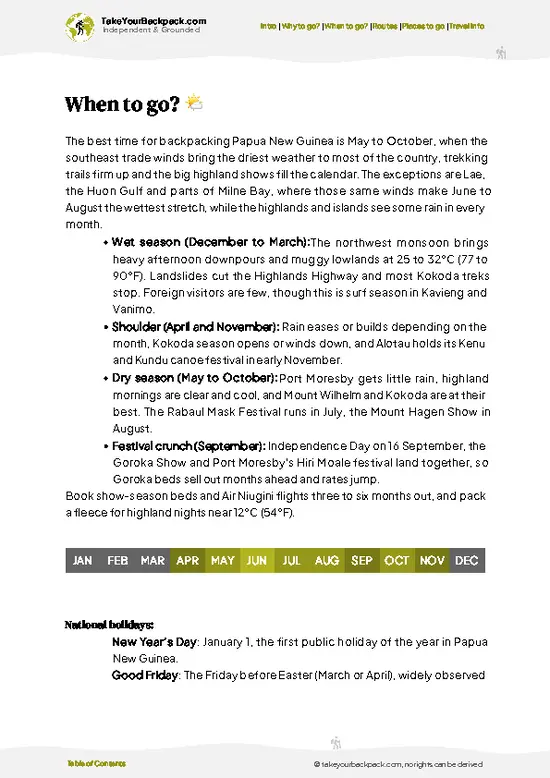
  • Topic: Weather – Milne Bay’s dry season, from May to October, is your golden window. Expect less rain, making trails and boat rides smoother. The wet season (November to April) floods paths and turns the sea choppy, not ideal for diving or island hopping.

  • Topic: Temperature – Temperatures hover between 24-30°C (75-86°F) year-round, but the dry season feels more comfortable with lower humidity. The wet season’s heat combined with humidity can sap your energy fast.

  • Topic: Daylight Hours – Roughly 11 to 12 hours of daylight year-round, but the dry season offers clearer skies, so you get more usable daylight for trekking and exploring without the midday downpours cutting your plans short.

  • Topic: Crowds – Milne Bay isn’t exactly overrun, but the dry season draws the few adventurous divers
read more 👉

  • Topic: Weather – Milne Bay’s dry season, from May to October, is your golden window. Expect less rain, making trails and boat rides smoother. The wet season (November to April) floods paths and turns the sea choppy, not ideal for diving or island hopping.

  • Topic: Temperature – Temperatures hover between 24-30°C (75-86°F) year-round, but the dry season feels more comfortable with lower humidity. The wet season’s heat combined with humidity can sap your energy fast.

  • Topic: Daylight Hours – Roughly 11 to 12 hours of daylight year-round, but the dry season offers clearer skies, so you get more usable daylight for trekking and exploring without the midday downpours cutting your plans short.

  • Topic: Crowds – Milne Bay isn’t exactly overrun, but the dry season draws the few adventurous divers and trekkers who know what’s up. You’ll find a quiet buzz rather than silence or chaos.

  • Topic: Seasonal Activities – Dry months unlock the best diving visibility and island hopping. Cultural festivals often align with this period, giving you a chance to catch authentic local celebrations without the soggy interruptions.

  • Topic: Price Fluctuations – Prices for accommodation and tours peak slightly in the dry season but still stay reasonable compared to other Pacific hotspots. The wet season offers discounts but at the cost of comfort and access.


Pro-tip: Aim for late May or early June—right after the rains ease but before the dry season crowds fully arrive. You’ll snag better deals and enjoy near-perfect conditions like a local insider.


source: climatestotravel.comJANJanuary: fair for travelingFEBFebruary: fair for travelingMARMarch: fair for travelingAPRApril: fair for travelingMAYMay: highly recommended for travelingJUNJune: excellent for travelingJULJuly: excellent for travelingAUGAugust: excellent for travelingSEPSeptember: excellent for travelingOCTOctober: highly recommended for travelingNOVNovember: fair for travelingDECDecember: fair for traveling

✈️ The backpacker research shortcutPapua New Guinea Travel Guide

An offline-friendly backpacking guide with optimized travel routes, ranked highlights, transport advice, and the best areas to stay.
example page 0 from our offline Travel Guide for Papua New Guinea
example page 1 from our offline Travel Guide for Papua New Guinea
example page 2 from our offline Travel Guide for Papua New Guinea
example page 3 from our offline Travel Guide for Papua New Guinea
example page 4 from our offline Travel Guide for Papua New Guinea
example page 5 from our offline Travel Guide for Papua New Guinea
example page 6 from our offline Travel Guide for Papua New Guinea
example page 7 from our offline Travel Guide for Papua New Guinea
The digital guide (319 pages) contains:
86 highlights, ranked by travel appeal
Optimized 5, 10 & 15-day travel routes
Cities, national parks, landmarks, beaches
How to get around
Offline-friendly for travel without Wi-Fi
👉 Click to see all 30+ guide features

📅 Plan smarter in minutes, not weeks
Month by month travel advice
Festivals & national holidays
Budget expectations

🗺️ Go to the right places, skip the overrated ones
Honest pros & cons of destinations
Top hikes, parks & viewpoints
Lesser-known places most travelers miss
Clear “worth it vs skip it” guidance

🛏️ Travel smoothly without rookie mistakes
Best areas to stay
Transport systems explained simply
Common scams & safety advice
SIM cards, money & practical tips

🌍 Understand the country, not just visit it
Culture & traditions
52 Essential phrases & customs
Festivals worth planning around
Traveler-friendly historical context
Insights that make places more meaningful

📱 Built for real travel conditions
Fully downloadable PDF
Works completely offline
Optimized for phone use
Useful in remote areas & buses
Everything in one place
Save weeks of stressful planning
Get instant access to your full guide. 30‑day money-back guarantee.
+ Add another guide for just US$7.80

By proceeding you agree to our terms.
Sent to your inbox immediately after payment • 100% Secure Checkout
Best Backpacking Travel Advisor 2025 tourism awardBest Backpacking
Travel Advisor
2025
What others say about Take Your Backpack Guides:
⭐⭐⭐⭐⭐
Fantastic, amazing amount of information!
⭐⭐⭐⭐⭐
My goodness this is amazing, it's what I've been looking for hats off too you!
⭐⭐⭐⭐⭐
I think this is absolutely BRILLIANT
⭐⭐⭐⭐
Very complete and informative. It's still missing places, but I gotta to commend you
⭐⭐⭐⭐⭐
This is truly amazing, thank you, can't wait to explore it with my kids!
⭐⭐⭐⭐⭐
Awesome resource, thank you!
⭐⭐⭐⭐⭐
This is amazing! Can't wait to explore the ones I haven't seen
⭐⭐⭐⭐
I love this! Well done, great idea.
⭐⭐⭐⭐⭐
Thanks for taking the time to make this gem!
⭐⭐⭐⭐⭐
This might be the best website I've ever seen.
⭐⭐⭐⭐⭐
Congratulations, and thank you so much for your work; it's incredibly valuable.
⭐⭐⭐⭐
In all seriousness I think you did a great job pointing out the important spots
⭐⭐⭐⭐⭐
10/10 very good
⭐⭐⭐⭐⭐
As someone who's only just starting to visit regularly this is awesome, thank you.
⭐⭐⭐⭐
Thank you very much! I'm going to visit my dad, it's going to be very useful!
⭐⭐⭐⭐⭐
This is really cool! We'll be travelling for the first time and this definitely come in handy.
⭐⭐⭐⭐⭐
You are now our minister of culture, congratulations 👨‍💼
⭐⭐⭐⭐⭐
Just wanted to tell you that this is a pearl! Going to follow your recommendations.
⭐⭐⭐⭐⭐
This is so cool. I'll definitely be using the resource for my travels soon.
⭐⭐⭐⭐⭐
This is very impressive! Good work.
⭐⭐⭐⭐⭐
This is an amazing and informative site. Very well done!

🛏️ Where to stay?Where staying makes the most sense

When you hit Milne Bay, you’re diving into a backpacker’s paradise. Let’s break down the best spots to lay your head, where safety meets social vibes, and your wallet stays happy.

Start in Alotau, the capital. It’s your gateway to the region. The waterfront is alive with local markets and eateries. You’ll find fellow travelers here, swapping stories over fresh fish and coconut water. The laid-back atmosphere makes it easy to connect. Plus, it’s a solid base for day trips to nearby islands.

Next, consider Samarai Island. This place is a slice of tranquility. It’s a short boat ride from Alotau, … read more 👉
When you hit Milne Bay, you’re diving into a backpacker’s paradise. Let’s break down the best spots to lay your head, where safety meets social vibes, and your wallet stays happy.

Start in Alotau, the capital. It’s your gateway to the region. The waterfront is alive with local markets and eateries. You’ll find fellow travelers here, swapping stories over fresh fish and coconut water. The laid-back atmosphere makes it easy to connect. Plus, it’s a solid base for day trips to nearby islands.

Next, consider Samarai Island. This place is a slice of tranquility. It’s a short boat ride from Alotau, and you’ll feel the difference immediately. Think rustic charm and stunning views. It’s perfect for those who want to unwind after a day of exploring. The local community is welcoming, and you’ll often find impromptu gatherings around a fire.

Don’t overlook Kiriwina Island in the Trobriands. It’s a bit off the beaten path, but that’s where the magic happens. The culture here is rich, and you’ll get a taste of traditional life. The locals are friendly, and you can join in on village activities.

Each of these spots offers a unique flavor of Milne Bay. Choose wisely, and you’ll create memories that last a lifetime.

🚌 Getting aroundMoving around without the hassle

Milne Bay is a wild dance of time and intuition. Here, schedules are more like suggestions, and the rhythm of life flows with the tides. You’ll find yourself hopping between islands, where the only certainty is that the next boat will come when it feels like it. This isn’t a place for the rigid planner; it’s for those who can embrace the chaos and let the moment guide them. The locals have a knack for making the most of what they have, and you’ll want to do the same. So, let’s break down your transport options, so you can navigate this vibrant patch of Papua New Guinea like a pro.


  • Outboard Canoes: These are the lifeblood of island hopping. Prices vary, but expect to pay around K20-50 for short trips. They’re fast and exhilarating, but comfort is minimal—hold on tight!

  • Motorized Ferries:
read more 👉
Milne Bay is a wild dance of time and intuition. Here, schedules are more like suggestions, and the rhythm of life flows with the tides. You’ll find yourself hopping between islands, where the only certainty is that the next boat will come when it feels like it. This isn’t a place for the rigid planner; it’s for those who can embrace the chaos and let the moment guide them. The locals have a knack for making the most of what they have, and you’ll want to do the same. So, let’s break down your transport options, so you can navigate this vibrant patch of Papua New Guinea like a pro.


  • Outboard Canoes: These are the lifeblood of island hopping. Prices vary, but expect to pay around K20-50 for short trips. They’re fast and exhilarating, but comfort is minimal—hold on tight!

  • Motorized Ferries: A bit more organized, these ferries connect major islands. They typically run from 7 AM to 4 PM, costing K50-100. They’re slower than canoes but offer a more stable ride, making them a good choice for longer distances.

  • Private Water Taxis: If you’re in a hurry or traveling with a group, this is your best bet. Prices start around K200, depending on distance. They’re quicker and more comfortable, but you’ll need to negotiate the fare upfront.

  • Road Transport (Buses and Trucks): On the mainland, you’ll find a mix of buses and trucks that can take you to various towns. Fares are usually K10-20, with departures whenever they fill up. Expect a bumpy ride, but it’s a great way to mingle with locals.

  • Chartered Flights: For those who want to skip the hassle, small planes connect you to remote areas. Prices can be steep, starting at K500, but the views from above are worth every kina. Just be sure to book in advance.


To navigate Milne Bay efficiently, always ask locals for the latest on boat schedules and routes. They know the ins and outs better than any guidebook. Embrace the spontaneity, and you’ll find that the journey is just as rewarding as the destination.

🍲 FoodEating & Drinking in Milne Bay

In Milne Bay, the food scene is a vibrant tapestry of flavors that tells the story of its rich culture. Dive into sago, a staple made from the sago palm, often served as a side dish. Pair it with fresh fish, caught that morning, grilled to perfection, and seasoned with local herbs. The coconut crab is a must-try; its sweet, tender meat is a delicacy that locals savor.

For drinks, don’t miss the chance to sip on kava, a traditional beverage made from the roots of the kava plant. It’s earthy and slightly bitter, perfect for unwinding after a day of exploration. You’ll find it served in communal bowls, fostering a sense of connection among drinkers.

When it comes to dining, embrace the markets. They’re bustling with energy, filled with vendors selling everything from ripe tropical fruits to … read more 👉
In Milne Bay, the food scene is a vibrant tapestry of flavors that tells the story of its rich culture. Dive into sago, a staple made from the sago palm, often served as a side dish. Pair it with fresh fish, caught that morning, grilled to perfection, and seasoned with local herbs. The coconut crab is a must-try; its sweet, tender meat is a delicacy that locals savor.

For drinks, don’t miss the chance to sip on kava, a traditional beverage made from the roots of the kava plant. It’s earthy and slightly bitter, perfect for unwinding after a day of exploration. You’ll find it served in communal bowls, fostering a sense of connection among drinkers.

When it comes to dining, embrace the markets. They’re bustling with energy, filled with vendors selling everything from ripe tropical fruits to grilled skewers. Street food is where the magic happens; grab a banana fritter or some taro chips from a roadside stall.

Dining customs here are relaxed. Don’t be surprised if meals are shared; it’s a communal experience. Just remember to eat with your right hand, as the left is considered impolite. Immerse yourself in the local vibe, and you’ll leave with a taste of Milne Bay that lingers long after you’ve gone.

FAQTraveler FAQ

5 to 7 days are ideal to explore Milne Bay thoroughly, allowing time for island hopping, diving, and cultural visits. The region's scattered islands and diverse marine life require travel time between locations. Allocate extra days if planning to dive extensively or visit remote villages.
Travel around Milne Bay without a car primarily involves boats and small planes, as road infrastructure is limited. Local motorized canoes and passenger boats connect islands, with fares typically ranging from 10 to 50 PGK depending on distance. Walking is common within villages and towns.
Milne Bay is known for its world-class scuba diving and snorkeling sites, featuring vibrant coral reefs and WWII wrecks. It is also famous for its rich indigenous culture and biodiversity, including rare bird species and pristine rainforests.
⚠️ Things can change over time, so always validate details locally before you go.

More places to explore across Papua New Guinea

Milne Bay isn’t the only highlight in Papua New Guinea. Explore all what Papua New Guinea has to offer.
Country photo of Papua New Guinea

We 💚 feedbackIs it worth it?

Milne Bay has this raw, unfiltered vibe that’s hard to find elsewhere. You’ll stumble upon locals who genuinely want to share their world with you—like that impromptu dance party I crashed at a village feast. But here’s the kicker: the infrastructure can be a bit rough. Don’t expect luxury; embrace the adventure. Pack your patience and a sense of humor. Trust me, the unexpected moments are what make it all worthwhile. You’ll leave with stories that no guidebook can capture.

✍️ Help improve this page!
The information on this page is based on in-depth research, insights shared by experienced travelers, and feedback from the local travel community in Papua New Guinea. While every effort is made to keep the information accurate and current, conditions can change — so if you spot anything incorrect or outdated, please get in touch.


🙋‍♂️ Give feedback

👋 Meet the founderWho’s Behind Take Your Backpack?

Johan, backpacker and founder of TakeYourBackpackHi, I’m Johan (Netherlands 🇳🇱), the creator of TakeYourBackpack. Over the past decade, I’ve backpacked through 80+ countries across six continents, gaining extensive experience with independent travel, long-term trips, and overland routes.

This site is built on a combination of firsthand travel experience and carefully curated insights from other backpackers. Many guides are based on places I’ve personally visited, while others bring together tips, observations, and practical advice shared by trusted travelers I’ve met along the way.

The goal is to provide realistic, experience-driven guidance — not generic itineraries — so you can explore destinations with better context, clearer expectations, and more confidence.

Get full country guide •
Instant download • 86 highlights • Full Offline guide