×

Peru🇵🇪 | townsAguas Calientesthermal springs, cloud forest, rail gateway | things to do and best time to go

Explore Puno and the Uros Floating IslandsExplore Ayacuho

Backpacking in Aguas Calientes
🏆 Top picktown ranked #1
By Johan Kruseman 🇳🇱 | Updated June 5, 2026

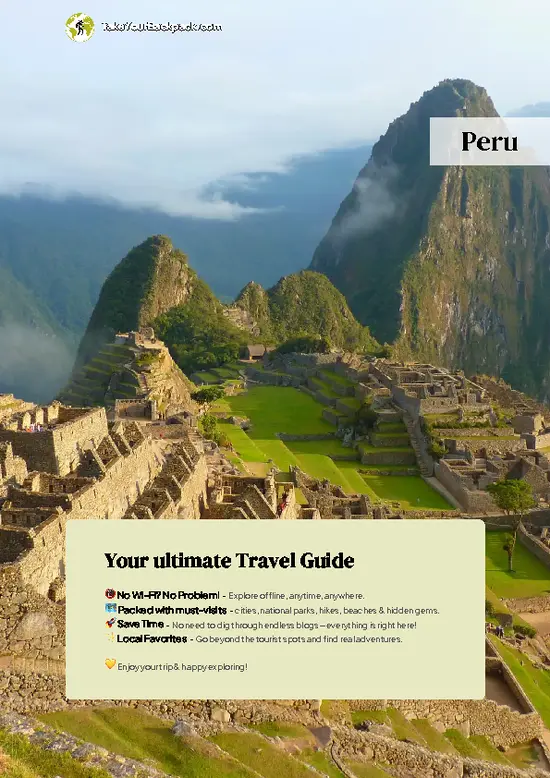
Most people imagine Aguas Calientes as a mystical Andean village; it’s really a cramped rail town that exists almost entirely to feed people up to Machu Picchu. You find it deep in southern Peru, in the cloud forest at the bottom of a steep valley below the ruins, at the end of the train line from Ollantaytambo and Cusco. For backpackers, it’s a necessary pause more than a destination: humid air smelling of river and wet stone, mountains rising like walls on all sides, and a constant shuffle of daypacks and trekking poles. The upside is easy trail access along the Urubamba, quick shuttles to the citadel, hot springs for sore legs, and a guaranteed crowd of other travelers swapping plans over early dinners. Evenings are sleepy and practical, not romantic; think 9 p.m. bedtimes. Compared with Ollantaytambo or Urubamba, Aguas Calientes is more touristic, less soulful, but closer to the prize.

Discover everything you want to know in the 📖 Peru Travel Guide.


Get your Peru guide
118 ranked highlights, routes & tips, works offline (444 pages)
Loading the map 🌍
CLICK TO FILTER
cities
towns
villages
landmarks
national parks
hikes
beaches
attractions
festivals
regions
SHOW COUNTRY’S BESTSHOW ALL

✨ Why go?
Ranked #1 town in Peru
Why Aguas Calientes should be on your travel list

Aguas Calientes is more than just a gateway to Machu Picchu; it’s a breath of fresh air in the midst of your backpacking journey. Nestled in a lush valley, the village is surrounded by towering mountains and the soothing sound of the Urubamba River. This natural beauty creates a serene atmosphere that invites you to slow down.

Backpackers often choose Aguas Calientes as a pause between the bustling cities of Cusco and the ancient ruins. The vibe here is chill, perfect for solo travelers seeking calm or couples wanting to reconnect. You can wander through the local markets, where the scent of fresh empanadas mingles with the earthy aroma of Andean herbs.

While many pass through for just a night, those who linger find joy in the slower pace. Take a morning hike to the nearby waterfalls or … read more 👉
Aguas Calientes is more than just a gateway to Machu Picchu; it’s a breath of fresh air in the midst of your backpacking journey. Nestled in a lush valley, the village is surrounded by towering mountains and the soothing sound of the Urubamba River. This natural beauty creates a serene atmosphere that invites you to slow down.

Backpackers often choose Aguas Calientes as a pause between the bustling cities of Cusco and the ancient ruins. The vibe here is chill, perfect for solo travelers seeking calm or couples wanting to reconnect. You can wander through the local markets, where the scent of fresh empanadas mingles with the earthy aroma of Andean herbs.

While many pass through for just a night, those who linger find joy in the slower pace. Take a morning hike to the nearby waterfalls or soak in the thermal baths, which are a welcome treat after a day of trekking. This village works as a social hub, where you can swap stories with fellow travelers or simply enjoy a quiet evening with a view. If you appreciate a blend of nature, culture, and a touch of tranquility, Aguas Calientes is worth more than just a quick stop.
Want to include Aguas Calientes in your Peru route?
Create a personalized Peru itinerary that includes Aguas Calientes and the places that fit your trip — based on your travel style, budget, and available time. Get your route in seconds.

Generate my trip

💡 HighlightsThe experiences that define the visit

  • Plaza de Armas (Main Square) — The social heart of Aguas Calientes where locals and travelers mingle around food stalls, street musicians and festival activity; great for people-watching and orienting yourself to town life.
  • Parish Church by the Plaza — A small, lived-in church next to the square where you can see local devotions and simple colonial-era religious art; it’s quietly revealing about everyday Andean Catholic customs.
  • Mercado Municipal (Central Market) — No-frills stalls selling fresh produce, soups, Andean snacks and cheap lunches; a real slice of local food culture and the best place to try authentic, inexpensive fare.
  • Estación de Tren (Machu Picchu / Aguas Calientes Station) — More than a transit point: the comings and goings, old timetables and riverside backdrop make it
read more 👉
  • Plaza de Armas (Main Square) — The social heart of Aguas Calientes where locals and travelers mingle around food stalls, street musicians and festival activity; great for people-watching and orienting yourself to town life.
  • Parish Church by the Plaza — A small, lived-in church next to the square where you can see local devotions and simple colonial-era religious art; it’s quietly revealing about everyday Andean Catholic customs.
  • Mercado Municipal (Central Market) — No-frills stalls selling fresh produce, soups, Andean snacks and cheap lunches; a real slice of local food culture and the best place to try authentic, inexpensive fare.
  • Estación de Tren (Machu Picchu / Aguas Calientes Station) — More than a transit point: the comings and goings, old timetables and riverside backdrop make it a lively, photogenic place to feel the town’s pulse.
  • Museo de Sitio Manuel Chávez Ballón — Small archaeology museum that explains Machu Picchu’s finds and context; excellent if you want historical depth before (or after) visiting the citadel.
  • Termas de Aguas Calientes (Hot Springs) — Thermal baths beside the river where hikers and families unwind; inexpensive, relaxing and a proper local ritual after a long trek or Machu Picchu day.
  • Riverside Promenade along the Vilcanota/Urubamba — A pleasant, flat walk with river views, train-watch spots and short bridges — nice for a low-effort stroll and to escape the main street noise.
  • Town Mirador (Viewpoint) — A short, steep climb from town that delivers compact panoramic views of the valley, surrounding peaks and the roofs of Aguas Calientes — perfect for sunrise or late-afternoon light.
  • Artisan Street & Handicraft Alleyways — Concentrated rows of family-run stalls and small workshops where you can inspect (and haggle for) textiles, silver and carved souvenirs; you’ll see traditional techniques and meet makers more often than in big tourist shops.
  • Chocolate & Cacao Workshops — Short hands-on demos and tastings from local chocolatiers (there’s a ChocoMuseo branch and other small shops) that connect you to Andean cacao traditions — tasty and informative.
A few great day-trip highlights just outside town are the world-famous Machu Picchu (plus Huayna Picchu or Machu Picchu Mountain if you have permits), the nearby Jardines de Mandor and Mandor Waterfall, and the steep Putucusi hike — Mandor Gardens is my personal favorite for a peaceful trail and a pretty waterfall close to town.
Spotted a mistake or missing something? Contact us.

Things to do around Aguas Calientes

Ratings based on Tripadvisor reviews. When you book through this link, you support our work at no extra cost to you.

🏘️ NeighborhoodsUnderstanding the local layout

Aguas Calientes is compact but layered, and where you land shapes your whole Machu Picchu experience. Here’s how to read the town’s pulse and pick your spot.

Central Plaza
This is the heartbeat of Aguas Calientes—busy, bustling, and loud. If you want to be steps from restaurants, markets, and the bus stop to Machu Picchu, this is your base. Expect crowds and noise, especially in the evening when tour groups flood back. It’s perfect for a short stay or if you want to maximize your time on the mountain without fussing over transport. Budget options cluster here, but prices can spike due to demand.

Riverfront Area
Just a few blocks from the plaza, the riverfront offers a quieter vibe with green spaces and the soothing sound of flowing water. It’s a good middle ground—still walkable to everything … read more 👉
Aguas Calientes is compact but layered, and where you land shapes your whole Machu Picchu experience. Here’s how to read the town’s pulse and pick your spot.

Central Plaza
This is the heartbeat of Aguas Calientes—busy, bustling, and loud. If you want to be steps from restaurants, markets, and the bus stop to Machu Picchu, this is your base. Expect crowds and noise, especially in the evening when tour groups flood back. It’s perfect for a short stay or if you want to maximize your time on the mountain without fussing over transport. Budget options cluster here, but prices can spike due to demand.

Riverfront Area
Just a few blocks from the plaza, the riverfront offers a quieter vibe with green spaces and the soothing sound of flowing water. It’s a good middle ground—still walkable to everything but with a bit of breathing room. Accommodations here range from mid-tier hostels to boutique lodges, making it ideal for those who want to unwind after a day on the trail without sacrificing convenience.

Upper Town (Mirador Zone)
Climbing uphill from the center, this area is less crowded and cooler in the mornings. The walk is steep but worth it if you want to escape the tourist crush and enjoy views over the town and surrounding jungle. Nightlife is minimal here, so it’s better for longer stays where rest and early starts matter. Expect fewer dining options, so plan accordingly.

Near the Train Station
If you’re arriving late or leaving early, staying near the train station is a practical move. It’s quieter and less touristy, with simple lodgings and local eateries. The trade-off is a 15-20 minute walk to the town center, which can feel longer with a heavy pack. This spot suits travelers who prioritize logistics over ambiance.

Knowing these zones helps you dodge the noise, save time, and soak in the right atmosphere before and after your Machu Picchu adventure.

⌛️ 1 dayWhat you can realistically do in a day

Aguas Calientes is the gateway to Machu Picchu, but it’s more than just a jumping-off point. This small town, squeezed between steep jungle slopes and the roaring Urubamba River, has a raw, earthy energy that hits you as soon as you step off the train. The air is thick with humidity and the scent of wet earth and blooming orchids. It’s a place where the buzz of tourists mixes with the chatter of locals selling fresh fruit and handwoven textiles.

Start your morning early with a stroll through the main street, Avenida Pachacutec. The light here is soft, filtered through mist that clings to the mountains. Grab a strong cup of coffee at one of the local cafés—try Café Inkaterra for a rich, smoky brew that feels like a warm handshake. From there, wander toward the small but lively Mercado Artesanal. … read more 👉
Aguas Calientes is the gateway to Machu Picchu, but it’s more than just a jumping-off point. This small town, squeezed between steep jungle slopes and the roaring Urubamba River, has a raw, earthy energy that hits you as soon as you step off the train. The air is thick with humidity and the scent of wet earth and blooming orchids. It’s a place where the buzz of tourists mixes with the chatter of locals selling fresh fruit and handwoven textiles.

Start your morning early with a stroll through the main street, Avenida Pachacutec. The light here is soft, filtered through mist that clings to the mountains. Grab a strong cup of coffee at one of the local cafés—try Café Inkaterra for a rich, smoky brew that feels like a warm handshake. From there, wander toward the small but lively Mercado Artesanal. It’s a sensory overload of colors and textures, where you can pick up alpaca wool scarves or sample fresh granadilla fruit. This market is a great spot to soak in local life before the crowds swell.

By midday, head to the less-trodden path up to the Mandor Gardens, just a 20-minute walk from town. Most visitors rush to Machu Picchu, but this lush botanical garden offers a peaceful contrast. The trail winds through orchids, hummingbirds, and small waterfalls, a quiet green sanctuary that feels miles away from the tourist bustle. It’s a perfect spot to catch your breath and connect with the jungle’s pulse.

As afternoon fades, circle back to the town’s riverside area near the hot springs. The thermal baths here are a soothing reward after a day of walking. The water is warm but not scalding, surrounded by mossy stones and the constant murmur of the river. Locals and travelers alike soak side by side, sharing stories and laughter. Finish your day with dinner at a small eatery in the Santa Teresa neighborhood, where you can savor hearty Andean dishes like trout fresh from the river, served with a side of mountain views fading into twilight.

Aguas Calientes isn’t just a pit stop; it’s a place where the jungle’s wildness and the Andes’ mystery meet. Spend your day here with curiosity and a slow pace, and you’ll find the town’s heartbeat is worth listening to.
Turn your Aguas Calientes visit into an Peru adventure
Build a complete Peru route with Aguas Calientes, hidden gems, must-see destinations, and realistic travel times included.

Generate my trip

🌤️ When to go?Seasonal considerations and timing


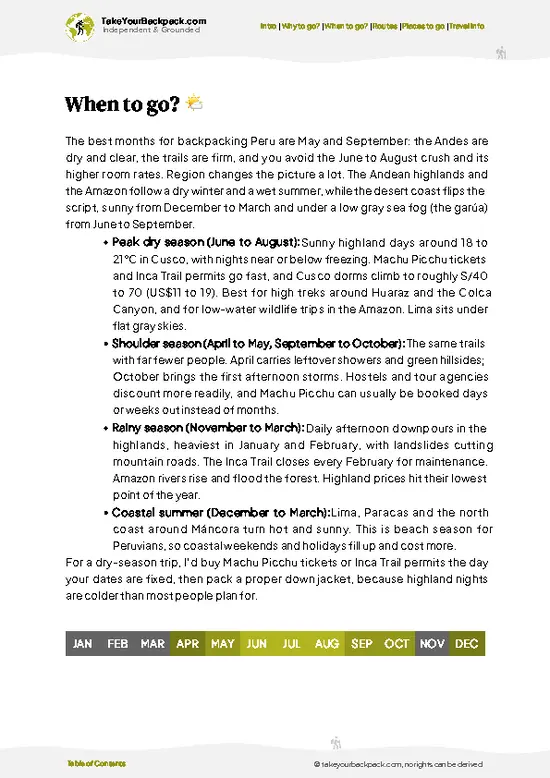
  • Weather: The dry season from May to September offers crisp, clear skies perfect for trekking. Expect daytime highs around 20°C (68°F) and chilly nights dropping to 5°C (41°F). The wet season, November to March, brings heavy rains that turn trails slippery and the air thick with humidity.

  • Temperature: Daytime warmth feels pleasant but can shift quickly in the mountains. Layering is key—mornings start cold, warming to mild afternoons. Nights are cold year-round, often below 10°C (50°F), so pack accordingly.

  • Daylight Hours: Between June and August, daylight stretches to about 11 hours, giving you more time to explore Machu Picchu and the surrounding trails without rushing. In the wet season, shorter days and frequent clouds can limit visibility.

  • Crowds: Peak season coincides with dry
read more 👉

  • Weather: The dry season from May to September offers crisp, clear skies perfect for trekking. Expect daytime highs around 20°C (68°F) and chilly nights dropping to 5°C (41°F). The wet season, November to March, brings heavy rains that turn trails slippery and the air thick with humidity.

  • Temperature: Daytime warmth feels pleasant but can shift quickly in the mountains. Layering is key—mornings start cold, warming to mild afternoons. Nights are cold year-round, often below 10°C (50°F), so pack accordingly.

  • Daylight Hours: Between June and August, daylight stretches to about 11 hours, giving you more time to explore Machu Picchu and the surrounding trails without rushing. In the wet season, shorter days and frequent clouds can limit visibility.

  • Crowds: Peak season coincides with dry months, especially June and July, when the village swells with tourists. This means longer waits and higher prices but also a lively atmosphere. Shoulder months like April and October offer a quieter vibe with fewer people.

  • Seasonal Activities: The dry season is prime for hiking and photography, with vibrant green landscapes and clear views. The wet season showcases lush, misty forests and fewer tourists but requires waterproof gear and patience.

  • Price Fluctuations: Accommodation and tours spike in the dry season, especially mid-year. Booking ahead is essential. The wet season sees lower prices and more availability, making it a budget-friendly option if you can handle the rain.


Pro-tip: Aim for late April or early October—just before or after the dry season—when the weather is still manageable, crowds thin out, and prices drop, giving you a smoother, more intimate experience of Aguas Calientes.


source: climatestotravel.comJANJanuary: fair for travelingFEBFebruary: fair for travelingMARMarch: fair for travelingAPRApril: highly recommended for travelingMAYMay: excellent for travelingJUNJune: excellent for travelingJULJuly: excellent for travelingAUGAugust: excellent for travelingSEPSeptember: excellent for travelingOCTOctober: highly recommended for travelingNOVNovember: fair for travelingDECDecember: fair for traveling
when-to-go

✈️ The backpacker research shortcutPeru Travel Guide

An offline-friendly backpacking guide with optimized travel routes, ranked highlights, transport advice, and the best areas to stay.
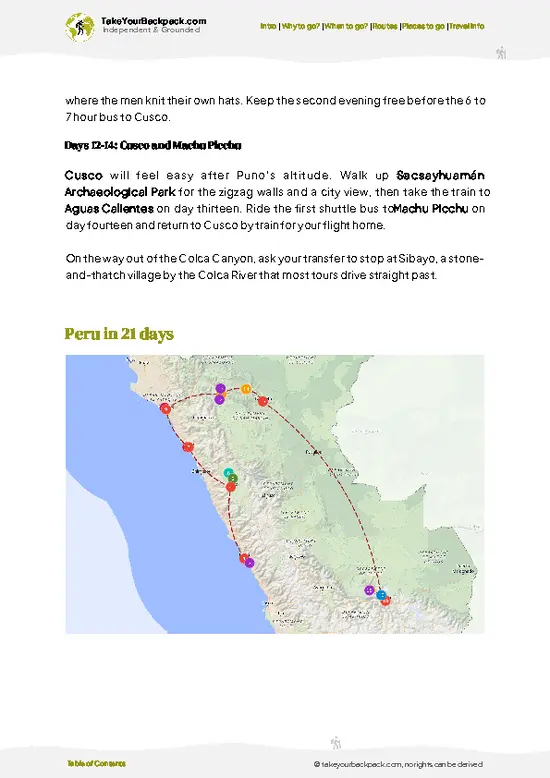
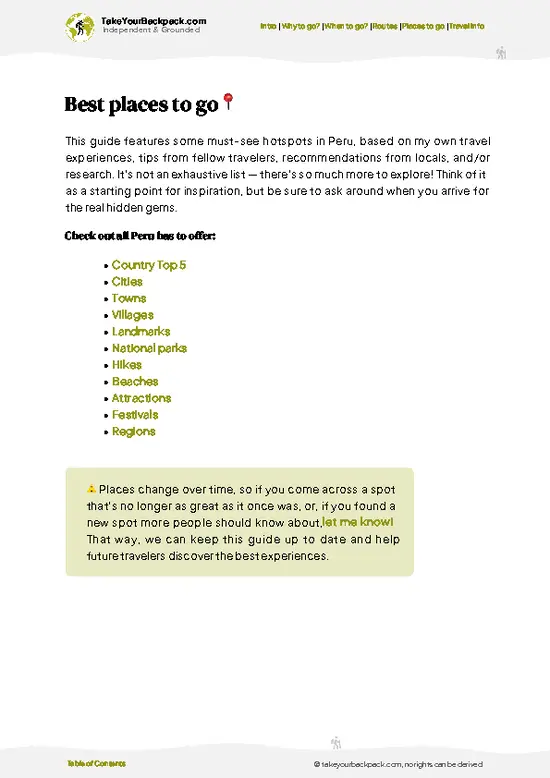
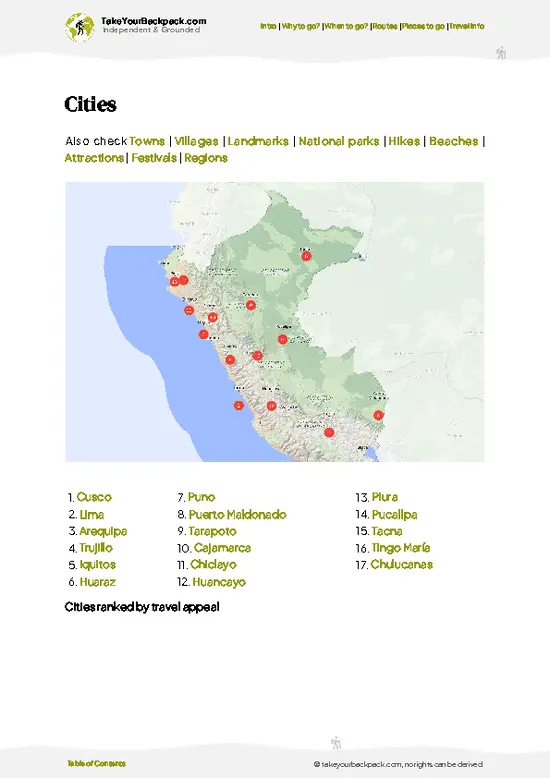
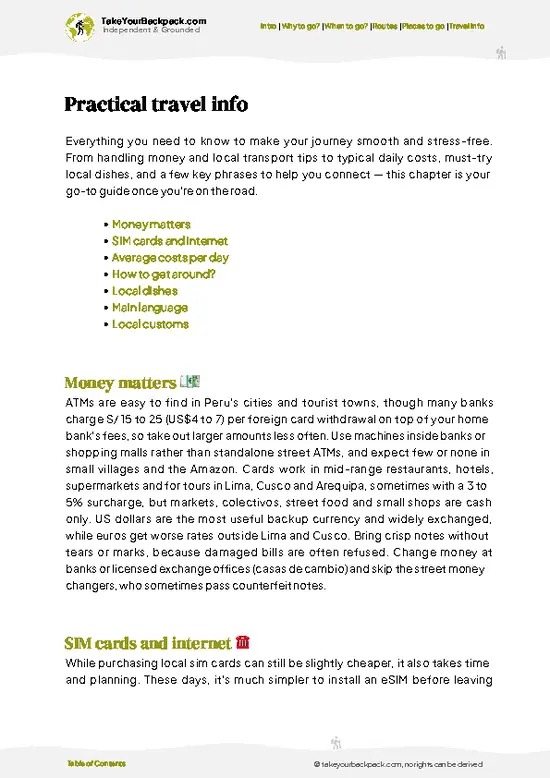
example page 0 from our offline Travel Guide for Peru
example page 1 from our offline Travel Guide for Peru
example page 2 from our offline Travel Guide for Peru
example page 3 from our offline Travel Guide for Peru
example page 4 from our offline Travel Guide for Peru
example page 5 from our offline Travel Guide for Peru
example page 6 from our offline Travel Guide for Peru
example page 7 from our offline Travel Guide for Peru
The digital guide (444 pages) contains:
118 highlights, ranked by travel appeal
Optimized 7, 14 & 21-day travel routes
Cities, national parks, landmarks, beaches
How to get around
Offline-friendly for travel without Wi-Fi
👉 Click to see all 30+ guide features

📅 Plan smarter in minutes, not weeks
Month by month travel advice
Festivals & national holidays
Budget expectations

🗺️ Go to the right places, skip the overrated ones
Honest pros & cons of destinations
Top hikes, parks & viewpoints
Lesser-known places most travelers miss
Clear “worth it vs skip it” guidance

🛏️ Travel smoothly without rookie mistakes
Best areas to stay
Transport systems explained simply
Common scams & safety advice
SIM cards, money & practical tips

🌍 Understand the country, not just visit it
Culture & traditions
52 Essential phrases & customs
Festivals worth planning around
Traveler-friendly historical context
Insights that make places more meaningful

📱 Built for real travel conditions
Fully downloadable PDF
Works completely offline
Optimized for phone use
Useful in remote areas & buses
Everything in one place
Save weeks of stressful planning
Get instant access to your full guide. 30‑day money-back guarantee.


By proceeding you agree to our terms.
Sent to your inbox immediately after payment • 100% Secure Checkout
Best Backpacking Travel Advisor 2025 tourism awardBest Backpacking
Travel Advisor
2025
What others say about Take Your Backpack Guides:
⭐⭐⭐⭐⭐
Fantastic, amazing amount of information!
⭐⭐⭐⭐⭐
My goodness this is amazing, it's what I've been looking for hats off too you!
⭐⭐⭐⭐⭐
I think this is absolutely BRILLIANT
⭐⭐⭐⭐
Very complete and informative. It's still missing places, but I gotta to commend you
⭐⭐⭐⭐⭐
This is truly amazing, thank you, can't wait to explore it with my kids!
⭐⭐⭐⭐⭐
Awesome resource, thank you!
⭐⭐⭐⭐⭐
This is amazing! Can't wait to explore the ones I haven't seen
⭐⭐⭐⭐
I love this! Well done, great idea.
⭐⭐⭐⭐⭐
Thanks for taking the time to make this gem!
⭐⭐⭐⭐⭐
This might be the best website I've ever seen.
⭐⭐⭐⭐⭐
Congratulations, and thank you so much for your work; it's incredibly valuable.
⭐⭐⭐⭐
In all seriousness I think you did a great job pointing out the important spots
⭐⭐⭐⭐⭐
10/10 very good
⭐⭐⭐⭐⭐
As someone who's only just starting to visit regularly this is awesome, thank you.
⭐⭐⭐⭐
Thank you very much! I'm going to visit my dad, it's going to be very useful!
⭐⭐⭐⭐⭐
This is really cool! We'll be travelling for the first time and this definitely come in handy.
⭐⭐⭐⭐⭐
You are now our minister of culture, congratulations 👨‍💼
⭐⭐⭐⭐⭐
Just wanted to tell you that this is a pearl! Going to follow your recommendations.
⭐⭐⭐⭐⭐
This is so cool. I'll definitely be using the resource for my travels soon.
⭐⭐⭐⭐⭐
This is very impressive! Good work.
⭐⭐⭐⭐⭐
This is an amazing and informative site. Very well done!

🛏️ Where to stay?Best areas and accommodation options

In Aguas Calientes, the village that acts as the gateway to Machu Picchu, where you stay shapes your entire experience. The town is small, packed with hostels, guesthouses, and a few budget hotels, but the real trick is balancing proximity, comfort, and price without getting swallowed by tourist noise.

First, consider location. Staying close to the train station or the main bus stop means you’ll dodge the uphill slog with a heavy pack after a long day on the trail. Places like Supertramp Hostel or Gringo Bill’s are right in the thick of it—easy access, lively social scenes, and a chance to swap … read more 👉
In Aguas Calientes, the village that acts as the gateway to Machu Picchu, where you stay shapes your entire experience. The town is small, packed with hostels, guesthouses, and a few budget hotels, but the real trick is balancing proximity, comfort, and price without getting swallowed by tourist noise.

First, consider location. Staying close to the train station or the main bus stop means you’ll dodge the uphill slog with a heavy pack after a long day on the trail. Places like Supertramp Hostel or Gringo Bill’s are right in the thick of it—easy access, lively social scenes, and a chance to swap stories with fellow trekkers. But if you want a quieter night, step a block or two away from the main drag. Hostels like Eco Quechua offer a calmer vibe with the scent of eucalyptus in the air, perfect for recharging before dawn’s early bus to Machu Picchu.

Next, think about facilities. Hot showers and reliable Wi-Fi might seem trivial, but after days on the trail, they feel like a luxury. Many hostels here deliver on that, but check reviews for consistency. Dorms are the norm, but if you want a bit more privacy, some guesthouses offer private rooms at a reasonable premium.

Finally, book early. Aguas Calientes fills up fast, especially in high season. Locking in your spot means less stress and more time to soak in the misty mountain air and the distant hum of the Urubamba River before you head up to the ruins.

🚌 Getting aroundHow to get around Aguas Calientes

Aguas Calientes moves at its own rhythm—less a clock-driven town and more a pulse you feel in the air. The scent of wet earth from the nearby Urubamba River mingles with the sharp tang of roasted coffee beans, while the chatter of travelers and vendors creates a lively, improvisational soundtrack. This isn’t a place where you’ll find rigid timetables or orderly queues; instead, it’s a town that thrives on intuition and flow. The streets are narrow, often crowded, and the pace can feel both hurried and relaxed at once. Understanding this flow is your first step to mastering Aguas Calientes: it’s about timing your moves with the crowd’s energy, knowing when to push forward and when to pause, and using the town’s compact scale to your advantage.


  • Walking: The most essential way to get around.
read more 👉
Aguas Calientes moves at its own rhythm—less a clock-driven town and more a pulse you feel in the air. The scent of wet earth from the nearby Urubamba River mingles with the sharp tang of roasted coffee beans, while the chatter of travelers and vendors creates a lively, improvisational soundtrack. This isn’t a place where you’ll find rigid timetables or orderly queues; instead, it’s a town that thrives on intuition and flow. The streets are narrow, often crowded, and the pace can feel both hurried and relaxed at once. Understanding this flow is your first step to mastering Aguas Calientes: it’s about timing your moves with the crowd’s energy, knowing when to push forward and when to pause, and using the town’s compact scale to your advantage.


  • Walking: The most essential way to get around. Aguas Calientes is small—about 2 kilometers from end to end—so walking is not just practical, it’s immersive. The uneven cobblestone streets can be slippery when wet, so sturdy shoes are a must. Walking lets you soak in the misty mountain air and catch spontaneous street performances or local market stalls. It’s free, flexible, and the best way to navigate the town’s unpredictable flow.


  • Shuttle Bus to Machu Picchu Entrance: Runs roughly from 5:30 AM to 5:30 PM, departing every 10-15 minutes. It costs around $12 USD one way. The ride is short—about 25 minutes—but expect lines, especially early morning and late afternoon. The buses are basic but reliable, and the steep, winding road means you’ll want to hold on tight. This is your fastest, most direct link to the ruins, but timing is everything to avoid the crush.


  • Taxi Services: Available but limited and pricier than the shuttle, usually around $15-$20 USD for the same route. Taxis offer door-to-door convenience and a bit more comfort, but the narrow streets and traffic congestion can make this option slower during peak times. Use taxis if you’re traveling with heavy gear or want to avoid the shuttle lines, but factor in the unpredictable traffic flow.


  • Train Station Access: The train station is the town’s main gateway, with services arriving from Cusco and Ollantaytambo. Trains run early morning through evening, but schedules vary by season and operator. Tickets are pricey but unavoidable for most travelers. From the station, it’s a 10-minute walk or short taxi ride into town. Knowing train times helps you plan your arrival and departure to sync with local rhythms and avoid waiting in the humid, crowded station.

👛 Costs (as of 1 May 2025)Money, prices, and spending tips

Backpacking in Aguas Calientes, the gateway to Machu Picchu, comes with a price tag that reflects its unique location and tourist draw. Here’s a realistic breakdown of what you’ll spend daily as an independent traveler navigating this bustling mountain town.
  • Dorm Accommodation: Expect to pay between $10 and $20 USD per night for a bed in a shared dorm. The options here range from basic hostels with simple amenities to slightly more polished spots with better views or included breakfast. Prices spike during peak season, so booking ahead can save you a few bucks.
  • Meals: Eating out in Aguas Calientes can be surprisingly affordable if you stick to local eateries. A hearty meal at a modest restaurant or street stall will run you about $3 to $7 USD. Tourist-oriented restaurants near the train
read more 👉
Backpacking in Aguas Calientes, the gateway to Machu Picchu, comes with a price tag that reflects its unique location and tourist draw. Here’s a realistic breakdown of what you’ll spend daily as an independent traveler navigating this bustling mountain town.
  • Dorm Accommodation: Expect to pay between $10 and $20 USD per night for a bed in a shared dorm. The options here range from basic hostels with simple amenities to slightly more polished spots with better views or included breakfast. Prices spike during peak season, so booking ahead can save you a few bucks.
  • Meals: Eating out in Aguas Calientes can be surprisingly affordable if you stick to local eateries. A hearty meal at a modest restaurant or street stall will run you about $3 to $7 USD. Tourist-oriented restaurants near the train station or main plaza push prices higher, often $10 or more for a dish. Breakfasts are cheaper, often under $3, especially if you grab fruit or pastries from local markets.
  • Local Transport: The town itself is small and walkable, so you can mostly skip transport costs. However, if you want to catch a shuttle bus up to Machu Picchu, budget around $12 USD for a round trip. Taxis exist but are rarely necessary unless you’re hauling heavy gear or traveling late at night.
  • Basic Activities/Entry Fees: The main expense here is the Machu Picchu entrance ticket, which costs about $45 USD for foreign adults. If you plan to hike Huayna Picchu or Machu Picchu Mountain, add another $15 to $20 USD. Other local attractions and hot springs charge small fees, usually under $5 USD.
  • Miscellaneous Expenses: Think water, snacks, souvenirs, or a coffee fix. Bottled water runs about $1 to $2 USD, and a coffee or juice can be $1.50 to $3. Souvenirs vary widely, but small trinkets or textiles start around $5. Keep some cash handy for tips or unexpected costs.

All told, you’re looking at a daily budget roughly between $30 and $60 USD, depending on how much you splurge on meals and extras. Aguas Calientes isn’t dirt cheap, but with some savvy choices—like eating local and booking dorm beds early—you can keep your costs manageable while soaking in the mountain air and anticipation before Machu Picchu.


source: peru.travel
⚠️ Prices can change and everyone travels differently, so take this as a rough guide. Hope it helps you plan your adventure!

🚌 Day tripsBest day trips from Aguas Calientes

Aguas Calientes is your launchpad for some of the most rewarding day trips in the Sacred Valley. With its vibrant atmosphere and proximity to stunning landscapes, you’ll find that each journey offers a unique slice of Peru’s rich tapestry. Let’s dive into some worthwhile adventures.

1. Machu Picchu
This is the big one. Just a 30-minute train ride from Aguas Calientes, you’ll arrive at the iconic ruins. The early morning light casts a golden hue over the ancient stones, and the mist rising from the mountains adds an ethereal quality. Tickets can run around $50, plus the train fare, which varies but typically hovers around $30 each way. Aim for the dry season from May to September for the best weather. A common mistake? Many first-timers rush through the site. Take your time; explore the … read more 👉
Aguas Calientes is your launchpad for some of the most rewarding day trips in the Sacred Valley. With its vibrant atmosphere and proximity to stunning landscapes, you’ll find that each journey offers a unique slice of Peru’s rich tapestry. Let’s dive into some worthwhile adventures.

1. Machu Picchu
This is the big one. Just a 30-minute train ride from Aguas Calientes, you’ll arrive at the iconic ruins. The early morning light casts a golden hue over the ancient stones, and the mist rising from the mountains adds an ethereal quality. Tickets can run around $50, plus the train fare, which varies but typically hovers around $30 each way. Aim for the dry season from May to September for the best weather. A common mistake? Many first-timers rush through the site. Take your time; explore the lesser-known paths for a more intimate experience. 👉 Explore Aguas Calientes

2. Huayna Picchu
For those seeking a challenge, the hike up Huayna Picchu is a must. Starting from Machu Picchu, this steep ascent takes about an hour and rewards you with breathtaking views of the ruins below. The ticket costs an additional $15, and you’ll want to reserve it in advance, as spots fill quickly. The best time to go is early morning, when the air is crisp and the crowds are thin. Don’t underestimate the climb; bring plenty of water and wear sturdy shoes. 👉 Explore Aguas Calientes

3. Mandor Gardens
Just a short 30-minute walk from Aguas Calientes, Mandor Gardens is a serene escape. The trail winds through lush vegetation, and the scent of orchids fills the air. Entry is free, making it a budget-friendly option. Spend a few hours wandering the gardens and soaking in the tranquility. The best time to visit is in the morning when the flowers are in full bloom. A common oversight is not bringing snacks; pack a light lunch to enjoy amidst the beauty. 👉 Explore Aguas Calientes

4. The Inca Trail (Short Trek)
If you’re up for a bit of adventure, consider a short trek along the Inca Trail. You can start from Aguas Calientes and hike to the Sun Gate, which offers a stunning view of Machu Picchu. The trek takes about 2-3 hours, and while it’s free, you’ll want to bring snacks and water. The dry season is ideal for this trek, as the trails can get muddy during the rainy season. Many first-timers underestimate the elevation; take it slow and enjoy the journey. 👉 Explore Aguas Calientes

5. Ollantaytambo
A day trip to Ollantaytambo is a fantastic way to experience Incan history. A 90-minute train ride from Aguas Calientes leads you to this ancient town, where you can explore impressive ruins and charming streets. Expect to spend around $25 for the train and a small entry fee of about $5. The best time to visit is during the shoulder seasons, when the crowds are lighter. A common mistake is to overlook the town itself; take time to wander and enjoy local cuisine. 👉 Explore Aguas Calientes
Want to know what more Peru offers?
The Peru Travel Guide describes 118 highlights, from cities to national parks, from beaches to hikes

Get the Travel Guide -

🛡️ SafetyStaying Safe: What Travelers Should Know

Aguas Calientes feels safe in the daylight, especially around the main plaza and market where the buzz of tourists and locals blends with the scent of fresh coffee and grilled corn. Still, the narrow streets can get crowded and a bit chaotic, so keep your backpack close and your wits about you—pickpockets are drawn to distracted travelers, not the alert ones. Solo travelers should avoid wandering too far after dark; the town quiets down quickly, and the dimly lit alleys don’t offer much in the way of street life or security. Stick to well-lit, populated areas if you’re out late.

Scams here aren’t elaborate but can be persistent: vendors might overcharge or push overpriced souvenirs, and unofficial guides may promise shortcuts to Machu Picchu that don’t exist. The best defense is a calm, confident … read more 👉
Aguas Calientes feels safe in the daylight, especially around the main plaza and market where the buzz of tourists and locals blends with the scent of fresh coffee and grilled corn. Still, the narrow streets can get crowded and a bit chaotic, so keep your backpack close and your wits about you—pickpockets are drawn to distracted travelers, not the alert ones. Solo travelers should avoid wandering too far after dark; the town quiets down quickly, and the dimly lit alleys don’t offer much in the way of street life or security. Stick to well-lit, populated areas if you’re out late.

Scams here aren’t elaborate but can be persistent: vendors might overcharge or push overpriced souvenirs, and unofficial guides may promise shortcuts to Machu Picchu that don’t exist. The best defense is a calm, confident “no, gracias” and a clear plan—book your train and tours through official channels. When you move through Aguas Calientes with steady eyes and a relaxed but purposeful stride, the town’s charm shines through without hassle.

Other Peruvian towns near Aguas Calientes

Explore more nearby:

  • Ayacuho—Andean plazas, colonial churches, artisan workshops| 184 km away
  • Huancavelica—colonial churches, mountain valleys, thermal baths| 269 km away
  • Nazca—ancient geoglyphs, arid plains, desert airstrips| 320 km away

💡 Not sure where to go next?
Create a personalized itinerary for Peru including Aguas Calientes and the places that fit your trip.

Generate my itinerary

👉 Discover all towns

Or checkout all Peru has to offer (think cities, towns, villages, national parks, hikes, beaches, festivals)
Country photo of Peru

We 💚 feedbackParting advice and final tips

Aguas Calientes is your gateway to Machu Picchu, and the thrill of waking up to the sound of rushing water and the scent of fresh coffee is unbeatable. But be ready for the crowds; it’s a bustling hub that can feel overwhelming, especially during peak season. Embrace the chaos, though—it adds to the experience. Just remember to carve out some quiet moments to soak in the beauty around you. It’s all part of the adventure.

✈️ When did I visit Peru?
Peru I visited during my half year trip through South and Central America back in 2003

✍️ Help improve this page!
The information on this page is based on my own backpacking experience in Peru, supplemented with up-to-date research and feedback from other travelers. Travel details can change, so if you notice anything outdated or incomplete, feel free to let me know.


🙋‍♂️ Give feedback

👋 Meet the founderWho’s Behind Take Your Backpack?

Johan, backpacker and founder of TakeYourBackpackHi, I’m Johan (Netherlands 🇳🇱), the creator of TakeYourBackpack. Over the past decade, I’ve backpacked through 80+ countries across six continents, gaining extensive experience with independent travel, long-term trips, and overland routes.

This site is built on a combination of firsthand travel experience and carefully curated insights from other backpackers. Many guides are based on places I’ve personally visited, while others bring together tips, observations, and practical advice shared by trusted travelers I’ve met along the way.

The goal is to provide realistic, experience-driven guidance — not generic itineraries — so you can explore destinations with better context, clearer expectations, and more confidence.

Get full Peru guide •
Instant download • 118 highlights • Full Offline guide