
×

Peru🇵🇪 | citiesHuarazCordillera Blanca, trekking base, glacial lakes | things to do and best time to go

Explore TrujilloExplore Tarapoto

Backpacking in Huaraz
🌟 Highlightcity ranked #6
By Johan Kruseman 🇳🇱 | Updated September 4, 2026

Most people online sell Huaraz as a pure mountain base camp, but the surprise is how unapologetically scruffy and urban it feels for a trekking hub this close to world-class peaks. Huaraz sits in Peru’s Ancash region, in the Callejón de Huaylas, between the Cordillera Blanca and Cordillera Negra. For backpackers, it’s a trade: you get cheap hostels, easy tour agencies, and fast access to hikes like Laguna 69 and Santa Cruz, but you don’t get a charming colonial center or polished cafés on every corner. The town is noisy, concrete-heavy, and a bit chaotic, yet it’s far easier to meet other hikers here than in Trujillo or Chimbote, and nightlife is lively in a rough-around-the-edges way. It’s generally safe if you use city smarts, and logistically simple, but you come for the mountains, not the city itself.

Discover everything you want to know in the 📖 Peru Travel Guide.


Get your Peru guide
113 ranked highlights, routes & tips, works offline (416 pages)
Loading the map 🌍
CLICK TO FILTER
cities
towns
villages
landmarks
national parks
hikes
beaches
attractions
festivals
regions
SHOW COUNTRY’S BESTSHOW ALL

✨ Why go?
Ranked #6 city in Peru
The unique appeal for travelers

Huaraz is a backpacker’s hub in Peru, and for good reason. It’s a basecamp for some of the most breathtaking day trips in the Andes, making it a strategic stop on your route. The highlights here are numerous, but what really sets Huaraz apart is its affordability. You can find cozy hostels that cater to budget travelers, often with a social vibe that makes meeting fellow adventurers easy.

The food scene is a delightful mix of local and international flavors, with plenty of options that won’t break the bank. Plus, the city is walkable, allowing you to explore its charming streets without the hassle of transport. When the sun sets, the nightlife offers a laid-back atmosphere where you can unwind after a day of trekking.

Finally, Huaraz serves as a convenient launchpad for onward travel, … read more 👉
Huaraz is a backpacker’s hub in Peru, and for good reason. It’s a basecamp for some of the most breathtaking day trips in the Andes, making it a strategic stop on your route. The highlights here are numerous, but what really sets Huaraz apart is its affordability. You can find cozy hostels that cater to budget travelers, often with a social vibe that makes meeting fellow adventurers easy.

The food scene is a delightful mix of local and international flavors, with plenty of options that won’t break the bank. Plus, the city is walkable, allowing you to explore its charming streets without the hassle of transport. When the sun sets, the nightlife offers a laid-back atmosphere where you can unwind after a day of trekking.

Finally, Huaraz serves as a convenient launchpad for onward travel, whether you’re heading to the coast or deeper into the mountains. If you’re looking for a place that balances comfort and adventure, Huaraz is worth more than just a quick stop.
Want to include Huaraz in your Peru route?
Create a personalized Peru itinerary that includes Huaraz and the places that fit your trip — based on your travel style, budget, and available time. Get your route in seconds.

Generate my trip

💡 HighlightsMust-see experiences and standout moments

  1. Plaza de Armas — The beating heart of Huaraz: people-watching, market stalls, street vendors and a good orientation point for the city’s rhythms. Great for an early-morning coffee and to feel local life without leaving the center.
  2. Catedral de Huaraz (Nuestra Señora de la Asunción) — Rebuilt after the 1970 quake, the cathedral combines local devotion with simple Andean baroque touches; the plaza-facing façade and the interior murals tell a lot about the city’s resilience.
  3. Museo Regional de Ancash (Antonio Raimondi) — The best place in town for pre-Columbian artifacts, highland ethnography and natural-history context for the Cordillera Blanca. Compact but informative; useful before heading into the mountains.
  4. Mercado Central / Mercado Modelo — Real food culture: fresh produce, roasted cuy
read more 👉
  1. Plaza de Armas — The beating heart of Huaraz: people-watching, market stalls, street vendors and a good orientation point for the city’s rhythms. Great for an early-morning coffee and to feel local life without leaving the center.
  2. Catedral de Huaraz (Nuestra Señora de la Asunción) — Rebuilt after the 1970 quake, the cathedral combines local devotion with simple Andean baroque touches; the plaza-facing façade and the interior murals tell a lot about the city’s resilience.
  3. Museo Regional de Ancash (Antonio Raimondi) — The best place in town for pre-Columbian artifacts, highland ethnography and natural-history context for the Cordillera Blanca. Compact but informative; useful before heading into the mountains.
  4. Mercado Central / Mercado Modelo — Real food culture: fresh produce, roasted cuy and anticuchos, herbalistas, and cheap local meals. Go early, walk the aisles, try a jugo or a local breakfast; it’s where Huaraz’s flavors and daily life meet.
  5. Mercado Artesanal — Small stalls and booths selling alpaca textiles, woven belts, carved gourds and other regional crafts. Not polished tourist kitsch — you can still find honest makers and haggle a fair price.
  6. Mirador (the hilltop cross) — A short uphill walk from the centre leads to a cross and viewpoints over the city and the snowline of the Cordillera Blanca. It’s a quick acclimatization hike with very rewarding light at sunrise or late afternoon.
  7. Casa de la Cultura / Centro Cultural — Small rotating shows, folk music nights, exhibitions and local theater. Check the schedule — you’ll often catch a community concert, photo show or an artisan demo that gives a deeper feel for local creativity.
  8. Estadio Rosas Pampa — If there’s a match, go. Local football is loud, messy and fun; even outside matchday the stadium area shows how sport anchors community life at altitude.
  9. Avenida Luzuriaga and José Olaya (main street strip) — The city’s social spine: backpacker cafes, guide offices, bakeries and cheap restaurants. Good for sorting logistics, grabbing a decent coffee, and hearing the latest trail and weather gossip.
  10. Iglesia La Merced / small colonial churches — A cluster of older churches and chapels around the central blocks where you can see local religious art, attend a mass if you want, and observe the devotional side of Huaraz life up close.
A few superb day trips outside the city: Laguna Wilcacocha (short, close hike — my personal favorite), Laguna 69, Pastoruri Glacier and Laguna Parón — all easily done as full-day excursions from Huaraz.
Spotted a mistake or missing something? Contact us.

Things to do in Huaraz

Ratings based on Tripadvisor reviews. When you book through this link, you support our work at no extra cost to you.

🏘️ NeighborhoodsNeighborhood guide to Huaraz

Huaraz is a backpacker’s playground, where the Andes loom large and adventure is just around the corner. Here’s how to navigate its neighborhoods for the best experience.

Centro: This is the heart of Huaraz. You’ll find a mix of budget hostels and local eateries. The vibe is lively, perfect for meeting fellow travelers. Walkability is high; everything you need is within a few blocks. Nightlife is decent, with bars that cater to backpackers. Ideal for short stays, but longer-term visitors might find it a bit noisy.

Jr. José Olaya: A quieter option, this area offers a more local feel. Hostels here are slightly pricier but often come with better amenities. It’s a short walk to the Centro, making it easy to dip into the action. Great for longer stays if you prefer a peaceful environment.

San read more 👉
Huaraz is a backpacker’s playground, where the Andes loom large and adventure is just around the corner. Here’s how to navigate its neighborhoods for the best experience.

Centro: This is the heart of Huaraz. You’ll find a mix of budget hostels and local eateries. The vibe is lively, perfect for meeting fellow travelers. Walkability is high; everything you need is within a few blocks. Nightlife is decent, with bars that cater to backpackers. Ideal for short stays, but longer-term visitors might find it a bit noisy.

Jr. José Olaya: A quieter option, this area offers a more local feel. Hostels here are slightly pricier but often come with better amenities. It’s a short walk to the Centro, making it easy to dip into the action. Great for longer stays if you prefer a peaceful environment.

San Francisco: This neighborhood is a hidden treasure. It’s a bit farther from the main attractions, but the trade-off is tranquility. Accommodations are affordable, and you’ll find some fantastic local markets. Perfect for those who want to immerse themselves in daily life. Transport options are limited, so be ready to walk or take a taxi.

Monterrey: Known for its thermal baths, this area is a unique draw. It’s a bit of a trek from the city center, but the experience is worth it. Ideal for longer stays if you want to unwind after trekking. The vibe is relaxed, with fewer tourists around.

⌛️ 1 day1-day itinerary for Huaraz

Huaraz, nestled in the Peruvian Andes, is a gateway to breathtaking landscapes and rich culture. It’s a hub for trekkers and climbers, but it also offers a vibrant local life that’s often overlooked. Spend a day here, and you’ll find a blend of adventure and authenticity.

Start your morning with a stroll through the bustling Plaza de Armas. Grab a breakfast of fresh bread and local cheese from a nearby market stall. The plaza is surrounded by charming colonial architecture, and the energy is infectious. After fueling up, head to the nearby Museo Arqueológico de Ancash. This often-missed spot showcases pre-Incan artifacts and gives you a deeper understanding of the region’s history.

In the afternoon, make your way to the picturesque neighborhood of San Francisco. Here, you can wander through … read more 👉
Huaraz, nestled in the Peruvian Andes, is a gateway to breathtaking landscapes and rich culture. It’s a hub for trekkers and climbers, but it also offers a vibrant local life that’s often overlooked. Spend a day here, and you’ll find a blend of adventure and authenticity.

Start your morning with a stroll through the bustling Plaza de Armas. Grab a breakfast of fresh bread and local cheese from a nearby market stall. The plaza is surrounded by charming colonial architecture, and the energy is infectious. After fueling up, head to the nearby Museo Arqueológico de Ancash. This often-missed spot showcases pre-Incan artifacts and gives you a deeper understanding of the region’s history.

In the afternoon, make your way to the picturesque neighborhood of San Francisco. Here, you can wander through local artisan shops and perhaps pick up a unique piece of handmade jewelry. Don’t skip a visit to the nearby Laguna Wilcacocha. It’s a short hike, but the views of the surrounding mountains are worth every step. You’ll find fewer tourists here, allowing for a more intimate experience with nature.

As the sun begins to set, return to the city and explore the vibrant food scene. Head to a local eatery in the Jirón José Olaya area for a plate of ceviche that will make your taste buds dance. Pair it with a refreshing chicha morada, a traditional Peruvian drink.

End your day at a cozy café, perhaps Café Andino, where you can reflect on your adventures over a cup of rich Peruvian coffee. Huaraz may be a small city, but it’s packed with experiences that resonate long after you leave.
Turn your Huaraz visit into an Peru adventure
Build a complete Peru route with Huaraz, hidden gems, must-see destinations, and realistic travel times included.

Generate my trip

🌤️ When to go?Choosing the right time of year


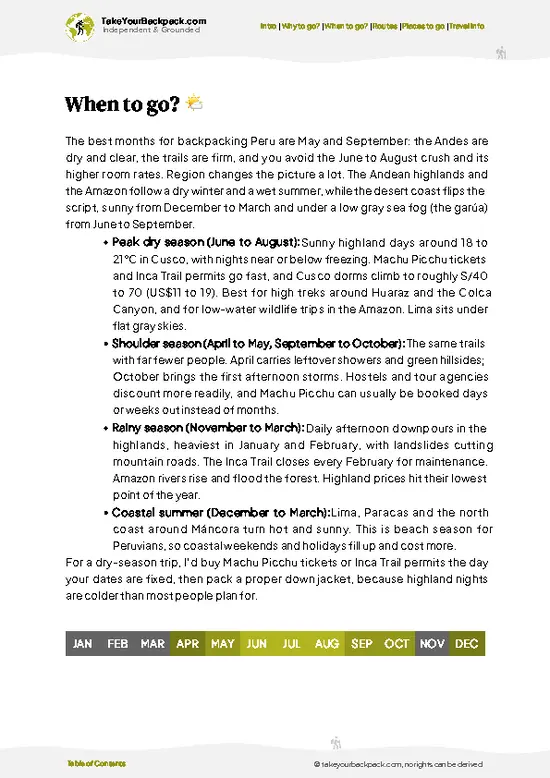
  • Weather: The dry season from May to September is prime for backpacking. Expect clear skies and minimal rain, which means trails stay accessible and views of the Cordillera Blanca are sharp. The wet season (October to April) brings heavy afternoon showers that can turn paths to mud and increase landslide risks.

  • Temperature: Daytime temps hover around 15-20°C (59-68°F) during the dry months, perfect for hiking without overheating. Nights can dip below freezing, especially in June and July, so pack layers. The wet season is milder but damp, with highs around 18°C (64°F) and chilly nights.

  • Daylight Hours: From May to August, daylight stretches to about 11-12 hours, giving you ample time to tackle long treks. The rest of the year, daylight shrinks slightly, but never drastically—still enough
read more 👉

  • Weather: The dry season from May to September is prime for backpacking. Expect clear skies and minimal rain, which means trails stay accessible and views of the Cordillera Blanca are sharp. The wet season (October to April) brings heavy afternoon showers that can turn paths to mud and increase landslide risks.

  • Temperature: Daytime temps hover around 15-20°C (59-68°F) during the dry months, perfect for hiking without overheating. Nights can dip below freezing, especially in June and July, so pack layers. The wet season is milder but damp, with highs around 18°C (64°F) and chilly nights.

  • Daylight Hours: From May to August, daylight stretches to about 11-12 hours, giving you ample time to tackle long treks. The rest of the year, daylight shrinks slightly, but never drastically—still enough for solid daily hikes.

  • Crowds: Peak season (June-August) draws more trekkers, especially around the Santa Cruz trail. You’ll find busier campsites and higher demand for guides. Shoulder months like May and September offer a quieter experience with nearly the same weather perks.

  • Seasonal Activities: Dry months are ideal for climbing, trekking, and exploring archaeological sites. The wet season is better for cultural immersion and local festivals but less reliable for outdoor adventures.

  • Price Fluctuations: Expect accommodation and guide prices to spike during the dry season’s peak months. Booking ahead can save money. The wet season offers lower prices but comes with the trade-off of less predictable weather and trail conditions.


Pro-tip: Aim for late May or early September to balance good weather, fewer crowds, and better prices—your smartest move for a high-value Huaraz trip.


source: climatestotravel.comJANJanuary: fair for travelingFEBFebruary: fair for travelingMARMarch: fair for travelingAPRApril: fair for travelingMAYMay: highly recommended for travelingJUNJune: excellent for travelingJULJuly: excellent for travelingAUGAugust: excellent for travelingSEPSeptember: highly recommended for travelingOCTOctober: fair for travelingNOVNovember: fair for travelingDECDecember: fair for traveling
when-to-go

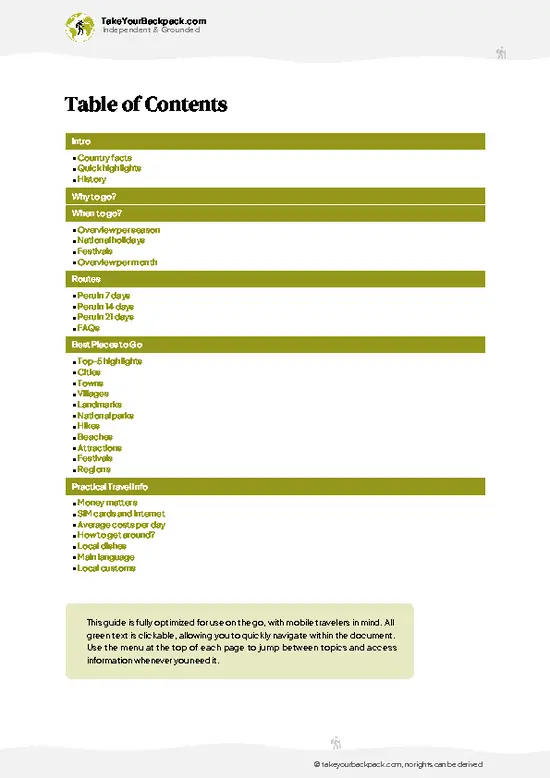
✈️ The backpacker research shortcutPeru Travel Guide

An offline-friendly backpacking guide with optimized travel routes, ranked highlights, transport advice, and the best areas to stay.
example page 0 from our offline Travel Guide for Peru
example page 1 from our offline Travel Guide for Peru
example page 2 from our offline Travel Guide for Peru
example page 3 from our offline Travel Guide for Peru
example page 4 from our offline Travel Guide for Peru
example page 5 from our offline Travel Guide for Peru
example page 6 from our offline Travel Guide for Peru
example page 7 from our offline Travel Guide for Peru
The digital guide (416 pages) contains:
113 highlights, ranked by travel appeal
Optimized 7, 14 & 21-day travel routes
Cities, national parks, landmarks, beaches
How to get around
Offline-friendly for travel without Wi-Fi
👉 Click to see all 30+ guide features

📅 Plan smarter in minutes, not weeks
Month by month travel advice
Festivals & national holidays
Budget expectations

🗺️ Go to the right places, skip the overrated ones
Honest pros & cons of destinations
Top hikes, parks & viewpoints
Lesser-known places most travelers miss
Clear “worth it vs skip it” guidance

🛏️ Travel smoothly without rookie mistakes
Best areas to stay
Transport systems explained simply
Common scams & safety advice
SIM cards, money & practical tips

🌍 Understand the country, not just visit it
Culture & traditions
52 Essential phrases & customs
Festivals worth planning around
Traveler-friendly historical context
Insights that make places more meaningful

📱 Built for real travel conditions
Fully downloadable PDF
Works completely offline
Optimized for phone use
Useful in remote areas & buses
Everything in one place
Save weeks of stressful planning
Get instant access to your full guide. 30‑day money-back guarantee.
+ Add another guide for just US$7.80

By proceeding you agree to our terms.
Sent to your inbox immediately after payment • 100% Secure Checkout
Best Backpacking Travel Advisor 2025 tourism awardBest Backpacking
Travel Advisor
2025
What others say about Take Your Backpack Guides:
⭐⭐⭐⭐⭐
Fantastic, amazing amount of information!
⭐⭐⭐⭐⭐
My goodness this is amazing, it's what I've been looking for hats off too you!
⭐⭐⭐⭐⭐
I think this is absolutely BRILLIANT
⭐⭐⭐⭐
Very complete and informative. It's still missing places, but I gotta to commend you
⭐⭐⭐⭐⭐
This is truly amazing, thank you, can't wait to explore it with my kids!
⭐⭐⭐⭐⭐
Awesome resource, thank you!
⭐⭐⭐⭐⭐
This is amazing! Can't wait to explore the ones I haven't seen
⭐⭐⭐⭐
I love this! Well done, great idea.
⭐⭐⭐⭐⭐
Thanks for taking the time to make this gem!
⭐⭐⭐⭐⭐
This might be the best website I've ever seen.
⭐⭐⭐⭐⭐
Congratulations, and thank you so much for your work; it's incredibly valuable.
⭐⭐⭐⭐
In all seriousness I think you did a great job pointing out the important spots
⭐⭐⭐⭐⭐
10/10 very good
⭐⭐⭐⭐⭐
As someone who's only just starting to visit regularly this is awesome, thank you.
⭐⭐⭐⭐
Thank you very much! I'm going to visit my dad, it's going to be very useful!
⭐⭐⭐⭐⭐
This is really cool! We'll be travelling for the first time and this definitely come in handy.
⭐⭐⭐⭐⭐
You are now our minister of culture, congratulations 👨‍💼
⭐⭐⭐⭐⭐
Just wanted to tell you that this is a pearl! Going to follow your recommendations.
⭐⭐⭐⭐⭐
This is so cool. I'll definitely be using the resource for my travels soon.
⭐⭐⭐⭐⭐
This is very impressive! Good work.
⭐⭐⭐⭐⭐
This is an amazing and informative site. Very well done!

🛏️ Where to stay?Choosing the right base

Downtown Huaraz is the undeniable hub for backpackers who want to plug into the city’s pulse without draining their wallets. It’s where safety meets social energy—streets are lively but manageable, with a steady flow of fellow travelers and locals. Hostels cluster here, offering everything from dorm beds to budget private rooms, making it easy to find a spot that fits your comfort threshold without blowing your budget. The vibe is casual but buzzing, with cafes, markets, and tour agencies all within walking distance, so you’re never far from planning your next trek or swapping stories over a cheap … read more 👉
Downtown Huaraz is the undeniable hub for backpackers who want to plug into the city’s pulse without draining their wallets. It’s where safety meets social energy—streets are lively but manageable, with a steady flow of fellow travelers and locals. Hostels cluster here, offering everything from dorm beds to budget private rooms, making it easy to find a spot that fits your comfort threshold without blowing your budget. The vibe is casual but buzzing, with cafes, markets, and tour agencies all within walking distance, so you’re never far from planning your next trek or swapping stories over a cheap beer.

Compared to the quieter, more residential neighborhoods on the city’s outskirts, downtown’s advantage is clear: you trade a bit of peace for convenience and connection. If you want to maximize social opportunities and ease of access to gear shops and transport, this is your zone. The trade-off is a bit more noise and foot traffic, but that’s the price for being at the heart of the action. For solo backpackers especially, this area offers a natural safety net—people around, plenty of hostel common areas, and a vibe that encourages mingling without pressure.

🚌 Getting aroundHow to get from A to B

Huaraz moves at its own rhythm—neither a frantic rush nor a laid-back drift. It’s a city where the Andes’ pulse sets the pace, blending a mix of informal hustle and surprisingly reliable routines. You’ll find that timing here is a flexible concept, shaped by mountain weather, local markets, and the steady flow of trekkers and locals alike. It’s a place where you can lean into the chaos or master the system, but either way, understanding the trade-offs between time, money, and comfort is your ticket to winning the game.


  • Walking: The most straightforward and budget-friendly way to get around Huaraz’s compact center. It costs nothing, offers maximum flexibility, and lets you soak in the city’s street life. Expect to spend 10-30 minutes between most key spots, depending on your pace and altitude
read more 👉
Huaraz moves at its own rhythm—neither a frantic rush nor a laid-back drift. It’s a city where the Andes’ pulse sets the pace, blending a mix of informal hustle and surprisingly reliable routines. You’ll find that timing here is a flexible concept, shaped by mountain weather, local markets, and the steady flow of trekkers and locals alike. It’s a place where you can lean into the chaos or master the system, but either way, understanding the trade-offs between time, money, and comfort is your ticket to winning the game.


  • Walking: The most straightforward and budget-friendly way to get around Huaraz’s compact center. It costs nothing, offers maximum flexibility, and lets you soak in the city’s street life. Expect to spend 10-30 minutes between most key spots, depending on your pace and altitude adjustment. No schedules, no waiting—just your own two feet and the mountain air.


  • Colectivos (Shared Minivans): These are the backbone of local transit, running on semi-fixed routes but leaving only when full. Prices hover around 1-2 PEN (about $0.25-$0.50), making them unbeatable for budget travelers. They’re fast compared to walking but can be cramped and unpredictable in departure times. Operating roughly from 6 AM to 8 PM, they’re your go-to for quick hops to nearby neighborhoods or trailheads.


  • Local Buses: Larger than colectivos, these buses cover longer distances within and just outside the city. They run from early morning until early evening, with fares around 2-3 PEN. Expect a slower ride due to frequent stops and less direct routes, but they offer more comfort and space. Ideal if you’re carrying gear or want to avoid the squeeze of minivans.


  • Taxis: Readily available and negotiable, taxis offer the fastest and most comfortable rides but at a premium. Expect to pay 5-10 PEN for short trips within the city. They run 24/7, which is handy if you’re arriving late or leaving early. The trade-off here is clear: you pay more for speed and door-to-door service, but it’s a luxury rather than a necessity.


  • Motorbike Taxis: A niche option for the adventurous, these are quick and cheap (around 2-3 PEN) but less safe and uncomfortable for longer rides or with heavy packs. They operate mostly during daylight hours and are best for short, urgent trips when you want to shave off minutes without breaking the bank.


Mastering Huaraz’s transit means balancing your priorities: save time by splurging on taxis or colectivos, save money by walking or hopping on buses, or save your energy by choosing comfort when the altitude and terrain demand it. Each choice shapes your experience, so pick your moves like a chess player—strategic, deliberate, and ready to enjoy the win.

👛 Costs (as of 4 September 2026)How expensive it really is

Backpacking in Huaraz, Peru, is a balancing act between stretching your budget and soaking in the Andes without skimping on essentials. Here’s the lowdown on what your daily expenses look like, broken down so you can play the trade-off game like a pro:
  • Dorm Accommodation (High Season): Expect to pay around $8 to $12 per night. High season (May to September) pushes prices up due to trekking demand, but you still get clean, basic hostels with good social vibes.
  • Dorm Accommodation (Off-Season): Drop to $5 to $8 per night. Fewer tourists mean better deals, and you might snag a quieter dorm or even a private room at a bargain.
  • Meals: Street food and local eateries will run you about $3 to $6 per meal. A hearty plate of ceviche or a traditional Peruvian soup won’t break the bank, but if you aim
read more 👉
Backpacking in Huaraz, Peru, is a balancing act between stretching your budget and soaking in the Andes without skimping on essentials. Here’s the lowdown on what your daily expenses look like, broken down so you can play the trade-off game like a pro:
  • Dorm Accommodation (High Season): Expect to pay around $8 to $12 per night. High season (May to September) pushes prices up due to trekking demand, but you still get clean, basic hostels with good social vibes.
  • Dorm Accommodation (Off-Season): Drop to $5 to $8 per night. Fewer tourists mean better deals, and you might snag a quieter dorm or even a private room at a bargain.
  • Meals: Street food and local eateries will run you about $3 to $6 per meal. A hearty plate of ceviche or a traditional Peruvian soup won’t break the bank, but if you aim for touristy cafes, expect to pay double.
  • Local Transport: Short rides on colectivos or minibuses cost roughly $0.50 to $1. These are your go-to for hopping between neighborhoods or heading out to trailheads.
  • City Transport Pass: Huaraz doesn’t have a formal city transport pass system, so budgeting for individual rides is your best bet. Factor in around $2 to $3 daily if you’re moving around a lot.
  • Basic Activities/Entry Fees: Entrance to local museums or small archaeological sites typically costs $2 to $5. Trekking permits or guided day hikes can push this higher, around $10 to $20, depending on the route and guide quality.
  • Miscellaneous Expenses: Think water, snacks, occasional laundry, or a coffee break—budget $2 to $5 daily. These small comforts add up but keep your energy up for the trails.

All told, you’re looking at a daily budget between $15 and $35. The lower end means embracing dorm life, street eats, and self-guided adventures. The higher end buys a bit more comfort and guided experiences without blowing your wallet. Knowing these trade-offs lets you decide where to tighten or loosen the purse strings, turning your Huaraz trip into a smart, memorable adventure.


source: peru.travel
⚠️ Prices can change and everyone travels differently, so take this as a rough guide. Hope it helps you plan your adventure!

🚌 Day tripsShort trips worth adding

Huaraz is a backpacker’s dream, offering a launchpad for some of the most exhilarating day trips in the Andes. Here’s how to make the most of your time, money, and comfort while exploring this stunning region.

Laguna 69
This trek is a must-do. The vibrant turquoise waters of Laguna 69 are a sight to behold, framed by towering peaks. Expect a 3-4 hour hike each way, with a total travel time of about 10 hours from Huaraz. The cost? Around $15 for transportation and park fees. The best time to go is during the dry season, from May to September. A common mistake is underestimating the altitude; acclimatize properly to avoid headaches and fatigue.

👉 Explore Laguna 69

Pastoruri Glacier
A unique opportunity to see a glacier in the tropics, Pastoruri is a stunning contrast to the surrounding … read more 👉
Huaraz is a backpacker’s dream, offering a launchpad for some of the most exhilarating day trips in the Andes. Here’s how to make the most of your time, money, and comfort while exploring this stunning region.

Laguna 69
This trek is a must-do. The vibrant turquoise waters of Laguna 69 are a sight to behold, framed by towering peaks. Expect a 3-4 hour hike each way, with a total travel time of about 10 hours from Huaraz. The cost? Around $15 for transportation and park fees. The best time to go is during the dry season, from May to September. A common mistake is underestimating the altitude; acclimatize properly to avoid headaches and fatigue.

👉 Explore Laguna 69

Pastoruri Glacier
A unique opportunity to see a glacier in the tropics, Pastoruri is a stunning contrast to the surrounding landscapes. The trip takes about 2 hours by bus, and you’ll spend a few hours exploring the glacier itself. Budget around $20 for the round trip and entrance fees. The dry season is ideal, but be prepared for chilly winds. Many first-timers forget to dress in layers, thinking it’ll be warm just because they’re in Peru.


Chavín de Huantar
Dive into ancient history with a visit to this archaeological site, known for its impressive stone carvings and underground galleries. The journey takes about 2.5 hours, and you can expect to spend around $25 for transport and entry. The best time to visit is during the dry season, but avoid weekends when it gets crowded. A common oversight is not allowing enough time to explore the site thoroughly; it’s rich with history and deserves your attention.


Wilcacocha Lake
For a more relaxed day, head to Wilcacocha Lake. This easy hike offers stunning views of the Cordillera Blanca without the crowds. It’s about a 1.5-hour trek from the trailhead, and you can do the round trip in about 4 hours. Expect to spend around $10 for transport. The dry season is best, and many first-timers miss the turnoff for the trailhead, so keep your eyes peeled for signs.


Llanganuco Lakes
These two lakes, Chinancocha and Orconcocha, are breathtaking and accessible via a 2-hour bus ride. The total cost is about $20, including transport and park fees. Visit during the dry season for the best views. A common mistake is rushing through; take your time to soak in the scenery and snap some photos.

Want to know what more Peru offers?
The Peru Travel Guide describes 113 highlights, from cities to national parks, from beaches to hikes

Get the Travel Guide -

🍲 FoodLocal Cuisine & Drinks

In Huaraz, the culinary scene is a vibrant tapestry of flavors that reflects the region’s rich culture and stunning landscapes. You can’t visit without trying cuy chactado, a crispy fried guinea pig that’s a local delicacy. The taste? Think tender meat with a unique, savory crunch. Pair it with pachamanca, a traditional dish cooked underground with hot stones, infusing the meat and potatoes with earthy flavors.

Street food is where the magic happens. Vendors line the bustling markets, serving up anticuchos—grilled skewers of marinated beef heart, often accompanied by a spicy sauce. The aroma wafts through the air, drawing you in. Grab a plate and enjoy it with a side of choclo, the local corn, which is sweet and hearty.

When it comes to drinks, don’t miss out on chicha morada, a refreshing … read more 👉
In Huaraz, the culinary scene is a vibrant tapestry of flavors that reflects the region’s rich culture and stunning landscapes. You can’t visit without trying cuy chactado, a crispy fried guinea pig that’s a local delicacy. The taste? Think tender meat with a unique, savory crunch. Pair it with pachamanca, a traditional dish cooked underground with hot stones, infusing the meat and potatoes with earthy flavors.

Street food is where the magic happens. Vendors line the bustling markets, serving up anticuchos—grilled skewers of marinated beef heart, often accompanied by a spicy sauce. The aroma wafts through the air, drawing you in. Grab a plate and enjoy it with a side of choclo, the local corn, which is sweet and hearty.

When it comes to drinks, don’t miss out on chicha morada, a refreshing purple corn drink that’s both sweet and tangy. It’s a staple at local gatherings, and sipping it feels like joining a community celebration.

Dining here is casual and communal. Expect to share tables, swap stories, and dive into the local customs. Embrace the lively atmosphere; it’s all part of the experience.

🛡️ SafetyScams, Hazards, and Annoyances

Huaraz is generally safe, but a few areas require extra awareness. Stick to well-lit streets at night, especially around the Plaza de Armas. Solo travelers should trust their instincts; if something feels off, it probably is.

Common scams include overly friendly locals who might offer unsolicited help, only to expect a tip. Politely decline and keep moving. Street vendors can be persistent, but a firm “no, gracias” usually does the trick.

Keep your belongings close, especially in crowded markets. A crossbody bag or money belt can be your best friend.

Overall, approach Huaraz with a sense of curiosity and caution. Engage with locals, but stay aware of your surroundings. This balance will help you enjoy the vibrant culture without unnecessary stress.

FAQTraveler FAQ

3 to 5 days are ideal to explore Huaraz and its surroundings, including day hikes and acclimatization. Key trips include Laguna 69, about 4-5 hours from the city, and the Santa Cruz trek, which takes 4 days. This timeframe allows for proper altitude adjustment and multiple excursions.
Yes, Huaraz is generally safe for solo backpackers who take standard precautions. Avoid walking alone at night in poorly lit areas and keep valuables secure. The local community is friendly, and tourist areas have a visible police presence.
Huaraz is known for its stunning mountain scenery in the Cordillera Blanca range and as a base for trekking and climbing. It is famous for access to high-altitude hikes like Laguna 69 and the Santa Cruz trek. The city also serves as a gateway to Huascarán National Park, home to Peru's highest peak.
⚠️ Things can change over time, so always validate details locally before you go.

Other Peruvian cities near Huaraz

Explore more nearby:

  • Tingo María—jungle gateway, limestone caves, river confluence| 170 km away
  • Trujillo—Moche ruins, adobe temples, surf beaches| 227 km away
  • Cajamarca—thermal baths, Inca heritage, dairy markets| 285 km away

💡 Not sure where to go next?
Create a personalized itinerary for Peru including Huaraz and the places that fit your trip.

Generate my itinerary

👉 Discover all cities

Or checkout all Peru has to offer (think cities, towns, villages, national parks, hikes, beaches, festivals)
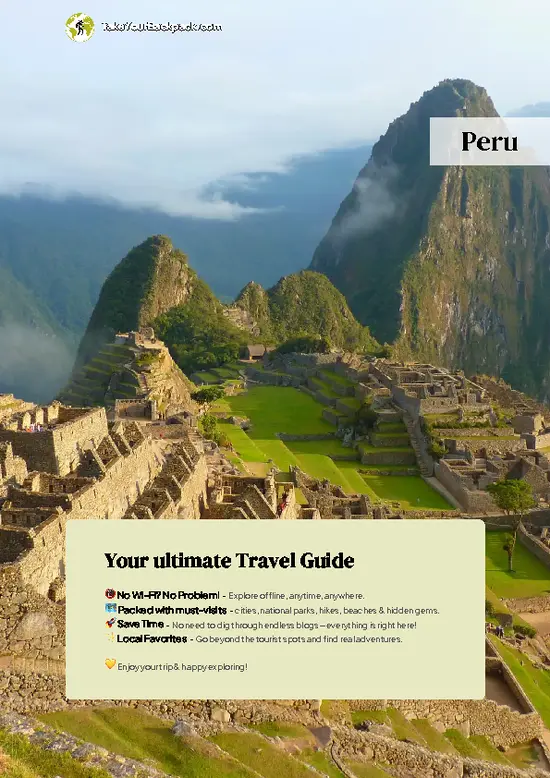
Country photo of Peru

We 💚 feedbackKey takeaways before you go

Huaraz is a hiker’s paradise. The Cordillera Blanca offers trails that challenge and inspire, with breathtaking views that make every step worthwhile. But here’s the kicker: altitude sickness can hit hard. Take it slow, acclimatize, and don’t rush into those epic treks. The payoff is worth it, but respect the mountains. Embrace the journey, and you’ll find that the struggle adds to the adventure.

✈️ When did I visit Peru?
Peru I visited during my half year trip through South and Central America back in 2003

✍️ Help improve this page!
The information on this page is based on my own backpacking experience in Peru, supplemented with up-to-date research and feedback from other travelers. Travel details can change, so if you notice anything outdated or incomplete, feel free to let me know.


🙋‍♂️ Give feedback

👋 Meet the founderWho’s Behind Take Your Backpack?

Johan, backpacker and founder of TakeYourBackpackHi, I’m Johan (Netherlands 🇳🇱), the creator of TakeYourBackpack. Over the past decade, I’ve backpacked through 80+ countries across six continents, gaining extensive experience with independent travel, long-term trips, and overland routes.

This site is built on a combination of firsthand travel experience and carefully curated insights from other backpackers. Many guides are based on places I’ve personally visited, while others bring together tips, observations, and practical advice shared by trusted travelers I’ve met along the way.

The goal is to provide realistic, experience-driven guidance — not generic itineraries — so you can explore destinations with better context, clearer expectations, and more confidence.

Get full Peru guide •
Instant download • 113 highlights • Full Offline guide