×

Peru🇵🇪 | citiesTingo Maríajungle gateway, limestone caves, river confluence | things to do and best time to go

Explore Puerto MaldonadoExplore Chulucanas

Backpacking in Tingo María
👀 For curious travelerscity ranked #16
By Johan Kruseman 🇳🇱 | Updated September 4, 2026

Everyone comes to Tingo María for “La Bella Durmiente,” that mountain skyline shaped like a sleeping woman, but the silhouette is just the poster. What actually matters is the feeling of dropping out of the high Andes into thick, wet jungle air, where the road bends and suddenly everything smells like damp earth, river, and fried plantain.

Tingo María sits in central Peru, in the Huánuco region, right where the mountains loosen their grip and the Amazon starts to take over. As a backpacker stop, it’s more launchpad than destination: a practical base for caves, waterfalls, and lowland forest, not a town you linger in for its charm. The center is compact and walkable, with cheap menus, basic hostels, and a low-key plaza where evenings feel slow and local rather than “traveler social.” Compared to Tarapoto or Oxapampa, it’s rougher around the edges, less curated, and a bit more old-school. Buses in and out are frequent but long and winding; moto-taxis handle everything inside town. Costs are friendly, safety is mostly about normal street sense, and the payoff is that you’re close to real jungle without the polished eco-lodge bubble.

Discover everything you want to know in the 📖 Peru Travel Guide.


Get your Peru guide
113 ranked highlights, routes & tips, works offline (416 pages)
Loading the map 🌍
CLICK TO FILTER
cities
towns
villages
landmarks
national parks
hikes
beaches
attractions
festivals
regions
SHOW COUNTRY’S BESTSHOW ALL

✨ Why go?
Ranked #16 city in Peru
Reasons people choose to visit here

Tingo María is a gateway for backpackers seeking both adventure and culture. Nestled in the lush foothills of the Andes, it’s a convenient base for accessing nearby hikes like the stunning Cueva de las Lechuzas or the Río Huallaga. The walkable streets are lined with small-scale hostels and guesthouses, offering a cozy atmosphere that invites connection. You’ll find friendly locals serving up authentic Peruvian dishes that burst with flavor, making every meal a cultural experience.

Backpackers often stay a few days, soaking in the laid-back vibe. It’s a place where slow travelers and solo adventurers can mingle, share stories, and plan their next moves. The town isn’t about nightlife; it’s about the social fabric woven through shared experiences. If you’re looking for a spot to recharge before … read more 👉
Tingo María is a gateway for backpackers seeking both adventure and culture. Nestled in the lush foothills of the Andes, it’s a convenient base for accessing nearby hikes like the stunning Cueva de las Lechuzas or the Río Huallaga. The walkable streets are lined with small-scale hostels and guesthouses, offering a cozy atmosphere that invites connection. You’ll find friendly locals serving up authentic Peruvian dishes that burst with flavor, making every meal a cultural experience.

Backpackers often stay a few days, soaking in the laid-back vibe. It’s a place where slow travelers and solo adventurers can mingle, share stories, and plan their next moves. The town isn’t about nightlife; it’s about the social fabric woven through shared experiences. If you’re looking for a spot to recharge before heading to the Amazon or the coast, Tingo María is perfect. It’s not just a stop; it’s a chance to immerse yourself in the rhythm of local life.
Want to include Tingo María in your Peru route?
Create a personalized Peru itinerary that includes Tingo María and the places that fit your trip — based on your travel style, budget, and available time. Get your route in seconds.

Generate my trip

💡 HighlightsDon't-miss highlights and experiences

  1. Cueva de las Lechuzas — A short, slightly spooky walk into a limestone cave where thousands of oilbirds and bats roost; dramatic stalactites, echoing calls at dusk, and the chance to see a very different Amazonian night life without leaving town.
  2. Mirador de la Bella Durmiente — The classic viewpoint for the ridge that locals call “La Bella Durmiente” (the Sleeping Beauty). Best at sunrise or sunset—the silhouette is iconic and you get an instant read on why this place stuck in people’s hearts.
  3. Plaza de Armas (Parque Principal) — The town’s social living room: people-watching, street vendors, municipal buildings and the main church. It’s where markets thin out into evening strolls and you’ll meet locals going about daily life.
  4. Mercado Central (Mercado Municipal) — A lively, messy market
read more 👉
  1. Cueva de las Lechuzas — A short, slightly spooky walk into a limestone cave where thousands of oilbirds and bats roost; dramatic stalactites, echoing calls at dusk, and the chance to see a very different Amazonian night life without leaving town.
  2. Mirador de la Bella Durmiente — The classic viewpoint for the ridge that locals call “La Bella Durmiente” (the Sleeping Beauty). Best at sunrise or sunset—the silhouette is iconic and you get an instant read on why this place stuck in people’s hearts.
  3. Plaza de Armas (Parque Principal) — The town’s social living room: people-watching, street vendors, municipal buildings and the main church. It’s where markets thin out into evening strolls and you’ll meet locals going about daily life.
  4. Mercado Central (Mercado Municipal) — A lively, messy market full of Amazon fruits, smoked meats, herbs and street food. Perfect for tasting juanes, trying strange fruits, and seeing how local food culture really works.
  5. Malecón del Río Huallaga — The riverfront promenade along the Huallaga. Gentle walks, local fishermen, kids swimming off the banks and a relaxed place to catch sunset reflections on the river—good for a low-effort afternoon.
  6. Iglesia principal (la iglesia junto a la plaza) — The town’s main church beside the Plaza: not a grand cathedral, but an active place of worship and community gatherings. Visiting during a service or festival gives real cultural context.
  7. Casa de la Cultura / Centro Cultural municipal — Small local cultural center where you can catch rotating exhibits, occasional performances, and handicraft displays. Great spot to ask about local festivals, music or community events happening while you’re in town.
  8. Paseo Comercial y tiendas artesanales — The cluster of streets near the plaza with handicraft stalls, coffee sellers and small eateries. Not a single museum piece, but where you’ll find handcrafted souvenirs and meet the people who make them.
  9. Miradores y cerros urbanos menores — A handful of smaller hills and lookout points scattered through town (often just a short climb up stairs) that give different angles on the Bella Durmiente, the river and the rooftops—great for short hikes without leaving town proper.
  10. Parque Infantil / espacios verdes comunitarios — Small parks where families gather in the evening; they’re simple but culturally revealing—watch local sports, street food vendors and weekend rhythms of Tingo María life up close.
A few great day trips just outside town: Parque Nacional Tingo María (hiking, deeper viewpoints and wildlife), the Pampa Hermosa protected area (cloud-forest trails and birding), and the Aucayacu hot springs and waterfalls—my personal favorite for a day trip is Pampa Hermosa.
Spotted a mistake or missing something? Contact us.

🏘️ NeighborhoodsHow different areas shape the experience

Tingo María is a vibrant hub in the Peruvian jungle, where the air is thick with the scent of tropical flora and the sounds of life pulse around you. Here’s how to navigate its neighborhoods like a pro:

Centro: This is the heart of Tingo María. Bustling markets and street vendors create a lively atmosphere. You’ll find affordable hostels and eateries serving local dishes. Walkability is high; everything is within reach. Perfect for short stays, but the energy can be overwhelming if you’re looking for peace.

La Banda de Shilcayo: A quieter alternative, this area offers a more laid-back vibe. It’s a bit removed from the chaos of the Centro, making it ideal for longer stays. You’ll find cozy guesthouses and a few local cafes. The transport access is decent, but you might need to walk a bit … read more 👉
Tingo María is a vibrant hub in the Peruvian jungle, where the air is thick with the scent of tropical flora and the sounds of life pulse around you. Here’s how to navigate its neighborhoods like a pro:

Centro: This is the heart of Tingo María. Bustling markets and street vendors create a lively atmosphere. You’ll find affordable hostels and eateries serving local dishes. Walkability is high; everything is within reach. Perfect for short stays, but the energy can be overwhelming if you’re looking for peace.

La Banda de Shilcayo: A quieter alternative, this area offers a more laid-back vibe. It’s a bit removed from the chaos of the Centro, making it ideal for longer stays. You’ll find cozy guesthouses and a few local cafes. The transport access is decent, but you might need to walk a bit more to reach the main attractions.

El Mirador: Known for its stunning views, this neighborhood is a bit of a trek uphill. It’s worth it for the sunsets and tranquility. Accommodations here are pricier, but the experience is unique. Great for those seeking solitude after a day of exploring.

San Juan: This area is a mix of local life and backpacker charm. It’s affordable and offers a taste of everyday Tingo María. The nightlife is more subdued, making it suitable for those who want to unwind after a day of adventure. Transport options are good, connecting you to the rest of the town easily.

⌛️ 1 dayA smart one-day plan

Tingo María, a vibrant town tucked in the foothills of the Andes, is a gateway to lush landscapes and rich culture. The air is thick with the scent of tropical flora, and the sounds of the Huallaga River create a soothing backdrop. This is a place where the everyday meets the extraordinary, making it perfect for a day of exploration.

Start your morning with a stroll through the bustling Plaza de Armas. Grab a cup of freshly brewed coffee from a local café, where the aroma of roasted beans mingles with the sweet scent of pastries. The plaza is alive with locals chatting and vendors selling colorful crafts. After soaking in the atmosphere, head to the nearby Parque Nacional Tingo María. The entrance is just a short taxi ride away, and once you’re in, the trails beckon. The lush greenery and … read more 👉
Tingo María, a vibrant town tucked in the foothills of the Andes, is a gateway to lush landscapes and rich culture. The air is thick with the scent of tropical flora, and the sounds of the Huallaga River create a soothing backdrop. This is a place where the everyday meets the extraordinary, making it perfect for a day of exploration.

Start your morning with a stroll through the bustling Plaza de Armas. Grab a cup of freshly brewed coffee from a local café, where the aroma of roasted beans mingles with the sweet scent of pastries. The plaza is alive with locals chatting and vendors selling colorful crafts. After soaking in the atmosphere, head to the nearby Parque Nacional Tingo María. The entrance is just a short taxi ride away, and once you’re in, the trails beckon. The lush greenery and the sounds of chirping birds create a serene escape. Don’t miss the iconic Cueva de las Lechuzas, where you can marvel at the unique rock formations and perhaps spot a few owls.

In the afternoon, make your way to the neighborhood of San Juan, where you can visit the local market. Here, the vibrant colors of fruits and vegetables are a feast for the eyes. Try some local specialties like juanes, a rice dish wrapped in banana leaves, and chat with the friendly vendors. It’s a slice of daily life that many tourists overlook but is essential to understanding the local culture.

As evening approaches, return to the Plaza de Armas. The sunset casts a warm glow over the town, and the atmosphere shifts to a lively buzz. Enjoy dinner at a local eatery, where you can savor fresh fish from the river. The flavors are bold, and the hospitality is genuine.

Tingo María may not be on every tourist’s radar, but its charm lies in the details—the sounds, the tastes, and the warmth of its people. Embrace the journey, and you’ll leave with a deeper appreciation for this hidden slice of Peru.
Turn your Tingo María visit into an Peru adventure
Build a complete Peru route with Tingo María, hidden gems, must-see destinations, and realistic travel times included.

Generate my trip

🌤️ When to go?Choosing the right time of year


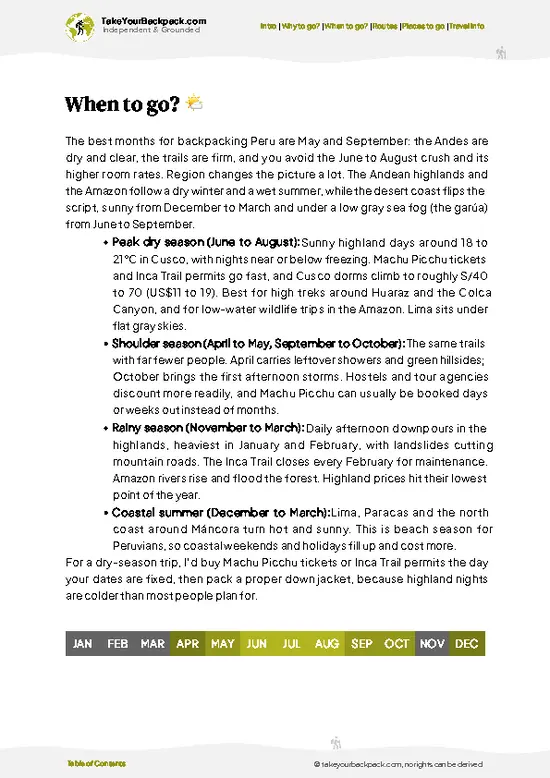
  • Topic: Weather – Tingo María sits in a tropical rainforest climate, so expect heavy rains from November to April. The dry season, May to October, offers clearer skies and less mud, making trails more accessible and the jungle sounds sharper.

  • Topic: Temperature – Temperatures hover between 22°C and 30°C (72°F to 86°F) year-round, but humidity spikes during the wet season, making it feel hotter and stickier. Dry months bring a more comfortable, breathable heat.

  • Topic: Daylight Hours – Near the equator, daylight stays steady around 12 hours daily, so no need to rush early or worry about fading light. This consistency lets you plan hikes and explorations without surprise time crunches.

  • Topic: Crowds – Tourist traffic peaks during the dry season, especially July and August, when locals
read more 👉

  • Topic: Weather – Tingo María sits in a tropical rainforest climate, so expect heavy rains from November to April. The dry season, May to October, offers clearer skies and less mud, making trails more accessible and the jungle sounds sharper.

  • Topic: Temperature – Temperatures hover between 22°C and 30°C (72°F to 86°F) year-round, but humidity spikes during the wet season, making it feel hotter and stickier. Dry months bring a more comfortable, breathable heat.

  • Topic: Daylight Hours – Near the equator, daylight stays steady around 12 hours daily, so no need to rush early or worry about fading light. This consistency lets you plan hikes and explorations without surprise time crunches.

  • Topic: Crowds – Tourist traffic peaks during the dry season, especially July and August, when locals and international visitors flock to the national park. Visiting shoulder months like May or September means fewer people and a quieter jungle experience.

  • Topic: Seasonal Activities – The dry season is prime for hiking, birdwatching, and exploring caves without the risk of flash floods. The wet season, while challenging, turns the landscape lush and vibrant, ideal for photographers chasing dramatic skies and roaring waterfalls.

  • Topic: Price Fluctuations – Accommodation and tour prices rise during the dry season’s peak months. Booking in shoulder seasons can save money and still deliver good weather, striking a balance between comfort and cost.


Pro-tip: Aim for late May or early September—when the jungle is still green, the trails are manageable, and you dodge both the crowds and the worst of the rain.


source: climatestotravel.comJANJanuary: fair for travelingFEBFebruary: fair for travelingMARMarch: fair for travelingAPRApril: fair for travelingMAYMay: highly recommended for travelingJUNJune: highly recommended for travelingJULJuly: excellent for travelingAUGAugust: excellent for travelingSEPSeptember: highly recommended for travelingOCTOctober: highly recommended for travelingNOVNovember: fair for travelingDECDecember: fair for traveling
when-to-go

✈️ The backpacker research shortcutPeru Travel Guide

An offline-friendly backpacking guide with optimized travel routes, ranked highlights, transport advice, and the best areas to stay.
example page 0 from our offline Travel Guide for Peru
example page 1 from our offline Travel Guide for Peru
example page 2 from our offline Travel Guide for Peru
example page 3 from our offline Travel Guide for Peru
example page 4 from our offline Travel Guide for Peru
example page 5 from our offline Travel Guide for Peru
example page 6 from our offline Travel Guide for Peru
example page 7 from our offline Travel Guide for Peru
The digital guide (416 pages) contains:
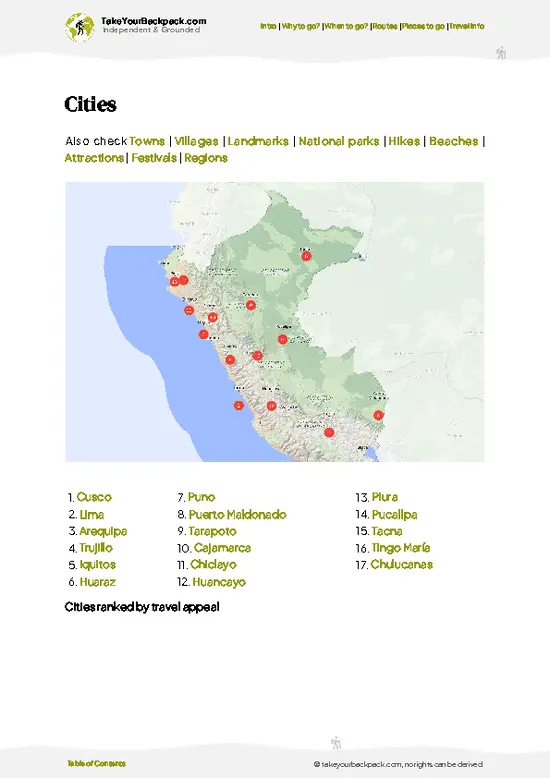
113 highlights, ranked by travel appeal
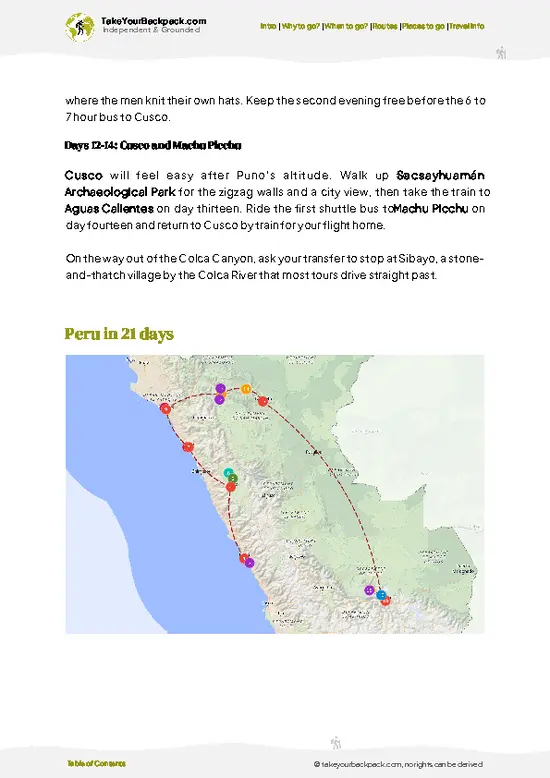
Optimized 7, 14 & 21-day travel routes
Cities, national parks, landmarks, beaches
How to get around
Offline-friendly for travel without Wi-Fi
👉 Click to see all 30+ guide features

📅 Plan smarter in minutes, not weeks
Month by month travel advice
Festivals & national holidays
Budget expectations

🗺️ Go to the right places, skip the overrated ones
Honest pros & cons of destinations
Top hikes, parks & viewpoints
Lesser-known places most travelers miss
Clear “worth it vs skip it” guidance

🛏️ Travel smoothly without rookie mistakes
Best areas to stay
Transport systems explained simply
Common scams & safety advice
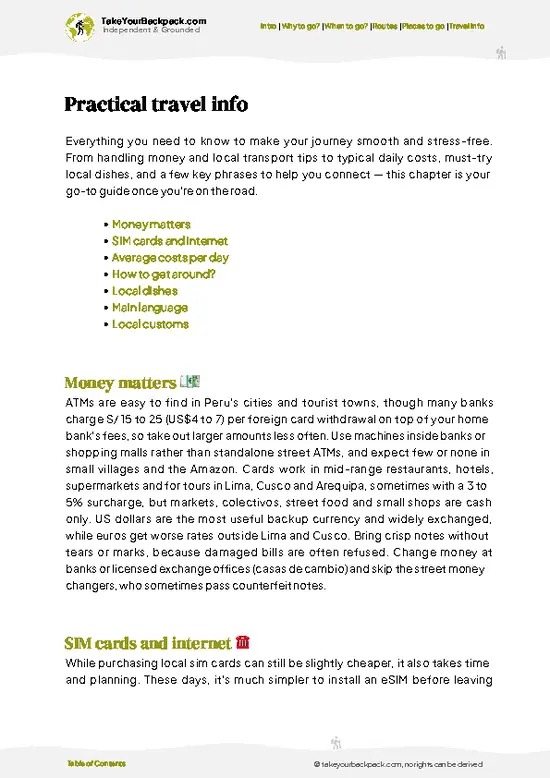
SIM cards, money & practical tips

🌍 Understand the country, not just visit it
Culture & traditions
52 Essential phrases & customs
Festivals worth planning around
Traveler-friendly historical context
Insights that make places more meaningful

📱 Built for real travel conditions
Fully downloadable PDF
Works completely offline
Optimized for phone use
Useful in remote areas & buses
Everything in one place
Save weeks of stressful planning
Get instant access to your full guide. 30‑day money-back guarantee.
+ Add another guide for just US$7.80

By proceeding you agree to our terms.
Sent to your inbox immediately after payment • 100% Secure Checkout
Best Backpacking Travel Advisor 2025 tourism awardBest Backpacking
Travel Advisor
2025
What others say about Take Your Backpack Guides:
⭐⭐⭐⭐⭐
Fantastic, amazing amount of information!
⭐⭐⭐⭐⭐
My goodness this is amazing, it's what I've been looking for hats off too you!
⭐⭐⭐⭐⭐
I think this is absolutely BRILLIANT
⭐⭐⭐⭐
Very complete and informative. It's still missing places, but I gotta to commend you
⭐⭐⭐⭐⭐
This is truly amazing, thank you, can't wait to explore it with my kids!
⭐⭐⭐⭐⭐
Awesome resource, thank you!
⭐⭐⭐⭐⭐
This is amazing! Can't wait to explore the ones I haven't seen
⭐⭐⭐⭐
I love this! Well done, great idea.
⭐⭐⭐⭐⭐
Thanks for taking the time to make this gem!
⭐⭐⭐⭐⭐
This might be the best website I've ever seen.
⭐⭐⭐⭐⭐
Congratulations, and thank you so much for your work; it's incredibly valuable.
⭐⭐⭐⭐
In all seriousness I think you did a great job pointing out the important spots
⭐⭐⭐⭐⭐
10/10 very good
⭐⭐⭐⭐⭐
As someone who's only just starting to visit regularly this is awesome, thank you.
⭐⭐⭐⭐
Thank you very much! I'm going to visit my dad, it's going to be very useful!
⭐⭐⭐⭐⭐
This is really cool! We'll be travelling for the first time and this definitely come in handy.
⭐⭐⭐⭐⭐
You are now our minister of culture, congratulations 👨‍💼
⭐⭐⭐⭐⭐
Just wanted to tell you that this is a pearl! Going to follow your recommendations.
⭐⭐⭐⭐⭐
This is so cool. I'll definitely be using the resource for my travels soon.
⭐⭐⭐⭐⭐
This is very impressive! Good work.
⭐⭐⭐⭐⭐
This is an amazing and informative site. Very well done!

🛏️ Where to stay?Best areas to stay in Peru

In Tingo María, the best spot for backpackers is the area around the town center, especially near the main plaza and along Avenida José Gálvez. This neighborhood pulses with local life—vendors hawking fresh fruit, the scent of grilled meats drifting from street stalls, and the chatter of locals and travelers blending into a lively soundtrack. It’s safe enough to wander after dark, with a steady flow of people that keeps the streets feeling alive but not overwhelming.

Why this area? It’s where you’ll find the most budget-friendly hostels packed with fellow backpackers, making it easy to swap stories … read more 👉
In Tingo María, the best spot for backpackers is the area around the town center, especially near the main plaza and along Avenida José Gálvez. This neighborhood pulses with local life—vendors hawking fresh fruit, the scent of grilled meats drifting from street stalls, and the chatter of locals and travelers blending into a lively soundtrack. It’s safe enough to wander after dark, with a steady flow of people that keeps the streets feeling alive but not overwhelming.

Why this area? It’s where you’ll find the most budget-friendly hostels packed with fellow backpackers, making it easy to swap stories or find a hiking buddy for the nearby national park. The hostels here tend to be simple but clean, often with communal spaces that encourage socializing. You’re also a short walk from markets and eateries where you can sample local dishes without breaking the bank.

Compared to the quieter, more residential outskirts, staying near the plaza means you’re plugged into the town’s rhythm. It’s not polished or touristy, but that’s the point—this is where you get the real Tingo María vibe, a mix of raw energy and genuine warmth that sets the tone for your adventures ahead.

🚌 Getting aroundGetting around like a local

Tingo María moves at its own rhythm—neither frantic nor lethargic, but a steady pulse that matches the humid air thick with the scent of wet earth and tropical blooms. The town’s flow is less about strict timetables and more about reading the subtle cues: the chatter of vendors setting up, the slow roll of moto-taxis weaving through narrow streets, and the occasional burst of laughter from a corner café. It’s a place where intuition beats rigid schedules, and knowing when to hop on a ride or stroll through the market means tuning into the local tempo rather than chasing a clock.

Walking: The most straightforward way to soak in Tingo María’s atmosphere. Streets are compact and mostly flat, making it easy to cover the town center on foot in under an hour. Walking lets you catch the scent of … read more 👉
Tingo María moves at its own rhythm—neither frantic nor lethargic, but a steady pulse that matches the humid air thick with the scent of wet earth and tropical blooms. The town’s flow is less about strict timetables and more about reading the subtle cues: the chatter of vendors setting up, the slow roll of moto-taxis weaving through narrow streets, and the occasional burst of laughter from a corner café. It’s a place where intuition beats rigid schedules, and knowing when to hop on a ride or stroll through the market means tuning into the local tempo rather than chasing a clock.

Walking: The most straightforward way to soak in Tingo María’s atmosphere. Streets are compact and mostly flat, making it easy to cover the town center on foot in under an hour. Walking lets you catch the scent of fresh fruit stalls, hear the clatter of domino games, and spot murals that tell local stories. No cost, and perfect for spontaneous detours.

Moto-taxis: These buzzing three-wheelers are the town’s lifeblood for short hops. They run from dawn until late evening, usually charging between 1 to 3 soles depending on distance. They’re quick and nimble, perfect for darting through traffic or reaching spots where larger vehicles can’t go. Always agree on the fare before you climb on to avoid surprises.

Colectivos (shared vans): Ideal for budget travelers heading to nearby villages or the outskirts of Tingo María. They leave once full, so timing is flexible but unpredictable—sometimes a 10-minute wait, sometimes longer. Fares hover around 2 to 5 soles. The ride is bumpy but offers a window into daily life, with locals chatting and vendors hopping on and off.

Public buses: Less common within the town but essential for longer trips to cities like Huánuco or Tarapoto. Buses usually depart in the early morning and late afternoon, with fares ranging from 10 to 20 soles depending on the destination. They’re slower but more comfortable than colectivos, with fixed routes and schedules that require a bit of planning.

Taxi cars: More expensive than moto-taxis but offer comfort and air conditioning, a welcome relief in the tropical heat. Expect to pay around 10 to 15 soles for rides within town. They’re best for travelers with luggage or those who want a smoother, quieter ride, especially during midday when the sun is at its peak.

Understanding this flow means you’re not just moving through Tingo María—you’re syncing with its pulse. Walk when the light softens in the late afternoon, grab a moto-taxi to chase the sunset, and use colectivos to stretch your adventure beyond the town’s edges. Each choice shapes your experience, turning transit from a chore into part of the story.

👛 Costs (as of 4 September 2026)How expensive it really is

Backpacking in Tingo María, Peru, offers a raw, earthy experience where the jungle’s humidity mingles with the scent of fresh fruit markets and the distant roar of waterfalls. Knowing the daily costs here helps you plan without surprises, so you can focus on soaking in the atmosphere instead of stressing over your wallet.
  • Dorm Accommodation: Expect to pay around $5 to $10 USD per night for a bed in a basic hostel dorm. These places are simple—think mosquito nets, shared bathrooms, and the occasional jungle soundtrack through the thin walls. It’s not luxury, but it’s clean and gets you close to other travelers.
  • Meals: Local eateries serve hearty plates of rice, beans, and grilled meat or fish for about $2 to $4 USD. Street food snacks like tamales or fresh fruit juices run under $1. If you
read more 👉
Backpacking in Tingo María, Peru, offers a raw, earthy experience where the jungle’s humidity mingles with the scent of fresh fruit markets and the distant roar of waterfalls. Knowing the daily costs here helps you plan without surprises, so you can focus on soaking in the atmosphere instead of stressing over your wallet.
  • Dorm Accommodation: Expect to pay around $5 to $10 USD per night for a bed in a basic hostel dorm. These places are simple—think mosquito nets, shared bathrooms, and the occasional jungle soundtrack through the thin walls. It’s not luxury, but it’s clean and gets you close to other travelers.
  • Meals: Local eateries serve hearty plates of rice, beans, and grilled meat or fish for about $2 to $4 USD. Street food snacks like tamales or fresh fruit juices run under $1. If you want to splurge on a nicer meal, budget $6 to $8 USD, but the local joints deliver the authentic flavors without the markup.
  • Local Transport: Taxis and mototaxis are the go-to options, with rides typically costing $0.50 to $1.50 USD depending on distance. Walking is often the best way to explore the town’s compact center, but for trips to nearby natural sites, factor in $3 to $5 USD for round-trip transport.
  • Basic Activities/Entry Fees: Entry to the famous Cueva de las Lechuzas (Owl Cave) and other local natural attractions usually costs between $3 and $7 USD. Guided tours, which are highly recommended for safety and context, add another $10 to $15 USD but are worth every penny for the insight and access.
  • Miscellaneous Expenses: Bottled water, snacks, and occasional internet access will add about $1 to $3 USD daily. Keep some small change handy for tips or unexpected needs like a quick laundry service or a local SIM card top-up.

All told, you’re looking at roughly $12 to $30 USD per day to cover the essentials in Tingo María. This range gives you flexibility—stick to basics and you’ll save, but a few small splurges on tours or meals won’t break the bank. The key is embracing the simplicity here; the jungle’s charm is in its raw edges, not polished comforts.


source: peru.travel
⚠️ Prices can change and everyone travels differently, so take this as a rough guide. Hope it helps you plan your adventure!

🚌 Day tripsShort trips worth adding

Tingo María is a backpacker’s dream base, perfectly positioned for a variety of day trips that showcase the raw beauty of Peru’s jungle and mountains. Each adventure offers a unique slice of local life, stunning landscapes, and the thrill of exploration.

1. Parque Nacional Tingo María
Just a short bus ride from town, this national park is a treasure trove of biodiversity. You’ll wander through lush trails, where the air is thick with the scent of damp earth and blooming orchids. Keep an eye out for the elusive cock-of-the-rock bird, its vibrant plumage a stark contrast against the green backdrop. The park is best explored in the morning when the mist clings to the trees, creating an ethereal atmosphere. Expect to spend about 4-5 hours here, with a total cost of around $5 for entry and transport. … read more 👉
Tingo María is a backpacker’s dream base, perfectly positioned for a variety of day trips that showcase the raw beauty of Peru’s jungle and mountains. Each adventure offers a unique slice of local life, stunning landscapes, and the thrill of exploration.

1. Parque Nacional Tingo María
Just a short bus ride from town, this national park is a treasure trove of biodiversity. You’ll wander through lush trails, where the air is thick with the scent of damp earth and blooming orchids. Keep an eye out for the elusive cock-of-the-rock bird, its vibrant plumage a stark contrast against the green backdrop. The park is best explored in the morning when the mist clings to the trees, creating an ethereal atmosphere. Expect to spend about 4-5 hours here, with a total cost of around $5 for entry and transport. A common mistake? Underestimating the humidity—bring plenty of water and a good pair of shoes.


2. Laguna de los Cóndores
This stunning lake, surrounded by towering cliffs, is a bit of a trek but worth every step. The journey takes about 1.5 hours by bus, followed by a 30-minute hike. The tranquility of the water, reflecting the sky, is a sight to behold. Pack a picnic to enjoy by the shore, and don’t forget your camera; the golden hour here is magical. Total costs hover around $10, including transport and snacks. Many first-timers miss the trailhead—ask locals for directions to avoid wandering off course.


3. Cueva de las Lechuzas
This cave system is a fascinating glimpse into the geological wonders of the region. A 30-minute bus ride from Tingo María leads you to the entrance, where the air cools and the sound of dripping water fills your ears. Guided tours last about 2 hours, revealing stunning rock formations and the occasional bat fluttering overhead. Expect to spend around $8 for the tour and transport. A common pitfall? Forgetting a flashlight—bring one to fully appreciate the cave’s beauty.


4. Tarapoto
Though a bit farther at about 2.5 hours by bus, Tarapoto offers a vibrant market scene and access to waterfalls like Ahuashiyacu. The journey is scenic, with rolling hills and glimpses of local life. Once there, you can spend the day sampling local dishes and shopping for handmade crafts. Budget around $15 for transport and meals. Many backpackers overlook the market hours—arrive early to snag the best deals and freshest food.
👉 Explore Tarapoto
Want to know what more Peru offers?
The Peru Travel Guide describes 113 highlights, from cities to national parks, from beaches to hikes

Get the Travel Guide -

🍲 FoodEating & Drinking in Tingo María

In Tingo María, food is a lively negotiation between jungle freshness and Andean heartiness. You’ll want to dive into juane, a local staple wrapped in bijao leaves, steaming with rice, spiced chicken, and olives. It’s the kind of dish that sticks with you—not just filling but a taste of the region’s soul. Another must-try is inchicapi, a thick, tangy chicken soup brightened with herbs and peanuts, perfect for resetting after a sweaty jungle trek.

Backpackers usually find their groove at the bustling markets and street stalls, where the air hums with sizzling meat and the sharp tang of citrus. These spots are where you get the real deal—no tourist gloss, just honest, bold flavors served fast and cheap. Casual eateries, often family-run, offer hearty plates that feel like a warm handshake after … read more 👉
In Tingo María, food is a lively negotiation between jungle freshness and Andean heartiness. You’ll want to dive into juane, a local staple wrapped in bijao leaves, steaming with rice, spiced chicken, and olives. It’s the kind of dish that sticks with you—not just filling but a taste of the region’s soul. Another must-try is inchicapi, a thick, tangy chicken soup brightened with herbs and peanuts, perfect for resetting after a sweaty jungle trek.

Backpackers usually find their groove at the bustling markets and street stalls, where the air hums with sizzling meat and the sharp tang of citrus. These spots are where you get the real deal—no tourist gloss, just honest, bold flavors served fast and cheap. Casual eateries, often family-run, offer hearty plates that feel like a warm handshake after a long day.

Drinking here isn’t about fancy cocktails but about fresh fruit juices and the occasional cold chicha, a fermented corn drink with a slightly sour kick that locals sip with pride. Sharing a drink is social glue, so expect to be invited into conversations. The vibe is relaxed; no rush, no fuss—just the rhythm of a town that knows how to savor its food and company.

🛡️ SafetySafety Tips and Common Scams in Tingo María

Tingo María is generally safe, but a few practical tips can enhance your experience. The town has a relaxed vibe, but keep your wits about you, especially in crowded markets. Vendors can be persistent, so a polite but firm “no gracias” works wonders.

If you’re wandering solo at night, stick to well-lit areas and avoid empty streets. The main square is lively and a good spot to soak in the local atmosphere, but don’t stray too far after dark.

Watch for common scams, like inflated taxi fares. Always agree on a price before getting in. Street food is a highlight, but choose busy stalls where locals gather; it’s a good sign of freshness.

Overall, carry yourself confidently, smile, and engage with locals. They appreciate genuine interest, and you’ll find that a little awareness goes a long way in making your trip smooth and enjoyable.

FAQCommon questions from travelers

2 to 3 days are sufficient to explore Tingo María and its main attractions, including the Tingo María National Park and the Cueva de las Lechuzas. This allows time for hiking and visiting local markets without rushing.
Yes, Tingo María is generally safe for solo backpackers, especially during daylight hours. Standard precautions like avoiding isolated areas at night and securing belongings are advised.
Tingo María is known for its natural beauty, particularly the Tingo María National Park, which features caves, waterfalls, and diverse wildlife. It is also famous for the Cueva de las Lechuzas, a cave inhabited by thousands of oilbirds.
⚠️ Things can change over time, so always validate details locally before you go.

Other Peruvian cities near Tingo María

Explore more nearby:

  • Huaraz—Cordillera Blanca, trekking base, glacial lakes| 170 km away
  • Pucallpa—Ucayali river, shipyards, jungle markets| 185 km away
  • Tarapoto—jungle waterfalls, Amazon foothills, cacao farms| 316 km away

💡 Not sure where to go next?
Create a personalized itinerary for Peru including Tingo María and the places that fit your trip.

Generate my itinerary

👉 Discover all cities

Or checkout all Peru has to offer (think cities, towns, villages, national parks, hikes, beaches, festivals)
Country photo of Peru

We 💚 feedbackFinal thoughts on visiting Tingo María

Tingo María is a sensory feast, with the air thick with the scent of tropical blooms and the sound of rushing rivers. The lush landscapes are a reward for those willing to trek a bit off the beaten path. But be ready for the humidity; it can be stifling. Embrace the sweat, though—it’s part of the experience. The payoff? A vibrant local culture that feels alive and welcoming, making every drop worth it.

✈️ When did I visit Peru?
Peru I visited during my half year trip through South and Central America back in 2003

✍️ Help improve this page!
The information on this page is based on my own backpacking experience in Peru, supplemented with up-to-date research and feedback from other travelers. Travel details can change, so if you notice anything outdated or incomplete, feel free to let me know.


🙋‍♂️ Give feedback

👋 Meet the founderWho’s Behind Take Your Backpack?

Johan, backpacker and founder of TakeYourBackpackHi, I’m Johan (Netherlands 🇳🇱), the creator of TakeYourBackpack. Over the past decade, I’ve backpacked through 80+ countries across six continents, gaining extensive experience with independent travel, long-term trips, and overland routes.

This site is built on a combination of firsthand travel experience and carefully curated insights from other backpackers. Many guides are based on places I’ve personally visited, while others bring together tips, observations, and practical advice shared by trusted travelers I’ve met along the way.

The goal is to provide realistic, experience-driven guidance — not generic itineraries — so you can explore destinations with better context, clearer expectations, and more confidence.

Get full Peru guide •
Instant download • 113 highlights • Full Offline guide