×
Lima

Peru🇵🇪 | citiesLimaPacific cliffs, ceviche stalls, colonial plazas | things to do and best time to go

Explore IquitosExplore Puno

Backpacking in Lima
UNESCO World Heritage site
🏆 Top pickcity ranked #2
By Johan Kruseman 🇳🇱 | Updated July 30, 2026

Your shoes are still dusty from Miraflores traffic when the sea air hits you: cold, salty, cutting through exhaust as paragliders swing overhead and a street vendor presses a plastic cup of maracuyá juice into your hand. Horns, waves, reggaeton from a passing taxi, and somewhere a whistle from a ceviche stall calling out today’s catch.

Lima sits on Peru’s central Pacific coast, a huge, sprawled-out capital that most backpackers first meet on a layover and then realize is worth at least a couple of days. It’s chaotic and grey-skied much of the year, but the food scene is absurdly good for the price, from market menus in Surquillo to late-night sandwiches in Barranco. The historic center feels grand but a bit worn; Barranco is where you actually want to go out and meet people. Hostels are social, transport is cheap but slow, and safety is very neighborhood-dependent—Miraflores and Barranco feel manageable, some outer districts absolutely don’t. Compared to Cusco or Arequipa, Lima is less charming, more real-world big city: heavier traffic, better restaurants, more nightlife, and a useful place to understand modern Peru before you disappear into the Andes.

Discover everything you want to know in the 📖 Peru Travel Guide.


Get your Peru guide
113 ranked highlights, routes & tips, works offline (416 pages)
Loading the map 🌍
CLICK TO FILTER
cities
towns
villages
landmarks
national parks
hikes
beaches
attractions
festivals
regions
SHOW COUNTRY’S BESTSHOW ALL

✨ Why go?
Ranked #2 city in Peru
What makes it a must-see city

Lima is a strategic hub for backpackers, blending affordability with a vibrant atmosphere. The city offers a wealth of highlights and activities that cater to various interests, making it a perfect base for exploration. You’ll find hostels that are not just budget-friendly but also buzzing with fellow travelers, fostering a sense of community.

The food scene is a major draw, with street vendors and local eateries serving up delicious, authentic dishes that won’t break the bank. Plus, Lima’s walkability allows you to soak in the local culture as you navigate its neighborhoods, from the historic center to the coastal districts.

When it comes to nightlife, the city doesn’t disappoint; vibrant bars and clubs keep the energy alive well into the night. And if you’re looking to venture beyond … read more 👉
Lima is a strategic hub for backpackers, blending affordability with a vibrant atmosphere. The city offers a wealth of highlights and activities that cater to various interests, making it a perfect base for exploration. You’ll find hostels that are not just budget-friendly but also buzzing with fellow travelers, fostering a sense of community.

The food scene is a major draw, with street vendors and local eateries serving up delicious, authentic dishes that won’t break the bank. Plus, Lima’s walkability allows you to soak in the local culture as you navigate its neighborhoods, from the historic center to the coastal districts.

When it comes to nightlife, the city doesn’t disappoint; vibrant bars and clubs keep the energy alive well into the night. And if you’re looking to venture beyond the city, Lima serves as an excellent launchpad for day trips to nearby attractions.

In short, whether you’re planning a longer stay or just a quick stop, Lima offers a rich blend of experiences that can enhance your backpacking route through Peru.
Want to include Lima in your Peru route?
Create a personalized Peru itinerary that includes Lima and the places that fit your trip — based on your travel style, budget, and available time. Get your route in seconds.

Generate my trip

💡 HighlightsMust-see experiences and standout moments

  • Plaza Mayor (Plaza de Armas) — The colonial heart of Lima where the Cathedral, the Archbishop’s Palace and the Government Palace face off around a buzzing square; great for people-watching and feeling the city’s history in stone.
  • San Francisco Monastery and Catacombs — A compact time capsule: baroque cloisters, gilded chapels and eerie underground catacombs you can actually walk through; best experienced with a guided tour to get the stories behind the bones.
  • Museo Larco — World-class pre-Columbian collection in a converted vice-royal mansion; the galleries and the erotic pottery room make for an intimate, well-curated lesson in Peru’s ancient cultures.
  • Huaca Pucllana — A striking pre-Incan adobe pyramid sitting in the middle of Miraflores; visit at sunset to see the walls glow and then
read more 👉
  • Plaza Mayor (Plaza de Armas) — The colonial heart of Lima where the Cathedral, the Archbishop’s Palace and the Government Palace face off around a buzzing square; great for people-watching and feeling the city’s history in stone.
  • San Francisco Monastery and Catacombs — A compact time capsule: baroque cloisters, gilded chapels and eerie underground catacombs you can actually walk through; best experienced with a guided tour to get the stories behind the bones.
  • Museo Larco — World-class pre-Columbian collection in a converted vice-royal mansion; the galleries and the erotic pottery room make for an intimate, well-curated lesson in Peru’s ancient cultures.
  • Huaca Pucllana — A striking pre-Incan adobe pyramid sitting in the middle of Miraflores; visit at sunset to see the walls glow and then grab dinner at a nearby cevichería.
  • Malecón de Miraflores & Parque del Amor — Dramatic cliff-top ocean views, wind, sculptures and paragliders lifting off above the Pacific; the best low-effort way to feel Lima’s coastal vibe.
  • Barranco neighborhood — Lima’s bohemian quarter: colorful street art, the Puente de los Suspiros, small museums and cafés along the Bajada de los Baños; wander until a random gallery or bar hooks you.
  • Circuito Mágico del Agua (Parque de la Reserva) — A surprisingly joyful evening outing: sculpted fountains, illuminated water shows and playful tunnels of spray — cheap, safe, and fun after dark.
  • Pantanos de Villa — Coastal wetland reserve in Chorrillos with trails and bird hides; a peaceful, surprisingly green escape in the city that’s great for birdwatching and quiet photography.
  • El Olivar (San Isidro) — An old olive grove and shady park threaded with walking paths and cafés; a calm, surprisingly historic patch of green amid polished San Isidro streets.
  • Surquillo Market — A lively neighborhood market where you can taste local fruit, see fresh seafood and get a real sense of Lima’s food culture without the tourist gloss; go hungry and curious.
For short day trips outside the city try Pachacamac (ancient coastal complex — my personal favorite), the Paracas/Ballestas boat trips for wildlife and dramatic coastlines, or the archaeological site of Caral if you want an older, quieter ruin — all are doable from Lima in a long day.
Spotted a mistake or missing something? Contact us.

Things to do in Lima

Ratings based on Tripadvisor reviews. When you book through this link, you support our work at no extra cost to you.

🏘️ NeighborhoodsHow different areas shape the experience

Lima is a sprawling city with distinct neighborhoods, each offering unique experiences for backpackers. Here’s a breakdown to help you navigate your choices.

Miraflores: This is the backpacker’s hub. It’s lively, with parks, ocean views, and a plethora of cafes. Expect higher prices but plenty of amenities. Walkable streets make it easy to explore, and nightlife is vibrant, with bars and clubs buzzing until dawn. Perfect for short stays, but you might find yourself lingering longer.

Barranco: Known for its bohemian vibe, Barranco is where art meets nightlife. Street art adorns the walls, and the atmosphere is laid-back. Prices are generally lower than Miraflores, and it’s walkable, with plenty of quirky cafes and galleries. Ideal for those looking to soak in local culture, it’s great for … read more 👉
Lima is a sprawling city with distinct neighborhoods, each offering unique experiences for backpackers. Here’s a breakdown to help you navigate your choices.

Miraflores: This is the backpacker’s hub. It’s lively, with parks, ocean views, and a plethora of cafes. Expect higher prices but plenty of amenities. Walkable streets make it easy to explore, and nightlife is vibrant, with bars and clubs buzzing until dawn. Perfect for short stays, but you might find yourself lingering longer.

Barranco: Known for its bohemian vibe, Barranco is where art meets nightlife. Street art adorns the walls, and the atmosphere is laid-back. Prices are generally lower than Miraflores, and it’s walkable, with plenty of quirky cafes and galleries. Ideal for those looking to soak in local culture, it’s great for both short and extended stays.

Centro Histórico: The heart of Lima, this area is rich in history. Think colonial architecture and bustling markets. It’s less touristy than the others, offering a more authentic experience. Prices are lower, but the vibe can be chaotic. Walkability is decent, but be cautious at night. Best for short stays if you want to dive into Lima’s past.

San Isidro: A business district with a more upscale feel. It’s quieter, with parks and fine dining. Prices can be steep, but you’ll find a more relaxed atmosphere. Public transport is accessible, making it easy to reach other areas. Suitable for longer stays if you prefer a calmer environment.

Each neighborhood has its trade-offs. Choose wisely based on what you value most: time, money, or comfort.

⌛️ 1 daySeeing the highlights in 24 hours

Lima, Peru, is a city that pulses with life, where colonial architecture meets vibrant street art, and culinary delights are around every corner. It’s a place where history whispers through the streets, and the Pacific Ocean offers a stunning backdrop. You can easily spend a day here, soaking in the culture and flavors without feeling rushed.

Start your morning in the bohemian neighborhood of Barranco. Grab a coffee at a local café, like **Café de la Paz**, where the aroma of freshly brewed beans mingles with the sound of local chatter. After your caffeine fix, stroll along the **Puente de los Suspiros**—a charming wooden bridge that’s perfect for a quick photo op. The colorful murals and artistic vibe set the tone for the day.

As the sun climbs higher, make your way to the historic center. … read more 👉
Lima, Peru, is a city that pulses with life, where colonial architecture meets vibrant street art, and culinary delights are around every corner. It’s a place where history whispers through the streets, and the Pacific Ocean offers a stunning backdrop. You can easily spend a day here, soaking in the culture and flavors without feeling rushed.

Start your morning in the bohemian neighborhood of Barranco. Grab a coffee at a local café, like **Café de la Paz**, where the aroma of freshly brewed beans mingles with the sound of local chatter. After your caffeine fix, stroll along the **Puente de los Suspiros**—a charming wooden bridge that’s perfect for a quick photo op. The colorful murals and artistic vibe set the tone for the day.

As the sun climbs higher, make your way to the historic center. Visit the **Plaza Mayor**, where you can admire the grand **Government Palace** and the **Cathedral of Lima**. The architecture here tells stories of a rich past. If you’re feeling adventurous, pop into the **Convento de San Francisco** to explore its eerie catacombs—definitely not on every tourist’s radar, but a fascinating glimpse into the city’s history.

For lunch, head to **Miraflores** and indulge in some ceviche at **Punto Azul**. The freshness of the fish, paired with zesty lime, is a must-try. Afterward, take a leisurely walk along the **Malecón**, where the cliffs meet the ocean. The views are breathtaking, and you might even catch a glimpse of surfers riding the waves below.

As evening approaches, return to Barranco for dinner at **La 73**, a lively spot with a mix of traditional and modern Peruvian dishes. Wrap up your day with a drink at **Ayahuasca**, a bar that’s a converted mansion, offering a unique atmosphere and creative cocktails.

In just one day, you’ve tasted the essence of Lima, balancing time, comfort, and money while uncovering both the iconic and the hidden treasures of this vibrant city.
Turn your Lima visit into an Peru adventure
Build a complete Peru route with Lima, hidden gems, must-see destinations, and realistic travel times included.

Generate my trip

🌤️ When to go?Best time to visit Lima


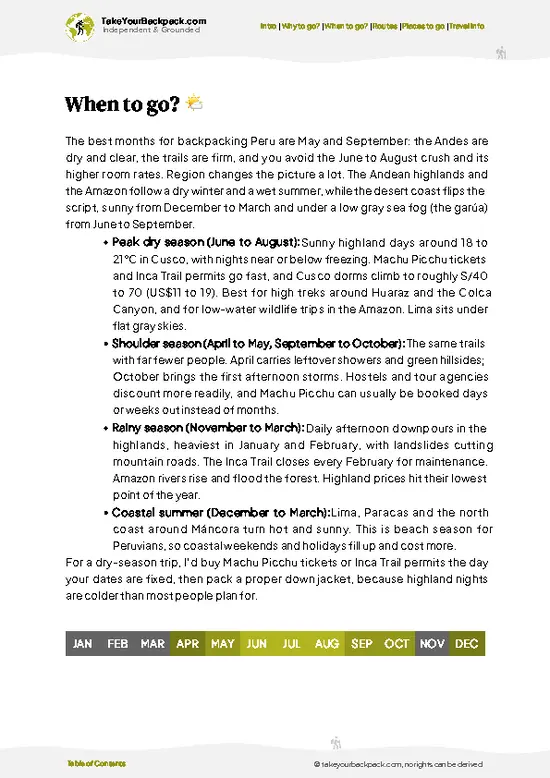
  • Weather: Lima’s climate is a paradox—mild but humid. From December to April, expect warm, dry days around 24-28°C (75-82°F), perfect for beach time and city strolls. May to November brings cooler temps, 16-20°C (61-68°F), with persistent gray skies and a thick coastal fog called ”garúa,” which can dampen outdoor plans.

  • Temperature: The city rarely hits extremes. Summer highs hover near 28°C (82°F), while winter lows dip to about 14°C (57°F) at night. This narrow range means you’re not battling heatwaves or freezing cold, but the chill and dampness in winter can feel surprisingly penetrating.

  • Daylight Hours: Lima enjoys fairly consistent daylight year-round, roughly 11 to 13 hours. Longer days in summer give you more daylight for exploring, while winter’s shorter days mean earlier sunsets
read more 👉

  • Weather: Lima’s climate is a paradox—mild but humid. From December to April, expect warm, dry days around 24-28°C (75-82°F), perfect for beach time and city strolls. May to November brings cooler temps, 16-20°C (61-68°F), with persistent gray skies and a thick coastal fog called ”garúa,” which can dampen outdoor plans.

  • Temperature: The city rarely hits extremes. Summer highs hover near 28°C (82°F), while winter lows dip to about 14°C (57°F) at night. This narrow range means you’re not battling heatwaves or freezing cold, but the chill and dampness in winter can feel surprisingly penetrating.

  • Daylight Hours: Lima enjoys fairly consistent daylight year-round, roughly 11 to 13 hours. Longer days in summer give you more daylight for exploring, while winter’s shorter days mean earlier sunsets around 6 PM, nudging you to plan activities accordingly.

  • Crowds: Peak tourist season aligns with summer (December to March), when locals and international visitors flood the city. This ups prices and fills hostels but also livens the atmosphere. Off-season (May to October) sees fewer tourists, making it easier to snag deals and enjoy quieter streets.

  • Seasonal Activities: Summer hosts vibrant festivals like the Señor de los Milagros procession in October, a cultural highlight. Surfing peaks in summer too, while winter’s foggy weather suits museum visits and culinary tours better.

  • Price Fluctuations: Expect accommodation and flight prices to spike during summer and major festivals. Winter months offer better bargains but come with the trade-off of gloomier weather and less outdoor activity.


Pro-tip: Aim for late spring (October-November) to catch pleasant weather, fewer crowds, and a sweet spot in prices—your best bet for balancing comfort, cost, and authentic local vibes.


source: climatestotravel.comJANJanuary: highly recommended for travelingFEBFebruary: highly recommended for travelingMARMarch: highly recommended for travelingAPRApril: good for travelingMAYMay: fair for travelingJUNJune: fair for travelingJULJuly: fair for travelingAUGAugust: fair for travelingSEPSeptember: good for travelingOCTOctober: excellent for travelingNOVNovember: excellent for travelingDECDecember: highly recommended for traveling
Peru - Lima

✈️ The backpacker research shortcutPeru Travel Guide

An offline-friendly backpacking guide with optimized travel routes, ranked highlights, transport advice, and the best areas to stay.
example page 0 from our offline Travel Guide for Peru
example page 1 from our offline Travel Guide for Peru
example page 2 from our offline Travel Guide for Peru
example page 3 from our offline Travel Guide for Peru
example page 4 from our offline Travel Guide for Peru
example page 5 from our offline Travel Guide for Peru
example page 6 from our offline Travel Guide for Peru
example page 7 from our offline Travel Guide for Peru
The digital guide (416 pages) contains:
113 highlights, ranked by travel appeal
Optimized 7, 14 & 21-day travel routes
Cities, national parks, landmarks, beaches
How to get around
Offline-friendly for travel without Wi-Fi
👉 Click to see all 30+ guide features

📅 Plan smarter in minutes, not weeks
Month by month travel advice
Festivals & national holidays
Budget expectations

🗺️ Go to the right places, skip the overrated ones
Honest pros & cons of destinations
Top hikes, parks & viewpoints
Lesser-known places most travelers miss
Clear “worth it vs skip it” guidance

🛏️ Travel smoothly without rookie mistakes
Best areas to stay
Transport systems explained simply
Common scams & safety advice
SIM cards, money & practical tips

🌍 Understand the country, not just visit it
Culture & traditions
52 Essential phrases & customs
Festivals worth planning around
Traveler-friendly historical context
Insights that make places more meaningful

📱 Built for real travel conditions
Fully downloadable PDF
Works completely offline
Optimized for phone use
Useful in remote areas & buses
Everything in one place
Save weeks of stressful planning
Get instant access to your full guide. 30‑day money-back guarantee.
+ Add another guide for just US$7.80

By proceeding you agree to our terms.
Sent to your inbox immediately after payment • 100% Secure Checkout
Best Backpacking Travel Advisor 2025 tourism awardBest Backpacking
Travel Advisor
2025
What others say about Take Your Backpack Guides:
⭐⭐⭐⭐⭐
Fantastic, amazing amount of information!
⭐⭐⭐⭐⭐
My goodness this is amazing, it's what I've been looking for hats off too you!
⭐⭐⭐⭐⭐
I think this is absolutely BRILLIANT
⭐⭐⭐⭐
Very complete and informative. It's still missing places, but I gotta to commend you
⭐⭐⭐⭐⭐
This is truly amazing, thank you, can't wait to explore it with my kids!
⭐⭐⭐⭐⭐
Awesome resource, thank you!
⭐⭐⭐⭐⭐
This is amazing! Can't wait to explore the ones I haven't seen
⭐⭐⭐⭐
I love this! Well done, great idea.
⭐⭐⭐⭐⭐
Thanks for taking the time to make this gem!
⭐⭐⭐⭐⭐
This might be the best website I've ever seen.
⭐⭐⭐⭐⭐
Congratulations, and thank you so much for your work; it's incredibly valuable.
⭐⭐⭐⭐
In all seriousness I think you did a great job pointing out the important spots
⭐⭐⭐⭐⭐
10/10 very good
⭐⭐⭐⭐⭐
As someone who's only just starting to visit regularly this is awesome, thank you.
⭐⭐⭐⭐
Thank you very much! I'm going to visit my dad, it's going to be very useful!
⭐⭐⭐⭐⭐
This is really cool! We'll be travelling for the first time and this definitely come in handy.
⭐⭐⭐⭐⭐
You are now our minister of culture, congratulations 👨‍💼
⭐⭐⭐⭐⭐
Just wanted to tell you that this is a pearl! Going to follow your recommendations.
⭐⭐⭐⭐⭐
This is so cool. I'll definitely be using the resource for my travels soon.
⭐⭐⭐⭐⭐
This is very impressive! Good work.
⭐⭐⭐⭐⭐
This is an amazing and informative site. Very well done!

🛏️ Where to stay?How to pick the right area

Lima’s backpacker scene gravitates heavily toward Miraflores and Barranco—two neighborhoods that strike a smart balance between safety, social buzz, and budget options. Miraflores is the logistical sweet spot. It’s safe, walkable, and packed with hostels that cater to solo travelers and groups alike. You’ll find plenty of communal spaces where meeting others feels organic, whether it’s a rooftop terrace or a lively common room. The vibe here leans toward active days—think parks, ocean cliffs, and cafes buzzing with digital nomads and travelers swapping stories.

Barranco, just a short ride away, … read more 👉
Lima’s backpacker scene gravitates heavily toward Miraflores and Barranco—two neighborhoods that strike a smart balance between safety, social buzz, and budget options. Miraflores is the logistical sweet spot. It’s safe, walkable, and packed with hostels that cater to solo travelers and groups alike. You’ll find plenty of communal spaces where meeting others feels organic, whether it’s a rooftop terrace or a lively common room. The vibe here leans toward active days—think parks, ocean cliffs, and cafes buzzing with digital nomads and travelers swapping stories.

Barranco, just a short ride away, offers a more bohemian, artsy atmosphere. It’s quieter at night but still social, with a handful of hostels that attract creatives and those looking for a laid-back scene. The streets are lined with murals, galleries, and cozy bars, making it a perfect spot if you want to blend cultural immersion with your social life. Safety here is solid but less polished than Miraflores, so it rewards those who prefer a bit of edge without sacrificing comfort.

Compared to downtown Lima or San Isidro, these two neighborhoods offer a better trade-off: less noise and chaos, more reliable safety, and a community feel that’s crucial for solo backpackers. You’re trading off the ultra-budget options of the city center for a more curated experience where comfort and connection come standard.

🚌 Getting aroundHow to get around Lima

Lima moves like a city caught between two tempos. On one hand, the official schedules and timetables try to impose order—buses and metros with set hours, a semblance of predictability. On the other, the streets pulse with improvisation: minibuses darting off-route, mototaxis weaving through traffic, and pedestrians who seem to know shortcuts that no map shows. This blend of structure and chaos means your transit choices in Lima are a game of trade-offs. You can chase comfort and speed, but it’ll cost you. Or you can embrace the local rhythm, sacrificing some ease for a deeper, more authentic experience. Understanding this balance is your key to winning the city’s transit game.


  • Walking: Lima’s historic center and Miraflores district are surprisingly walkable, with wide sidewalks and plenty
read more 👉
Lima moves like a city caught between two tempos. On one hand, the official schedules and timetables try to impose order—buses and metros with set hours, a semblance of predictability. On the other, the streets pulse with improvisation: minibuses darting off-route, mototaxis weaving through traffic, and pedestrians who seem to know shortcuts that no map shows. This blend of structure and chaos means your transit choices in Lima are a game of trade-offs. You can chase comfort and speed, but it’ll cost you. Or you can embrace the local rhythm, sacrificing some ease for a deeper, more authentic experience. Understanding this balance is your key to winning the city’s transit game.


  • Walking: Lima’s historic center and Miraflores district are surprisingly walkable, with wide sidewalks and plenty to see. Walking costs nothing, offers maximum flexibility, and lets you absorb the city’s street life up close. It’s slow but unbeatable for comfort and immersion—just watch for uneven pavement and busy intersections.


  • Metropolitano Bus: This is Lima’s rapid bus system, running from early morning (around 5:00 AM) until about 11:00 PM. A single ride costs roughly 3.50 PEN (about $1), making it a budget-friendly option. It’s faster than regular buses because it uses dedicated lanes, but expect crowded conditions during rush hours. Comfort is basic—no air conditioning, but it’s cleaner and more reliable than most alternatives.


  • Colectivos and Minibuses: These privately operated minibuses and shared taxis are everywhere. They run almost 24/7, with no fixed schedule, so you catch them when they fill up or when you flag one down. Fares are cheap (1-2 PEN), but speed varies wildly depending on traffic and driver aggression. Comfort is minimal—think cramped seats and no air conditioning. They’re a gamble: fast if you catch a good ride, slow if stuck in traffic or waiting for passengers.


  • Taxi Apps (Beat, Cabify): For a bit more cash (starting around 10-15 PEN for short rides), app-based taxis offer door-to-door comfort and safety. They run 24/7, so timing isn’t an issue. You trade money for convenience and a smoother ride, avoiding the unpredictability of street hailing. Ideal if you’re carrying luggage or traveling late at night.


  • Mototaxis: These three-wheeled motorbikes operate mostly in the outskirts and poorer neighborhoods. They’re cheap (around 1-3 PEN), quick for short distances, and can squeeze through traffic jams. But they’re noisy, exposed to the elements, and not recommended for long rides or if you value safety highly. Use them only if you’re comfortable with a bit of risk and want to save time on short hops.

👛 Costs (as of 30 July 2026)Travel costs and budget guide for Lima

Backpacking in Lima, Peru, offers a clear trade-off map between time, money, and comfort, and knowing the daily costs helps you play that system smartly.
  • Dorm Accommodation (High Season): Expect to pay around $10-$15 per night in popular hostels during peak months (June to August). These spots fill fast, so booking early saves you from last-minute price hikes or settling for less central locations.
  • Dorm Accommodation (Off-Season): Prices drop to about $7-$10 per night when the tourist flow slows down. You can snag quieter hostels with better vibes and sometimes even negotiate a lower rate if you stay multiple nights.
  • Meals: Street food and local markets are your best friends here, with meals ranging from $2 to $5. If you opt for casual sit-down restaurants, budget around $6-$10 per meal.
read more 👉
Backpacking in Lima, Peru, offers a clear trade-off map between time, money, and comfort, and knowing the daily costs helps you play that system smartly.
  • Dorm Accommodation (High Season): Expect to pay around $10-$15 per night in popular hostels during peak months (June to August). These spots fill fast, so booking early saves you from last-minute price hikes or settling for less central locations.
  • Dorm Accommodation (Off-Season): Prices drop to about $7-$10 per night when the tourist flow slows down. You can snag quieter hostels with better vibes and sometimes even negotiate a lower rate if you stay multiple nights.
  • Meals: Street food and local markets are your best friends here, with meals ranging from $2 to $5. If you opt for casual sit-down restaurants, budget around $6-$10 per meal. Lima’s food scene is rich, so balancing street eats with a few splurges is a smart move.
  • Local Transport: Single bus or combi rides cost about $0.50 to $1.00. They’re frequent but can be chaotic, so factor in some extra time if you’re not in a rush.
  • City Transport Pass: The Metropolitano bus system offers a card for around $1.50, with rides costing about $0.75 each. If you plan to move around a lot, this pass saves both time and hassle compared to paying cash every trip.
  • Basic Activities/Entry Fees: Museums and cultural sites typically charge between $3 and $7. Some iconic spots might be pricier, but many offer free entry on certain days—perfect for budget-conscious explorers.
  • Miscellaneous Expenses: Think snacks, water, occasional coffee, or small souvenirs—budget around $3 to $7 daily. These add up, so keep an eye on them if you want to stretch your funds.

Altogether, a realistic daily budget for backpacking in Lima ranges from about $20 on the leanest days to $40 if you lean into a bit more comfort or activity. This range lets you decide if you want to hustle for every cent or enjoy a smoother pace without breaking the bank.


source: peru.travel
⚠️ Prices can change and everyone travels differently, so take this as a rough guide. Hope it helps you plan your adventure!

🚌 Day tripsShort trips worth adding

Lima is a fantastic launchpad for day trips that offer a taste of Peru’s diverse landscapes and cultures. You can easily escape the city’s hustle and bustle while diving into experiences that are both enriching and budget-friendly. Here are some top picks:

Paracas and the Ballestas Islands
Just a 3.5-hour bus ride from Lima, Paracas is a coastal paradise. The Ballestas Islands, often dubbed the ”Poor Man’s Galapagos,” are home to sea lions, penguins, and a vibrant array of seabirds. A boat tour typically costs around $15, and the scenery is breathtaking. Don’t miss the chance to explore the Paracas National Reserve afterward, where you can hike along stunning cliffs. Many first-timers underestimate the time needed for the boat tour, so plan for a full day.
👉 Explore Paracas

Huacachina read more 👉
Lima is a fantastic launchpad for day trips that offer a taste of Peru’s diverse landscapes and cultures. You can easily escape the city’s hustle and bustle while diving into experiences that are both enriching and budget-friendly. Here are some top picks:

Paracas and the Ballestas Islands
Just a 3.5-hour bus ride from Lima, Paracas is a coastal paradise. The Ballestas Islands, often dubbed the ”Poor Man’s Galapagos,” are home to sea lions, penguins, and a vibrant array of seabirds. A boat tour typically costs around $15, and the scenery is breathtaking. Don’t miss the chance to explore the Paracas National Reserve afterward, where you can hike along stunning cliffs. Many first-timers underestimate the time needed for the boat tour, so plan for a full day.
👉 Explore Paracas

Huacachina Oasis
From Paracas, it’s a quick hop to Huacachina, a desert oasis surrounded by towering sand dunes. The bus ride takes about an hour, and for around $10, you can rent a sandboard or take a thrilling dune buggy ride. The sunset views are spectacular, painting the dunes in shades of gold and orange. A common mistake is to rush through; take your time to soak in the surreal landscape.
👉 Explore Huacachina

Lima’s Pachacamac Ruins
Only an hour from the city, the Pachacamac archaeological site offers a glimpse into ancient Peruvian civilization. Entry is about $5, and you can wander through impressive temples and learn about the area’s rich history. Many backpackers overlook this site, thinking it’s just another ruin, but the views of the surrounding desert and ocean are worth the trip. Visit in the morning to avoid the heat and crowds.
👉 Explore Pachacamac

Canta and the Nor Yauyos-Cochas Landscape Reserve
For a more off-the-beaten-path adventure, head to Canta, about 2.5 hours from Lima. This area is known for its stunning landscapes, including turquoise lagoons and dramatic mountains. A day trip can cost around $20 for transport and meals. The best time to go is during the dry season, from May to September. Many travelers miss the chance to hike the trails, so pack your boots and explore!


Chosica and the Rímac Valley
Just an hour away, Chosica is a charming town in the Rímac Valley, perfect for a quick escape. You can enjoy local cuisine and hike in the surrounding hills. The total cost for a day trip is around $15, making it a budget-friendly option. First-timers often overlook the local markets, which are a great way to experience authentic Peruvian culture.
Want to know what more Peru offers?
The Peru Travel Guide describes 113 highlights, from cities to national parks, from beaches to hikes

Get the Travel Guide -

🍲 FoodEating & Drinking in Lima

In Lima, the food scene is a vibrant tapestry of flavors that beckons every backpacker. Start with ceviche, the city’s crown jewel. Fresh fish marinated in zesty lime juice, mixed with onions and a hint of chili, it’s a refreshing burst of flavor that captures the ocean’s essence. Pair it with a pisco sour, a tangy cocktail that’s a local favorite, blending pisco, lime, sugar, and egg white into a frothy delight.

For a true taste of local life, hit the markets. The bustling atmosphere of Mercado de Surquillo is electric, filled with vendors hawking everything from fresh produce to street snacks. Try anticuchos, skewered beef heart marinated in spices, grilled to perfection. It’s a street food staple that’s both affordable and delicious.

Dining in Lima is often a communal affair. Expect to … read more 👉
In Lima, the food scene is a vibrant tapestry of flavors that beckons every backpacker. Start with ceviche, the city’s crown jewel. Fresh fish marinated in zesty lime juice, mixed with onions and a hint of chili, it’s a refreshing burst of flavor that captures the ocean’s essence. Pair it with a pisco sour, a tangy cocktail that’s a local favorite, blending pisco, lime, sugar, and egg white into a frothy delight.

For a true taste of local life, hit the markets. The bustling atmosphere of Mercado de Surquillo is electric, filled with vendors hawking everything from fresh produce to street snacks. Try anticuchos, skewered beef heart marinated in spices, grilled to perfection. It’s a street food staple that’s both affordable and delicious.

Dining in Lima is often a communal affair. Expect to share dishes, a practice that fosters connection. When you’re at a casual eatery, don’t be surprised if your meal comes with a side of choclo (Peruvian corn) or yuca.

Remember, meals can stretch into the evening, so embrace the slow pace. Enjoying food here isn’t just about sustenance; it’s a celebration of culture and community.

🛡️ SafetyStaying Safe: What Travelers Should Know

Lima is generally safe for backpackers, but a few areas require extra awareness. Stick to neighborhoods like Miraflores and Barranco, especially at night. These spots buzz with life and are well-patrolled. If you venture out solo after dark, stay on main streets and avoid empty alleys.

Common scams include the classic “fake taxi” situation. Always use reputable ride-hailing apps or ask your accommodation to arrange transport. Be cautious of overly friendly locals offering unsolicited help; they might expect a tip or lead you to shops with inflated prices.

Annoyances can crop up, like persistent street vendors or aggressive touts. A polite but firm “no, gracias” usually does the trick. Keep your belongings secure and be mindful of your surroundings, especially in crowded areas. With a little … read more 👉
Lima is generally safe for backpackers, but a few areas require extra awareness. Stick to neighborhoods like Miraflores and Barranco, especially at night. These spots buzz with life and are well-patrolled. If you venture out solo after dark, stay on main streets and avoid empty alleys.

Common scams include the classic “fake taxi” situation. Always use reputable ride-hailing apps or ask your accommodation to arrange transport. Be cautious of overly friendly locals offering unsolicited help; they might expect a tip or lead you to shops with inflated prices.

Annoyances can crop up, like persistent street vendors or aggressive touts. A polite but firm “no, gracias” usually does the trick. Keep your belongings secure and be mindful of your surroundings, especially in crowded areas. With a little awareness and a confident stride, you can navigate Lima smoothly and enjoy its vibrant culture without unnecessary stress.

Other Peruvian cities near Lima

Explore more nearby:

  • Huancayo—central plateau, Sunday fair, railway hub| 199 km away
  • Huaraz—Cordillera Blanca, trekking base, glacial lakes| 285 km away
  • Tingo María—jungle gateway, limestone caves, river confluence| 326 km away

💡 Not sure where to go next?
Create a personalized itinerary for Peru including Lima and the places that fit your trip.

Generate my itinerary

👉 Discover all cities

Or checkout all Peru has to offer (think cities, towns, villages, national parks, hikes, beaches, festivals)
Country photo of Peru

We 💚 feedbackFinal thoughts on visiting Lima

Lima’s culinary scene is a game-changer. You’ll find flavors that dance on your palate, from street food to Michelin-starred dining. But here’s the catch: traffic can be a nightmare. Getting around takes time, and that can eat into your exploration. Embrace the chaos, and you’ll uncover a city that rewards patience with unforgettable tastes and vibrant culture. Just plan your moves wisely, and you’ll be golden.

✈️ When did I visit Peru?
Peru I visited during my half year trip through South and Central America back in 2003

✍️ Help improve this page!
The information on this page is based on my own backpacking experience in Peru, supplemented with up-to-date research and feedback from other travelers. Travel details can change, so if you notice anything outdated or incomplete, feel free to let me know.


🙋‍♂️ Give feedback

👋 Meet the founderWho’s Behind Take Your Backpack?

Johan, backpacker and founder of TakeYourBackpackHi, I’m Johan (Netherlands 🇳🇱), the creator of TakeYourBackpack. Over the past decade, I’ve backpacked through 80+ countries across six continents, gaining extensive experience with independent travel, long-term trips, and overland routes.

This site is built on a combination of firsthand travel experience and carefully curated insights from other backpackers. Many guides are based on places I’ve personally visited, while others bring together tips, observations, and practical advice shared by trusted travelers I’ve met along the way.

The goal is to provide realistic, experience-driven guidance — not generic itineraries — so you can explore destinations with better context, clearer expectations, and more confidence.

Get full Peru guide •
Instant download • 113 highlights • Full Offline guide