×

Rwanda🇷🇼 | citiesRusiziCongo-Nile divide, river port, tea plantations | things to do and best time to go

Explore GicumbiExplore KigaliUp Music Festival

Backpacking in Rusizi
By Johan Kruseman 🇳🇱 | Updated October 16, 2026

Rusizi used to be the end of the road—literally. Years ago, it was a sleepy border town where backpackers passed through with a wary eye, dodging potholes and eyeing up Lake Kivu from a distance. Fast-forward to today, and Rusizi is still no Kigali, but it’s shed some of its rough edges. Tucked in Rwanda’s far southwest, right on the Congolese border, Rusizi is where the country’s wild side meets its calmest waters. For backpackers, the city is a curious mix: you get the slow pace of lakeside life, a handful of colonial-era buildings, and the gateway to Nyungwe Forest’s chimpanzee trails. Don’t expect a buzzing hostel scene or nightlife—Rusizi is more about quiet evenings and local markets than rooftop bars. It’s safe, affordable, and less polished than Huye or Musanze, but that’s part of the charm. You’ll work a bit harder to meet fellow travelers, but the payoff is a genuine, unhurried Rwanda.

Discover everything you want to know in the 📖 Rwanda Travel Guide.


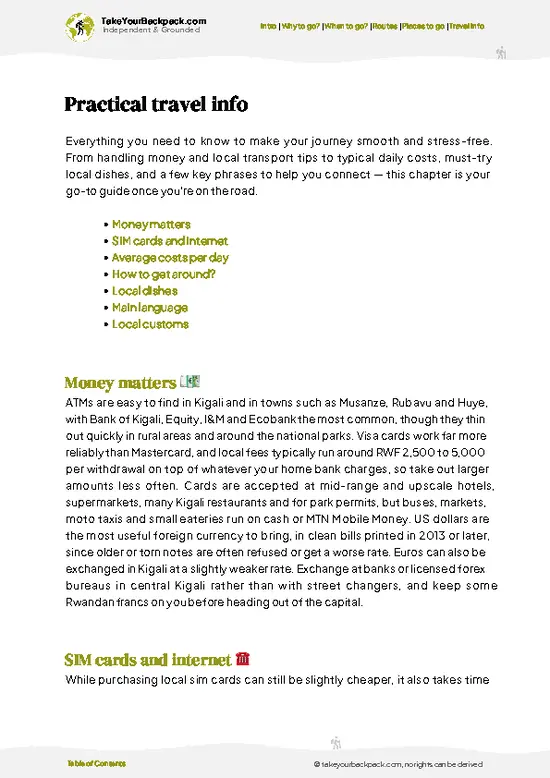
example page 0 from our offline Travel Guide for Rwanda
example page 1 from our offline Travel Guide for Rwanda
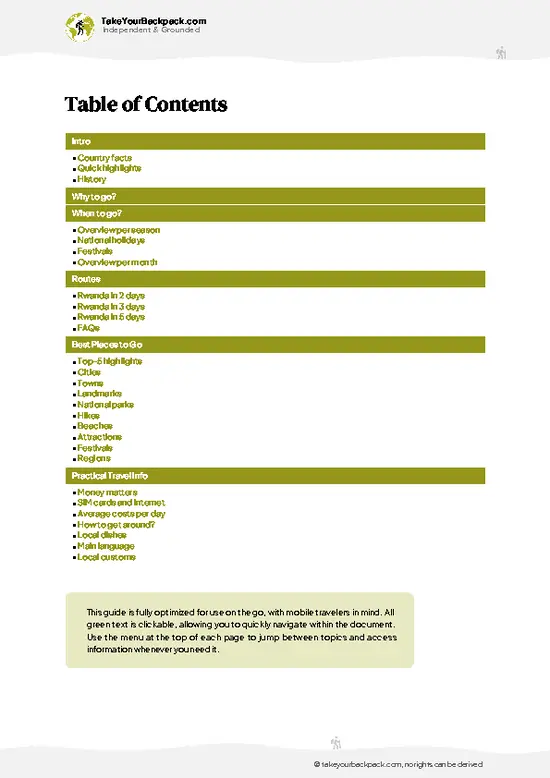
example page 2 from our offline Travel Guide for Rwanda
example page 3 from our offline Travel Guide for Rwanda
example page 4 from our offline Travel Guide for Rwanda
example page 5 from our offline Travel Guide for Rwanda
example page 6 from our offline Travel Guide for Rwanda
example page 7 from our offline Travel Guide for Rwanda
Loading the map 🌍
CLICK TO FILTER
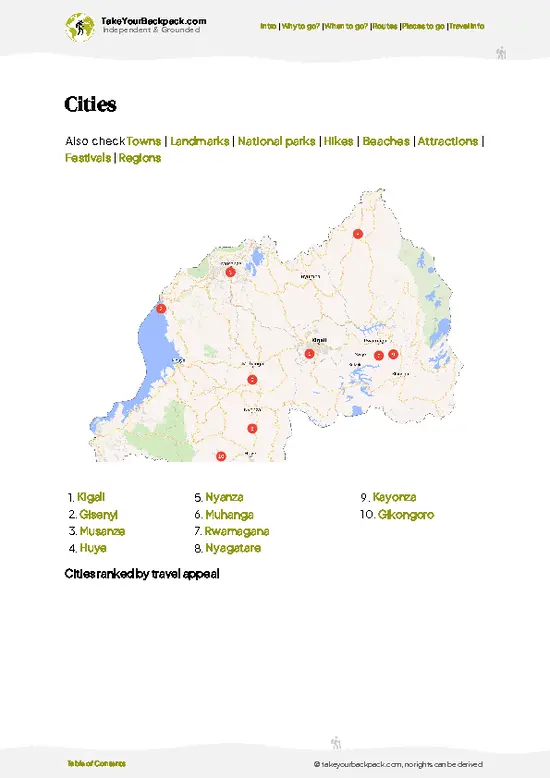
cities
towns
landmarks
national parks
hikes
beaches
attractions
festivals
regions
SHOW COUNTRY’S BESTSHOW ALL

✨ Why go?
Ranked #99 city in Rwanda
Why visitors keep coming back

Rusizi is a strategic stop for backpackers weaving through Rwanda. It’s not just about the highlights; it’s about how this city fits into your journey. The basecamp value here is solid. You can launch day trips to nearby wonders without the hassle of moving your gear every night.

Hostels in Rusizi are affordable and often buzzing with fellow travelers, making it easy to swap stories and tips. The local food scene is a delightful mix of flavors, offering everything from street snacks to cozy eateries. Plus, the city is walkable, allowing you to soak in the atmosphere without the need for transport.

When the sun sets, the nightlife offers a laid-back vibe, perfect for unwinding after a day of exploration. And if you’re looking to move on, onward travel is a breeze, connecting you to other … read more 👉
Rusizi is a strategic stop for backpackers weaving through Rwanda. It’s not just about the highlights; it’s about how this city fits into your journey. The basecamp value here is solid. You can launch day trips to nearby wonders without the hassle of moving your gear every night.

Hostels in Rusizi are affordable and often buzzing with fellow travelers, making it easy to swap stories and tips. The local food scene is a delightful mix of flavors, offering everything from street snacks to cozy eateries. Plus, the city is walkable, allowing you to soak in the atmosphere without the need for transport.

When the sun sets, the nightlife offers a laid-back vibe, perfect for unwinding after a day of exploration. And if you’re looking to move on, onward travel is a breeze, connecting you to other parts of Rwanda and beyond.

In essence, Rusizi is a practical choice for those who appreciate a blend of comfort and adventure, making it a worthy stop rather than just a fleeting moment on your map.

💡 HighlightsPlaces and moments you shouldn't skip

  • Rusizi National Park (river-mouth reserve) — A tiny but genuine riverside reserve right where the Rusizi River meets Lake Kivu. Hippos and crocodiles loaf in the channel, birdlife is excellent at dawn, and local guides run short boat trips that actually put you within easy view of wildlife without a full safari budget.
  • Lake Kivu waterfront (Cyangugu/Kamembe lakeshore) — Palm-lined shoreline, fishing boats, and low-key beaches: perfect for a slow sunset, a swim where locals do, or watching fishermen sort the catch. It’s an honest lakeside vibe that shows how life here revolves around the water.
  • Cyangugu Fish Market (lakeshore market) — Early-morning bustle where you’ll see freshly caught tilapia and smoked fish being traded, gutted, and grilled on the spot. Great place to try local street
… read more 👉
  • Rusizi National Park (river-mouth reserve) — A tiny but genuine riverside reserve right where the Rusizi River meets Lake Kivu. Hippos and crocodiles loaf in the channel, birdlife is excellent at dawn, and local guides run short boat trips that actually put you within easy view of wildlife without a full safari budget.
  • Lake Kivu waterfront (Cyangugu/Kamembe lakeshore) — Palm-lined shoreline, fishing boats, and low-key beaches: perfect for a slow sunset, a swim where locals do, or watching fishermen sort the catch. It’s an honest lakeside vibe that shows how life here revolves around the water.
  • Cyangugu Fish Market (lakeshore market) — Early-morning bustle where you’ll see freshly caught tilapia and smoked fish being traded, gutted, and grilled on the spot. Great place to try local street food, practice bargaining, and take photos of colorful baskets and boats.
  • Rusizi River bridge & border viewpoint — Walk the bridge or the nearby banks to peer across at Bukavu (DRC) and study the comings and goings of pirogues, ferries, and cross-border traders. It’s a compact, human slice of regional life and a surprisingly photogenic viewpoint.
  • Congo-Nile Trail trailhead — The southern trail access is right around town; you can hire a bike or sign up for a section ride. The rides hug the lake, cut through villages, and are one of the best low-cost ways to see everyday rural life without straying far from Rusizi.
  • Kamembe Central Market (Rusizi market) — The town’s main market for fruit, vegetables, household goods, and textiles. If you want to experience ordinary Rwandan urban life—no tourist shows, just real shopping—this is where locals do their daily business.
  • Local craft workshops and cooperatives — Small artisan groups and stalls clustered near the market sell woven baskets, beaded goods, and woodwork. You can often meet the makers, see how items are made, and buy directly at fair prices (bring small notes; card machines are rare).
  • Lake Kivu boat excursions & nearby islands — Small public or private boats run from the town’s shore to nearby islands and lakeside villages. Day trips offer swimming, picnics, and a close look at fishing communities—less polished than the tourist circuit, but more authentic.
  • Old port area and colonial-era riverside buildings — A short walk along the waterfront reveals relics of the town’s transport past: surviving customs and port buildings, warehouses, and the working quay. It’s low-key history you can touch while watching modern life roll by.
  • Community centers and live-music / dance nights — Local youth and cultural centers host occasional traditional music and dance performances, and small bars sometimes feature live bands. If your timing’s right, you’ll catch authentic music nights that aren’t set up for tourists.
A few great day-trip highlights just outside Rusizi: Nyungwe National Park (canopy walk and primates), the Karongi/Kibuye lakeside towns and islands along Lake Kivu, and nearby tea/coffee plantations and cooperatives that offer short tours.
Spotted a mistake or missing something? Contact us.

Things to do near Rusizi

Ratings based on Tripadvisor reviews. When you book through this link, you support our work at no extra cost to you.

🏘️ NeighborhoodsUnderstanding the local layout

Rusizi is a vibrant hub for backpackers, offering a mix of local culture, stunning landscapes, and practical amenities. Here’s how the neighborhoods stack up:

Central Rusizi: This area buzzes with energy. You’ll find affordable guesthouses and local eateries, making it ideal for budget travelers. The walkability is excellent, with markets and cafes just a stroll away. Nightlife is low-key but lively, perfect for mingling with locals. It’s great for short stays, giving you quick access to transport options for day trips.

Kamembe: Known for its lakeside charm, Kamembe is a bit quieter but offers stunning views of Lake Kivu. Accommodations range from budget to mid-range, and the vibe is relaxed. It’s a solid choice for longer stays, especially if you want to soak in the scenery. The area is … read more 👉
Rusizi is a vibrant hub for backpackers, offering a mix of local culture, stunning landscapes, and practical amenities. Here’s how the neighborhoods stack up:

Central Rusizi: This area buzzes with energy. You’ll find affordable guesthouses and local eateries, making it ideal for budget travelers. The walkability is excellent, with markets and cafes just a stroll away. Nightlife is low-key but lively, perfect for mingling with locals. It’s great for short stays, giving you quick access to transport options for day trips.

Kamembe: Known for its lakeside charm, Kamembe is a bit quieter but offers stunning views of Lake Kivu. Accommodations range from budget to mid-range, and the vibe is relaxed. It’s a solid choice for longer stays, especially if you want to soak in the scenery. The area is walkable, but you might need a taxi for some attractions. Nightlife is minimal, focusing more on serene evenings by the water.

Nyakabuye: This neighborhood is a hidden treasure for those seeking a more tranquil experience. It’s less touristy, with a few cozy lodges and local restaurants. The walkability is decent, but having a bike or scooter can enhance your experience. Ideal for longer stays, it offers a peaceful retreat. Nightlife is virtually nonexistent, making it perfect for unwinding after a day of exploration.

Each area has its unique flavor, so choose based on what you value most: social buzz, scenic views, or peaceful retreat.

⌛️ 1 dayA smart one-day plan

Rusizi, a vibrant town on the shores of Lake Tanganyika, offers a unique blend of natural beauty and cultural richness. It’s a place where the rhythm of daily life unfolds against a stunning backdrop of mountains and water. You’ll find a mix of local markets, lakeside strolls, and a touch of Rwandan history that makes for an engaging day.

Start your morning with a visit to the bustling market in the Nyakabuye neighborhood. The air is filled with the scent of fresh produce and spices. Grab a local breakfast of akabenz (fried pork) or a simple chapati with tea. Engage with the vendors; they’re often eager to share stories about their goods. This sets a friendly tone for your day.

After breakfast, head to the shores of Lake Tanganyika. Rent a kayak or simply take a leisurely walk along the … read more 👉
Rusizi, a vibrant town on the shores of Lake Tanganyika, offers a unique blend of natural beauty and cultural richness. It’s a place where the rhythm of daily life unfolds against a stunning backdrop of mountains and water. You’ll find a mix of local markets, lakeside strolls, and a touch of Rwandan history that makes for an engaging day.

Start your morning with a visit to the bustling market in the Nyakabuye neighborhood. The air is filled with the scent of fresh produce and spices. Grab a local breakfast of akabenz (fried pork) or a simple chapati with tea. Engage with the vendors; they’re often eager to share stories about their goods. This sets a friendly tone for your day.

After breakfast, head to the shores of Lake Tanganyika. Rent a kayak or simply take a leisurely walk along the waterfront. The lake is a hub of activity, with fishermen casting nets and locals enjoying the sun. If you’re feeling adventurous, consider a short boat trip to explore some of the nearby islands. This experience is often overlooked by tourists, but it’s a fantastic way to connect with the local environment.

In the afternoon, make your way to the Rusizi National Park. It’s a short drive from the lake, and you can explore the trails that wind through lush vegetation. Keep an eye out for the diverse bird species that call this area home. It’s a peaceful escape, perfect for unwinding and soaking in the natural beauty.

As evening approaches, return to the lakeside for dinner at a local eatery. Enjoy fresh fish caught that day, paired with a side of plantains. The sunset over the lake is a spectacle worth witnessing, painting the sky in hues of orange and pink.

This day in Rusizi is not just about ticking boxes; it’s about immersing yourself in the local culture and savoring the moments that make travel truly rewarding.

🌤️ When to go?Seasonal considerations and timing

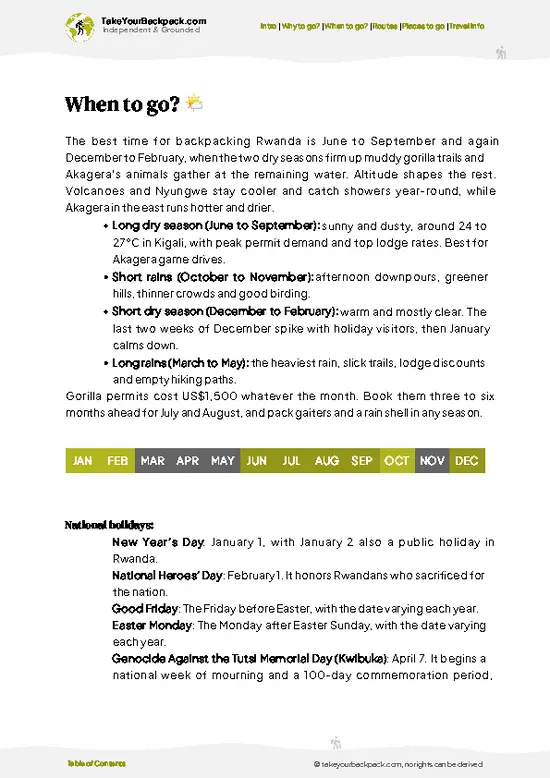
  • Topic: Weather - Rusizi experiences a tropical climate with two rainy seasons: heavy rains from March to May and lighter showers in October and November. The dry months, June to September and December to February, offer clearer skies and easier trekking conditions.
  • Topic: Temperature - Expect daytime highs around 24-28°C (75-82°F) year-round, with cooler nights dipping to 15-18°C (59-64°F). The dry season tends to feel more comfortable for outdoor activities without the humidity spike.
  • Topic: Daylight Hours - Near the equator, daylight is steady, roughly 12 hours daily throughout the year. This consistency means you can plan hikes and excursions without worrying about drastic changes in sunset times.
  • Topic: Crowds - Peak tourist flow aligns with the dry season, especially July and August,
… read more 👉
  • Topic: Weather - Rusizi experiences a tropical climate with two rainy seasons: heavy rains from March to May and lighter showers in October and November. The dry months, June to September and December to February, offer clearer skies and easier trekking conditions.
  • Topic: Temperature - Expect daytime highs around 24-28°C (75-82°F) year-round, with cooler nights dipping to 15-18°C (59-64°F). The dry season tends to feel more comfortable for outdoor activities without the humidity spike.
  • Topic: Daylight Hours - Near the equator, daylight is steady, roughly 12 hours daily throughout the year. This consistency means you can plan hikes and excursions without worrying about drastic changes in sunset times.
  • Topic: Crowds - Peak tourist flow aligns with the dry season, especially July and August, when international travelers flock to Rwanda. Visiting just before or after this window means fewer people and a more intimate experience.
  • Topic: Seasonal Activities - Dry months are prime for gorilla trekking and wildlife spotting, as animals gather near water sources. The rainy season can limit trail access but brings lush landscapes and birdwatching opportunities.
  • Topic: Price Fluctuations - Accommodation and tour prices spike during the dry season’s peak months. Traveling in shoulder seasons (June or September) can save money while still offering good weather and manageable crowds.
Pro-tip: Aim for the shoulder dry months—June or September—to balance comfort, cost, and crowd size, turning your Rusizi trip into a strategic win.


source: climatestotravel.comJANJanuary: highly recommended for travelingFEBFebruary: highly recommended for travelingMARMarch: fair for travelingAPRApril: fair for travelingMAYMay: fair for travelingJUNJune: highly recommended for travelingJULJuly: excellent for travelingAUGAugust: excellent for travelingSEPSeptember: highly recommended for travelingOCTOctober: good for travelingNOVNovember: good for travelingDECDecember: highly recommended for traveling
when-to-go

✈️ The backpacker research shortcutRwanda Travel Guide

An offline-friendly backpacking guide with optimized travel routes, ranked highlights, transport advice, and the best areas to stay.
example page 0 from our offline Travel Guide for Rwanda
example page 1 from our offline Travel Guide for Rwanda
example page 2 from our offline Travel Guide for Rwanda
example page 3 from our offline Travel Guide for Rwanda
example page 4 from our offline Travel Guide for Rwanda
example page 5 from our offline Travel Guide for Rwanda
example page 6 from our offline Travel Guide for Rwanda
example page 7 from our offline Travel Guide for Rwanda
The digital guide (233 pages) contains:
✅ 57 highlights, ranked by travel appeal
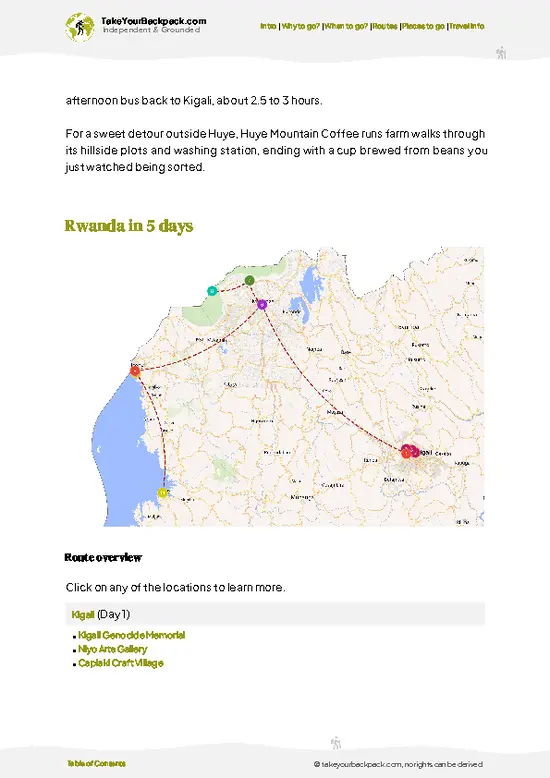
✅ Optimized 2, 3 & 5-day travel routes
✅ Cities, national parks, landmarks, beaches
✅ How to get around
✅ Offline-friendly for travel without Wi-Fi
👉 Click to see all 30+ guide features

📅 Plan smarter in minutes, not weeks
✅ Month by month travel advice
✅ Festivals & national holidays
✅ Budget expectations

🗺️ Go to the right places, skip the overrated ones
✅ Honest pros & cons of destinations
✅ Top hikes, parks & viewpoints
✅ Lesser-known places most travelers miss
✅ Clear “worth it vs skip it” guidance

🛏️ Travel smoothly without rookie mistakes
✅ Best areas to stay
✅ Transport systems explained simply
✅ Common scams & safety advice
✅ SIM cards, money & practical tips

🌍 Understand the country, not just visit it
✅ Culture & traditions
✅ 52 Essential phrases & customs
✅ Festivals worth planning around
✅ Traveler-friendly historical context
✅ Insights that make places more meaningful

📱 Built for real travel conditions
✅ Fully downloadable PDF
✅ Works completely offline
✅ Optimized for phone use
✅ Useful in remote areas & buses
✅ Everything in one place
Stop searching, start planning
Get instant access to your full guide. 30‑day money-back guarantee.
+ Add another guide for just

By proceeding you agree to our terms.
Sent to your inbox immediately after payment • 100% Secure Checkout
Best Backpacking Travel Advisor 2025 tourism awardBest Backpacking
Travel Advisor
2025
What others say about Take Your Backpack Guides:
⭐⭐⭐⭐⭐
Fantastic, amazing amount of information!
⭐⭐⭐⭐⭐
My goodness this is amazing, it's what I've been looking for hats off too you!
⭐⭐⭐⭐⭐
I think this is absolutely BRILLIANT
⭐⭐⭐⭐
Very complete and informative. It's still missing places, but I gotta to commend you
⭐⭐⭐⭐⭐
This is truly amazing, thank you, can't wait to explore it with my kids!
⭐⭐⭐⭐⭐
Awesome resource, thank you!
⭐⭐⭐⭐⭐
This is amazing! Can't wait to explore the ones I haven't seen
⭐⭐⭐⭐
I love this! Well done, great idea.
⭐⭐⭐⭐⭐
Thanks for taking the time to make this gem!
⭐⭐⭐⭐⭐
This might be the best website I've ever seen.
⭐⭐⭐⭐⭐
Congratulations, and thank you so much for your work; it's incredibly valuable.
⭐⭐⭐⭐
In all seriousness I think you did a great job pointing out the important spots
⭐⭐⭐⭐⭐
10/10 very good
⭐⭐⭐⭐⭐
As someone who's only just starting to visit regularly this is awesome, thank you.
⭐⭐⭐⭐
Thank you very much! I'm going to visit my dad, it's going to be very useful!
⭐⭐⭐⭐⭐
This is really cool! We'll be travelling for the first time and this definitely come in handy.
⭐⭐⭐⭐⭐
You are now our minister of culture, congratulations 👨‍💼
⭐⭐⭐⭐⭐
Just wanted to tell you that this is a pearl! Going to follow your recommendations.
⭐⭐⭐⭐⭐
This is so cool. I'll definitely be using the resource for my travels soon.
⭐⭐⭐⭐⭐
This is very impressive! Good work.
⭐⭐⭐⭐⭐
This is an amazing and informative site. Very well done!

🛏️ Where to stay?How to pick the right area

In Rusizi, the best neighborhood for backpackers is the area around the city center, often referred to as Nyundo or the adjacent zones near the main market. This district strikes a smart balance between safety and social buzz, essential for solo travelers who want to plug into the local rhythm without wandering into sketchy corners. It’s where you’ll find a cluster of budget hostels and guesthouses, which means plenty of opportunities to meet fellow backpackers swapping stories over a shared meal or a cold local brew.

Compared to the quieter, more residential neighborhoods on the outskirts, the … read more 👉
In Rusizi, the best neighborhood for backpackers is the area around the city center, often referred to as Nyundo or the adjacent zones near the main market. This district strikes a smart balance between safety and social buzz, essential for solo travelers who want to plug into the local rhythm without wandering into sketchy corners. It’s where you’ll find a cluster of budget hostels and guesthouses, which means plenty of opportunities to meet fellow backpackers swapping stories over a shared meal or a cold local brew.

Compared to the quieter, more residential neighborhoods on the outskirts, the city center offers a livelier vibe that’s easier to navigate on foot, cutting down on transport costs and time. It’s not luxury, but the comfort level is solid—clean, basic accommodations that prioritize community spaces over frills. This is where you trade a bit of plush for connection and convenience, which is exactly what you want when you’re backpacking.

Avoid the industrial zones or areas too close to the border crossings; they’re less welcoming and can feel isolating. The city center’s mix of markets, eateries, and hostels creates a natural social hub, making it the smartest choice for budget travelers who want to maximize both their time and their experience in Rusizi.

🚌 Getting aroundHow to get from A to B

Rusizi moves with a pulse that’s part clockwork, part improvisation. It’s a city where the official bus schedule might say one thing, but the real rhythm is set by the drivers’ moods, the market’s buzz, and the sun’s position. You’ll find that time here isn’t a strict master but a flexible partner—sometimes you wait, sometimes you jump on the next ride without a second thought. Understanding this flow is your first win: you’re not just a passenger, you’re a player in a system that rewards savvy timing and a willingness to roll with the unexpected.
  • Walking: The ultimate budget mode—free, flexible, and immersive. Rusizi’s compact center means you can cover most key spots on foot within 20-30 minutes, soaking in street life and spontaneous encounters. No schedule, no cost, just your own pace.
… read more 👉
Rusizi moves with a pulse that’s part clockwork, part improvisation. It’s a city where the official bus schedule might say one thing, but the real rhythm is set by the drivers’ moods, the market’s buzz, and the sun’s position. You’ll find that time here isn’t a strict master but a flexible partner—sometimes you wait, sometimes you jump on the next ride without a second thought. Understanding this flow is your first win: you’re not just a passenger, you’re a player in a system that rewards savvy timing and a willingness to roll with the unexpected.
  • Walking: The ultimate budget mode—free, flexible, and immersive. Rusizi’s compact center means you can cover most key spots on foot within 20-30 minutes, soaking in street life and spontaneous encounters. No schedule, no cost, just your own pace.
  • Minibus Taxis (Matatus): These are the city’s veins, running from dawn until late evening, roughly 6 AM to 9 PM. Fares hover around $0.50 to $1, making them the cheapest motorized option. They’re fast when full but can get cramped and noisy. Expect frequent stops and a bit of a hustle to grab a seat.
  • Motorcycle Taxis (Boda Bodas): For when time is tight but cash is limited, boda bodas offer door-to-door service at about $1-$2 per short trip. They dart through traffic with ease, cutting travel time significantly, but comfort is minimal and safety varies—helmet use is spotty, so buckle up mentally.
  • Shared Taxis: Slightly pricier than minibuses, around $2-$3 per ride, these run on fixed routes with fewer stops, making them quicker and more comfortable. They operate mostly from early morning until early evening. Ideal if you want a balance between speed and budget without the chaos of matatus.
  • Private Car Hire: The luxury end of Rusizi transit, costing $30 and up per day. Offers maximum comfort, flexibility, and speed but at a steep price. Best reserved for longer day trips outside the city or when your schedule is non-negotiable.

Mastering Rusizi’s transit means weighing your priorities: save money and embrace the city’s pulse by walking or hopping on a matatu, or spend a bit more for speed and comfort with shared taxis or boda bodas. Private cars are the ace card—use them sparingly, when time is your most precious currency. This is your trade-off map: every choice shapes your experience, and knowing the stakes turns travel from a gamble into a game you’re winning.

👛 Costs (as of 16 October 2026)What things cost and how to budget

Backpacking in Rusizi, Rwanda, offers a clear trade-off map between time, money, and comfort, with costs that reflect the city’s modest scale and developing tourism infrastructure. Here’s what you can expect to spend daily as an independent traveler:
  • Dorm Accommodation (High Season): Expect to pay around $8 to $12 per night. High season drives prices up slightly due to demand, but options remain basic and functional rather than luxurious.
  • Dorm Accommodation (Off-Season): Prices drop to about $5 to $8 per night. Fewer tourists mean better bargaining power and occasional discounts, though facilities remain simple.
  • Meals: Local eateries serve filling meals for $2 to $5 each. Street food and small restaurants dominate, offering hearty, affordable options that keep your budget lean without sacrificing
… read more 👉
Backpacking in Rusizi, Rwanda, offers a clear trade-off map between time, money, and comfort, with costs that reflect the city’s modest scale and developing tourism infrastructure. Here’s what you can expect to spend daily as an independent traveler:
  • Dorm Accommodation (High Season): Expect to pay around $8 to $12 per night. High season drives prices up slightly due to demand, but options remain basic and functional rather than luxurious.
  • Dorm Accommodation (Off-Season): Prices drop to about $5 to $8 per night. Fewer tourists mean better bargaining power and occasional discounts, though facilities remain simple.
  • Meals: Local eateries serve filling meals for $2 to $5 each. Street food and small restaurants dominate, offering hearty, affordable options that keep your budget lean without sacrificing flavor.
  • Local Transport: Boda-bodas (motorcycle taxis) are the go-to for short trips, costing roughly $0.50 to $1.50 depending on distance. They’re quick but can be bumpy and less comfortable.
  • City Transport Pass: Rusizi doesn’t have a formal city transport pass system. Instead, minibuses and shared taxis operate on a per-ride basis, typically $0.30 to $1 per trip, depending on distance.
  • Basic Activities/Entry Fees: Expect to pay around $3 to $7 for entry to local attractions or guided tours. These are modest fees but add up if you’re hitting multiple spots in a day.
  • Miscellaneous Expenses: Budget $1 to $3 for essentials like bottled water, snacks, or small tips. These small costs can fluctuate but are generally low.

In total, a daily budget for backpacking in Rusizi ranges from about $15 on a shoestring to $30 if you lean toward more comfort or activity. This balance lets you decide where to save and where to splurge, turning your trip into a strategic play between comfort, time, and cost.


source: rwandatourism.com
⚠️ Prices can change and everyone travels differently, so take this as a rough guide. Hope it helps you plan your adventure!

🚌 Day tripsExploring the surroundings

Rusizi, Rwanda, is a fantastic launchpad for day trips that balance adventure and cultural immersion. Here are some standout options that will enrich your experience without draining your wallet.

Kibuye
Just a two-hour bus ride from Rusizi, Kibuye offers stunning views of Lake Kivu. The journey is scenic, with rolling hills and lush landscapes that set the stage for a day of exploration. Once there, you can rent a kayak or simply stroll along the lakeshore. The local fish market is a must-see, where you can sample fresh tilapia. Budget around $10 for transport and snacks. The best time to visit is during the dry season, from May to September, when the weather is perfect for outdoor activities. A common mistake is underestimating the time needed to explore; plan to spend at least five hours … read more 👉
Rusizi, Rwanda, is a fantastic launchpad for day trips that balance adventure and cultural immersion. Here are some standout options that will enrich your experience without draining your wallet.

Kibuye
Just a two-hour bus ride from Rusizi, Kibuye offers stunning views of Lake Kivu. The journey is scenic, with rolling hills and lush landscapes that set the stage for a day of exploration. Once there, you can rent a kayak or simply stroll along the lakeshore. The local fish market is a must-see, where you can sample fresh tilapia. Budget around $10 for transport and snacks. The best time to visit is during the dry season, from May to September, when the weather is perfect for outdoor activities. A common mistake is underestimating the time needed to explore; plan to spend at least five hours here to soak it all in.
👉 Explore Kibuye

Nyungwe National Park
A little over an hour from Rusizi, Nyungwe is a paradise for nature lovers. This national park is home to diverse wildlife, including chimpanzees and countless bird species. The canopy walk is a highlight, offering breathtaking views from above the treetops. Expect to pay around $15 for park entry and transport. The dry season is ideal for spotting wildlife, but even during the rainy months, the lush scenery is captivating. First-timers often overlook the need for sturdy footwear; the trails can be slippery.


Bugarama Hot Springs
Only about 30 minutes from Rusizi, Bugarama Hot Springs is a hidden treasure. The natural hot springs are perfect for a relaxing soak after a day of hiking or exploring. The entry fee is minimal, around $5, making it a budget-friendly option. Visit in the late afternoon to enjoy the sunset while you unwind. Many travelers miss the chance to bring a picnic; the surrounding area is perfect for a leisurely meal.


Cyangugu
Just a short 20-minute ride from Rusizi, Cyangugu is a charming town with a rich history. You can visit the local market, where vendors sell everything from fresh produce to handmade crafts. The vibrant atmosphere is a great way to connect with locals and experience daily life. Budget around $5 for transport and snacks. The best time to go is early morning when the market is bustling. A common mistake is not bargaining; it’s part of the experience!
👉 Explore Cyangugu

These day trips from Rusizi offer a mix of relaxation, adventure, and cultural insights, making your backpacking journey truly rewarding.

🍲 FoodEating & Drinking in Rusizi

In Rusizi, the culinary scene is a delightful mix of flavors that reflect the heart of Rwandan culture. You can’t visit without trying ugali, a staple made from maize flour, often served with a rich sauce or grilled meat. Pair it with isombe, a dish of cassava leaves cooked in ground peanuts that brings a nutty depth to your meal.

Street food is where the magic happens. Vendors line the streets, sizzling skewers of brochettes—marinated meat grilled to perfection. The aroma wafts through the air, drawing you in. Grab a few and enjoy them with a side of akabenz, fried pork that’s crispy on the outside and tender within.

For drinks, don’t miss out on ikigage, a traditional sorghum beer that’s slightly sour and refreshing. It’s often shared among friends, so grab a cup and join the locals … read more 👉
In Rusizi, the culinary scene is a delightful mix of flavors that reflect the heart of Rwandan culture. You can’t visit without trying ugali, a staple made from maize flour, often served with a rich sauce or grilled meat. Pair it with isombe, a dish of cassava leaves cooked in ground peanuts that brings a nutty depth to your meal.

Street food is where the magic happens. Vendors line the streets, sizzling skewers of brochettes—marinated meat grilled to perfection. The aroma wafts through the air, drawing you in. Grab a few and enjoy them with a side of akabenz, fried pork that’s crispy on the outside and tender within.

For drinks, don’t miss out on ikigage, a traditional sorghum beer that’s slightly sour and refreshing. It’s often shared among friends, so grab a cup and join the locals in their lively conversations.

Dining here is casual and communal. Expect to share tables and engage with your neighbors. It’s all about connection, so don’t hesitate to strike up a conversation. Embrace the local customs, and you’ll find that every meal is a chance to dive deeper into the vibrant culture of Rusizi.

🛡️ SafetyStaying Safe: What Travelers Should Know

Rusizi is generally safe for backpackers, but a few situational awareness tips can enhance your experience. Stick to well-lit areas at night, especially along the lakeshore. Solo travelers should be mindful of their surroundings, as the vibrant local life can sometimes lead to distractions.

Scams are rare, but be cautious around markets. Vendors may inflate prices for tourists. A friendly smile and a firm, polite negotiation can go a long way. If someone approaches you with a “tour guide” offer, it’s often best to politely decline unless you’ve done your homework.

Everyday annoyances might include occasional power outages or slow internet, so plan accordingly. Carry a portable charger and download maps offline. Overall, keep your valuables close and your attitude open. Embrace the local … read more 👉
Rusizi is generally safe for backpackers, but a few situational awareness tips can enhance your experience. Stick to well-lit areas at night, especially along the lakeshore. Solo travelers should be mindful of their surroundings, as the vibrant local life can sometimes lead to distractions.

Scams are rare, but be cautious around markets. Vendors may inflate prices for tourists. A friendly smile and a firm, polite negotiation can go a long way. If someone approaches you with a “tour guide” offer, it’s often best to politely decline unless you’ve done your homework.

Everyday annoyances might include occasional power outages or slow internet, so plan accordingly. Carry a portable charger and download maps offline. Overall, keep your valuables close and your attitude open. Embrace the local culture, and you’ll find that the small bumps in the road only add to the adventure.

FAQCommon questions from travelers

2 to 3 days are sufficient to explore Rusizi. This allows time to visit the Rusizi National Park and enjoy the nearby Lake Kivu beaches. Additional days may be needed if planning to explore surrounding areas or engage in water activities.
Yes, Rusizi is generally safe for solo backpackers. Standard precautions such as avoiding isolated areas at night and securing valuables are advised. Local markets and tourist spots are usually well-patrolled and safe during the day.
Rusizi is known for its proximity to Rusizi National Park, famous for hippos and birdwatching. It is also recognized for its location on the shores of Lake Kivu, offering scenic views and water-based activities. The town serves as a gateway to western Rwanda's natural attractions.
⚠️ Things can change over time, so always validate details locally before you go.

Other Rwandan cities near Rusizi

Explore more nearby:

  • Gikongoro—Murambi memorial, cool tea ridges, Huye-Nyungwe stopover| 44 km away
  • Karongi—lakefront promenade, boat docks, market stalls| 50 km away
  • Huye—Ethnographic museum, arboretum, coffee hills, student town| 62 km away

💡 Not sure where to go next?
Create a personalized itinerary for Rwanda including Rusizi and the places that fit your trip.

Generate my itinerary

👉 Discover all cities

Or checkout all Rwanda has to offer (think cities, towns, villages, national parks, hikes, beaches, festivals)
Country photo of Rwanda

We 💚 feedbackSumming up the experience

Rusizi has a laid-back vibe that feels like a well-kept secret. The best surprise? The local markets bursting with life and flavors—try the grilled fish; it’s a game changer. Just a heads-up: the humidity can be intense, so stay hydrated and take it slow. Embrace the rhythm of life here; it’s all about savoring the moment. You’ll leave with a deeper appreciation for Rwanda’s heart and soul. Trust me, it’s worth every second.

✍️ Help improve this page!
The information on this page is based on in-depth research, insights shared by experienced travelers, and feedback from the local travel community in Rwanda. While every effort is made to keep the information accurate and current, conditions can change — so if you spot anything incorrect or outdated, please get in touch.


🙋‍♂️ Give feedback

👋 Meet the founderWho’s Behind Take Your Backpack?

Johan, backpacker and founder of TakeYourBackpackHi, I’m Johan (Netherlands 🇳🇱), the creator of TakeYourBackpack. Over the past 3 decades, I’ve backpacked through 90+ countries across six continents, gaining extensive experience with independent travel, long-term trips, and overland routes.

This site is built on a combination of firsthand travel experience and carefully curated insights from other backpackers. Many guides are based on places I’ve personally visited, while others bring together tips, observations, and practical advice shared by trusted travelers I’ve met along the way.

The goal is to provide realistic, experience-driven guidance — not generic itineraries — so you can explore destinations with better context, clearer expectations, and more confidence.