×

Saudi Arabia🇸🇦 | best beachesThe Must-See 6 beaches in Saudi Arabia

Beaches in Saudi Arabia are defined by two coastlines that behave like different countries. The Red Sea coast offers clear water, fringing coral reefs and a growing resort and dive scene, while the Arabian Gulf coast is shallower, warmer and mostly used by local families and weekend visitors. Costs, access and crowds split along the same line. Public corniches are free and easy to reach by taxi, but the best reef sites often need a car or a booked transfer. Resort beaches charge day fees and sit far from town. For backpacking or independent travel, the Red Sea is the more practical choice, with the Gulf as a quieter add-on.

By Johan Kruseman 🇳🇱 | Updated October 19, 2026
Explore the best attractions in Saudi Arabia

Why go?Why These beach Stand Out

Saudi Arabia has more than 2,400 kilometers of coastline, and most of the beach appeal sits on the Red Sea, where a long fringing reef, calm water and high visibility make for some of the region's best snorkeling and diving. The Gulf side is shallower, with muddier flats and strong summer humidity, so it suits local picnics more than swimming trips.

The country is also new to international beach tourism. Tourist visas for many nationalities opened in 2019, and large coastal developments have since added resorts, marinas and airports. Infrastructure is uneven. Resort zones are polished and priced accordingly, while older public beaches may have few facilities and little shade.

Travelers should know that cultural norms shape beach use. Public beaches are often family-oriented, modest dress … read more 👉
Saudi Arabia has more than 2,400 kilometers of coastline, and most of the beach appeal sits on the Red Sea, where a long fringing reef, calm water and high visibility make for some of the region's best snorkeling and diving. The Gulf side is shallower, with muddier flats and strong summer humidity, so it suits local picnics more than swimming trips.

The country is also new to international beach tourism. Tourist visas for many nationalities opened in 2019, and large coastal developments have since added resorts, marinas and airports. Infrastructure is uneven. Resort zones are polished and priced accordingly, while older public beaches may have few facilities and little shade.

Travelers should know that cultural norms shape beach use. Public beaches are often family-oriented, modest dress is expected away from private resorts, and some stretches are segregated or restricted. Bikinis are generally limited to private resort beaches and boats, and alcohol is not sold anywhere in the country. Foreign visitors are usually given more latitude at resorts, but the rules differ by site.

Climate matters just as much. Summer heat and humidity make midday beach time uncomfortable, and distances are large, so a car or organized transport is usually part of the plan. Beaches here suit travelers who value reefs, desert backdrops and uncrowded shores over nightlife or cheap beach shacks.
Why These Made the Cut
The list of best beaches in Saudi Arabia is created based on beauty, vibe, water quality, activities, and surrounding scenery. If you feel a beach is missing in this list, please let us know.

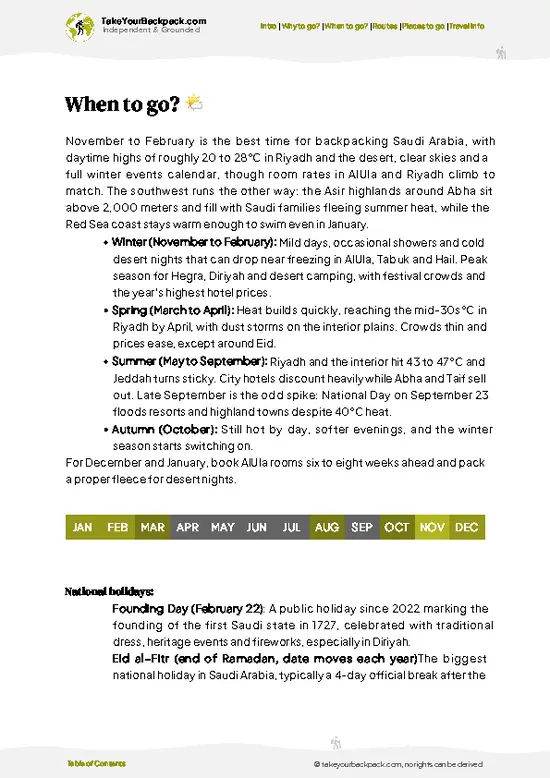
When to go?Timing Your Visit for the Best Experience

Best months for beaches: The best months for beaches in Saudi Arabia are November to March, when daytime air temperatures on the Red Sea coast sit around 24 to 30°C and the sea stays at roughly 24 to 27°C. Rain is rare, usually under 50 mm for the whole year on most coasts, so cancelled days are uncommon.
Shoulder seasons: April, May, October and early November are workable. Air temperatures climb to 33 to 38°C, and the sea warms to 27 to 30°C, which is pleasant for snorkeling but hard on anyone walking on sand at midday. Plan water time for early morning and late afternoon.
Summer and regional differences: From June to September, the Red Sea coast regularly passes 38°C with high humidity, and the Gulf coast around Dammam and Khobar can reach 45°C or more with humidity near saturation. Many … read more 👉
Best months for beaches: The best months for beaches in Saudi Arabia are November to March, when daytime air temperatures on the Red Sea coast sit around 24 to 30°C and the sea stays at roughly 24 to 27°C. Rain is rare, usually under 50 mm for the whole year on most coasts, so cancelled days are uncommon.
Shoulder seasons: April, May, October and early November are workable. Air temperatures climb to 33 to 38°C, and the sea warms to 27 to 30°C, which is pleasant for snorkeling but hard on anyone walking on sand at midday. Plan water time for early morning and late afternoon.
Summer and regional differences: From June to September, the Red Sea coast regularly passes 38°C with high humidity, and the Gulf coast around Dammam and Khobar can reach 45°C or more with humidity near saturation. Many travelers skip this period, though resort prices can fall sharply, sometimes by 30 to 50 percent compared with winter rates. The Gulf is at its most comfortable from November to March, when evenings can feel cool.
Peak periods: Winter holidays, long weekends and school breaks push up resort prices and fill beach areas, especially on Fridays and Saturdays. Ramadan changes opening hours, with daytime food service limited and evenings busier, and the dates shift by about 11 days earlier each year.

beach hoppingHow to Combine beaches Into One Trip

How many days to allow: A trip combining several beaches in Saudi Arabia needs 7 to 10 days, and more if the Gulf coast is included. The distances are large, so time between stops can easily exceed time on the sand.
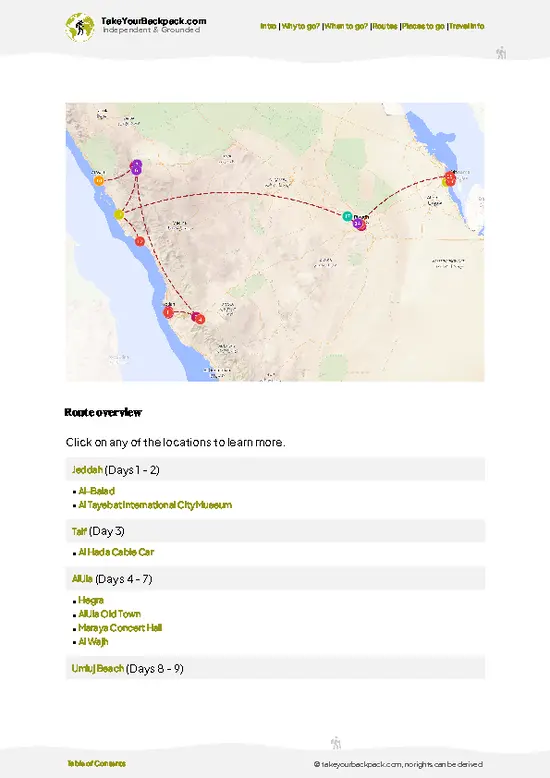
Grouping regions: The Red Sea coast groups into a northern cluster around Tabuk and the NEOM area, a central cluster around Yanbu and Al Wajh, and a southern cluster near Jeddah and, farther down, Jazan. Jeddah is the main hub, with an international airport and domestic flights to the others. The Gulf coast is separate, reached through Dammam or Riyadh, and fits best as a standalone add-on of 2 to 3 days. A south-to-north direction, starting in Jeddah and flying or driving up the coast, keeps the longest transfers early while energy is high.
Time per stop and travel times: Allow … read more 👉
How many days to allow: A trip combining several beaches in Saudi Arabia needs 7 to 10 days, and more if the Gulf coast is included. The distances are large, so time between stops can easily exceed time on the sand.
Grouping regions: The Red Sea coast groups into a northern cluster around Tabuk and the NEOM area, a central cluster around Yanbu and Al Wajh, and a southern cluster near Jeddah and, farther down, Jazan. Jeddah is the main hub, with an international airport and domestic flights to the others. The Gulf coast is separate, reached through Dammam or Riyadh, and fits best as a standalone add-on of 2 to 3 days. A south-to-north direction, starting in Jeddah and flying or driving up the coast, keeps the longest transfers early while energy is high.
Time per stop and travel times: Allow 2 to 3 days per Red Sea area, which gives time for a boat trip, one reef session and a rest day. Driving Jeddah to Yanbu takes about 3.5 to 4 hours, Yanbu to Al Wajh around 4 to 5 hours, and Jeddah to Jazan roughly 10 hours, so flights suit the longer legs. Domestic flights typically run 1.5 to 2 hours.
Planning mistakes: The most common mistake is packing too many coastal stops into one week, which turns the trip into a driving tour. Pick two regions and stay put. Another is relying on public transport, which is limited between coastal towns. Rent a car, or book transfers early. Last, travelers schedule midday beach time in warm months, when mornings and evenings are far more comfortable.

The ListTop beaches of Saudi Arabia

1 Umluj Beach

island views, soft sand, boat tours, marine life

Take boat trips to nearby islands or walk along quiet beaches, with frequent dolphin sightings and clear, shallow water.

saudi-arabia-beach-umluj-beach
© Google |

2 Half Moon Bay

crescent shoreline, shallow waters, sand dunes, resort access

Swim in calm, shallow seas or relax on wide sandy stretches, with easy access to nearby resorts and recreational facilities.

3 Silver Sands Beach

private entry, imported sand, water sports, expat community

Join a diverse crowd at a private beach offering imported white sand, rental equipment, and relaxed dress codes uncommon elsewhere.

4 Tayeb Al Ism Beach

rugged cliffs, turquoise water, snorkeling spots, undeveloped coast

Swim in clear water beneath steep cliffs, with coral reefs close to shore and little built infrastructure nearby.

5 Haql Beach

Red Sea views, shipwreck, mountain backdrop, remote setting

Stand on quiet sands facing a dramatic shipwreck and distant Sinai peaks, with few crowds and a sense of isolation.

6 Uqair Beach

historic fort, tidal flats, fishing boats, wide open spaces

Visit a beach lined with traditional boats and tidal pools, near an old fort that hints at the region’s trading past.

Loading the map 🌍

Expert viewInsights from Locals and Experts

How many beaches to visit: Plan on two or three beach areas for a typical backpacking trip. Saudi Arabia’s coastal distances are long, and each stop usually needs a half day of transfer. Staying two or three nights in each place gives time for weather delays, boat schedules and the early-morning window when heat is manageable.
Choosing between types: Reef and snorkeling coasts on the Red Sea are the best fit for most independent travelers because the water is clear and the sites are in or near towns with cheaper guesthouses. Resort beaches suit those who want privacy, loungers and a more relaxed dress code, but they sit far from towns, so budget travelers pay for transport and day passes. Public corniches suit those wanting local atmosphere, with families, grilled food and sunset crowds, though … read more 👉
How many beaches to visit: Plan on two or three beach areas for a typical backpacking trip. Saudi Arabia’s coastal distances are long, and each stop usually needs a half day of transfer. Staying two or three nights in each place gives time for weather delays, boat schedules and the early-morning window when heat is manageable.
Choosing between types: Reef and snorkeling coasts on the Red Sea are the best fit for most independent travelers because the water is clear and the sites are in or near towns with cheaper guesthouses. Resort beaches suit those who want privacy, loungers and a more relaxed dress code, but they sit far from towns, so budget travelers pay for transport and day passes. Public corniches suit those wanting local atmosphere, with families, grilled food and sunset crowds, though facilities are basic. Gulf beaches work as a short add-on rather than a main draw.
What it costs: Budget about US$60 to 110 a day (SAR 225 to 410) for a mid-range independent trip with basic hotels, shared meals and local transport. Public beaches are usually free. Resort day passes typically run SAR 150 to 600 (US$40 to 160), snorkel gear rental SAR 50 to 100 (US$13 to 27), and a half-day boat or diving trip SAR 250 to 500 (US$65 to 135). Taxis and ride-hailing within a town cost SAR 15 to 40 (US$4 to 11), but rental cars, at around SAR 120 to 200 a day (US$32 to 53), make long coastal stretches far easier. Prices are higher in winter and on weekends, so book resort passes ahead.
Dress and behavior: Public beaches are family spaces, so swimwear is commonly more modest than in most countries. Many visitors swim in shorts and a T-shirt or a full-coverage swimsuit, and women often wear leggings and a long top. Bikinis are generally limited to private resorts and chartered boats. Photographing other people, especially women and families, without permission is a sensitive matter and can cause real trouble. Alcohol is banned, so there are no beach bars. Carry a light cover-up for the walk from the car.
Safety on the water: Heat is the main risk. Drink 3 to 4 liters of water a day, wear a rash guard and reef-safe sunscreen, and avoid midday sun. Currents and wind can pick up quickly, and lifeguards are not always present, so swim near others and follow posted flags. Coral cuts, sea urchins and stonefish are real concerns, so wear reef shoes. Some coastal zones are restricted for military or development reasons, and signage is usually in Arabic and English, so obey it.
Smarter habits: Book resort passes and boat trips a few days ahead in winter, carry cash for small beach vendors, and download offline maps because mobile coverage can be patchy along remote coast roads.

✈️ The backpacker research shortcutSaudi Arabia Travel Guide

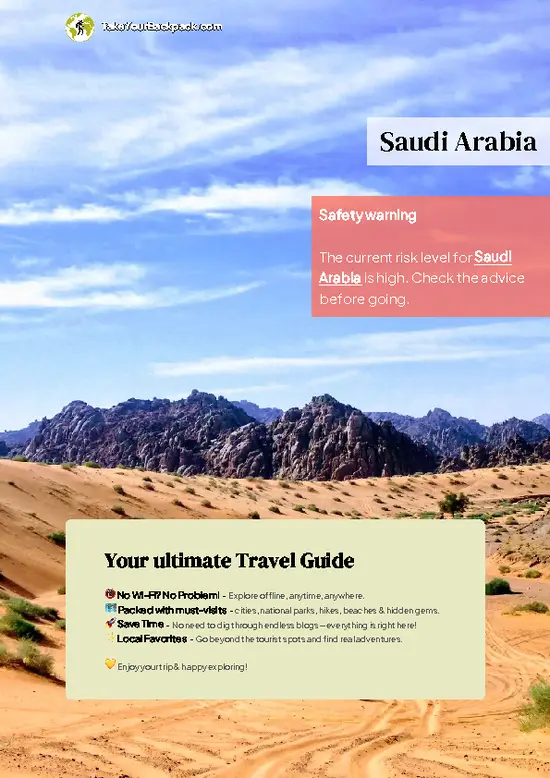
An offline-friendly backpacking guide with optimized travel routes, ranked highlights, transport advice, and the best areas to stay.
example page 0 from our offline Travel Guide for Saudi Arabia
example page 1 from our offline Travel Guide for Saudi Arabia
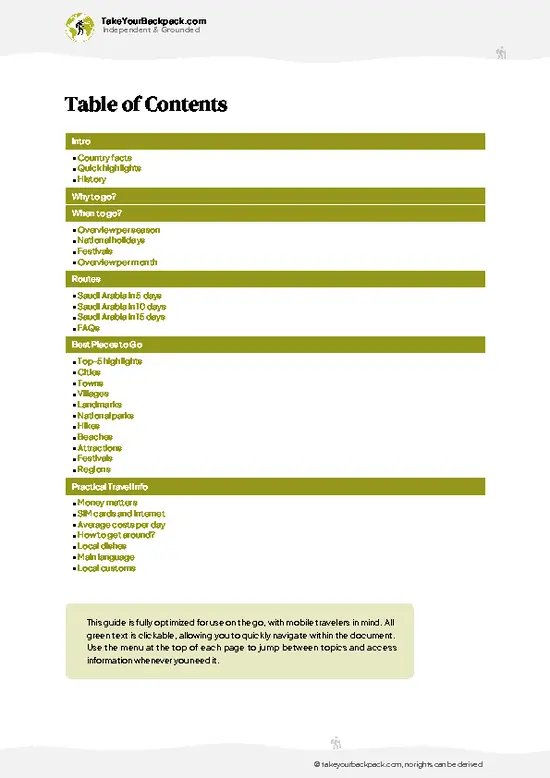
example page 2 from our offline Travel Guide for Saudi Arabia
example page 3 from our offline Travel Guide for Saudi Arabia
example page 4 from our offline Travel Guide for Saudi Arabia
example page 5 from our offline Travel Guide for Saudi Arabia
example page 6 from our offline Travel Guide for Saudi Arabia
example page 7 from our offline Travel Guide for Saudi Arabia
The digital guide (322 pages) contains:
✅ 86 highlights, ranked by travel appeal
✅ Optimized 5, 10 & 15-day travel routes
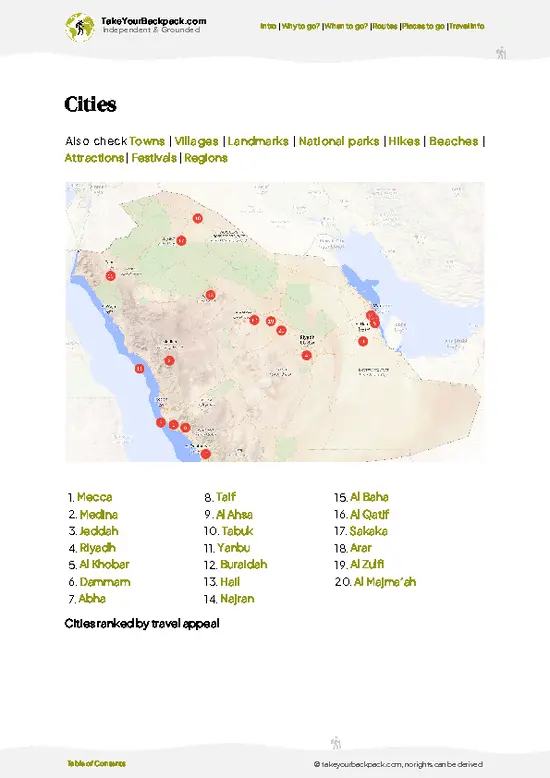
✅ Cities, national parks, landmarks, beaches
✅ How to get around
✅ Offline-friendly for travel without Wi-Fi
👉 Click to see all 30+ guide features

📅 Plan smarter in minutes, not weeks
✅ Month by month travel advice
✅ Festivals & national holidays
✅ Budget expectations

🗺️ Go to the right places, skip the overrated ones
✅ Honest pros & cons of destinations
✅ Top hikes, parks & viewpoints
✅ Lesser-known places most travelers miss
✅ Clear “worth it vs skip it” guidance

🛏️ Travel smoothly without rookie mistakes
✅ Best areas to stay
✅ Transport systems explained simply
✅ Common scams & safety advice
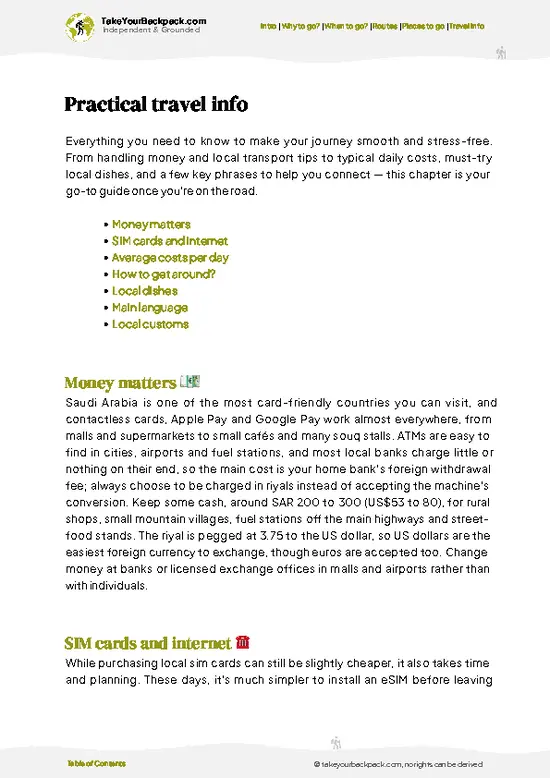
✅ SIM cards, money & practical tips

🌍 Understand the country, not just visit it
✅ Culture & traditions
✅ 52 Essential phrases & customs
✅ Festivals worth planning around
✅ Traveler-friendly historical context
✅ Insights that make places more meaningful

📱 Built for real travel conditions
✅ Fully downloadable PDF
✅ Works completely offline
✅ Optimized for phone use
✅ Useful in remote areas & buses
✅ Everything in one place
Stop searching, start planning
Get instant access to your full guide. 30‑day money-back guarantee.
+ Add another guide for just

By proceeding you agree to our terms.
Sent to your inbox immediately after payment • 100% Secure Checkout
Best Backpacking Travel Advisor 2025 tourism awardBest Backpacking
Travel Advisor
2025
What others say about Take Your Backpack Guides:
⭐⭐⭐⭐⭐
Fantastic, amazing amount of information!
⭐⭐⭐⭐⭐
My goodness this is amazing, it's what I've been looking for hats off too you!
⭐⭐⭐⭐⭐
I think this is absolutely BRILLIANT
⭐⭐⭐⭐
Very complete and informative. It's still missing places, but I gotta to commend you
⭐⭐⭐⭐⭐
This is truly amazing, thank you, can't wait to explore it with my kids!
⭐⭐⭐⭐⭐
Awesome resource, thank you!
⭐⭐⭐⭐⭐
This is amazing! Can't wait to explore the ones I haven't seen
⭐⭐⭐⭐
I love this! Well done, great idea.
⭐⭐⭐⭐⭐
Thanks for taking the time to make this gem!
⭐⭐⭐⭐⭐
This might be the best website I've ever seen.
⭐⭐⭐⭐⭐
Congratulations, and thank you so much for your work; it's incredibly valuable.
⭐⭐⭐⭐
In all seriousness I think you did a great job pointing out the important spots
⭐⭐⭐⭐⭐
10/10 very good
⭐⭐⭐⭐⭐
As someone who's only just starting to visit regularly this is awesome, thank you.
⭐⭐⭐⭐
Thank you very much! I'm going to visit my dad, it's going to be very useful!
⭐⭐⭐⭐⭐
This is really cool! We'll be travelling for the first time and this definitely come in handy.
⭐⭐⭐⭐⭐
You are now our minister of culture, congratulations 👨‍💼
⭐⭐⭐⭐⭐
Just wanted to tell you that this is a pearl! Going to follow your recommendations.
⭐⭐⭐⭐⭐
This is so cool. I'll definitely be using the resource for my travels soon.
⭐⭐⭐⭐⭐
This is very impressive! Good work.
⭐⭐⭐⭐⭐
This is an amazing and informative site. Very well done!

🛏️ Where to stay?Top Areas to Stay

True dorm hostels are rare in Saudi Arabia, so budget travelers mostly book small hotels, furnished apartments or app-listed rooms, typically SAR 150 to 250 (about US$40 to 67) a night in big cities. In Riyadh, Al Batha has the cheapest beds and sits near Masmak Fort and the old souqs, though it is crowded, noisy and rough around the edges, while Al Olaya costs more but is clean, safe, on the Metro and closest to the city’s cafés and late-night dining. In Jeddah, Al Balad puts you inside the historic coral-stone quarter with few modern comforts, and Al Hamra near the Corniche is quieter and greener, with evening seafront walks but longer rides to the old town.

If you enjoy meeting fellow travelers, … read more 👉
True dorm hostels are rare in Saudi Arabia, so budget travelers mostly book small hotels, furnished apartments or app-listed rooms, typically SAR 150 to 250 (about US$40 to 67) a night in big cities. In Riyadh, Al Batha has the cheapest beds and sits near Masmak Fort and the old souqs, though it is crowded, noisy and rough around the edges, while Al Olaya costs more but is clean, safe, on the Metro and closest to the city’s cafés and late-night dining. In Jeddah, Al Balad puts you inside the historic coral-stone quarter with few modern comforts, and Al Hamra near the Corniche is quieter and greener, with evening seafront walks but longer rides to the old town.

If you enjoy meeting fellow travelers, consider choosing hostels with high ratings for atmosphere. On the other hand, if you prefer having your own space, a hotel might be a better option.

Saudi ArabiaDiscover the Country

👋 Meet the founderWho’s Behind Take Your Backpack?

Johan, backpacker and founder of TakeYourBackpackHi, I’m Johan (Netherlands 🇳🇱), the creator of TakeYourBackpack. Over the past 3 decades, I’ve backpacked through 90+ countries across six continents, gaining extensive experience with independent travel, long-term trips, and overland routes.

This site is built on a combination of firsthand travel experience and carefully curated insights from other backpackers. Many guides are based on places I’ve personally visited, while others bring together tips, observations, and practical advice shared by trusted travelers I’ve met along the way.

The goal is to provide realistic, experience-driven guidance — not generic itineraries — so you can explore destinations with better context, clearer expectations, and more confidence.