×

Saudi Arabia🇸🇦 | best regionsThe Must-See 5 regions in Saudi Arabia

Saudi Arabia is roughly the size of Western Europe, and its regions behave like separate countries. The Red Sea coast and the western Hejaz hold the pilgrimage cities, old trading ports and mountain towns, with the most developed tourism and the highest prices. The northwest offers desert canyons and archaeological sites, while the south is cooler, greener and more rural. The central and eastern regions are oil-era cities and open desert, with fewer visitors. Distances are long, public transport is thin, and costs rise where tourism is organized. Independent travel is now practical thanks to the e-visa, but the right region depends on your tolerance for planning, heat and driving.

By Johan Kruseman 🇳🇱 | Updated October 19, 2026
Explore the best cities in Saudi Arabia

Why go?Why These region Stand Out

Saudi Arabia suits regional travel because its geography is unusually varied. Coastal plains, volcanic fields, sandstone canyons, high escarpments and sand deserts sit within one country, and the climate shifts sharply with altitude. The history is layered too: pre-Islamic caravan kingdoms, Islamic heritage, Ottoman-era towns and the modern state all leave distinct marks, so each part of the country has its own character, food and dialect.

The country is less suited to casual wandering. It is built around cars and domestic flights, and distances between regions often run 800 to 1,500 kilometers. Intercity buses and the Haramain high-speed train cover only a few corridors, so reaching remote areas usually means renting a car or booking a driver or tour. Tourism infrastructure is still new, … read more 👉
Saudi Arabia suits regional travel because its geography is unusually varied. Coastal plains, volcanic fields, sandstone canyons, high escarpments and sand deserts sit within one country, and the climate shifts sharply with altitude. The history is layered too: pre-Islamic caravan kingdoms, Islamic heritage, Ottoman-era towns and the modern state all leave distinct marks, so each part of the country has its own character, food and dialect.

The country is less suited to casual wandering. It is built around cars and domestic flights, and distances between regions often run 800 to 1,500 kilometers. Intercity buses and the Haramain high-speed train cover only a few corridors, so reaching remote areas usually means renting a car or booking a driver or tour. Tourism infrastructure is still new, and some of the best sites are managed through permits, timed tickets or guided access.

Before choosing Saudi Arabia, travelers should know that most nationalities can apply for an e-visa online, that Mecca is closed to non-Muslims, and that public conduct and dress follow conservative norms even though enforcement has relaxed. Alcohol is not sold. Summer heat limits where and when you can be outdoors, so planning around climate matters more here than in most countries.
Behind the Scenes of Selection
The list of best regions in Saudi Arabia is created based on landscapes, local culture, attractions, vibes, and overall appeal. If you feel a region is missing in this list, please let us know.

When to go?Timing Your Visit for the Best Experience

Best months: The best months are November to March, when daytime highs across most of the country sit around 18 to 28°C instead of the 40 to 48°C common from June to September. This is the period when hiking, desert camping and outdoor ruins are comfortable, and it is also when most events and festivals run.
Shoulder seasons: October and April are workable, with highs of 30 to 36°C in much of the interior and the northwest, though midday sun is still harsh. Prices for hotels and tours rise from late November to February, and weekends and school holidays can fill rooms in the main tourist areas. Booking ahead in those months is sensible.
Regional differences: The southwest highlands around Abha are the exception to the summer rule. At roughly 2,000 meters they stay about 20 to 30°C in July and … read more 👉
Best months: The best months are November to March, when daytime highs across most of the country sit around 18 to 28°C instead of the 40 to 48°C common from June to September. This is the period when hiking, desert camping and outdoor ruins are comfortable, and it is also when most events and festivals run.
Shoulder seasons: October and April are workable, with highs of 30 to 36°C in much of the interior and the northwest, though midday sun is still harsh. Prices for hotels and tours rise from late November to February, and weekends and school holidays can fill rooms in the main tourist areas. Booking ahead in those months is sensible.
Regional differences: The southwest highlands around Abha are the exception to the summer rule. At roughly 2,000 meters they stay about 20 to 30°C in July and August and receive the most rain, mainly from July to September, so this is the place to go when everywhere else is too hot. The Red Sea coast is humid in summer, with highs of 35 to 42°C. Winter nights in the northwest and the interior can drop to 3 to 8°C, and high ground in Tabuk region occasionally sees frost. Rain across most of the country is light and falls mainly from November to April, but flash floods can close desert roads.
Ramadan: Ramadan shifts by about eleven days each year. Daytime eating and opening hours change, and many sites run on reduced schedules.

region hoppingHow to Combine regions Into One Trip

How long to allow: A trip combining several regions needs 10 to 21 days, and two weeks is the practical minimum for three areas without constant transit. The country is large, so the plan should be built around a few hubs instead of a loop of everything.
Grouping and direction: Regions group by proximity and flight links. The west (Jeddah and Medina) pairs with the northwest via Medina or AlUla, which are roughly 4 to 5 hours apart by road. The south pairs with the Red Sea coast through Jeddah, with Abha reachable by a flight of about 1.5 hours. Riyadh anchors the center and links to the east by train in about 4 hours. A sensible direction is to start in the hottest or most remote area while energy is high and finish in a city with good flight connections. Jeddah and Riyadh are the main international … read more 👉
How long to allow: A trip combining several regions needs 10 to 21 days, and two weeks is the practical minimum for three areas without constant transit. The country is large, so the plan should be built around a few hubs instead of a loop of everything.
Grouping and direction: Regions group by proximity and flight links. The west (Jeddah and Medina) pairs with the northwest via Medina or AlUla, which are roughly 4 to 5 hours apart by road. The south pairs with the Red Sea coast through Jeddah, with Abha reachable by a flight of about 1.5 hours. Riyadh anchors the center and links to the east by train in about 4 hours. A sensible direction is to start in the hottest or most remote area while energy is high and finish in a city with good flight connections. Jeddah and Riyadh are the main international gateways, so flying into one and out of the other avoids backtracking.
Time per stop: Allow 3 to 5 days for regions with spread-out sites and 2 to 3 days for city-based areas. Road transfers between regions typically take 4 to 10 hours. Domestic flights of 1 to 2 hours are often cheaper in time than the road.
Common planning mistakes: The most frequent error is underestimating distance and trying to cover too many regions in a week. Another is relying on public transport where there is none. Book rental cars, drivers and flights early, and leave a buffer day before an international departure. Travelers also forget that many sites close one day a week or during prayer times, so schedule long drives on other days.

The ListTop regions of Saudi Arabia

1 Empty Quarter

endless dunes, salt flats, remote isolation, extreme climate

Venture into a vast, inhospitable landscape marked by towering sand seas and silence, demanding preparation and respect from all who cross it.

2 ‘Uruq Bani Ma’arid

sand dunes, Arabian oryx, desert plateau, wildlife reserve

Traverse a protected expanse where shifting dunes meet rare desert wildlife, offering solitude and stark natural contrasts for adventurous visitors.

3 Maysan

orchards, fertile valleys, cool highlands, stone farmhouses

Discover a patchwork of fruit groves and elevated fields, where cooler air and rural architecture define the rhythms of daily life.

4 Al Mandaq

terraced fields, mountain foothills, seasonal streams, rural villages

Wander among cultivated slopes and small settlements, experiencing traditional farming landscapes shaped by local water sources and changing elevations.

5 Al Jouf

olive farms, ancient ruins, northern plains

Visit archaeological sites, sample local olives, and experience a crossroads city with deep historical roots in the northern desert.

Loading the map 🌍

Expert viewInsights from Locals and Experts

How many regions to visit: Visiting two to four regions is the sensible range for a trip of two to three weeks. The reason is distance. Moving between regions takes half a day or more, and sites inside each region are spread out, so adding a fifth area usually means more time in transit than on the ground. Experienced travelers choose fewer places and stay longer, which also cuts the cost of repeated transfers.
Choosing between kinds of regions: Regions fall broadly into heritage and desert landscapes, coast and cities, and highlands and villages. Hikers and photographers get the most from the desert and canyon areas, but these need a car or a tour. Travelers on tighter budgets and without a driver’s license do better in the cities and the highlands, where taxis, ride-hailing apps and cheaper … read more 👉
How many regions to visit: Visiting two to four regions is the sensible range for a trip of two to three weeks. The reason is distance. Moving between regions takes half a day or more, and sites inside each region are spread out, so adding a fifth area usually means more time in transit than on the ground. Experienced travelers choose fewer places and stay longer, which also cuts the cost of repeated transfers.
Choosing between kinds of regions: Regions fall broadly into heritage and desert landscapes, coast and cities, and highlands and villages. Hikers and photographers get the most from the desert and canyon areas, but these need a car or a tour. Travelers on tighter budgets and without a driver’s license do better in the cities and the highlands, where taxis, ride-hailing apps and cheaper guesthouses exist. Those after cultural depth tend to prioritize the older towns and the Hejaz. The reason is practical: access, not interest, decides what is realistic here, so match the region to the transport you can arrange.
What it costs: Expect US$60 to 120 a day (about SAR 225 to 450) for a mid-range independent traveler, and US$40 to 60 if you stay in hostels or simple guesthouses and eat local food. Tourist-oriented areas cost more because lodging is limited. Entry fees for major archaeological and heritage sites usually run about SAR 40 to 100 (US$11 to 27), and guided tours or desert excursions cost SAR 200 to 600 (US$53 to 160) per person. Car rental is roughly US$35 to 70 a day plus fuel, which is cheap by international standards. Shared costs make driving much more economical than relying on tours. Book popular tours in advance, since small operators set daily quotas.
Safety and cultural considerations: Saudi Arabia is considered low in street crime, and visitors report feeling secure in cities. The real hazards are environmental: heat, long empty roads and flash floods. Carry extra water, tell someone your route and avoid desert driving in summer. Areas near the Yemen border are subject to government travel advisories, so check them before heading south.
Dress and conduct: Modest dress is expected: covered shoulders and knees for everyone, and women are no longer required to wear an abaya, though many choose loose clothing. Photographing people without permission, especially women, is offensive, and drones need permits. Prayer times close shops and some attractions for 20 to 30 minutes several times a day, so experienced travelers plan meals and errands around them. Public displays of affection and alcohol are not tolerated, and travel insurance should cover remote areas.

✈️ The backpacker research shortcutSaudi Arabia Travel Guide

An offline-friendly backpacking guide with optimized travel routes, ranked highlights, transport advice, and the best areas to stay.
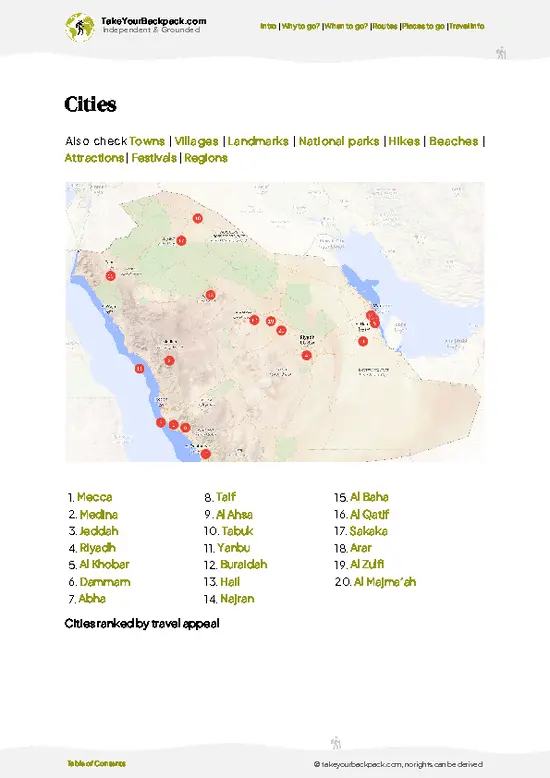
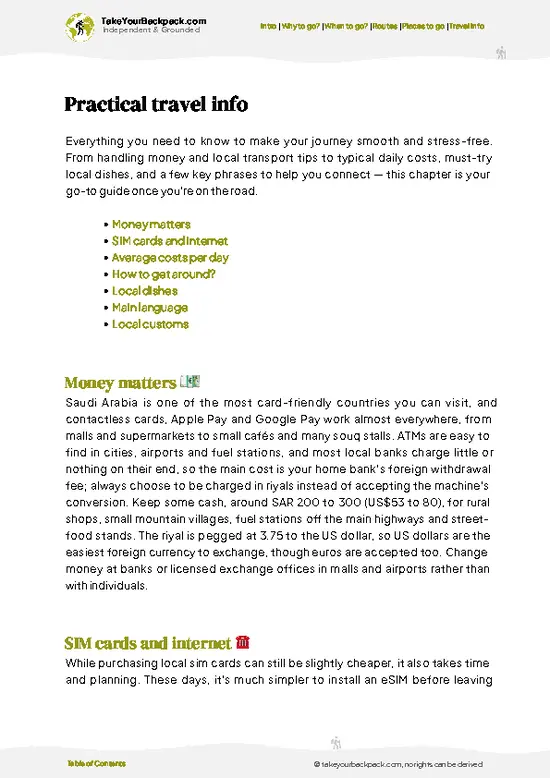
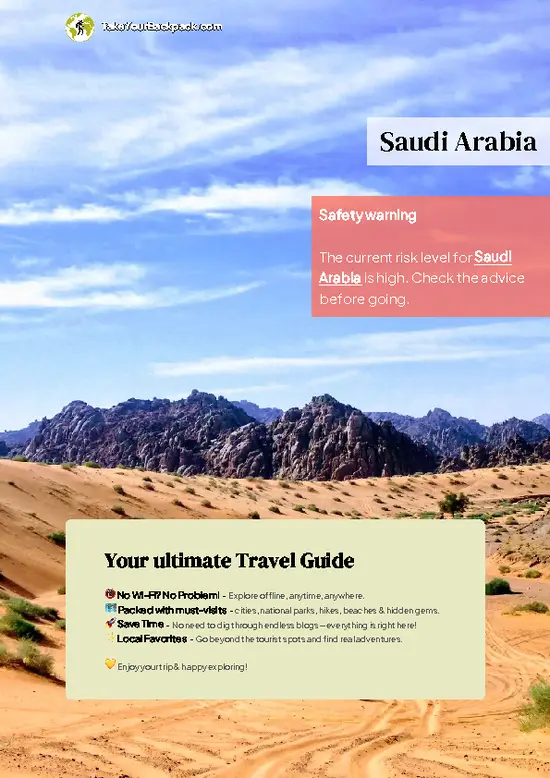
example page 0 from our offline Travel Guide for Saudi Arabia
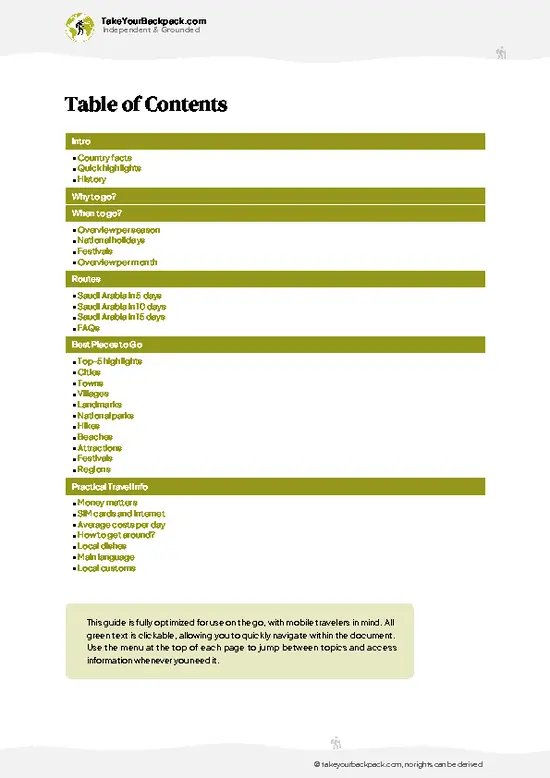
example page 1 from our offline Travel Guide for Saudi Arabia
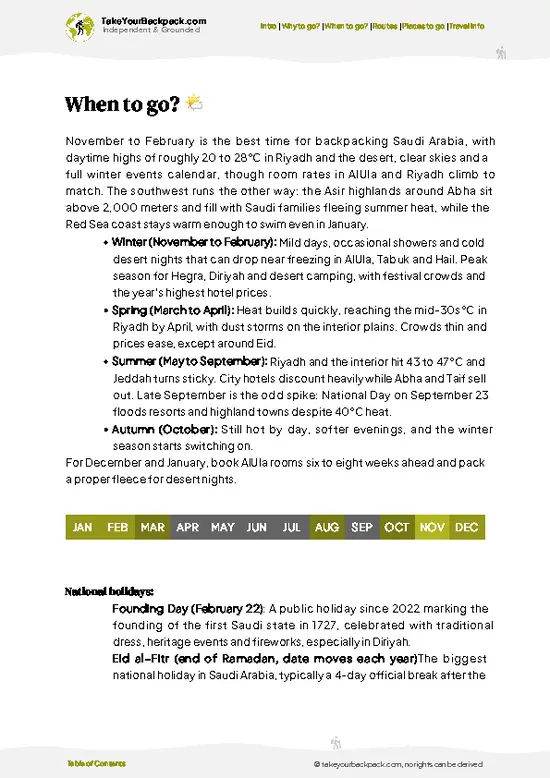
example page 2 from our offline Travel Guide for Saudi Arabia
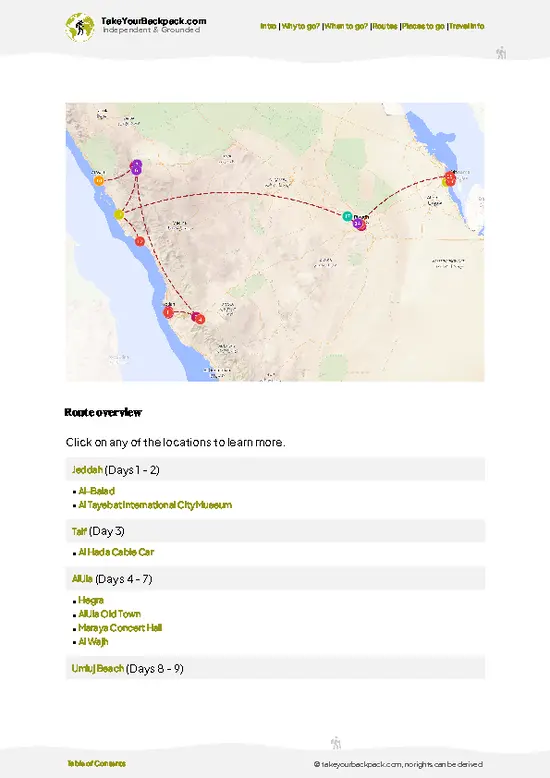
example page 3 from our offline Travel Guide for Saudi Arabia
example page 4 from our offline Travel Guide for Saudi Arabia
example page 5 from our offline Travel Guide for Saudi Arabia
example page 6 from our offline Travel Guide for Saudi Arabia
example page 7 from our offline Travel Guide for Saudi Arabia
The digital guide (322 pages) contains:
✅ 86 highlights, ranked by travel appeal
✅ Optimized 5, 10 & 15-day travel routes
✅ Cities, national parks, landmarks, beaches
✅ How to get around
✅ Offline-friendly for travel without Wi-Fi
👉 Click to see all 30+ guide features

📅 Plan smarter in minutes, not weeks
✅ Month by month travel advice
✅ Festivals & national holidays
✅ Budget expectations

🗺️ Go to the right places, skip the overrated ones
✅ Honest pros & cons of destinations
✅ Top hikes, parks & viewpoints
✅ Lesser-known places most travelers miss
✅ Clear “worth it vs skip it” guidance

🛏️ Travel smoothly without rookie mistakes
✅ Best areas to stay
✅ Transport systems explained simply
✅ Common scams & safety advice
✅ SIM cards, money & practical tips

🌍 Understand the country, not just visit it
✅ Culture & traditions
✅ 52 Essential phrases & customs
✅ Festivals worth planning around
✅ Traveler-friendly historical context
✅ Insights that make places more meaningful

📱 Built for real travel conditions
✅ Fully downloadable PDF
✅ Works completely offline
✅ Optimized for phone use
✅ Useful in remote areas & buses
✅ Everything in one place
Stop searching, start planning
Get instant access to your full guide. 30‑day money-back guarantee.
+ Add another guide for just

By proceeding you agree to our terms.
Sent to your inbox immediately after payment • 100% Secure Checkout
Best Backpacking Travel Advisor 2025 tourism awardBest Backpacking
Travel Advisor
2025
What others say about Take Your Backpack Guides:
⭐⭐⭐⭐⭐
Fantastic, amazing amount of information!
⭐⭐⭐⭐⭐
My goodness this is amazing, it's what I've been looking for hats off too you!
⭐⭐⭐⭐⭐
I think this is absolutely BRILLIANT
⭐⭐⭐⭐
Very complete and informative. It's still missing places, but I gotta to commend you
⭐⭐⭐⭐⭐
This is truly amazing, thank you, can't wait to explore it with my kids!
⭐⭐⭐⭐⭐
Awesome resource, thank you!
⭐⭐⭐⭐⭐
This is amazing! Can't wait to explore the ones I haven't seen
⭐⭐⭐⭐
I love this! Well done, great idea.
⭐⭐⭐⭐⭐
Thanks for taking the time to make this gem!
⭐⭐⭐⭐⭐
This might be the best website I've ever seen.
⭐⭐⭐⭐⭐
Congratulations, and thank you so much for your work; it's incredibly valuable.
⭐⭐⭐⭐
In all seriousness I think you did a great job pointing out the important spots
⭐⭐⭐⭐⭐
10/10 very good
⭐⭐⭐⭐⭐
As someone who's only just starting to visit regularly this is awesome, thank you.
⭐⭐⭐⭐
Thank you very much! I'm going to visit my dad, it's going to be very useful!
⭐⭐⭐⭐⭐
This is really cool! We'll be travelling for the first time and this definitely come in handy.
⭐⭐⭐⭐⭐
You are now our minister of culture, congratulations 👨‍💼
⭐⭐⭐⭐⭐
Just wanted to tell you that this is a pearl! Going to follow your recommendations.
⭐⭐⭐⭐⭐
This is so cool. I'll definitely be using the resource for my travels soon.
⭐⭐⭐⭐⭐
This is very impressive! Good work.
⭐⭐⭐⭐⭐
This is an amazing and informative site. Very well done!

🛏️ Where to stay?Best Stay Options in Saudi Arabia

True dorm hostels are rare in Saudi Arabia, so budget travelers mostly book small hotels, furnished apartments or app-listed rooms, typically SAR 150 to 250 (about US$40 to 67) a night in big cities. In Riyadh, Al Batha has the cheapest beds and sits near Masmak Fort and the old souqs, though it is crowded, noisy and rough around the edges, while Al Olaya costs more but is clean, safe, on the Metro and closest to the city’s cafés and late-night dining. In Jeddah, Al Balad puts you inside the historic coral-stone quarter with few modern comforts, and Al Hamra near the Corniche is quieter and greener, with evening seafront walks but longer rides to the old town.

If you enjoy meeting fellow travelers, … read more 👉
True dorm hostels are rare in Saudi Arabia, so budget travelers mostly book small hotels, furnished apartments or app-listed rooms, typically SAR 150 to 250 (about US$40 to 67) a night in big cities. In Riyadh, Al Batha has the cheapest beds and sits near Masmak Fort and the old souqs, though it is crowded, noisy and rough around the edges, while Al Olaya costs more but is clean, safe, on the Metro and closest to the city’s cafés and late-night dining. In Jeddah, Al Balad puts you inside the historic coral-stone quarter with few modern comforts, and Al Hamra near the Corniche is quieter and greener, with evening seafront walks but longer rides to the old town.

If you enjoy meeting fellow travelers, consider choosing hostels with high ratings for atmosphere. On the other hand, if you prefer having your own space, a hotel might be a better option.

Saudi ArabiaWhere to Go Next

👋 Meet the founderWho’s Behind Take Your Backpack?

Johan, backpacker and founder of TakeYourBackpackHi, I’m Johan (Netherlands 🇳🇱), the creator of TakeYourBackpack. Over the past 3 decades, I’ve backpacked through 90+ countries across six continents, gaining extensive experience with independent travel, long-term trips, and overland routes.

This site is built on a combination of firsthand travel experience and carefully curated insights from other backpackers. Many guides are based on places I’ve personally visited, while others bring together tips, observations, and practical advice shared by trusted travelers I’ve met along the way.

The goal is to provide realistic, experience-driven guidance — not generic itineraries — so you can explore destinations with better context, clearer expectations, and more confidence.