×

South Sudan🇸🇸 | townsPiborMurle herds, Pibor River, ash-decorated cattle | things to do and best time to go

Explore KapoetaExplore Terekeka

Backpacking in Pibor
👍 Recommendedtown ranked #9
By Johan Kruseman 🇳🇱 | Updated October 22, 2026

Pibor is the main town of the Murle people, and the Murle custom of cattle keeping shapes everything: herds are driven through and around the settlement, and cattle camps sit along the Pibor River on the edge of town. It lies in the Greater Pibor Administrative Area in the east of South Sudan, near the Gilo and Pibor river banks. There are no sights in the usual sense, no museums, no old quarter, no nightlife, so skip any plan to tick things off. The market and the riverside are worth your hours for the daily trade and cattle culture. Access is hard, accommodation is basic and aid-agency compounds dominate the social scene, so meeting other backpackers is unlikely. Experienced, self-sufficient travelers with local contacts will get something real here. Anyone wanting comfort or easy logistics won’t.

Discover everything you want to know in the 📖 South Sudan Travel Guide.
Safety warning

The current risk level for South Sudan is high. Check the advice before going.


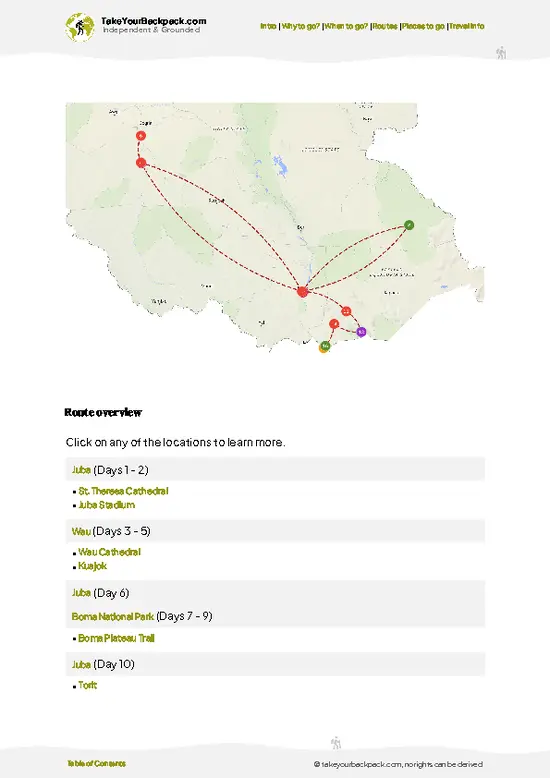
example page 0 from our offline Travel Guide for South Sudan
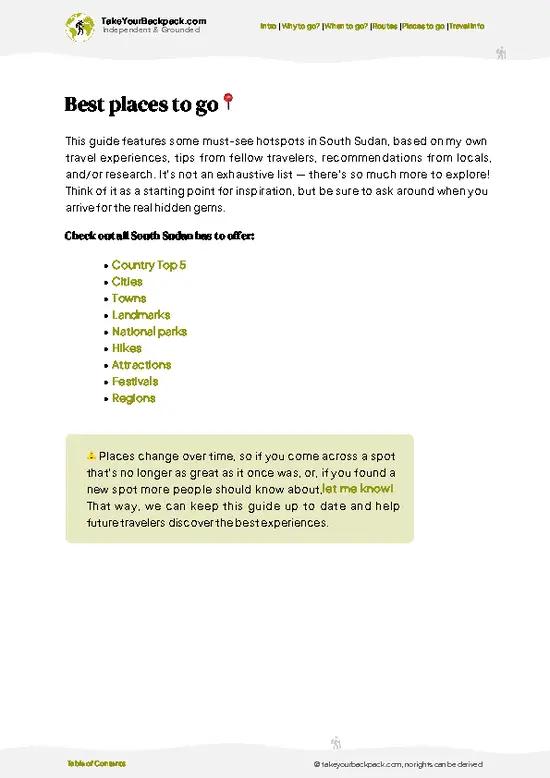
example page 1 from our offline Travel Guide for South Sudan
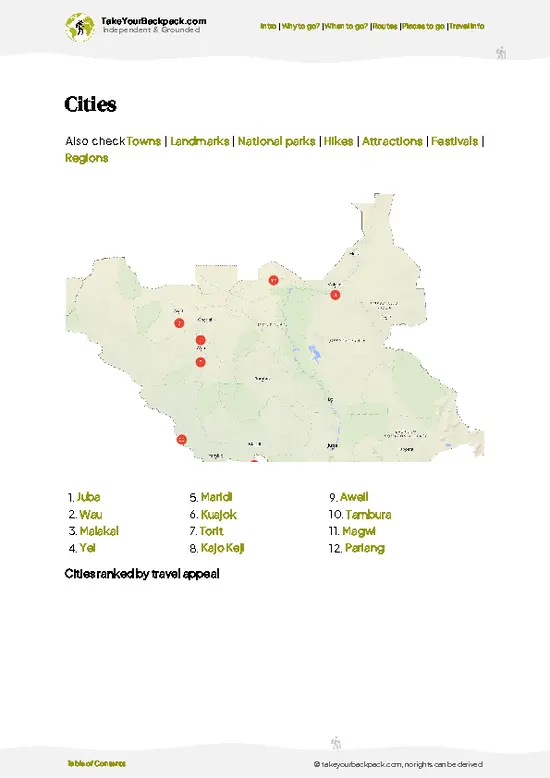
example page 2 from our offline Travel Guide for South Sudan
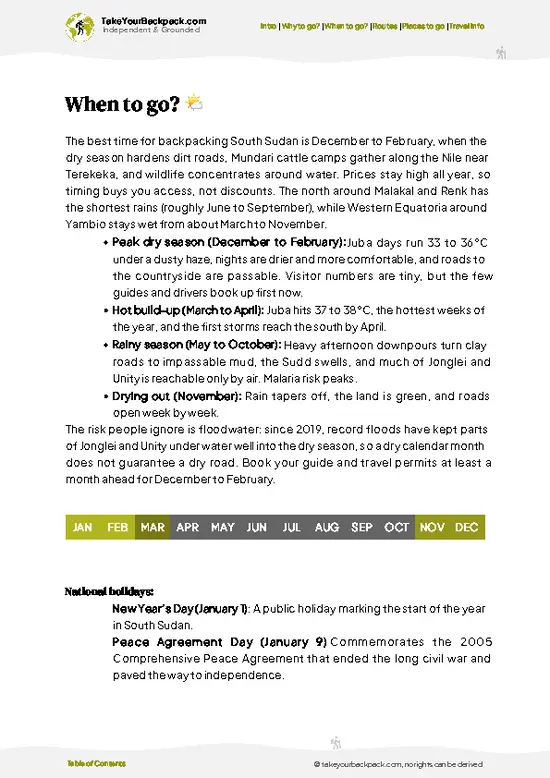
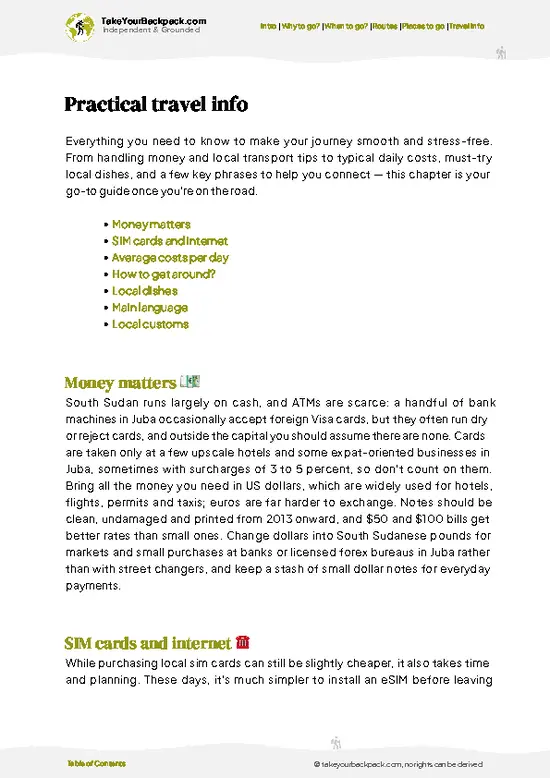
example page 3 from our offline Travel Guide for South Sudan
example page 4 from our offline Travel Guide for South Sudan
example page 5 from our offline Travel Guide for South Sudan
example page 6 from our offline Travel Guide for South Sudan
example page 7 from our offline Travel Guide for South Sudan
Loading the map 🌍
CLICK TO FILTER
cities
towns
landmarks
national parks
hikes
attractions
festivals
regions
SHOW COUNTRY’S BESTSHOW ALL

✨ Why go?
Ranked #9 town in South Sudan
Why visitors keep coming back

Pibor draws the rare traveler who wants to see Murle life at its source rather than collect sights. The town is a trading and administrative hub for the surrounding lowlands, so the Pibor market is where you see how people here buy, sell and gather news. The Pibor River shapes the day, with people washing, fetching water and herding along its banks. Cattle are central to Murle identity, and the camps nearby show how seriously that is taken. Travelers stay briefly, usually a night or two, because lodging is limited and movement depends on security and local permission. It suits slow, patient, self-reliant travelers who are comfortable with uncertainty and who arrive through humanitarian or community contacts. Solo and small-group travelers both need a local guide here. Anyone chasing a packed itinerary should choose elsewhere.

💡 HighlightsWhat this place is best known for

  1. Pibor Market: The town’s commercial heart, where traders sell grain, cooking goods, cloth and household items. Go in the morning when stalls are busiest. Entry is free; allow 1 to 2 hours.
  2. Pibor River Banks: The river is where daily life gathers, with water collection, washing and cattle crossing. Late afternoon is calmest and most photogenic, though always ask before taking pictures of people. Free; 1 hour.
  3. Murle Cattle Camps near town: Cattle are the center of Murle culture, and the camps show herding routines, ash-decorated cattle and songs for prized animals. Visit only with a local host and permission, usually in the morning. Expect a small gift or guide fee of about US$5 to 15; 2 to 3 hours.
  4. Pibor Town Center: A short walk past the administrative buildings, small shops and tea stalls gives
… read more 👉
  1. Pibor Market: The town’s commercial heart, where traders sell grain, cooking goods, cloth and household items. Go in the morning when stalls are busiest. Entry is free; allow 1 to 2 hours.
  2. Pibor River Banks: The river is where daily life gathers, with water collection, washing and cattle crossing. Late afternoon is calmest and most photogenic, though always ask before taking pictures of people. Free; 1 hour.
  3. Murle Cattle Camps near town: Cattle are the center of Murle culture, and the camps show herding routines, ash-decorated cattle and songs for prized animals. Visit only with a local host and permission, usually in the morning. Expect a small gift or guide fee of about US$5 to 15; 2 to 3 hours.
  4. Pibor Town Center: A short walk past the administrative buildings, small shops and tea stalls gives a feel for how the region functions. Mornings are best. Free; 1 hour.
  5. Tea Stalls and Roadside Cafés: Sitting over sweet tea is the easiest way to talk with residents and hear how the area is changing. Afternoons are quietest. A glass costs about US$0.30 to 1; 30 to 60 minutes.
For day trips, travelers with local arrangements sometimes reach villages along the Pibor River and the wider Boma plateau lowlands, though movement depends on security. Pibor Market and the river banks are free, while tea at the stalls costs the least of the paid options.
Spotted a mistake or missing something? Contact us.

🏘️ NeighborhoodsUnderstanding the local layout

Pibor is small enough to cover on foot in an afternoon, and the areas below are the only ones that matter.
  • Market and main road area: This is where to spend most of your time. Traders sell grain, dried fish, tea, soap and phone credit, and the tea stalls serve sweet tea and flatbread at any hour of the day. Go in the morning, when people from outlying villages arrive. Walking is easy, though the dirt tracks turn to mud after rain.
  • Pibor riverbanks: The Pibor River side is quiet and good for watching fishing, washing and cattle being watered. It is worth an hour, not more. Ask before photographing people.
  • Humanitarian compound zone: Many aid agencies have bases here, with fenced offices and the town’s best-connected staff. There is nothing to see, but it is useful for road and security updates.
… read more 👉
Pibor is small enough to cover on foot in an afternoon, and the areas below are the only ones that matter.
  • Market and main road area: This is where to spend most of your time. Traders sell grain, dried fish, tea, soap and phone credit, and the tea stalls serve sweet tea and flatbread at any hour of the day. Go in the morning, when people from outlying villages arrive. Walking is easy, though the dirt tracks turn to mud after rain.
  • Pibor riverbanks: The Pibor River side is quiet and good for watching fishing, washing and cattle being watered. It is worth an hour, not more. Ask before photographing people.
  • Humanitarian compound zone: Many aid agencies have bases here, with fenced offices and the town’s best-connected staff. There is nothing to see, but it is useful for road and security updates. Skip it as a sightseeing stop.
  • Outer Murle settlements: Homesteads and cattle camps on the edges show Murle life, with cattle central to it. Visit only with a local guide or host who can arrange permission. Going alone is a poor idea.
Nightlife is essentially absent, so plan on early evenings.

⌛️ 1 dayHow to make the most of one day

The day is slow and mostly on foot, since Pibor is small, with a long pause in the midday heat and no need for taxis. 7:00 AM: Pibor River Banks. Start at the water while it is cool, watching people fetch water and cattle move to grazing. Walk back toward the center when the first stalls open.
9:00 AM: Pibor Market. Browse the stalls for grain, cloth and tools, and buy a few small things to break the ice. Walk to the nearest tea stall afterward.
11:00 AM: Tea Stall Stop. Sit with sweet tea and talk with whoever is nearby. This is where you gather local advice about the day ahead.
12:30 PM: Rest Break. Return to your lodging and rest through the hottest hours, drinking plenty of water.
3:30 PM: Murle Cattle Camp. Walk or ride with a local host to a camp on the town’s edge, which most passing visitors … read more 👉
The day is slow and mostly on foot, since Pibor is small, with a long pause in the midday heat and no need for taxis. 7:00 AM: Pibor River Banks. Start at the water while it is cool, watching people fetch water and cattle move to grazing. Walk back toward the center when the first stalls open.
9:00 AM: Pibor Market. Browse the stalls for grain, cloth and tools, and buy a few small things to break the ice. Walk to the nearest tea stall afterward.
11:00 AM: Tea Stall Stop. Sit with sweet tea and talk with whoever is nearby. This is where you gather local advice about the day ahead.
12:30 PM: Rest Break. Return to your lodging and rest through the hottest hours, drinking plenty of water.
3:30 PM: Murle Cattle Camp. Walk or ride with a local host to a camp on the town’s edge, which most passing visitors never see. Watch the herders tend ash-covered cattle and listen to their songs.
5:30 PM: Riverside Return. Finish along the river as the light softens and the day’s herding winds down.

🌤️ When to go?Seasonal considerations and timing

November to March gives Pibor its most workable travel window, with dry roads and hot but manageable days.
  • Dry Season (November to March): Days reach 33 to 38°C (91 to 100°F), nights drop to about 20°C (68°F). Tracks harden, so road access improves, and demand for seats on flights and trucks rises along with prices.
  • Hot Build-Up (March to May): Afternoons often pass 38°C (100°F), and storms start to arrive late in this stretch.
  • Rainy Season (May to October): Temperatures sit around 25 to 32°C (77 to 90°F). Heavy rain floods the plains and cuts roads for weeks, and flights are the only dependable way in.
  • Daylight: Days stay close to twelve hours all year, so there is little seasonal change.
Book transport early for December and January, and leave slack for delays.

source: climatestotravel.comJANJanuary: excellent for travelingFEBFebruary: excellent for travelingMARMarch: fair for travelingAPRApril: below average for travelingMAYMay: below average for travelingJUNJune: below average for travelingJULJuly: below average for travelingAUGAugust: below average for travelingSEPSeptember: fair for travelingOCTOctober: good for travelingNOVNovember: highly recommended for travelingDECDecember: excellent for traveling
when-to-go

✈️ The backpacker research shortcutSouth Sudan Travel Guide

An offline-friendly backpacking guide with optimized travel routes, ranked highlights, transport advice, and the best areas to stay.
example page 0 from our offline Travel Guide for South Sudan
example page 1 from our offline Travel Guide for South Sudan
example page 2 from our offline Travel Guide for South Sudan
example page 3 from our offline Travel Guide for South Sudan
example page 4 from our offline Travel Guide for South Sudan
example page 5 from our offline Travel Guide for South Sudan
example page 6 from our offline Travel Guide for South Sudan
example page 7 from our offline Travel Guide for South Sudan
The digital guide (242 pages) contains:
✅ 57 highlights, ranked by travel appeal
✅ Optimized 5, 10 & 15-day travel routes
✅ Cities, national parks, landmarks, beaches
✅ How to get around
✅ Offline-friendly for travel without Wi-Fi
👉 Click to see all 30+ guide features

📅 Plan smarter in minutes, not weeks
✅ Month by month travel advice
✅ Festivals & national holidays
✅ Budget expectations

🗺️ Go to the right places, skip the overrated ones
✅ Honest pros & cons of destinations
✅ Top hikes, parks & viewpoints
✅ Lesser-known places most travelers miss
✅ Clear “worth it vs skip it” guidance

🛏️ Travel smoothly without rookie mistakes
✅ Best areas to stay
✅ Transport systems explained simply
✅ Common scams & safety advice
✅ SIM cards, money & practical tips

🌍 Understand the country, not just visit it
✅ Culture & traditions
✅ 52 Essential phrases & customs
✅ Festivals worth planning around
✅ Traveler-friendly historical context
✅ Insights that make places more meaningful

📱 Built for real travel conditions
✅ Fully downloadable PDF
✅ Works completely offline
✅ Optimized for phone use
✅ Useful in remote areas & buses
✅ Everything in one place
Stop searching, start planning
Get instant access to your full guide. 30‑day money-back guarantee.
+ Add another guide for just

By proceeding you agree to our terms.
Sent to your inbox immediately after payment • 100% Secure Checkout
Best Backpacking Travel Advisor 2025 tourism awardBest Backpacking
Travel Advisor
2025
What others say about Take Your Backpack Guides:
⭐⭐⭐⭐⭐
Fantastic, amazing amount of information!
⭐⭐⭐⭐⭐
My goodness this is amazing, it's what I've been looking for hats off too you!
⭐⭐⭐⭐⭐
I think this is absolutely BRILLIANT
⭐⭐⭐⭐
Very complete and informative. It's still missing places, but I gotta to commend you
⭐⭐⭐⭐⭐
This is truly amazing, thank you, can't wait to explore it with my kids!
⭐⭐⭐⭐⭐
Awesome resource, thank you!
⭐⭐⭐⭐⭐
This is amazing! Can't wait to explore the ones I haven't seen
⭐⭐⭐⭐
I love this! Well done, great idea.
⭐⭐⭐⭐⭐
Thanks for taking the time to make this gem!
⭐⭐⭐⭐⭐
This might be the best website I've ever seen.
⭐⭐⭐⭐⭐
Congratulations, and thank you so much for your work; it's incredibly valuable.
⭐⭐⭐⭐
In all seriousness I think you did a great job pointing out the important spots
⭐⭐⭐⭐⭐
10/10 very good
⭐⭐⭐⭐⭐
As someone who's only just starting to visit regularly this is awesome, thank you.
⭐⭐⭐⭐
Thank you very much! I'm going to visit my dad, it's going to be very useful!
⭐⭐⭐⭐⭐
This is really cool! We'll be travelling for the first time and this definitely come in handy.
⭐⭐⭐⭐⭐
You are now our minister of culture, congratulations 👨‍💼
⭐⭐⭐⭐⭐
Just wanted to tell you that this is a pearl! Going to follow your recommendations.
⭐⭐⭐⭐⭐
This is so cool. I'll definitely be using the resource for my travels soon.
⭐⭐⭐⭐⭐
This is very impressive! Good work.
⭐⭐⭐⭐⭐
This is an amazing and informative site. Very well done!

🛏️ Where to stay?Best areas to stay in South Sudan

Stay near the market and main road in Pibor, since this central area has the few basic guesthouses and the best access to food and boda-bodas. Budget beds are limited and usually simple rooms or tukuls with a shared washroom, so book ahead through local contacts where possible. Prices typically run US$10 to 30 a night, with no dorm culture to speak of. Electricity is often from generators and may be limited to evening hours, so bring a power bank and a mosquito net.

This part of town is busier by day and quiet after sunset, and noise is mainly roosters, generators and early market traffic. Being … read more 👉
Stay near the market and main road in Pibor, since this central area has the few basic guesthouses and the best access to food and boda-bodas. Budget beds are limited and usually simple rooms or tukuls with a shared washroom, so book ahead through local contacts where possible. Prices typically run US$10 to 30 a night, with no dorm culture to speak of. Electricity is often from generators and may be limited to evening hours, so bring a power bank and a mosquito net.

This part of town is busier by day and quiet after sunset, and noise is mainly roosters, generators and early market traffic. Being central means you can walk to tea stalls and shops before dark and reach a boda-boda quickly. The aid compound area has better security, but access is generally for agency staff only, so do not count on it. Avoid camping on outskirts or riverbanks, where nobody is around to help.

🚌 Getting aroundGetting around like a local

A boda-boda (motorbike taxi) ride within Pibor typically costs US$0.50 to 2, paid in cash, usually South Sudanese pounds, though US dollars in small bills are often accepted. Negotiate before you climb on. The town is compact and walkable, traffic is light, and no formal public transport exists. Everything beyond town depends on weather and security.
  • Walking: Free and the best way to see the market, riverbank and main road, which are within about 2 km of each other. Carry water, since midday heat is punishing.
  • Boda-boda: Fast and cheap for short hops or for reaching outskirts, at US$0.50 to 2. Drivers generally work daylight hours only. Agree the fare first and wear any helmet offered.
  • Shared trucks and 4x4s: The way to reach Bor or Pochalla over unpaved roads, typically US$30 to 80 per seat,
… read more 👉
A boda-boda (motorbike taxi) ride within Pibor typically costs US$0.50 to 2, paid in cash, usually South Sudanese pounds, though US dollars in small bills are often accepted. Negotiate before you climb on. The town is compact and walkable, traffic is light, and no formal public transport exists. Everything beyond town depends on weather and security.
  • Walking: Free and the best way to see the market, riverbank and main road, which are within about 2 km of each other. Carry water, since midday heat is punishing.
  • Boda-boda: Fast and cheap for short hops or for reaching outskirts, at US$0.50 to 2. Drivers generally work daylight hours only. Agree the fare first and wear any helmet offered.
  • Shared trucks and 4x4s: The way to reach Bor or Pochalla over unpaved roads, typically US$30 to 80 per seat, taking one to several days depending on mud. Not worth trying in the rains.
  • Humanitarian and charter flights: Small aircraft serve the Pibor airstrip, and seats on charter or UN-linked flights from Juba can run US$150 to 300 one way. Pricey but often the only dependable option in the wet months. Book through a reputable operator.
Skip any plan that relies on timetables. Ask locally and confirm security before moving on any road.

👛 Costs (as of 22 October 2026)What things cost and how to budget

Pibor costs about US$62 a day for a backpacker, and nearly everything is imported, so prices run high for the standard of service.
CategoryBudget RangeLocal Reality
Dorm accommodationUS$10 to 30 (high season)No true dorms. Expect a basic room or tukul, with shared washing facilities.
MealsUS$8 to 15Beans, flatbread, rice, goat or fish at simple eateries, plus sweet tea.
Local transportUS$2 to 6Boda-boda rides cost US$0.50 to 2 each, and walking covers the rest.
Basic activities/entry feesUS$5 to 15Mostly guide fees and visits to river and cattle camps, with no formal tickets.
Miscellaneous expensesUS$5 to 10Bottled water, phone credit, power bank charging and small gifts to hosts.
Total Daily BudgetUS$62Excludes flights or long road transfers.
Carry small US dollar bills, since change is scarce and … read more 👉
Pibor costs about US$62 a day for a backpacker, and nearly everything is imported, so prices run high for the standard of service.
CategoryBudget RangeLocal Reality
Dorm accommodationUS$10 to 30 (high season)No true dorms. Expect a basic room or tukul, with shared washing facilities.
MealsUS$8 to 15Beans, flatbread, rice, goat or fish at simple eateries, plus sweet tea.
Local transportUS$2 to 6Boda-boda rides cost US$0.50 to 2 each, and walking covers the rest.
Basic activities/entry feesUS$5 to 15Mostly guide fees and visits to river and cattle camps, with no formal tickets.
Miscellaneous expensesUS$5 to 10Bottled water, phone credit, power bank charging and small gifts to hosts.
Total Daily BudgetUS$62Excludes flights or long road transfers.
Carry small US dollar bills, since change is scarce and prices are often quoted in dollars. Splitting a guide and boda-boda fare with another traveler cuts costs noticeably.


source: worldbank.org
⚠️ Prices can change and everyone travels differently, so take this as a rough guide. Hope it helps you plan your adventure!

🚌 Day tripsWhere to go beyond the main area

Pibor works as a base only for short, locally arranged outings, and none should be attempted without a guide and fresh security advice.
Pibor River Banks: Fishing, washing and cattle-watering along the river make an easy half day on foot or by boda-boda, at US$0 to 3. Go in the dry season when the banks are firm. First-timers often photograph without asking and cause friction.

Murle Cattle Camps: Cattle camps near town show Murle pastoral life, with herders, decorated cattle and fires of dung smoke. Allow half a day with a local host, and budget US$10 to 30 for guide and transport. Visit November to March, when camps sit nearer the river. The common mistake is arriving unannounced, which can be taken as intrusion.

Boma National Park Edge: The Boma landscape lies north and east, famous for … read more 👉
Pibor works as a base only for short, locally arranged outings, and none should be attempted without a guide and fresh security advice.
Pibor River Banks: Fishing, washing and cattle-watering along the river make an easy half day on foot or by boda-boda, at US$0 to 3. Go in the dry season when the banks are firm. First-timers often photograph without asking and cause friction.

Murle Cattle Camps: Cattle camps near town show Murle pastoral life, with herders, decorated cattle and fires of dung smoke. Allow half a day with a local host, and budget US$10 to 30 for guide and transport. Visit November to March, when camps sit nearer the river. The common mistake is arriving unannounced, which can be taken as intrusion.

Boma National Park Edge: The Boma landscape lies north and east, famous for the huge antelope migration. Reaching it is a long, costly expedition rather than a day trip, so only the nearest grasslands are realistic, with a hired 4x4 at roughly US$80 to 150 a day. Dry season only.
👉 Explore Boma National Park

🛡️ SafetyStaying Safe: What Travelers Should Know

Pibor needs real preparation, because security here is volatile and conditions can change quickly. Inter-communal tensions and cattle raiding have affected the wider area, and roads outside town can be unsafe or impassable. Check with local contacts or aid organizations before you travel, register with your embassy, and avoid moving between towns without a trusted guide. Within the market and main road in daylight, most visitors feel fine. Solo travelers, especially women, should avoid walking after dark and should stay with a host. Petty theft is uncommon, but keep cash out of sight. Ask before taking photographs, since officials and locals may object, and carry permits and travel papers at all times.

FAQTraveler FAQ

Pibor is worth visiting only if you want remote Murle culture and are prepared for difficult logistics, since it is not a casual stop. The river, market and cattle camps are the draws, and you will need a local host or guide. Expect to spend around US$60 a day, plus costly flights or rough road travel.
Pibor needs two to three days to see the market, riverbank and one cattle camp visit with a guide. Add buffer days for flight cancellations or flooded roads, especially from May to October. Budget roughly US$120 to 190 for a short stay, excluding transport in.
Pibor is not realistic as a day trip from another city. Juba is far away, and roads are rough, often closed in the rains, while flights are limited charters costing US$150 to 300 one way. Plan to stay at least one night, and confirm security before you travel.
⚠️ Things can change over time, so always validate details locally before you go.

Other South Sudanese towns near Pibor

Explore more nearby:

  • Akobo—Pibor riverbank, Nuer cattle camps, Ethiopian-border goods| 110 km away
  • Pochalla—Anuak villages, Ethiopian frontier, dirt airstrip| 114 km away
  • Lafon—Pari farmland, granite outcrops, sorghum market| 209 km away

💡 Not sure where to go next?
Create a personalized itinerary for South Sudan including Pibor and the places that fit your trip.

Generate my itinerary

👉 Discover all towns

Or checkout all South Sudan has to offer (think cities, towns, villages, national parks, hikes, beaches, festivals)
Country photo of South Sudan

We 💚 feedbackSumming up the experience

Pibor is best in the late dry months, when tracks are firmer, and in the cool first hours of any morning, when the river and market are at their liveliest. Arrive with a local contact, carry small gifts for hosts and cash in small notes, and keep your schedule loose.

✍️ Help improve this page!
The information on this page is based on in-depth research, insights shared by experienced travelers, and feedback from the local travel community in South Sudan. While every effort is made to keep the information accurate and current, conditions can change — so if you spot anything incorrect or outdated, please get in touch.


🙋‍♂️ Give feedback

👋 Meet the founderWho’s Behind Take Your Backpack?

Johan, backpacker and founder of TakeYourBackpackHi, I’m Johan (Netherlands 🇳🇱), the creator of TakeYourBackpack. Over the past 3 decades, I’ve backpacked through 90+ countries across six continents, gaining extensive experience with independent travel, long-term trips, and overland routes.

This site is built on a combination of firsthand travel experience and carefully curated insights from other backpackers. Many guides are based on places I’ve personally visited, while others bring together tips, observations, and practical advice shared by trusted travelers I’ve met along the way.

The goal is to provide realistic, experience-driven guidance — not generic itineraries — so you can explore destinations with better context, clearer expectations, and more confidence.