×

South Sudan🇸🇸 | landmarksTomb of John Garangnational memorial, political history, Juba landmark | things to do and best time to go

Explore Sudd WetlandsExplore John Garang Mausoleum

Backpacking in Tomb of John Garang
👍 Recommendedunique site ranked #3
By Johan Kruseman 🇳🇱 | Updated September 3, 2026

Your boots crunch on gravel as you cross the sun-bleached plaza, the air thick with heat and the low hum of distant traffic. A faded mural of John Garang stares back, eyes unwavering, while a group of schoolchildren in blue uniforms giggle nearby, their laughter bouncing off the concrete. This is the Tomb of John Garang, tucked just outside the government quarter in Juba, South Sudan—a site that’s more pilgrimage than postcard. Here’s the honest deal: you won’t find crowds of selfie-stick tourists or glossy souvenir stalls. The wow-factor isn’t in the architecture (it’s stark, functional, and ringed by security), but in the gravity of standing where South Sudan’s independence story is both mourned and celebrated. It’s not cheap or easy to reach—permits, checkpoints, and the city’s wild logistics see to that. But if you want raw, unfiltered history and a sense of place that Instagram can’t fake, this is the real magic.

Discover everything you want to know in the 📖 South Sudan Travel Guide.
Safety warning

The current risk level for South Sudan is high. Check the advice before going.


Get your South Sudan guide
68 ranked highlights, routes & tips, works offline (270 pages)
Loading the map 🌍
CLICK TO FILTER
cities
towns
landmarks
national parks
hikes
attractions
festivals
regions
SHOW COUNTRY’S BESTSHOW ALL

✨ Why go?
Ranked #3 unique site in South Sudan
Why Tomb of John Garang should be on your travel list

The Tomb of John Garang isn’t just another stop on your South Sudan itinerary; it’s a symbol of resilience and a piece of living history. Sure, the crowds can be overwhelming, especially during local holidays, but that’s part of the experience. You’re not just visiting a site; you’re stepping into a narrative that shaped a nation.

The cost? Minimal. Entry fees are low, and the surrounding area is rich with local vendors offering authentic food and crafts. You can grab a meal for a few bucks, making it a budget-friendly stop.

What makes this place truly unique is its cultural significance. Garang was a pivotal figure in South Sudan’s fight for independence, and visiting his tomb allows you to connect with the spirit of the people.

It fits seamlessly into a broader route through the region. … read more 👉
The Tomb of John Garang isn’t just another stop on your South Sudan itinerary; it’s a symbol of resilience and a piece of living history. Sure, the crowds can be overwhelming, especially during local holidays, but that’s part of the experience. You’re not just visiting a site; you’re stepping into a narrative that shaped a nation.

The cost? Minimal. Entry fees are low, and the surrounding area is rich with local vendors offering authentic food and crafts. You can grab a meal for a few bucks, making it a budget-friendly stop.

What makes this place truly unique is its cultural significance. Garang was a pivotal figure in South Sudan’s fight for independence, and visiting his tomb allows you to connect with the spirit of the people.

It fits seamlessly into a broader route through the region. Pair it with a trek to the Nile or a visit to local markets. This isn’t just a photo op; it’s a chance to engage with a community that’s rebuilding and redefining itself. Don’t skip it.
Want to include Tomb of John Garang in your South Sudan route?
Create a personalized South Sudan itinerary that includes Tomb of John Garang and the places that fit your trip — based on your travel style, budget, and available time. Get your route in seconds.

Generate my trip

💡 HighlightsMust-see experiences and standout moments

  • The tomb and memorial itself — The focal point: John Garang’s burial spot and the surrounding memorial platform. It’s where a huge chunk of modern South Sudan’s story is concentrated, so standing here gives you a real sense of why people come from across the country to pay respects.
  • Symbolic architecture and monuments — The memorial complex uses bold, symbolic design elements rather than subtle decoration. The shapes, inscriptions and monument placement are meant to communicate struggle, hope and nationhood—good for slow-walking and picking up visual details that aren’t obvious at first glance.
  • Local remembrance and ceremonies — You’ll often find people laying flowers, leaving small tokens, or quietly holding private moments. Around anniversaries or national holidays the site fills with
read more 👉
  • The tomb and memorial itself — The focal point: John Garang’s burial spot and the surrounding memorial platform. It’s where a huge chunk of modern South Sudan’s story is concentrated, so standing here gives you a real sense of why people come from across the country to pay respects.
  • Symbolic architecture and monuments — The memorial complex uses bold, symbolic design elements rather than subtle decoration. The shapes, inscriptions and monument placement are meant to communicate struggle, hope and nationhood—good for slow-walking and picking up visual details that aren’t obvious at first glance.
  • Local remembrance and ceremonies — You’ll often find people laying flowers, leaving small tokens, or quietly holding private moments. Around anniversaries or national holidays the site fills with speeches and songs; catching one of those events is powerful and very human.
  • Conversations with veterans and storytellers — Locals, former combatants and older Juba residents commonly hang around to tell Garang stories and explain the symbolism. A ten-minute chat here can give you context you won’t find in a guidebook.
  • Views of Juba and the river — The site offers views across parts of the city and the nearby riverfront; it’s a handy perch for photos and for seeing how the urban landscape wraps around this national landmark.
  • Photographic and reflective spots — Benches, platforms and open spaces make it easy to sit, photograph the memorial and absorb the atmosphere. It’s both a photo stop and a quiet place to reflect on the country’s recent history.
  • Blend with a local market run or walk in the area — The tomb is close enough to Juba’s central neighborhoods that you can combine it with a walk through nearby markets or street-food stalls. It’s a cheap, authentic way to turn a historical stop into a fuller day out—just be respectful when photographing people and aware of local customs.
Spotted a mistake or missing something? Contact us.
🌤️ When to go?Seasonal considerations and timing


  • Weather: South Sudan’s climate is brutally hot and humid from March to May, with temperatures soaring above 38°C (100°F). This is the low season for a reason—traveling then means sweating through your gear and risking health issues. The dry season, from November to February, offers more bearable heat, around 25-30°C (77-86°F), making trekking and exploring far more comfortable.

  • Temperature: Nights can get surprisingly cool during the dry season, dipping to 15°C (59°F), so pack layers. Daytime highs in the dry season hover around 28°C (82°F), which is manageable for most backpackers. Avoid the wet season (June to October) when humidity spikes and temperatures stay in the mid-30s Celsius (mid-90s Fahrenheit), turning the journey into a slog.

  • Daylight Hours: South Sudan sits near the equator,
read more 👉

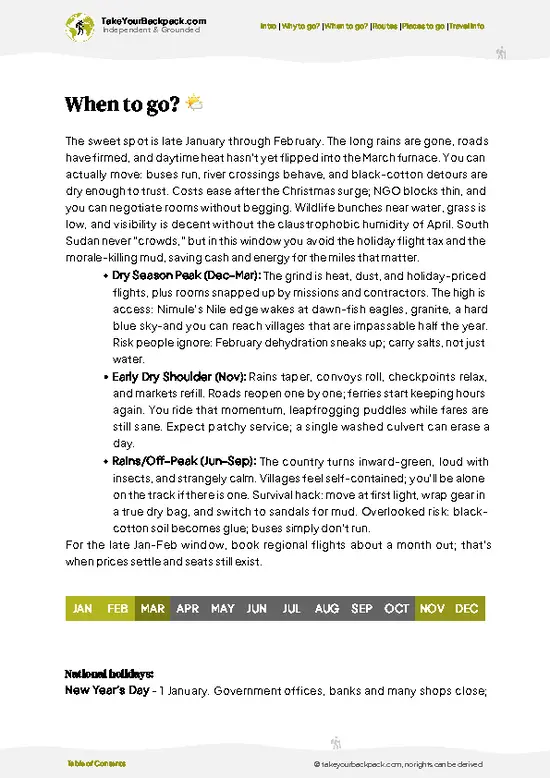
  • Weather: South Sudan’s climate is brutally hot and humid from March to May, with temperatures soaring above 38°C (100°F). This is the low season for a reason—traveling then means sweating through your gear and risking health issues. The dry season, from November to February, offers more bearable heat, around 25-30°C (77-86°F), making trekking and exploring far more comfortable.

  • Temperature: Nights can get surprisingly cool during the dry season, dipping to 15°C (59°F), so pack layers. Daytime highs in the dry season hover around 28°C (82°F), which is manageable for most backpackers. Avoid the wet season (June to October) when humidity spikes and temperatures stay in the mid-30s Celsius (mid-90s Fahrenheit), turning the journey into a slog.

  • Daylight Hours: South Sudan sits near the equator, so daylight is steady year-round—roughly 12 hours daily. This consistency means you don’t have to juggle your schedule around shifting sunrise or sunset times, a rare convenience for backpackers.

  • Crowds: The Tomb of John Garang isn’t exactly a tourist hotspot, so expect minimal crowds year-round. The dry season sees a slight uptick in visitors, mostly locals and political pilgrims, but you’ll still have plenty of space to soak in the atmosphere without elbowing through selfie sticks.

  • Seasonal Activities: The dry season aligns with local commemorations and political events honoring John Garang, adding a layer of cultural depth to your visit. These events are raw and real, not polished for tourists, offering a rare glimpse into South Sudan’s soul.

  • Price Fluctuations: Costs for guides and accommodations remain fairly stable due to the low tourist volume. However, expect slightly higher prices during the dry season when demand peaks. The wet season offers cheaper rates but comes with the trade-off of difficult travel conditions and limited access.


Pro-tip: Aim for the dry season’s shoulder months (November or February) to dodge extreme heat, catch local events, and enjoy manageable prices without the hassle of crowds or oppressive humidity.


source: climatestotravel.comJANJanuary: excellent for travelingFEBFebruary: excellent for travelingMARMarch: fair for travelingAPRApril: fair for travelingMAYMay: fair for travelingJUNJune: below average for travelingJULJuly: below average for travelingAUGAugust: below average for travelingSEPSeptember: below average for travelingOCTOctober: below average for travelingNOVNovember: highly recommended for travelingDECDecember: excellent for traveling
when-to-go

✈️ The backpacker research shortcutSouth Sudan Travel Guide

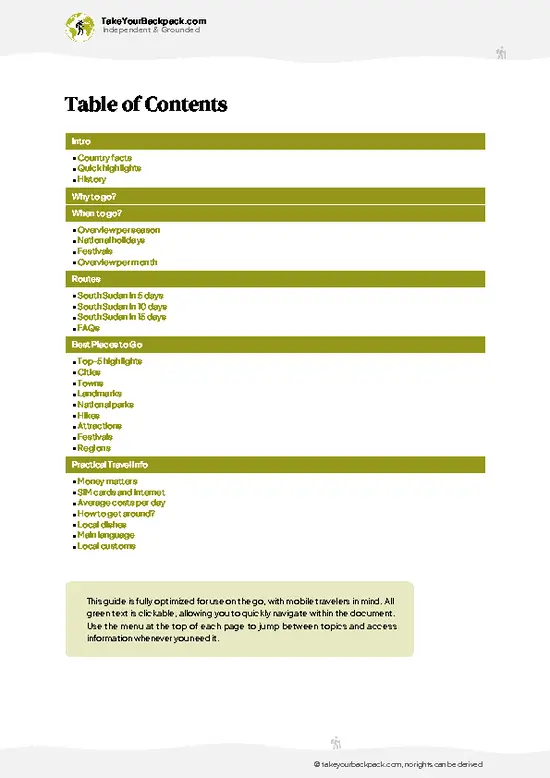
An offline-friendly backpacking guide with optimized travel routes, ranked highlights, transport advice, and the best areas to stay.
example page 0 from our offline Travel Guide for South Sudan
example page 1 from our offline Travel Guide for South Sudan
example page 2 from our offline Travel Guide for South Sudan
example page 3 from our offline Travel Guide for South Sudan
example page 4 from our offline Travel Guide for South Sudan
example page 5 from our offline Travel Guide for South Sudan
example page 6 from our offline Travel Guide for South Sudan
example page 7 from our offline Travel Guide for South Sudan
The digital guide (270 pages) contains:
68 highlights, ranked by travel appeal
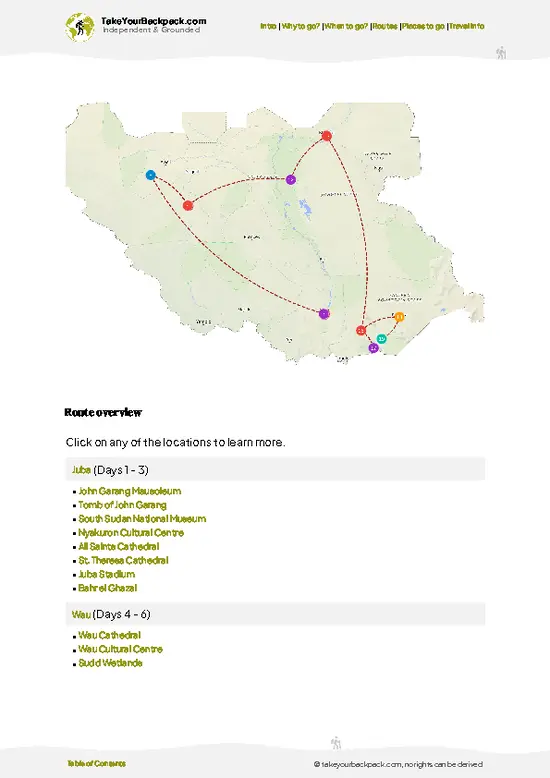
Optimized 5, 10 & 15-day travel routes
Cities, national parks, landmarks, beaches
How to get around
Offline-friendly for travel without Wi-Fi
👉 Click to see all 30+ guide features

📅 Plan smarter in minutes, not weeks
Month by month travel advice
Festivals & national holidays
Budget expectations

🗺️ Go to the right places, skip the overrated ones
Honest pros & cons of destinations
Top hikes, parks & viewpoints
Lesser-known places most travelers miss
Clear “worth it vs skip it” guidance

🛏️ Travel smoothly without rookie mistakes
Best areas to stay
Transport systems explained simply
Common scams & safety advice
SIM cards, money & practical tips

🌍 Understand the country, not just visit it
Culture & traditions
52 Essential phrases & customs
Festivals worth planning around
Traveler-friendly historical context
Insights that make places more meaningful

📱 Built for real travel conditions
Fully downloadable PDF
Works completely offline
Optimized for phone use
Useful in remote areas & buses
Everything in one place
Save weeks of stressful planning
Get instant access to your full guide. 30‑day money-back guarantee.
+ Add another guide for just US$7.80

By proceeding you agree to our terms.
Sent to your inbox immediately after payment • 100% Secure Checkout
Best Backpacking Travel Advisor 2025 tourism awardBest Backpacking
Travel Advisor
2025
What others say about Take Your Backpack Guides:
⭐⭐⭐⭐⭐
Fantastic, amazing amount of information!
⭐⭐⭐⭐⭐
My goodness this is amazing, it's what I've been looking for hats off too you!
⭐⭐⭐⭐⭐
I think this is absolutely BRILLIANT
⭐⭐⭐⭐
Very complete and informative. It's still missing places, but I gotta to commend you
⭐⭐⭐⭐⭐
This is truly amazing, thank you, can't wait to explore it with my kids!
⭐⭐⭐⭐⭐
Awesome resource, thank you!
⭐⭐⭐⭐⭐
This is amazing! Can't wait to explore the ones I haven't seen
⭐⭐⭐⭐
I love this! Well done, great idea.
⭐⭐⭐⭐⭐
Thanks for taking the time to make this gem!
⭐⭐⭐⭐⭐
This might be the best website I've ever seen.
⭐⭐⭐⭐⭐
Congratulations, and thank you so much for your work; it's incredibly valuable.
⭐⭐⭐⭐
In all seriousness I think you did a great job pointing out the important spots
⭐⭐⭐⭐⭐
10/10 very good
⭐⭐⭐⭐⭐
As someone who's only just starting to visit regularly this is awesome, thank you.
⭐⭐⭐⭐
Thank you very much! I'm going to visit my dad, it's going to be very useful!
⭐⭐⭐⭐⭐
This is really cool! We'll be travelling for the first time and this definitely come in handy.
⭐⭐⭐⭐⭐
You are now our minister of culture, congratulations 👨‍💼
⭐⭐⭐⭐⭐
Just wanted to tell you that this is a pearl! Going to follow your recommendations.
⭐⭐⭐⭐⭐
This is so cool. I'll definitely be using the resource for my travels soon.
⭐⭐⭐⭐⭐
This is very impressive! Good work.
⭐⭐⭐⭐⭐
This is an amazing and informative site. Very well done!

🛏️ Where to stay?Choosing the right base

Staying near the Tomb of John Garang in South Sudan isn’t about luxury; it’s about immersing yourself in a vibrant, evolving culture. The area around Juba is where you want to be. It’s the heartbeat of the city, buzzing with life and energy.

Look for accommodations in neighborhoods like Juba Town. Here, you’ll find a mix of budget-friendly guesthouses and hostels that cater to backpackers. The vibe is social, making it easy to connect with fellow travelers and locals. You’ll hear laughter, see shared meals, and feel the warmth of a community that’s welcoming despite the challenges.

Safety is … read more 👉
Staying near the Tomb of John Garang in South Sudan isn’t about luxury; it’s about immersing yourself in a vibrant, evolving culture. The area around Juba is where you want to be. It’s the heartbeat of the city, buzzing with life and energy.

Look for accommodations in neighborhoods like Juba Town. Here, you’ll find a mix of budget-friendly guesthouses and hostels that cater to backpackers. The vibe is social, making it easy to connect with fellow travelers and locals. You’ll hear laughter, see shared meals, and feel the warmth of a community that’s welcoming despite the challenges.

Safety is a priority, so stick to well-trodden paths. The main roads are generally secure, especially during the day. Engage with the local scene; markets and street food stalls are just a short walk away. They offer a taste of authentic South Sudanese life that you won’t find in glossy brochures.

Don’t expect five-star amenities, but do expect genuine interactions and a chance to witness the resilience of a nation. This is where the real magic happens—amidst the hustle, the stories, and the spirit of the people.

👛 Costs (as of 3 September 2026)What things cost and how to budget

Visiting the Tomb of John Garang in South Sudan isn’t just about the site; it’s about understanding the context and the journey. Here’s what you can expect in terms of costs:
  • Entry Fee: The entry fee is typically around $5 to $10. This small amount grants you access to the site, but be prepared for potential changes depending on local regulations.
  • Transportation: Getting to the tomb can be tricky. If you’re in Juba, expect to pay between $10 and $30 for a taxi. Public transport is cheaper but less reliable, often costing around $2 to $5. Factor in extra time for delays.
  • Guided Tours: Hiring a local guide can enhance your experience. Prices range from $20 to $50, depending on the length of the tour and the guide’s expertise. This is worth it for insights you won’t find in guidebooks.
  • Accommodation:
read more 👉
Visiting the Tomb of John Garang in South Sudan isn’t just about the site; it’s about understanding the context and the journey. Here’s what you can expect in terms of costs:
  • Entry Fee: The entry fee is typically around $5 to $10. This small amount grants you access to the site, but be prepared for potential changes depending on local regulations.
  • Transportation: Getting to the tomb can be tricky. If you’re in Juba, expect to pay between $10 and $30 for a taxi. Public transport is cheaper but less reliable, often costing around $2 to $5. Factor in extra time for delays.
  • Guided Tours: Hiring a local guide can enhance your experience. Prices range from $20 to $50, depending on the length of the tour and the guide’s expertise. This is worth it for insights you won’t find in guidebooks.
  • Accommodation: If you need a place to stay, budget hotels in Juba start at around $30 per night. Mid-range options can go up to $100. The quality varies, so read reviews carefully.
  • Food: Meals can be quite affordable. Street food might cost you $2 to $5, while a sit-down meal in a local restaurant can range from $10 to $20. Western-style dining will be pricier, often starting at $20.

Prepare for a unique experience that goes beyond the typical tourist path. The costs may seem low, but the value lies in the stories and connections you’ll make along the way.
⚠️ Prices can change and everyone travels differently, so take this as a rough guide. Hope it helps you plan your adventure!

FAQFrequently asked questions about Tomb of John Garang

The Tomb of John Garang is the burial site of John Garang de Mabior, a prominent South Sudanese leader and founder of the Sudan People's Liberation Army. It is located in Juba, the capital of South Sudan, and serves as a significant historical and political landmark.
Visiting the Tomb of John Garang typically takes about 1 to 2 hours, allowing time to explore the site and reflect on its historical importance. It is advisable to allocate extra time if you plan to visit nearby attractions in Juba.
To get to the Tomb of John Garang, travel to Juba, South Sudan's capital, which is accessible by air via Juba International Airport. From the city center, the tomb is reachable by taxi or local transport within 10 to 15 minutes, depending on traffic.
⚠️ Things can change over time, so always validate details locally before you go.

Other South Sudanese landmarks near Tomb of John Garang

Explore more nearby:

  • Mount Kinyeti—Imatong Mountains, highest peak, montane forest| 177 km away
  • Jonglei Canal—unfinished waterway, Nile tributaries, remote engineering site| 367 km away
  • Sudd Wetlands—floating vegetation, seasonal floodplain, bird migration| 404 km away

💡 Not sure where to go next?
Create a personalized itinerary for South Sudan including Tomb of John Garang and the places that fit your trip.

Generate my itinerary

👉 Discover all landmarks

Or checkout all South Sudan has to offer (think cities, towns, villages, national parks, hikes, beaches, festivals)
Country photo of South Sudan

We 💚 feedbackParting advice and final tips

Visiting the Tomb of John Garang is like stepping into a living history lesson. The vibe is intense but respectful, with locals often sharing stories that breathe life into the place. Expect crowds, especially during commemorative events; it can feel overwhelming. But here’s the kicker: the best surprise is the warmth of the people. They’re eager to connect, and that’s where the real magic lies. Just be mindful of your surroundings—stay aware, and you’ll soak in the authenticity without the touristy fluff.

✍️ Help improve this page!
The information on this page is based on in-depth research, insights shared by experienced travelers, and feedback from the local travel community in South Sudan. While every effort is made to keep the information accurate and current, conditions can change — so if you spot anything incorrect or outdated, please get in touch.


🙋‍♂️ Give feedback

👋 Meet the founderWho’s Behind Take Your Backpack?

Johan, backpacker and founder of TakeYourBackpackHi, I’m Johan (Netherlands 🇳🇱), the creator of TakeYourBackpack. Over the past decade, I’ve backpacked through 80+ countries across six continents, gaining extensive experience with independent travel, long-term trips, and overland routes.

This site is built on a combination of firsthand travel experience and carefully curated insights from other backpackers. Many guides are based on places I’ve personally visited, while others bring together tips, observations, and practical advice shared by trusted travelers I’ve met along the way.

The goal is to provide realistic, experience-driven guidance — not generic itineraries — so you can explore destinations with better context, clearer expectations, and more confidence.

Get full country guide •
Instant download • 68 highlights • Full Offline guide