×

Spain🇪🇸 | national parksEl Palmarrice paddies, freshwater lagoon, migratory birds, traditional barraca houses | things to do and best time to go

Explore Bardenas Reales Natural ParkExplore Parque Natural de la Albufera

Backpacking in El Palmar
By Johan Kruseman 🇳🇱 | Updated May 24, 2026

A boot sinks into sand that’s still cool from the night, while the salt tang of the Atlantic hangs in the air and the only sound is the slow, deliberate crunch of footsteps—until a startled egret lifts off from the reeds. That’s El Palmar: a coastal outpost on Spain’s southern Atlantic fringe, tucked inside the province of Cádiz, Andalusia.

El Palmar isn’t a national park in the official sense, but it’s a magnet for backpackers who want wild dunes, birdlife, and a break from the Andalusian tourist circuit. The hiking is gentle—think sandy tracks and boardwalks, not mountain scrambles. The scenery is raw and open, with marshes and long, empty beaches, but don’t expect dramatic peaks or dense forests. Wildlife is mostly birds, especially in spring. Access is easy by bus or car, and there’s no entrance fee, but summer crowds can turn the place from peaceful to packed. Camping is limited and strictly regulated; cheap hostels fill fast. Compared to Doñana National Park up the coast, El Palmar is less grand, less protected, and more relaxed—better for a quiet walk than a wilderness epic. I come here when I want to breathe, not conquer.

Discover everything you want to know in the 📖 Spain Travel Guide.
Loading the map 🌍
CLICK TO FILTER
city
town
village
unique site
national park
hike
beach
attraction
festival
region
SHOW COUNTRY’S BESTSHOW ALL

✨ Why go?
Ranked #99 national park in Spain
What makes this national park worth exploring

Backpackers pick El Palmar National Park in Spain because it offers a rare blend of independent exploration and straightforward logistics. Unlike parks that push guided tours, El Palmar lets you chart your own course. The trail variety ranges from easy strolls to more demanding hikes, so you can tailor your day without feeling locked into a schedule. This flexibility is a big win for travelers who want to move at their own pace, without the pressure of group timing or extra fees.

Budget-wise, the area supports camping and affordable hostels nearby, which means you can stretch your euros without sacrificing comfort. The campsites are basic but well-maintained, perfect for those who want to wake up close to nature without the hassle of booking expensive lodges. Hostels in the nearby towns offer … read more 👉
Backpackers pick El Palmar National Park in Spain because it offers a rare blend of independent exploration and straightforward logistics. Unlike parks that push guided tours, El Palmar lets you chart your own course. The trail variety ranges from easy strolls to more demanding hikes, so you can tailor your day without feeling locked into a schedule. This flexibility is a big win for travelers who want to move at their own pace, without the pressure of group timing or extra fees.

Budget-wise, the area supports camping and affordable hostels nearby, which means you can stretch your euros without sacrificing comfort. The campsites are basic but well-maintained, perfect for those who want to wake up close to nature without the hassle of booking expensive lodges. Hostels in the nearby towns offer a social vibe if you want a break from solitude.

El Palmar’s straightforward access and clear signage make it ideal for self-guided travelers. You won’t need a guide to navigate the main routes, which keeps costs down and the experience authentic. This park is about simplicity and freedom—no hidden fees, no tourist traps—just the essentials for a solid, budget-friendly outdoor adventure.
Get the complete Travel Guide for Spain
Everything organized for offline planning — routes, highlights, costs & tips

See what’s inside 👉

Get the Travel Guide -

💡 HighlightsTop highlights of El Palmar

1. The Dune Ecosystem
El Palmar’s dunes aren’t just a pretty backdrop—they’re a living, shifting landscape that defines the park’s character. These aren’t the Sahara’s endless sand seas, but a patchwork of rolling, grass-tufted dunes that buffer the inland wetlands from the Atlantic’s moods. The real value here is in the details: the way the wind sculpts the sand into ripples, the tough, salt-resistant plants that anchor the slopes, and the sense of space you get walking the ridgelines at sunrise. If you want a place to feel the raw edge of Spain’s southern coast, this is it.


2. Marshlands and Birdlife
The marshes are the park’s quiet engine. They’re not dramatic at first glance, but give them a moment. This is where you’ll find herons, egrets, and—if you’re lucky—flamingos wading in the … read more 👉
1. The Dune Ecosystem
El Palmar’s dunes aren’t just a pretty backdrop—they’re a living, shifting landscape that defines the park’s character. These aren’t the Sahara’s endless sand seas, but a patchwork of rolling, grass-tufted dunes that buffer the inland wetlands from the Atlantic’s moods. The real value here is in the details: the way the wind sculpts the sand into ripples, the tough, salt-resistant plants that anchor the slopes, and the sense of space you get walking the ridgelines at sunrise. If you want a place to feel the raw edge of Spain’s southern coast, this is it.


2. Marshlands and Birdlife
The marshes are the park’s quiet engine. They’re not dramatic at first glance, but give them a moment. This is where you’ll find herons, egrets, and—if you’re lucky—flamingos wading in the shallows. Spring and autumn migration bring a surge of birdlife, and even in the off-season, the soundtrack is all wings and water. Bring binoculars if you care about birds; bring patience if you care about peace. The marshes are also a buffer against development, a reminder that not every Spanish coastline has been paved over for sunbeds.


3. Sendero de la Torre Vigía
This hiking trail is the park’s best all-in-one sampler. It’s not a brutal slog—think more of a long, sandy stroll with enough elevation to keep your calves honest. The payoff is the old watchtower at the end, a relic from the days when pirates were a real concern. The views from the top are worth the sand in your shoes: dunes, marsh, and the Atlantic stretching out to the horizon. If you only have time for one walk, make it this one. This is my personal favorite—there’s something about the mix of history and wildness that sticks with you.


4. El Palmar Beach
The beach here is long, open, and—outside of summer weekends—refreshingly empty. No high-rise hotels, no thumping beach bars, just sand, surf, and the occasional fisherman. The Atlantic can be rough, so swimming isn’t always safe, but the real draw is the sense of scale and solitude. If you want to see what the Costa de la Luz looked like before mass tourism, this is as close as you’ll get.


5. Pine Forests (Pinares)
The park’s inland pine groves are a cool, resin-scented contrast to the open dunes and marsh. These forests are home to chameleons, rabbits, and the odd fox if you’re quiet enough. The shade is a relief in summer, and the trails here are soft underfoot—good for an easy afternoon wander or a picnic away from the wind. The pines also stabilize the dunes, making them a quiet but essential part of the park’s ecosystem.
Spotted a mistake or missing something? Contact us.

Things to do near El Palmar

Ratings based on Tripadvisor reviews. When you book through this link, you support our work at no extra cost to you.

🌤️ When to go?Best time to explore El Palmar


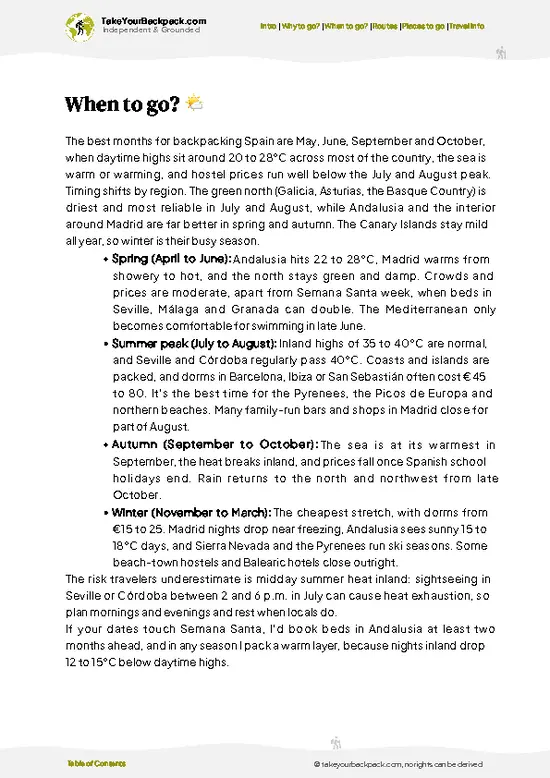
  • Weather: El Palmar experiences mild winters and hot summers. From November to February, expect cooler, wetter conditions with temperatures around 10-15°C (50-59°F). The dry season from May to September brings heat, often exceeding 30°C (86°F), which can drain your energy on long hikes.

  • Temperature: Spring (March to May) offers a sweet spot with daytime highs between 18-25°C (64-77°F), perfect for backpacking without overheating. Autumn (September to October) mirrors this comfort but starts cooling down by late October.

  • Daylight Hours: Long days from late May to early August provide up to 15 hours of light, great for extended exploration. Winter months shrink daylight to about 9-10 hours, limiting your hiking window.

  • Crowds: Summer months (June to August) attract the most visitors,
read more 👉

  • Weather: El Palmar experiences mild winters and hot summers. From November to February, expect cooler, wetter conditions with temperatures around 10-15°C (50-59°F). The dry season from May to September brings heat, often exceeding 30°C (86°F), which can drain your energy on long hikes.

  • Temperature: Spring (March to May) offers a sweet spot with daytime highs between 18-25°C (64-77°F), perfect for backpacking without overheating. Autumn (September to October) mirrors this comfort but starts cooling down by late October.

  • Daylight Hours: Long days from late May to early August provide up to 15 hours of light, great for extended exploration. Winter months shrink daylight to about 9-10 hours, limiting your hiking window.

  • Crowds: Summer months (June to August) attract the most visitors, especially weekends, which can turn quiet trails into busy paths. Spring and autumn see fewer tourists, letting you enjoy the park’s natural rhythm.

  • Seasonal Activities: Spring and autumn are ideal for birdwatching and wildflower spotting, key draws here. Summer’s heat limits wildlife activity during the day, pushing exploration to early mornings or late evenings.

  • Price Fluctuations: Accommodation and local services peak in summer, with prices often 20-30% higher than off-season months like November or February. Booking ahead during peak times is essential to avoid last-minute cost spikes.


Pro-tip: Aim for late April or early October to dodge crowds, enjoy manageable temperatures, and stretch your daylight hours without paying a premium.


source: climatestotravel.comJANJanuary: fair for travelingFEBFebruary: fair for travelingMARMarch: highly recommended for travelingAPRApril: excellent for travelingMAYMay: highly recommended for travelingJUNJune: good for travelingJULJuly: fair for travelingAUGAugust: fair for travelingSEPSeptember: highly recommended for travelingOCTOctober: excellent for travelingNOVNovember: fair for travelingDECDecember: fair for traveling
when-to-go

✈️ The backpacker research shortcutSpain Travel Guide

An offline-friendly backpacking guide with optimized travel routes, ranked highlights, transport advice, and the best areas to stay.
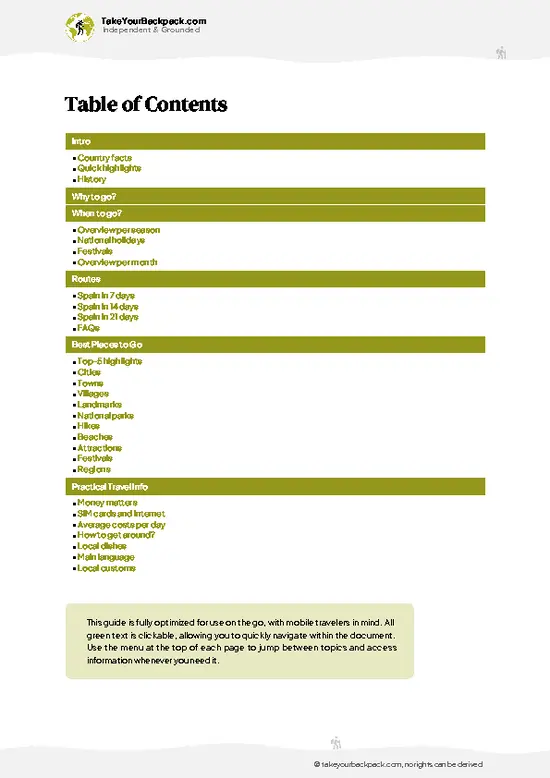
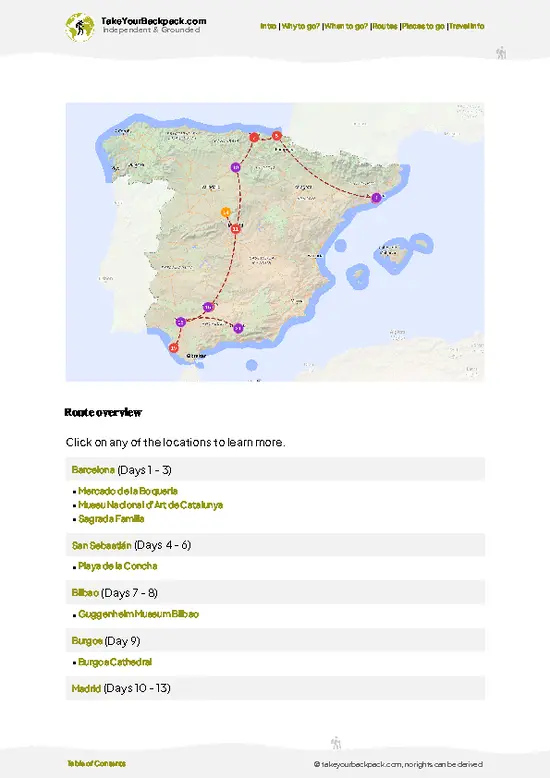
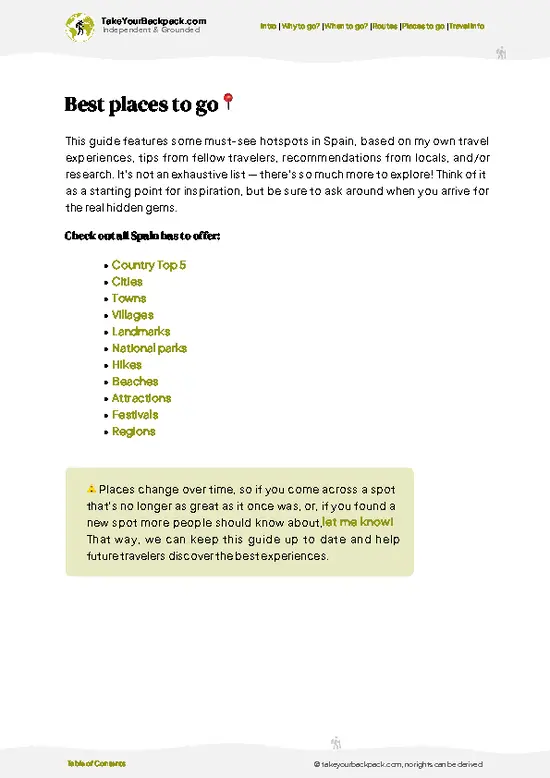
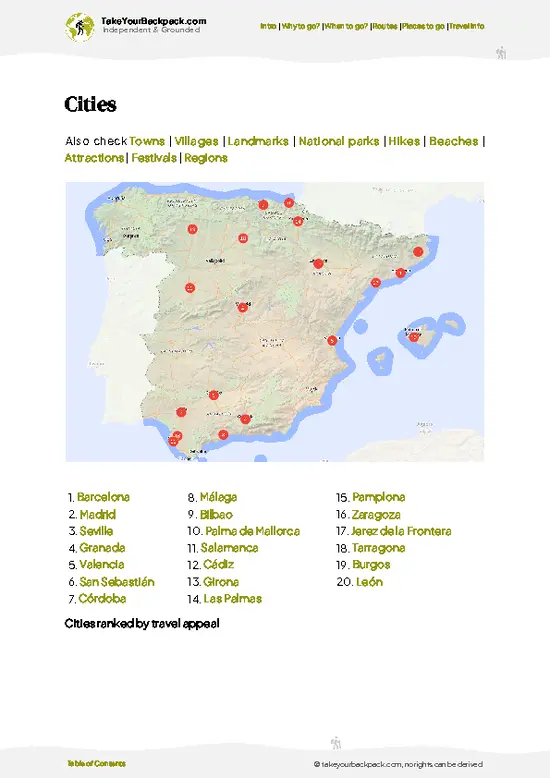
example page 0 from our offline Travel Guide for Spainexample page 1 from our offline Travel Guide for Spainexample page 2 from our offline Travel Guide for Spainexample page 3 from our offline Travel Guide for Spainexample page 4 from our offline Travel Guide for Spainexample page 5 from our offline Travel Guide for Spainexample page 6 from our offline Travel Guide for Spainexample page 7 from our offline Travel Guide for Spain
The digital guide (553 pages) contains:
151 highlights, ranked by travel appeal
Optimized 7, 14 & 21-day travel routes
Cities, national parks, beaches, historical sites, ...
How to get around
Offline-friendly for travel without Wi-Fi
👉 Click to see all 30+ guide features

📅 Plan smarter in minutes, not weeks
Month by month travel advice
Festivals & national holidays
Budget expectations

🗺️ Go to the right places, skip the overrated ones
Honest pros & cons of destinations
Top hikes, parks & viewpoints
Lesser-known places most travelers miss
Clear “worth it vs skip it” guidance

🛏️ Travel smoothly without rookie mistakes
Best areas to stay
Transport systems explained simply
Common scams & safety advice
SIM cards, money & practical tips

🌍 Understand the country, not just visit it
Culture & traditions
52 Essential phrases & customs
Festivals worth planning around
Traveler-friendly historical context
Insights that make places more meaningful

📱 Built for real travel conditions
Fully downloadable PDF
Works completely offline
Optimized for phone use
Useful in remote areas & buses
Everything in one place
Save weeks of stressful planning
Get instant access to the full guide directly. 30-day money-back guarantee.


Sent to your inbox immediately after payment • 100% Secure Checkout
Best Backpacking Travel Advisor 2025 tourism awardBest Backpacking
Travel Advisor
2025
What others say about Take Your Backpack Guides:
⭐⭐⭐⭐⭐
Fantastic, amazing amount of information!
⭐⭐⭐⭐⭐
My goodness this is amazing, it's what I've been looking for hats off too you!
⭐⭐⭐⭐⭐
I think this is absolutely BRILLIANT
⭐⭐⭐⭐
Very complete and informative. It's still missing places, but I gotta to commend you
⭐⭐⭐⭐⭐
This is truly amazing, thank you, can't wait to explore it with my kids!
⭐⭐⭐⭐⭐
Awesome resource, thank you!
⭐⭐⭐⭐⭐
This is amazing! Can't wait to explore the ones I haven't seen
⭐⭐⭐⭐
I love this! Well done, great idea.
⭐⭐⭐⭐⭐
Thanks for taking the time to make this gem!
⭐⭐⭐⭐⭐
This might be the best website I've ever seen.
⭐⭐⭐⭐⭐
Congratulations, and thank you so much for your work; it's incredibly valuable.
⭐⭐⭐⭐
In all seriousness I think you did a great job pointing out the important spots
⭐⭐⭐⭐⭐
10/10 very good
⭐⭐⭐⭐⭐
As someone who's only just starting to visit regularly this is awesome, thank you.
⭐⭐⭐⭐
Thank you very much! I'm going to visit my dad, it's going to be very useful!
⭐⭐⭐⭐⭐
This is really cool! We'll be travelling for the first time and this definitely come in handy.
⭐⭐⭐⭐⭐
You are now our minister of culture, congratulations 👨‍💼
⭐⭐⭐⭐⭐
Just wanted to tell you that this is a pearl! Going to follow your recommendations.
⭐⭐⭐⭐⭐
This is so cool. I'll definitely be using the resource for my travels soon.
⭐⭐⭐⭐⭐
This is very impressive! Good work.
⭐⭐⭐⭐⭐
This is an amazing and informative site. Very well done!

🛏️ Where to stay?Best areas and accommodation options

El Palmar National Park in Spain doesn’t offer accommodations inside its boundaries. This is a crucial point to lock in early because some parks tempt you with the idea of camping or lodges within, but here, that’s not the case. You’ll need to base yourself outside the park and plan your daily visits accordingly.

The closest and most practical place to stay is the town of Vejer de la Frontera, about 20 kilometers away. It’s a charming white village with enough hostels, guesthouses, and budget hotels to suit backpackers. Staying here means you get a real taste of Andalusian life, plus easy access … read more 👉
El Palmar National Park in Spain doesn’t offer accommodations inside its boundaries. This is a crucial point to lock in early because some parks tempt you with the idea of camping or lodges within, but here, that’s not the case. You’ll need to base yourself outside the park and plan your daily visits accordingly.

The closest and most practical place to stay is the town of Vejer de la Frontera, about 20 kilometers away. It’s a charming white village with enough hostels, guesthouses, and budget hotels to suit backpackers. Staying here means you get a real taste of Andalusian life, plus easy access to the park by bus or bike if you’re up for it. Just be aware that public transport options can be limited, especially on weekends, so renting a bike or car might be your best bet to avoid wasting time.

Another option is El Palmar village itself, right on the coast, roughly 10 kilometers from the park. It’s more touristy, with a handful of hostels and budget hotels, but it’s also a good spot if you want to combine your nature trip with some beach time. Keep in mind, though, that prices here can spike during summer weekends, so book ahead or risk paying a premium.

Bottom line: no in-park stays, so pick your base wisely to maximize your time in the palm groves without burning your budget or energy on long transfers.

👛 Costs (as of 23 February 2026)Typical daily expenses

Para una experiencia de mochilero en El Palmar, España, puedes esperar gastar entre €40 y €60 al día. Este presupuesto incluye alojamiento en albergues o pensiones económicas, comidas en mercados o supermercados, transporte público y algunas actividades gratuitas o de bajo costo. Ten en cuenta que los precios pueden variar según la temporada y la disponibilidad.

source: spainseeker.com
⚠️ Prices can change and everyone travels differently, so take this as a rough guide. Hope it helps you plan your adventure!

🥾 TrailsDiscover El Palmar's top trails and natural wonders

El Palmar National Park in Spain offers a unique hiking experience centered around its distinctive Mediterranean palm groves, which are a rare sight in Europe. The terrain is mostly flat with gentle undulations, making it accessible for most hikers, but don’t mistake ease for dullness. The park’s charm lies in its open landscapes dotted with the fan-shaped leaves of the European fan palm, creating a surreal, almost otherworldly atmosphere. Wildlife is subtle but rewarding: keep an eye out for the Iberian frog, various bird species like the black kite, and the occasional wild boar, especially during … read more 👉
El Palmar National Park in Spain offers a unique hiking experience centered around its distinctive Mediterranean palm groves, which are a rare sight in Europe. The terrain is mostly flat with gentle undulations, making it accessible for most hikers, but don’t mistake ease for dullness. The park’s charm lies in its open landscapes dotted with the fan-shaped leaves of the European fan palm, creating a surreal, almost otherworldly atmosphere. Wildlife is subtle but rewarding: keep an eye out for the Iberian frog, various bird species like the black kite, and the occasional wild boar, especially during quieter hours.

The park features a few designated trails, with the most notable being Sendero de la Palmera. This trail is a manageable loop that covers approximately 6 kilometers. It typically takes about 2 hours to complete at a relaxed pace. The difficulty level is low, suitable for families and casual walkers. The terrain is mostly dirt paths with some gravel sections, so sturdy walking shoes are recommended but nothing too technical. Key features include panoramic views of the palm groves, small freshwater streams, and interpretive signs that explain the ecological importance of the palms and the surrounding flora. The trail is well-marked, but the open landscape means there’s little shade, so bring sun protection and water.

Another option is the Ruta de las Dunas, a slightly longer trek at 8 kilometers, which takes around 3 hours. This route edges closer to the park’s sandy dune areas and offers a bit more variety in terrain, including some soft sand patches that can slow your pace. Difficulty here is moderate due to the sand and occasional uneven ground. The highlight is the contrast between the lush palm groves and the stark dunes, a reminder of the park’s coastal proximity. Wildlife sightings are less frequent here, but the landscape itself is worth the effort.

Getting to El Palmar by public transport is doable but requires some planning. The nearest major town is Vejer de la Frontera, which is connected by bus services from larger cities like Cádiz and Jerez de la Frontera. From Vejer, local buses or taxis can take you to the park entrance, but schedules are sparse, so timing your visit carefully is crucial. If you’re relying on public transport, aim for midweek visits to avoid weekend crowds, which can swell, especially in spring and early summer when locals flock to the park for picnics and short hikes.

There is no entrance fee, which is a relief for budget-conscious travelers, but don’t let that fool you into thinking the park is a free-for-all. Respect the marked trails and avoid disturbing the wildlife or plants. Facilities are minimal—no cafes or visitor centers—so come prepared with snacks, water, and a map or GPS device. The lack of amenities means you’ll spend your energy on the experience itself, not on navigating crowds or commercial distractions. This is a place to slow down, breathe in the dry, slightly salty air, and appreciate a slice of Spain’s natural heritage without the usual tourist noise.
⚠️ Hiking info can sometimes be outdated or inaccurate. Before you hit the trail, check the latest conditions with locals. If you do spot anything that's off, I'd love to hear from you, so I can update it for fellow travelers.

🛡️ SafetyTraveler Safety Guide

El Palmar National Park in Spain offers a straightforward hiking experience, but that doesn’t mean you can show up unprepared. The terrain is mostly flat with sandy paths and some uneven ground, so sturdy, closed-toe shoes with good grip are essential—flip-flops or worn-out sneakers will slow you down and risk injury. The park’s low elevation means altitude isn’t a concern, but the open landscape leaves you exposed to sun and wind, especially in summer. Bring sun protection and plenty of water; shade is scarce, and dehydration sneaks up faster than you’d expect.

Wildlife here is mostly non-threatening—think birds and small mammals rather than predators. Still, respect their space and avoid feeding animals; it’s better for them and keeps your experience authentic. Navigation is simple with … read more 👉
El Palmar National Park in Spain offers a straightforward hiking experience, but that doesn’t mean you can show up unprepared. The terrain is mostly flat with sandy paths and some uneven ground, so sturdy, closed-toe shoes with good grip are essential—flip-flops or worn-out sneakers will slow you down and risk injury. The park’s low elevation means altitude isn’t a concern, but the open landscape leaves you exposed to sun and wind, especially in summer. Bring sun protection and plenty of water; shade is scarce, and dehydration sneaks up faster than you’d expect.

Wildlife here is mostly non-threatening—think birds and small mammals rather than predators. Still, respect their space and avoid feeding animals; it’s better for them and keeps your experience authentic. Navigation is simple with marked trails, but don’t rely solely on signs—carry a map or GPS, especially if you plan to explore beyond the main paths. Avoid midday hikes in peak heat to conserve energy and stay comfortable. With these practical steps, you’ll avoid common pitfalls and enjoy the park’s quiet charm without surprises.

Other Spanish national parks near El Palmar

Explore more nearby:


👉 Discover all national parks

Or checkout all Spain has to offer (think cities, towns, villages, national parks, hikes, beaches, festivals)
Country photo of Spain
film
0
0
0a
Picos de Europa
iStockphoto
film
1
1
1a
Teide
iStockphoto
film
2
2
2a
Ordesa y Monte Perdido
Paco Cano
film
3
3
3a
Doñana
Maria Asensio
film
4
4
4a
Sierra Nevada
Edu Álvarez
film
5
5
5a
Cabo de Gata-Níjar
Parque Natural Del Cabo De Gata-níjar
film
6
6
6a
Aigüestortes i Estany de Sant Maurici
Magin Revillo
film
7
7
7a
Sierra de Cazorla
film
8
8
8a
Sierra de Grazalema
Alvaro Sanchez
film
9
9
9a
Monfragüe

We 💚 feedbackParting advice and final tips

El Palmar delivers a rare chance to walk among wild palm groves without the crowds that choke so many Spanish parks. That quiet alone makes it worth the trip. But don’t expect a full-service tourist setup here—facilities are basic, and the nearest town is a solid bike ride away. Plan accordingly, or you’ll waste energy scrambling for water or shade when you should be soaking in the landscape instead.

✈️ When did I visit Spain?
With Spain having so much to offer, I have visited it many times. Best trip was a hiking tour in the Picos de Europa in the North of Spain in July 2023.

✍️ Help improve this page!
The information on this page is based on my own backpacking experience in Spain, supplemented with up-to-date research and feedback from other travelers. Travel details can change, so if you notice anything outdated or incomplete, feel free to let me know.


🙋‍♂️ Give feedback

👋 Meet the founderWho’s Behind Take Your Backpack?

Johan, backpacker and founder of TakeYourBackpackHi, I’m Johan (Netherlands 🇳🇱), the creator of TakeYourBackpack. Over the past decade, I’ve backpacked through 80+ countries across six continents, gaining extensive experience with independent travel, long-term trips, and overland routes.

This site is built on a combination of firsthand travel experience and carefully curated insights from other backpackers. Many guides are based on places I’ve personally visited, while others bring together tips, observations, and practical advice shared by trusted travelers I’ve met along the way.

The goal is to provide realistic, experience-driven guidance — not generic itineraries — so you can explore destinations with better context, clearer expectations, and more confidence.

Get full Spain guide •
Instant download • 151 highlights • Full Offline guide