×

Spain🇪🇸 | best national parksTop-Rated 10 national parks in Spain

Spain’s national parks are a treasure trove for backpackers, offering a diverse range of landscapes, wildlife, and adventure opportunities. Defined by their unique ecosystems and commitment to conservation, these parks vary dramatically from the rugged peaks of the Picos de Europa to the sun-soaked beaches of Cabo de Gata. Each region has its own seasonal nuances; for instance, the Sierra Nevada is a winter wonderland, while the Doñana National Park bursts with life in spring.

Choosing the right park can shape your entire experience. Some parks are easily accessible, perfect for a leisurely exploration, while others demand a more rugged approach, ideal for the adventurous spirit. The vibe shifts with the seasons, affecting everything from budget to safety. Independent travelers will find that immersing themselves in local culture varies widely, making it essential to select a park that aligns with your travel style and goals.

By Johan Kruseman 🇳🇱 | Updated May 24, 2026
Explore the best hikes in Spain

Why go?Why Travelers Love These Spots

National parks in Spain offer a unique blend of landscapes, biodiversity, and cultural richness that sets them apart from those in other countries. With a diverse range of ecosystems—from the rugged peaks of the Pyrenees to the arid expanses of Tabernas Desert—Spain’s parks showcase a remarkable variety of flora and fauna. This biodiversity is not just a backdrop; it’s a living testament to the country’s climatic contrasts, where Mediterranean warmth meets Atlantic moisture, creating habitats that are home to species found nowhere else in Europe.

However, the infrastructure can be a double-edged sword. While many parks are equipped with visitor centers and well-marked trails, some remote areas require a commitment to reach. This trade-off between accessibility and immersive experience can … read more 👉
National parks in Spain offer a unique blend of landscapes, biodiversity, and cultural richness that sets them apart from those in other countries. With a diverse range of ecosystems—from the rugged peaks of the Pyrenees to the arid expanses of Tabernas Desert—Spain’s parks showcase a remarkable variety of flora and fauna. This biodiversity is not just a backdrop; it’s a living testament to the country’s climatic contrasts, where Mediterranean warmth meets Atlantic moisture, creating habitats that are home to species found nowhere else in Europe.

However, the infrastructure can be a double-edged sword. While many parks are equipped with visitor centers and well-marked trails, some remote areas require a commitment to reach. This trade-off between accessibility and immersive experience can be significant. Travelers may find themselves spending hours navigating winding roads to access lesser-known parks, only to be rewarded with solitude and breathtaking vistas. Conversely, the more accessible parks can feel crowded, diluting the sense of adventure.

Spain’s rich cultural history also plays a role in its national parks. Many are steeped in stories of ancient civilizations, adding layers of meaning to the natural beauty. Yet, this historical context can sometimes lead to a focus on preservation that limits certain activities, like off-trail hiking or camping, which may frustrate the more adventurous spirit.

Ultimately, understanding these constraints is essential for making the most of a visit. The balance between travel time and depth of exploration is crucial; a longer journey might yield a more profound connection to the land, while a quick trip could leave one feeling like a tourist rather than an explorer. In Spain, the national parks are not just places to visit; they are experiences that demand time, respect, and a willingness to engage with the wild heart of the country.
How the List Was Created
The list of best national parks in Spain is created based on landscapes, wildlife, adventure opportunities, facilities, and overall experience. If you feel a national park is missing in this list, please let us know.

When to go?Seasonal Guide to Visiting

Weather Patterns

Spain’s national parks offer a variety of experiences, but the weather can be a fickle friend. Summers can be scorching, especially in the southern regions, where temperatures often soar. This heat can lead to dry trails and limited wildlife visibility, as many creatures seek shade. Conversely, winter brings cold temperatures and potential snowfall in higher elevations, which can close trails and limit access.

Optimal Seasons

Spring and early autumn are generally the sweet spots for visiting. During these months, temperatures are mild, making for comfortable hiking conditions. Wildlife is more active, and the flora is in full bloom, providing a vibrant backdrop. However, these seasons can also attract more visitors, leading to crowded trails.

Shoulder Seasons

Late autumn … read more 👉

Weather Patterns

Spain’s national parks offer a variety of experiences, but the weather can be a fickle friend. Summers can be scorching, especially in the southern regions, where temperatures often soar. This heat can lead to dry trails and limited wildlife visibility, as many creatures seek shade. Conversely, winter brings cold temperatures and potential snowfall in higher elevations, which can close trails and limit access.

Optimal Seasons

Spring and early autumn are generally the sweet spots for visiting. During these months, temperatures are mild, making for comfortable hiking conditions. Wildlife is more active, and the flora is in full bloom, providing a vibrant backdrop. However, these seasons can also attract more visitors, leading to crowded trails.

Shoulder Seasons

Late autumn and early spring can be a mixed bag. Fewer crowds mean a more serene experience, but weather can be unpredictable. Rainfall is more common, and some trails may be muddy or even impassable. Costs may drop during these times, making it a budget-friendly option, but travelers should be prepared for the possibility of less-than-ideal conditions.

Peak Periods

Summer is peak season for many parks, drawing tourists eager to soak up the sun. While the scenery is often at its most picturesque, the trails can feel like rush hour. Expect long lines and limited solitude.

Seasonal Constraints

Travelers should weigh the trade-offs of scenery versus solitude. The best views often come with the highest foot traffic. Planning around these factors can lead to a more rewarding experience, allowing for both adventure and appreciation of Spain’s natural beauty.

national park hoppingPlanning Your Route Efficiently

Combining National Parks in Spain requires a bit of finesse. Spain’s parks are scattered like a tapas platter—each bite unique, but too many can leave you stuffed. Start by clustering parks regionally. The Picos de Europa in the north pairs well with the lush landscapes of Ordesa y Monte Perdido. Head south, and you’ll find the arid beauty of Sierra de Grazalema and the dramatic cliffs of Los Cahorros.

Travel direction matters. A logical route might take you from the north to the south or vice versa, depending on your starting point. This way, you minimize backtracking and maximize your time on the trails. Each park typically demands at least a full day to soak in the scenery, with some requiring two or three if you want to tackle the more challenging hikes.

Common pitfalls include over-scheduling. … read more 👉
Combining National Parks in Spain requires a bit of finesse. Spain’s parks are scattered like a tapas platter—each bite unique, but too many can leave you stuffed. Start by clustering parks regionally. The Picos de Europa in the north pairs well with the lush landscapes of Ordesa y Monte Perdido. Head south, and you’ll find the arid beauty of Sierra de Grazalema and the dramatic cliffs of Los Cahorros.

Travel direction matters. A logical route might take you from the north to the south or vice versa, depending on your starting point. This way, you minimize backtracking and maximize your time on the trails. Each park typically demands at least a full day to soak in the scenery, with some requiring two or three if you want to tackle the more challenging hikes.

Common pitfalls include over-scheduling. Trying to cram too many parks into a short timeframe can lead to a blur of landscapes rather than memorable experiences. It’s tempting to check off boxes, but the real magic often lies in lingering a bit longer in one spot.

Consider trade-offs. Speed might get you to more parks, but depth of experience is where the soul-stirring moments happen. Budget constraints can also play a role; some parks have limited facilities, so plan accordingly.

Flexibility is key. Weather can change plans in an instant, and trails might be closed for maintenance. Embrace the unpredictability. A well-planned trip allows for spontaneity, ensuring that even if you deviate from the plan, you’re still on the path to adventure.

The ListMust-Visit national parks in Spain

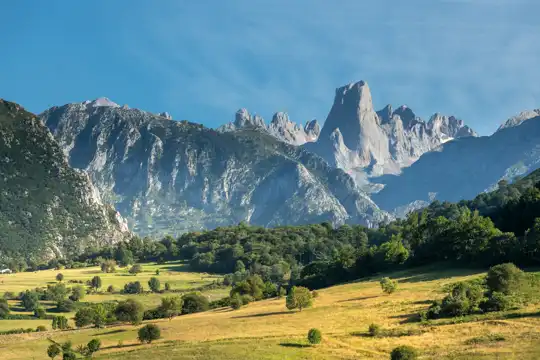
1 Picos de Europa

karst mountains, alpine meadows, narrow gorges

Traverse steep trails through misty valleys, passing grazing livestock and limestone spires that rise abruptly from the landscape.

Spain - Picos de Europa

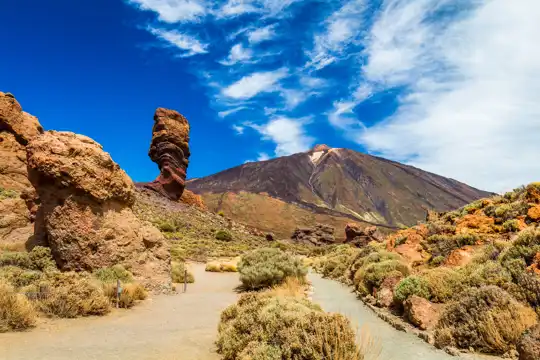
2 Teide National Park

volcanic crater, lava fields, Canary pine

Walk across stark volcanic terrain beneath Spain’s highest peak, observing rare flora and dramatic color contrasts at altitude.

Spain - Teide National Park

3 Ordesa y Monte Perdido

deep canyons, limestone cliffs, waterfalls

Ascend dramatic gorges where beech forests meet sheer rock, and waterfalls tumble into turquoise pools beneath towering peaks.

spain-national-park-ordesa-y-monte-perdido
© Google | Paco Cano

4 Doñana National Park

wetlands, migratory birds, shifting dunes

Watch flocks gather on marshes, glimpse elusive lynx, and cross sandy plains shaped by tides and seasonal flooding.

spain-national-park-donana-national-park
© Google | Maria Asensio

5 Sierra Nevada

snow-capped summits, high-altitude plateaus, endemic plants

Climb above tree line for panoramic views, encountering rare wildflowers and the last patches of Iberian snowfields.

spain-national-park-sierra-nevada
© Google | Edu Álvarez

6 Cabo de Gata-Níjar

volcanic cliffs, arid coast, wild coves

Follow dusty trails along the Mediterranean, discovering secluded beaches, fossil-rich rock, and rare desert-adapted flora.

7 Timanfaya National Park

lava flows, geothermal vents, Martian landscape

Traverse a surreal expanse of solidified lava, feeling the heat of the earth and the absence of vegetation underfoot.

8 Caldera de Taburiente National Park

erosion crater, laurel forests, steep ravines

Descend into a vast volcanic basin, where lush vegetation clings to cliffs and streams cut through ancient rock.

9 Aigüestortes i Estany de Sant Maurici

granite peaks, glacial lakes, Pyrenean valleys

Hike through high mountain passes and forests, pausing at clear alpine lakes framed by rugged summits and shifting light.

spain-national-park-aiguestortes-i-estany-de-sant-maurici
© Google | Magin Revillo

10 Delta del Ebro Natural Park

rice paddies, river delta, wading birds

Cycle or walk along levees, watching flamingos and herons feed in shallow lagoons surrounded by cultivated fields.

11 Parque Natural de la Albufera

freshwater lagoon, rice paddies, migratory birds, boat rides

Glide through tranquil waters surrounded by rice fields, spot seasonal birdlife, and experience the landscape that inspired Valencia’s traditional cuisine.

12 Cabañeros National Park

Mediterranean woodland, open plains, Iberian wildlife

Cross dehesa landscapes dotted with holm oaks, watching for deer, wild boar, and birds of prey in open clearings.

13 Sierra de Cazorla

pine forests, river canyons, mountain springs

Wander through dense woods and along clear streams, spotting deer and vultures in Spain’s largest protected natural area.

spain-national-park-sierra-de-cazorla
© Google |

14 Sierra de Grazalema

limestone ridges, cork oak groves, rainiest microclimate

Experience lush slopes and deep gorges, where persistent rainfall supports unique plant life and hidden cave systems.

spain-national-park-sierra-de-grazalema
© Google | Alvaro Sanchez

15 Monfragüe National Park

river cliffs, Mediterranean scrub, raptor nesting sites

Scan rocky outcrops for vultures and eagles, following quiet trails through dense brush and along the Tagus River.

spain-national-park-monfrague-national-park
© Google |

16 Tablas de Daimiel National Park

flooded plains, reed beds, aquatic birds

Navigate boardwalks over shallow waters, observing seasonal changes in birdlife and the interplay of land and water.

17 Montseny Natural Park

mixed woodlands, rounded peaks, rural hamlets

Roam through beech and oak forests, climbing gentle slopes and passing stone villages with a strong local identity.

18 Bardenas Reales Natural Park

badlands, clay buttes, semi-desert

Explore a stark, eroded landscape of sculpted hills and dry gullies, where silence and wind define the open terrain.

19 Las Batuecas-Sierra de Francia Natural Park

remote valleys, chestnut woods, prehistoric art

Venture into secluded gorges and forested hills, discovering ancient cave paintings and traditional mountain villages.

Think you know Spain?

Prove you’re a true local — uncover 9 lesser-known national parks in Spain that locals tend to keep to themselves.
Loading the map 🌍

Expert viewWhat You Should Know

Essential

Spain’s national parks are a treasure trove of diverse landscapes, from rugged mountains to serene wetlands. With 15 national parks, you could easily spend weeks exploring, but let’s be real: time is a luxury. Aim for three to five parks to get a solid taste without feeling like you’re on a never-ending road trip.

The parks are generally well-marked and accessible, but don’t expect a five-star resort experience. Some parks, like Picos de Europa, offer stunning trails but can be a logistical headache. Limited public transport means you might need a car, which can feel like a game of Tetris when packing your gear. The trade-off? You’ll have the freedom to explore remote areas, but you’ll also need to navigate winding roads and find parking in popular spots.

Wildlife is another … read more 👉
Essential

Spain’s national parks are a treasure trove of diverse landscapes, from rugged mountains to serene wetlands. With 15 national parks, you could easily spend weeks exploring, but let’s be real: time is a luxury. Aim for three to five parks to get a solid taste without feeling like you’re on a never-ending road trip.

The parks are generally well-marked and accessible, but don’t expect a five-star resort experience. Some parks, like Picos de Europa, offer stunning trails but can be a logistical headache. Limited public transport means you might need a car, which can feel like a game of Tetris when packing your gear. The trade-off? You’ll have the freedom to explore remote areas, but you’ll also need to navigate winding roads and find parking in popular spots.

Wildlife is another highlight. In places like Doñana National Park, you might spot flamingos and Iberian lynxes, but don’t forget your binoculars. The best time for wildlife watching is early morning or late afternoon, so plan your hikes accordingly. Just remember, the more time you spend in one park, the less you have to see others.

Overrated

Some parks, while beautiful, can feel like they’re riding on the coattails of their more impressive neighbors. For instance, while Montserrat is famous for its monastery and rock formations, the crowds can be overwhelming. You’ll find yourself jostling for space with selfie sticks and tour groups, which can detract from the natural beauty. If you’re after solitude, skip the hype and head to nearby lesser-known trails.

Another contender for the overrated category is Garajonay National Park. Yes, it has lush laurel forests and unique flora, but the park’s small size means you can cover it in a day. If you’re crunched for time, it might not be worth the detour when you could be soaking in the expansive views of the Sierra Nevada or the dramatic cliffs of Teide National Park.

Essential

Now, let’s talk about the parks that truly deliver. Sierra de Guadarrama is a must for those who crave mountain air and challenging hikes. The park is well-equipped with infrastructure, including visitor centers and marked trails. You can spend a day or a week here, depending on how deep you want to dive into its rugged beauty. The trade-off? It can get crowded on weekends, so consider visiting mid-week for a more intimate experience with nature.

Another standout is Aigüestortes i Estany de Sant Maurici. This park is a paradise for hikers, with over 200 lakes and a network of trails that range from easy strolls to hardcore treks. The infrastructure is solid, with mountain huts offering overnight stays. The catch? The best trails can be a bit remote, requiring a longer drive and some planning. But the payoff is worth it: breathtaking views and a chance to connect with the wild.

Overrated

On the flip side, you might want to think twice about visiting Cabañeros National Park. While it boasts a unique landscape of rolling hills and Mediterranean forests, it often feels like a park that’s trying too hard to be something it’s not. The wildlife is elusive, and the trails can be poorly marked. If you’re looking for a true wilderness experience, you might find yourself frustrated.

Another park that might not live up to the hype is Tablas de Daimiel. It’s a wetland area that’s important for birdlife, but the park’s small size means you can see it all in a few hours. If you’re short on time, it’s better to prioritize parks that offer more diverse experiences.

Essential

When planning your itinerary, consider the regional variations. Northern parks like Picos de Europa and Ordesa y Monte Perdido offer dramatic landscapes and cooler temperatures, while southern parks like Doñana and Sierra de Grazalema have a warmer climate and unique ecosystems. Each region has its own cultural flavor, so take the time to enjoy local cuisine and customs.

Safety is another consideration. While Spain is generally safe, remote areas can pose risks. Always inform someone of your plans, especially if you’re heading into less-trafficked trails. Carry enough water and snacks, and be prepared for sudden weather changes, particularly in mountainous regions.

In summary, Spain’s national parks offer a rich tapestry of experiences, but not all are created equal. Focus on those that provide a genuine connection to nature, while being mindful of the trade-offs in time and effort. With a little planning, you can navigate the absurdities of travel and find the gold amidst the grind.

✈️ The backpacker research shortcutSpain Travel Guide

An offline-friendly backpacking guide with optimized travel routes, ranked highlights, transport advice, and the best areas to stay.
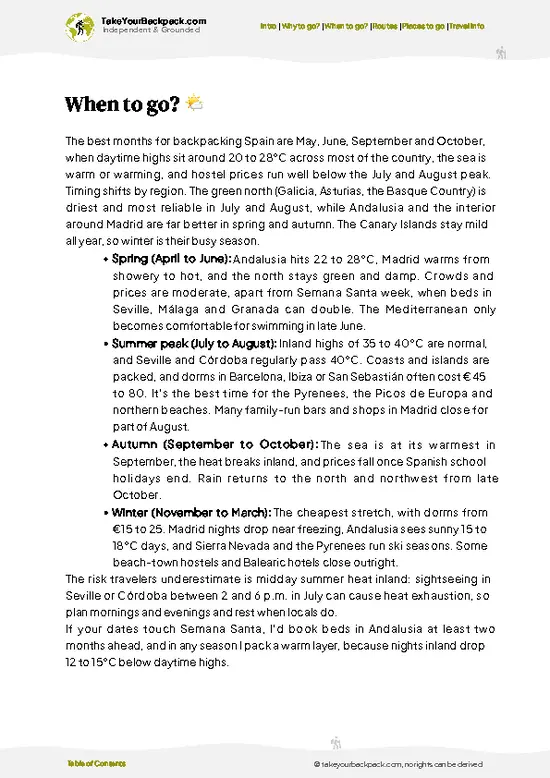
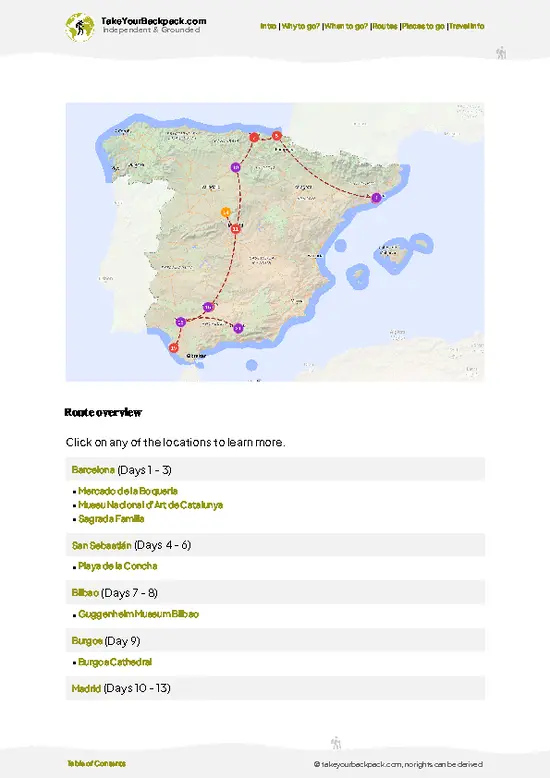
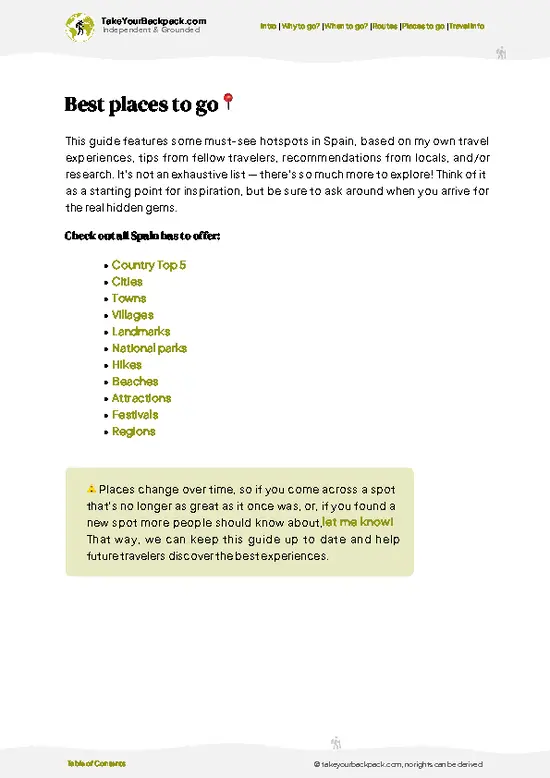
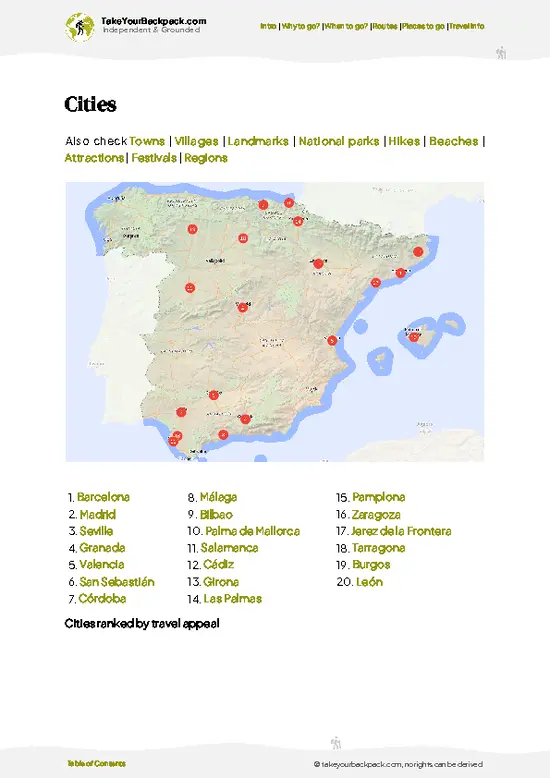
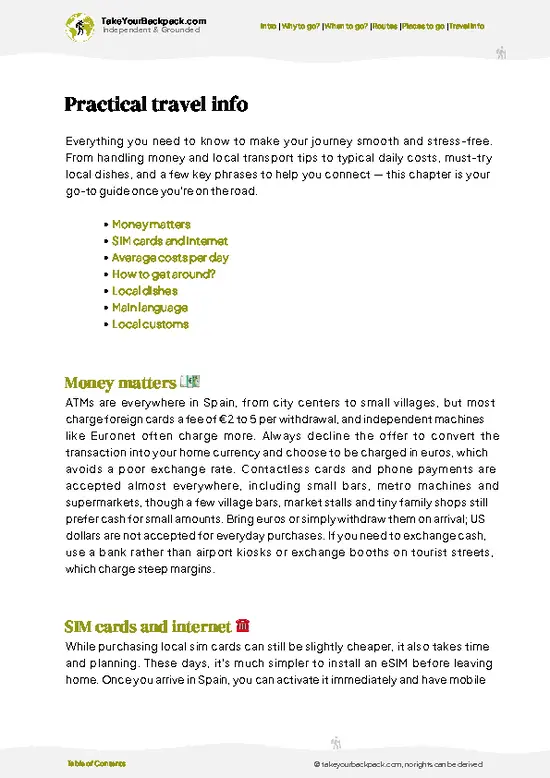
example page 0 from our offline Travel Guide for Spainexample page 1 from our offline Travel Guide for Spainexample page 2 from our offline Travel Guide for Spainexample page 3 from our offline Travel Guide for Spainexample page 4 from our offline Travel Guide for Spainexample page 5 from our offline Travel Guide for Spainexample page 6 from our offline Travel Guide for Spainexample page 7 from our offline Travel Guide for Spain
The digital guide (553 pages) contains:
151 highlights, ranked by travel appeal
Optimized 7, 14 & 21-day travel routes
Cities, national parks, beaches, historical sites, ...
How to get around
Offline-friendly for travel without Wi-Fi
👉 Click to see all 30+ guide features

📅 Plan smarter in minutes, not weeks
Month by month travel advice
Festivals & national holidays
Budget expectations

🗺️ Go to the right places, skip the overrated ones
Honest pros & cons of destinations
Top hikes, parks & viewpoints
Lesser-known places most travelers miss
Clear “worth it vs skip it” guidance

🛏️ Travel smoothly without rookie mistakes
Best areas to stay
Transport systems explained simply
Common scams & safety advice
SIM cards, money & practical tips

🌍 Understand the country, not just visit it
Culture & traditions
52 Essential phrases & customs
Festivals worth planning around
Traveler-friendly historical context
Insights that make places more meaningful

📱 Built for real travel conditions
Fully downloadable PDF
Works completely offline
Optimized for phone use
Useful in remote areas & buses
Everything in one place
Save weeks of stressful planning
Get instant access to the full guide directly. 30-day money-back guarantee.


Sent to your inbox immediately after payment • 100% Secure Checkout
Best Backpacking Travel Advisor 2025 tourism awardBest Backpacking
Travel Advisor
2025
What others say about Take Your Backpack Guides:
⭐⭐⭐⭐⭐
Fantastic, amazing amount of information!
⭐⭐⭐⭐⭐
My goodness this is amazing, it's what I've been looking for hats off too you!
⭐⭐⭐⭐⭐
I think this is absolutely BRILLIANT
⭐⭐⭐⭐
Very complete and informative. It's still missing places, but I gotta to commend you
⭐⭐⭐⭐⭐
This is truly amazing, thank you, can't wait to explore it with my kids!
⭐⭐⭐⭐⭐
Awesome resource, thank you!
⭐⭐⭐⭐⭐
This is amazing! Can't wait to explore the ones I haven't seen
⭐⭐⭐⭐
I love this! Well done, great idea.
⭐⭐⭐⭐⭐
Thanks for taking the time to make this gem!
⭐⭐⭐⭐⭐
This might be the best website I've ever seen.
⭐⭐⭐⭐⭐
Congratulations, and thank you so much for your work; it's incredibly valuable.
⭐⭐⭐⭐
In all seriousness I think you did a great job pointing out the important spots
⭐⭐⭐⭐⭐
10/10 very good
⭐⭐⭐⭐⭐
As someone who's only just starting to visit regularly this is awesome, thank you.
⭐⭐⭐⭐
Thank you very much! I'm going to visit my dad, it's going to be very useful!
⭐⭐⭐⭐⭐
This is really cool! We'll be travelling for the first time and this definitely come in handy.
⭐⭐⭐⭐⭐
You are now our minister of culture, congratulations 👨‍💼
⭐⭐⭐⭐⭐
Just wanted to tell you that this is a pearl! Going to follow your recommendations.
⭐⭐⭐⭐⭐
This is so cool. I'll definitely be using the resource for my travels soon.
⭐⭐⭐⭐⭐
This is very impressive! Good work.
⭐⭐⭐⭐⭐
This is an amazing and informative site. Very well done!

🛏️ Where to stay?Top Areas to Stay

Yes, hostels and budget accommodation are abundant across Spain, clustered in city centres and beach resort zones so you can find options in almost every major destination.

In Barcelona the Gothic Quarter, El Raval and Eixample have the most options — Gothic is unbeatable for landmarks and transit but very touristy and noisy at night; El Raval is cheaper with edgy nightlife and a higher petty‑theft risk; Eixample is calmer and safer but generally pricier.

Madrid’s Gran Vía, Malasaña and Lavapiés concentrate budget stays — Gran Vía is central and busy, Malasaña is lively with nightlife and good low‑cost choices, Lavapiés is multicultural and cheaper though less polished; in Andalusia favour … read more 👉
Yes, hostels and budget accommodation are abundant across Spain, clustered in city centres and beach resort zones so you can find options in almost every major destination.

In Barcelona the Gothic Quarter, El Raval and Eixample have the most options — Gothic is unbeatable for landmarks and transit but very touristy and noisy at night; El Raval is cheaper with edgy nightlife and a higher petty‑theft risk; Eixample is calmer and safer but generally pricier.

Madrid’s Gran Vía, Malasaña and Lavapiés concentrate budget stays — Gran Vía is central and busy, Malasaña is lively with nightlife and good low‑cost choices, Lavapiés is multicultural and cheaper though less polished; in Andalusia favour Seville’s Santa Cruz or Triana for walkable sights and quieter evenings, and Granada’s Albaicín for views but expect steep streets and limited late‑night transport.

If you enjoy meeting fellow travelers, consider choosing hostels with high ratings for atmosphere. On the other hand, if you prefer having your own space, a hotel might be a better option.

SpainDiscover the Country

👋 Meet the founderWho’s Behind Take Your Backpack?

Johan, backpacker and founder of TakeYourBackpackHi, I’m Johan (Netherlands 🇳🇱), the creator of TakeYourBackpack. Over the past decade, I’ve backpacked through 80+ countries across six continents, gaining extensive experience with independent travel, long-term trips, and overland routes.

This site is built on a combination of firsthand travel experience and carefully curated insights from other backpackers. Many guides are based on places I’ve personally visited, while others bring together tips, observations, and practical advice shared by trusted travelers I’ve met along the way.

The goal is to provide realistic, experience-driven guidance — not generic itineraries — so you can explore destinations with better context, clearer expectations, and more confidence.

Get full Spain guide •
Instant download • 151 highlights • Full Offline guide