×

Sri Lanka🇱🇰 | best festivalsEssential 10 festivals to Explore in Sri Lanka

Festivals in Sri Lanka arrive with drums you feel in your sternum, the smell of frangipani and burning camphor, and sweat running down your back in the crush. Most are tied to Buddhist full moon Poya days, Hindu temple calendars or the Muslim lunar year, so the mood shifts by region. In the Hill Country and the south, processions are huge, loud and crowded, and rooms fill early. The north and east run quieter, with ritual taking priority over spectacle, and fewer travelers. Entry is often free, but viewing seats cost money. Independent travelers can reach nearly all of them by bus or train, though last-mile transport gets tight.

By Johan Kruseman 🇳🇱 | Updated October 19, 2026
Explore the best regions in Sri Lanka

Why go?What Makes Them Special

Sri Lanka packs four major religions into an island you can cross in a day, so the festival calendar runs nearly year-round. Buddhists (roughly 70 percent of the population), Hindus, Muslims and Christians each keep their own lunar or solar dates, and a monthly Poya holiday shuts shops, stops alcohol sales and fills temples with white-clad worshippers carrying lotus and jasmine. Elephants, drummers and fire dancers come from old royal and temple traditions that survived colonial rule, which is why the pageantry feels rooted rather than staged.

The island's size is a real advantage. Hardly anywhere is more than a long day away by train or bus, and the rail lines through the hills are slow but cheap. Monsoons split the island into two weather systems, so something is usually dry somewhere.
… read more 👉
Sri Lanka packs four major religions into an island you can cross in a day, so the festival calendar runs nearly year-round. Buddhists (roughly 70 percent of the population), Hindus, Muslims and Christians each keep their own lunar or solar dates, and a monthly Poya holiday shuts shops, stops alcohol sales and fills temples with white-clad worshippers carrying lotus and jasmine. Elephants, drummers and fire dancers come from old royal and temple traditions that survived colonial rule, which is why the pageantry feels rooted rather than staged.

The island's size is a real advantage. Hardly anywhere is more than a long day away by train or bus, and the rail lines through the hills are slow but cheap. Monsoons split the island into two weather systems, so something is usually dry somewhere.

Before choosing Sri Lanka for its festivals, know that dates move with the lunar calendar and are often confirmed only weeks ahead. Expect heat, dense crowds, sticky pavements and inflated accommodation prices in host towns. Dress modestly, with shoulders and knees covered, and remove shoes and hats at sacred sites. Public transport thickens to standing room only, and some regions still have thin evening services after processions end, so plan how you leave as carefully as how you arrive.
Our Approach to Ranking
The list of best festivals in Sri Lanka is created based on energy, traditions, crowd experience, activities, and overall excitement. If you feel a festival is missing in this list, please let us know.

When to go?Seasonal Guide to Visiting

Best months and weather: The best months for festivals in Sri Lanka are December to April for the west, south and Hill Country, and May to September for the north and east, because each side is in its dry season then. In the southwest, days run 28 to 32°C with humidity that makes your shirt cling by mid-morning, and rain is light. The Hill Country is cooler, around 15 to 22°C, with chilly evenings that suit a fleece.

Shoulder seasons: The southwest monsoon hits the west and south from May to September, bringing heavy afternoon downpours, red mud and rough seas. Meanwhile the northeast monsoon drenches the north and east from October to January, and roads and tracks can flood. April and October to November are inter-monsoon months with thunderstorms most afternoons, usually clearing by evening. … read more 👉
Best months and weather: The best months for festivals in Sri Lanka are December to April for the west, south and Hill Country, and May to September for the north and east, because each side is in its dry season then. In the southwest, days run 28 to 32°C with humidity that makes your shirt cling by mid-morning, and rain is light. The Hill Country is cooler, around 15 to 22°C, with chilly evenings that suit a fleece.

Shoulder seasons: The southwest monsoon hits the west and south from May to September, bringing heavy afternoon downpours, red mud and rough seas. Meanwhile the northeast monsoon drenches the north and east from October to January, and roads and tracks can flood. April and October to November are inter-monsoon months with thunderstorms most afternoons, usually clearing by evening. Shoulder months bring lower accommodation prices, often 20 to 40 percent below peak.

Peak periods and prices: Around major festivals and school holidays, room rates in host towns can double or triple and the best places book out weeks ahead. Mid-April's New Year holiday week also shuts many shops and fills buses and trains to capacity. Reserve beds early and book reserved rail seats as soon as they open, around 30 days before travel.

festival hoppingPlanning Your Route Efficiently

How many days to allow: A trip combining several festivals in Sri Lanka needs 10 to 14 days, because the dates are fixed and the island's roads are slower than the map suggests. Distances look short, but buses wind through hills and towns at an average of 30 to 40 km/h.

Which regions group well: The Colombo, Kandy and Hill Country cluster works best, with Colombo's airport as the entry point. Colombo to Kandy takes 3 to 4 hours by train or bus, and Kandy to Ella by train takes about 6 to 7 hours through tea slopes. The south coast from Galle to Tissamaharama pairs neatly with the Ella end, with 3 to 4 hours by bus between Ella and the coast. Travel in one loop, from the west into the hills, then down the east or south side, rather than backtracking. The north and east (Jaffna, Trincomalee, … read more 👉
How many days to allow: A trip combining several festivals in Sri Lanka needs 10 to 14 days, because the dates are fixed and the island's roads are slower than the map suggests. Distances look short, but buses wind through hills and towns at an average of 30 to 40 km/h.

Which regions group well: The Colombo, Kandy and Hill Country cluster works best, with Colombo's airport as the entry point. Colombo to Kandy takes 3 to 4 hours by train or bus, and Kandy to Ella by train takes about 6 to 7 hours through tea slopes. The south coast from Galle to Tissamaharama pairs neatly with the Ella end, with 3 to 4 hours by bus between Ella and the coast. Travel in one loop, from the west into the hills, then down the east or south side, rather than backtracking. The north and east (Jaffna, Trincomalee, Batticaloa) sit far from this loop, with 8 to 10 hours from Colombo by road, so treat them as a separate trip or a deliberate detour.

Pacing and common mistakes: Give each stop 2 to 3 nights. The usual mistake is booking a single night per festival town, then arriving after dusk with crowds blocking roads and no bed. Another is cramming two events on consecutive days in distant regions. Instead, arrive a day early, sleep close to the venue, and leave the morning after, once the roads have emptied.

The ListTop festivals of Sri Lanka

1 Kandy Esala Perahera

temple of the tooth, royal costumes, tusker elephants, torchlit nights

Stand among thousands as elaborately dressed elephants and dancers escort the tooth relic in a ritual unique to Kandy.

2 Vesak

Buddha’s birth, illuminated lanterns, almsgiving, temple visits

Walk city streets lined with glowing lanterns and witness acts of generosity as Sri Lankans commemorate the Buddha’s life.

3 Sinhala and Tamil New Year

traditional games, home rituals, sweetmeats, family gatherings

Join locals as homes fill with the scent of fresh sweets, neighbors exchange gifts, and entire towns pause for shared celebration.

4 Galle Literary Festival

author talks, heritage venues, book signings, coastal fort

Attend readings and discussions in centuries-old buildings, mingling with writers and travelers inside Galle’s historic fort.

5 Kataragama Festival

multi-faith pilgrimage, fire-walking, river rituals, forest shrines

Experience a rare convergence of faiths as pilgrims walk barefoot, carry offerings, and gather at shrines deep in the southern jungle.

6 Nallur Festival

Jaffna temple, processions, ceremonial flags, Tamil traditions

Absorb the intensity of daily rituals and processions as the Nallur Kandaswamy Temple becomes the heart of northern Tamil culture.

7 Duruthu Perahera

Kelaniya temple, Buddhist pageant, torchbearers, January rituals

Observe a luminous procession of dancers, drummers, and elephants as the Buddhist calendar’s first major festival unfolds.

9 Poson

Mihintale pilgrimage, white-clad devotees, Buddhist sermons, lantern displays

Join pilgrims climbing ancient steps to Mihintale, where sermons and lanterns mark the arrival of Buddhism in Sri Lanka.

10 Thai Pongal

rice harvest, clay pot cooking, kolam art, thanksgiving

Share in the gratitude of farmers as homes are decorated with rice flour designs and sweet rice simmers in open courtyards.

11 Deepavali

oil lamps, sweets exchange, new clothes, Hindu homes

See homes glow with rows of lamps and taste festival sweets as families mark the triumph of light over darkness.

12 Maha Shivaratri

night temple vigils, Shiva devotees, oil lamps, sacred chants

Witness temples illuminated through the night as devotees fast, chant, and offer flowers in a deeply spiritual atmosphere.

13 Vel Festival

Hindu chariots, Murugan worship, city streets, silver spear

Watch as colorfully decorated chariots roll through urban neighborhoods, accompanied by music and the rhythmic pull of devotees.

Think you know Sri Lanka?

Prove you’re a true local — uncover 3 lesser-known festivals in Sri Lanka that locals tend to keep to themselves.
Loading the map 🌍

Expert viewInsights from Locals and Experts

How many festivals to see: Plan on two to four festivals in a single trip. Each one costs a full day of waiting, standing, sweating and recovering, and travel between regions eats the rest. Two lets you see them properly and still have time for beaches, trains and tea country. Four is the ceiling before the heat and crowds turn it into a chore.

Which kind to prioritize: If you want spectacle, pick the large Buddhist processions with elephants, fire dancers and whip-crack drummers, and accept packed streets and higher prices. If you prefer ritual and atmosphere, choose Hindu temple festivals in the north and east or the south's smaller coastal events, where you can stand close, smell incense and coconut oil lamps and talk with worshippers. Travelers on a tight budget should favor the monthly … read more 👉
How many festivals to see: Plan on two to four festivals in a single trip. Each one costs a full day of waiting, standing, sweating and recovering, and travel between regions eats the rest. Two lets you see them properly and still have time for beaches, trains and tea country. Four is the ceiling before the heat and crowds turn it into a chore.

Which kind to prioritize: If you want spectacle, pick the large Buddhist processions with elephants, fire dancers and whip-crack drummers, and accept packed streets and higher prices. If you prefer ritual and atmosphere, choose Hindu temple festivals in the north and east or the south's smaller coastal events, where you can stand close, smell incense and coconut oil lamps and talk with worshippers. Travelers on a tight budget should favor the monthly Poya observances at local temples, which cost nothing and happen almost anywhere. Photographers should reach the route early for position and plan for rain gear.

What it costs: Budget US$30 to 55 a day (about LKR 9,000 to 16,500) for a mid-range backpacker: a room at US$15 to 30, meals at US$5 to 10, and local transport at US$3 to 8. Standing along a procession route is usually free. Reserved grandstand or balcony seats can run US$20 to 80 or more, depending on the event and how close you book. Add US$5 to 15 for a local guide if you want ritual explained. Three-wheeler rides home after a procession often jump to double the normal fare, so set a price before you climb in.

Safety and etiquette: Crowds are the main hazard. Keep your phone and wallet in a zipped front pocket, hold a bag in front of you and agree on a meeting point if you are traveling with others. Elephants are chained and handled by trained mahouts, but never stand within reach of a moving animal, and keep clear of the lanes where they exit. Fire and firecrackers are common, so avoid synthetic clothing near flames.

Cover shoulders and knees at temples, remove shoes and hats before entering, and never point your feet at an altar or Buddha image or turn your back to take a selfie with one. Ask before photographing worshippers, especially women and monks, and women should not touch a monk. Alcohol is banned on Poya days, so do not expect a beer afterward.

Drink bottled or filtered water, carry a hat and sunscreen, and eat from busy stalls where food moves fast. Hydrate before you head into a crowd that may keep you standing for four hours in 30°C heat. A rain poncho takes little space and earns its place during monsoon months.

✈️ The backpacker research shortcutSri Lanka Travel Guide

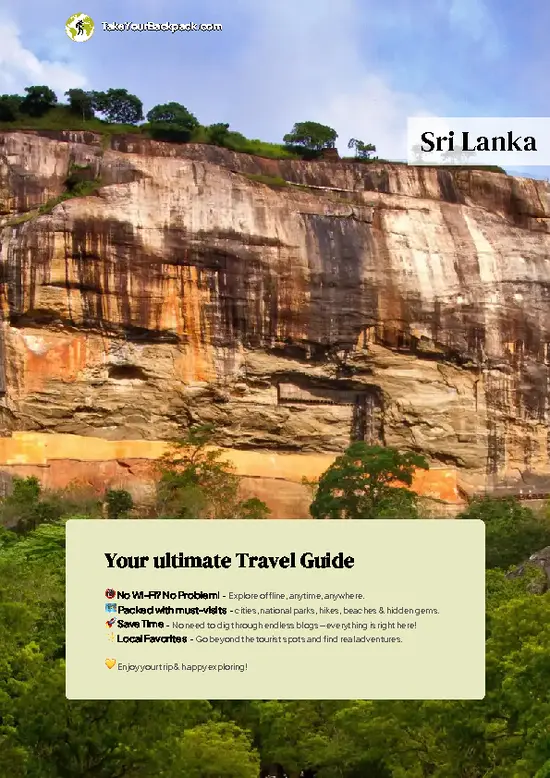
An offline-friendly backpacking guide with optimized travel routes, ranked highlights, transport advice, and the best areas to stay.
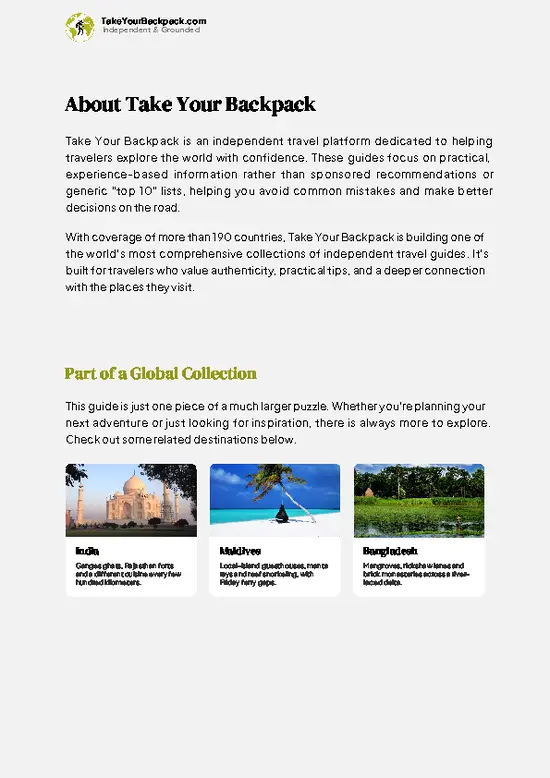
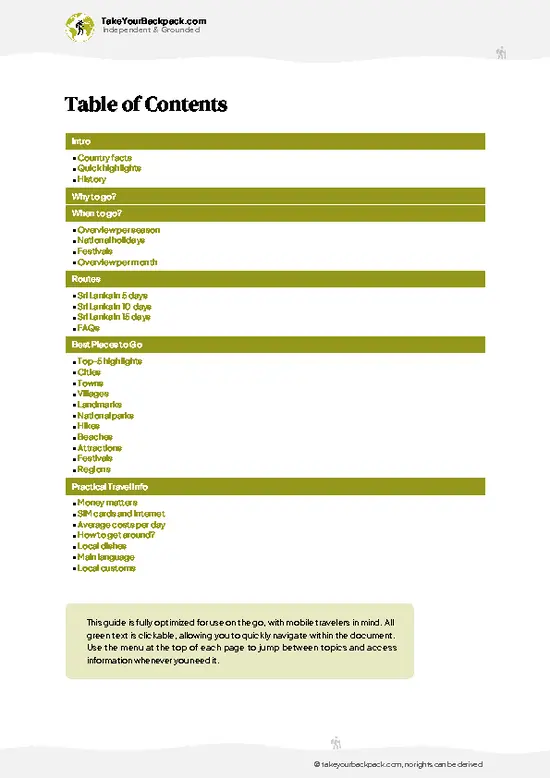
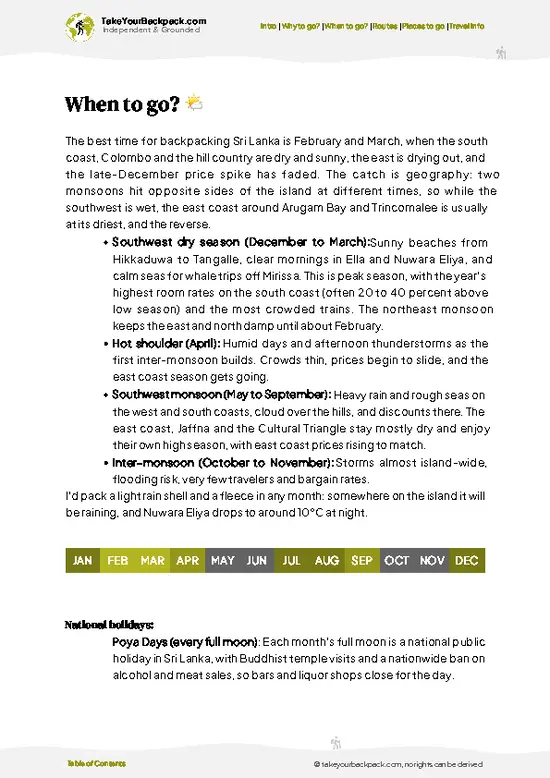
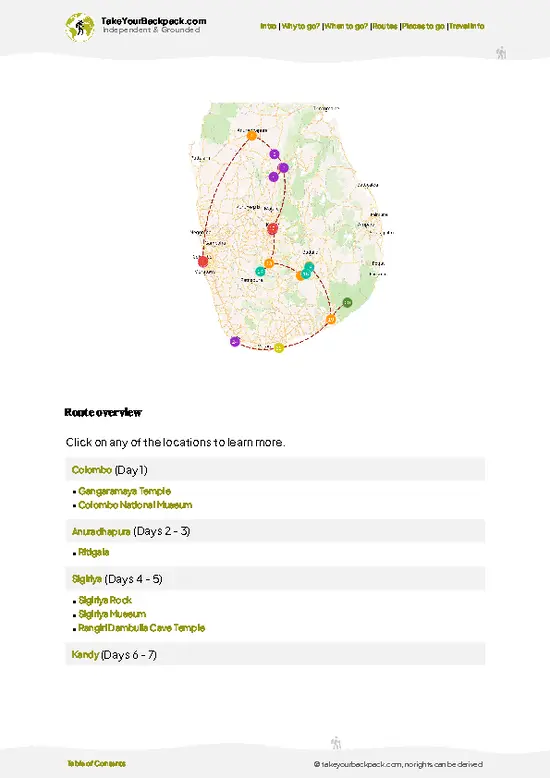
example page 0 from our offline Travel Guide for Sri Lanka
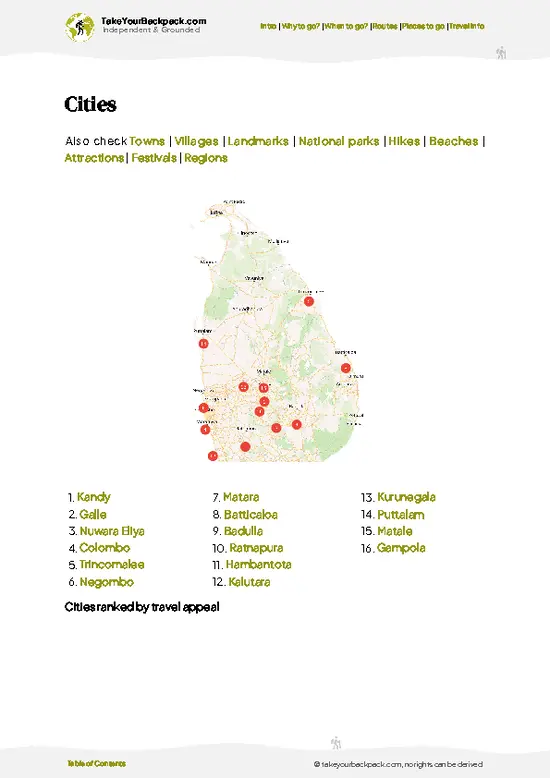
example page 1 from our offline Travel Guide for Sri Lanka
example page 2 from our offline Travel Guide for Sri Lanka
example page 3 from our offline Travel Guide for Sri Lanka
example page 4 from our offline Travel Guide for Sri Lanka
example page 5 from our offline Travel Guide for Sri Lanka
example page 6 from our offline Travel Guide for Sri Lanka
example page 7 from our offline Travel Guide for Sri Lanka
The digital guide (435 pages) contains:
✅ 121 highlights, ranked by travel appeal
✅ Optimized 5, 10 & 15-day travel routes
✅ Cities, national parks, landmarks, beaches
✅ How to get around
✅ Offline-friendly for travel without Wi-Fi
👉 Click to see all 30+ guide features

📅 Plan smarter in minutes, not weeks
✅ Month by month travel advice
✅ Festivals & national holidays
✅ Budget expectations

🗺️ Go to the right places, skip the overrated ones
✅ Honest pros & cons of destinations
✅ Top hikes, parks & viewpoints
✅ Lesser-known places most travelers miss
✅ Clear “worth it vs skip it” guidance

🛏️ Travel smoothly without rookie mistakes
✅ Best areas to stay
✅ Transport systems explained simply
✅ Common scams & safety advice
✅ SIM cards, money & practical tips

🌍 Understand the country, not just visit it
✅ Culture & traditions
✅ 52 Essential phrases & customs
✅ Festivals worth planning around
✅ Traveler-friendly historical context
✅ Insights that make places more meaningful

📱 Built for real travel conditions
✅ Fully downloadable PDF
✅ Works completely offline
✅ Optimized for phone use
✅ Useful in remote areas & buses
✅ Everything in one place
Stop searching, start planning
Get instant access to your full guide. 30‑day money-back guarantee.
+ Add another guide for just

By proceeding you agree to our terms.
Sent to your inbox immediately after payment • 100% Secure Checkout
Best Backpacking Travel Advisor 2025 tourism awardBest Backpacking
Travel Advisor
2025
What others say about Take Your Backpack Guides:
⭐⭐⭐⭐⭐
Fantastic, amazing amount of information!
⭐⭐⭐⭐⭐
My goodness this is amazing, it's what I've been looking for hats off too you!
⭐⭐⭐⭐⭐
I think this is absolutely BRILLIANT
⭐⭐⭐⭐
Very complete and informative. It's still missing places, but I gotta to commend you
⭐⭐⭐⭐⭐
This is truly amazing, thank you, can't wait to explore it with my kids!
⭐⭐⭐⭐⭐
Awesome resource, thank you!
⭐⭐⭐⭐⭐
This is amazing! Can't wait to explore the ones I haven't seen
⭐⭐⭐⭐
I love this! Well done, great idea.
⭐⭐⭐⭐⭐
Thanks for taking the time to make this gem!
⭐⭐⭐⭐⭐
This might be the best website I've ever seen.
⭐⭐⭐⭐⭐
Congratulations, and thank you so much for your work; it's incredibly valuable.
⭐⭐⭐⭐
In all seriousness I think you did a great job pointing out the important spots
⭐⭐⭐⭐⭐
10/10 very good
⭐⭐⭐⭐⭐
As someone who's only just starting to visit regularly this is awesome, thank you.
⭐⭐⭐⭐
Thank you very much! I'm going to visit my dad, it's going to be very useful!
⭐⭐⭐⭐⭐
This is really cool! We'll be travelling for the first time and this definitely come in handy.
⭐⭐⭐⭐⭐
You are now our minister of culture, congratulations 👨‍💼
⭐⭐⭐⭐⭐
Just wanted to tell you that this is a pearl! Going to follow your recommendations.
⭐⭐⭐⭐⭐
This is so cool. I'll definitely be using the resource for my travels soon.
⭐⭐⭐⭐⭐
This is very impressive! Good work.
⭐⭐⭐⭐⭐
This is an amazing and informative site. Very well done!

🛏️ Where to stay?Where to Stay: Sri Lanka Edition

Sri Lanka has plenty of hostels and family-run guesthouses, with dorm beds typically around LKR 2,500 to 4,500 (US$8 to 15) and simple private doubles from about LKR 5,000 to 9,000 (US$17 to 30). In Colombo, Fort puts you next to the main train and bus stations but goes quiet after dark, while Kollupitiya and Bambalapitiya offer more restaurants and bars at slightly higher prices. In the hill country, Ella has the densest cluster of social hostels within walking distance of the main trails, and Kandy concentrates its budget beds on the hillsides around the lake, which are quiet but involve steep walks. On the south coast, Mirissa and Hikkaduwa are the party-leaning beach bases, Unawatuna and … read more 👉
Sri Lanka has plenty of hostels and family-run guesthouses, with dorm beds typically around LKR 2,500 to 4,500 (US$8 to 15) and simple private doubles from about LKR 5,000 to 9,000 (US$17 to 30). In Colombo, Fort puts you next to the main train and bus stations but goes quiet after dark, while Kollupitiya and Bambalapitiya offer more restaurants and bars at slightly higher prices. In the hill country, Ella has the densest cluster of social hostels within walking distance of the main trails, and Kandy concentrates its budget beds on the hillsides around the lake, which are quiet but involve steep walks. On the south coast, Mirissa and Hikkaduwa are the party-leaning beach bases, Unawatuna and Tangalle are calmer, and Arugam Bay on the east coast fills with surfers from roughly April to October, when prices climb.

If you enjoy meeting fellow travelers, consider choosing hostels with high ratings for atmosphere. On the other hand, if you prefer having your own space, a hotel might be a better option.

Sri LankaExplore Beyond This Category

👋 Meet the founderWho’s Behind Take Your Backpack?

Johan, backpacker and founder of TakeYourBackpackHi, I’m Johan (Netherlands 🇳🇱), the creator of TakeYourBackpack. Over the past 3 decades, I’ve backpacked through 90+ countries across six continents, gaining extensive experience with independent travel, long-term trips, and overland routes.

This site is built on a combination of firsthand travel experience and carefully curated insights from other backpackers. Many guides are based on places I’ve personally visited, while others bring together tips, observations, and practical advice shared by trusted travelers I’ve met along the way.

The goal is to provide realistic, experience-driven guidance — not generic itineraries — so you can explore destinations with better context, clearer expectations, and more confidence.