×

Sri Lanka🇱🇰 | best hikesEssential 9 hikes to Explore in Sri Lanka

Hikes in Sri Lanka start in damp heat and end in cold wind. In the Hill Country you climb through tea terraces, the air smelling of wet leaves and woodsmoke, and finish before the mist swallows the view around 10 a.m. The south offers humid rainforest trails with leeches and loud insect choruses, while the dry zone serves up bare granite, baking by midday. Access is easy: trains and tuk-tuks reach most trailheads, and a basic guesthouse costs little. Crowds gather at famous summits and thin out elsewhere. For independent travelers and backpackers, the choice is between cool, social highlands and quieter, rougher forest.

By Johan Kruseman 🇳🇱 | Updated October 19, 2026
Explore the best beaches in Sri Lanka

Why go?What Makes Them Special

Sri Lanka packs extreme variety into an island roughly 440 kilometers long. Within a few hours you can pass from sea-level coconut palms to cloud forest above 2,000 meters, and the temperature drops with every switchback. Two monsoons mean something is always green and dripping somewhere, and the island's rainforest and highland plains hold wildlife found nowhere else, so even a short walk puts birdsong and the sharp smell of eucalyptus and wet earth around you.

Culture sits on the trails too. Many peaks are pilgrimage sites, so you share steps with families, incense smoke and bare feet, and the pace is set by devotion rather than fitness. Tea estates cross the highlands, and their pickers' paths often double as walking routes, which means plenty of footpaths but few waymarked long-distance … read more 👉
Sri Lanka packs extreme variety into an island roughly 440 kilometers long. Within a few hours you can pass from sea-level coconut palms to cloud forest above 2,000 meters, and the temperature drops with every switchback. Two monsoons mean something is always green and dripping somewhere, and the island's rainforest and highland plains hold wildlife found nowhere else, so even a short walk puts birdsong and the sharp smell of eucalyptus and wet earth around you.

Culture sits on the trails too. Many peaks are pilgrimage sites, so you share steps with families, incense smoke and bare feet, and the pace is set by devotion rather than fitness. Tea estates cross the highlands, and their pickers' paths often double as walking routes, which means plenty of footpaths but few waymarked long-distance trails.

Know before you choose: this is day-hike country, not a trekking destination in the Himalayan sense. Trails are short, steep and often stepped, but heat, humidity, leeches and sudden downpours make easy distances tiring. Signage is patchy, and some protected areas require a licensed guide and a paid permit. Infrastructure is good enough that you rarely need camping gear, but a rain jacket is always worth packing.
Our Approach to Ranking
The list of best hikes in Sri Lanka is created based on scenery, challenge, trail quality, landmarks, and overall enjoyment. If you feel a hike is missing in this list, please let us know.

When to go?Seasonal Guide to Visiting

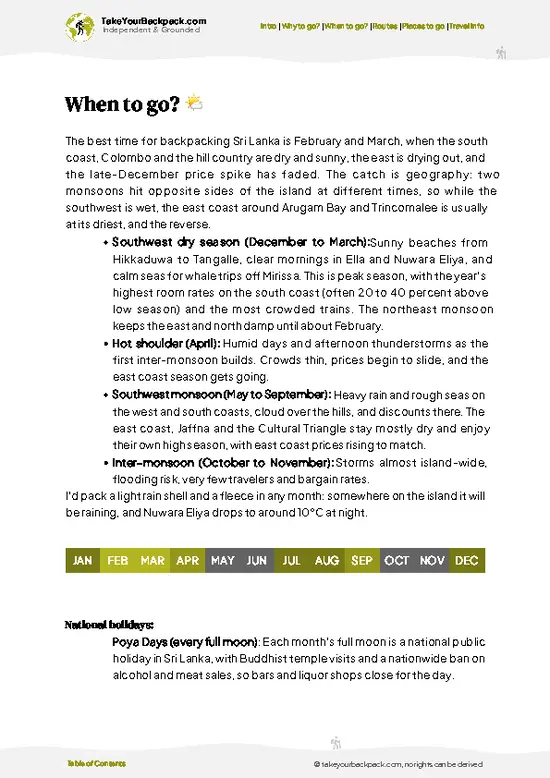
Best months: The best months for hiking in Sri Lanka are January to March in the Hill Country, when dry, clear mornings give long views and the air stays cool, with daytime highs of 18 to 24°C in the highlands. Nights at 2,000 meters can drop to 5°C or lower, so the first light often comes with frost on the grass.

Shoulder seasons: April and May and August to September are workable shoulder months: afternoon thunderstorms roll in, but mornings are usually clear, and guesthouse prices drop 20 to 30 percent from peak. The southwest monsoon (May to September) drenches the south and west rainforests, with heavy rain, slick trails and many leeches. Meanwhile the northeast monsoon (October to January) mostly soaks the east and north.

Peak periods: The Sinhala and Tamil New Year in mid-April and … read more 👉
Best months: The best months for hiking in Sri Lanka are January to March in the Hill Country, when dry, clear mornings give long views and the air stays cool, with daytime highs of 18 to 24°C in the highlands. Nights at 2,000 meters can drop to 5°C or lower, so the first light often comes with frost on the grass.

Shoulder seasons: April and May and August to September are workable shoulder months: afternoon thunderstorms roll in, but mornings are usually clear, and guesthouse prices drop 20 to 30 percent from peak. The southwest monsoon (May to September) drenches the south and west rainforests, with heavy rain, slick trails and many leeches. Meanwhile the northeast monsoon (October to January) mostly soaks the east and north.

Peak periods: The Sinhala and Tamil New Year in mid-April and the Esala Perahera season around July and August fill buses and trains and push prices up, as locals travel too. Hill Country rooms are scarcest around Christmas and New Year, when rates can rise 30 to 50 percent. The pilgrimage season on the sacred peak typically runs from December to May, with night climbs under strings of lights. Coastal and lowland trails run hot at 28 to 33°C year-round, so start at dawn whenever you go.

hike hoppingPlanning Your Route Efficiently

How long you need: A trip combining several hikes in Sri Lanka works best over 10 to 14 days, which allows for slow transport and the weather's habit of closing down a day.

Grouping and direction: The country's best clusters are the central Hill Country (around Kandy, Nuwara Eliya, Ella and Haputale), the southwest rainforest belt and the dry-zone rock country in the north-center. Go from Colombo or the airport at Negombo to Kandy, then climb to the tea country and finish with a descent toward the south coast, which means arriving at altitude only once and ending on warm sand. Allow two to three nights per stop so you can hike one morning and use another for rest or a weather swap.

Getting between regions: Trains are slow and scenic: Kandy to Ella takes roughly 6 to 7 hours, and the window … read more 👉
How long you need: A trip combining several hikes in Sri Lanka works best over 10 to 14 days, which allows for slow transport and the weather's habit of closing down a day.

Grouping and direction: The country's best clusters are the central Hill Country (around Kandy, Nuwara Eliya, Ella and Haputale), the southwest rainforest belt and the dry-zone rock country in the north-center. Go from Colombo or the airport at Negombo to Kandy, then climb to the tea country and finish with a descent toward the south coast, which means arriving at altitude only once and ending on warm sand. Allow two to three nights per stop so you can hike one morning and use another for rest or a weather swap.

Getting between regions: Trains are slow and scenic: Kandy to Ella takes roughly 6 to 7 hours, and the window seats are loud with wind and the smell of tea and diesel. Buses and drivers are quicker on the road, but mountain roads twist, so a 100 kilometer leg can take 3 to 4 hours. From Ella to the south coast is about 3 to 4 hours by road.

Common planning mistakes: The classic error is cramming too many regions into a short trip, then spending half of it on buses. Another is booking afternoon hikes, when cloud closes in and the heat peaks. Start early, hike the long summits first, and keep a flexible day in each region for rain.

The ListTop hikes of Sri Lanka

1 Adam’s Peak

pilgrimage steps, sunrise summit, sacred footprint, lantern-lit ascent

Join a steady stream of pilgrims climbing through the night, reaching the summit at dawn for spiritual rituals and mountain silhouettes.

sri-lanka-hike-adams-peak
© Google |

2 World’s End

cloud forest plateau, sheer escarpment, sambar deer, misty grasslands

Follow a winding trail through cool highland plains, passing rare wildlife and sudden cliffs that reveal sweeping views over tea country.

3 Ella Rock

steep climb, eucalyptus groves, railway tracks, valley overlook

Trek past tea fields and along train lines before a steep push through forest, rewarded by a broad view over Ella Gap and beyond.

sri-lanka-hike-ella-rock
© Google |

4 Pidurangala Rock

rock scramble, ancient monastery, Sigiriya panorama, sunrise vantage

Scramble over boulders and past ruins to a summit that faces Sigiriya, offering a quieter alternative for sunrise and open sky views.

sri-lanka-hike-pidurangala-rock
© Google |

5 Little Adam’s Peak

gentle ascent, panoramic hill views, tea plantations, easy access

Climb a well-marked path through tea fields to a breezy summit, where the landscape opens up to rolling valleys and distant peaks.

6 Diyaluma Falls Trek

multi-tiered waterfall, natural pools, rocky ledges, open grassland

Ascend grassy hills to reach the upper cascades of Sri Lanka’s second tallest waterfall, where cool pools offer a break from the sun.

sri-lanka-hike-diyaluma-falls-trek
© Google |

7 Lipton’s Seat

historic tea estate, winding estate roads, colonial viewpoint, plantation villages

Walk through working tea estates and rural settlements, ending at a lookout once favored by Sir Thomas Lipton for its far-reaching vistas.

sri-lanka-hike-liptons-seat
© Google |

8 Meemure Village Trail

jungle footpaths, rural hamlets, Knuckles foothills, river crossings

Venture deep into the Knuckles range, crossing streams and forested slopes to reach a remote village shaped by traditional ways of life.

sri-lanka-hike-meemure-village-trail
© Google |

9 Kirigalpoththa Trail

remote summit, boggy meadows, endemic flora, challenging terrain

Traverse muddy tracks and dense undergrowth to reach Sri Lanka’s second-highest peak, where rare plants and solitude reward the effort.

sri-lanka-hike-kirigalpoththa-trail
© Google |
Loading the map 🌍

Expert viewInsights from Locals and Experts

How many hikes: I recommend three to five hikes in a trip of two weeks. That is enough to cover the island's different climates (highland, rainforest and dry rock) without turning every day into a dawn alarm. More than five and the tired legs, wet socks and long bus rides start to blur the views, while fewer than three means missing how much the landscape changes.

Which kind to prioritize: First-timers and those on a tight schedule should favor Hill Country walks: short, well trodden, with tea terraces and cool air. Travelers who want solitude should look to the rainforest and lesser-visited highland trails, where it is quieter but muddier and navigation is harder. Photographers and history fans should choose the dry-zone rock climbs at sunrise, before the stone heats up.

What it costs: … read more 👉
How many hikes: I recommend three to five hikes in a trip of two weeks. That is enough to cover the island's different climates (highland, rainforest and dry rock) without turning every day into a dawn alarm. More than five and the tired legs, wet socks and long bus rides start to blur the views, while fewer than three means missing how much the landscape changes.

Which kind to prioritize: First-timers and those on a tight schedule should favor Hill Country walks: short, well trodden, with tea terraces and cool air. Travelers who want solitude should look to the rainforest and lesser-visited highland trails, where it is quieter but muddier and navigation is harder. Photographers and history fans should choose the dry-zone rock climbs at sunrise, before the stone heats up.

What it costs: Budget about US$25 to 45 a day (roughly Rs 7,500 to 13,500) including a basic guesthouse, local food and public transport. Entry fees vary widely: many highland trails are free or cost a few dollars, while national parks and the famous rock fortress charge foreign visitors US$15 to 35, and some parks add vehicle and guide fees. A local guide runs about US$10 to 30 for a half day, and is compulsory in some protected areas. Tuk-tuks to trailheads cost roughly US$3 to 12, depending on distance, and a morning jeep for a longer approach costs more. A rain-heavy trip may need a dry bag, which is cheap in town.

Crowds, honestly: The best-known summits are busy at dawn, with queues on narrow steps and a steady chatter of selfie sticks and vendors. Go midweek or choose a less famous alternative and you will often have the path to yourself, with just birdsong and the sound of pickers working the slopes.

Safety: Leeches are common in wet months, so wear gaiters or tuck trousers into socks and carry salt or repellent. Weather turns fast: lightning and sudden fog are real risks on exposed ridges, so turn back when cloud drops. Watch for wasps and hornets on rocky routes and stay clear of wild elephants, which can cross trails near forest edges. Carry at least 2 liters of water and use purified or boiled supplies. Solo women generally find the highlands manageable but should avoid remote trails at dusk and consider a guide.

Cultural considerations: Many peaks are sacred. Cover shoulders and knees, remove shoes and hats at shrines, and never point your feet toward a Buddha image. Keep your voice low on the pilgrim steps and give right of way to those climbing for worship. Tip guides and porters 10 to 15 percent, and ask before photographing people.

✈️ The backpacker research shortcutSri Lanka Travel Guide

An offline-friendly backpacking guide with optimized travel routes, ranked highlights, transport advice, and the best areas to stay.
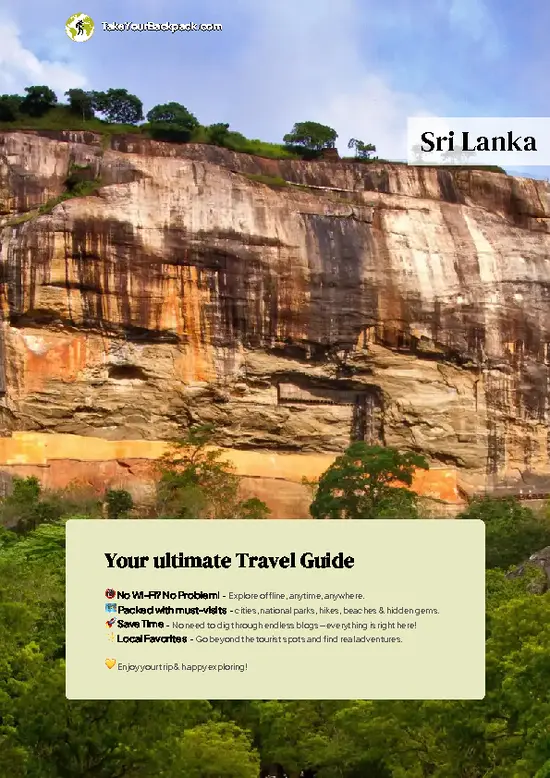
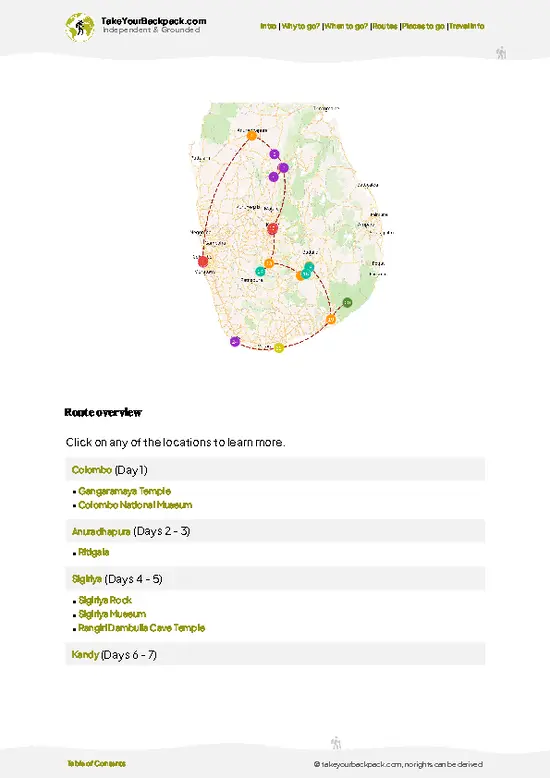
example page 0 from our offline Travel Guide for Sri Lanka
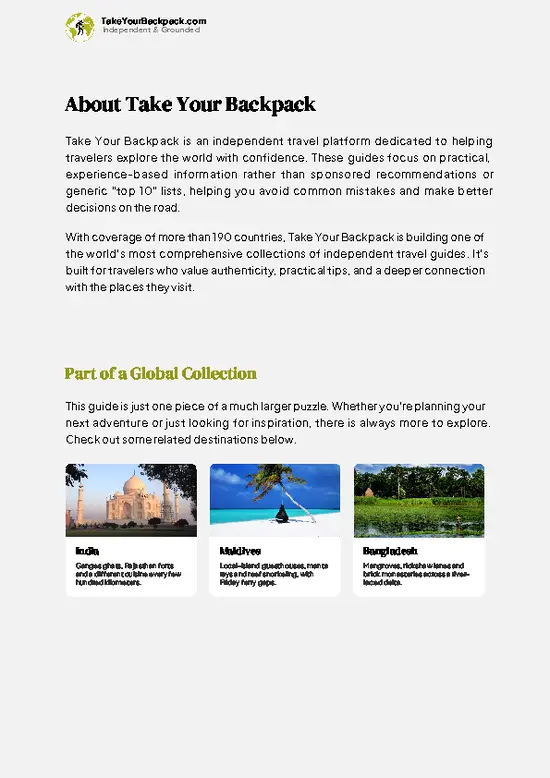
example page 1 from our offline Travel Guide for Sri Lanka
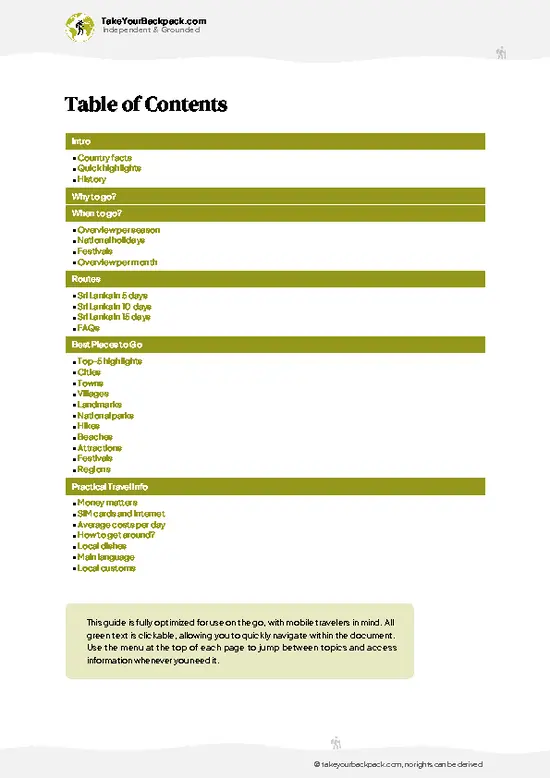
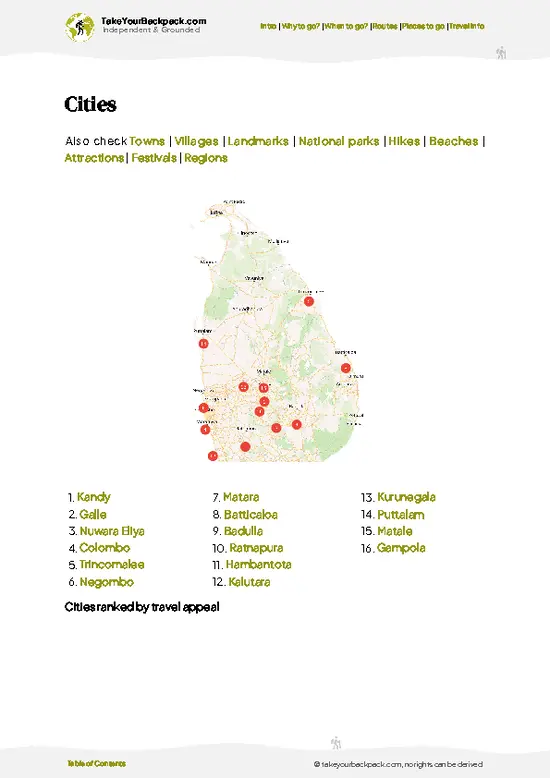
example page 2 from our offline Travel Guide for Sri Lanka
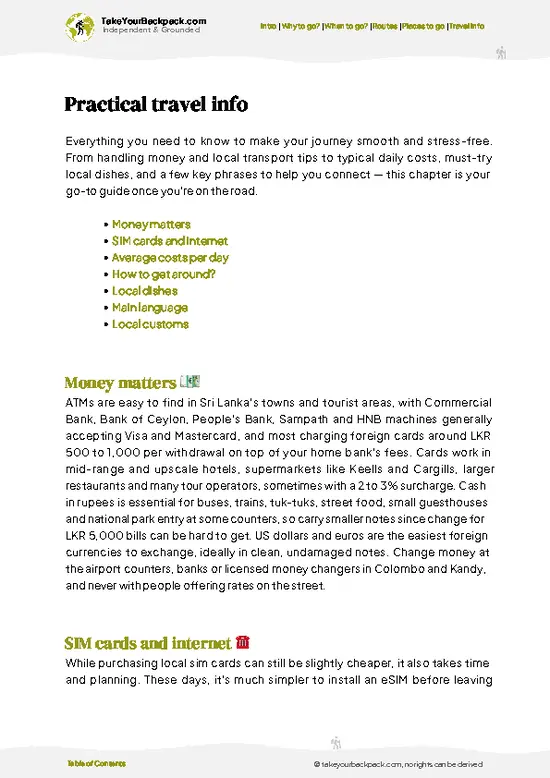
example page 3 from our offline Travel Guide for Sri Lanka
example page 4 from our offline Travel Guide for Sri Lanka
example page 5 from our offline Travel Guide for Sri Lanka
example page 6 from our offline Travel Guide for Sri Lanka
example page 7 from our offline Travel Guide for Sri Lanka
The digital guide (435 pages) contains:
✅ 121 highlights, ranked by travel appeal
✅ Optimized 5, 10 & 15-day travel routes
✅ Cities, national parks, landmarks, beaches
✅ How to get around
✅ Offline-friendly for travel without Wi-Fi
👉 Click to see all 30+ guide features

📅 Plan smarter in minutes, not weeks
✅ Month by month travel advice
✅ Festivals & national holidays
✅ Budget expectations

🗺️ Go to the right places, skip the overrated ones
✅ Honest pros & cons of destinations
✅ Top hikes, parks & viewpoints
✅ Lesser-known places most travelers miss
✅ Clear “worth it vs skip it” guidance

🛏️ Travel smoothly without rookie mistakes
✅ Best areas to stay
✅ Transport systems explained simply
✅ Common scams & safety advice
✅ SIM cards, money & practical tips

🌍 Understand the country, not just visit it
✅ Culture & traditions
✅ 52 Essential phrases & customs
✅ Festivals worth planning around
✅ Traveler-friendly historical context
✅ Insights that make places more meaningful

📱 Built for real travel conditions
✅ Fully downloadable PDF
✅ Works completely offline
✅ Optimized for phone use
✅ Useful in remote areas & buses
✅ Everything in one place
Stop searching, start planning
Get instant access to your full guide. 30‑day money-back guarantee.
+ Add another guide for just

By proceeding you agree to our terms.
Sent to your inbox immediately after payment • 100% Secure Checkout
Best Backpacking Travel Advisor 2025 tourism awardBest Backpacking
Travel Advisor
2025
What others say about Take Your Backpack Guides:
⭐⭐⭐⭐⭐
Fantastic, amazing amount of information!
⭐⭐⭐⭐⭐
My goodness this is amazing, it's what I've been looking for hats off too you!
⭐⭐⭐⭐⭐
I think this is absolutely BRILLIANT
⭐⭐⭐⭐
Very complete and informative. It's still missing places, but I gotta to commend you
⭐⭐⭐⭐⭐
This is truly amazing, thank you, can't wait to explore it with my kids!
⭐⭐⭐⭐⭐
Awesome resource, thank you!
⭐⭐⭐⭐⭐
This is amazing! Can't wait to explore the ones I haven't seen
⭐⭐⭐⭐
I love this! Well done, great idea.
⭐⭐⭐⭐⭐
Thanks for taking the time to make this gem!
⭐⭐⭐⭐⭐
This might be the best website I've ever seen.
⭐⭐⭐⭐⭐
Congratulations, and thank you so much for your work; it's incredibly valuable.
⭐⭐⭐⭐
In all seriousness I think you did a great job pointing out the important spots
⭐⭐⭐⭐⭐
10/10 very good
⭐⭐⭐⭐⭐
As someone who's only just starting to visit regularly this is awesome, thank you.
⭐⭐⭐⭐
Thank you very much! I'm going to visit my dad, it's going to be very useful!
⭐⭐⭐⭐⭐
This is really cool! We'll be travelling for the first time and this definitely come in handy.
⭐⭐⭐⭐⭐
You are now our minister of culture, congratulations 👨‍💼
⭐⭐⭐⭐⭐
Just wanted to tell you that this is a pearl! Going to follow your recommendations.
⭐⭐⭐⭐⭐
This is so cool. I'll definitely be using the resource for my travels soon.
⭐⭐⭐⭐⭐
This is very impressive! Good work.
⭐⭐⭐⭐⭐
This is an amazing and informative site. Very well done!

🛏️ Where to stay?Where to Stay in Sri Lanka

Sri Lanka has plenty of hostels and family-run guesthouses, with dorm beds typically around LKR 2,500 to 4,500 (US$8 to 15) and simple private doubles from about LKR 5,000 to 9,000 (US$17 to 30). In Colombo, Fort puts you next to the main train and bus stations but goes quiet after dark, while Kollupitiya and Bambalapitiya offer more restaurants and bars at slightly higher prices. In the hill country, Ella has the densest cluster of social hostels within walking distance of the main trails, and Kandy concentrates its budget beds on the hillsides around the lake, which are quiet but involve steep walks. On the south coast, Mirissa and Hikkaduwa are the party-leaning beach bases, Unawatuna and … read more 👉
Sri Lanka has plenty of hostels and family-run guesthouses, with dorm beds typically around LKR 2,500 to 4,500 (US$8 to 15) and simple private doubles from about LKR 5,000 to 9,000 (US$17 to 30). In Colombo, Fort puts you next to the main train and bus stations but goes quiet after dark, while Kollupitiya and Bambalapitiya offer more restaurants and bars at slightly higher prices. In the hill country, Ella has the densest cluster of social hostels within walking distance of the main trails, and Kandy concentrates its budget beds on the hillsides around the lake, which are quiet but involve steep walks. On the south coast, Mirissa and Hikkaduwa are the party-leaning beach bases, Unawatuna and Tangalle are calmer, and Arugam Bay on the east coast fills with surfers from roughly April to October, when prices climb.

If you enjoy meeting fellow travelers, consider choosing hostels with high ratings for atmosphere. On the other hand, if you prefer having your own space, a hotel might be a better option.

Sri LankaMore of Sri Lanka

👋 Meet the founderWho’s Behind Take Your Backpack?

Johan, backpacker and founder of TakeYourBackpackHi, I’m Johan (Netherlands 🇳🇱), the creator of TakeYourBackpack. Over the past 3 decades, I’ve backpacked through 90+ countries across six continents, gaining extensive experience with independent travel, long-term trips, and overland routes.

This site is built on a combination of firsthand travel experience and carefully curated insights from other backpackers. Many guides are based on places I’ve personally visited, while others bring together tips, observations, and practical advice shared by trusted travelers I’ve met along the way.

The goal is to provide realistic, experience-driven guidance — not generic itineraries — so you can explore destinations with better context, clearer expectations, and more confidence.