×

Sri Lanka🇱🇰 | best national parksEssential 10 national parks to Explore in Sri Lanka

National parks in Sri Lanka are mostly run by the Department of Wildlife Conservation, and the experience depends on the climate zone. In the dry-zone lowlands, you rattle along red dust tracks in a jeep at dawn, with the smell of wet scrub and the trumpet of elephants in the distance. In the hill country, you walk cold, misty grasslands in a fleece. Most parks need a hired vehicle and tracker, so independent backpackers share jeeps to split costs. Southern parks draw the biggest crowds and convoys, while northern and eastern ones are quieter and take more effort to reach.

By Johan Kruseman 🇳🇱 | Updated October 19, 2026
Explore the best hikes in Sri Lanka

Why go?What Makes Them Special

Sri Lanka packs an unusual range of habitats into an island you can cross in a day: dry thorn scrub, monsoon forest, wetlands, rainforest and cloud-wrapped highland plains. That is why the island has so many parks for its size, and why a wildlife-focused trip here means short hops between very different landscapes rather than long overland hauls. Elephants, leopards, sloth bears and hundreds of bird species live close to roads, villages and ancient reservoirs, so animals are often easy to see from a vehicle.
The trade-off is access. Park rules are tight: most reserves require a registered jeep and tracker, and you cannot self-drive or wander on foot except in a few highland areas. Fees for foreigners are charged in dollars or rupees at a much higher rate than for locals, and extras for the … read more 👉
Sri Lanka packs an unusual range of habitats into an island you can cross in a day: dry thorn scrub, monsoon forest, wetlands, rainforest and cloud-wrapped highland plains. That is why the island has so many parks for its size, and why a wildlife-focused trip here means short hops between very different landscapes rather than long overland hauls. Elephants, leopards, sloth bears and hundreds of bird species live close to roads, villages and ancient reservoirs, so animals are often easy to see from a vehicle.
The trade-off is access. Park rules are tight: most reserves require a registered jeep and tracker, and you cannot self-drive or wander on foot except in a few highland areas. Fees for foreigners are charged in dollars or rupees at a much higher rate than for locals, and extras for the vehicle, guide and service add up fast. Expect dust, heat, bumpy tracks and sometimes a queue of 30 or more jeeps at a popular sighting.
The long civil conflict that ended in 2009 kept parts of the north and east closed for years, so some reserves are still lightly visited and less developed. Know that sightings are never guaranteed, and that the season matters more than the park name.
Behind the Scenes of Selection
The list of best national parks in Sri Lanka is created based on landscapes, wildlife, adventure opportunities, facilities, and overall experience. If you feel a national park is missing in this list, please let us know.

When to go?Seasonal Guide to Visiting

Best months by region: The best window for most dry-zone national parks is May to September in the south and February to September in the east, because roads are dry and animals gather at shrinking waterholes. In the highlands, January to March is the clearest, with sunny mornings and cold nights.
Weather that shapes your day: Sri Lanka has two monsoons. The southwest monsoon (May to September) soaks the west coast and hill country but leaves the southeast and north drier. The northeast monsoon (October to January) brings rain to the east and north, with heavy showers in November and December that turn tracks to mud. The dry lowlands run hot, about 28 to 35°C by midday, and dawn drives are cooler and golden. The highland plains sit near 5 to 15°C, and a cloud bank often rolls in by 10am, so … read more 👉
Best months by region: The best window for most dry-zone national parks is May to September in the south and February to September in the east, because roads are dry and animals gather at shrinking waterholes. In the highlands, January to March is the clearest, with sunny mornings and cold nights.
Weather that shapes your day: Sri Lanka has two monsoons. The southwest monsoon (May to September) soaks the west coast and hill country but leaves the southeast and north drier. The northeast monsoon (October to January) brings rain to the east and north, with heavy showers in November and December that turn tracks to mud. The dry lowlands run hot, about 28 to 35°C by midday, and dawn drives are cooler and golden. The highland plains sit near 5 to 15°C, and a cloud bank often rolls in by 10am, so start early.
Shoulder seasons, closures and prices: March to April and October are the shoulder months, with thunderstorms in the afternoon and fewer jeeps in the park. Some southern and northwestern parks close for roughly a month, usually in September or October, for dry-season maintenance and to give the animals peace. Peak weeks around Christmas, New Year and the August to September elephant gatherings push jeep and room prices up by 20 to 50 percent. Book ahead at those times and check closure dates before you commit.

national park hoppingPlanning Your Route Efficiently

How many days to plan: A trip linking several national parks in Sri Lanka works best over 10 to 14 days, which leaves room for travel time and a buffer for weather or a missed sighting.
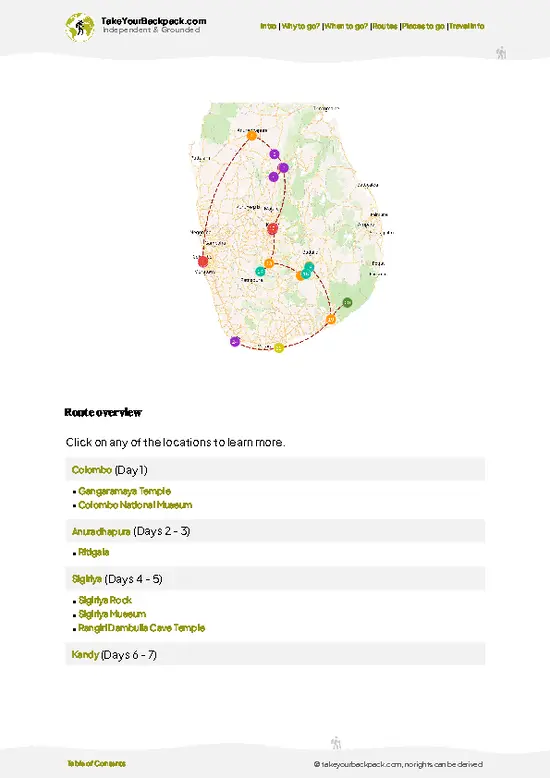
Which regions cluster and which way to go: The south and southeast group neatly around Tissamaharama, Udawalawe and the coast. The cultural triangle in the north-central region groups around Habarana, Sigiriya and Anuradhapura, with parks in easy range. The hill country around Nuwara Eliya and Ella sits between them, with cool air and winding roads. A sensible loop runs from Colombo up to the northwest, across the north-central plains, down into the hills, and finishing in the southeast, or the reverse. Moving with the dry-season window in mind saves you from hauling through mud. The east coast parks work as … read more 👉
How many days to plan: A trip linking several national parks in Sri Lanka works best over 10 to 14 days, which leaves room for travel time and a buffer for weather or a missed sighting.
Which regions cluster and which way to go: The south and southeast group neatly around Tissamaharama, Udawalawe and the coast. The cultural triangle in the north-central region groups around Habarana, Sigiriya and Anuradhapura, with parks in easy range. The hill country around Nuwara Eliya and Ella sits between them, with cool air and winding roads. A sensible loop runs from Colombo up to the northwest, across the north-central plains, down into the hills, and finishing in the southeast, or the reverse. Moving with the dry-season window in mind saves you from hauling through mud. The east coast parks work as a separate add-on from Batticaloa or Arugam Bay.
Time per stop and moving between regions: Give each park half a day to a full day: a safari typically lasts three to four hours, and dawn is the best slot. Allow two nights where possible so you can try two drives. Transfers between regions take 3 to 6 hours by road. Trains from Kandy to Ella (about 6 to 7 hours) are scenic but slow, and they will not take you to park gates, so budget for a tuk-tuk or minivan.
Planning mistakes: Travelers often cram one park each day, arriving after dark in dust and exhaustion. Pick fewer stops. Another is ignoring distances on the map: 100 kilometers can take three hours on winding, truck-clogged roads. Always add buffer time and book jeeps through your guesthouse a day ahead.

The ListTop national parks of Sri Lanka

1 Yala National Park

rocky outcrops, leopard sightings, coastal dunes

Travel through varied terrain from arid plains to rocky hills, with a high chance of spotting leopards and other predators near waterholes.

2 Udawalawe National Park

open grassland, reservoir, elephant herds

Spot elephants grazing in open fields and water buffalo cooling off in the reservoir, with wide vistas making wildlife easy to observe.

sri-lanka-national-park-udawalawe-national-park
© Google |

3 Wilpattu National Park

natural lakes, leopard habitat, scrub jungle

Drive between forest-ringed lakes where leopards and sloth bears roam, and sandy tracks wind through thick, untamed bush.

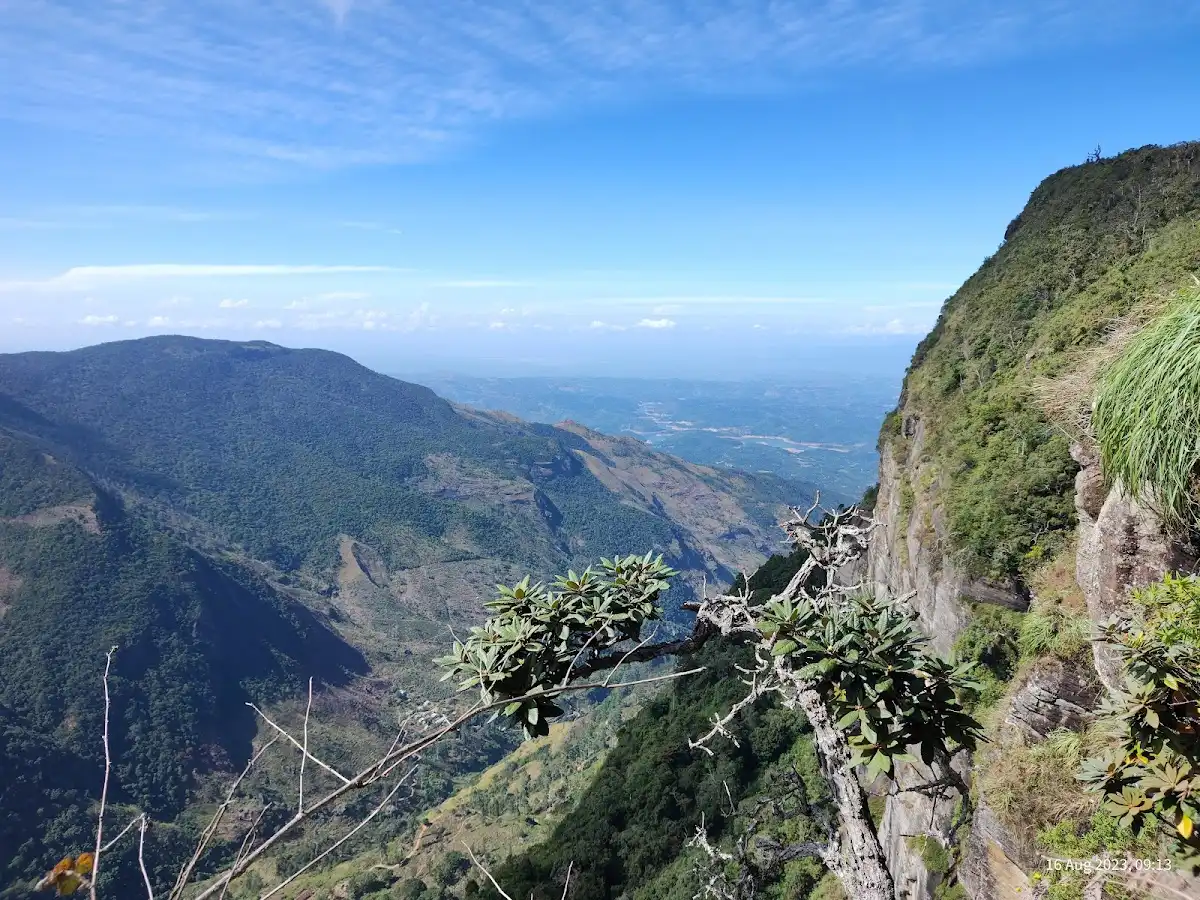
4 Horton Plains National Park

highland plateau, World's End escarpment, cloud forest

Trek across windswept grasslands to dramatic cliffs, with misty forests and rare wildlife rewarding early starts and steady legs.

sri-lanka-national-park-horton-plains-national-park
© Google |

5 Sinharaja Forest Reserve

rainforest canopy, endemic species, dense undergrowth

Walk shaded trails beneath towering trees, where rare birds and butterflies thrive in tangled jungle and the air stays cool and damp.

6 Minneriya National Park

seasonal tank, elephant gathering, open grassland

Time your visit for the dry season to witness large herds of elephants assembling at the reservoir, with open plains offering clear views.

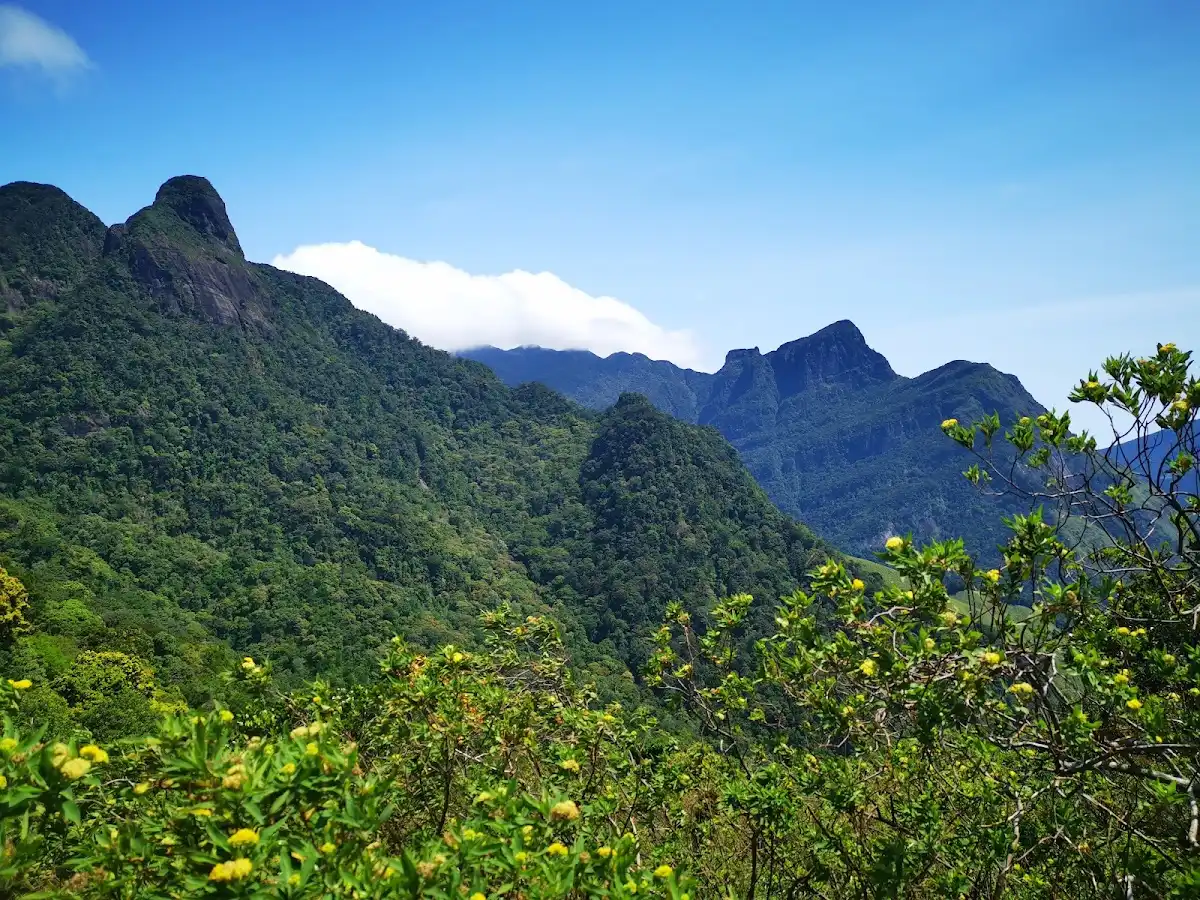
7 Knuckles Mountain Range

misty peaks, remote villages, montane forest

Venture into rugged highlands where trails cross tea estates and cloud forests, revealing isolated hamlets and panoramic ridges.

sri-lanka-national-park-knuckles-mountain-range
© Google |

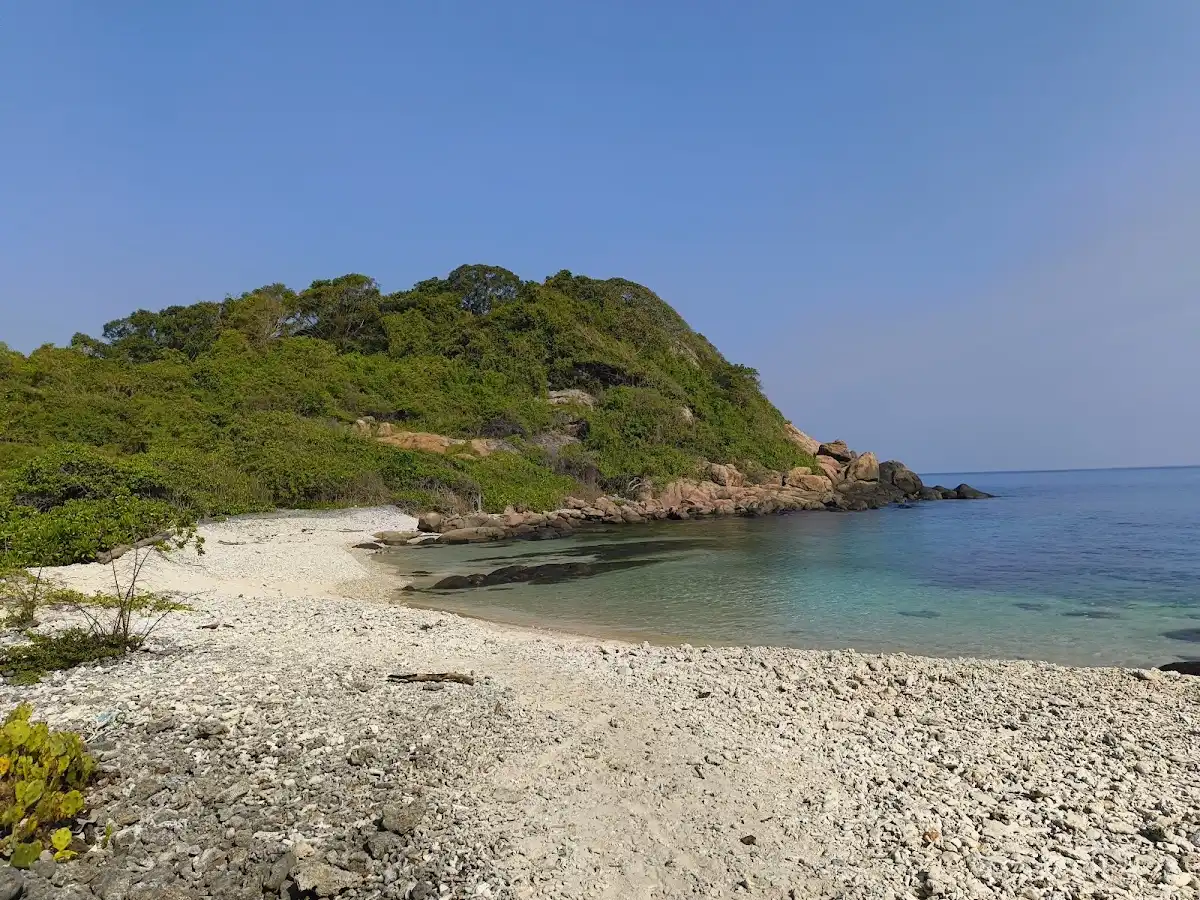
8 Pigeon Island National Park

offshore islets, blacktip reef sharks, coral beaches

Snorkel among shallow reefs where blacktip sharks glide past and white sand beaches ring small islands just off the coast.

sri-lanka-national-park-pigeon-island-national-park
© Google |

9 Bundala National Park

coastal lagoons, migratory birds, salt pans

Watch flocks of flamingos and storks gather in shallow wetlands, with salt flats and scrubby bushland providing a haven for birdwatchers.

10 Gal Oya National Park

island-dotted reservoir, boat safaris, swimming elephants

Glide across Senanayake Samudraya by boat to spot elephants swimming between islands and observe wildlife along remote forested shores.

11 Kumana National Park

coastal lagoons, nesting birds, mangrove swamps

Explore a mosaic of wetlands and dunes where waterbirds nest in spring, and quiet tracks reveal crocodiles and wild buffalo.

12 Wasgamuwa National Park

riverine forest, wild elephants, ancient ruins

Travel through dense woodland and open plains where herds of elephants roam and centuries-old archaeological sites emerge from the undergrowth.

13 Hikkaduwa National Park

coral reefs, tropical fish, snorkeling spots

Swim above vibrant coral gardens teeming with reef fish, with clear waters making marine life easy to spot just offshore.

14 Galway’s Land National Park

montane forest, endemic birds, misty trails

Walk through cloud-draped woods near Nuwara Eliya, where rare birds flit among mossy branches and cool air refreshes every step.

15 Maduru Oya National Park

reservoir views, Vedda heritage, dry zone forest

Experience a landscape shaped by water and tradition, with forest tracks leading to indigenous villages and quiet lakeside lookouts.

16 Lunugamvehera National Park

buffer zone, elephant corridor, dry scrubland

Traverse a vital link between major parks, where elephants migrate through arid bush and waterholes attract animals during the dry season.

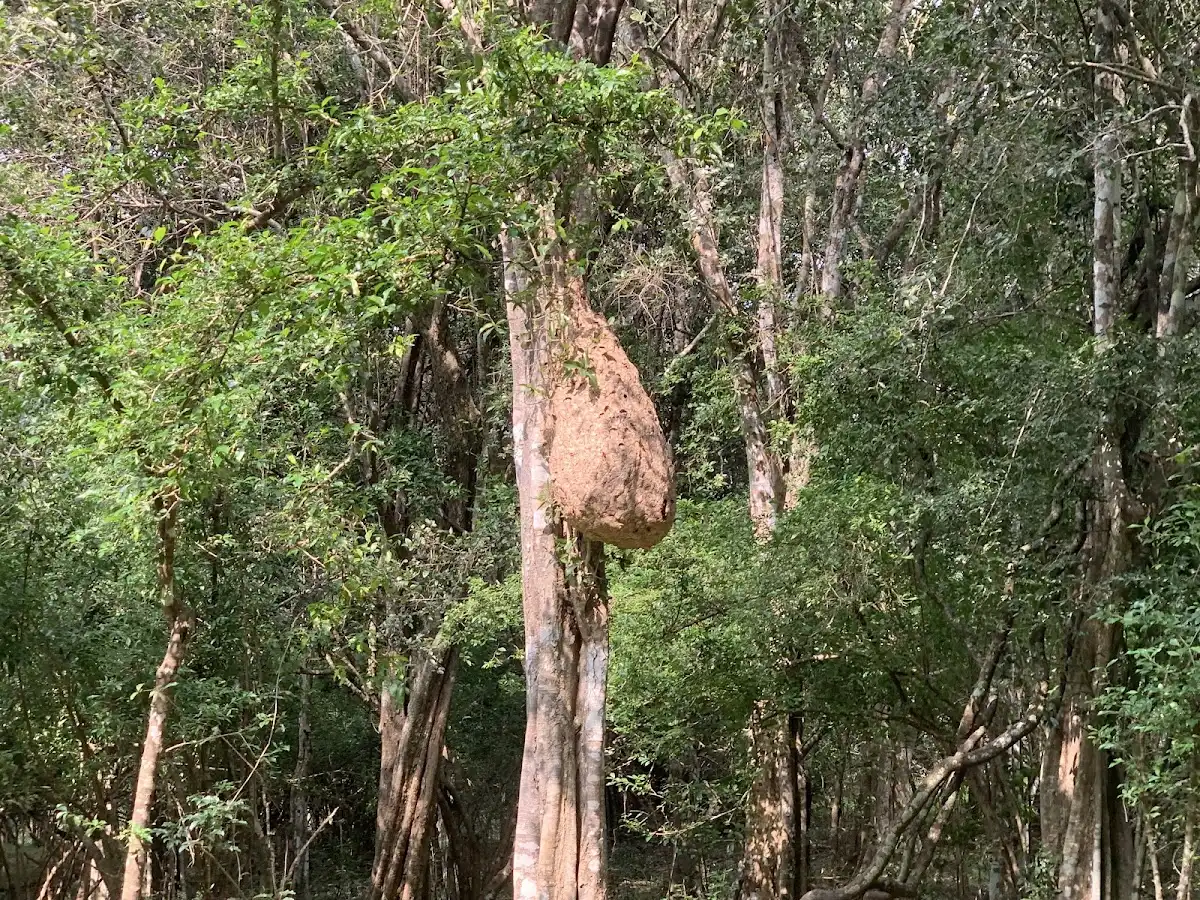
17 Lahugala National Park

grassland tanks, elephant gatherings, forest edge

Visit in the dry months to see elephants congregate at ancient tanks, with open grasslands bordered by dense forest.

sri-lanka-national-park-lahugala-national-park
© Google |

18 Chundikkulam National Park

coastal wetlands, migratory waders, lagoons

Observe seasonal bird migrations in tranquil lagoons, with mudflats and mangroves supporting a rich diversity of waterfowl and shorebirds.

19 Angammedilla National Park

granite outcrops, water catchment, forested hills

Hike through rugged terrain where ancient irrigation channels wind past rocky hills and forested slopes shelter shy wildlife.

Think you know Sri Lanka?

Prove you’re a true local — uncover 9 lesser-known national parks in Sri Lanka that locals tend to keep to themselves.
Loading the map 🌍

Expert viewInsights from Locals and Experts

How many parks to visit: I recommend three to four national parks on a typical two-week trip. Fewer than three and you miss the contrast between habitats. More than four and you are paying for repetitive dawn starts and long drives, and the fourth safari rarely adds as much as the first. Most visitors who book five or six come away tired and sunburned, and they have seen the same elephants.
Prioritizing by travel style: For big mammals, pick one dry-zone lowland park: that is where elephants, leopards and sloth bears live, and where you get the dust-and-engine safari. For birdlife and quiet, choose a wetland or a less-visited eastern or northern reserve, where fewer vehicles mean you can hear frogs and kingfishers. For walking, choose a highland park, because it is among the few places where … read more 👉
How many parks to visit: I recommend three to four national parks on a typical two-week trip. Fewer than three and you miss the contrast between habitats. More than four and you are paying for repetitive dawn starts and long drives, and the fourth safari rarely adds as much as the first. Most visitors who book five or six come away tired and sunburned, and they have seen the same elephants.
Prioritizing by travel style: For big mammals, pick one dry-zone lowland park: that is where elephants, leopards and sloth bears live, and where you get the dust-and-engine safari. For birdlife and quiet, choose a wetland or a less-visited eastern or northern reserve, where fewer vehicles mean you can hear frogs and kingfishers. For walking, choose a highland park, because it is among the few places where you can hike on your own two feet with the cool air smelling of wet grass and rhododendron. A first-timer should choose one of each rather than three similar ones.
What it costs: Budget about US$35 to 60 a day for food, a simple room and local transport, before any park fees. A single visit usually costs between US$40 and 90 per person when you share a jeep between four, covering the foreign entry fee (roughly US$15 to 35, depending on the park), the vehicle (about LKR 10,000 to 25,000, or US$35 to 85, per jeep for a half-day), a tracker tip, and service and tax charges. Going solo doubles or triples the per-person share, so ask your guesthouse or hostel to pair you with others. Highland parks charge a similar entry but need no jeep, which makes them the cheapest option. Bring cash in rupees for tips and snacks, since card machines at gates are not reliable.
Safety and etiquette: The real danger is wild elephants and the heat. Stay inside the vehicle unless the tracker says otherwise, and never stand in the roof hatch when a bull is close. Bring a hat, sunscreen, water and a light layer for the 5am chill. Choose operators who keep their distance from animals and do not crowd a leopard or chase an elephant: harassed animals are one of the park system’s biggest problems, and your driver will go along with your preference if you say so. Dress modestly if the route passes a temple or village, and keep litter in your bag, because plastic kills animals here. Mosquitoes and leeches thrive in damp forest, so wear long trousers and closed shoes, and use repellent. A morning slot is almost always better than the afternoon, with softer light, cooler air and fewer jeeps on the track.

✈️ The backpacker research shortcutSri Lanka Travel Guide

An offline-friendly backpacking guide with optimized travel routes, ranked highlights, transport advice, and the best areas to stay.
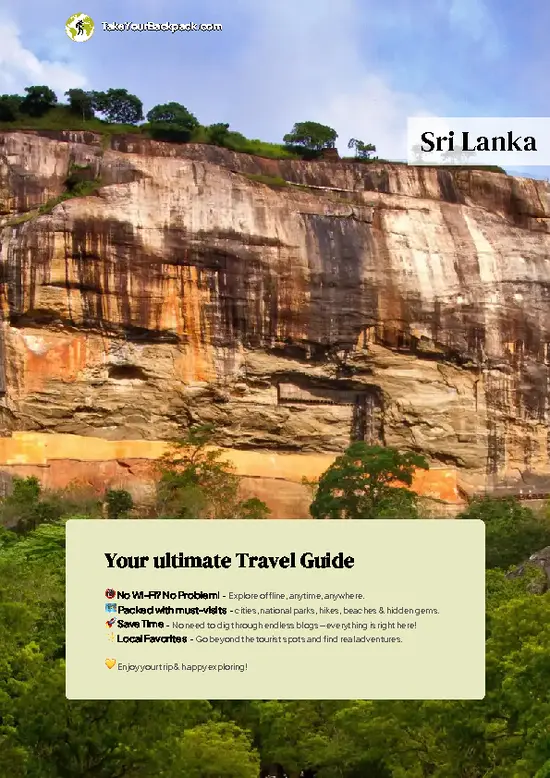
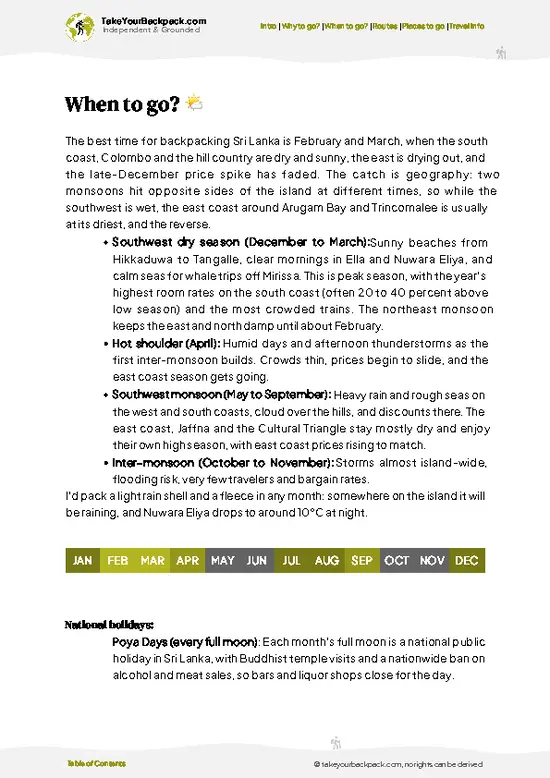
example page 0 from our offline Travel Guide for Sri Lanka
example page 1 from our offline Travel Guide for Sri Lanka
example page 2 from our offline Travel Guide for Sri Lanka
example page 3 from our offline Travel Guide for Sri Lanka
example page 4 from our offline Travel Guide for Sri Lanka
example page 5 from our offline Travel Guide for Sri Lanka
example page 6 from our offline Travel Guide for Sri Lanka
example page 7 from our offline Travel Guide for Sri Lanka
The digital guide (435 pages) contains:
✅ 121 highlights, ranked by travel appeal
✅ Optimized 5, 10 & 15-day travel routes
✅ Cities, national parks, landmarks, beaches
✅ How to get around
✅ Offline-friendly for travel without Wi-Fi
👉 Click to see all 30+ guide features

📅 Plan smarter in minutes, not weeks
✅ Month by month travel advice
✅ Festivals & national holidays
✅ Budget expectations

🗺️ Go to the right places, skip the overrated ones
✅ Honest pros & cons of destinations
✅ Top hikes, parks & viewpoints
✅ Lesser-known places most travelers miss
✅ Clear “worth it vs skip it” guidance

🛏️ Travel smoothly without rookie mistakes
✅ Best areas to stay
✅ Transport systems explained simply
✅ Common scams & safety advice
✅ SIM cards, money & practical tips

🌍 Understand the country, not just visit it
✅ Culture & traditions
✅ 52 Essential phrases & customs
✅ Festivals worth planning around
✅ Traveler-friendly historical context
✅ Insights that make places more meaningful

📱 Built for real travel conditions
✅ Fully downloadable PDF
✅ Works completely offline
✅ Optimized for phone use
✅ Useful in remote areas & buses
✅ Everything in one place
Stop searching, start planning
Get instant access to your full guide. 30‑day money-back guarantee.
+ Add another guide for just

By proceeding you agree to our terms.
Sent to your inbox immediately after payment • 100% Secure Checkout
Best Backpacking Travel Advisor 2025 tourism awardBest Backpacking
Travel Advisor
2025
What others say about Take Your Backpack Guides:
⭐⭐⭐⭐⭐
Fantastic, amazing amount of information!
⭐⭐⭐⭐⭐
My goodness this is amazing, it's what I've been looking for hats off too you!
⭐⭐⭐⭐⭐
I think this is absolutely BRILLIANT
⭐⭐⭐⭐
Very complete and informative. It's still missing places, but I gotta to commend you
⭐⭐⭐⭐⭐
This is truly amazing, thank you, can't wait to explore it with my kids!
⭐⭐⭐⭐⭐
Awesome resource, thank you!
⭐⭐⭐⭐⭐
This is amazing! Can't wait to explore the ones I haven't seen
⭐⭐⭐⭐
I love this! Well done, great idea.
⭐⭐⭐⭐⭐
Thanks for taking the time to make this gem!
⭐⭐⭐⭐⭐
This might be the best website I've ever seen.
⭐⭐⭐⭐⭐
Congratulations, and thank you so much for your work; it's incredibly valuable.
⭐⭐⭐⭐
In all seriousness I think you did a great job pointing out the important spots
⭐⭐⭐⭐⭐
10/10 very good
⭐⭐⭐⭐⭐
As someone who's only just starting to visit regularly this is awesome, thank you.
⭐⭐⭐⭐
Thank you very much! I'm going to visit my dad, it's going to be very useful!
⭐⭐⭐⭐⭐
This is really cool! We'll be travelling for the first time and this definitely come in handy.
⭐⭐⭐⭐⭐
You are now our minister of culture, congratulations 👨‍💼
⭐⭐⭐⭐⭐
Just wanted to tell you that this is a pearl! Going to follow your recommendations.
⭐⭐⭐⭐⭐
This is so cool. I'll definitely be using the resource for my travels soon.
⭐⭐⭐⭐⭐
This is very impressive! Good work.
⭐⭐⭐⭐⭐
This is an amazing and informative site. Very well done!

🛏️ Where to stay?Where to Stay: Sri Lanka Edition

Sri Lanka has plenty of hostels and family-run guesthouses, with dorm beds typically around LKR 2,500 to 4,500 (US$8 to 15) and simple private doubles from about LKR 5,000 to 9,000 (US$17 to 30). In Colombo, Fort puts you next to the main train and bus stations but goes quiet after dark, while Kollupitiya and Bambalapitiya offer more restaurants and bars at slightly higher prices. In the hill country, Ella has the densest cluster of social hostels within walking distance of the main trails, and Kandy concentrates its budget beds on the hillsides around the lake, which are quiet but involve steep walks. On the south coast, Mirissa and Hikkaduwa are the party-leaning beach bases, Unawatuna and … read more 👉
Sri Lanka has plenty of hostels and family-run guesthouses, with dorm beds typically around LKR 2,500 to 4,500 (US$8 to 15) and simple private doubles from about LKR 5,000 to 9,000 (US$17 to 30). In Colombo, Fort puts you next to the main train and bus stations but goes quiet after dark, while Kollupitiya and Bambalapitiya offer more restaurants and bars at slightly higher prices. In the hill country, Ella has the densest cluster of social hostels within walking distance of the main trails, and Kandy concentrates its budget beds on the hillsides around the lake, which are quiet but involve steep walks. On the south coast, Mirissa and Hikkaduwa are the party-leaning beach bases, Unawatuna and Tangalle are calmer, and Arugam Bay on the east coast fills with surfers from roughly April to October, when prices climb.

If you enjoy meeting fellow travelers, consider choosing hostels with high ratings for atmosphere. On the other hand, if you prefer having your own space, a hotel might be a better option.

Sri LankaExplore Beyond This Category

👋 Meet the founderWho’s Behind Take Your Backpack?

Johan, backpacker and founder of TakeYourBackpackHi, I’m Johan (Netherlands 🇳🇱), the creator of TakeYourBackpack. Over the past 3 decades, I’ve backpacked through 90+ countries across six continents, gaining extensive experience with independent travel, long-term trips, and overland routes.

This site is built on a combination of firsthand travel experience and carefully curated insights from other backpackers. Many guides are based on places I’ve personally visited, while others bring together tips, observations, and practical advice shared by trusted travelers I’ve met along the way.

The goal is to provide realistic, experience-driven guidance — not generic itineraries — so you can explore destinations with better context, clearer expectations, and more confidence.