×

Sudan🇸🇩 | best national parksYour Guide to the 5 Best national parks in Sudan

Sudan’s national parks are a treasure trove for backpackers seeking wildlife, landscapes, and adventure. Each park offers a unique experience shaped by its geography and climate. For instance, Dinder National Park is a lush haven during the rainy season, attracting diverse wildlife, while Sudd presents a vast wetland ecosystem that’s best explored in the dry months.

Choosing the right park impacts your budget, safety, and cultural immersion. Some parks are more accessible, while others require careful planning and local guides. Understanding these nuances ensures you maximize your exploration pace and energy, making your independent travel in Sudan both rewarding and memorable.

By Johan Kruseman 🇳🇱 | Updated September 4, 2026
Explore the best hikes in Sudan

Why go?Why Travelers Love These Spots

National parks in Sudan stand out due to their diverse landscapes and rich biodiversity. Unlike many other countries, Sudan’s parks offer a unique blend of desert and savanna ecosystems, creating habitats for species that thrive in these contrasting environments. This diversity is not just a backdrop; it shapes the entire experience, from the wildlife you encounter to the types of adventures available.

However, accessibility can be a double-edged sword. Many parks are remote, requiring significant travel time. This can be a trade-off: the longer journey often leads to a more immersive experience, away from the crowds. Yet, the infrastructure is still developing, which means travelers may face challenges in transportation and accommodation. Understanding these constraints is crucial for planning. … read more 👉
National parks in Sudan stand out due to their diverse landscapes and rich biodiversity. Unlike many other countries, Sudan’s parks offer a unique blend of desert and savanna ecosystems, creating habitats for species that thrive in these contrasting environments. This diversity is not just a backdrop; it shapes the entire experience, from the wildlife you encounter to the types of adventures available.

However, accessibility can be a double-edged sword. Many parks are remote, requiring significant travel time. This can be a trade-off: the longer journey often leads to a more immersive experience, away from the crowds. Yet, the infrastructure is still developing, which means travelers may face challenges in transportation and accommodation. Understanding these constraints is crucial for planning.

Sudan’s climatic conditions also play a role. The extreme heat can limit exploration during the day, pushing adventurers to early mornings or late afternoons. This can enhance the experience, as wildlife is more active during these cooler hours, but it requires careful planning.

Culturally, Sudan is rich in history, with its parks often reflecting ancient civilizations. This adds depth to the natural beauty, making the parks not just places to explore but also to understand the interconnectedness of nature and history. Balancing these factors is key to making the most of Sudan’s national parks.
Evaluating the Top Choices
The list of best national parks in Sudan is created based on landscapes, wildlife, adventure opportunities, facilities, and overall experience. If you feel a national park is missing in this list, please let us know.

When to go?Timing Your Visit for the Best Experience

Seasonality in Sudan’s National Parks

Sudan’s national parks are best explored during the dry season, typically from November to April. This period offers the most favorable conditions for wildlife visibility. Animals congregate around water sources, making sightings more frequent. Temperatures are generally milder, especially in the mornings and evenings, which is ideal for hiking and exploration.

Rainfall and Trail Conditions

The wet season, from May to October, brings heavy rainfall, transforming trails into muddy challenges. Many parks may become inaccessible, and wildlife disperses, making sightings less reliable. If you venture during this time, be prepared for potential cancellations and delays.

Optimal Months

The peak months for visiting are December through February. Expect … read more 👉
Seasonality in Sudan’s National Parks

Sudan’s national parks are best explored during the dry season, typically from November to April. This period offers the most favorable conditions for wildlife visibility. Animals congregate around water sources, making sightings more frequent. Temperatures are generally milder, especially in the mornings and evenings, which is ideal for hiking and exploration.

Rainfall and Trail Conditions

The wet season, from May to October, brings heavy rainfall, transforming trails into muddy challenges. Many parks may become inaccessible, and wildlife disperses, making sightings less reliable. If you venture during this time, be prepared for potential cancellations and delays.

Optimal Months

The peak months for visiting are December through February. Expect cooler temperatures and vibrant landscapes. However, this is also when parks can see more visitors, leading to crowded trails. If solitude is a priority, consider the shoulder months of November and March. These months offer a balance of decent weather and fewer crowds, although wildlife visibility may not be as high.

Trade-offs to Consider

Travelers should weigh the benefits of peak scenery against the potential for crowded conditions. Costs may also rise during peak season, impacting budgets. Understanding these seasonal patterns is crucial for planning an effective and enjoyable trip.

national park hoppingPlanning Your Route Efficiently

Combining national parks in Sudan requires strategic planning and a clear understanding of the landscape. Start by clustering parks regionally. The northern parks, like Jebel Barkal and the nearby archaeological sites, can be paired with the southern parks like Dinder and Radom for a well-rounded experience. This minimizes travel time and maximizes exploration.

Typical travel distances can be deceptive. Expect to spend several hours on the road between parks, especially in remote areas. Allocate at least two to three days per park to truly appreciate the unique ecosystems and cultural heritage. Rushing through can lead to missed opportunities and fatigue.

Common mistakes include underestimating travel times and over-scheduling. Flexibility is key. If a park captivates, allow extra time read more 👉
Combining national parks in Sudan requires strategic planning and a clear understanding of the landscape. Start by clustering parks regionally. The northern parks, like Jebel Barkal and the nearby archaeological sites, can be paired with the southern parks like Dinder and Radom for a well-rounded experience. This minimizes travel time and maximizes exploration.

Typical travel distances can be deceptive. Expect to spend several hours on the road between parks, especially in remote areas. Allocate at least two to three days per park to truly appreciate the unique ecosystems and cultural heritage. Rushing through can lead to missed opportunities and fatigue.

Common mistakes include underestimating travel times and over-scheduling. Flexibility is key. If a park captivates, allow extra time to soak it in. Conversely, if a park doesn’t resonate, don’t hesitate to move on. This balance between speed and depth is crucial.

Consider budget versus comfort. Some parks have limited facilities, so plan accordingly. Camping can save money but may require more effort. Weigh the effort against the reward; sometimes, the most remote spots yield the richest experiences. Prioritize what matters most to you, whether it’s wildlife, landscapes, or cultural encounters.

The ListThe Best national parks of Sudan

1 Dinder National Park

flooded grasslands, riverine forests, large mammals, bird migration

Travel through a mosaic of wetlands and woodlands, observing antelope, monkeys, and flocks of birds along the Dinder River.

2 Radom National Park

dense woodland, seasonal rivers, rare antelope, remote borderland

Trace shifting animal tracks through thick forest, where elusive mammals and birds move between Sudan and the Central African Republic.

3 Sanganeb National Park

coral atoll, marine sanctuary, reef fish, lighthouse island

Snorkel vibrant reefs around a solitary lighthouse, encountering colorful marine life in Sudan’s only offshore national park.

4 Jebel Marra National Park

crater lakes, waterfalls, highland plateau, volcanic peaks

Hike to cool highlands and hidden lakes, where waterfalls tumble from volcanic cliffs and the air is fresh year-round.

5 Wadi Howar National Park

ancient riverbed, desert grasslands, migratory birds, fossil sites

Follow the dry course of a vanished river, discovering wildlife corridors and archaeological traces in a stark, open landscape.

Loading the map 🌍

Expert viewTips and Advice from Travelers

Terrain Sudan’s national parks are a mixed bag of dramatic landscapes. From the rugged mountains of the Jebel Marra region to the vast, arid expanses of the Nubian Desert, each park offers a unique experience. The terrain can be challenging, with rocky paths and sandy stretches that demand good footwear and stamina. Expect to hike, scramble, and sometimes navigate tricky conditions. If you’re not prepared for the physical demands, you might find yourself sidelined, missing out on the breathtaking views and wildlife encounters that make the effort worthwhile.

Park Infrastructure The infrastructure in Sudan’s national parks is a mixed blessing. Some parks have basic facilities, while others are more remote, lacking even the essentials. Expect limited signage and few amenities. This means you … read more 👉
Terrain Sudan’s national parks are a mixed bag of dramatic landscapes. From the rugged mountains of the Jebel Marra region to the vast, arid expanses of the Nubian Desert, each park offers a unique experience. The terrain can be challenging, with rocky paths and sandy stretches that demand good footwear and stamina. Expect to hike, scramble, and sometimes navigate tricky conditions. If you’re not prepared for the physical demands, you might find yourself sidelined, missing out on the breathtaking views and wildlife encounters that make the effort worthwhile.

Park Infrastructure The infrastructure in Sudan’s national parks is a mixed blessing. Some parks have basic facilities, while others are more remote, lacking even the essentials. Expect limited signage and few amenities. This means you need to come equipped with your own supplies, including food and water. If you’re not comfortable with self-sufficiency, you might want to reconsider your itinerary. The trade-off here is between comfort and adventure; the more remote parks offer raw beauty but require a higher level of preparation and resilience.

Wildlife Activity Wildlife viewing can be hit or miss. Some parks are teeming with life, while others may leave you searching for signs of animals. The best time for wildlife activity is often during the cooler months, but this can also mean more visitors. If you’re keen on spotting specific species, research the best times to visit each park. Keep in mind that wildlife is unpredictable; you might spend hours waiting for a glimpse of a rare animal. The trade-off is between time spent in a park and the likelihood of seeing wildlife. If you’re short on time, prioritize parks known for their biodiversity.

Time and Budget Plan to visit at least three to four national parks to get a well-rounded experience of Sudan’s natural beauty. However, don’t stretch yourself too thin. Each park deserves a few days to explore, and rushing through them will only lead to fatigue and missed opportunities. Budget-wise, be prepared for variable costs. Some parks may have entrance fees, while others might require permits for certain activities. Factor in transportation costs, which can be significant due to limited public transport options. The trade-off here is between seeing more parks and fully immersing yourself in fewer, richer experiences.

Planning and Prioritizing Prioritize parks based on your interests—whether it’s hiking, wildlife, or cultural experiences. Research local conditions, as some parks may be more accessible during certain seasons. Be flexible; weather can change quickly, and road conditions can be unpredictable. If you’re traveling solo, consider joining a guided tour for safety and local insights. This can also help you navigate cultural nuances, which are crucial in Sudan. The trade-off is between independence and the depth of experience; a guide can enhance your understanding of the local culture but may limit your freedom to explore at your own pace.

Safety and Cultural Considerations Always stay aware of your surroundings. Some areas may have security concerns, so check local advisories before heading out. Respect local customs and dress modestly, especially in rural areas. Engaging with local communities can enrich your experience, but be mindful of cultural sensitivities. The trade-off here is between immersion and comfort; while connecting with locals can lead to rewarding experiences, it requires a level of respect and understanding that not everyone is prepared for.

Sudan’s national parks offer a wealth of experiences, but they demand respect and preparation. By understanding the terrain, infrastructure, wildlife, and cultural context, you can navigate the challenges and truly appreciate the beauty that awaits.

✈️ The backpacker research shortcutSudan Travel Guide

An offline-friendly backpacking guide with optimized travel routes, ranked highlights, transport advice, and the best areas to stay.
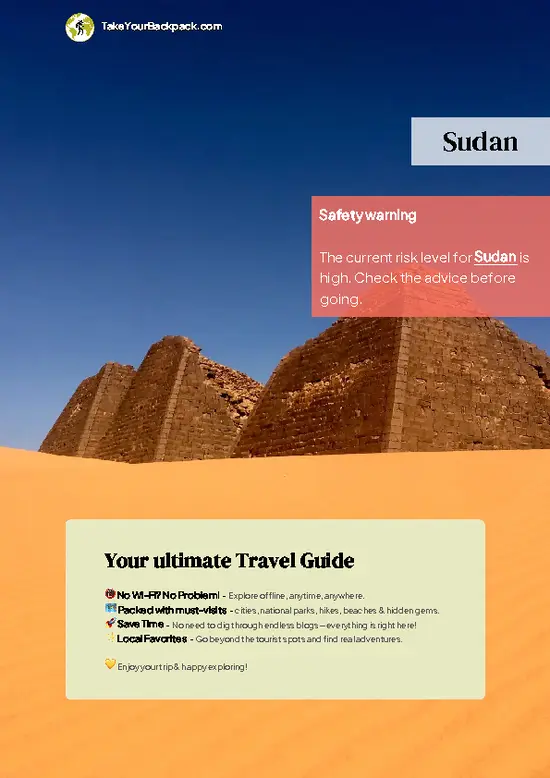
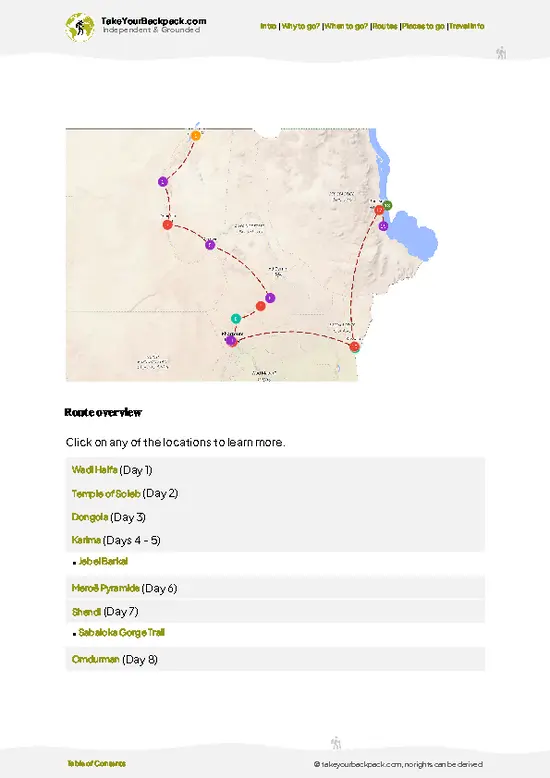
example page 0 from our offline Travel Guide for Sudan
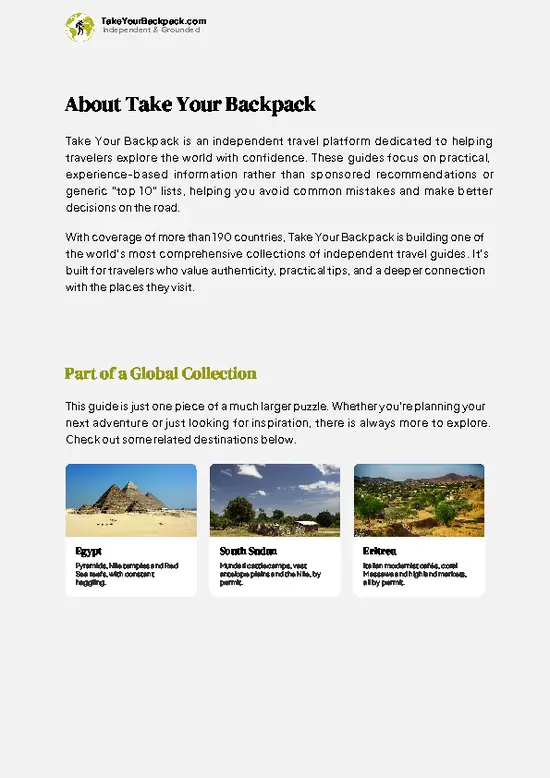
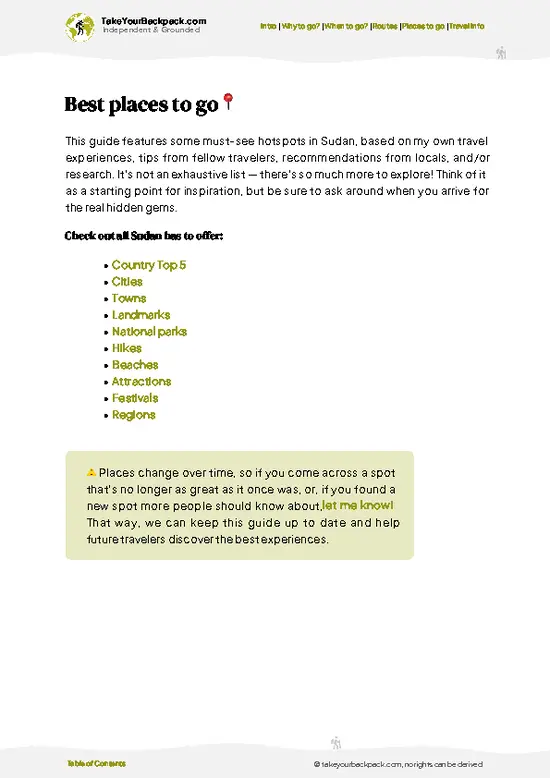
example page 1 from our offline Travel Guide for Sudan
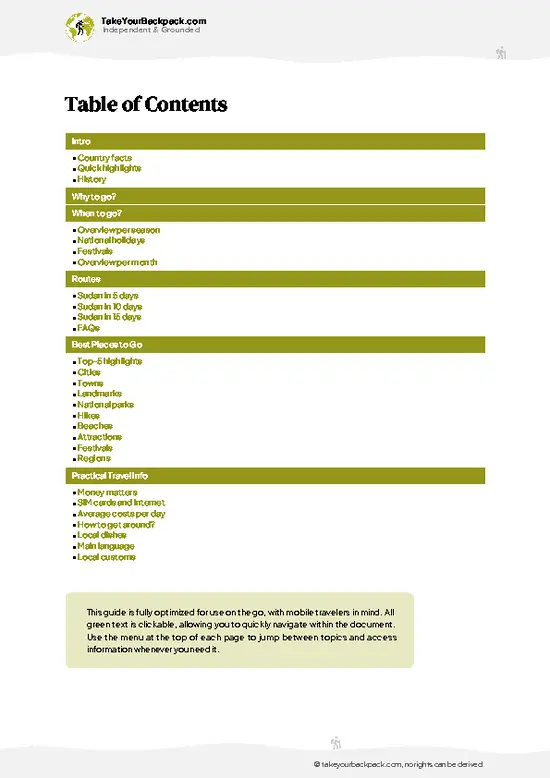
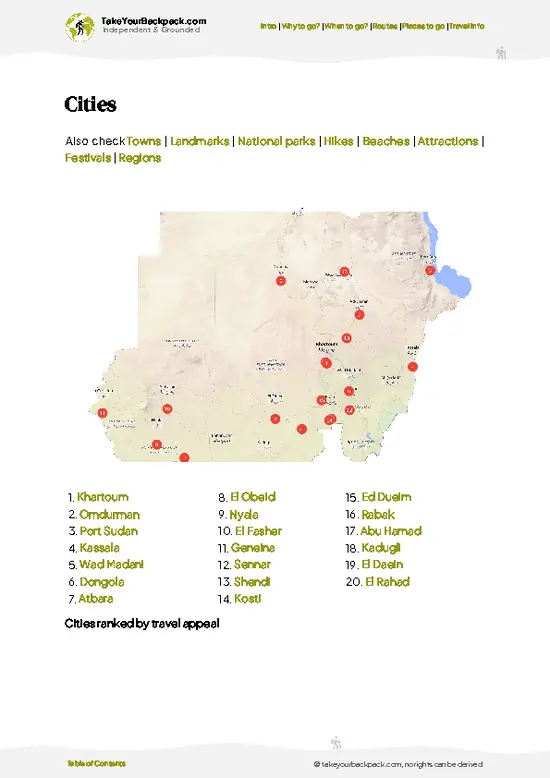
example page 2 from our offline Travel Guide for Sudan
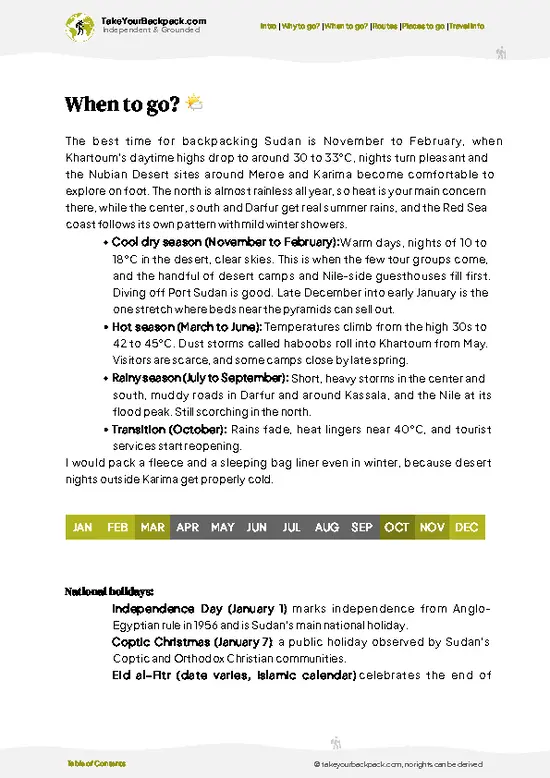
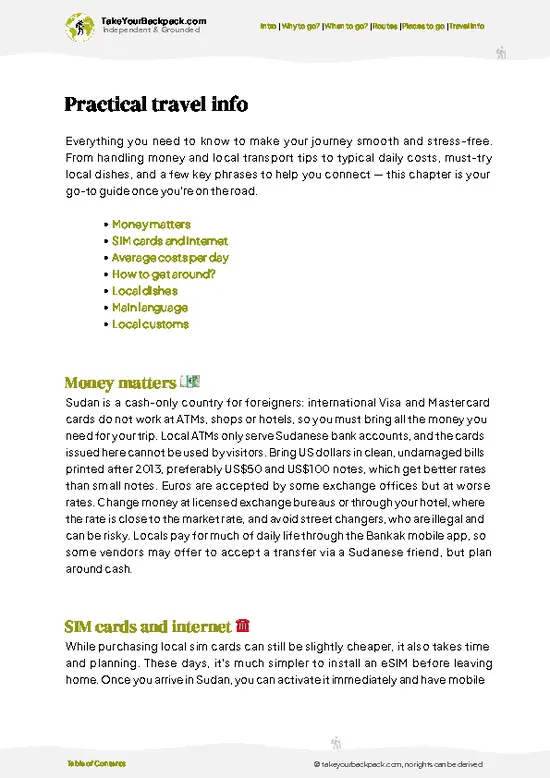
example page 3 from our offline Travel Guide for Sudan
example page 4 from our offline Travel Guide for Sudan
example page 5 from our offline Travel Guide for Sudan
example page 6 from our offline Travel Guide for Sudan
example page 7 from our offline Travel Guide for Sudan
The digital guide (291 pages) contains:
72 highlights, ranked by travel appeal
Optimized 5, 10 & 15-day travel routes
Cities, national parks, landmarks, beaches
How to get around
Offline-friendly for travel without Wi-Fi
👉 Click to see all 30+ guide features

📅 Plan smarter in minutes, not weeks
Month by month travel advice
Festivals & national holidays
Budget expectations

🗺️ Go to the right places, skip the overrated ones
Honest pros & cons of destinations
Top hikes, parks & viewpoints
Lesser-known places most travelers miss
Clear “worth it vs skip it” guidance

🛏️ Travel smoothly without rookie mistakes
Best areas to stay
Transport systems explained simply
Common scams & safety advice
SIM cards, money & practical tips

🌍 Understand the country, not just visit it
Culture & traditions
52 Essential phrases & customs
Festivals worth planning around
Traveler-friendly historical context
Insights that make places more meaningful

📱 Built for real travel conditions
Fully downloadable PDF
Works completely offline
Optimized for phone use
Useful in remote areas & buses
Everything in one place
Save weeks of stressful planning
Get instant access to your full guide. 30‑day money-back guarantee.
+ Add another guide for just US$7.80

By proceeding you agree to our terms.
Sent to your inbox immediately after payment • 100% Secure Checkout
Best Backpacking Travel Advisor 2025 tourism awardBest Backpacking
Travel Advisor
2025
What others say about Take Your Backpack Guides:
⭐⭐⭐⭐⭐
Fantastic, amazing amount of information!
⭐⭐⭐⭐⭐
My goodness this is amazing, it's what I've been looking for hats off too you!
⭐⭐⭐⭐⭐
I think this is absolutely BRILLIANT
⭐⭐⭐⭐
Very complete and informative. It's still missing places, but I gotta to commend you
⭐⭐⭐⭐⭐
This is truly amazing, thank you, can't wait to explore it with my kids!
⭐⭐⭐⭐⭐
Awesome resource, thank you!
⭐⭐⭐⭐⭐
This is amazing! Can't wait to explore the ones I haven't seen
⭐⭐⭐⭐
I love this! Well done, great idea.
⭐⭐⭐⭐⭐
Thanks for taking the time to make this gem!
⭐⭐⭐⭐⭐
This might be the best website I've ever seen.
⭐⭐⭐⭐⭐
Congratulations, and thank you so much for your work; it's incredibly valuable.
⭐⭐⭐⭐
In all seriousness I think you did a great job pointing out the important spots
⭐⭐⭐⭐⭐
10/10 very good
⭐⭐⭐⭐⭐
As someone who's only just starting to visit regularly this is awesome, thank you.
⭐⭐⭐⭐
Thank you very much! I'm going to visit my dad, it's going to be very useful!
⭐⭐⭐⭐⭐
This is really cool! We'll be travelling for the first time and this definitely come in handy.
⭐⭐⭐⭐⭐
You are now our minister of culture, congratulations 👨‍💼
⭐⭐⭐⭐⭐
Just wanted to tell you that this is a pearl! Going to follow your recommendations.
⭐⭐⭐⭐⭐
This is so cool. I'll definitely be using the resource for my travels soon.
⭐⭐⭐⭐⭐
This is very impressive! Good work.
⭐⭐⭐⭐⭐
This is an amazing and informative site. Very well done!

🛏️ Where to stay?Where to Stay: Sudan Edition

There are budget hotels and guesthouses in Sudan, mainly in Khartoum, but true backpacker hostels with dorms are rare; plan for small guesthouses or budget hotels rather than large hostel chains.

Khartoum City Centre/Nile Corniche: closest to museums, markets and restaurants and reasonably safe with some evening activity; Al‑Amarat: quieter and more residential with better security but slightly higher prices; Omdurman: cheapest local guesthouses and excellent daytime markets but more traditional, less evening infrastructure and quieter at night; Khartoum North (Bahri): most basic and inexpensive options, more industrial and farther from tourist highlights.

Book ahead during busy periods, … read more 👉
There are budget hotels and guesthouses in Sudan, mainly in Khartoum, but true backpacker hostels with dorms are rare; plan for small guesthouses or budget hotels rather than large hostel chains.

Khartoum City Centre/Nile Corniche: closest to museums, markets and restaurants and reasonably safe with some evening activity; Al‑Amarat: quieter and more residential with better security but slightly higher prices; Omdurman: cheapest local guesthouses and excellent daytime markets but more traditional, less evening infrastructure and quieter at night; Khartoum North (Bahri): most basic and inexpensive options, more industrial and farther from tourist highlights.

Book ahead during busy periods, carry cash, expect modest facilities and variable internet, and prioritize central Khartoum or Amarat for convenience and safety while using Omdurman for daytime visits.

If you enjoy meeting fellow travelers, consider choosing hostels with high ratings for atmosphere. On the other hand, if you prefer having your own space, a hotel might be a better option.

SudanExplore Beyond This Category

👋 Meet the founderWho’s Behind Take Your Backpack?

Johan, backpacker and founder of TakeYourBackpackHi, I’m Johan (Netherlands 🇳🇱), the creator of TakeYourBackpack. Over the past decade, I’ve backpacked through 80+ countries across six continents, gaining extensive experience with independent travel, long-term trips, and overland routes.

This site is built on a combination of firsthand travel experience and carefully curated insights from other backpackers. Many guides are based on places I’ve personally visited, while others bring together tips, observations, and practical advice shared by trusted travelers I’ve met along the way.

The goal is to provide realistic, experience-driven guidance — not generic itineraries — so you can explore destinations with better context, clearer expectations, and more confidence.

Get full Sudan guide •
Instant download • 72 highlights • Full Offline guide