×

Sudan🇸🇩 | landmarksArchaeological Sites of the Island of Meroesandstone ruins, royal necropolis, desert landscape, ancient columns | things to do and best time to go

Explore TalodiExplore Great Mosque of Omdurman

Backpacking in Archaeological Sites of the Island of Meroe
UNESCO World Heritage site
🏆 Top pickunique site ranked #2
By Johan Kruseman 🇳🇱 | Updated May 7, 2026

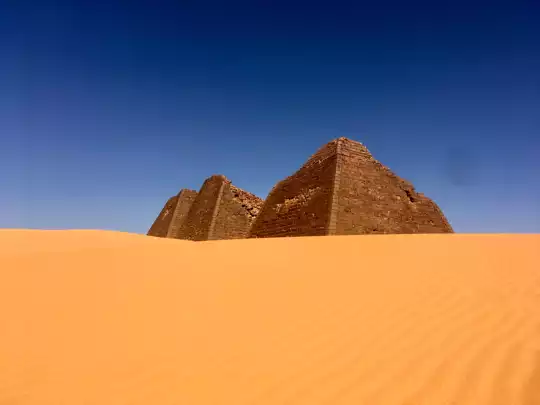
Your boots crunch over black pebbles as you step between pyramids that look nothing like Egypt’s glossy postcards—smaller, sharper, and battered by centuries of wind. The air smells like sun-baked stone and distant acacia. There’s no crowd, just the low whistle of desert wind and the occasional camel herder eyeing you with mild curiosity. This is the Island of Meroe, deep in Sudan’s northern desert, about 200 kilometers northeast of Khartoum.

Forget the Instagram fantasy of perfect solitude at sunrise—yes, you’ll get the pyramids to yourself, but that’s because almost nobody comes here. The journey is rough, the heat is real, and there’s no tourist infrastructure to coddle you. But that’s the magic: Meroe feels raw, ancient, and unfiltered. The cost is low if you’re willing to rough it, and the photo potential is off the charts—think pyramids silhouetted against a Martian-red sky, not a selfie stick in sight. Meroe isn’t easy, but it’s the kind of place that makes you feel like you’ve stumbled into a secret chapter of human history.

Discover everything you want to know in the 📖 Sudan Travel Guide.
Safety warning

The current risk level for Sudan is high. Check the advice before going.


Get your Sudan guide
72 ranked highlights, routes & tips, works offline (300 pages)
Loading the map 🌍
CLICK TO FILTER
cities
towns
landmarks
national parks
hikes
beaches
attractions
festivals
regions
SHOW COUNTRY’S BESTSHOW ALL

✨ Why go?
Ranked #2 unique site in Sudan
Why Archaeological Sites of the Island of Meroe should be on your travel list

The Archaeological Sites of the Island of Meroe in Sudan are a must-see for backpackers who crave the real deal. Forget the glossy Instagram shots; this place is about raw history and authenticity. You’ll find pyramids that rival those in Egypt but without the overwhelming crowds. Here, you can wander among the ruins, feeling the weight of centuries without the pressure of a selfie stick in your face.

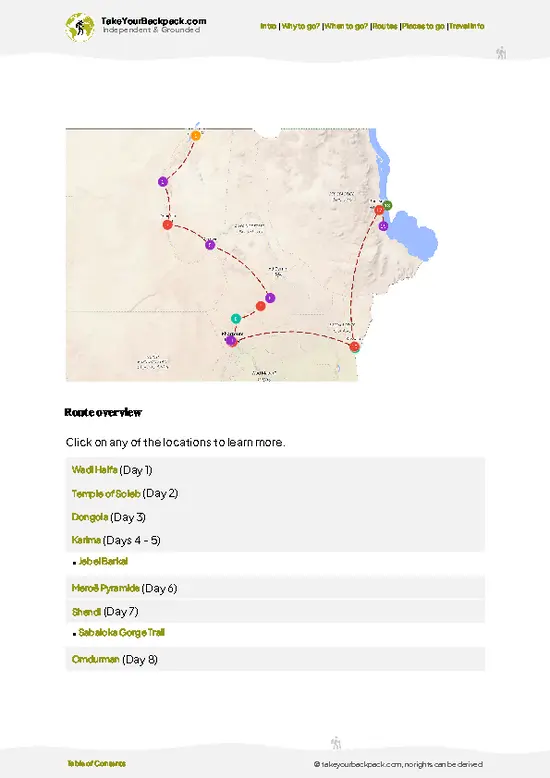
The cost? Minimal. Entry fees are low, and you can camp nearby for a fraction of what you’d spend in a hotel. This makes Meroe a budget-friendly stop that packs a punch. Plus, it fits perfectly into a broader route through Sudan, allowing you to explore the Nile and other cultural sites without backtracking.

The effort-to-reward ratio is off the charts. You’ll hike through stunning landscapes, … read more 👉
The Archaeological Sites of the Island of Meroe in Sudan are a must-see for backpackers who crave the real deal. Forget the glossy Instagram shots; this place is about raw history and authenticity. You’ll find pyramids that rival those in Egypt but without the overwhelming crowds. Here, you can wander among the ruins, feeling the weight of centuries without the pressure of a selfie stick in your face.

The cost? Minimal. Entry fees are low, and you can camp nearby for a fraction of what you’d spend in a hotel. This makes Meroe a budget-friendly stop that packs a punch. Plus, it fits perfectly into a broader route through Sudan, allowing you to explore the Nile and other cultural sites without backtracking.

The effort-to-reward ratio is off the charts. You’ll hike through stunning landscapes, meet locals who are genuinely curious about your journey, and soak in a sense of discovery that’s hard to find elsewhere. Meroe isn’t just a stop; it’s a life-changing experience that connects you to the heart of Sudan’s rich heritage.
Want to include Archaeological Sites of the Island of Meroe in your Sudan route?
Create a personalized Sudan itinerary that includes Archaeological Sites of the Island of Meroe and the places that fit your trip — based on your travel style, budget, and available time. Get your route in seconds.

Generate my trip

💡 HighlightsPlaces and moments you shouldn't skip

  1. Royal Pyramids of Meroe — Hundreds of narrow, steep-sided pyramids clustered on the desert ridge; they’re smaller than Egyptian pyramids but packed with character. Each marks a Kushite royal tomb with small chapels and reliefs — seeing them up close feels oddly intimate and weirdly otherworldly. (My personal favorite.)
  2. Ruins of the Royal City — The mud-brick foundations, street layouts and workshop areas are the remains of a once-thriving capital. You can still spot evidence of large-scale ironworking and organized urban life — it tells you this was more than a funerary landscape.
  3. Temple of Amun at Meroe — A mix of Egyptian motifs and local design: sphinxes, columned facades and carved reliefs dedicated to Amun. It’s a good place to see how Kushite rulers adopted and adapted pharaonic
read more 👉
  1. Royal Pyramids of Meroe — Hundreds of narrow, steep-sided pyramids clustered on the desert ridge; they’re smaller than Egyptian pyramids but packed with character. Each marks a Kushite royal tomb with small chapels and reliefs — seeing them up close feels oddly intimate and weirdly otherworldly. (My personal favorite.)
  2. Ruins of the Royal City — The mud-brick foundations, street layouts and workshop areas are the remains of a once-thriving capital. You can still spot evidence of large-scale ironworking and organized urban life — it tells you this was more than a funerary landscape.
  3. Temple of Amun at Meroe — A mix of Egyptian motifs and local design: sphinxes, columned facades and carved reliefs dedicated to Amun. It’s a good place to see how Kushite rulers adopted and adapted pharaonic religion for their own courts.
  4. Apedemak (Lion) Temple at Naqa — This is the lion-god temple, with striking lion capitals and reliefs you won’t find elsewhere; the iconography is bold and unapologetically Kushite. The carvings are in a more native style, so it’s great for spotting cultural differences up close.
  5. Naga’s Temples and Monumental Sculpture — Naga has larger temple platforms and finely cut stelae celebrating kings and offerings. The reliefs and inscriptions are excellent source material for Meroitic history and show Hellenistic, Egyptian and local influences all mixed together.
  6. Stone Statues, Reliefs and the Meroitic Script — Scattered around the sites are sculpted heads, ritual scenes and inscriptions in the partly-deciphered Meroitic script. It’s a fascinating visual record — the language isn’t fully unlocked, so the stones keep a bit of mystery.
  7. Desert Setting and Sunsets — The whole complex sits in stark desert light with the Nile on the horizon; late afternoon casts gorgeous shadows across the pyramids. Bring a jacket—temperatures drop fast—but don’t skip staying until sunset for the best photos and quiet.
Spotted a mistake or missing something? Contact us.

🌤️ When to go?Best time to visit Archaeological Sites of the Island of Meroe


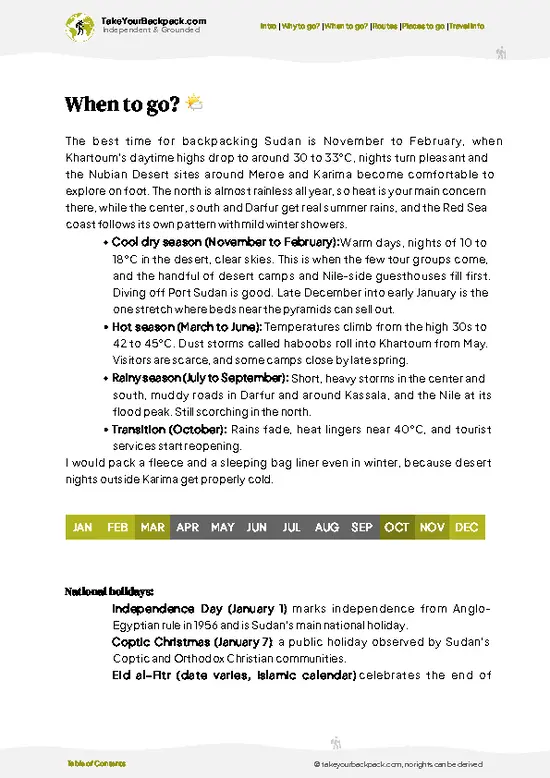
  • Weather: The best window is between October and March. Sudan’s summer is brutal—think 40-45°C (104-113°F)—which turns exploring these ancient pyramids into a sweat-drenched slog. The cooler months bring highs around 25-30°C (77-86°F), making trekking bearable and even enjoyable.

  • Temperature: Nights can dip to 10-15°C (50-59°F) in winter, so pack layers. Days are warm but not oven-hot, perfect for long hikes without frying your brain.

  • Daylight Hours: Daylight is fairly consistent year-round, roughly 11-12 hours. Early mornings and late afternoons offer the best light for photos and cooler temps for walking.

  • Crowds: Expect very few tourists year-round. This isn’t Machu Picchu. You’ll often have the site to yourself, which is a rare luxury in the world of archaeology.

  • Seasonal Activities:
read more 👉

  • Weather: The best window is between October and March. Sudan’s summer is brutal—think 40-45°C (104-113°F)—which turns exploring these ancient pyramids into a sweat-drenched slog. The cooler months bring highs around 25-30°C (77-86°F), making trekking bearable and even enjoyable.

  • Temperature: Nights can dip to 10-15°C (50-59°F) in winter, so pack layers. Days are warm but not oven-hot, perfect for long hikes without frying your brain.

  • Daylight Hours: Daylight is fairly consistent year-round, roughly 11-12 hours. Early mornings and late afternoons offer the best light for photos and cooler temps for walking.

  • Crowds: Expect very few tourists year-round. This isn’t Machu Picchu. You’ll often have the site to yourself, which is a rare luxury in the world of archaeology.

  • Seasonal Activities: There’s little in the way of organized events here. The real draw is the raw, untouched history and the chance to camp under stars that feel like they belong to another era.

  • Price Fluctuations: Costs remain steady year-round. Flights and local transport might spike slightly during the cooler months, but the difference is marginal compared to the comfort gained.


Pro-tip: Aim for late October or early November—cool enough to explore without melting, and just before the slight uptick in visitors and prices. You’ll get the site’s full impact without the sweat or the crowds.


source: climatestotravel.comJANJanuary: excellent for travelingFEBFebruary: excellent for travelingMARMarch: excellent for travelingAPRApril: good for travelingMAYMay: below average for travelingJUNJune: below average for travelingJULJuly: below average for travelingAUGAugust: below average for travelingSEPSeptember: fair for travelingOCTOctober: excellent for travelingNOVNovember: excellent for travelingDECDecember: excellent for traveling
when-to-go

✈️ The backpacker research shortcutSudan Travel Guide

An offline-friendly backpacking guide with optimized travel routes, ranked highlights, transport advice, and the best areas to stay.
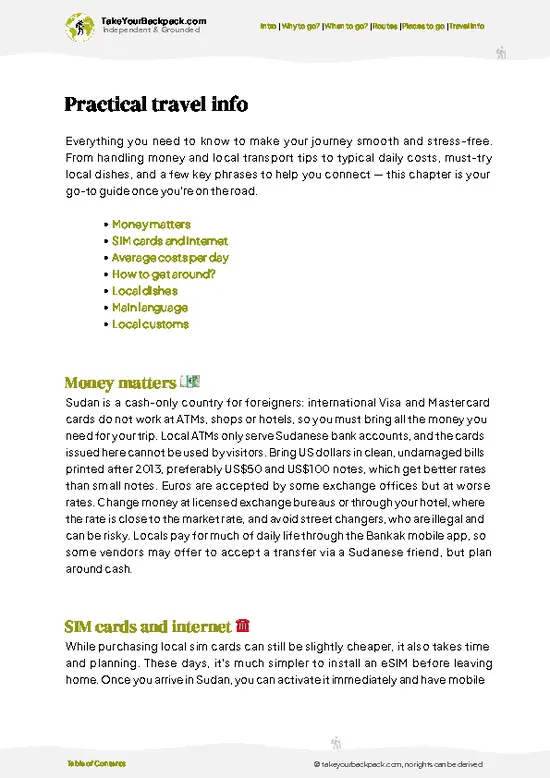
example page 0 from our offline Travel Guide for Sudan
example page 1 from our offline Travel Guide for Sudan
example page 2 from our offline Travel Guide for Sudan
example page 3 from our offline Travel Guide for Sudan
example page 4 from our offline Travel Guide for Sudan
example page 5 from our offline Travel Guide for Sudan
example page 6 from our offline Travel Guide for Sudan
example page 7 from our offline Travel Guide for Sudan
The digital guide (300 pages) contains:
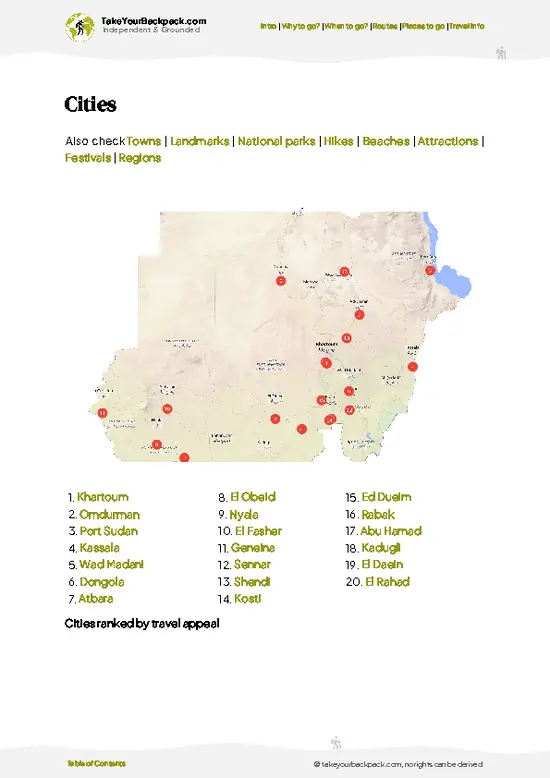
72 highlights, ranked by travel appeal
Optimized 5, 10 & 15-day travel routes
Cities, national parks, landmarks, beaches
How to get around
Offline-friendly for travel without Wi-Fi
👉 Click to see all 30+ guide features

📅 Plan smarter in minutes, not weeks
Month by month travel advice
Festivals & national holidays
Budget expectations

🗺️ Go to the right places, skip the overrated ones
Honest pros & cons of destinations
Top hikes, parks & viewpoints
Lesser-known places most travelers miss
Clear “worth it vs skip it” guidance

🛏️ Travel smoothly without rookie mistakes
Best areas to stay
Transport systems explained simply
Common scams & safety advice
SIM cards, money & practical tips

🌍 Understand the country, not just visit it
Culture & traditions
52 Essential phrases & customs
Festivals worth planning around
Traveler-friendly historical context
Insights that make places more meaningful

📱 Built for real travel conditions
Fully downloadable PDF
Works completely offline
Optimized for phone use
Useful in remote areas & buses
Everything in one place
Save weeks of stressful planning
Get instant access to your full guide. 30‑day money-back guarantee.


By proceeding you agree to our terms.
Sent to your inbox immediately after payment • 100% Secure Checkout
Best Backpacking Travel Advisor 2025 tourism awardBest Backpacking
Travel Advisor
2025
What others say about Take Your Backpack Guides:
⭐⭐⭐⭐⭐
Fantastic, amazing amount of information!
⭐⭐⭐⭐⭐
My goodness this is amazing, it's what I've been looking for hats off too you!
⭐⭐⭐⭐⭐
I think this is absolutely BRILLIANT
⭐⭐⭐⭐
Very complete and informative. It's still missing places, but I gotta to commend you
⭐⭐⭐⭐⭐
This is truly amazing, thank you, can't wait to explore it with my kids!
⭐⭐⭐⭐⭐
Awesome resource, thank you!
⭐⭐⭐⭐⭐
This is amazing! Can't wait to explore the ones I haven't seen
⭐⭐⭐⭐
I love this! Well done, great idea.
⭐⭐⭐⭐⭐
Thanks for taking the time to make this gem!
⭐⭐⭐⭐⭐
This might be the best website I've ever seen.
⭐⭐⭐⭐⭐
Congratulations, and thank you so much for your work; it's incredibly valuable.
⭐⭐⭐⭐
In all seriousness I think you did a great job pointing out the important spots
⭐⭐⭐⭐⭐
10/10 very good
⭐⭐⭐⭐⭐
As someone who's only just starting to visit regularly this is awesome, thank you.
⭐⭐⭐⭐
Thank you very much! I'm going to visit my dad, it's going to be very useful!
⭐⭐⭐⭐⭐
This is really cool! We'll be travelling for the first time and this definitely come in handy.
⭐⭐⭐⭐⭐
You are now our minister of culture, congratulations 👨‍💼
⭐⭐⭐⭐⭐
Just wanted to tell you that this is a pearl! Going to follow your recommendations.
⭐⭐⭐⭐⭐
This is so cool. I'll definitely be using the resource for my travels soon.
⭐⭐⭐⭐⭐
This is very impressive! Good work.
⭐⭐⭐⭐⭐
This is an amazing and informative site. Very well done!

🛏️ Where to stay?Choosing the right base

Staying near the Archaeological Sites of Meroe in Sudan is a unique experience, but let’s cut through the fluff. The area is remote, and options are limited, but that’s part of the adventure.

First off, consider the town of Shendi. It’s your best bet for a base camp. The vibe is laid-back, and you’ll find a mix of locals and travelers. It’s not a party hub, but you’ll meet fellow backpackers over a cup of strong Sudanese tea. The hospitality here is genuine, and you can often find someone willing to share stories or help you navigate the local scene.

Another option is to stay near the Nile. … read more 👉
Staying near the Archaeological Sites of Meroe in Sudan is a unique experience, but let’s cut through the fluff. The area is remote, and options are limited, but that’s part of the adventure.

First off, consider the town of Shendi. It’s your best bet for a base camp. The vibe is laid-back, and you’ll find a mix of locals and travelers. It’s not a party hub, but you’ll meet fellow backpackers over a cup of strong Sudanese tea. The hospitality here is genuine, and you can often find someone willing to share stories or help you navigate the local scene.

Another option is to stay near the Nile. The riverbanks offer a tranquil setting, and you can find basic accommodations that cater to budget travelers. Waking up to the sound of water and the sight of palm trees is a bonus. Plus, you can easily arrange transport to Meroe from here.

Safety is generally good, but always stay aware of your surroundings. Engage with locals; they’re your best resource for authentic experiences. The real magic lies in the connections you make and the stories you gather along the way.

👛 Costs (as of 20 February 2025)What things cost and how to budget

Visiting the Archaeological Sites of the Island of Meroe in Sudan is a journey into history, but it comes with its own set of costs. Here’s a breakdown of what you can expect.
  • Entry Fees: The entrance fee for the Meroe site is around $5 to $10 USD. This small investment grants you access to the stunning pyramids and ruins that date back to the Kingdom of Kush. It’s a steal for the history you’ll absorb.
  • Transportation: Getting to Meroe can be a bit tricky. If you’re coming from Khartoum, expect to pay about $50 to $100 USD for a private taxi or a shared minibus. The roads can be rough, but the scenery is worth it. Just be prepared for a bumpy ride.
  • Accommodation: Options near Meroe are limited. Basic guesthouses or campsites can range from $15 to $30 USD per night. If you want a bit more comfort,
read more 👉
Visiting the Archaeological Sites of the Island of Meroe in Sudan is a journey into history, but it comes with its own set of costs. Here’s a breakdown of what you can expect.
  • Entry Fees: The entrance fee for the Meroe site is around $5 to $10 USD. This small investment grants you access to the stunning pyramids and ruins that date back to the Kingdom of Kush. It’s a steal for the history you’ll absorb.
  • Transportation: Getting to Meroe can be a bit tricky. If you’re coming from Khartoum, expect to pay about $50 to $100 USD for a private taxi or a shared minibus. The roads can be rough, but the scenery is worth it. Just be prepared for a bumpy ride.
  • Accommodation: Options near Meroe are limited. Basic guesthouses or campsites can range from $15 to $30 USD per night. If you want a bit more comfort, a mid-range hotel might cost you $50 to $80 USD. Don’t expect luxury; think of it as part of the adventure.
  • Food: Meals are inexpensive. Street food or local restaurants will set you back about $3 to $10 USD per meal. Try the traditional dishes; they’re a highlight of the experience. Just be cautious about where you eat to avoid any stomach issues.
  • Guided Tours: If you want to dive deeper into the history, hiring a local guide can cost around $20 to $50 USD for a half-day tour. This is a worthwhile splurge; a knowledgeable guide can bring the ancient ruins to life.

Overall, budgeting around $100 to $200 USD per day should cover your basic needs while allowing you to soak in the real magic of Meroe.


source: sudan.gov.sd
⚠️ Prices can change and everyone travels differently, so take this as a rough guide. Hope it helps you plan your adventure!

Other Sudanese landmarks near Archaeological Sites of the Island of Meroe

Explore more nearby:

  • Meroë Pyramids—steep-sided pyramids, Nubian burial grounds, desert isolation, hieroglyphic carvings
  • Jebel Barkal—sandstone mountain, pharaonic temples, cliffside views, sacred site
  • Suakin—coral stone ruins, Red Sea port, Ottoman architecture, crumbling facades

💡 Not sure where to go next?
Create a personalized itinerary for Sudan including Archaeological Sites of the Island of Meroe and the places that fit your trip.

Generate my itinerary

👉 Discover all landmarks

Or checkout all Sudan has to offer (think cities, towns, villages, national parks, hikes, beaches, festivals)
Country photo of Sudan

We 💚 feedbackParting advice and final tips

The Archaeological Sites of Meroe are a treasure trove of ancient Nubian history, with pyramids that whisper stories of a civilization long gone. You’ll feel the weight of time here, and it’s genuinely moving. But let’s be real: the heat can be brutal, and the remote location means you’ll deal with some logistical headaches. If you’re up for the challenge, the rewards are immense. Just don’t expect a cushy tourist experience.

✈️ When did I visit Sudan?
Sudan I visited back in October 2017. I combined the trip with a visit to Ethiopia.

✍️ Help improve this page!
The information on this page is based on my own backpacking experience in Sudan, supplemented with up-to-date research and feedback from other travelers. Travel details can change, so if you notice anything outdated or incomplete, feel free to let me know.


🙋‍♂️ Give feedback

👋 Meet the founderWho’s Behind Take Your Backpack?

Johan, backpacker and founder of TakeYourBackpackHi, I’m Johan (Netherlands 🇳🇱), the creator of TakeYourBackpack. Over the past decade, I’ve backpacked through 80+ countries across six continents, gaining extensive experience with independent travel, long-term trips, and overland routes.

This site is built on a combination of firsthand travel experience and carefully curated insights from other backpackers. Many guides are based on places I’ve personally visited, while others bring together tips, observations, and practical advice shared by trusted travelers I’ve met along the way.

The goal is to provide realistic, experience-driven guidance — not generic itineraries — so you can explore destinations with better context, clearer expectations, and more confidence.

Get full Sudan guide •
Instant download • 72 highlights • Full Offline guide