×

Tajikistan🇹🇯 | best villagesEssential villages to Explore in Tajikistan

Villages in Tajikistan are mountain settlements of mud-brick houses, apricot orchards and tea served before you finish saying hello. The country splits into distinct worlds. The Pamirs and the Wakhan Valley mean homestays, long dirt roads and Afghan peaks across the river. The Fann Mountains sit a few hours from Dushanbe, with lakes and easy trailheads. The Zarafshan and Yagnob valleys feel remote and traditional. Independent travel works everywhere, but distance costs time and shared-taxi fares. Pick your region, pack for altitude, and go.

By Johan Kruseman 🇳🇱 | Updated October 19, 2026
Explore the best landmarks in Tajikistan

Why go?Why Travelers Love These Spots

Tajikistan is more than 90 percent mountains, and that geography built its village life. Settlements cling to river valleys and alluvial fans, where glacier-fed irrigation channels turn bare slopes into orchards and barley fields. Isolation did the rest. Pamiri communities kept their Ismaili traditions and the distinctive Pamiri house, with its five pillars and stacked-beam ceiling. The Yagnob valley preserved a dialect descended from Sogdian. Soviet-era roads, then the Pamir Highway, pushed through but never erased the old rhythms.

That same terrain shapes what you can expect. Homestays are the backbone of village travel, usually with dinner and breakfast included, and there are few hotels, restaurants or ATMs outside district centers. Mobile coverage is patchy, winters close high passes, … read more 👉
Tajikistan is more than 90 percent mountains, and that geography built its village life. Settlements cling to river valleys and alluvial fans, where glacier-fed irrigation channels turn bare slopes into orchards and barley fields. Isolation did the rest. Pamiri communities kept their Ismaili traditions and the distinctive Pamiri house, with its five pillars and stacked-beam ceiling. The Yagnob valley preserved a dialect descended from Sogdian. Soviet-era roads, then the Pamir Highway, pushed through but never erased the old rhythms.

That same terrain shapes what you can expect. Homestays are the backbone of village travel, usually with dinner and breakfast included, and there are few hotels, restaurants or ATMs outside district centers. Mobile coverage is patchy, winters close high passes, and many roads are rough, so transport takes planning and plenty of buffer time. Altitude matters too. Many Pamir villages sit above 2,500 meters, and some above 3,000.

Travelers should also know that permits are required for the Gorno-Badakhshan region (the GBAO permit, now handled through the e-visa system), and that carrying cash in somoni is essential. Expect hospitality that feels generous and unhurried, in a country where visitors are still a curiosity rather than a crowd.
Why These Made the Cut
The list of best villages in Tajikistan is created based on authenticity, scenic beauty, community spirit, traditions, and overall character. If you feel a village is missing in this list, please let us know.

When to go?Seasonal Guide to Visiting

Best months for village travel: June to September is the best window for Tajikistan's villages, because high passes are open, homestays are running and daytime temperatures in mountain valleys sit around 20 to 30°C. July and August bring the warmest days, with low valleys such as the Fergana side and Dushanbe often topping 35°C, so higher villages are the cooler choice then.

Shoulder seasons and winter: May and late September to October work well for lower valleys and the Fann Mountains, with apricot and almond blossom in spring and harvest colors in autumn. Nights in the Pamirs can drop below freezing even in these months, often to minus 5°C or lower above 3,500 meters. Snow can still block passes in May. Rain is light in the Pamirs, which are semi-arid, while the western valleys see most … read more 👉
Best months for village travel: June to September is the best window for Tajikistan's villages, because high passes are open, homestays are running and daytime temperatures in mountain valleys sit around 20 to 30°C. July and August bring the warmest days, with low valleys such as the Fergana side and Dushanbe often topping 35°C, so higher villages are the cooler choice then.

Shoulder seasons and winter: May and late September to October work well for lower valleys and the Fann Mountains, with apricot and almond blossom in spring and harvest colors in autumn. Nights in the Pamirs can drop below freezing even in these months, often to minus 5°C or lower above 3,500 meters. Snow can still block passes in May. Rain is light in the Pamirs, which are semi-arid, while the western valleys see most of their precipitation between March and May.

Winter and crowds: From November to March, snow shuts many high roads and some homestays close, and Pamir temperatures can fall well below minus 20°C. Winter suits only travelers who want deep cold and quiet, and who have flexible schedules. Crowds are never large, but July and August are the busiest months along the Pamir Highway, so book homestays a few days ahead if you want a specific bed. Prices stay fairly steady through the year, with homestays typically around US$20 to 35 with meals.

village hoppingHow to Combine villages Into One Trip

How long a combined trip takes: A trip linking several villages in Tajikistan needs 10 to 21 days, because distances look short on the map but roads are slow. Two clusters work best. The western cluster around Dushanbe, the Fann Mountains and the Zarafshan valley is compact, with 3 to 5 hours between bases by shared taxi or marshrutka. The Pamir cluster runs from Khorog through the Wakhan Valley and on toward Murghab, with 4 to 8 hours between stops on rough roads.

Direction and pace: Start in Dushanbe, spend a few days in the west to adjust to altitude, then fly or drive the 12 to 16 hours to Khorog. Moving west to east along the Pamir Highway toward Osh in Kyrgyzstan keeps momentum and avoids doubling back. Allow 1 to 3 nights per village. One night suits a transit stop, while two or three … read more 👉
How long a combined trip takes: A trip linking several villages in Tajikistan needs 10 to 21 days, because distances look short on the map but roads are slow. Two clusters work best. The western cluster around Dushanbe, the Fann Mountains and the Zarafshan valley is compact, with 3 to 5 hours between bases by shared taxi or marshrutka. The Pamir cluster runs from Khorog through the Wakhan Valley and on toward Murghab, with 4 to 8 hours between stops on rough roads.

Direction and pace: Start in Dushanbe, spend a few days in the west to adjust to altitude, then fly or drive the 12 to 16 hours to Khorog. Moving west to east along the Pamir Highway toward Osh in Kyrgyzstan keeps momentum and avoids doubling back. Allow 1 to 3 nights per village. One night suits a transit stop, while two or three let you hike, meet your hosts and recover from altitude.

Planning mistakes to dodge: The classic error is cramming a village into every day. Roads wash out, shared taxis wait until they fill, and a 200-kilometer leg can swallow a full day. Build one spare day for every five or six days of travel. Another error is sleeping too high too fast. Climb gradually, keeping the first nights below 3,000 meters. Finally, pair Pamir stops with fuel and cash planning, since ATMs thin out beyond Khorog.

The ListMust-Visit villages in Tajikistan

1 Shing

Seven Lakes, forested gorge, mudbrick villages

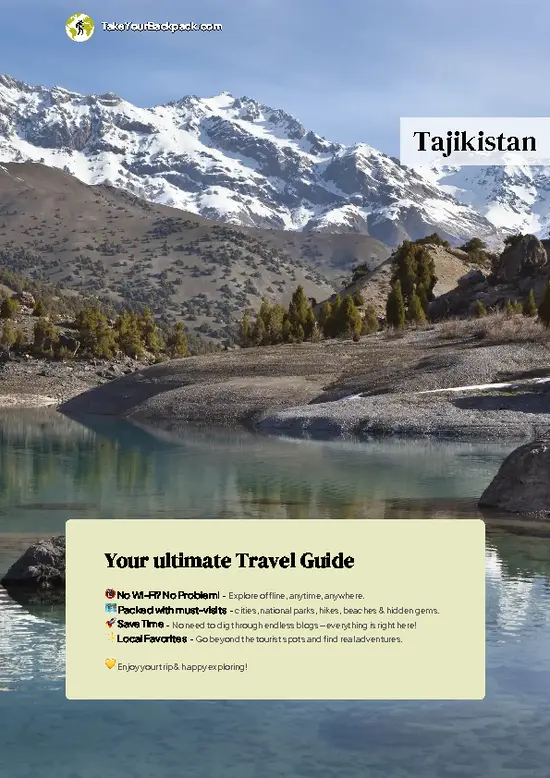
Follow winding tracks past turquoise lakes and wooded slopes, where small communities cluster along the valley floor.

Loading the map 🌍

Expert viewExpert Commentary on villages

How many villages to visit: Visit four to six villages on a trip of two to three weeks. That number gives you two nights in most places, enough time to walk the lanes, share a meal and recover from a long jeep ride, without turning the trip into a checklist. Fewer than four feels thin for the effort of getting here. More than six means you spend your days in a shared taxi watching the same dusty road.

Choosing your kind of village: Trekkers should favor the Fann Mountains and Zarafshan side, where trails start almost at the guesthouse door and you end the day beside a turquoise lake with tea in hand. Culture seekers should aim for the Pamirs and the Wakhan, where you wake in a Pamiri house with sunlight dropping through the central skylight, then walk to hot springs or ruined forts with Afghan … read more 👉
How many villages to visit: Visit four to six villages on a trip of two to three weeks. That number gives you two nights in most places, enough time to walk the lanes, share a meal and recover from a long jeep ride, without turning the trip into a checklist. Fewer than four feels thin for the effort of getting here. More than six means you spend your days in a shared taxi watching the same dusty road.

Choosing your kind of village: Trekkers should favor the Fann Mountains and Zarafshan side, where trails start almost at the guesthouse door and you end the day beside a turquoise lake with tea in hand. Culture seekers should aim for the Pamirs and the Wakhan, where you wake in a Pamiri house with sunlight dropping through the central skylight, then walk to hot springs or ruined forts with Afghan peaks across the river. Travelers short on time or comfort can stay in the lower western valleys, where roads are better and day trips from Dushanbe work.

What it costs: Plan on US$25 to 45 a day on a mid-budget backpacker pace. Homestays run roughly US$20 to 35 a night with dinner and breakfast, which is often the best-value meal you will eat. Shared taxis and marshrutkas cost around US$5 to 20 per leg, while a private 4x4 with driver on rough routes runs about US$100 to 150 a day, split between passengers. Guides for treks cost roughly US$30 to 60 a day. Village entry is generally free, though small fees apply at some forts, museums and hot springs, usually US$1 to 5. Carry plenty of somoni in cash, because cards rarely work outside Dushanbe and Khorog.

Safety and etiquette: Tajik villages are welcoming, and petty crime is low. The real risks are physical. Altitude sickness, landslides, river crossings and long hours from medical care call for travel insurance with evacuation, a basic medical kit and slow acclimatization. Stay well away from the Afghan border zones beyond marked roads, and keep your passport and permits on you, since checkpoints are routine.

On culture, dress modestly, with covered shoulders and knees for everyone. Remove shoes at the door, accept tea, and take bread with your right hand. Ask before photographing people, particularly women. In Ismaili Pamiri homes, you may notice a small shrine or photo of the Aga Khan, and respectful curiosity goes a long way. Bring small gifts such as sweets or tea if you want a warm exchange with your hosts.

✈️ The backpacker research shortcutTajikistan Travel Guide

An offline-friendly backpacking guide with optimized travel routes, ranked highlights, transport advice, and the best areas to stay.
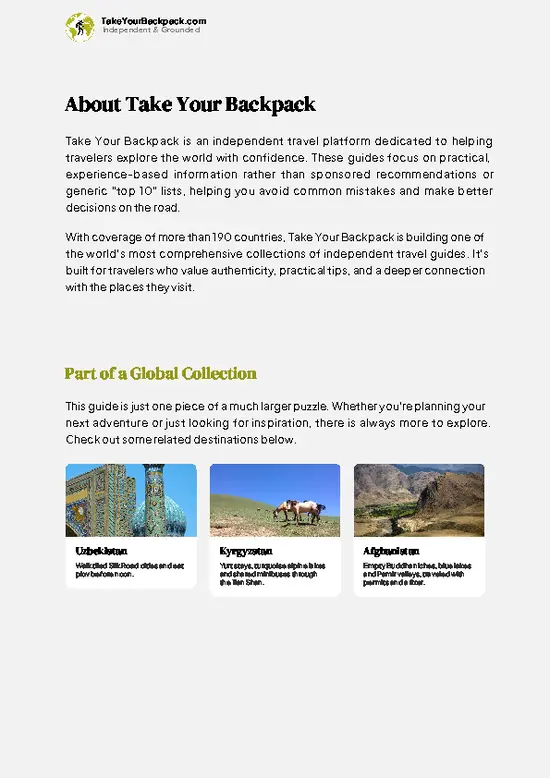
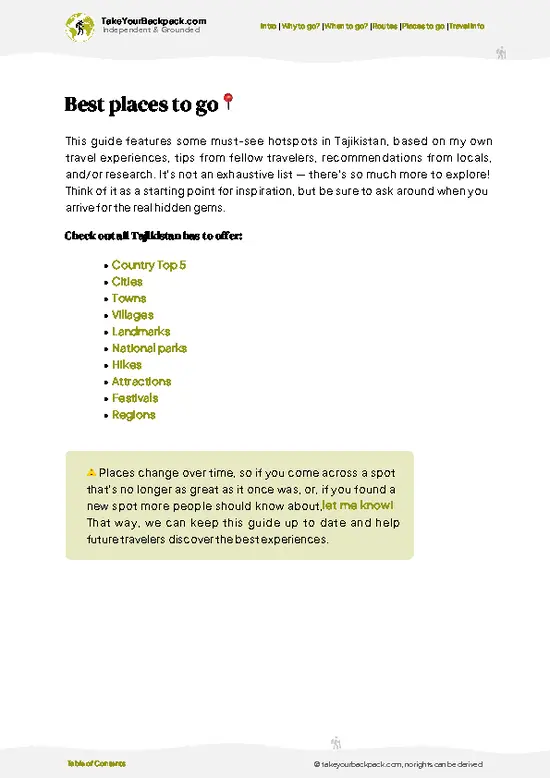
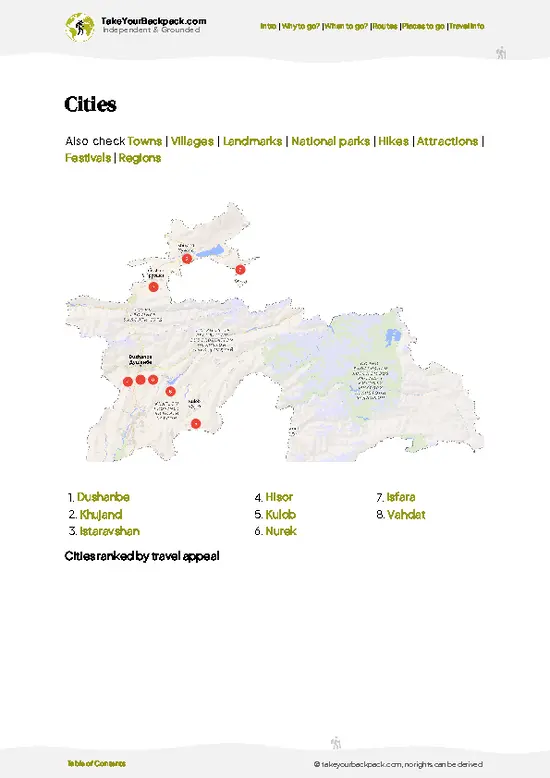
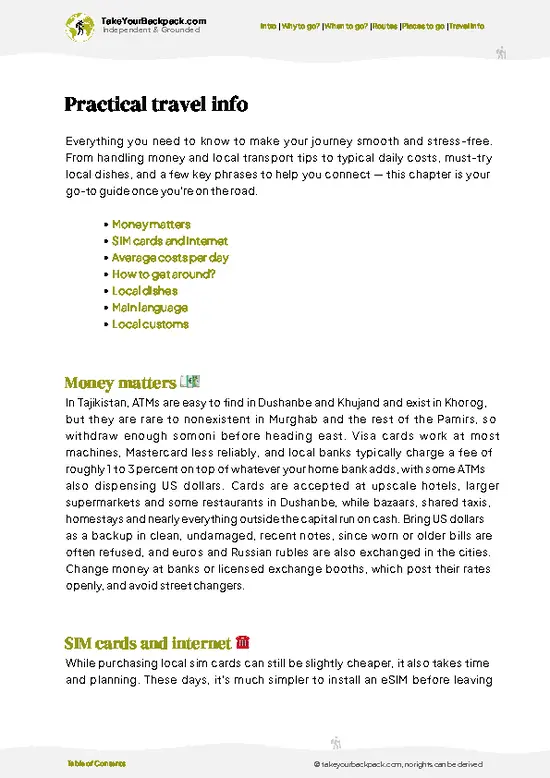
example page 0 from our offline Travel Guide for Tajikistan
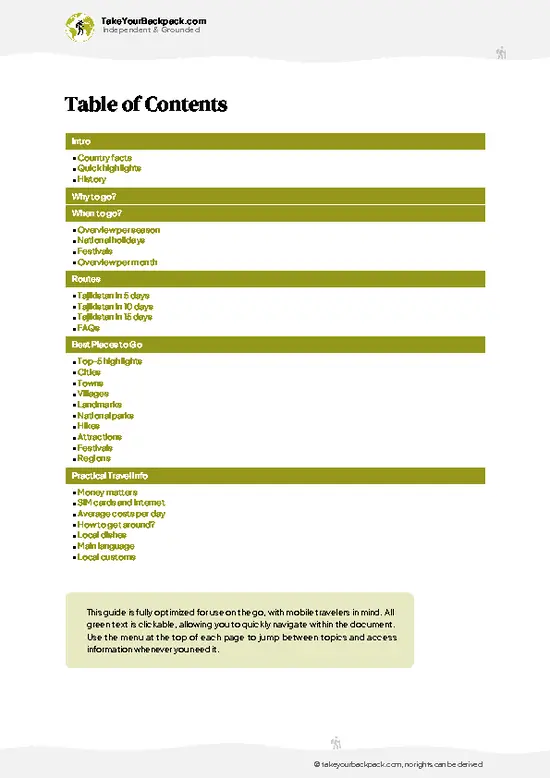
example page 1 from our offline Travel Guide for Tajikistan
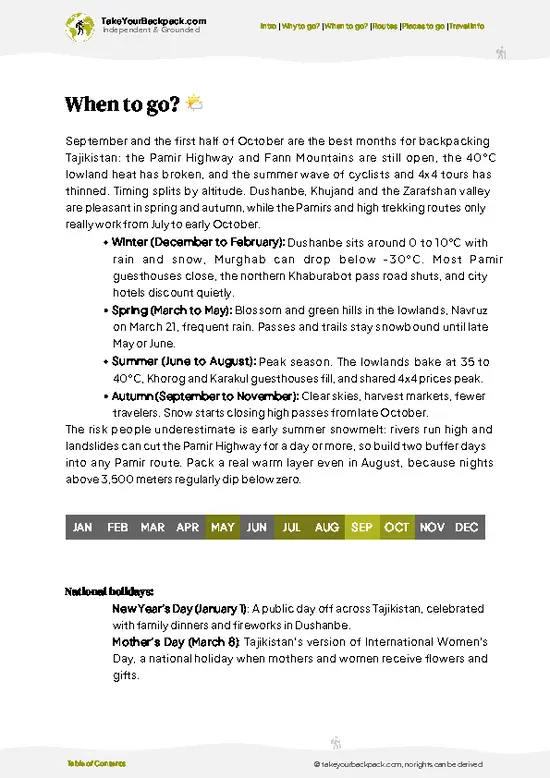
example page 2 from our offline Travel Guide for Tajikistan
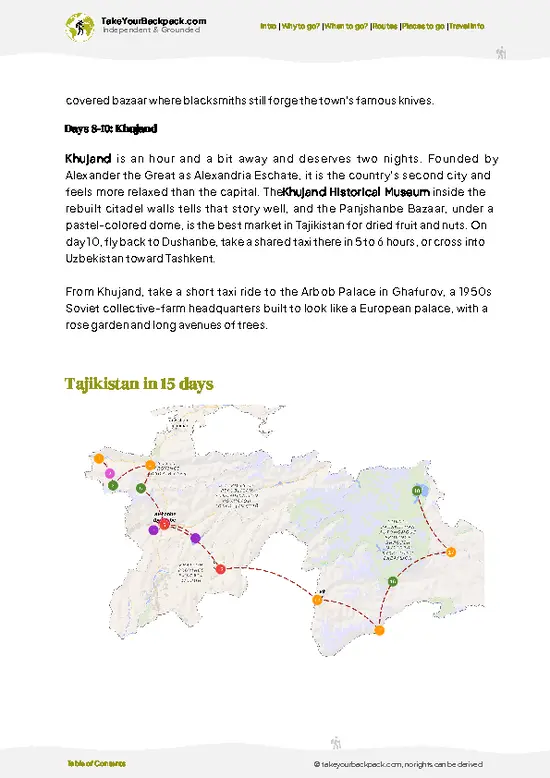
example page 3 from our offline Travel Guide for Tajikistan
example page 4 from our offline Travel Guide for Tajikistan
example page 5 from our offline Travel Guide for Tajikistan
example page 6 from our offline Travel Guide for Tajikistan
example page 7 from our offline Travel Guide for Tajikistan
The digital guide (268 pages) contains:
✅ 64 highlights, ranked by travel appeal
✅ Optimized 5, 10 & 15-day travel routes
✅ Cities, national parks, landmarks, beaches
✅ How to get around
✅ Offline-friendly for travel without Wi-Fi
👉 Click to see all 30+ guide features

📅 Plan smarter in minutes, not weeks
✅ Month by month travel advice
✅ Festivals & national holidays
✅ Budget expectations

🗺️ Go to the right places, skip the overrated ones
✅ Honest pros & cons of destinations
✅ Top hikes, parks & viewpoints
✅ Lesser-known places most travelers miss
✅ Clear “worth it vs skip it” guidance

🛏️ Travel smoothly without rookie mistakes
✅ Best areas to stay
✅ Transport systems explained simply
✅ Common scams & safety advice
✅ SIM cards, money & practical tips

🌍 Understand the country, not just visit it
✅ Culture & traditions
✅ 52 Essential phrases & customs
✅ Festivals worth planning around
✅ Traveler-friendly historical context
✅ Insights that make places more meaningful

📱 Built for real travel conditions
✅ Fully downloadable PDF
✅ Works completely offline
✅ Optimized for phone use
✅ Useful in remote areas & buses
✅ Everything in one place
Stop searching, start planning
Get instant access to your full guide. 30‑day money-back guarantee.
+ Add another guide for just

By proceeding you agree to our terms.
Sent to your inbox immediately after payment • 100% Secure Checkout
Best Backpacking Travel Advisor 2025 tourism awardBest Backpacking
Travel Advisor
2025
What others say about Take Your Backpack Guides:
⭐⭐⭐⭐⭐
Fantastic, amazing amount of information!
⭐⭐⭐⭐⭐
My goodness this is amazing, it's what I've been looking for hats off too you!
⭐⭐⭐⭐⭐
I think this is absolutely BRILLIANT
⭐⭐⭐⭐
Very complete and informative. It's still missing places, but I gotta to commend you
⭐⭐⭐⭐⭐
This is truly amazing, thank you, can't wait to explore it with my kids!
⭐⭐⭐⭐⭐
Awesome resource, thank you!
⭐⭐⭐⭐⭐
This is amazing! Can't wait to explore the ones I haven't seen
⭐⭐⭐⭐
I love this! Well done, great idea.
⭐⭐⭐⭐⭐
Thanks for taking the time to make this gem!
⭐⭐⭐⭐⭐
This might be the best website I've ever seen.
⭐⭐⭐⭐⭐
Congratulations, and thank you so much for your work; it's incredibly valuable.
⭐⭐⭐⭐
In all seriousness I think you did a great job pointing out the important spots
⭐⭐⭐⭐⭐
10/10 very good
⭐⭐⭐⭐⭐
As someone who's only just starting to visit regularly this is awesome, thank you.
⭐⭐⭐⭐
Thank you very much! I'm going to visit my dad, it's going to be very useful!
⭐⭐⭐⭐⭐
This is really cool! We'll be travelling for the first time and this definitely come in handy.
⭐⭐⭐⭐⭐
You are now our minister of culture, congratulations 👨‍💼
⭐⭐⭐⭐⭐
Just wanted to tell you that this is a pearl! Going to follow your recommendations.
⭐⭐⭐⭐⭐
This is so cool. I'll definitely be using the resource for my travels soon.
⭐⭐⭐⭐⭐
This is very impressive! Good work.
⭐⭐⭐⭐⭐
This is an amazing and informative site. Very well done!

🛏️ Where to stay?Where to Stay: Tajikistan Edition

Tajikistan has a small but growing hostel scene, with dorm beds from roughly US$7 to 12 and guesthouse rooms from about US$15 to 30, most of them in Dushanbe, Khorog and Khujand. In Dushanbe, the streets around Rudaki Avenue put you within walking distance of the parks, museums and the few bars and cafes that stay open late, while the quieter residential lanes south toward the Shohmansur bazaar area are cheaper and closer to shared taxi stands but a longer walk from evening life. In Khorog, places near the center and the Panj River make it easy to arrange Pamir Highway transport, and nights are calm and safe with almost no nightlife, while homestays in the Pamir and Fann Mountain villages trade … read more 👉
Tajikistan has a small but growing hostel scene, with dorm beds from roughly US$7 to 12 and guesthouse rooms from about US$15 to 30, most of them in Dushanbe, Khorog and Khujand. In Dushanbe, the streets around Rudaki Avenue put you within walking distance of the parks, museums and the few bars and cafes that stay open late, while the quieter residential lanes south toward the Shohmansur bazaar area are cheaper and closer to shared taxi stands but a longer walk from evening life. In Khorog, places near the center and the Panj River make it easy to arrange Pamir Highway transport, and nights are calm and safe with almost no nightlife, while homestays in the Pamir and Fann Mountain villages trade hostel social life for home-cooked meals and very early nights.

If you enjoy meeting fellow travelers, consider choosing hostels with high ratings for atmosphere. On the other hand, if you prefer having your own space, a hotel might be a better option.

TajikistanExplore Beyond This Category

👋 Meet the founderWho’s Behind Take Your Backpack?

Johan, backpacker and founder of TakeYourBackpackHi, I’m Johan (Netherlands 🇳🇱), the creator of TakeYourBackpack. Over the past 3 decades, I’ve backpacked through 90+ countries across six continents, gaining extensive experience with independent travel, long-term trips, and overland routes.

This site is built on a combination of firsthand travel experience and carefully curated insights from other backpackers. Many guides are based on places I’ve personally visited, while others bring together tips, observations, and practical advice shared by trusted travelers I’ve met along the way.

The goal is to provide realistic, experience-driven guidance — not generic itineraries — so you can explore destinations with better context, clearer expectations, and more confidence.