×

Tanzania🇹🇿 | attractionsCultural Heritage CentreAfrican art, gemstone galleries, craft collections | things to do and best time to go

Explore Mwenge Woodcarvers MarketExplore Old Boma Museum

Backpacking in Cultural Heritage Centre
👌 Worth visitingattraction ranked #12
By Johan Kruseman 🇳🇱 | Updated September 3, 2026

Is the Cultural Heritage Centre in Arusha really about the shopping? That’s the Instagram pitch: a gleaming, modern complex where you can buy Maasai beadwork and Tanzanite under one roof. But if you’re backpacking Tanzania, skip the fantasy of “authentic” souvenirs and look for what’s actually rare here—an unfiltered window into contemporary Tanzanian creativity. The Centre sits on the outskirts of Arusha, the safari capital, and yes, it’s polished, commercial, and sometimes swarmed by tour buses. Prices can sting, especially if you’re used to bargaining in local markets, and the crowds can make it feel more like a museum gift shop than a cultural deep-dive. But here’s the twist: the art gallery upstairs is a knockout, with bold, sometimes provocative work from across Africa that you won’t see in the usual tourist circuit. It’s not Olduvai Gorge or Ngorongoro, but if you want to see Tanzania’s living, breathing art scene—this is where it’s happening.

Discover everything you want to know in the 📖 Tanzania Travel Guide.
Loading the map 🌍
CLICK TO FILTER
cities
towns
landmarks
national parks
hikes
beaches
attractions
festivals
SHOW COUNTRY’S BESTSHOW ALL

✨ Why go?
Ranked #12 attraction in Tanzania
Why Cultural Heritage Centre should be on your travel list

The Cultural Heritage Centre in Tanzania isn’t just another stop on the tourist checklist—it’s a raw, unvarnished dive into the country’s soul. Sure, it draws crowds, especially during peak season, and yes, the entrance fee isn’t pocket change for a budget backpacker. But here’s the kicker: this place is a living archive of Tanzania’s rich, complex history and vibrant cultural mosaic. It’s where you get face-to-face with artifacts and stories that textbooks skim over, from ancient tribal crafts to the echoes of colonial struggles.

Backpackers make time here because it’s a rare chance to connect deeply with the people and traditions that shape modern Tanzania. It’s not just about ticking off an iconic site; it’s about understanding the layers beneath the surface—the sweat, the resilience, … read more 👉
The Cultural Heritage Centre in Tanzania isn’t just another stop on the tourist checklist—it’s a raw, unvarnished dive into the country’s soul. Sure, it draws crowds, especially during peak season, and yes, the entrance fee isn’t pocket change for a budget backpacker. But here’s the kicker: this place is a living archive of Tanzania’s rich, complex history and vibrant cultural mosaic. It’s where you get face-to-face with artifacts and stories that textbooks skim over, from ancient tribal crafts to the echoes of colonial struggles.

Backpackers make time here because it’s a rare chance to connect deeply with the people and traditions that shape modern Tanzania. It’s not just about ticking off an iconic site; it’s about understanding the layers beneath the surface—the sweat, the resilience, the artistry. The effort to navigate the crowds and the cost pays off in a way that few other stops do. This centre is a milestone on the route, a place where you pause, reflect, and recalibrate your journey with a richer perspective. If you want the real Tanzania, beyond the safaris and beaches, this is where you find it.
Want to include Cultural Heritage Centre in your Tanzania route?
Create a personalized Tanzania itinerary that includes Cultural Heritage Centre and the places that fit your trip — based on your travel style, budget, and available time. Get your route in seconds.

Generate my trip

💡 HighlightsWhat this place is best known for

The Great African Art Gallery
Forget the Instagram shots of Maasai beadwork and generic wooden giraffes. The real jaw-dropper here is the sheer scale and diversity of the art collection—this is the largest collection of African art in East Africa, and it’s not just Tanzanian. You’ll see everything from massive Makonde ebony sculptures (some taller than you) to contemporary paintings that actually challenge you, not just decorate a hotel lobby. The gallery is a maze, and you’ll get lost in the best way—one minute you’re face-to-face with a centuries-old mask, the next you’re staring down a surrealist canvas that could hang in Berlin. This is where you realize African art isn’t a monolith; it’s a riot of styles, stories, and subversion.


The Jewelry Workshop
Most tourists snap up a quick trinket … read more 👉
The Great African Art Gallery
Forget the Instagram shots of Maasai beadwork and generic wooden giraffes. The real jaw-dropper here is the sheer scale and diversity of the art collection—this is the largest collection of African art in East Africa, and it’s not just Tanzanian. You’ll see everything from massive Makonde ebony sculptures (some taller than you) to contemporary paintings that actually challenge you, not just decorate a hotel lobby. The gallery is a maze, and you’ll get lost in the best way—one minute you’re face-to-face with a centuries-old mask, the next you’re staring down a surrealist canvas that could hang in Berlin. This is where you realize African art isn’t a monolith; it’s a riot of styles, stories, and subversion.


The Jewelry Workshop
Most tourists snap up a quick trinket and call it a day. But if you want to see real Tanzanite—yes, the blue-violet gemstone that only comes from this corner of the planet—this is the place. The workshop isn’t just a sales pitch; you can watch artisans cut, polish, and set stones right in front of you. There’s a tactile thrill in seeing raw, dusty stones transformed into something that could headline a Sotheby’s auction. The staff actually know their stuff, and if you ask, they’ll walk you through the difference between the tourist-grade and the real-deal, investment-level gems. No pressure to buy, but you’ll leave with a new appreciation for what’s at stake in every sparkle.


The Carvings Courtyard
This isn’t your average souvenir stall. The open-air courtyard is stacked with hand-carved furniture, doors, and statues—some so intricate you’ll wonder how many lifetimes it took to finish. The Makonde carvers are often working on-site, and you can watch them coax faces and animals out of blocks of ebony using nothing but hand tools and muscle memory. The scale is wild: from palm-sized figurines to doors that could guard a palace. If you want to see the difference between mass-produced and master-crafted, this is your crash course.


The Cultural Performance Arena
Skip the sanitized hotel dance shows. Here, performances are raw, loud, and sometimes a little chaotic—just how I like it. Drumming groups, acrobats, and traditional dancers rotate through, and if you’re lucky, you’ll catch a spontaneous jam session that feels more like a block party than a staged event. The energy is contagious, and you’re not just watching—you’re in the thick of it, sometimes literally pulled into the circle. It’s entertainment with teeth, not a postcard.


The Pan-African Craft Market
Most so-called “markets” in tourist zones are just price-gouging with a smile. Here, the selection is actually curated: baskets from Uganda, beadwork from Kenya, textiles from West Africa. Prices aren’t rock-bottom, but you’re paying for quality and provenance, not just a story. The vendors know their makers, and you can actually learn something if you bother to ask. It’s a crash course in the continent’s craft traditions, minus the hard sell.
Spotted a mistake or missing something? Contact us.

Things to do around Cultural Heritage Centre

Ratings based on Tripadvisor reviews. When you book through this link, you support our work at no extra cost to you.

🌤️ When to go?Choosing the right time of year


  • Weather: The Cultural Heritage Centre is best visited during Tanzania’s dry season, from June to October. Expect clear skies and minimal rain, which means less mud and more comfortable exploring. Avoid the heavy rains of March to May, when trails get sloppy and some exhibits might be less accessible.

  • Temperature: Daytime temps hover around 20-25°C (68-77°F) in the dry months, perfect for wandering without overheating. Nights can dip to 10-15°C (50-59°F), so pack a light jacket. The wet season is warmer but sticky, often pushing 27-30°C (81-86°F).

  • Daylight Hours: Tanzania enjoys roughly 12 hours of daylight year-round, but June to August offers slightly longer mornings and evenings, giving you more time to soak in the exhibits and local crafts without rushing.

  • Crowds: Peak tourist
read more 👉

  • Weather: The Cultural Heritage Centre is best visited during Tanzania’s dry season, from June to October. Expect clear skies and minimal rain, which means less mud and more comfortable exploring. Avoid the heavy rains of March to May, when trails get sloppy and some exhibits might be less accessible.

  • Temperature: Daytime temps hover around 20-25°C (68-77°F) in the dry months, perfect for wandering without overheating. Nights can dip to 10-15°C (50-59°F), so pack a light jacket. The wet season is warmer but sticky, often pushing 27-30°C (81-86°F).

  • Daylight Hours: Tanzania enjoys roughly 12 hours of daylight year-round, but June to August offers slightly longer mornings and evenings, giving you more time to soak in the exhibits and local crafts without rushing.

  • Crowds: Peak tourist season aligns with the dry months, so expect more visitors from July to September. The Centre can feel busy, but the energy adds to the experience. For a quieter visit, aim for June or October.

  • Seasonal Activities: June to October is also when cultural festivals and traditional performances ramp up, adding layers of authenticity beyond the static displays. Missing these means missing the heartbeat of the place.

  • Price Fluctuations: Entrance fees and local vendor prices spike during peak season (July-September). Visiting just outside these months can save you a bit without sacrificing the experience.


Pro-tip: Hit the Centre in early June or late October to dodge crowds and high prices while still enjoying dry, pleasant weather and vibrant cultural events.


source: climatestotravel.comJANJanuary: fair for travelingFEBFebruary: fair for travelingMARMarch: below average for travelingAPRApril: below average for travelingMAYMay: below average for travelingJUNJune: excellent for travelingJULJuly: highly recommended for travelingAUGAugust: highly recommended for travelingSEPSeptember: highly recommended for travelingOCTOctober: excellent for travelingNOVNovember: good for travelingDECDecember: good for traveling
when-to-go

✈️ The backpacker research shortcutTanzania Travel Guide

An offline-friendly backpacking guide with optimized travel routes, ranked highlights, transport advice, and the best areas to stay.
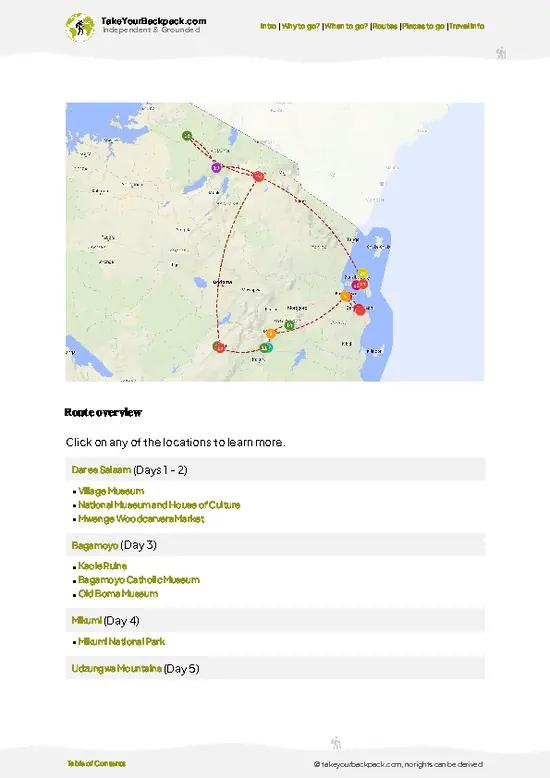
example page 0 from our offline Travel Guide for Tanzania
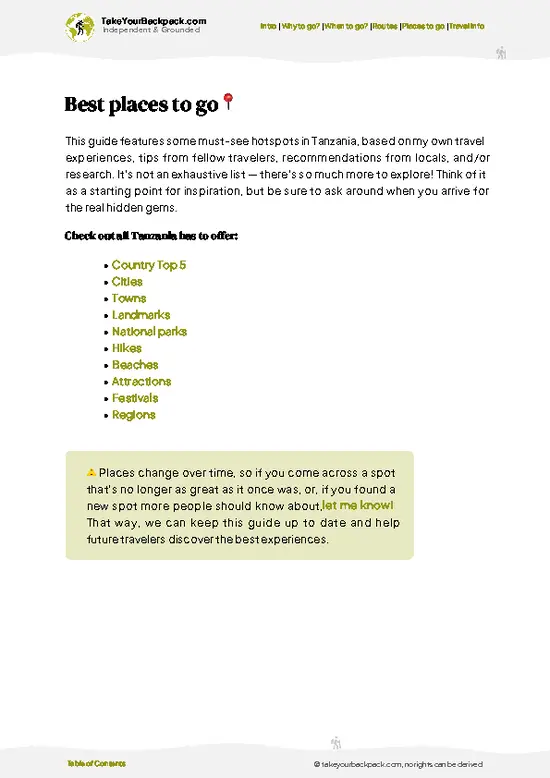
example page 1 from our offline Travel Guide for Tanzania
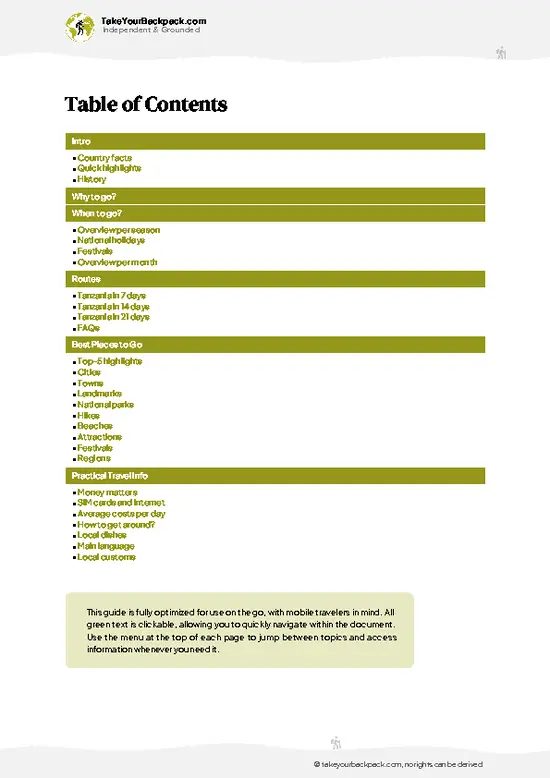
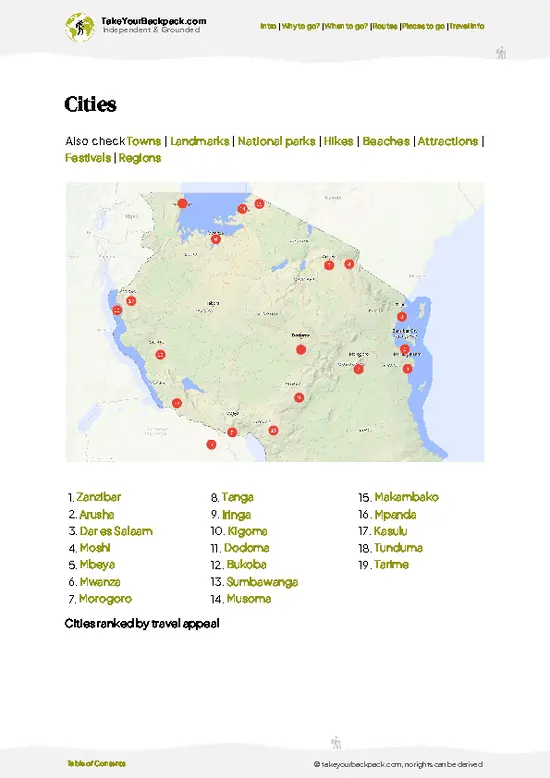
example page 2 from our offline Travel Guide for Tanzania
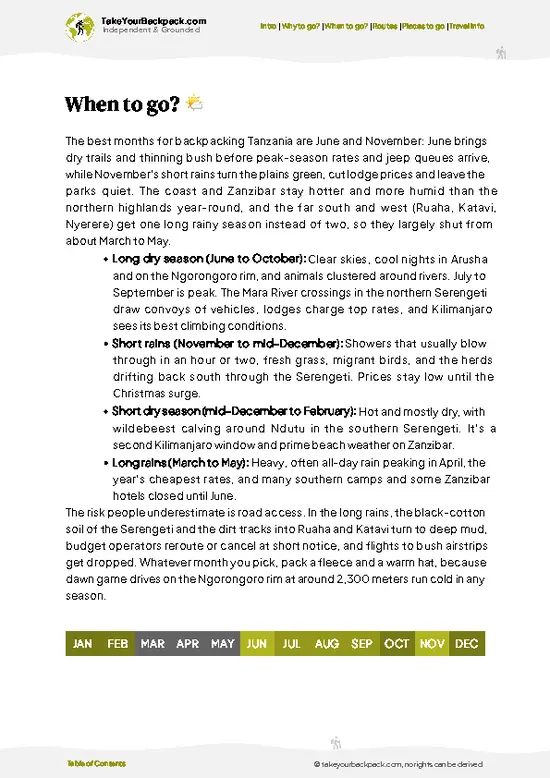
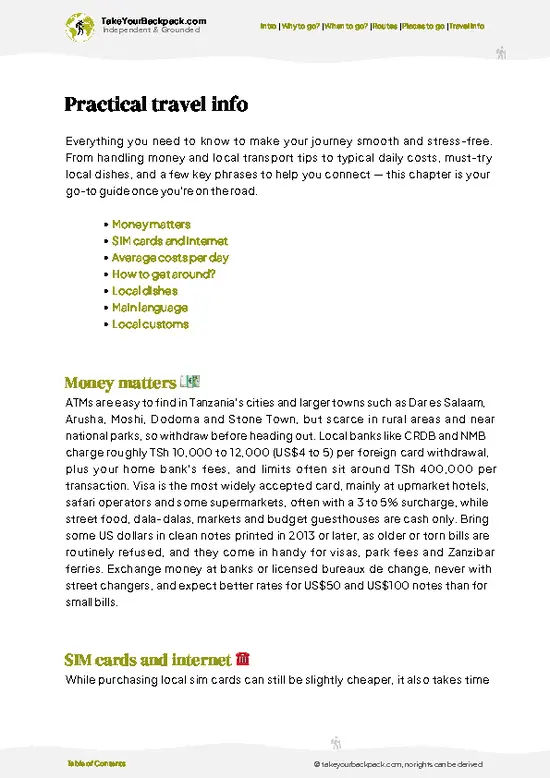
example page 3 from our offline Travel Guide for Tanzania
example page 4 from our offline Travel Guide for Tanzania
example page 5 from our offline Travel Guide for Tanzania
example page 6 from our offline Travel Guide for Tanzania
example page 7 from our offline Travel Guide for Tanzania
The digital guide (377 pages) contains:
100 highlights, ranked by travel appeal
Optimized 7, 14 & 21-day travel routes
Cities, national parks, landmarks, beaches
How to get around
Offline-friendly for travel without Wi-Fi
👉 Click to see all 30+ guide features

📅 Plan smarter in minutes, not weeks
Month by month travel advice
Festivals & national holidays
Budget expectations

🗺️ Go to the right places, skip the overrated ones
Honest pros & cons of destinations
Top hikes, parks & viewpoints
Lesser-known places most travelers miss
Clear “worth it vs skip it” guidance

🛏️ Travel smoothly without rookie mistakes
Best areas to stay
Transport systems explained simply
Common scams & safety advice
SIM cards, money & practical tips

🌍 Understand the country, not just visit it
Culture & traditions
52 Essential phrases & customs
Festivals worth planning around
Traveler-friendly historical context
Insights that make places more meaningful

📱 Built for real travel conditions
Fully downloadable PDF
Works completely offline
Optimized for phone use
Useful in remote areas & buses
Everything in one place
Save weeks of stressful planning
Get instant access to your full guide. 30‑day money-back guarantee.
+ Add another guide for just US$7.80

By proceeding you agree to our terms.
Sent to your inbox immediately after payment • 100% Secure Checkout
Best Backpacking Travel Advisor 2025 tourism awardBest Backpacking
Travel Advisor
2025
What others say about Take Your Backpack Guides:
⭐⭐⭐⭐⭐
Fantastic, amazing amount of information!
⭐⭐⭐⭐⭐
My goodness this is amazing, it's what I've been looking for hats off too you!
⭐⭐⭐⭐⭐
I think this is absolutely BRILLIANT
⭐⭐⭐⭐
Very complete and informative. It's still missing places, but I gotta to commend you
⭐⭐⭐⭐⭐
This is truly amazing, thank you, can't wait to explore it with my kids!
⭐⭐⭐⭐⭐
Awesome resource, thank you!
⭐⭐⭐⭐⭐
This is amazing! Can't wait to explore the ones I haven't seen
⭐⭐⭐⭐
I love this! Well done, great idea.
⭐⭐⭐⭐⭐
Thanks for taking the time to make this gem!
⭐⭐⭐⭐⭐
This might be the best website I've ever seen.
⭐⭐⭐⭐⭐
Congratulations, and thank you so much for your work; it's incredibly valuable.
⭐⭐⭐⭐
In all seriousness I think you did a great job pointing out the important spots
⭐⭐⭐⭐⭐
10/10 very good
⭐⭐⭐⭐⭐
As someone who's only just starting to visit regularly this is awesome, thank you.
⭐⭐⭐⭐
Thank you very much! I'm going to visit my dad, it's going to be very useful!
⭐⭐⭐⭐⭐
This is really cool! We'll be travelling for the first time and this definitely come in handy.
⭐⭐⭐⭐⭐
You are now our minister of culture, congratulations 👨‍💼
⭐⭐⭐⭐⭐
Just wanted to tell you that this is a pearl! Going to follow your recommendations.
⭐⭐⭐⭐⭐
This is so cool. I'll definitely be using the resource for my travels soon.
⭐⭐⭐⭐⭐
This is very impressive! Good work.
⭐⭐⭐⭐⭐
This is an amazing and informative site. Very well done!

🛏️ Where to stay?How to pick the right area

The Cultural Heritage Centre in Tanzania draws a crowd, no doubt. It’s not some secret spot where you’ll have the place to yourself—expect groups, school trips, and tourists snapping the same souvenirs you’re after. The Instagram shots don’t lie, but they also don’t show the lines or the occasional pushy vendor. That’s the reality check. But here’s the kicker: the real magic isn’t just in the centre itself; it’s in where you land after hours.

If you want to be close enough to walk back after a long day of soaking in history and art, focus on neighborhoods that balance safety with a social vibe. … read more 👉
The Cultural Heritage Centre in Tanzania draws a crowd, no doubt. It’s not some secret spot where you’ll have the place to yourself—expect groups, school trips, and tourists snapping the same souvenirs you’re after. The Instagram shots don’t lie, but they also don’t show the lines or the occasional pushy vendor. That’s the reality check. But here’s the kicker: the real magic isn’t just in the centre itself; it’s in where you land after hours.

If you want to be close enough to walk back after a long day of soaking in history and art, focus on neighborhoods that balance safety with a social vibe. These areas are buzzing with fellow backpackers and solo travelers, so you’re never eating dinner alone unless you want to be. The streets here have a rhythm—street food stalls, local markets, and small cafés where you can swap stories and travel tips. It’s not about luxury; it’s about connection and authenticity.

You’ll find budget options that keep your wallet intact but don’t skimp on the essentials: clean, secure, and with a communal space that invites interaction. Staying here means you’re not just a visitor; you’re part of the pulse of the city. That’s the kind of experience that sticks with you, long after the souvenirs are packed away.

👛 Costs (as of 3 September 2026)Money, prices, and spending tips

The Cultural Heritage Centre in Arusha, Tanzania, does not charge an entrance fee. Visitors can explore the art gallery and cultural exhibits free of charge. However, if you plan to purchase souvenirs, be prepared for higher prices compared to other local markets. ([tripadvisor.com](https://www.tripadvisor.com/FAQ_Answers-g297913-d2305304-t4075399-What_is_the_entrance_fee.html?utm_source=openai))

source: tripadvisor.co.uk
⚠️ Prices can change and everyone travels differently, so take this as a rough guide. Hope it helps you plan your adventure!

FAQTraveler FAQ

1 to 2 hours is sufficient to explore the Cultural Heritage Centre. This allows time to browse the art galleries, craft shops, and cultural exhibits without rushing. Plan for extra time if you want to shop or participate in workshops.
Yes, the Cultural Heritage Centre is worth the entrance fee, which is typically around 5,000 Tanzanian Shillings (about 2 USD). It offers a unique insight into Tanzanian art, crafts, and culture, making it valuable for cultural understanding and souvenir shopping.
The Cultural Heritage Centre is located in Arusha city and is easily accessible by taxi or boda boda (motorcycle taxi). It is about a 10-minute drive from the city center, and most drivers will know the location by name.
⚠️ Things can change over time, so always validate details locally before you go.

Other Tanzanian attractions near Cultural Heritage Centre

Explore more nearby:


💡 Not sure where to go next?
Create a personalized itinerary for Tanzania including Cultural Heritage Centre and the places that fit your trip.

Generate my itinerary

👉 Discover all attractions

Or checkout all Tanzania has to offer (think cities, towns, villages, national parks, hikes, beaches, festivals)
Country photo of Tanzania

We 💚 feedbackParting advice and final tips

The Cultural Heritage Centre in Tanzania isn’t some quiet sanctuary—it’s lively, sometimes packed, and yes, it can feel a bit touristy. But here’s the kicker: once you push past the crowds and the souvenir stalls, you’ll find genuine artistry that hits deeper than the usual museum fare. The wood carvings and paintings aren’t just for show; they tell stories you won’t get anywhere else. If you’re patient and curious, this place turns from a stopover into a real connection with Tanzanian culture. Just don’t rush it.

✍️ Help improve this page!
The information on this page is based on in-depth research, insights shared by experienced travelers, and feedback from the local travel community in Tanzania. While every effort is made to keep the information accurate and current, conditions can change — so if you spot anything incorrect or outdated, please get in touch.


🙋‍♂️ Give feedback

👋 Meet the founderWho’s Behind Take Your Backpack?

Johan, backpacker and founder of TakeYourBackpackHi, I’m Johan (Netherlands 🇳🇱), the creator of TakeYourBackpack. Over the past decade, I’ve backpacked through 80+ countries across six continents, gaining extensive experience with independent travel, long-term trips, and overland routes.

This site is built on a combination of firsthand travel experience and carefully curated insights from other backpackers. Many guides are based on places I’ve personally visited, while others bring together tips, observations, and practical advice shared by trusted travelers I’ve met along the way.

The goal is to provide realistic, experience-driven guidance — not generic itineraries — so you can explore destinations with better context, clearer expectations, and more confidence.

Get full Tanzania guide •
Instant download • 100 highlights • Full Offline guide