×

Tanzania🇹🇿 | citiesArushaOperator quotes, Meru skyline, Maasai Market, daladala hub | things to do and best time to go

Explore Paje BeachExplore Dar es Salaam

Backpacking in Arusha
🏆 Top pickcity ranked #3
By Johan Kruseman 🇳🇱 | Updated October 22, 2026

Arusha puts you within a day of Kilimanjaro, Meru and the Serengeti gateways, so you can book a climb or safari on the spot and haggle between operators in person. The city sits in the north of Tanzania, at the foot of Mount Meru, and it runs on dust, daladalas and deal-making. Walk it. Compare quotes for a day, because paying a little more for a vetted operator buys safer vehicles and better guides, which beats the cheapest tout offer every time. Taxis save your legs but eat your budget, so use them only after dark. It suits trip-planners, climbers and market-lovers; it won’t suit anyone hunting beaches, nightlife polish or quiet. Expect touts, traffic and a few ugly concrete blocks. Then look up: Meru’s jagged cone fills the horizon on clear mornings, and the Maasai Market stalls spill beads and blankets onto the pavement below it.

Discover everything you want to know in the 📖 Tanzania Travel Guide.


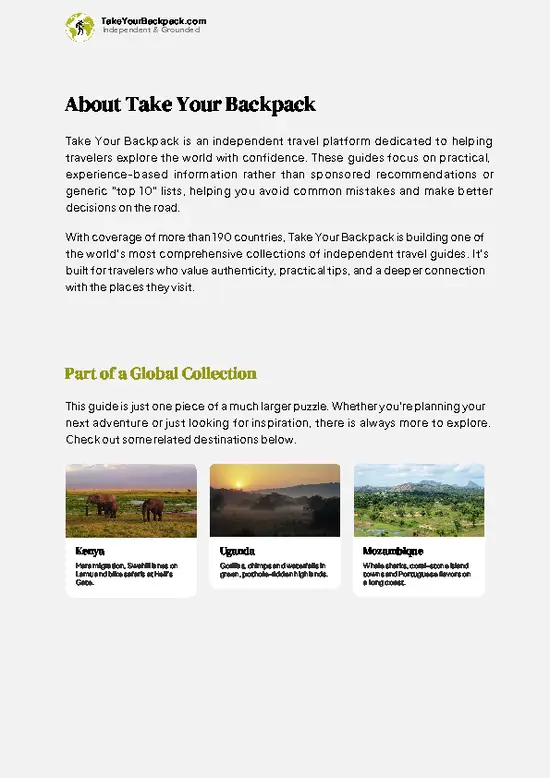
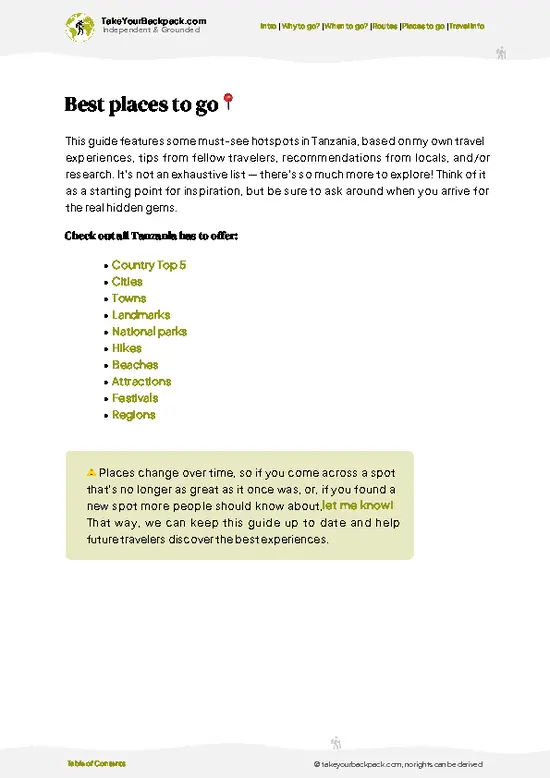
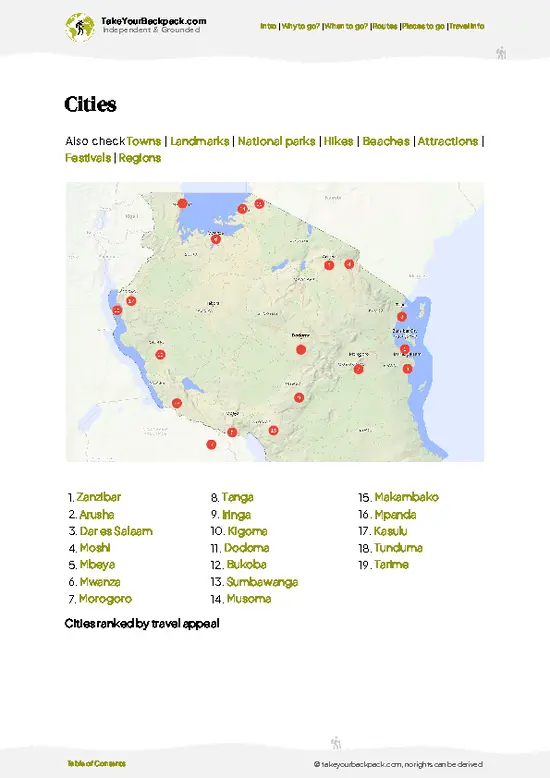
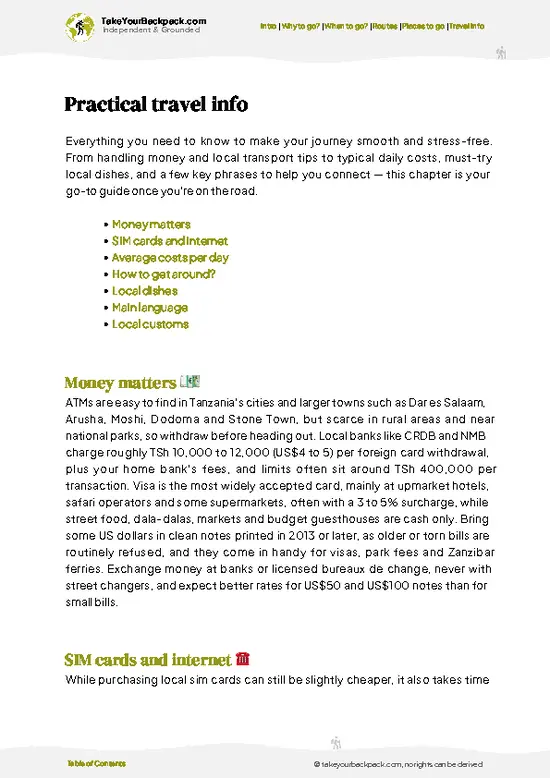
example page 0 from our offline Travel Guide for Tanzania
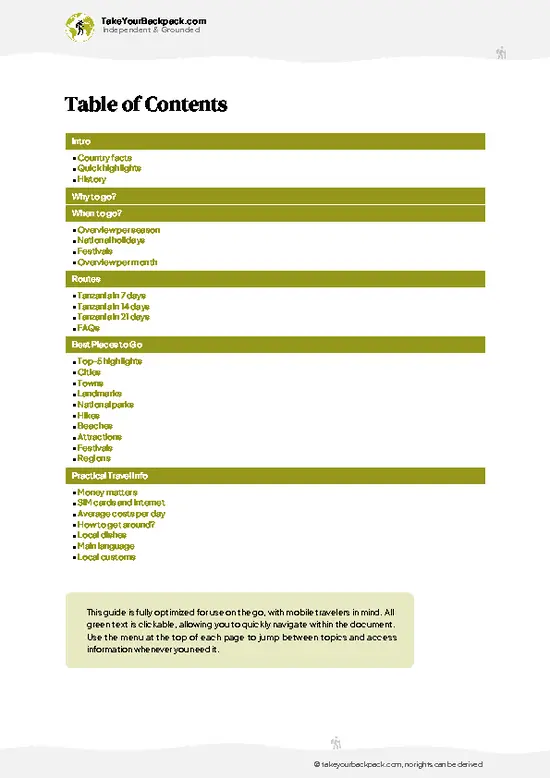
example page 1 from our offline Travel Guide for Tanzania
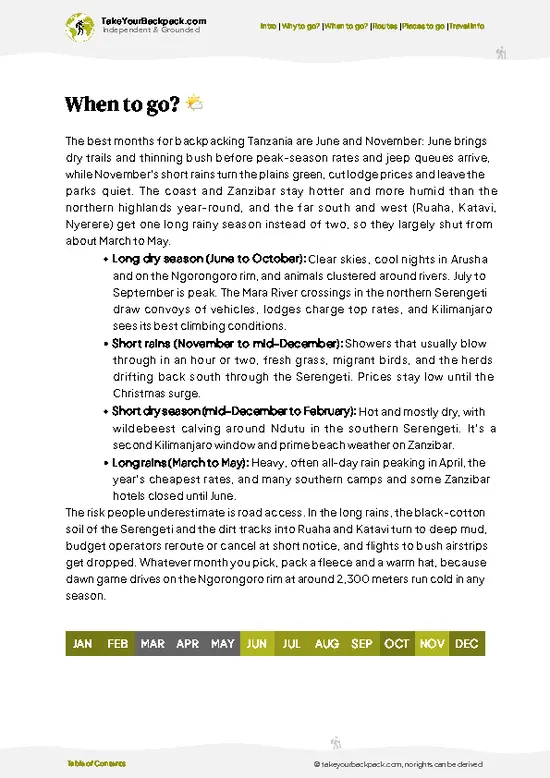
example page 2 from our offline Travel Guide for Tanzania
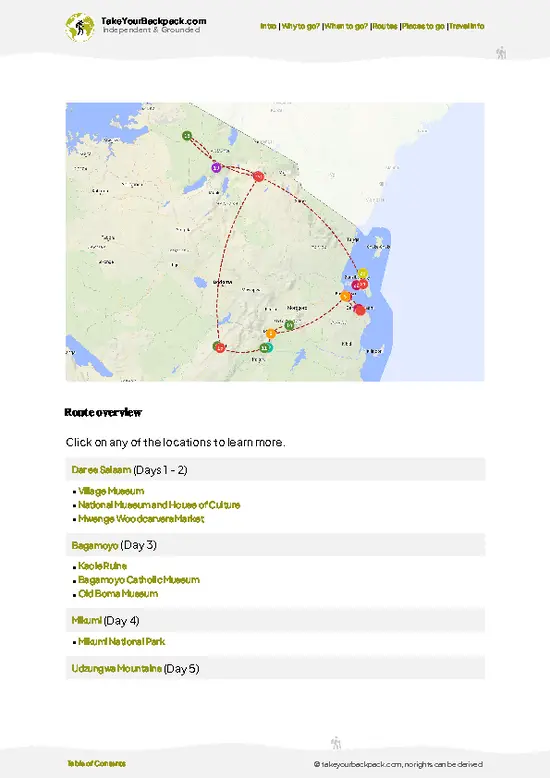
example page 3 from our offline Travel Guide for Tanzania
example page 4 from our offline Travel Guide for Tanzania
example page 5 from our offline Travel Guide for Tanzania
example page 6 from our offline Travel Guide for Tanzania
example page 7 from our offline Travel Guide for Tanzania
Loading the map 🌍
CLICK TO FILTER
cities
towns
landmarks
national parks
hikes
beaches
attractions
festivals
regions
SHOW COUNTRY’S BESTSHOW ALL

✨ Why go?
Ranked #3 city in Tanzania
What makes this city worth visiting

Arusha is where northern Tanzania gets organized, and that is the main reason backpackers come. Dozens of safari and trekking operators sit within a few blocks, so you can meet guides, check gear and compare itineraries face to face instead of trusting a website. Add the cheap hostels and guesthouses clustered around the center, plus a food scene that runs from nyama choma grills to Indian curries and decent coffee, and you can sort out an entire trip in two or three days. The city also works as a recovery stop after a Kilimanjaro or Meru climb, with hot showers, laundry and a proper meal. Buses and shuttles leave for Moshi, Dar es Salaam and across the border to Nairobi, so onward travel is simple. Be honest with yourself about the sightseeing: it is modest, and the real draw lies outside … read more 👉
Arusha is where northern Tanzania gets organized, and that is the main reason backpackers come. Dozens of safari and trekking operators sit within a few blocks, so you can meet guides, check gear and compare itineraries face to face instead of trusting a website. Add the cheap hostels and guesthouses clustered around the center, plus a food scene that runs from nyama choma grills to Indian curries and decent coffee, and you can sort out an entire trip in two or three days. The city also works as a recovery stop after a Kilimanjaro or Meru climb, with hot showers, laundry and a proper meal. Buses and shuttles leave for Moshi, Dar es Salaam and across the border to Nairobi, so onward travel is simple. Be honest with yourself about the sightseeing: it is modest, and the real draw lies outside town. Treat Arusha as a smart two-to-four-night staging post, not a destination to linger in, unless you are climbing Mount Meru right from the doorstep.

🏘️ NeighborhoodsWhere things are and how it's laid out

Arusha sits at the foot of Mount Meru, and its compact core is easy to cover on foot, so pick an area and start moving.
  • Central Arusha (Clock Tower and Market area): This is the beating heart, so dive in. The Central Market sells mounds of spices, bananas and secondhand clothes, and the lanes around it are loud, dusty and packed with minibuses. Walk it in the morning, keep bags in front, and fill up on cheap grilled meat and chips at the small eateries nearby. It gives you the most for the least money, and you spend nothing on transport.
  • Njiro and Sakina: Sakina is the bus and dala-dala crossroads toward Moshi and Nairobi, gritty but useful. Njiro, south of town, is quieter and residential, with cafés and the shopping mall. Reaching Njiro costs a short taxi or motorbike ride, so go for a coffee
… read more 👉
Arusha sits at the foot of Mount Meru, and its compact core is easy to cover on foot, so pick an area and start moving.
  • Central Arusha (Clock Tower and Market area): This is the beating heart, so dive in. The Central Market sells mounds of spices, bananas and secondhand clothes, and the lanes around it are loud, dusty and packed with minibuses. Walk it in the morning, keep bags in front, and fill up on cheap grilled meat and chips at the small eateries nearby. It gives you the most for the least money, and you spend nothing on transport.
  • Njiro and Sakina: Sakina is the bus and dala-dala crossroads toward Moshi and Nairobi, gritty but useful. Njiro, south of town, is quieter and residential, with cafés and the shopping mall. Reaching Njiro costs a short taxi or motorbike ride, so go for a coffee and a calm afternoon rather than for sights.
  • Themi and Kijenge: These leafy suburbs east of the center hold bakeries, craft shops and relaxed bars. Kijenge’s main road is a good evening stroll, with live music spilling from open-air venues on weekends. Walking from the center takes 20 to 30 minutes, which is easy and free, though a short taxi home after dark is smarter.
  • Mount Meru foothills (Usa River and Momella side): Head out here for banana farms, coffee plantations and clear views of the peak. Everything is spread out, so you need transport, and the extra cost pays off if you want green quiet over city noise.

⌛️ 1 dayHow to make the most of one day

A walking-and-wandering day that stays inside the compact center, with one short ride out to the arts side of town.

7:30 AM: Chai at a local café near the Clock Tower. Start with sweet spiced tea and a mandazi, the fried dough sold at every corner stall. Then stroll to the Uhuru Monument roundabout and the clock tower, which locals treat as the city’s center point.

9:00 AM: Arusha Declaration Museum. Walk five minutes to the Uhuru Torch monument area and the small museum telling the story of the 1967 declaration. It is quick and quiet, and it explains why this city matters to Tanzanians.

10:30 AM: Old Boma Museum. Continue on foot to the former German fort, now a natural and colonial history museum. Displays cover early hominid finds from Olduvai and the German and British eras. Allow an … read more 👉
A walking-and-wandering day that stays inside the compact center, with one short ride out to the arts side of town.

7:30 AM: Chai at a local café near the Clock Tower. Start with sweet spiced tea and a mandazi, the fried dough sold at every corner stall. Then stroll to the Uhuru Monument roundabout and the clock tower, which locals treat as the city’s center point.

9:00 AM: Arusha Declaration Museum. Walk five minutes to the Uhuru Torch monument area and the small museum telling the story of the 1967 declaration. It is quick and quiet, and it explains why this city matters to Tanzanians.

10:30 AM: Old Boma Museum. Continue on foot to the former German fort, now a natural and colonial history museum. Displays cover early hominid finds from Olduvai and the German and British eras. Allow an hour.

12:30 PM: Central Market lunch. Dive into the Soko Kuu, where stacks of tomatoes, spices, bananas and secondhand clothes fill the lanes. Eat grilled meat, rice and beans at one of the food stalls on the edges. Keep bags zipped and bargain with a smile.

2:30 PM: Mount Meru Hospital side lanes and Maasai Market. Walk to the Maasai Market for beadwork and fabrics. Compare three stalls before buying, since first prices run high.

4:00 PM: Cultural Heritage Center. Take a short taxi or bajaji ride out of the center. This huge gallery of Tanzanian carvings, paintings and jewelry is less visited by backpackers and fun to browse.

6:30 PM: Dinner back in town. Finish with nyama choma and a cold Kilimanjaro lager in a local bar before an early night.

🌤️ When to go?Best time to visit Arusha

Late June to October and January to early March give the driest, most comfortable weather for backpacking from Arusha.
  • Long Dry Season (June to October): Days reach 24 to 28°C (75 to 82°F) and nights drop to 10 to 14°C (50 to 57°F), so pack a fleece. Safari demand peaks, and prices for tours and beds climb, especially July and August.
  • Short Dry Spell (January to early March): Warmer at 27 to 31°C (81 to 88°F), with good Meru and safari conditions and fewer people than midyear.
  • Short Rains (November to December): Brief afternoon showers, green hills and lower prices. Roads stay passable and wildlife viewing is still good.
  • Long Rains (late March to May): Heavy downpours turn dirt roads muddy, many camps cut rates, and cloud often hides Meru. It is the cheapest time and the quietest.
Daylight stays … read more 👉
Late June to October and January to early March give the driest, most comfortable weather for backpacking from Arusha.
  • Long Dry Season (June to October): Days reach 24 to 28°C (75 to 82°F) and nights drop to 10 to 14°C (50 to 57°F), so pack a fleece. Safari demand peaks, and prices for tours and beds climb, especially July and August.
  • Short Dry Spell (January to early March): Warmer at 27 to 31°C (81 to 88°F), with good Meru and safari conditions and fewer people than midyear.
  • Short Rains (November to December): Brief afternoon showers, green hills and lower prices. Roads stay passable and wildlife viewing is still good.
  • Long Rains (late March to May): Heavy downpours turn dirt roads muddy, many camps cut rates, and cloud often hides Meru. It is the cheapest time and the quietest.
Daylight stays close to 12 hours all year, so plan activities for the morning, and book safaris a few weeks ahead for July and August.


source: climatestotravel.comJANJanuary: good for travelingFEBFebruary: good for travelingMARMarch: fair for travelingAPRApril: below average for travelingMAYMay: fair for travelingJUNJune: highly recommended for travelingJULJuly: excellent for travelingAUGAugust: excellent for travelingSEPSeptember: highly recommended for travelingOCTOctober: highly recommended for travelingNOVNovember: good for travelingDECDecember: good for traveling
when-to-go

✈️ The backpacker research shortcutTanzania Travel Guide

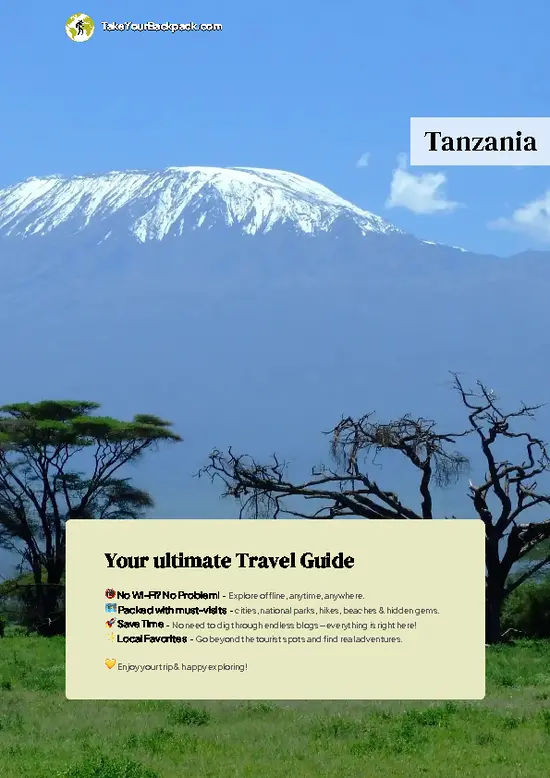
An offline-friendly backpacking guide with optimized travel routes, ranked highlights, transport advice, and the best areas to stay.
example page 0 from our offline Travel Guide for Tanzania
example page 1 from our offline Travel Guide for Tanzania
example page 2 from our offline Travel Guide for Tanzania
example page 3 from our offline Travel Guide for Tanzania
example page 4 from our offline Travel Guide for Tanzania
example page 5 from our offline Travel Guide for Tanzania
example page 6 from our offline Travel Guide for Tanzania
example page 7 from our offline Travel Guide for Tanzania
The digital guide (396 pages) contains:
✅ 103 highlights, ranked by travel appeal
✅ Optimized 7, 14 & 21-day travel routes
✅ Cities, national parks, landmarks, beaches
✅ How to get around
✅ Offline-friendly for travel without Wi-Fi
👉 Click to see all 30+ guide features

📅 Plan smarter in minutes, not weeks
✅ Month by month travel advice
✅ Festivals & national holidays
✅ Budget expectations

🗺️ Go to the right places, skip the overrated ones
✅ Honest pros & cons of destinations
✅ Top hikes, parks & viewpoints
✅ Lesser-known places most travelers miss
✅ Clear “worth it vs skip it” guidance

🛏️ Travel smoothly without rookie mistakes
✅ Best areas to stay
✅ Transport systems explained simply
✅ Common scams & safety advice
✅ SIM cards, money & practical tips

🌍 Understand the country, not just visit it
✅ Culture & traditions
✅ 52 Essential phrases & customs
✅ Festivals worth planning around
✅ Traveler-friendly historical context
✅ Insights that make places more meaningful

📱 Built for real travel conditions
✅ Fully downloadable PDF
✅ Works completely offline
✅ Optimized for phone use
✅ Useful in remote areas & buses
✅ Everything in one place
Stop searching, start planning
Get instant access to your full guide. 30‑day money-back guarantee.
+ Add another guide for just

By proceeding you agree to our terms.
Sent to your inbox immediately after payment • 100% Secure Checkout
Best Backpacking Travel Advisor 2025 tourism awardBest Backpacking
Travel Advisor
2025
What others say about Take Your Backpack Guides:
⭐⭐⭐⭐⭐
Fantastic, amazing amount of information!
⭐⭐⭐⭐⭐
My goodness this is amazing, it's what I've been looking for hats off too you!
⭐⭐⭐⭐⭐
I think this is absolutely BRILLIANT
⭐⭐⭐⭐
Very complete and informative. It's still missing places, but I gotta to commend you
⭐⭐⭐⭐⭐
This is truly amazing, thank you, can't wait to explore it with my kids!
⭐⭐⭐⭐⭐
Awesome resource, thank you!
⭐⭐⭐⭐⭐
This is amazing! Can't wait to explore the ones I haven't seen
⭐⭐⭐⭐
I love this! Well done, great idea.
⭐⭐⭐⭐⭐
Thanks for taking the time to make this gem!
⭐⭐⭐⭐⭐
This might be the best website I've ever seen.
⭐⭐⭐⭐⭐
Congratulations, and thank you so much for your work; it's incredibly valuable.
⭐⭐⭐⭐
In all seriousness I think you did a great job pointing out the important spots
⭐⭐⭐⭐⭐
10/10 very good
⭐⭐⭐⭐⭐
As someone who's only just starting to visit regularly this is awesome, thank you.
⭐⭐⭐⭐
Thank you very much! I'm going to visit my dad, it's going to be very useful!
⭐⭐⭐⭐⭐
This is really cool! We'll be travelling for the first time and this definitely come in handy.
⭐⭐⭐⭐⭐
You are now our minister of culture, congratulations 👨‍💼
⭐⭐⭐⭐⭐
Just wanted to tell you that this is a pearl! Going to follow your recommendations.
⭐⭐⭐⭐⭐
This is so cool. I'll definitely be using the resource for my travels soon.
⭐⭐⭐⭐⭐
This is very impressive! Good work.
⭐⭐⭐⭐⭐
This is an amazing and informative site. Very well done!

🛏️ Where to stay?Best areas and accommodation options

The center near the Clock Tower and the leafy streets of Kijenge and Themi are the best bets for a budget bed in Arusha. In the center you find the most dorm beds and cheap private rooms, typically US$8 to 20 a night, with easy access to dala-dalas, shuttle offices and tour operators. Everything you need is within walking distance by day, but expect traffic noise and early-morning bus horns, so ask for a room away from the main road.
Kijenge and Themi are calmer, with garden hostels and guesthouses, and rooms often cost US$10 to 25. They feel safer at night, with quieter streets and more places … read more 👉
The center near the Clock Tower and the leafy streets of Kijenge and Themi are the best bets for a budget bed in Arusha. In the center you find the most dorm beds and cheap private rooms, typically US$8 to 20 a night, with easy access to dala-dalas, shuttle offices and tour operators. Everything you need is within walking distance by day, but expect traffic noise and early-morning bus horns, so ask for a room away from the main road.
Kijenge and Themi are calmer, with garden hostels and guesthouses, and rooms often cost US$10 to 25. They feel safer at night, with quieter streets and more places to eat nearby. The trade-off is a 20 to 30 minute walk or a short bajaji ride to the market and bus station, which costs about US$1 to 3.
If you have an early departure for safari or Kilimanjaro, sleeping in the center saves you a rushed morning. If you want sleep, a garden and a decent breakfast, pick the suburbs. Book ahead in July, August and around Christmas, when beds fill with climbers and safari groups. Take a taxi after dark rather than walking between areas.

🚌 Getting aroundTransportation options and practical tips

Walking plus the occasional cheap motorbike or taxi is the easiest way to move around Arusha, because the central area is flat and compact, and traffic jams near Clock Tower and Sakina make vehicles slower than your feet. Public transport is plentiful but chaotic, so expect crowding and a lot of horn-honking.
  • Walking: Free and fastest in the center. You can cross from the market to the Clock Tower in 10 minutes, and daylight strolls are the best way to see the streets. Use another option after dark or for suburbs like Njiro.
  • Dala-dala (minibuses): The workhorse for backpackers, costing about US$0.20 to 0.50 per ride along set routes, with the main stand at the bus station area. They run from early morning to about 9 pm and are crammed, hot and slow in rush hour, but you cannot beat the price.
… read more 👉
Walking plus the occasional cheap motorbike or taxi is the easiest way to move around Arusha, because the central area is flat and compact, and traffic jams near Clock Tower and Sakina make vehicles slower than your feet. Public transport is plentiful but chaotic, so expect crowding and a lot of horn-honking.
  • Walking: Free and fastest in the center. You can cross from the market to the Clock Tower in 10 minutes, and daylight strolls are the best way to see the streets. Use another option after dark or for suburbs like Njiro.
  • Dala-dala (minibuses): The workhorse for backpackers, costing about US$0.20 to 0.50 per ride along set routes, with the main stand at the bus station area. They run from early morning to about 9 pm and are crammed, hot and slow in rush hour, but you cannot beat the price. Ask the conductor to confirm the destination before you board.
  • Bajaji (tuk-tuks): Three-wheelers cost about US$1 to 3 for short hops and zip through jams. They are comfortable enough for two people, and agreeing on the price first avoids arguments. For a short evening ride they give the best balance of safety and cost.
  • Boda-boda (motorbike taxis): Cheapest and quickest at roughly US$0.50 to 2 per trip, but riskier, and helmets are often missing. Use them only for short daytime rides.
  • Taxis and ride-hailing apps: Taxis cost about US$3 to 8 across town, and Uber and Bolt operate with fixed prices shown in advance. They are the best pick at night or with luggage. A ride to Kilimanjaro Airport costs about US$25 to 40 and takes 45 to 60 minutes.
For longer hauls, shuttle buses to Nairobi and Moshi leave from the center, and coaches to Dar es Salaam depart early in the morning from the main bus station.

👛 Costs (as of 22 October 2026)What things cost and how to budget

Arusha costs a backpacker about US$10 to 18 a day, with a total daily budget of US$46, excluding safaris and climbs. Prices are in US dollars, though you pay in Tanzanian shillings for most daily items.
CategoryBudget RangeLocal Reality
Dorm bed (high season)US$10 to 18Beds are scarcer from July to August and December, and breakfast is often included.
Dorm bed (off-season)US$7 to 12Long rains in April and May bring discounts and easy walk-in availability.
MealsUS$8 to 14Market plates are US$1 to 3, nyama choma US$4 to 8, and cafés a bit more.
Local transportUS$2 to 5Dala-dalas cost US$0.20 to 0.50, and bajaji or taxi rides cost US$1 to 8.
City transport passNot availableThere is no pass, so you pay per ride in cash.
Basic activities and entry feesUS$5 to 12Lake Duluti is around US$5 to 10, and museum
… read more 👉
Arusha costs a backpacker about US$10 to 18 a day, with a total daily budget of US$46, excluding safaris and climbs. Prices are in US dollars, though you pay in Tanzanian shillings for most daily items.
CategoryBudget RangeLocal Reality
Dorm bed (high season)US$10 to 18Beds are scarcer from July to August and December, and breakfast is often included.
Dorm bed (off-season)US$7 to 12Long rains in April and May bring discounts and easy walk-in availability.
MealsUS$8 to 14Market plates are US$1 to 3, nyama choma US$4 to 8, and cafés a bit more.
Local transportUS$2 to 5Dala-dalas cost US$0.20 to 0.50, and bajaji or taxi rides cost US$1 to 8.
City transport passNot availableThere is no pass, so you pay per ride in cash.
Basic activities and entry feesUS$5 to 12Lake Duluti is around US$5 to 10, and museum visits are cheap. National parks cost far more.
MiscellaneousUS$3 to 6SIM card with data, water, tips and laundry.
Total Daily BudgetUS$46Excludes safaris, which run US$200 and up per day.
Eat where locals do and avoid tourist menus near the Clock Tower to cut food costs by about half.
⚠️ Prices can change and everyone travels differently, so take this as a rough guide. Hope it helps you plan your adventure!

🚌 Day tripsBest day trips from Arusha

Arusha is the safari capital of northern Tanzania and works well as a base for day trips, as long as you set off early and book through a licensed operator.
Arusha National Park:
Only 45 minutes to an hour from town, this small park packs in giraffes, buffalo, colobus monkeys and flamingos on the Momela Lakes, with Mount Meru looming behind. Expect around US$50 to 60 for park entry plus US$50 to 100 for a shared vehicle. Go in the dry months, June to October, for the clearest views. First-timers often skip the walking safari with a ranger, which is a mistake because it gets you closer to the wildlife.

Lake Duluti:
A calm crater lake about 30 minutes from Arusha, with a forest trail around the shore and canoe hire for a few dollars. Entry runs around US$5 to 10, and a dala-dala plus a short … read more 👉
Arusha is the safari capital of northern Tanzania and works well as a base for day trips, as long as you set off early and book through a licensed operator.
Arusha National Park:
Only 45 minutes to an hour from town, this small park packs in giraffes, buffalo, colobus monkeys and flamingos on the Momela Lakes, with Mount Meru looming behind. Expect around US$50 to 60 for park entry plus US$50 to 100 for a shared vehicle. Go in the dry months, June to October, for the clearest views. First-timers often skip the walking safari with a ranger, which is a mistake because it gets you closer to the wildlife.

Lake Duluti:
A calm crater lake about 30 minutes from Arusha, with a forest trail around the shore and canoe hire for a few dollars. Entry runs around US$5 to 10, and a dala-dala plus a short walk gets you there for under US$2. Birdwatchers love the early morning, and it is a good rest day after safari days.

Materuni Waterfalls and Coffee Tour:
This day trip near Moshi takes about 1.5 to 2 hours each way by road, so start at dawn. You hike through banana groves to a 80 meter waterfall, then roast coffee over a fire. Budget US$50 to 80 with a guide and transport. Dry months make the trail less slippery, so bring decent shoes.

Tarangire National Park:
About two to two and a half hours by road, Tarangire is famous for large elephant herds and baobab trees, best from June to October when animals gather along the river. A one-day group safari costs around US$200 to 280, with entry fees making up a big share. It makes for a long day, so confirm lunch and drinking water are included.
👉 Explore Tarangire National Park

🍲 FoodLocal Cuisine & Drinks

Arusha’s food leans on the fertile farmland around Mount Meru, so look for the Maasai and Meru highland touch. Nyama choma (grilled goat or beef) is the social meal, sold by weight at open-air grills where you pick your cut, then eat with kachumbari salad and a pile of ugali or roasted bananas. Try mchemsho, a hearty soup of banana, meat and vegetables common in the Kilimanjaro and Meru area, and mtori, a creamy green banana soup. Expect a plate of nyama choma to cost around US$4 to 8.
For cheap eating, head to the stalls around the Central Market and the food spots near the bus station, where chapati, samosas and rice with beans cost US$1 to 3. Fresh juices from avocado, passion fruit and mango are everywhere, and Arusha’s highland coffee is excellent, sold in small cafés in Njiro and Kijenge … read more 👉
Arusha’s food leans on the fertile farmland around Mount Meru, so look for the Maasai and Meru highland touch. Nyama choma (grilled goat or beef) is the social meal, sold by weight at open-air grills where you pick your cut, then eat with kachumbari salad and a pile of ugali or roasted bananas. Try mchemsho, a hearty soup of banana, meat and vegetables common in the Kilimanjaro and Meru area, and mtori, a creamy green banana soup. Expect a plate of nyama choma to cost around US$4 to 8.
For cheap eating, head to the stalls around the Central Market and the food spots near the bus station, where chapati, samosas and rice with beans cost US$1 to 3. Fresh juices from avocado, passion fruit and mango are everywhere, and Arusha’s highland coffee is excellent, sold in small cafés in Njiro and Kijenge for US$1 to 3. In the evening, Kijenge’s open-air bars serve cold Kilimanjaro or Safari lager for about US$1.50 to 2.50, often with live music. A local custom is to share a plate of grilled meat among the table, eating with your hands.

🛡️ SafetyScams, Hazards, and Annoyances

Arusha is broadly safe for backpackers if you use normal city sense. Most problems are petty theft, such as phone snatching and bag pickpocketing around the Central Market, bus stations and crowded dala-dalas, so keep valuables out of back pockets and carry only what you need. Walking in the center is fine in daylight, but after dark take a taxi or ride-hailing app instead of walking, especially solo and between neighborhoods. The most common annoyance is flycatchers, street touts who approach with safari or Kilimanjaro offers and sometimes pose as friendly students. Politely decline, never hand over deposits on the street, and book only with an operator that has a licensed office and a TALA or TATO registration. Agree taxi and bajaji prices before riding. Women traveling alone may get attention … read more 👉
Arusha is broadly safe for backpackers if you use normal city sense. Most problems are petty theft, such as phone snatching and bag pickpocketing around the Central Market, bus stations and crowded dala-dalas, so keep valuables out of back pockets and carry only what you need. Walking in the center is fine in daylight, but after dark take a taxi or ride-hailing app instead of walking, especially solo and between neighborhoods. The most common annoyance is flycatchers, street touts who approach with safari or Kilimanjaro offers and sometimes pose as friendly students. Politely decline, never hand over deposits on the street, and book only with an operator that has a licensed office and a TALA or TATO registration. Agree taxi and bajaji prices before riding. Women traveling alone may get attention but usually it stays verbal, and a firm no works. Keep phones tucked away while walking near roads, where bike riders can grab them.

FAQTraveler FAQ

Two to three days covers Arusha itself and a day trip, though most travelers use it as a launch pad for safaris or Kilimanjaro and Meru climbs. One day handles the Central Market, a coffee spot and the Cultural Heritage Centre, and another day suits Arusha National Park, about 45 to 60 minutes away. Add extra days for Tarangire or the Materuni waterfalls.
Yes, Arusha is manageable for solo backpackers who take basic care. Petty theft around the Central Market and bus stations is the main risk, and touts selling safaris on the street are the common annoyance, so book only with licensed operators. After dark use a taxi or Uber for the US$3 to 8 ride rather than walking, and keep your phone out of sight.
Arusha is known as the gateway to northern Tanzania’s safari circuit, with Serengeti, Ngorongoro Crater, Tarangire and Lake Manyara all reachable from here. It also sits beneath Mount Meru (4,566 meters) and is a common starting point for Kilimanjaro trips, with Moshi about 1.5 to 2 hours away. Locally, you’ll find Maasai markets, highland coffee and nyama choma grills.
⚠️ Things can change over time, so always validate details locally before you go.

Other Tanzanian cities near Arusha

Explore more nearby:

  • Moshi—Kilimanjaro views, coffee cooperative, Chemka springs, Materuni waterfall| 74 km away
  • Dodoma—Parliament seat, plateau winelands, Gaddafi Mosque, bajaji rides| 328 km away
  • Tanga—German-era streets, Amboni Caves, Tongoni ruins, Raskazone Beach| 328 km away

💡 Not sure where to go next?
Create a personalized itinerary for Tanzania including Arusha and the places that fit your trip.

Generate my itinerary

👉 Discover all cities

Or checkout all Tanzania has to offer (think cities, towns, villages, national parks, hikes, beaches, festivals)
Country photo of Tanzania

We 💚 feedbackIs it worth it?

Arusha trips go wrong when people book the first safari offer a street tout hands them. Visit three licensed operators in person, ask for the vehicle, park fees and guide names in writing, and pay by traceable method. Then spend a spare afternoon at the Maasai Market with small bills, and haggle gently.

✍️ Help improve this page!
The information on this page is based on in-depth research, insights shared by experienced travelers, and feedback from the local travel community in Tanzania. While every effort is made to keep the information accurate and current, conditions can change — so if you spot anything incorrect or outdated, please get in touch.


🙋‍♂️ Give feedback

👋 Meet the founderWho’s Behind Take Your Backpack?

Johan, backpacker and founder of TakeYourBackpackHi, I’m Johan (Netherlands 🇳🇱), the creator of TakeYourBackpack. Over the past 3 decades, I’ve backpacked through 90+ countries across six continents, gaining extensive experience with independent travel, long-term trips, and overland routes.

This site is built on a combination of firsthand travel experience and carefully curated insights from other backpackers. Many guides are based on places I’ve personally visited, while others bring together tips, observations, and practical advice shared by trusted travelers I’ve met along the way.

The goal is to provide realistic, experience-driven guidance — not generic itineraries — so you can explore destinations with better context, clearer expectations, and more confidence.