×

Tanzania🇹🇿 | townsLiwaleCashew sheds, sesame sacks, remote district capital, miombo edge | things to do and best time to go

Explore KyelaExplore Nzega

Backpacking in Liwale
👀 For curious travelerstown ranked #25
By Johan Kruseman 🇳🇱 | Updated October 22, 2026

Liwale rewards travelers who arrive with a flexible plan, because the dirt roads are slow and buses are few. Plan your own days around them, and pad each leg. You’ll find it in Lindi Region in southern Tanzania, a quiet cashew and sesame town on the edge of wild miombo country. Evenings are slow, guesthouses are basic, and other backpackers are rare, so talk to locals. Spend your first day wandering the market, eating nyama choma, and asking about trips toward the reserve.

Discover everything you want to know in the 📖 Tanzania Travel Guide.


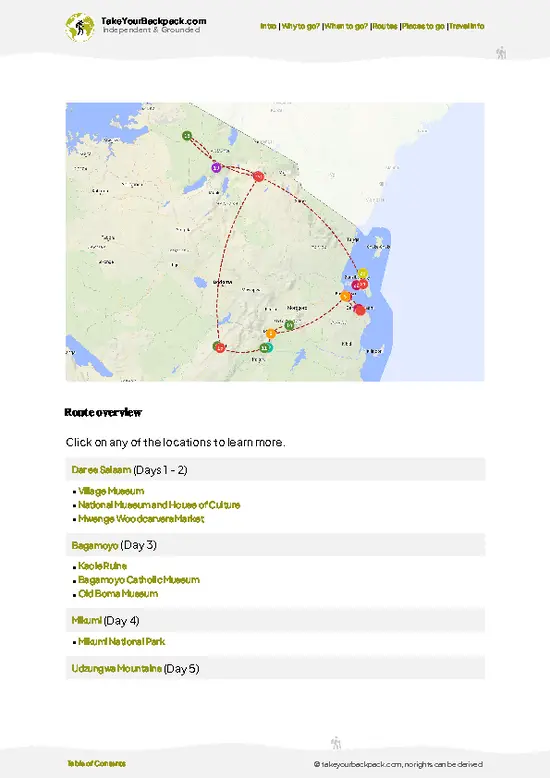
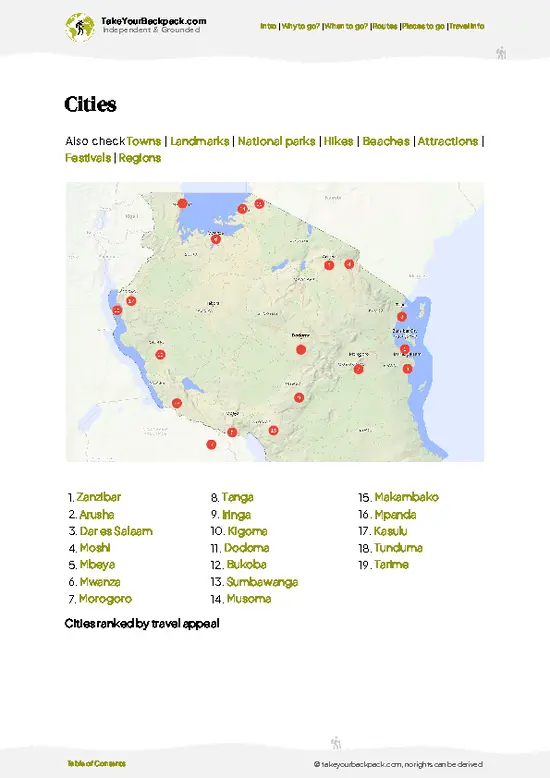
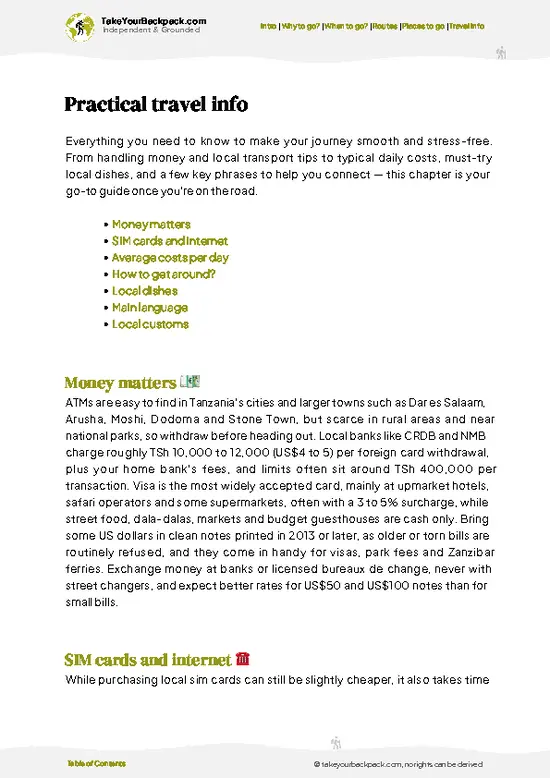
example page 0 from our offline Travel Guide for Tanzania
example page 1 from our offline Travel Guide for Tanzania
example page 2 from our offline Travel Guide for Tanzania
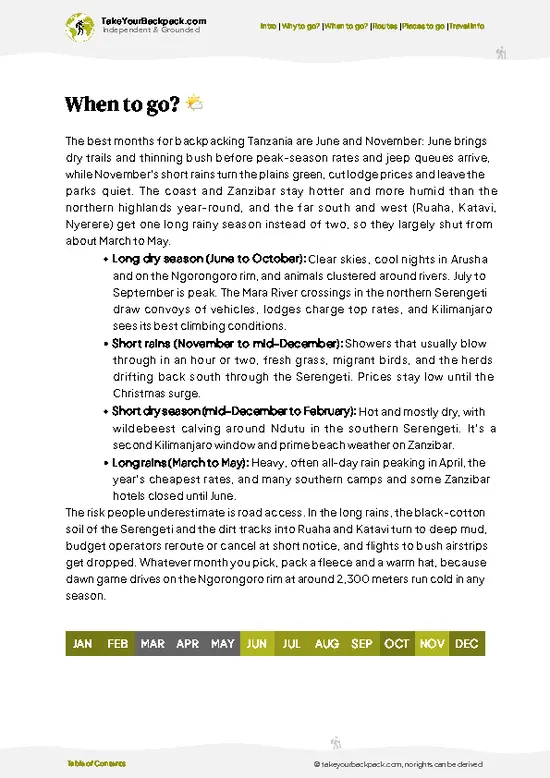
example page 3 from our offline Travel Guide for Tanzania
example page 4 from our offline Travel Guide for Tanzania
example page 5 from our offline Travel Guide for Tanzania
example page 6 from our offline Travel Guide for Tanzania
example page 7 from our offline Travel Guide for Tanzania
Loading the map 🌍
CLICK TO FILTER
cities
towns
landmarks
national parks
hikes
beaches
attractions
festivals
regions
SHOW COUNTRY’S BESTSHOW ALL

✨ Why go?
Ranked #25 town in Tanzania
What makes it a must-see town

Liwale is for people who want southern Tanzania with the volume turned down. It sits close to the wilderness of the southern Selous side, so miombo woodland and big game country start almost at the edge of town. Stays are brief and practical, a night or two of guesthouse life and market meals, then onward. Come if you are a self-reliant solo traveler or small-group explorer who enjoys cashew-season trading energy and swapping stories with locals. Skip it if you need nightlife or easy tour desks.

💡 HighlightsDon't-miss highlights and experiences

  1. Liwale Central Market: The town’s daily hub, with sacks of sesame and cashew nuts, produce stalls and cheap tea stands. Go in the morning when stock arrives. Free to enter, allow 1 hour.
  2. Cashew buying sheds: During the harvest and sales months, roughly October to December, farmers queue to weigh and sell raw nuts, and you can watch the trade that runs the local economy. Free to watch, 30 to 60 minutes. Be polite and ask before photographing.
  3. Evening grill stalls: Small roadside stands serve grilled meat, chips and sweet milky tea once the heat drops. Go after dusk for the best atmosphere. Expect to pay about US$2 to 4 for a meal, and allow an hour.
  4. Town walk along the main road: A slow loop past the shops, mosques, churches and tailors shows how a remote district capital works. Mornings and late
… read more 👉
  1. Liwale Central Market: The town’s daily hub, with sacks of sesame and cashew nuts, produce stalls and cheap tea stands. Go in the morning when stock arrives. Free to enter, allow 1 hour.
  2. Cashew buying sheds: During the harvest and sales months, roughly October to December, farmers queue to weigh and sell raw nuts, and you can watch the trade that runs the local economy. Free to watch, 30 to 60 minutes. Be polite and ask before photographing.
  3. Evening grill stalls: Small roadside stands serve grilled meat, chips and sweet milky tea once the heat drops. Go after dusk for the best atmosphere. Expect to pay about US$2 to 4 for a meal, and allow an hour.
  4. Town walk along the main road: A slow loop past the shops, mosques, churches and tailors shows how a remote district capital works. Mornings and late afternoons are cooler. Free, about 1 hour.
Day trips from Liwale lead to the southern Selous (Nyerere National Park) wilderness and the Mbwemkuru River country, where wildlife and woodland walks are possible with a guide. Park entry needs a ticket and a prior arrangement with an operator.
Spotted a mistake or missing something? Contact us.

🏘️ NeighborhoodsUnderstanding the local layout

Liwale is a small district town in Lindi Region, so you can cover every area on foot in an afternoon. Distances are short because the town grew along one main road, so skip hiring a ride and just walk it.
  • Main road and market: This is the center of action. Stalls sell cassava, cashews, sesame, rice and fried snacks, and prices are lowest in the morning, so go early and bargain with a smile.
  • Bus stand area: Noisy and quick, with small eateries serving ugali, beans and chai. Arrive here, eat, and move on.
  • Residential outskirts: Quiet lanes of mud-brick and tin-roof homes, with cashew trees and farmland at the edges. Walk them in daylight and greet everyone. Greetings open doors here.

⌛️ 1 dayA smart one-day plan

7:30 AM, Central Market: Start where the town wakes first. Sip sweet tea, watch sacks of sesame and cashew move, and chat with vendors. It gives you your bearings on a quiet, small-scale town.
9:30 AM, Main Road Walk: Stroll past tailors, shops and mosques, then drift toward the edges where farmland begins. This is slow, easy and free.
12:30 PM, Lunch Stall: Eat rice, beans or grilled fish with local families, since the midday heat calls for a break in the shade.
3:00 PM, Cashew Sheds and Farm Edges: Not on any standard route, this is where you see the real local trade, or fields and woodland trails beyond town in the off-season. Ask permission and keep your visit short.
6:00 PM, Grill Stalls: Finish with nyama choma, tea and conversation as lanterns come on.

🌤️ When to go?Weather, crowds, and seasonal trade-offs

Liwale is easiest to reach and explore from June to October, when the roads are firm and days are dry.
  • Dry season (June to October): Days run about 27 to 32°C (81 to 90°F), nights cooler near 15 to 18°C (59 to 64°F). Dirt roads are passable.
  • Hot build-up (November to December): Heat climbs past 33°C (91°F) before rains.
  • Long rains (March to May): Heavy downpours turn roads to mud and transport slows. Skip it.
Book onward transport a day ahead in the dry months, when cashew traders fill vehicles.

source: climatestotravel.comJANJanuary: fair for travelingFEBFebruary: fair for travelingMARMarch: fair for travelingAPRApril: fair for travelingMAYMay: fair for travelingJUNJune: highly recommended for travelingJULJuly: highly recommended for travelingAUGAugust: highly recommended for travelingSEPSeptember: excellent for travelingOCTOctober: excellent for travelingNOVNovember: fair for travelingDECDecember: fair for traveling
when-to-go

✈️ The backpacker research shortcutTanzania Travel Guide

An offline-friendly backpacking guide with optimized travel routes, ranked highlights, transport advice, and the best areas to stay.
example page 0 from our offline Travel Guide for Tanzania
example page 1 from our offline Travel Guide for Tanzania
example page 2 from our offline Travel Guide for Tanzania
example page 3 from our offline Travel Guide for Tanzania
example page 4 from our offline Travel Guide for Tanzania
example page 5 from our offline Travel Guide for Tanzania
example page 6 from our offline Travel Guide for Tanzania
example page 7 from our offline Travel Guide for Tanzania
The digital guide (396 pages) contains:
✅ 103 highlights, ranked by travel appeal
✅ Optimized 7, 14 & 21-day travel routes
✅ Cities, national parks, landmarks, beaches
✅ How to get around
✅ Offline-friendly for travel without Wi-Fi
👉 Click to see all 30+ guide features

📅 Plan smarter in minutes, not weeks
✅ Month by month travel advice
✅ Festivals & national holidays
✅ Budget expectations

🗺️ Go to the right places, skip the overrated ones
✅ Honest pros & cons of destinations
✅ Top hikes, parks & viewpoints
✅ Lesser-known places most travelers miss
✅ Clear “worth it vs skip it” guidance

🛏️ Travel smoothly without rookie mistakes
✅ Best areas to stay
✅ Transport systems explained simply
✅ Common scams & safety advice
✅ SIM cards, money & practical tips

🌍 Understand the country, not just visit it
✅ Culture & traditions
✅ 52 Essential phrases & customs
✅ Festivals worth planning around
✅ Traveler-friendly historical context
✅ Insights that make places more meaningful

📱 Built for real travel conditions
✅ Fully downloadable PDF
✅ Works completely offline
✅ Optimized for phone use
✅ Useful in remote areas & buses
✅ Everything in one place
Stop searching, start planning
Get instant access to your full guide. 30‑day money-back guarantee.
+ Add another guide for just

By proceeding you agree to our terms.
Sent to your inbox immediately after payment • 100% Secure Checkout
Best Backpacking Travel Advisor 2025 tourism awardBest Backpacking
Travel Advisor
2025
What others say about Take Your Backpack Guides:
⭐⭐⭐⭐⭐
Fantastic, amazing amount of information!
⭐⭐⭐⭐⭐
My goodness this is amazing, it's what I've been looking for hats off too you!
⭐⭐⭐⭐⭐
I think this is absolutely BRILLIANT
⭐⭐⭐⭐
Very complete and informative. It's still missing places, but I gotta to commend you
⭐⭐⭐⭐⭐
This is truly amazing, thank you, can't wait to explore it with my kids!
⭐⭐⭐⭐⭐
Awesome resource, thank you!
⭐⭐⭐⭐⭐
This is amazing! Can't wait to explore the ones I haven't seen
⭐⭐⭐⭐
I love this! Well done, great idea.
⭐⭐⭐⭐⭐
Thanks for taking the time to make this gem!
⭐⭐⭐⭐⭐
This might be the best website I've ever seen.
⭐⭐⭐⭐⭐
Congratulations, and thank you so much for your work; it's incredibly valuable.
⭐⭐⭐⭐
In all seriousness I think you did a great job pointing out the important spots
⭐⭐⭐⭐⭐
10/10 very good
⭐⭐⭐⭐⭐
As someone who's only just starting to visit regularly this is awesome, thank you.
⭐⭐⭐⭐
Thank you very much! I'm going to visit my dad, it's going to be very useful!
⭐⭐⭐⭐⭐
This is really cool! We'll be travelling for the first time and this definitely come in handy.
⭐⭐⭐⭐⭐
You are now our minister of culture, congratulations 👨‍💼
⭐⭐⭐⭐⭐
Just wanted to tell you that this is a pearl! Going to follow your recommendations.
⭐⭐⭐⭐⭐
This is so cool. I'll definitely be using the resource for my travels soon.
⭐⭐⭐⭐⭐
This is very impressive! Good work.
⭐⭐⭐⭐⭐
This is an amazing and informative site. Very well done!

🛏️ Where to stay?Choosing the right base

Stay near the main road and market, where the few guesthouses cluster and everything is a short walk away. Budget rooms with a bed and a fan or net are the norm, typically US$6 to 15 a night, and dorm-style hostels do not exist, so expect simple private rooms. Streets here are quiet after dark, though the bus stand area gets early-morning noise from departures. Staying close to the stand helps if you catch a dawn bus, but ask for a room at the back. Book ahead around cashew harvest season, when traders fill rooms.

🚌 Getting aroundMoving around without the hassle

Liwale punishes anyone who turns up at the bus stand late in the morning expecting a seat, because the long-distance buses leave very early and fill fast. Roads here are mostly unpaved outside the main routes, so journeys run slow and depend on weather. Plan the day around departures and you will be fine.
  • Walking: The town is compact, so everything sits within 10 to 20 minutes on foot. Free, and the best way to meet people.
  • Long-distance bus: Services link Liwale with Nachingwea, Masasi and Dar es Salaam. Fares run roughly US$8 to 25 depending on the destination, and departures cluster before dawn. Buy your ticket the day before.
  • Boda-boda (motorbike taxi): Quick for short hops at about US$0.40 to 1.50. Agree the price first, since there are no meters, and ask for a helmet.
  • Shared pickups and
… read more 👉
Liwale punishes anyone who turns up at the bus stand late in the morning expecting a seat, because the long-distance buses leave very early and fill fast. Roads here are mostly unpaved outside the main routes, so journeys run slow and depend on weather. Plan the day around departures and you will be fine.
  • Walking: The town is compact, so everything sits within 10 to 20 minutes on foot. Free, and the best way to meet people.
  • Long-distance bus: Services link Liwale with Nachingwea, Masasi and Dar es Salaam. Fares run roughly US$8 to 25 depending on the destination, and departures cluster before dawn. Buy your ticket the day before.
  • Boda-boda (motorbike taxi): Quick for short hops at about US$0.40 to 1.50. Agree the price first, since there are no meters, and ask for a helmet.
  • Shared pickups and minibuses: Cheaper links to nearby villages, costing about US$1 to 5. They leave when full, so carry water and patience.

👛 Costs (as of 22 October 2026)What things cost and how to budget

Liwale costs about US$6 to 15 a day for a backpacker, with a total daily budget near US$34. Prices are low, and cash is essential since card machines are scarce.
CategoryBudget RangeLocal Reality
Dorm accommodationUS$6 to 15Simple private guesthouse rooms; no dorms
MealsUS$5 to 10Ugali, rice and beans, chai at local eateries
Local transportUS$1 to 4Boda-boda hops and shared pickups
Basic activities/entry feesUS$2 to 8Guided farm or village walks
Miscellaneous expensesUS$2 to 3Water, airtime, snacks
Total Daily BudgetUS$34Upper end of the ranges
Buy fruit and snacks at the morning market rather than at roadside shops to save a few dollars.
⚠️ Prices can change and everyone travels differently, so take this as a rough guide. Hope it helps you plan your adventure!

🚌 Day tripsEasy escapes and nearby places

Liwale works as a base for nature-focused day trips, though transport is thin, so expect to arrange a driver or motorbike.
Nyerere National Park (northern edge):
The wild southern reaches of the park draw those after quiet game viewing without crowds. Allow a full day with a hired vehicle, budget US$40 to 100 for transport plus park fees, and go in the dry season. First-timers often underestimate road time.
👉 Explore Nyerere National Park
Village cashew farms:
Walk or ride a boda-boda to surrounding farms to see how cashew nuts are harvested and dried. Costs are minimal, about US$2 to 8 with a local guide, and the harvest around October to December is the best time. Ask permission before photographing people.

Nachingwea:
A bus ride of about 3 to 5 hours each way, so this suits an early start … read more 👉
Liwale works as a base for nature-focused day trips, though transport is thin, so expect to arrange a driver or motorbike.
Nyerere National Park (northern edge):
The wild southern reaches of the park draw those after quiet game viewing without crowds. Allow a full day with a hired vehicle, budget US$40 to 100 for transport plus park fees, and go in the dry season. First-timers often underestimate road time.
👉 Explore Nyerere National Park
Village cashew farms:
Walk or ride a boda-boda to surrounding farms to see how cashew nuts are harvested and dried. Costs are minimal, about US$2 to 8 with a local guide, and the harvest around October to December is the best time. Ask permission before photographing people.

Nachingwea:
A bus ride of about 3 to 5 hours each way, so this suits an early start and a late return. Expect around US$5 to 10 in fares and a look at a larger regional market town.

🍲 FoodLocal Cuisine & Drinks

In Liwale, food is a straightforward celebration of local staples—think hearty ugali, a dense maize porridge that anchors every meal, paired with flavorful mchicha (spinach stew) or freshly grilled fish when you’re lucky. The air often carries the smoky scent of street-side nyama choma (barbecued meat), a must-try for anyone wanting to tap into the city’s casual, communal eating vibe. Backpackers find their groove in bustling markets where vendors serve up these dishes with no fuss but plenty of warmth, or in small roadside cafés where the pace slows just enough to savor a cup of strong, sweet Tanzanian chai. Sharing food here is social currency; expect to eat with your hands and dive into conversations with locals eager to share their table and stories.

🛡️ SafetySafety Tips and Common Scams in Liwale

Liwale is calm and low-key, and most trouble is minor. Petty theft is rare, but keep your phone and cash out of sight at the market and bus stand. Walking at night is generally fine on the main road, though lanes are unlit, so carry a torch and avoid wandering alone far out. Agree boda-boda prices beforehand. Wildlife, including elephants, can appear near the outskirts, so ask locals before walking in the bush.

FAQTraveler FAQ

Liwale suits travelers who want remote, quiet Tanzania rather than a stopover. It sits near the southern edge of Nyerere National Park and has cashew farms, markets and little tourist traffic. Roads are rough, so allow time for slow travel, and expect basic guesthouses at US$6 to 15 a night.
Liwale needs two to three days to feel worthwhile. One day covers the market and a walk through town, and another suits a farm visit or a trip toward Nyerere National Park costing about US$40 to 100 with a hired vehicle. Add a buffer day because road conditions and bus schedules can shift.
Liwale is not practical as a day trip from a nearby city. Nachingwea is the closest larger town, and the bus takes roughly 3 to 5 hours each way on rough roads for about US$5 to 10. Spend at least one night so you are not rushing for the early departures.
⚠️ Things can change over time, so always validate details locally before you go.

Other Tanzanian towns near Liwale

Explore more nearby:

  • Kilwa Masoko—Fishing harbor, Pwani Beach, Kilwa Kisiwani gateway, quiet bay| 200 km away
  • Mikumi—Mkata floodplain, highway safari, hippo pool, park gate| 286 km away
  • Bagamoyo—Caravan Serai, Kaole ruins, dhow landing, slave-trade museum| 388 km away

💡 Not sure where to go next?
Create a personalized itinerary for Tanzania including Liwale and the places that fit your trip.

Generate my itinerary

👉 Discover all towns

Or checkout all Tanzania has to offer (think cities, towns, villages, national parks, hikes, beaches, festivals)
Country photo of Tanzania

We 💚 feedbackWhat to keep in mind

Liwale visitors often arrive without cash or onward transport sorted, then get stuck. Withdraw money in a larger town beforehand, confirm your next ride the day you arrive, and carry water. Then relax and enjoy the pace.

✍️ Help improve this page!
The information on this page is based on in-depth research, insights shared by experienced travelers, and feedback from the local travel community in Tanzania. While every effort is made to keep the information accurate and current, conditions can change — so if you spot anything incorrect or outdated, please get in touch.


🙋‍♂️ Give feedback

👋 Meet the founderWho’s Behind Take Your Backpack?

Johan, backpacker and founder of TakeYourBackpackHi, I’m Johan (Netherlands 🇳🇱), the creator of TakeYourBackpack. Over the past 3 decades, I’ve backpacked through 90+ countries across six continents, gaining extensive experience with independent travel, long-term trips, and overland routes.

This site is built on a combination of firsthand travel experience and carefully curated insights from other backpackers. Many guides are based on places I’ve personally visited, while others bring together tips, observations, and practical advice shared by trusted travelers I’ve met along the way.

The goal is to provide realistic, experience-driven guidance — not generic itineraries — so you can explore destinations with better context, clearer expectations, and more confidence.