
×

Togo🇹🇬 | attractionsMaison des Esclaves d’AgbodrafoLagoon shore, holding cells, Dos Santos story, Point of No Return | things to do and best time to go

Explore Koutammakou Cultural Landscape Visitor AreaExplore Marché de Kpalimé

Backpacking in Maison des Esclaves d’Agbodrafo
🌟 Highlightattraction ranked #5
By Johan Kruseman 🇳🇱 | Updated October 22, 2026

You can reach Maison des Esclaves d’Agbodrafo from Lomé in a short ride east along the coast, which makes it one of the easiest heavy-history stops in West Africa. It stands in Agbodrafo, in the lagoon-and-palm belt of southern Togo, close to Lake Togo. Inside, the air is cool and damp, the floors are worn and the courtyard hums with heat and cicadas. The building is small, so a guided visit goes fast, and crowds rarely build beyond a few school or diaspora groups. You pay a modest entry fee, and a guide is worth having because the stories come from the guide, not from placards. The mood is quiet and sobering, not theatrical, and the lagoon outside softens it a little. It suits history-minded travelers and anyone tracing the Atlantic slave trade. If you want thrills or a long sightseeing day, you will find it too brief.

Discover everything you want to know in the 📖 Togo Travel Guide.


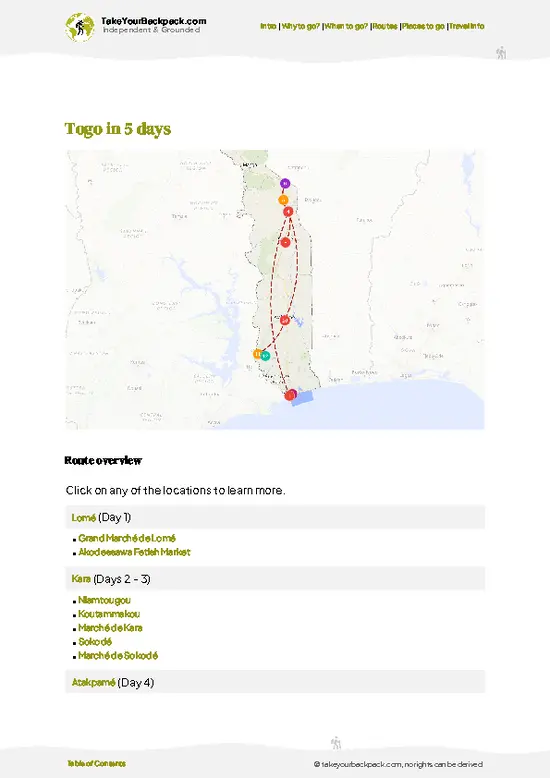
example page 0 from our offline Travel Guide for Togo
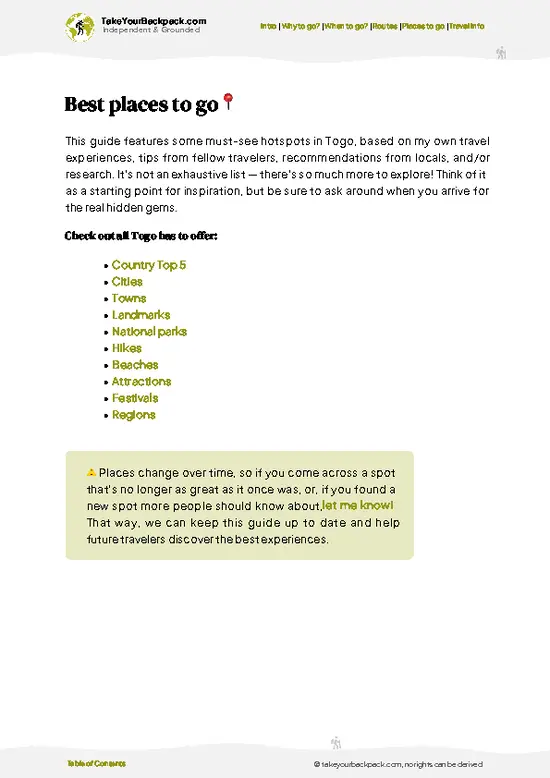
example page 1 from our offline Travel Guide for Togo
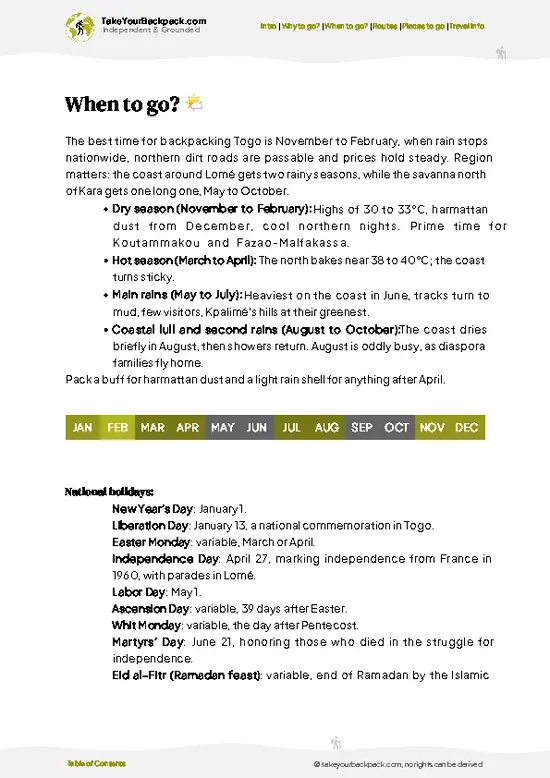
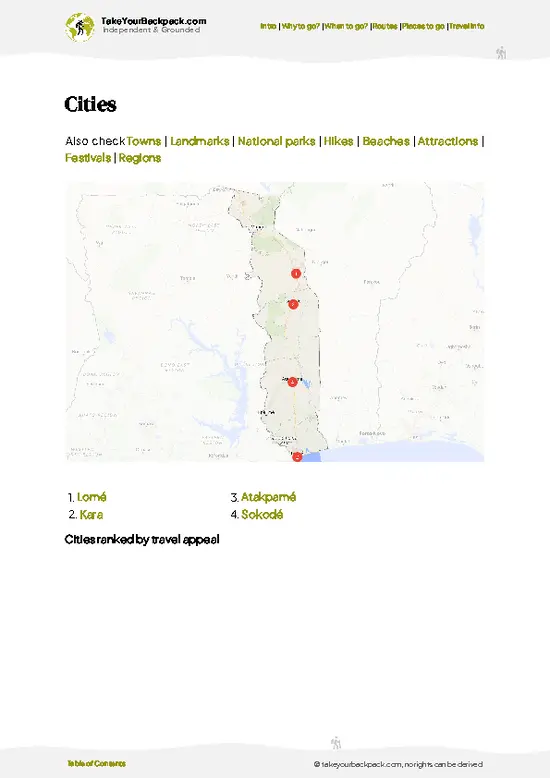
example page 2 from our offline Travel Guide for Togo
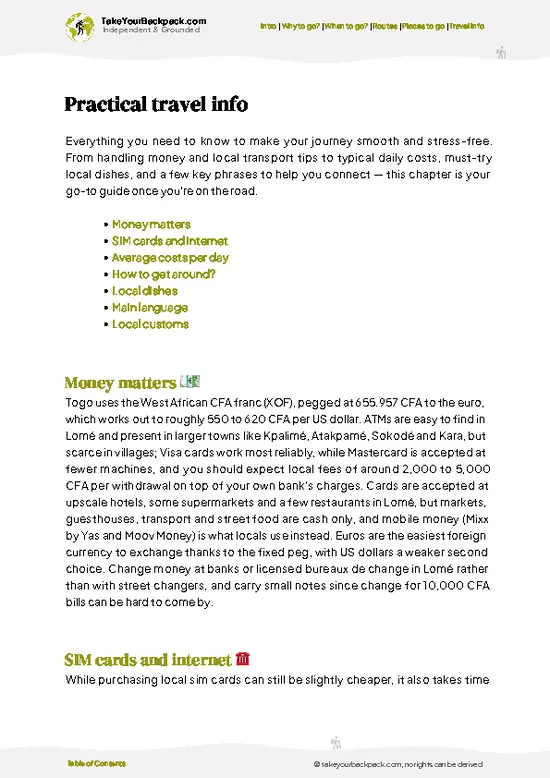
example page 3 from our offline Travel Guide for Togo
example page 4 from our offline Travel Guide for Togo
example page 5 from our offline Travel Guide for Togo
example page 6 from our offline Travel Guide for Togo
example page 7 from our offline Travel Guide for Togo
Loading the map 🌍
CLICK TO FILTER
cities
towns
landmarks
national parks
hikes
beaches
attractions
festivals
regions
SHOW COUNTRY’S BESTSHOW ALL

✨ Why go?
Ranked #5 attraction in Togo
The unique appeal for travelers

Maison des Esclaves d’Agbodrafo is one of the few places in Togo where the Atlantic slave trade has a physical address. The house belonged to the Brazilian-born trader Cinco Cinco Dos Santos. That specific link between this coast and Brazil, Haiti and the wider diaspora is what separates the visit from a generic museum stop.

The second reason is the setting. The lagoon landing point behind the house lets you see how captives were moved toward ships off the coast. You are standing in the geography, and that makes the story easier to grasp than any text panel.

The third is route value. Agbodrafo sits on the coastal road between Lomé and Aného, so it slots into a southern Togo loop without a detour. It gives the trip a serious anchor between beaches and lake villages, and it pairs with the … read more 👉
Maison des Esclaves d’Agbodrafo is one of the few places in Togo where the Atlantic slave trade has a physical address. The house belonged to the Brazilian-born trader Cinco Cinco Dos Santos. That specific link between this coast and Brazil, Haiti and the wider diaspora is what separates the visit from a generic museum stop.

The second reason is the setting. The lagoon landing point behind the house lets you see how captives were moved toward ships off the coast. You are standing in the geography, and that makes the story easier to grasp than any text panel.

The third is route value. Agbodrafo sits on the coastal road between Lomé and Aného, so it slots into a southern Togo loop without a detour. It gives the trip a serious anchor between beaches and lake villages, and it pairs with the Voodoo culture of the nearby towns, where the diaspora connections are still felt in religion and names.

💡 HighlightsThe experiences that define the visit

  1. The Slave House itself: The old trading house, the site’s main draw, has low rooms where captives were held. The guide explains how people were counted, sold and moved on.
  2. The holding cells: Dark, narrow and cool, these rooms are the most affecting space. Stand still for a minute and you notice how little light and air there is.
  3. The courtyard: An open yard where trading and inspections took place. Heat, sound and shade here contrast sharply with the rooms around it.
  4. The lagoon shore: Behind the house, the water shows how captives were taken by boat toward waiting ships. Quiet, flat and wide, it makes the route concrete.
  5. The Dos Santos story: The guide’s account of Cinco Cinco Dos Santos and the Brazilian connection explains how local traders, European demand and returning diaspora families fit
… read more 👉
  1. The Slave House itself: The old trading house, the site’s main draw, has low rooms where captives were held. The guide explains how people were counted, sold and moved on.
  2. The holding cells: Dark, narrow and cool, these rooms are the most affecting space. Stand still for a minute and you notice how little light and air there is.
  3. The courtyard: An open yard where trading and inspections took place. Heat, sound and shade here contrast sharply with the rooms around it.
  4. The lagoon shore: Behind the house, the water shows how captives were taken by boat toward waiting ships. Quiet, flat and wide, it makes the route concrete.
  5. The Dos Santos story: The guide’s account of Cinco Cinco Dos Santos and the Brazilian connection explains how local traders, European demand and returning diaspora families fit together.
  6. Exhibits and artifacts: Chains, shackles and trade objects are displayed inside. They are few, which keeps attention on the building and the telling.
  7. The “Point of No Return” memory: The site frames the spot where people left the shore for good, and visitors often pause here in silence.
Maison des Esclaves d’Agbodrafo takes about an hour to an hour and a half with a guide, a little more if you linger by the lagoon.
Spotted a mistake or missing something? Contact us.

Things to do near Maison des Esclaves d’Agbodrafo

Ratings based on Tripadvisor reviews. When you book through this link, you support our work at no extra cost to you.

🌤️ When to go?When to go for the best experience

  • Main Dry Season (November to March): Lowest rain, hot and humid at 24 to 33°C (75 to 91°F), with harmattan haze some mornings that softens the lagoon views. Easiest time for the boat and coastal walks.
  • Short Dry Spell (August to September): Cooler and cloudier at 23 to 28°C (73 to 82°F), with fewer visitors and lighter showers.
  • Rainy Seasons (April to July, October): Heavy downpours at 25 to 31°C (77 to 88°F). The sandy lanes turn muddy, but the house stays quiet and you can often have the guide to yourself.
  • Crowds and Prices: Visits peak around December holidays and when the diaspora returns, though prices for rooms and rides hardly change here.
  • Daylight: Close to the equator, days run about 11 to 13 hours, so plan to arrive by mid-morning.
Aim for a weekday morning in December to February for cooler light and the fewest tour groups.

source: climatestotravel.comJANJanuary: highly recommended for travelingFEBFebruary: excellent for travelingMARMarch: excellent for travelingAPRApril: fair for travelingMAYMay: fair for travelingJUNJune: fair for travelingJULJuly: fair for travelingAUGAugust: fair for travelingSEPSeptember: fair for travelingOCTOctober: fair for travelingNOVNovember: highly recommended for travelingDECDecember: highly recommended for traveling
when-to-go

✈️ The backpacker research shortcutTogo Travel Guide

An offline-friendly backpacking guide with optimized travel routes, ranked highlights, transport advice, and the best areas to stay.
example page 0 from our offline Travel Guide for Togo
example page 1 from our offline Travel Guide for Togo
example page 2 from our offline Travel Guide for Togo
example page 3 from our offline Travel Guide for Togo
example page 4 from our offline Travel Guide for Togo
example page 5 from our offline Travel Guide for Togo
example page 6 from our offline Travel Guide for Togo
example page 7 from our offline Travel Guide for Togo
The digital guide (194 pages) contains:
✅ 42 highlights, ranked by travel appeal
✅ Optimized 2, 3 & 5-day travel routes
✅ Cities, national parks, landmarks, beaches
✅ How to get around
✅ Offline-friendly for travel without Wi-Fi
👉 Click to see all 30+ guide features

📅 Plan smarter in minutes, not weeks
✅ Month by month travel advice
✅ Festivals & national holidays
✅ Budget expectations

🗺️ Go to the right places, skip the overrated ones
✅ Honest pros & cons of destinations
✅ Top hikes, parks & viewpoints
✅ Lesser-known places most travelers miss
✅ Clear “worth it vs skip it” guidance

🛏️ Travel smoothly without rookie mistakes
✅ Best areas to stay
✅ Transport systems explained simply
✅ Common scams & safety advice
✅ SIM cards, money & practical tips

🌍 Understand the country, not just visit it
✅ Culture & traditions
✅ 52 Essential phrases & customs
✅ Festivals worth planning around
✅ Traveler-friendly historical context
✅ Insights that make places more meaningful

📱 Built for real travel conditions
✅ Fully downloadable PDF
✅ Works completely offline
✅ Optimized for phone use
✅ Useful in remote areas & buses
✅ Everything in one place
Stop searching, start planning
Get instant access to your full guide. 30‑day money-back guarantee.
+ Add another guide for just

By proceeding you agree to our terms.
Sent to your inbox immediately after payment • 100% Secure Checkout
Best Backpacking Travel Advisor 2025 tourism awardBest Backpacking
Travel Advisor
2025
What others say about Take Your Backpack Guides:
⭐⭐⭐⭐⭐
Fantastic, amazing amount of information!
⭐⭐⭐⭐⭐
My goodness this is amazing, it's what I've been looking for hats off too you!
⭐⭐⭐⭐⭐
I think this is absolutely BRILLIANT
⭐⭐⭐⭐
Very complete and informative. It's still missing places, but I gotta to commend you
⭐⭐⭐⭐⭐
This is truly amazing, thank you, can't wait to explore it with my kids!
⭐⭐⭐⭐⭐
Awesome resource, thank you!
⭐⭐⭐⭐⭐
This is amazing! Can't wait to explore the ones I haven't seen
⭐⭐⭐⭐
I love this! Well done, great idea.
⭐⭐⭐⭐⭐
Thanks for taking the time to make this gem!
⭐⭐⭐⭐⭐
This might be the best website I've ever seen.
⭐⭐⭐⭐⭐
Congratulations, and thank you so much for your work; it's incredibly valuable.
⭐⭐⭐⭐
In all seriousness I think you did a great job pointing out the important spots
⭐⭐⭐⭐⭐
10/10 very good
⭐⭐⭐⭐⭐
As someone who's only just starting to visit regularly this is awesome, thank you.
⭐⭐⭐⭐
Thank you very much! I'm going to visit my dad, it's going to be very useful!
⭐⭐⭐⭐⭐
This is really cool! We'll be travelling for the first time and this definitely come in handy.
⭐⭐⭐⭐⭐
You are now our minister of culture, congratulations 👨‍💼
⭐⭐⭐⭐⭐
Just wanted to tell you that this is a pearl! Going to follow your recommendations.
⭐⭐⭐⭐⭐
This is so cool. I'll definitely be using the resource for my travels soon.
⭐⭐⭐⭐⭐
This is very impressive! Good work.
⭐⭐⭐⭐⭐
This is an amazing and informative site. Very well done!

🛏️ Where to stay?Choosing the right base

Stay in Lomé, about 30 to 45 minutes away by road, because Agbodrafo itself has only a handful of simple guesthouses. Lomé gives you the widest choice of dorms and budget rooms, plus the shared taxis that run east along the coast road.

The Bè and Nyékonakpoè districts are the most practical for backpackers. They sit near the Grand Marché and the taxi stands, so you can leave early and be back for dinner. Evenings here feel social, with street food stalls and small bars, and other solo travelers are easy to meet at communal tables. Stick to main streets after dark and use a moto or taxi for longer … read more 👉
Stay in Lomé, about 30 to 45 minutes away by road, because Agbodrafo itself has only a handful of simple guesthouses. Lomé gives you the widest choice of dorms and budget rooms, plus the shared taxis that run east along the coast road.

The Bè and Nyékonakpoè districts are the most practical for backpackers. They sit near the Grand Marché and the taxi stands, so you can leave early and be back for dinner. Evenings here feel social, with street food stalls and small bars, and other solo travelers are easy to meet at communal tables. Stick to main streets after dark and use a moto or taxi for longer hops.

The Tokoin and Hédzranawoé areas suit those who want quieter streets and a bit more polish, with fewer crowds but slightly higher prices.

For a calmer night close to the site, a lagoon-side or beach guesthouse in Agbodrafo or nearby Togoville direction is relaxed and safe, though the nightlife is limited to a beer by the water. Book ahead in December and early January, when families return and rooms fill quickly.

👛 Costs (as of 22 October 2026)How expensive it really is

Maison des Esclaves d’Agbodrafo costs a backpacker roughly €28 to 45 a day including entry, transport from Lomé, food and a basic bed, with the total landing around €38. Travelers pay in West African CFA francs, and cash is the norm outside Lomé.
CategoryBudget RangeLocal Reality
Entry and guide€2 to 5Small fee for the museum and guided tour, often in French, with English sometimes available.
Tips for guide€1 to 3Appreciated, not required.
Transport from Lomé (round trip)€3 to 8Shared taxi or minibus along the coast road, or a moto for the last stretch.
Local transport in Lomé€1 to 3Shared taxis and motos to the departure point.
Food€4 to 9Street rice, grilled fish and fufu at simple eateries.
Accommodation (low season)€10 to 20Dorms or basic fan rooms in Lomé.
Accommodation (high season)€15 to 25December
… read more 👉
Maison des Esclaves d’Agbodrafo costs a backpacker roughly €28 to 45 a day including entry, transport from Lomé, food and a basic bed, with the total landing around €38. Travelers pay in West African CFA francs, and cash is the norm outside Lomé.
CategoryBudget RangeLocal Reality
Entry and guide€2 to 5Small fee for the museum and guided tour, often in French, with English sometimes available.
Tips for guide€1 to 3Appreciated, not required.
Transport from Lomé (round trip)€3 to 8Shared taxi or minibus along the coast road, or a moto for the last stretch.
Local transport in Lomé€1 to 3Shared taxis and motos to the departure point.
Food€4 to 9Street rice, grilled fish and fufu at simple eateries.
Accommodation (low season)€10 to 20Dorms or basic fan rooms in Lomé.
Accommodation (high season)€15 to 25December and January fill early.
Total Daily Budget€38Comfortable for one traveler on a budget.


source: tourisme.gouv.tg
⚠️ Prices can change and everyone travels differently, so take this as a rough guide. Hope it helps you plan your adventure!

FAQFrequently asked questions about Maison des Esclaves d’Agbodrafo

Plan on one to two hours at Maison des Esclaves d’Agbodrafo itself, which covers the guided tour of the old merchant house and the nearby shoreline. With the 30 to 45 minute trip each way from Lomé, a half day is enough, and you can pair it with Togoville or Lake Togo in a full day.
Maison des Esclaves d’Agbodrafo is good value at roughly €2 to 5, because the guide explains the slave trade at this port and the Danish and German-era history on site. The building is small, so the guided story is the main draw rather than the architecture. Visitors with an interest in West African history get the most from it.
Take a shared taxi or minibus east from Lomé toward Aného along the coast road, then get off at Agbodrafo, about 30 to 45 minutes and roughly €1.50 to 4 one way. From the junction a moto-taxi covers the short last stretch for around €1 to 2. A private taxi from Lomé costs more, roughly €15 to 25 round trip, and can wait for you.
⚠️ Things can change over time, so always validate details locally before you go.

Other Togolese attractions near Maison des Esclaves d’Agbodrafo

Explore more nearby:


💡 Not sure where to go next?
Create a personalized itinerary for Togo including Maison des Esclaves d’Agbodrafo and the places that fit your trip.

Generate my itinerary

👉 Discover all attractions

Or checkout all Togo has to offer (think cities, towns, villages, national parks, hikes, beaches, festivals)
Country photo of Togo

We 💚 feedbackSumming up the experience

Maison des Esclaves d’Agbodrafo works best as a morning stop on a coastal loop, paired with Lake Togo for a boat ride and a swim, or with Aného for its colonial-era streets and voodoo links. I would visit the house first, while you are still fresh, and save the lagoon calm for afterward.

✍️ Help improve this page!
The information on this page is based on in-depth research, insights shared by experienced travelers, and feedback from the local travel community in Togo. While every effort is made to keep the information accurate and current, conditions can change — so if you spot anything incorrect or outdated, please get in touch.


🙋‍♂️ Give feedback

👋 Meet the founderWho’s Behind Take Your Backpack?

Johan, backpacker and founder of TakeYourBackpackHi, I’m Johan (Netherlands 🇳🇱), the creator of TakeYourBackpack. Over the past 3 decades, I’ve backpacked through 90+ countries across six continents, gaining extensive experience with independent travel, long-term trips, and overland routes.

This site is built on a combination of firsthand travel experience and carefully curated insights from other backpackers. Many guides are based on places I’ve personally visited, while others bring together tips, observations, and practical advice shared by trusted travelers I’ve met along the way.

The goal is to provide realistic, experience-driven guidance — not generic itineraries — so you can explore destinations with better context, clearer expectations, and more confidence.