×

Togo🇹🇬 | attractionsMarché de KpaliméHill-farm produce, coffee and cocoa beans, ginger, herbal remedies | things to do and best time to go

Explore Maison des Esclaves d’AgbodrafoExplore Marché de Kara

Backpacking in Marché de Kpalimé
👌 Worth visitingattraction ranked #10
By Johan Kruseman 🇳🇱 | Updated October 22, 2026

Walk in before nine and you get the best produce, the coolest air and sellers who still have energy to bargain with you. Marché de Kpalimé sits in the town of Kpalimé, in the green hills of western Togo, a few hours northwest of Lomé by road. Expect red dust, the smell of smoked fish, fermenting corn dough and crushed peppers, and a roar of motorbikes and hawkers. It gets crowded and hot by late morning, and paths between stalls are narrow and muddy after rain. Entry costs nothing, and a bag of local spices or fruit costs very little. Bring small coins and a bag, because sellers rarely have change for big bills.

Discover everything you want to know in the 📖 Togo Travel Guide.


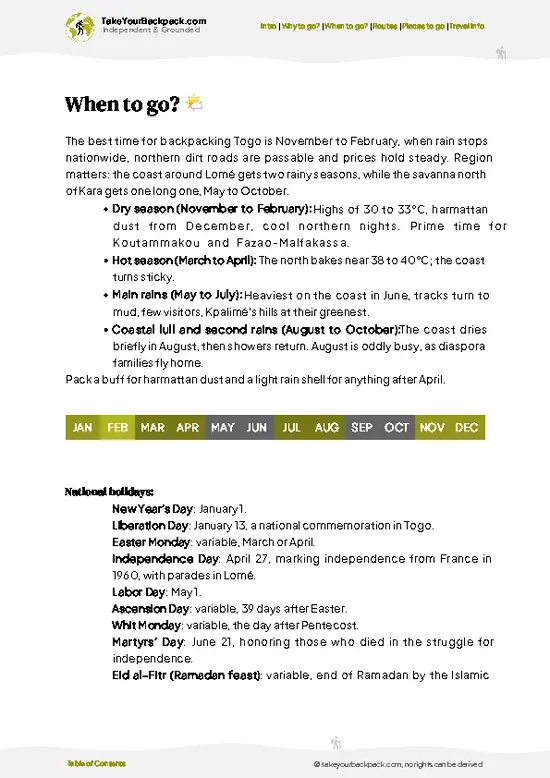
example page 0 from our offline Travel Guide for Togo
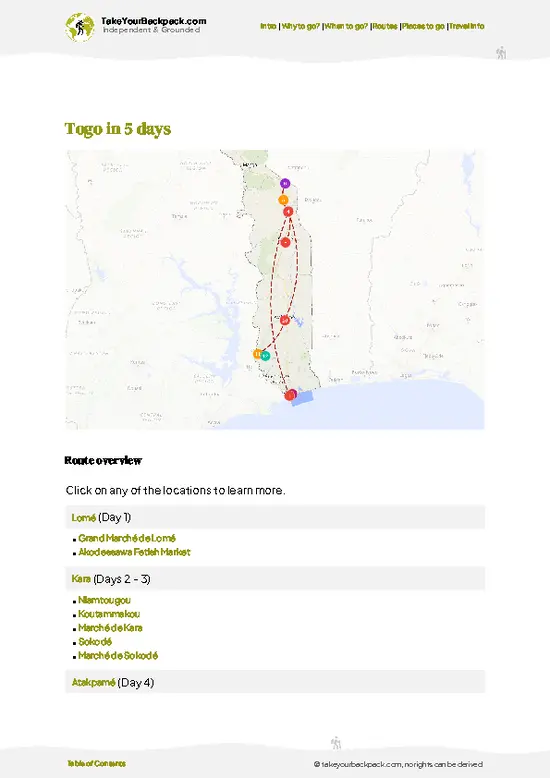
example page 1 from our offline Travel Guide for Togo
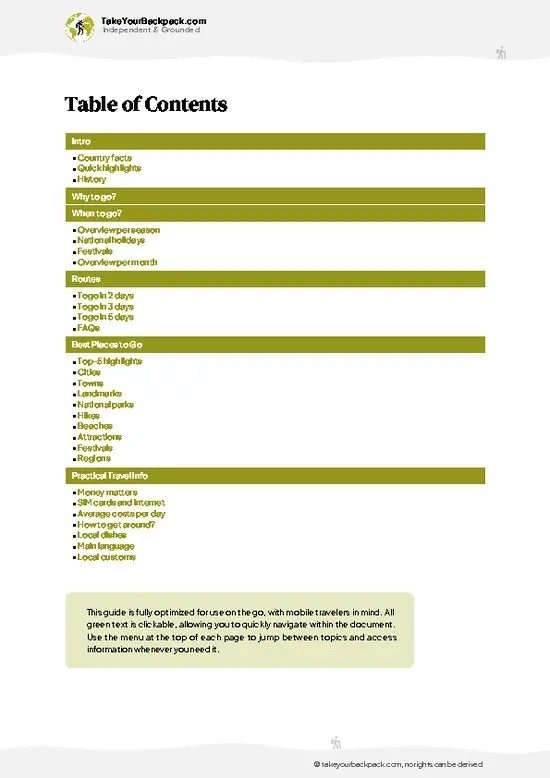
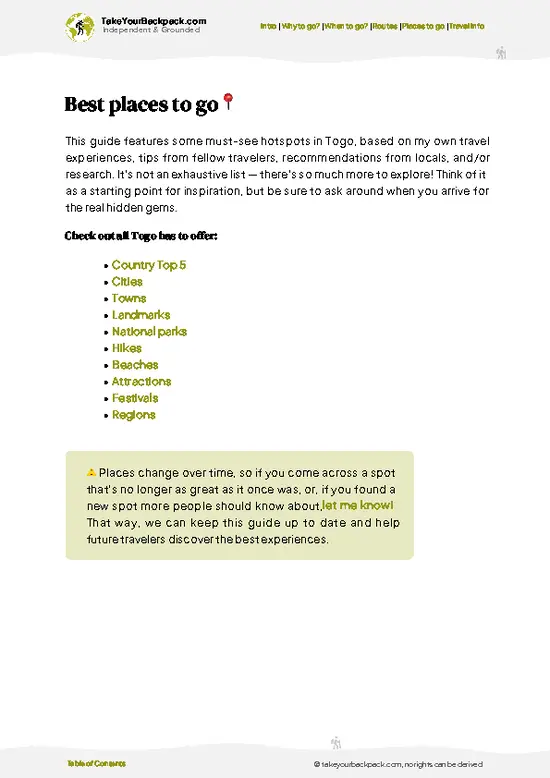
example page 2 from our offline Travel Guide for Togo
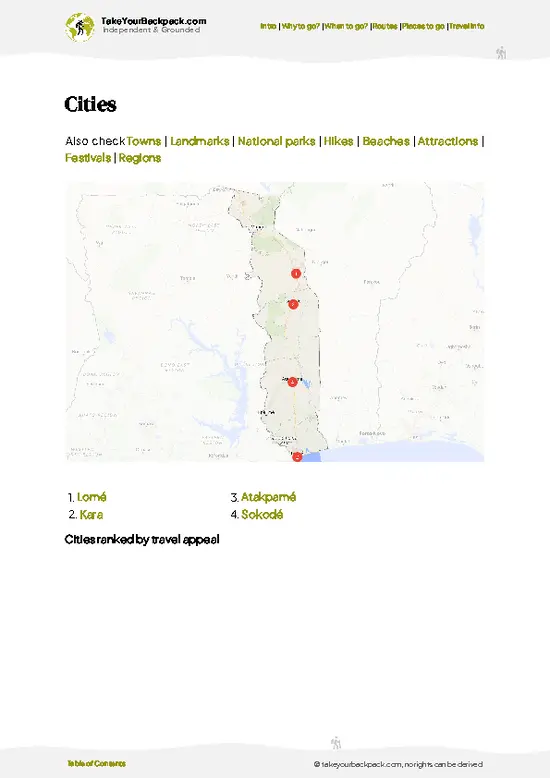
example page 3 from our offline Travel Guide for Togo
example page 4 from our offline Travel Guide for Togo
example page 5 from our offline Travel Guide for Togo
example page 6 from our offline Travel Guide for Togo
example page 7 from our offline Travel Guide for Togo
Loading the map 🌍
CLICK TO FILTER
cities
towns
landmarks
national parks
hikes
beaches
attractions
festivals
regions
SHOW COUNTRY’S BESTSHOW ALL

✨ Why go?
Ranked #10 attraction in Togo
What sets this place apart

Marché de Kpalimé shows you how the Plateaux region actually eats, trades and dresses, without a ticket booth or a guide in sight. Piles of cocoa, coffee, ginger, avocados and pineapples come down from the surrounding hills, so the produce is fresher and more varied than in the coastal markets. Bargaining here is friendly and unhurried, which makes it a gentle first lesson if you are new to West African haggling. It also fits neatly into a route through the hills, since the waterfalls, forests and butterfly trails around town are all a short ride away. Come for the colorful wax-print fabric stalls and the sellers of herbal remedies, and leave with a bag of fresh roasted peanuts.

💡 HighlightsPlaces and moments you shouldn't skip

  1. Main produce halls: Mounds of tomatoes, yams, cassava, chilies and leafy greens are stacked in neat pyramids, and the volume tells you how fertile the hills are.
  2. Spice and ginger stalls: Women sell ground pepper, dried ginger and fragrant local seasonings by the scoop, ideal for cheap, packable souvenirs.
  3. Fabric and wax-print sellers: Bolts of bold cloth hang from poles, and nearby tailors can sew a shirt or dress on the spot from a chosen length.
  4. Coffee and cocoa vendors: Beans from nearby plantations are sold raw by the bag, a reminder of why the region is known for them.
  5. Smoked fish and street food corners: Grilled fish, fried plantain, beans and fritters are served on the spot, and the smoke hangs low over the stalls.
  6. Traditional remedy sellers: Tables of dried roots, barks, powders and charms
… read more 👉
  1. Main produce halls: Mounds of tomatoes, yams, cassava, chilies and leafy greens are stacked in neat pyramids, and the volume tells you how fertile the hills are.
  2. Spice and ginger stalls: Women sell ground pepper, dried ginger and fragrant local seasonings by the scoop, ideal for cheap, packable souvenirs.
  3. Fabric and wax-print sellers: Bolts of bold cloth hang from poles, and nearby tailors can sew a shirt or dress on the spot from a chosen length.
  4. Coffee and cocoa vendors: Beans from nearby plantations are sold raw by the bag, a reminder of why the region is known for them.
  5. Smoked fish and street food corners: Grilled fish, fried plantain, beans and fritters are served on the spot, and the smoke hangs low over the stalls.
  6. Traditional remedy sellers: Tables of dried roots, barks, powders and charms show how much local healing still relies on plants.
  7. Basket and craft stalls: Woven baskets, wooden carvings and small handmade items sit along the market edges, usually cheaper than in the tourist shops.
Give it about two hours for a full loop with a snack and a bit of bargaining.
Spotted a mistake or missing something? Contact us.

Things to do near Marché de Kpalimé

Ratings based on Tripadvisor reviews. When you book through this link, you support our work at no extra cost to you.

🌤️ When to go?Seasonal considerations and timing

  • Dry Season (November to February): Market days are comfortable and roads are passable. Daytime highs run 30 to 33°C (86 to 91°F), mornings are cooler, and the Harmattan haze can dull views of the hills. Stalls are fullest, and prices for rooms edge up around Christmas.
  • Hot Season (March to April): Afternoons reach 33 to 36°C (91 to 97°F) and the market gets sticky by noon. Go early, when the stalls open.
  • Main Rains (May to July): Expect 25 to 31°C (77 to 88°F), afternoon downpours and muddy alleys. Fruit and vegetables are abundant, crowds are thin and rooms are easy to find.
  • Short Dry Spell and Minor Rains (August to October): Cooler, green and quieter, with showers more scattered. Daylight stays close to 12 hours all year.
Arrive before 9 a.m. on any day for the best produce and the least heat.

source: climatestotravel.comJANJanuary: excellent for travelingFEBFebruary: excellent for travelingMARMarch: excellent for travelingAPRApril: fair for travelingMAYMay: fair for travelingJUNJune: fair for travelingJULJuly: fair for travelingAUGAugust: fair for travelingSEPSeptember: fair for travelingOCTOctober: fair for travelingNOVNovember: excellent for travelingDECDecember: excellent for traveling
when-to-go

✈️ The backpacker research shortcutTogo Travel Guide

An offline-friendly backpacking guide with optimized travel routes, ranked highlights, transport advice, and the best areas to stay.
example page 0 from our offline Travel Guide for Togo
example page 1 from our offline Travel Guide for Togo
example page 2 from our offline Travel Guide for Togo
example page 3 from our offline Travel Guide for Togo
example page 4 from our offline Travel Guide for Togo
example page 5 from our offline Travel Guide for Togo
example page 6 from our offline Travel Guide for Togo
example page 7 from our offline Travel Guide for Togo
The digital guide (194 pages) contains:
✅ 42 highlights, ranked by travel appeal
✅ Optimized 2, 3 & 5-day travel routes
✅ Cities, national parks, landmarks, beaches
✅ How to get around
✅ Offline-friendly for travel without Wi-Fi
👉 Click to see all 30+ guide features

📅 Plan smarter in minutes, not weeks
✅ Month by month travel advice
✅ Festivals & national holidays
✅ Budget expectations

🗺️ Go to the right places, skip the overrated ones
✅ Honest pros & cons of destinations
✅ Top hikes, parks & viewpoints
✅ Lesser-known places most travelers miss
✅ Clear “worth it vs skip it” guidance

🛏️ Travel smoothly without rookie mistakes
✅ Best areas to stay
✅ Transport systems explained simply
✅ Common scams & safety advice
✅ SIM cards, money & practical tips

🌍 Understand the country, not just visit it
✅ Culture & traditions
✅ 52 Essential phrases & customs
✅ Festivals worth planning around
✅ Traveler-friendly historical context
✅ Insights that make places more meaningful

📱 Built for real travel conditions
✅ Fully downloadable PDF
✅ Works completely offline
✅ Optimized for phone use
✅ Useful in remote areas & buses
✅ Everything in one place
Stop searching, start planning
Get instant access to your full guide. 30‑day money-back guarantee.
+ Add another guide for just

By proceeding you agree to our terms.
Sent to your inbox immediately after payment • 100% Secure Checkout
Best Backpacking Travel Advisor 2025 tourism awardBest Backpacking
Travel Advisor
2025
What others say about Take Your Backpack Guides:
⭐⭐⭐⭐⭐
Fantastic, amazing amount of information!
⭐⭐⭐⭐⭐
My goodness this is amazing, it's what I've been looking for hats off too you!
⭐⭐⭐⭐⭐
I think this is absolutely BRILLIANT
⭐⭐⭐⭐
Very complete and informative. It's still missing places, but I gotta to commend you
⭐⭐⭐⭐⭐
This is truly amazing, thank you, can't wait to explore it with my kids!
⭐⭐⭐⭐⭐
Awesome resource, thank you!
⭐⭐⭐⭐⭐
This is amazing! Can't wait to explore the ones I haven't seen
⭐⭐⭐⭐
I love this! Well done, great idea.
⭐⭐⭐⭐⭐
Thanks for taking the time to make this gem!
⭐⭐⭐⭐⭐
This might be the best website I've ever seen.
⭐⭐⭐⭐⭐
Congratulations, and thank you so much for your work; it's incredibly valuable.
⭐⭐⭐⭐
In all seriousness I think you did a great job pointing out the important spots
⭐⭐⭐⭐⭐
10/10 very good
⭐⭐⭐⭐⭐
As someone who's only just starting to visit regularly this is awesome, thank you.
⭐⭐⭐⭐
Thank you very much! I'm going to visit my dad, it's going to be very useful!
⭐⭐⭐⭐⭐
This is really cool! We'll be travelling for the first time and this definitely come in handy.
⭐⭐⭐⭐⭐
You are now our minister of culture, congratulations 👨‍💼
⭐⭐⭐⭐⭐
Just wanted to tell you that this is a pearl! Going to follow your recommendations.
⭐⭐⭐⭐⭐
This is so cool. I'll definitely be using the resource for my travels soon.
⭐⭐⭐⭐⭐
This is very impressive! Good work.
⭐⭐⭐⭐⭐
This is an amazing and informative site. Very well done!

🛏️ Where to stay?Best areas to stay in Togo

Stay in central Kpalimé, within walking distance of Marché de Kpalimé, and you can reach the stalls in 5 to 10 minutes on foot. The streets around the market and the main roundabout hold the town’s cheapest guesthouses and basic hotels, plus plenty of chop stands, moto-taxis and shared taxis to Lomé or Atakpamé. It is lively from early morning, so light sleepers should ask for a room away from the road. This is where you will meet other budget travelers.

The quieter residential edge toward the hills, on the road to Kamalo and Mount Agou, suits hikers who want a calm base with a short moto ride … read more 👉
Stay in central Kpalimé, within walking distance of Marché de Kpalimé, and you can reach the stalls in 5 to 10 minutes on foot. The streets around the market and the main roundabout hold the town’s cheapest guesthouses and basic hotels, plus plenty of chop stands, moto-taxis and shared taxis to Lomé or Atakpamé. It is lively from early morning, so light sleepers should ask for a room away from the road. This is where you will meet other budget travelers.

The quieter residential edge toward the hills, on the road to Kamalo and Mount Agou, suits hikers who want a calm base with a short moto ride into town. Rooms there are often in family-run guesthouses, with gardens and cooler nights. Streets are generally safe for walking in daylight, but use a moto-taxi after dark. Book ahead around Christmas and for weekend visits, when rooms fill with visitors from Lomé.

👛 Costs (as of 22 October 2026)Typical daily expenses

Marché de Kpalimé costs nothing to enter, and a realistic day for a backpacker comes to about €26 including a bed, food and local transport. Everything is paid in cash, in the local currency.
CategoryBudget RangeLocal Reality
Entry€0Open market, no ticket.
Accommodation (high season)€10 to 15Simple guesthouse room with fan, near the market. Low season can drop to €7 to 11.
Food€3 to 6Rice, pâte and grilled fish from stalls and chop stands. Fruit costs well under €1.
Local Transport€1 to 3Moto-taxi rides in town cost roughly €0.40 to 1.
Shopping and Snacks€2 to 5Spices, woven goods and local coffee or cocoa. Bargain politely.
Guide (optional)€0 to 5Informal guides will walk you through the stalls. Agree on a price first.
Total Daily Budget€26Roughly €16 to 34 depending on comfort.


source: togofirst.com
⚠️ Prices can change and everyone travels differently, so take this as a rough guide. Hope it helps you plan your adventure!

FAQTraveler FAQ

Plan on 1 to 2 hours at Marché de Kpalimé to walk the main alleys and eat. Go before 9 a.m. when it is busiest and coolest. Pair it with a hike or a visit to the hills for a full day, or stay two nights to include Mount Agou and waterfalls.
Marché de Kpalimé has no entrance fee, so the only costs are what you buy. A meal runs about €2 to 5 and a bag of spices or coffee a few euros. It is a free, easy way to see daily life and regional produce, especially on busier market days.
Kpalimé is about 120 kilometers northwest of Lomé, and Marché de Kpalimé sits in the town center. Shared taxis and minibuses from Lomé take about 2.5 to 3.5 hours and cost around €4 to 8. Moto-taxis then cover short hops in town for under €1.
⚠️ Things can change over time, so always validate details locally before you go.

Other Togolese attractions near Marché de Kpalimé

Explore more nearby:


💡 Not sure where to go next?
Create a personalized itinerary for Togo including Marché de Kpalimé and the places that fit your trip.

Generate my itinerary

👉 Discover all attractions

Or checkout all Togo has to offer (think cities, towns, villages, national parks, hikes, beaches, festivals)
Country photo of Togo

We 💚 feedbackFinal thoughts on visiting Marché de Kpalimé

Marché de Kpalimé trips up travelers who arrive at midday, when heat, crowds and tired sellers wear everyone down. Go early, walk the whole loop once before buying, then circle back for your choices. Carry small bills, ask the price before photographing a stall, and keep your phone in a front pocket.

✍️ Help improve this page!
The information on this page is based on in-depth research, insights shared by experienced travelers, and feedback from the local travel community in Togo. While every effort is made to keep the information accurate and current, conditions can change — so if you spot anything incorrect or outdated, please get in touch.


🙋‍♂️ Give feedback

👋 Meet the founderWho’s Behind Take Your Backpack?

Johan, backpacker and founder of TakeYourBackpackHi, I’m Johan (Netherlands 🇳🇱), the creator of TakeYourBackpack. Over the past 3 decades, I’ve backpacked through 90+ countries across six continents, gaining extensive experience with independent travel, long-term trips, and overland routes.

This site is built on a combination of firsthand travel experience and carefully curated insights from other backpackers. Many guides are based on places I’ve personally visited, while others bring together tips, observations, and practical advice shared by trusted travelers I’ve met along the way.

The goal is to provide realistic, experience-driven guidance — not generic itineraries — so you can explore destinations with better context, clearer expectations, and more confidence.