×

Togo🇹🇬 | attractionsVillage Artisanal de KpaliméWoodcarvers, batik dyers, raffia weavers, workshop bargaining | things to do and best time to go

Explore National Museum of TogoExplore Centre Artisanal de Kloto

Backpacking in Village Artisanal de Kpalimé
👌 Worth visitingattraction ranked #9
By Johan Kruseman 🇳🇱 | Updated October 22, 2026

Most people come to Village Artisanal de Kpalimé for the woodcarvers, batik makers and basket weavers working in open-fronted stalls, where the air smells of sawdust, dye and varnish and mallets tap out a steady beat. What gets overlooked is that you can watch pieces being made and talk to the person who made them, which changes how you haggle. It sits in Kpalimé, in the green hills of southwestern Togo, near the Ghana border. The carvings and masks are the strongest draw, while the souvenir rows of mass-produced trinkets deserve a quick glance at most. Expect persistent greetings, heat under tin roofs and few other tourists. Craft lovers and slow browsers will enjoy it most. Anyone who hates bargaining or wants guided polish should skip it.

Discover everything you want to know in the 📖 Togo Travel Guide.


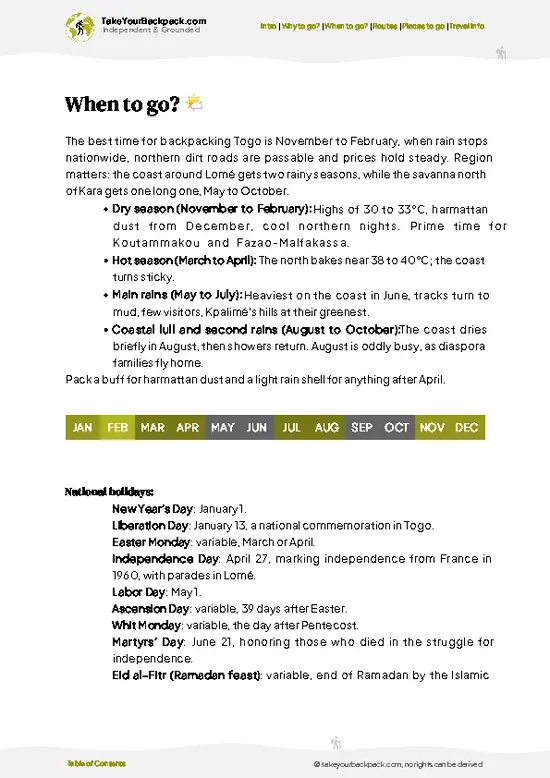
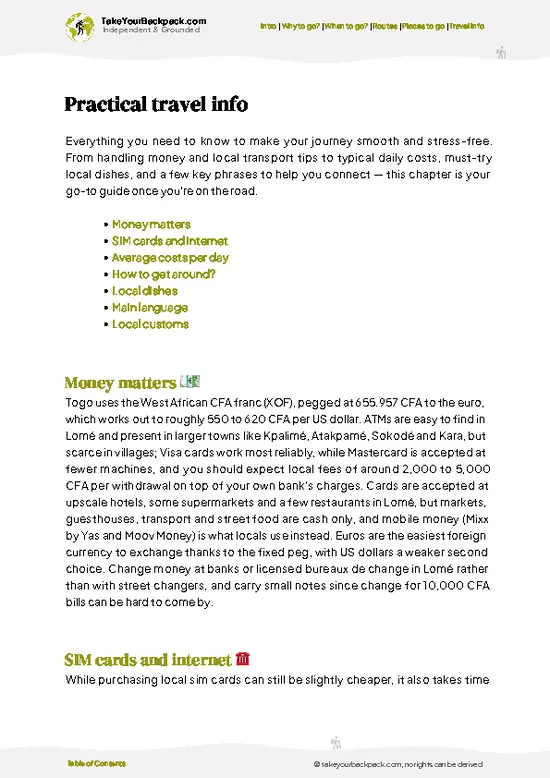
example page 0 from our offline Travel Guide for Togo
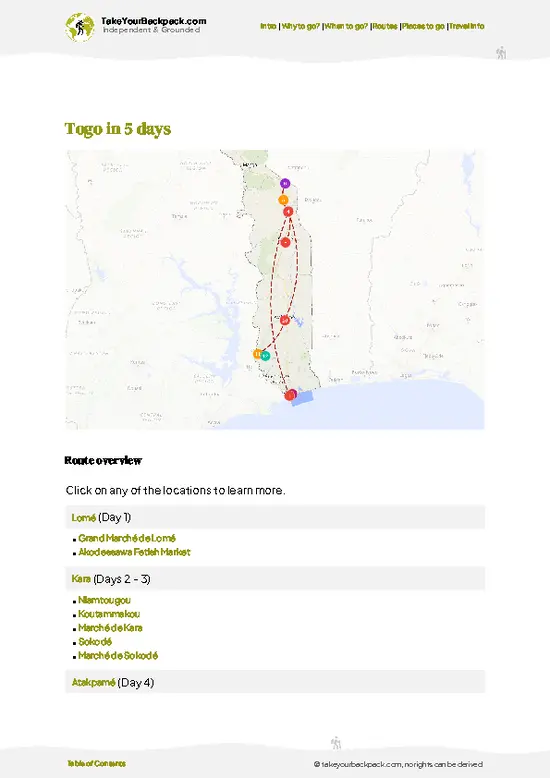
example page 1 from our offline Travel Guide for Togo
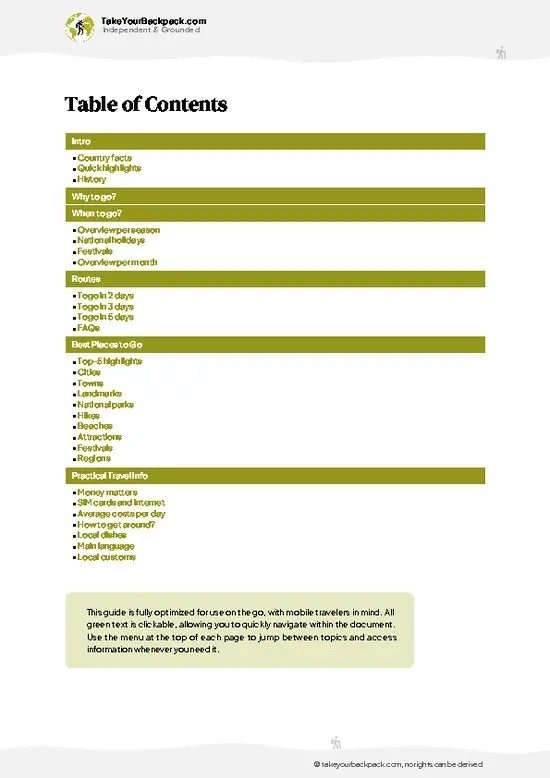
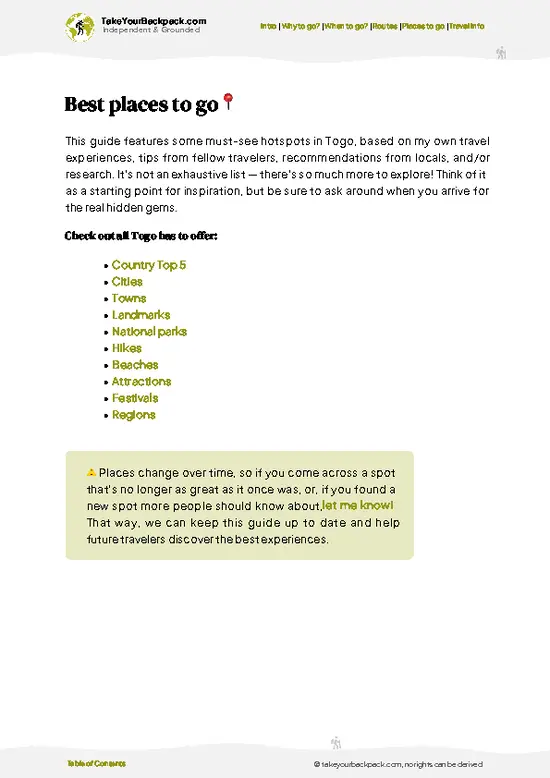
example page 2 from our offline Travel Guide for Togo
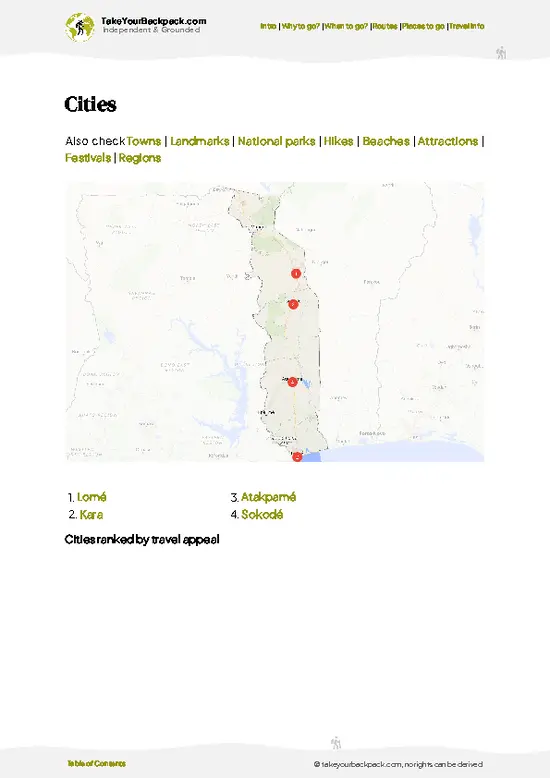
example page 3 from our offline Travel Guide for Togo
example page 4 from our offline Travel Guide for Togo
example page 5 from our offline Travel Guide for Togo
example page 6 from our offline Travel Guide for Togo
example page 7 from our offline Travel Guide for Togo
Loading the map 🌍
CLICK TO FILTER
cities
towns
landmarks
national parks
hikes
beaches
attractions
festivals
regions
SHOW COUNTRY’S BESTSHOW ALL

✨ Why go?
Ranked #9 attraction in Togo
The unique appeal for travelers

Village Artisanal de Kpalimé gives you something rare on a West African route: a working craft center where the maker stands beside the product. Carvers shape iroko and teak into masks and stools, and you can see the rough block become a finished figure. That visibility makes your purchase feel earned rather than staged.

The second reason is the setting. Kpalimé lies among forested hills near Mount Agou, so a morning spent browsing the stalls pairs easily with a walk into cooler air and cocoa and coffee country.

The third is price. Buying from the artisan, often with batik cloth dyed in wax-resist patterns, usually costs far less than the same items in Lomé shops, and bargaining is expected and mostly good-humored. For a route through Togo, it works as a lively, low-pressure cultural stop between the coast and the highlands.

💡 HighlightsTop highlights of Village Artisanal de Kpalimé

  1. Woodcarving workshops: Carvers chisel masks, drums and animal figures from hardwood, and you can usually watch a piece in progress before choosing one.
  2. Batik and fabric stalls: Wax-resist cloth in deep indigo, ochre and green hangs in rows, and makers explain how the patterns are drawn and dyed.
  3. Basket and raffia weaving: Local weavers produce bags, mats and baskets from palm fiber and grass, light enough to pack easily.
  4. Bead and jewelry makers: Strings of glass and recycled beads, plus brass and carved pendants, make some of the cheapest and most portable keepsakes.
  5. Leather and sandal makers: Small shops stitch sandals, wallets and pouches, and a fitting and adjustment on the spot is normal.
  6. Traditional instruments: Drums, rattles and wooden xylophone-style pieces are made here, and sellers will
… read more 👉
  1. Woodcarving workshops: Carvers chisel masks, drums and animal figures from hardwood, and you can usually watch a piece in progress before choosing one.
  2. Batik and fabric stalls: Wax-resist cloth in deep indigo, ochre and green hangs in rows, and makers explain how the patterns are drawn and dyed.
  3. Basket and raffia weaving: Local weavers produce bags, mats and baskets from palm fiber and grass, light enough to pack easily.
  4. Bead and jewelry makers: Strings of glass and recycled beads, plus brass and carved pendants, make some of the cheapest and most portable keepsakes.
  5. Leather and sandal makers: Small shops stitch sandals, wallets and pouches, and a fitting and adjustment on the spot is normal.
  6. Traditional instruments: Drums, rattles and wooden xylophone-style pieces are made here, and sellers will happily play one to show the tone.
  7. Bargaining with the artisans: Haggling here is a conversation, and mentioning that you watched the work being done often softens the starting price.
Village Artisanal de Kpalimé has no ticket system, so nothing needs booking ahead and you simply walk in.
Spotted a mistake or missing something? Contact us.

🌤️ When to go?Weather, crowds, and seasonal trade-offs

  • Dry Season (November to February): Harmattan haze softens the hills, mornings run 20 to 24°C (68 to 75°F) and afternoons reach 30 to 33°C (86 to 91°F). Roads to workshops stay firm and the market stalls are fully stocked.
  • Hot Months (March to April): Afternoons climb to 33 to 35°C (91 to 95°F) and humidity builds before the rains. Carving and batik demonstrations go on, but midday browsing is sweaty.
  • Rainy Season (May to October): Highs of 27 to 30°C (81 to 86°F), with heavy downpours, mostly in the afternoon. Mornings are usually clear, the surrounding forest is at its greenest, and few tourists show up.
  • Crowds and Prices: Visitor numbers rise around Christmas and the New Year, when diaspora families come home. Artisans bargain harder in the quiet months.
Arrive by 9 am, before the heat and before the afternoon rain.

source: climatestotravel.comJANJanuary: excellent for travelingFEBFebruary: excellent for travelingMARMarch: highly recommended for travelingAPRApril: fair for travelingMAYMay: fair for travelingJUNJune: fair for travelingJULJuly: fair for travelingAUGAugust: fair for travelingSEPSeptember: fair for travelingOCTOctober: fair for travelingNOVNovember: highly recommended for travelingDECDecember: excellent for traveling
when-to-go

✈️ The backpacker research shortcutTogo Travel Guide

An offline-friendly backpacking guide with optimized travel routes, ranked highlights, transport advice, and the best areas to stay.
example page 0 from our offline Travel Guide for Togo
example page 1 from our offline Travel Guide for Togo
example page 2 from our offline Travel Guide for Togo
example page 3 from our offline Travel Guide for Togo
example page 4 from our offline Travel Guide for Togo
example page 5 from our offline Travel Guide for Togo
example page 6 from our offline Travel Guide for Togo
example page 7 from our offline Travel Guide for Togo
The digital guide (194 pages) contains:
✅ 42 highlights, ranked by travel appeal
✅ Optimized 2, 3 & 5-day travel routes
✅ Cities, national parks, landmarks, beaches
✅ How to get around
✅ Offline-friendly for travel without Wi-Fi
👉 Click to see all 30+ guide features

📅 Plan smarter in minutes, not weeks
✅ Month by month travel advice
✅ Festivals & national holidays
✅ Budget expectations

🗺️ Go to the right places, skip the overrated ones
✅ Honest pros & cons of destinations
✅ Top hikes, parks & viewpoints
✅ Lesser-known places most travelers miss
✅ Clear “worth it vs skip it” guidance

🛏️ Travel smoothly without rookie mistakes
✅ Best areas to stay
✅ Transport systems explained simply
✅ Common scams & safety advice
✅ SIM cards, money & practical tips

🌍 Understand the country, not just visit it
✅ Culture & traditions
✅ 52 Essential phrases & customs
✅ Festivals worth planning around
✅ Traveler-friendly historical context
✅ Insights that make places more meaningful

📱 Built for real travel conditions
✅ Fully downloadable PDF
✅ Works completely offline
✅ Optimized for phone use
✅ Useful in remote areas & buses
✅ Everything in one place
Stop searching, start planning
Get instant access to your full guide. 30‑day money-back guarantee.
+ Add another guide for just

By proceeding you agree to our terms.
Sent to your inbox immediately after payment • 100% Secure Checkout
Best Backpacking Travel Advisor 2025 tourism awardBest Backpacking
Travel Advisor
2025
What others say about Take Your Backpack Guides:
⭐⭐⭐⭐⭐
Fantastic, amazing amount of information!
⭐⭐⭐⭐⭐
My goodness this is amazing, it's what I've been looking for hats off too you!
⭐⭐⭐⭐⭐
I think this is absolutely BRILLIANT
⭐⭐⭐⭐
Very complete and informative. It's still missing places, but I gotta to commend you
⭐⭐⭐⭐⭐
This is truly amazing, thank you, can't wait to explore it with my kids!
⭐⭐⭐⭐⭐
Awesome resource, thank you!
⭐⭐⭐⭐⭐
This is amazing! Can't wait to explore the ones I haven't seen
⭐⭐⭐⭐
I love this! Well done, great idea.
⭐⭐⭐⭐⭐
Thanks for taking the time to make this gem!
⭐⭐⭐⭐⭐
This might be the best website I've ever seen.
⭐⭐⭐⭐⭐
Congratulations, and thank you so much for your work; it's incredibly valuable.
⭐⭐⭐⭐
In all seriousness I think you did a great job pointing out the important spots
⭐⭐⭐⭐⭐
10/10 very good
⭐⭐⭐⭐⭐
As someone who's only just starting to visit regularly this is awesome, thank you.
⭐⭐⭐⭐
Thank you very much! I'm going to visit my dad, it's going to be very useful!
⭐⭐⭐⭐⭐
This is really cool! We'll be travelling for the first time and this definitely come in handy.
⭐⭐⭐⭐⭐
You are now our minister of culture, congratulations 👨‍💼
⭐⭐⭐⭐⭐
Just wanted to tell you that this is a pearl! Going to follow your recommendations.
⭐⭐⭐⭐⭐
This is so cool. I'll definitely be using the resource for my travels soon.
⭐⭐⭐⭐⭐
This is very impressive! Good work.
⭐⭐⭐⭐⭐
This is an amazing and informative site. Very well done!

🛏️ Where to stay?Best areas and accommodation options

The center of Kpalimé is the best place to sleep, because the artisan village sits a short walk or a cheap moto ride from the main market and the central streets. Guesthouses here are small and family-run, and you will meet other travelers over breakfast or at the evening bars and street grills near the Grand Marché. It is flat, easy to walk, and feels safe after dark on the main roads, though a flashlight helps on side streets. The leafy residential edge toward the Mont Agou road is quieter and suits anyone who wants birdsong and cooler nights, with easy access to hikes toward Mont Kloto and … read more 👉
The center of Kpalimé is the best place to sleep, because the artisan village sits a short walk or a cheap moto ride from the main market and the central streets. Guesthouses here are small and family-run, and you will meet other travelers over breakfast or at the evening bars and street grills near the Grand Marché. It is flat, easy to walk, and feels safe after dark on the main roads, though a flashlight helps on side streets. The leafy residential edge toward the Mont Agou road is quieter and suits anyone who wants birdsong and cooler nights, with easy access to hikes toward Mont Kloto and the Tomégbé waterfalls. Solo travelers will get more company in the center, where shared taxis and moto drivers gather, so day trips are simple to organize. Expect dorm-style or basic private rooms at roughly €8 to 20 a night. Book ahead only around late December.

👛 Costs (as of 22 October 2026)Money, prices, and spending tips

Village Artisanal de Kpalimé costs most backpackers about €26 to 40 a day, with free entry and money going mainly to crafts, food and a bed. Travelers pay in West African francs, and cash is the norm.
CategoryBudget RangeLocal Reality
EntryFreeWalk in and browse the workshops without a ticket.
Accommodation (high season)€8 to 20Basic guesthouses in central Kpalimé, fan rooms cheaper than air conditioning.
Food€4 to 9Rice, fufu or grilled fish at local eateries; restaurants cost more.
Transport€1 to 4Moto taxis and shared taxis around town cost little.
Crafts and Souvenirs€3 to 15Batik cloth, wood carvings, baskets and small masks. Bargaining is expected.
Guide or Workshop Demo€0 to 3A small tip for artisans who explain their techniques is appreciated.
Total Daily Budget€26 to 40Lower end with dorm beds and street food.
⚠️ Prices can change and everyone travels differently, so take this as a rough guide. Hope it helps you plan your adventure!

FAQTraveler FAQ

Plan on one to two hours at Village Artisanal de Kpalimé, which is enough to walk the workshops, watch carvers and batik makers, and bargain for a few pieces. Add a half day if you want to combine it with the central market and nearby Mont Kloto trails. Mornings are best, since most artisans are at work by 9 am.
Entry to Village Artisanal de Kpalimé is free, so the cost only comes from what you buy. You can watch craftspeople work and chat for nothing, and typical purchases such as batik cloth or small carvings run about €3 to 15. Prices beat the tourist shops in Lomé, and buying direct supports the maker.
Village Artisanal de Kpalimé lies in Kpalimé, roughly 120 km northwest of Lomé, and the trip by bus or shared taxi takes about 2.5 to 3.5 hours for around €4 to 7. Coaches and minibuses leave Lomé from the Agoè and Adidogomé areas. In Kpalimé, a moto taxi from the center costs about €0.50 to 1, or you can walk.
⚠️ Things can change over time, so always validate details locally before you go.

Other Togolese attractions near Village Artisanal de Kpalimé

Explore more nearby:


💡 Not sure where to go next?
Create a personalized itinerary for Togo including Village Artisanal de Kpalimé and the places that fit your trip.

Generate my itinerary

👉 Discover all attractions

Or checkout all Togo has to offer (think cities, towns, villages, national parks, hikes, beaches, festivals)
Country photo of Togo

We 💚 feedbackWhat to keep in mind

Village Artisanal de Kpalimé suits patient browsers, collectors of handmade objects and anyone who likes talking with the person behind the counter. I would bring small bills, a bag for fragile pieces and an unhurried morning. Skip it if you want fixed prices, since friendly bargaining is the whole game here.

✍️ Help improve this page!
The information on this page is based on in-depth research, insights shared by experienced travelers, and feedback from the local travel community in Togo. While every effort is made to keep the information accurate and current, conditions can change — so if you spot anything incorrect or outdated, please get in touch.


🙋‍♂️ Give feedback

👋 Meet the founderWho’s Behind Take Your Backpack?

Johan, backpacker and founder of TakeYourBackpackHi, I’m Johan (Netherlands 🇳🇱), the creator of TakeYourBackpack. Over the past 3 decades, I’ve backpacked through 90+ countries across six continents, gaining extensive experience with independent travel, long-term trips, and overland routes.

This site is built on a combination of firsthand travel experience and carefully curated insights from other backpackers. Many guides are based on places I’ve personally visited, while others bring together tips, observations, and practical advice shared by trusted travelers I’ve met along the way.

The goal is to provide realistic, experience-driven guidance — not generic itineraries — so you can explore destinations with better context, clearer expectations, and more confidence.