v2.webp)
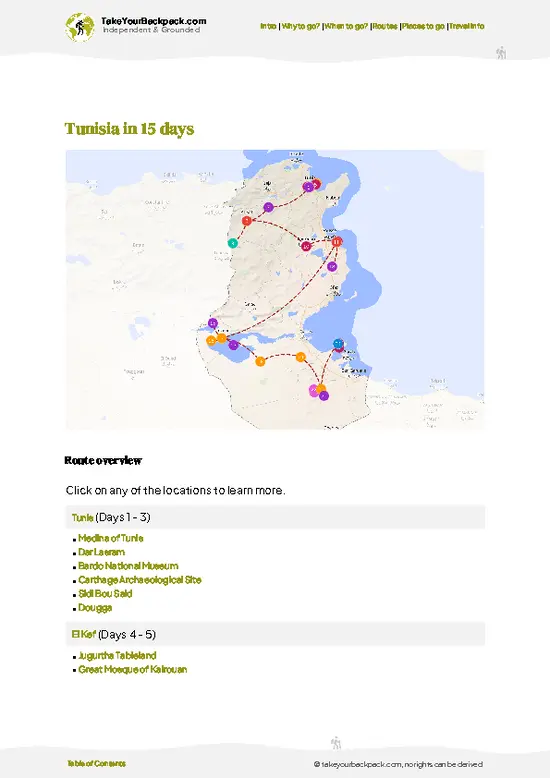
- Byzantine Fortress (Kasbah): The thick Byzantine-era walls on the hill above town give the best view over the rooftops and wheat plains. Go in the evening for cooler air and softer light. Usually free to walk around the outside, 30 to 45 minutes.
- Medina and Souk: Narrow lanes with butchers, spice sellers and tailors serving locals rather than tourists. Mornings are busiest. Free to enter, 1 to 2 hours.
- Weekly Market: Farmers bring grain, livestock, vegetables and olives from the surrounding countryside. Arrive before late morning. Free, 1 to 2 hours; the busiest day is usually the weekend.
- Sidi Bou Makhlouf Mosque area: A quiet corner of the old town where you can admire the architecture from the street. Non-Muslims generally look from outside. Free, 15 to 20 minutes.
- Béja Cathedral of Saint Augustine:
- Byzantine Fortress (Kasbah): The thick Byzantine-era walls on the hill above town give the best view over the rooftops and wheat plains. Go in the evening for cooler air and softer light. Usually free to walk around the outside, 30 to 45 minutes.
- Medina and Souk: Narrow lanes with butchers, spice sellers and tailors serving locals rather than tourists. Mornings are busiest. Free to enter, 1 to 2 hours.
- Weekly Market: Farmers bring grain, livestock, vegetables and olives from the surrounding countryside. Arrive before late morning. Free, 1 to 2 hours; the busiest day is usually the weekend.
- Sidi Bou Makhlouf Mosque area: A quiet corner of the old town where you can admire the architecture from the street. Non-Muslims generally look from outside. Free, 15 to 20 minutes.
- Béja Cathedral of Saint Augustine: A reminder of the town’s colonial-era European community, now a rare architectural landmark in the center. Best seen in daylight from the outside. Free, 15 minutes.
- Central Café Terraces: Sitting over a mint tea or coffee at a town-center café is how locals spend the afternoon and a decent way to meet people. Expect US$1 to 2 per drink, 1 hour or more.
Spotted a mistake or missing something? Contact us.

VIP transfer between Tunis Carthage Airport and a hotel in Tunis

07 -Guided day Tour Tunisia Monumental

10 Day Historical and Cultural Tour of Tunisia

8 Days Tunisia Essential Discovery Private Tour

Bizerte Utique Day and Cape Angela the Far North of Africa

Explore Tunisia in Depth:The Private Grand Tour in 8 Days

Half-Day Traditional Tunisian Cuisine Cooking Class in Tunis

3 Day Tunisian Desert Adventure Dunes, Oases and Bedouin Nights

Private Tour to Kairouan, El Jem and Sousse


 Best Backpacking
.jpg) Hi, I’m Johan (Netherlands 🇳🇱), the creator of TakeYourBackpack. Over the past 3 decades, I’ve backpacked through 90+ countries across six continents, gaining extensive experience with independent travel, long-term trips, and overland routes.
Hi, I’m Johan (Netherlands 🇳🇱), the creator of TakeYourBackpack. Over the past 3 decades, I’ve backpacked through 90+ countries across six continents, gaining extensive experience with independent travel, long-term trips, and overland routes.