×

Uganda🇺🇬 | best regionsDiscover the Best regions Across Uganda

Exploring the best regions in Uganda is essential for any backpacker seeking authentic experiences. Each region offers distinct climate, landscapes, and cultural character that shape your journey. The Western Highlands boast lush greenery and wildlife, perfect for trekking and gorilla encounters, while the Northern region reveals a raw, untamed beauty with rich cultural heritage.

Choosing wisely impacts your vibe, season, and budget. For instance, the dry season enhances accessibility and wildlife viewing, while the rainy months can transform trails into muddy challenges. Understanding these regional nuances not only enriches your travel experience but also ensures a smoother, more immersive adventure in this diverse country.

By Johan Kruseman 🇳🇱 | Updated June 14, 2026
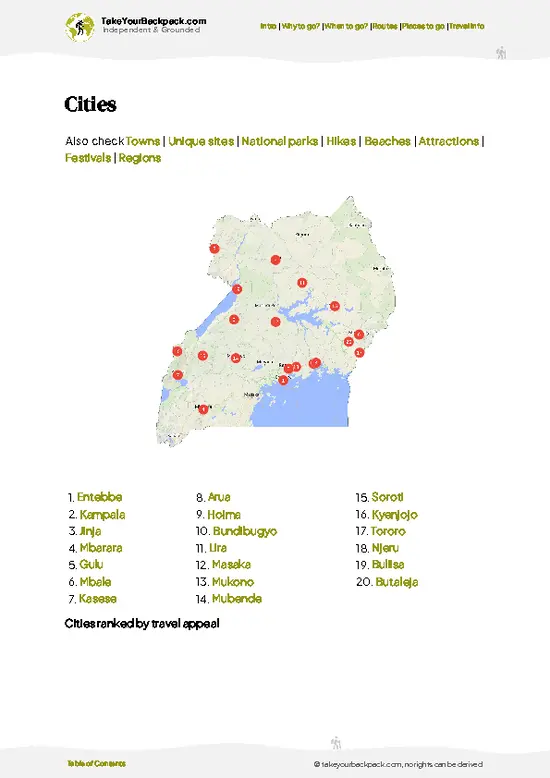
Explore the best cities in Uganda

Why go?Understanding Their Importance

Uganda stands out as a unique tapestry of climatic diversity, cultural richness, and stunning landscapes. Its geographic positioning near the equator creates a climate that varies dramatically across regions, from the lush, rain-soaked forests of the southwest to the arid plains of the northeast. This diversity allows travelers to experience a wide range of ecosystems and wildlife, making Uganda a microcosm of East Africa.

Culturally, Uganda is a melting pot of over 50 ethnic groups, each with distinct traditions and languages. This cultural character enriches the travel experience, offering opportunities for authentic interactions that are often absent in more homogenized destinations. However, this diversity comes with trade-offs. While some regions are easily accessible, others require … read more 👉
Uganda stands out as a unique tapestry of climatic diversity, cultural richness, and stunning landscapes. Its geographic positioning near the equator creates a climate that varies dramatically across regions, from the lush, rain-soaked forests of the southwest to the arid plains of the northeast. This diversity allows travelers to experience a wide range of ecosystems and wildlife, making Uganda a microcosm of East Africa.

Culturally, Uganda is a melting pot of over 50 ethnic groups, each with distinct traditions and languages. This cultural character enriches the travel experience, offering opportunities for authentic interactions that are often absent in more homogenized destinations. However, this diversity comes with trade-offs. While some regions are easily accessible, others require significant travel time, which can limit the depth of exploration.

Infrastructure varies widely; major roads connect key areas, but rural regions may present challenges. Travelers must weigh the benefits of accessibility against the immersive experiences found in less-traveled paths. Understanding these dynamics is crucial for making informed choices. The balance between travel distance and the breadth of experiences shapes the journey, ensuring that every step taken in Uganda is as rewarding as the destination itself.
Why These Made the Cut
The list of best regions in Uganda is created based on landscapes, local culture, attractions, vibes, and overall appeal. If you feel a region is missing in this list, please let us know.

When to go?Optimal Periods for Travel

Climate Variation

Uganda’s climate is a tapestry of variation, influenced by altitude and geography. The country generally experiences two rainy seasons: the long rains from March to May and the short rains from October to November. These months can make travel challenging due to muddy roads and limited accessibility, but they also bring lush landscapes and vibrant wildlife activity.

Optimal Months

The dry seasons, from June to September and December to February, are prime for exploration. Wildlife is more visible, and trekking conditions improve significantly. These months attract more visitors, leading to higher costs and crowded attractions. However, the experience of observing wildlife in their natural habitat often outweighs these trade-offs.

Shoulder Seasons

Traveling during the … read more 👉

Climate Variation

Uganda’s climate is a tapestry of variation, influenced by altitude and geography. The country generally experiences two rainy seasons: the long rains from March to May and the short rains from October to November. These months can make travel challenging due to muddy roads and limited accessibility, but they also bring lush landscapes and vibrant wildlife activity.

Optimal Months

The dry seasons, from June to September and December to February, are prime for exploration. Wildlife is more visible, and trekking conditions improve significantly. These months attract more visitors, leading to higher costs and crowded attractions. However, the experience of observing wildlife in their natural habitat often outweighs these trade-offs.

Shoulder Seasons

Traveling during the shoulder seasons—late May and early October—offers a balanced experience. Fewer crowds and lower prices are enticing, but weather can be unpredictable. Rain may still occur, impacting travel plans, yet the scenery is often at its most beautiful.

Seasonal Constraints

Consider the trade-offs between comfort and experience. Peak periods can mean higher costs and busy attractions, while off-peak times may offer solitude but come with weather-related challenges. Planning around these factors ensures a smoother journey through Uganda’s diverse regions.

region hoppingHow to Combine regions Into One Trip

General Routing Logic

Start in the southwest, where the lush landscapes of Bwindi Impenetrable National Park and the stunning Lake Bunyonyi await. This region is a prime spot for gorilla trekking, so allocate at least two days here to soak in the experience. From there, head northeast to Queen Elizabeth National Park, a hub for wildlife viewing. A day or two is ideal for game drives and boat safaris on the Kazinga Channel.

Typical Time Needed

Each major stop deserves a minimum of two days. This pacing allows for exploration without feeling rushed. Factor in travel time between regions; roads can be bumpy, so plan for longer drives than expected.

Common Planning Mistakes

Avoid cramming too many destinations into a short timeframe. This leads to fatigue and missed opportunities. Instead, … read more 👉

General Routing Logic

Start in the southwest, where the lush landscapes of Bwindi Impenetrable National Park and the stunning Lake Bunyonyi await. This region is a prime spot for gorilla trekking, so allocate at least two days here to soak in the experience. From there, head northeast to Queen Elizabeth National Park, a hub for wildlife viewing. A day or two is ideal for game drives and boat safaris on the Kazinga Channel.

Typical Time Needed

Each major stop deserves a minimum of two days. This pacing allows for exploration without feeling rushed. Factor in travel time between regions; roads can be bumpy, so plan for longer drives than expected.

Common Planning Mistakes

Avoid cramming too many destinations into a short timeframe. This leads to fatigue and missed opportunities. Instead, focus on a few key areas and dive deeper into their offerings.

Trade-offs and Constraints

Consider the balance between speed and depth. While it’s tempting to see as much as possible, a slower pace often yields richer experiences. Budget constraints may also dictate accommodation choices, impacting comfort. Prioritize experiences over luxury; the local culture and wildlife are the true rewards. Flexibility is key; be ready to adjust plans based on weather or local advice. Embrace the journey as much as the destination.

The ListHighly Recommended regions of Uganda

1 Teso

seasonal wetlands, sorghum fields, rock outcrops, cattle markets

Experience a region where rural life centers on open landscapes, traditional farming, and dramatic granite hills rising above the plains.

Loading the map 🌍

Expert viewTips and Advice from Travelers

Geographic Diversity

Uganda’s regions are a patchwork of landscapes, each offering distinct experiences. You’ve got the lush, green hills of the southwest, the expansive savannahs in the north, and the striking shores of Lake Victoria. Each area has its own rhythm and vibe, so choosing wisely is key. Aim to explore at least three regions to grasp the country’s essence. This isn’t just about ticking boxes; it’s about immersing yourself in varied cultures and environments.

However, be prepared for travel time. Distances can be deceptive. A few hundred kilometers might take longer than expected due to road conditions. Prioritize regions based on your interests—wildlife, culture, or adventure—and plan your route accordingly.

Transport Between Regions

Getting around Uganda can feel like an … read more 👉

Geographic Diversity

Uganda’s regions are a patchwork of landscapes, each offering distinct experiences. You’ve got the lush, green hills of the southwest, the expansive savannahs in the north, and the striking shores of Lake Victoria. Each area has its own rhythm and vibe, so choosing wisely is key. Aim to explore at least three regions to grasp the country’s essence. This isn’t just about ticking boxes; it’s about immersing yourself in varied cultures and environments.

However, be prepared for travel time. Distances can be deceptive. A few hundred kilometers might take longer than expected due to road conditions. Prioritize regions based on your interests—wildlife, culture, or adventure—and plan your route accordingly.

Transport Between Regions

Getting around Uganda can feel like an adventure in itself. Public transport options are available, but they often lack reliability. For a smoother experience, consider hiring a driver or joining a guided tour. This not only saves time but also allows you to soak in the scenery without the stress of navigation.

Keep in mind that travel times can vary significantly. A journey that seems straightforward on a map may involve bumpy roads and unexpected delays. Factor in extra time for travel, especially if you’re moving between regions with different terrains.

Cultural Variation

Cultural experiences in Uganda are as diverse as its landscapes. Each region boasts unique traditions, languages, and cuisines. The western regions are known for their rich cultural heritage, while the north offers a glimpse into the lives of the pastoral communities. Engaging with local customs can deepen your understanding of the country.

However, be mindful of cultural sensitivities. Dress modestly in rural areas and approach local customs with respect. This not only enriches your experience but also fosters goodwill.

Pacing Trade-Offs

Pacing your journey is crucial. You might be tempted to cram in as much as possible, but this can lead to burnout. Instead, focus on quality over quantity. Spend a few days in each region to truly absorb the local culture and environment.

Consider the trade-off between travel speed and depth of experience. Rushing through regions might save time, but you’ll miss the nuances that make Uganda special. Take the time to connect with locals, try new foods, and explore off-the-beaten-path areas.

Safety & Cultural Considerations

Safety is paramount. While Uganda is generally welcoming, it’s wise to stay informed about local conditions. Stick to well-traveled areas, especially at night, and keep your belongings secure.

Culturally, be aware that Uganda is home to various ethnic groups, each with its own customs. Learning a few phrases in local languages can go a long way in building rapport. This not only enhances your experience but also shows respect for the local culture.

In summary, Uganda’s regions offer a rich tapestry of experiences waiting to be explored. By understanding the geographic diversity, transport options, cultural variations, and pacing trade-offs, you can unlock a more rewarding journey. Embrace the adventure, and let the landscapes and people shape your experience.

✈️ The backpacker research shortcutUganda Travel Guide

An offline-friendly backpacking guide with optimized travel routes, ranked highlights, transport advice, and the best areas to stay.
example page 0 from our offline Travel Guide for Uganda
example page 1 from our offline Travel Guide for Uganda
example page 2 from our offline Travel Guide for Uganda
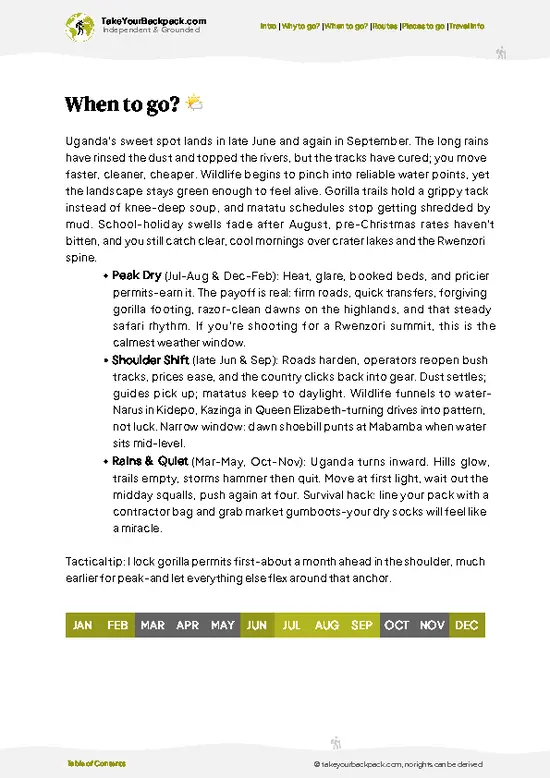
example page 3 from our offline Travel Guide for Uganda
example page 4 from our offline Travel Guide for Uganda
example page 5 from our offline Travel Guide for Uganda
example page 6 from our offline Travel Guide for Uganda
example page 7 from our offline Travel Guide for Uganda
The digital guide (422 pages) contains:
109 highlights, ranked by travel appeal
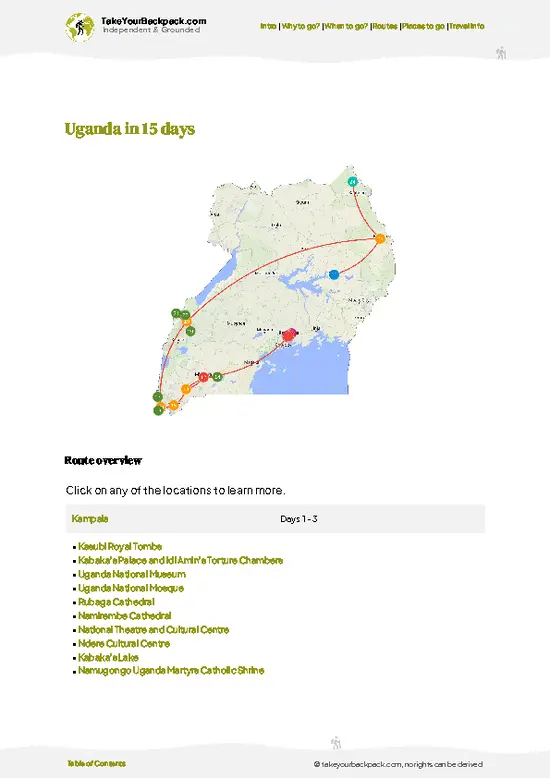
Optimized 5, 10 & 15-day travel routes
Cities, national parks, landmarks, beaches
How to get around
Offline-friendly for travel without Wi-Fi
👉 Click to see all 30+ guide features

📅 Plan smarter in minutes, not weeks
Month by month travel advice
Festivals & national holidays
Budget expectations

🗺️ Go to the right places, skip the overrated ones
Honest pros & cons of destinations
Top hikes, parks & viewpoints
Lesser-known places most travelers miss
Clear “worth it vs skip it” guidance

🛏️ Travel smoothly without rookie mistakes
Best areas to stay
Transport systems explained simply
Common scams & safety advice
SIM cards, money & practical tips

🌍 Understand the country, not just visit it
Culture & traditions
52 Essential phrases & customs
Festivals worth planning around
Traveler-friendly historical context
Insights that make places more meaningful

📱 Built for real travel conditions
Fully downloadable PDF
Works completely offline
Optimized for phone use
Useful in remote areas & buses
Everything in one place
Save weeks of stressful planning
Get instant access to your full guide. 30‑day money-back guarantee.


By proceeding you agree to our terms.
Sent to your inbox immediately after payment • 100% Secure Checkout
Best Backpacking Travel Advisor 2025 tourism awardBest Backpacking
Travel Advisor
2025
What others say about Take Your Backpack Guides:
⭐⭐⭐⭐⭐
Fantastic, amazing amount of information!
⭐⭐⭐⭐⭐
My goodness this is amazing, it's what I've been looking for hats off too you!
⭐⭐⭐⭐⭐
I think this is absolutely BRILLIANT
⭐⭐⭐⭐
Very complete and informative. It's still missing places, but I gotta to commend you
⭐⭐⭐⭐⭐
This is truly amazing, thank you, can't wait to explore it with my kids!
⭐⭐⭐⭐⭐
Awesome resource, thank you!
⭐⭐⭐⭐⭐
This is amazing! Can't wait to explore the ones I haven't seen
⭐⭐⭐⭐
I love this! Well done, great idea.
⭐⭐⭐⭐⭐
Thanks for taking the time to make this gem!
⭐⭐⭐⭐⭐
This might be the best website I've ever seen.
⭐⭐⭐⭐⭐
Congratulations, and thank you so much for your work; it's incredibly valuable.
⭐⭐⭐⭐
In all seriousness I think you did a great job pointing out the important spots
⭐⭐⭐⭐⭐
10/10 very good
⭐⭐⭐⭐⭐
As someone who's only just starting to visit regularly this is awesome, thank you.
⭐⭐⭐⭐
Thank you very much! I'm going to visit my dad, it's going to be very useful!
⭐⭐⭐⭐⭐
This is really cool! We'll be travelling for the first time and this definitely come in handy.
⭐⭐⭐⭐⭐
You are now our minister of culture, congratulations 👨‍💼
⭐⭐⭐⭐⭐
Just wanted to tell you that this is a pearl! Going to follow your recommendations.
⭐⭐⭐⭐⭐
This is so cool. I'll definitely be using the resource for my travels soon.
⭐⭐⭐⭐⭐
This is very impressive! Good work.
⭐⭐⭐⭐⭐
This is an amazing and informative site. Very well done!

🛏️ Where to stay?Where to Base Yourself

Yes — hostels and budget guesthouses are widely available across Uganda, with the strongest supply in Kampala and in towns that serve national parks and adventure hubs; expect dorms, basic private rooms and campsite-style options and book ahead during peak tracking and holiday periods.
In Kampala the best budget clusters are Old Kampala/City Centre (cheapest, on main bus routes, noisy and basic security), Kabalagala (best nightlife and eateries, louder at night, good transport links) and Makerere/Kololo (near the university, quieter and slightly pricier).
Outside the capital, Entebbe (airport access and lakeshore calm) and Jinja (riverside hostels and activity access but busy on weekends) … read more 👉
Yes — hostels and budget guesthouses are widely available across Uganda, with the strongest supply in Kampala and in towns that serve national parks and adventure hubs; expect dorms, basic private rooms and campsite-style options and book ahead during peak tracking and holiday periods.
In Kampala the best budget clusters are Old Kampala/City Centre (cheapest, on main bus routes, noisy and basic security), Kabalagala (best nightlife and eateries, louder at night, good transport links) and Makerere/Kololo (near the university, quieter and slightly pricier).
Outside the capital, Entebbe (airport access and lakeshore calm) and Jinja (riverside hostels and activity access but busy on weekends) are practical bases, while Fort Portal, Kisoro/Bwindi and Kasese/Mweya offer basic budget lodgings or camps close to gorilla treks, forest trails and safari zones but with limited availability and simpler facilities.

If you enjoy meeting fellow travelers, consider choosing hostels with high ratings for atmosphere. On the other hand, if you prefer having your own space, a hotel might be a better option.

UgandaExpand Your Journey

👋 Meet the founderWho’s Behind Take Your Backpack?

Johan, backpacker and founder of TakeYourBackpackHi, I’m Johan (Netherlands 🇳🇱), the creator of TakeYourBackpack. Over the past decade, I’ve backpacked through 80+ countries across six continents, gaining extensive experience with independent travel, long-term trips, and overland routes.

This site is built on a combination of firsthand travel experience and carefully curated insights from other backpackers. Many guides are based on places I’ve personally visited, while others bring together tips, observations, and practical advice shared by trusted travelers I’ve met along the way.

The goal is to provide realistic, experience-driven guidance — not generic itineraries — so you can explore destinations with better context, clearer expectations, and more confidence.

Get full Uganda guide •
Instant download • 109 highlights • Full Offline guide